
Authentic Spanish Gazpacho: Your Essential Guide to a Refreshing Summer Soup
Everything I’ve learned living in Spain about how to make the best authentic, delicious, fresh tomato gazpacho recipe — in just 15 minutes!

Embrace Summer with Authentic Spanish Gazpacho
The arrival of fresh tomato season heralds the perfect time to dive into the vibrant world of gazpacho. This refreshing, chilled Spanish tomato soup has captivated palates worldwide, but its true essence is best experienced in its homeland. Having lived in Barcelona and traveled extensively through Andalucía, the birthplace of gazpacho, my appreciation for this culinary gem has reached new heights. In Andalucía, gazpacho isn’t just a dish; it’s a way of life, available everywhere from bustling restaurants and cozy bars to local coffee shops and every supermercado.
Even here in Barcelona, grocery store shelves boast an impressive array of bottled gazpacho varieties, a testament to its popularity as the ultimate light and cooling meal to combat the summer heat. But nothing compares to the taste of homemade gazpacho, crafted with the season’s ripest, most flavorful produce. The difference is simply incomparable.
While gazpacho recipes can vary slightly across Spain’s diverse regions, and modern chefs often introduce innovative twists, the Andalusian-style tomato gazpacho remains the quintessential version most people envision. If you’re yearning for a truly authentic bowl – or even a glass with a straw, as is popular here – I’m delighted to share my go-to recipe. It’s incredibly quick and easy to prepare, taking only about 15 minutes, and I genuinely believe it’s lo mejor — simply the best!
The Rich History and Cultural Significance of Gazpacho
Gazpacho’s roots run deep into the history of Andalusia, a region in southern Spain known for its intense summers and rich agricultural traditions. Originally a peasant dish, it served as a practical and delicious way for farm laborers to cool down and nourish themselves using readily available ingredients. The earliest forms of gazpacho were likely much simpler, a blend of stale bread, garlic, olive oil, salt, and water, pounded into a paste. The introduction of tomatoes and bell peppers, brought from the Americas, revolutionized the dish, transforming it into the vibrant, flavorful soup we know today.
This chilled soup is more than just a meal; it’s a symbol of Spanish summer. It embodies the Mediterranean diet’s principles, utilizing fresh, wholesome ingredients that are at their peak during the hottest months. It’s a testament to simple, honest cooking that prioritizes flavor and nutrition. Preparing gazpacho at home allows you to connect with this culinary heritage, offering a taste experience far superior to any store-bought alternative, no matter how convenient.
Crafting the Best Authentic Gazpacho: A Quick Glance
While a video often captures the essence of cooking, the simplicity of authentic gazpacho lies in its straightforward preparation. It’s a dish that celebrates fresh ingredients, brought together seamlessly in a blender or food processor. For those eager to dive straight into the vibrant flavors, here’s a quick glimpse at what makes this recipe truly special.
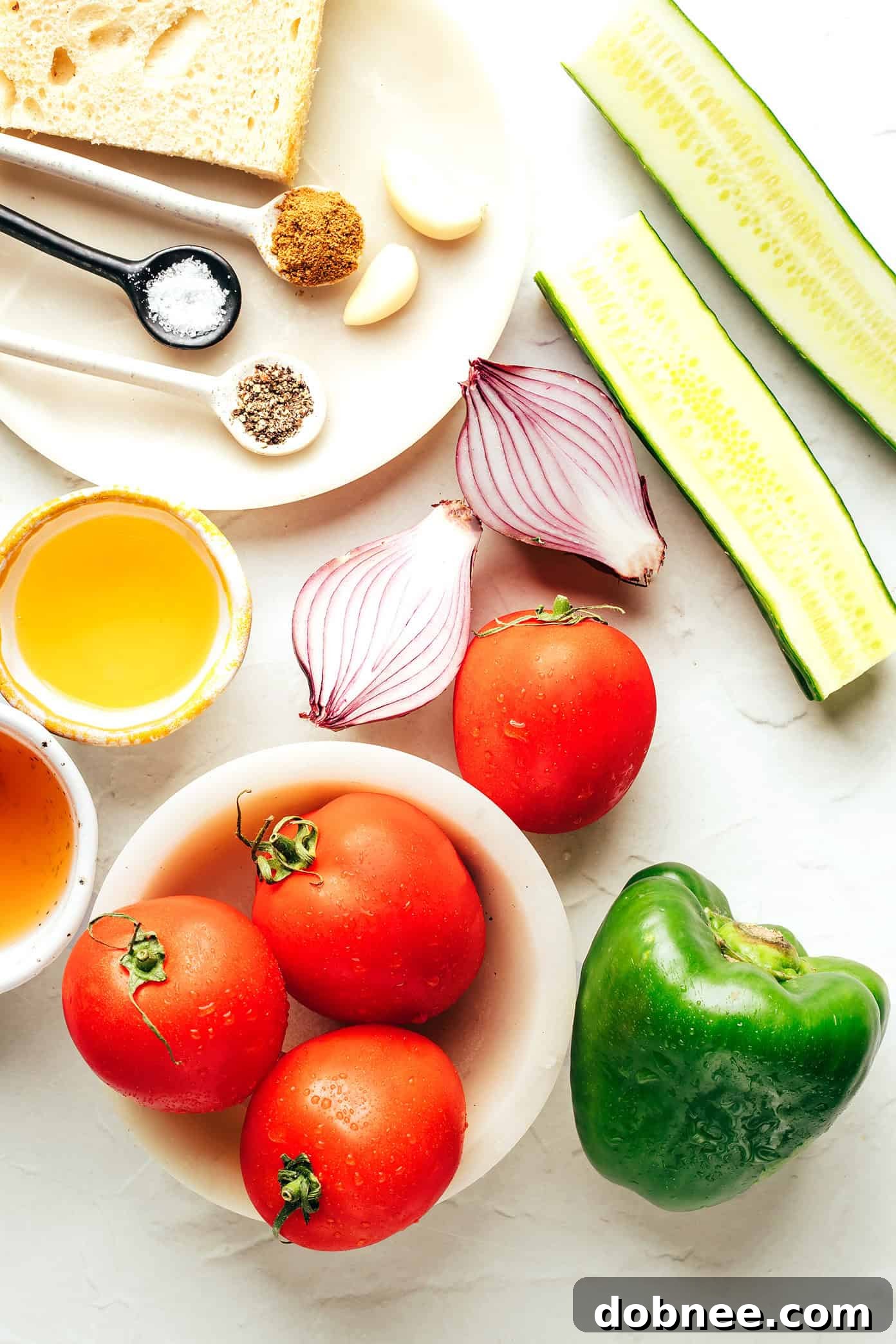
Essential Spanish Gazpacho Ingredients
Gazpacho stands as the ultimate summer soup, primarily because it relies entirely on fresh, seasonal produce and requires no cooking over a hot stove or oven. The preparation is simple: gather your ingredients, give them a quick chop, and let your blender or food processor do the rest. To craft this exquisite homemade gazpacho, you’ll need a handful of carefully selected components:
- Ripe Tomatoes: The heart and soul of gazpacho. While Roma tomatoes or what are locally known as “branch tomatoes” (medium, round, soft-skinned tomatoes on the vine) are traditional in Spain, any truly ripe, juicy, and flavorful fresh tomatoes will yield fantastic results. The key is ripeness; the sweeter and more vibrant your tomatoes, the richer your gazpacho will be. There’s no need to peel the tomatoes, but I highly recommend coring them by scooping out the tough white flesh and seeds for a smoother texture.
- Cucumber: Adds a crisp, refreshing note. In Spain, small Persian or Kirby cucumbers, peeled and seeded, are commonly used. However, half an English cucumber works just as wonderfully and often simplifies prep, as English cucumbers typically have fewer seeds and thinner skin, reducing the need for extensive peeling and seeding.
- Green Bell Pepper: A cornerstone for authentic flavor. Many Spanish purists insist on green bell peppers for that characteristic tangy, slightly bitter undertone that distinguishes traditional gazpacho. While any color of bell pepper can be used for a delicious soup, embracing the green variety will bring you closer to the classic Andalusian profile.
- Stale White Bread: This might seem unusual, but leftover white bread is crucial for achieving the perfect authentic gazpacho texture. It acts as a natural thickener, giving the soup a desirable body and helping to emulsify the ingredients, rounding out the overall flavor. For optimal smoothness, always discard the crusts. To incorporate the bread effectively:
- You can blend the other gazpacho ingredients first, then poke a slice of bread into the center of the soup. Let it sit for about 10 minutes to soften before blending it thoroughly into the mixture, ensuring a seamless integration.
- Alternatively, quickly run the bread under a faucet until completely soaked with water. Squeeze out all excess water with your hands until it’s just damp, then add it directly to the other soup ingredients and purée. Both methods work beautifully.
- Red Onion: A small amount adds a delicate pungency and aromatic depth. Half of a small red onion, peeled, is usually sufficient to enhance the flavors without overpowering the fresh vegetables.
- Garlic: Essential for a robust base. Two small cloves, or one large clove, provide just the right amount of sharp, savory warmth to complement the freshness of the other ingredients.
- Extra Virgin Olive Oil: A cornerstone of Mediterranean cuisine. While older, more traditional recipes might call for generous amounts of olive oil, modern Spanish preparations often reduce it for a lighter, healthier soup. This recipe uses 3 tablespoons, which provides ample richness and helps create that silky mouthfeel without being overly heavy. Choose a good quality extra virgin olive oil for the best flavor.
- Sherry Vinegar: The authentic Spanish touch. Hailing from Andalucía, sherry vinegar (vinagre de Jerez) is the traditional choice for gazpacho, lending a unique tangy, nutty complexity. If sherry vinegar isn’t available in your local grocery store, a good quality red wine vinegar can be used as a suitable substitute, though the sherry vinegar truly elevates the authenticity.
- Ground Cumin: The “secret ingredient.” One of our friends in Andalucía shared this tip, and it’s a game-changer. Cumin is popular in southern Spain due to its historical ties to North African cuisine, and a subtle hint of it adds an earthy, warm note that beautifully balances the freshness of the vegetables, adding an unexpected layer of depth.
- Sea Salt and Freshly Ground Black Pepper: Non-negotiable flavor enhancers. These basic seasonings are vital for bringing all the flavors together and should be adjusted to taste.
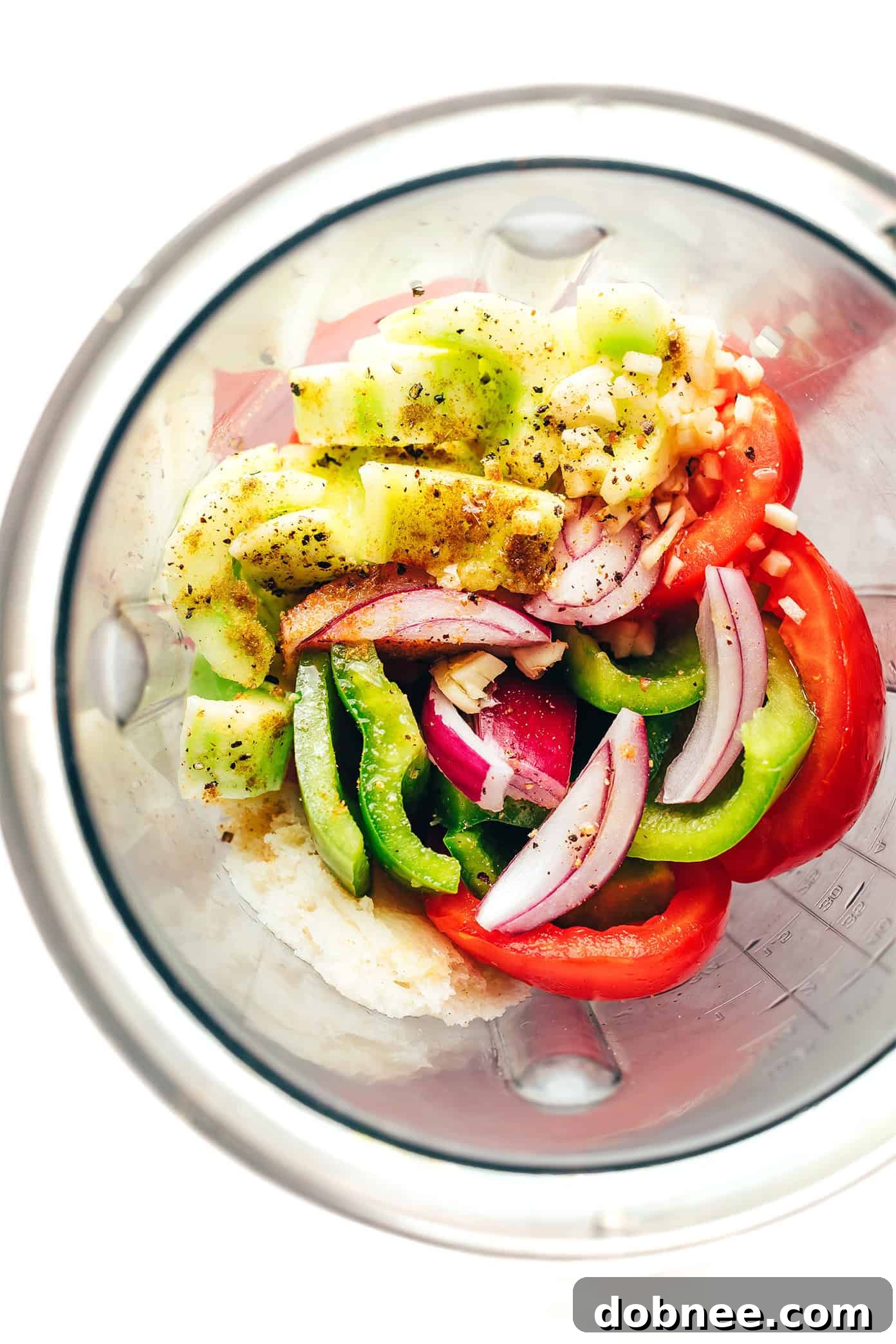
Step-by-Step: How to Make Gazpacho
Making homemade gazpacho soup is incredibly straightforward, transforming fresh produce into a vibrant, chilled delight with minimal effort:
- Prepare and Puree: Gather all your prepared gazpacho ingredients – tomatoes, cucumber, bell pepper, onion, garlic, olive oil, sherry vinegar, cumin, salt, pepper, and the soaked bread. Place them into a high-speed blender or a food processor. Blend for at least one minute, or until the mixture is completely smooth and reaches your desired consistency. For an extra velvety texture, you can pass the puréed soup through a fine-mesh sieve, though this is optional for those who prefer a slightly rustic feel.
- Season to Perfection: Taste the freshly blended soup. This is your opportunity to adjust the seasonings. You might find it needs a little more salt to brighten the flavors, an extra pinch of pepper for a subtle kick, or a touch more cumin to enhance its earthy notes. The balance of acidity, sweetness, and savory flavors is key, so don’t hesitate to fine-tune it.
- Chill Thoroughly: Transfer the seasoned soup into an airtight container. Refrigerate it for a minimum of 3 to 4 hours, or ideally, until it is completely chilled. Gazpacho is designed to be served ice-cold; chilling allows the flavors to meld beautifully and provides that essential refreshing quality. Patience during this step is rewarded with a superior soup.
- Serve and Garnish: Once perfectly chilled, give the gazpacho a quick stir. Ladle it into bowls or glasses. Now comes the fun part – garnishing! Top generously with your favorite additions to add texture, visual appeal, and an extra burst of flavor.
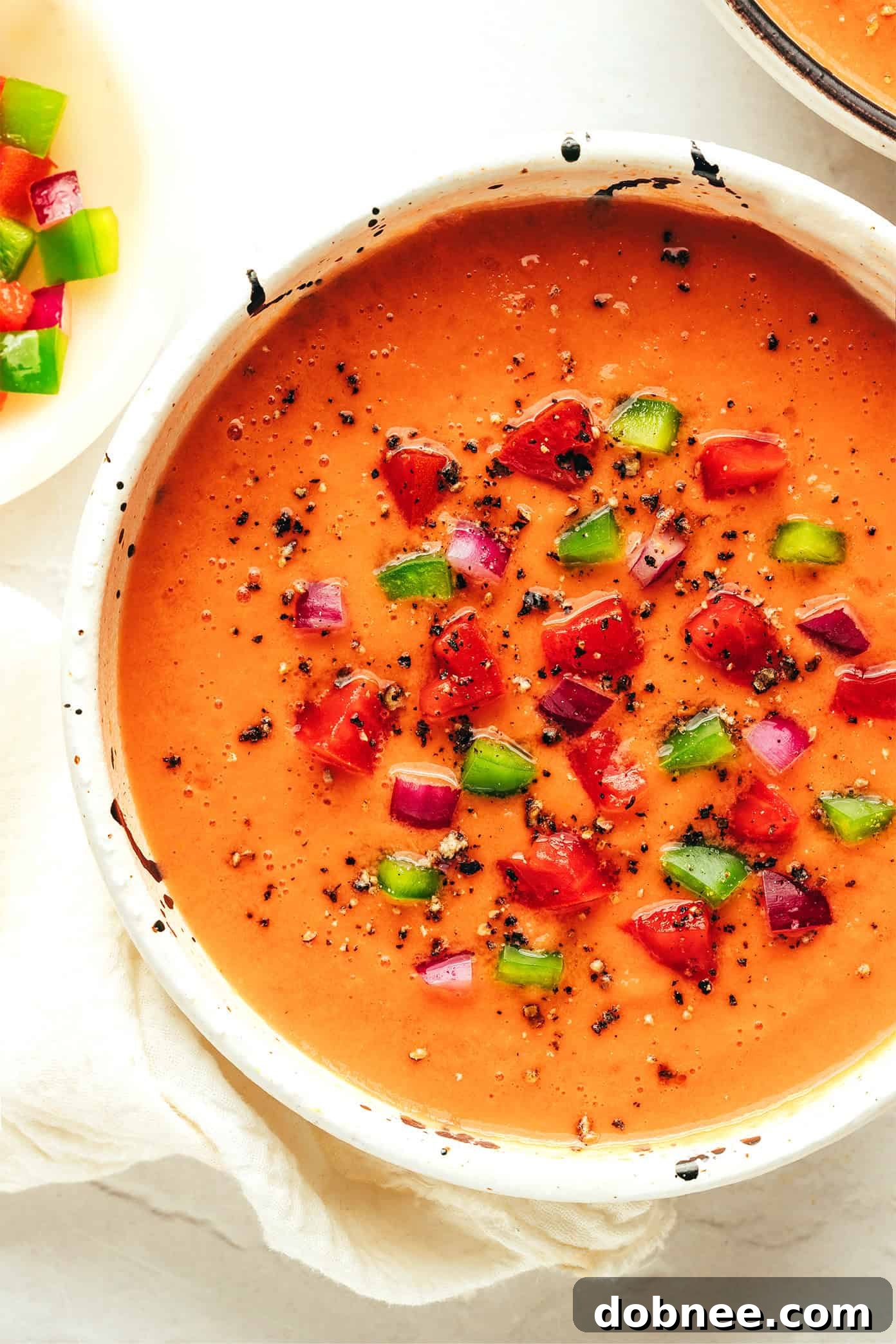
Elevate Your Gazpacho with Delicious Toppings
While gazpacho is wonderful on its own, a simple pureed soup truly shines with the addition of thoughtful toppings. These garnishes provide contrasting textures and complementary flavors, elevating the entire experience. I love to offer a selection, allowing everyone to customize their bowl (or glass!) to their liking. Here are some of my favorite gazpacho toppings:
- Homemade Croutons: Effortlessly made from any leftover bread, crunchy croutons add a delightful textural contrast to the smooth soup. They absorb some of the gazpacho’s flavor while retaining their crispness. (Learn how to make homemade croutons here).
- Fresh Herbs: A sprinkle of fresh basil, thyme, oregano, rosemary, or chives introduces a fragrant, aromatic dimension. Basil and chives, in particular, pair exceptionally well with the tomato base.
- Freshly-Cracked Black Pepper: A simple yet essential finish. A final grind of black pepper over the top enhances the overall flavor profile with its subtle heat and aroma.
- Drizzle of Olive Oil: Traditional in Spain, an extra swirl of high-quality extra virgin olive oil not only adds a beautiful sheen but also enriches the flavor with its fruity, sometimes peppery notes.
- Cream or Sour Cream: For those who enjoy a richer, creamier texture, a small drizzle of fresh cream or sour cream can be a luxurious addition, tempering the acidity of the tomatoes slightly.
- Traditional Spanish Additions: In southern Spain, particularly with salmorejo (a thicker, bread-heavy cold tomato soup), toppings like finely diced Spanish ham (jamón serrano) and chopped hard-boiled eggs are popular. These can also be wonderful, savory additions to gazpacho, providing a more substantial garnish.
- Leftover Chopped Gazpacho Veggies: The simplest and often most authentic garnish! Dice some extra tomato, green bell pepper, red onion, or cucumber and sprinkle them on top for a burst of fresh flavor and satisfying crunch that mirrors the soup’s core ingredients.
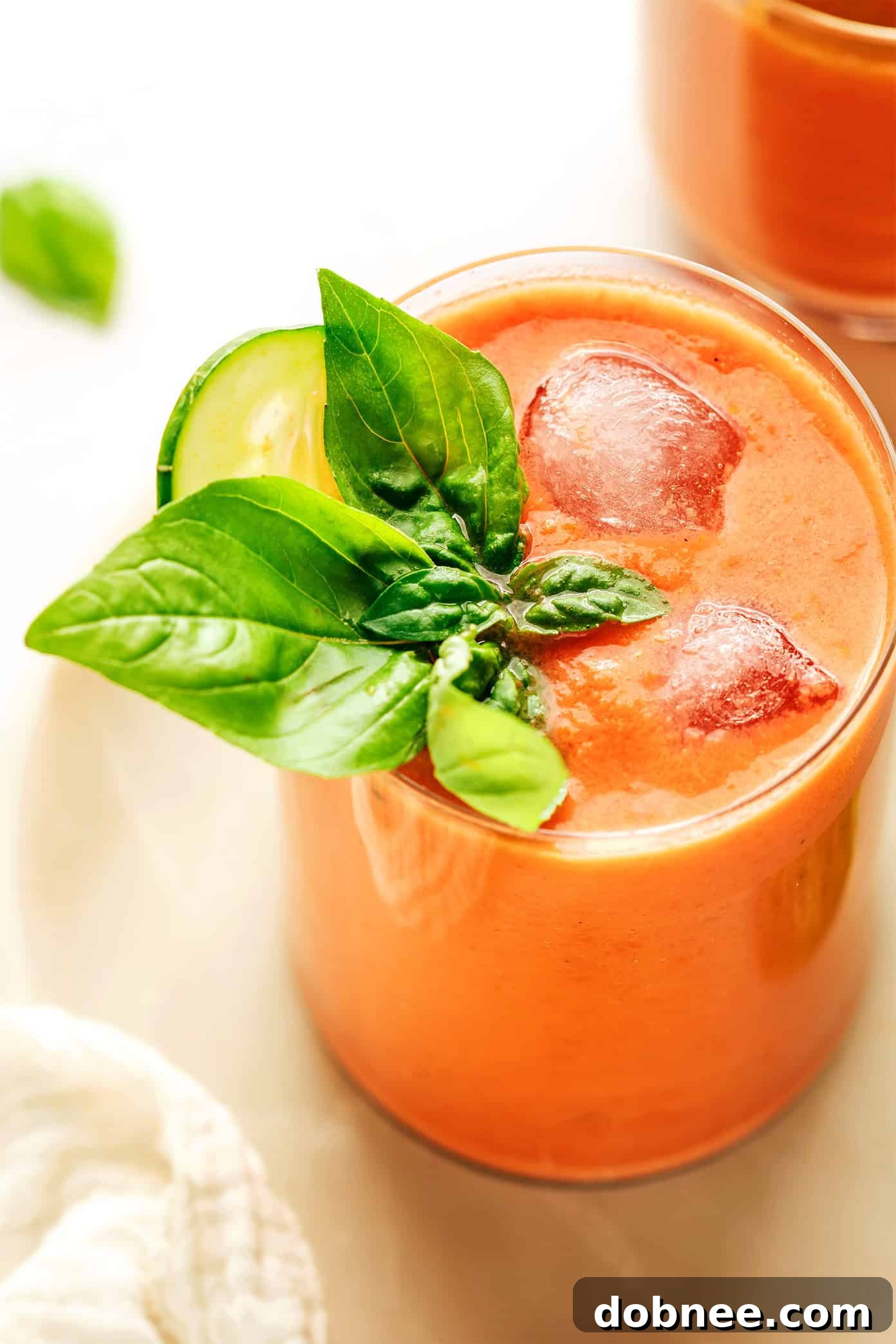
How to Serve Gazpacho for the Best Experience
Gazpacho offers versatility in how it’s served, making it suitable for various occasions and preferences. You can present this delightful soup in traditional bowls or mugs, carefully garnished with your chosen toppings. This classic presentation is perfect for a light lunch or as an elegant starter to a summer meal.
However, for a truly casual and refreshing experience, many establishments across Spain opt for a simpler, yet equally appealing, method: serving gazpacho over ice in tall glasses, often accompanied by a straw. This innovative approach is fantastic for beating the heat on a scorching day, turning the soup into a sophisticated and hydrating drink. It’s a method I’ve come to adore and highly recommend trying!

Regardless of your serving vessel, the single most critical factor for enjoying gazpacho is ensuring it’s thoroughly chilled. Plan to prepare and blend your gazpacho a few hours before you intend to serve it. This allows ample time for it to cool completely in the refrigerator, ensuring that essential crisp, invigorating chill that makes gazpacho so utterly irresistible.
Creative Gazpacho Variations to Explore
While the recipe provided focuses on authentic tomato gazpacho, the beauty of this cold soup lies in its adaptability. Once you master the basic technique, a world of creative variations opens up, allowing you to customize your gazpacho to suit your taste or what fresh produce is abundant. Here are some delightful ways you could customize your gazpacho:
- Add Fruit: For a touch of sweetness and an unexpected twist, incorporating fruits into red gazpacho is surprisingly popular in Spain. Watermelon, cantaloupe, and strawberries are common additions, lending their natural sugars and vibrant colors to the soup. The sweetness of the fruit beautifully complements the tang of the tomatoes. (Try my watermelon gazpacho recipe for inspiration).
- Introduce New Vegetables: Expand the vegetable base beyond the traditional. Beets can add a beautiful deep color and earthy sweetness, while zucchini offers a mild, creamy texture. Corn kernels provide a sweet crunch and sunny hue. Experiment with what’s fresh and in season for unique flavor profiles.
- Experiment with Herbs: Beyond the initial garnishes, you can blend fresh herbs directly into the soup for a more infused flavor. Basil brings a sweet, peppery note; rosemary offers a piney aroma; thyme imparts a subtle earthiness; and chives add a delicate oniony freshness. Choose herbs that complement your chosen vegetable and fruit additions.
- Incorporate Spice: While traditionally, heat is rarely found in Spanish gazpacho (the country generally avoids spicy food), for those who appreciate a kick, adding a few slices of jalapeño or serrano pepper can transform the soup. This isn’t authentic Spanish style, but it’s a fantastic way to introduce a fiery dimension that can be incredibly appealing, especially for those who love a bit of heat with their refreshing dishes.
- Green Gazpacho: Explore beyond red tomatoes! A verdant green gazpacho made with cucumbers, green grapes, green bell peppers, and fresh herbs like mint or cilantro offers a completely different, yet equally refreshing, experience.
- Almond Gazpacho (Ajoblanco): While technically a distinct soup, Ajoblanco is a close cousin to gazpacho and well worth exploring. Made with almonds, garlic, bread, olive oil, and water, it’s a creamy, white chilled soup, often garnished with grapes or melon, offering a rich and nutty alternative to tomato-based versions.
Authentic Gazpacho Recipe Card
Authentic Gazpacho

Rating: 4.9 from 184 reviews
- Author: Ali
- Prep Time: 15 minutes
- Cook Time: 0 mins
- Total Time: 15 minutes
- Yield: 4-6 servings
Print Recipe
Description
My favorite recipe for how to make authentic, fresh, delicious Spanish gazpacho.
Ingredients
- 2 pounds ripe Roma tomatoes, halved and cored*
- 1 small (1/2 lb) cucumber, peeled and seeded*
- 1 medium green bell pepper, cored
- 1/2 small red onion, peeled
- 2 small garlic cloves (or 1 large clove), peeled
- 3 tablespoons olive oil
- 2 tablespoons sherry vinegar
- 1 teaspoon fine sea salt
- 1/2 teaspoon freshly-cracked black pepper
- 1/2 teaspoon ground cumin
- 1 thick slice of white bread, soaked, crusts removed*
- Optional garnishes: homemade croutons, chopped fresh herbs, a drizzle of olive oil, or any leftover chopped gazpacho ingredients
Instructions
- Purée. Combine all ingredients together in a blender or food processor. Puree for 1 minute, or until the soup reaches your desired consistency.
- Season. Taste and season with extra salt, pepper, and/or cumin if needed.
- Chill. Refrigerate in a sealed container for 3 to 4 hours, or until completely chilled.
- Serve. Serve cold, topped with your desired garnishes.
Equipment and Helpful Products
A good quality blender or food processor is essential for this recipe. You might also find these products helpful:
Buy Now →
Buy Now →
Notes
- Tomatoes: To core the tomatoes, simply scoop out and discard the seeds, plus any of the tough white cores. This helps in achieving a smoother soup.
- Cucumber: If using an English cucumber, there’s no need to seed it, simplifying your preparation.
- Bread: We typically use a baguette for the bread slice. To soak it, briefly run it under the tap until it’s completely wet. Then, squeeze out all the excess water before adding it to your blender or food processor.
- Storage Instructions: Leftover gazpacho can be stored in an airtight food storage container in the refrigerator for up to 3 days. For longer storage, it freezes well for up to 3 months. Thaw in the refrigerator before serving.