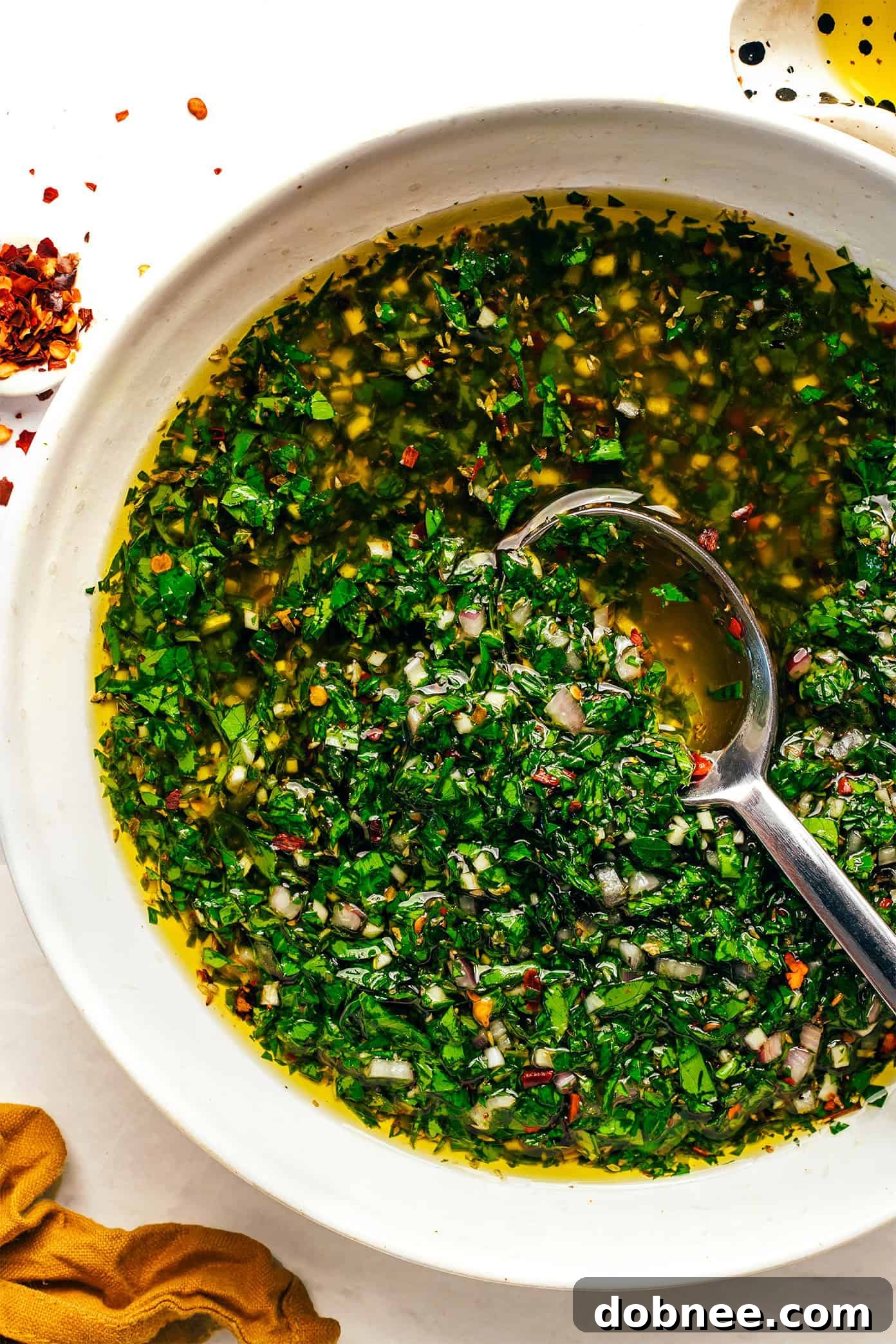
Discover how to make the freshest, most vibrant chimichurri sauce at home with this incredibly easy and versatile recipe. Elevate your grilled meats, vegetables, and countless other dishes with this zesty, herbaceous condiment that requires no cooking at all!
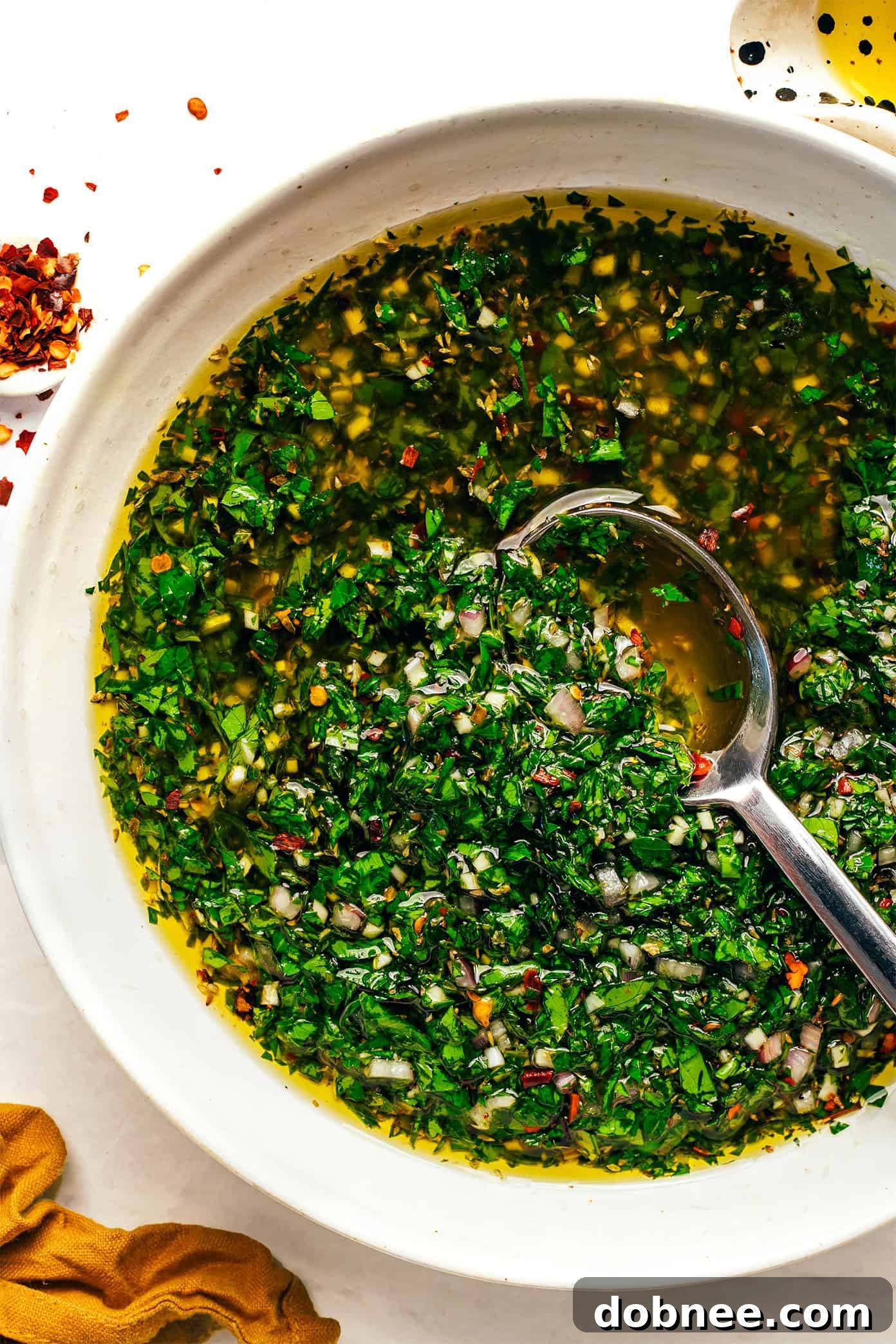
Homemade Chimichurri Sauce: The Ultimate Fresh Herb Condiment
Chimichurri is truly one of those culinary marvels that transforms any ordinary meal into an extraordinary dining experience – and the best part is, it requires absolutely no cooking! This vibrant, zesty sauce is a staple in Argentinian cuisine, celebrated for its ability to brighten and enhance a wide array of dishes. If you’ve ever craved a fresh, tangy, and garlicky accompaniment that’s bursting with flavor, then this easy chimichurri recipe is about to become your new kitchen essential.
Crafted from a simple yet powerful blend of fresh parsley, pungent garlic, robust olive oil, a touch of vinegar, and a hint of spices, this classic South American sauce comes together in mere minutes. It’s renowned for its bold, fresh taste, characterized by its garlicky kick, tangy acidity, and wonderfully herby essence. Perfect for spooning generously over juicy grilled steaks, succulent roasted vegetables, hearty grain bowls, flavorful sandwiches, or even as a unique dip for crusty bread, chimichurri is unbelievably versatile.
Beyond its incredible flavor, what makes chimichurri so beloved is its effortless preparation and adaptability. You can easily adhere to the traditional parsley-based version, or venture into exciting variations by incorporating fresh cilantro or oregano for a different aromatic profile. For those who enjoy a little heat, a pinch of extra chili flakes can amplify the spice. If you prefer a smoother consistency, a quick blend will do the trick. No matter how you choose to customize it, this refreshing, no-fuss sauce is an invaluable addition to any cook’s repertoire, promising to invigorate your meals with its irresistible charm.
Essential Chimichurri Ingredients
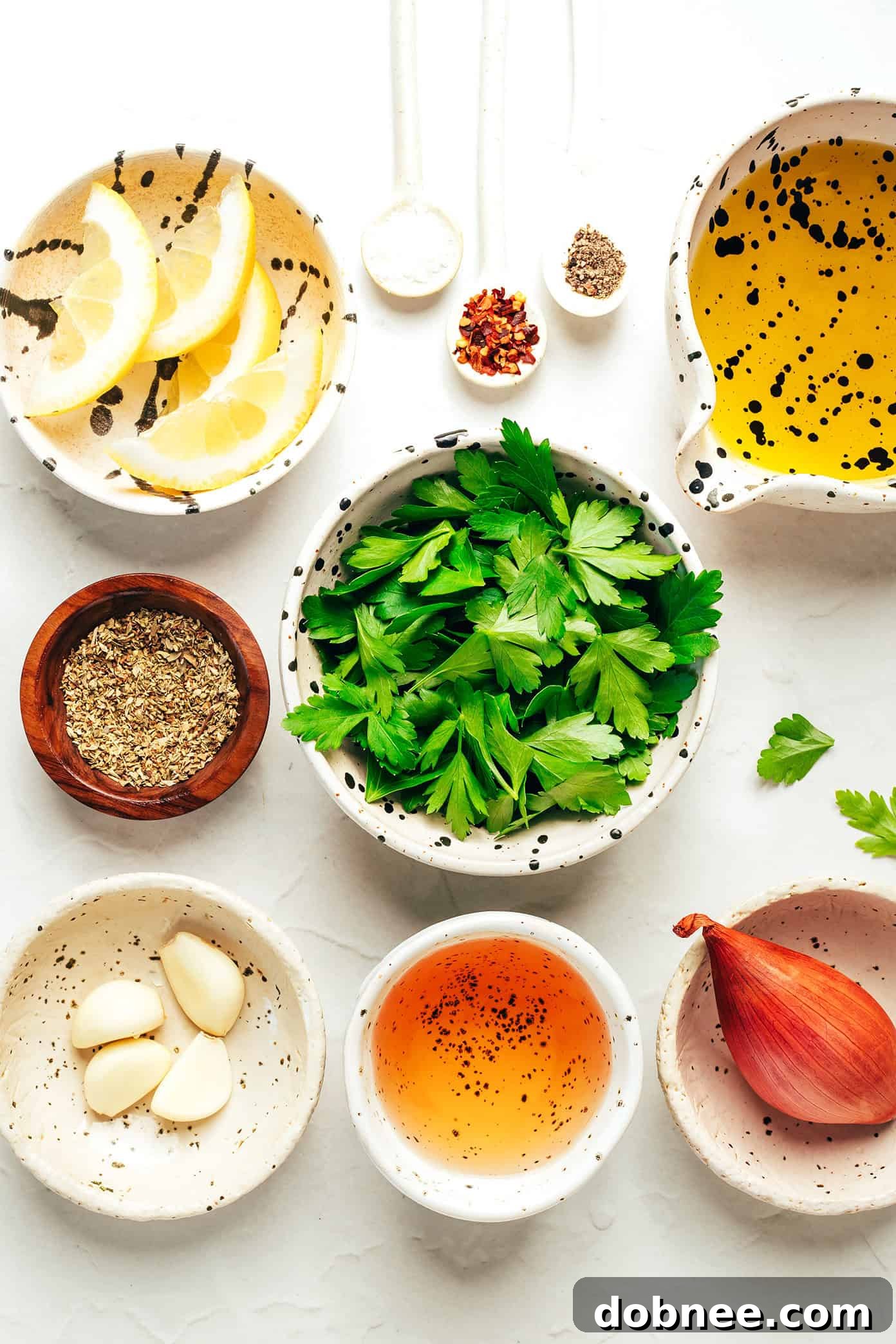
Making authentic chimichurri starts with understanding the role of each fresh ingredient. While the recipe is simple, selecting high-quality components is key to achieving that signature bold and bright flavor. Here’s a detailed look at the traditional ingredients you’ll need and why they are so crucial to this incredible sauce:
- Extra Virgin Olive Oil: The foundation of any great chimichurri, a good quality extra virgin olive oil not only provides a rich, silky base but also acts as a binder, harmonizing all the diverse flavors. Since olive oil is such a prominent component, its flavor will truly shine. Opt for a cold-pressed, robust EVOO for the best results, as it imparts a nuanced fruitiness and a slightly peppery finish that complements the herbs and spices beautifully.
- Fresh Parsley: This is the star herb in the traditional Argentinian chimichurri, lending a vibrant green hue and a bright, grassy, slightly peppery flavor. Flat-leaf (Italian) parsley is typically preferred over curly parsley for its stronger flavor and softer texture. While parsley is classic, many other Latin American countries also incorporate fresh cilantro alongside, or even in place of, parsley. Feel free to experiment based on your preference.
- Red Wine Vinegar: The tangy red wine vinegar is indispensable for providing the necessary acidity that cuts through the richness of the olive oil and balances the strong flavors of garlic and herbs. It adds a crucial bright, piquant note that awakens the palate. Ensure you’re using a good quality red wine vinegar for a clean, sharp tang without any harshness.
- Freshly-Squeezed Lemon Juice: A squeeze of fresh lemon juice introduces a delightful citrusy brightness that lifts and enhances the overall flavor profile. It adds another layer of acidity, complementing the vinegar and contributing to the sauce’s refreshing quality. Always use freshly squeezed juice for the most vibrant taste; bottled lemon juice often lacks the same zing.
- Dried Oregano: A small amount of dried oregano contributes an earthy depth and a subtle aromatic complexity that pairs wonderfully with the fresh parsley. While dried oregano is convenient and commonly used, if you have fresh oregano on hand, you can substitute it. As a general rule, use three times the amount of fresh herbs compared to dried (e.g., 1 tablespoon fresh for 1 teaspoon dried).
- Shallot: Finely minced shallot adds a delicate, sweet onion flavor that is milder and more refined than a regular onion. It helps to balance the sharper notes of the garlic and vinegar without overpowering the fresh herbs. If shallots are unavailable, a finely minced red onion can be used as a substitute. To mellow the bite of red onion, give it a quick rinse under cold water after mincing and pat it dry before adding to the sauce.
- Garlic: Minced or finely grated garlic is crucial for infusing chimichurri with its characteristic bold, pungent flavor. The amount of garlic can be adjusted to your personal taste – some prefer a milder hint, while others enjoy a powerful garlicky punch. For the most intense flavor, mince the garlic very finely or use a microplane grater.
- Crushed Red Pepper Flakes: Traditionally, chimichurri in Argentina and Uruguay often includes finely minced fresh red chilies for heat. However, since fresh chilies can sometimes be hard to source, crushed red pepper flakes offer an excellent and convenient alternative for adding a pleasant warmth and subtle spice. Adjust the quantity to control the level of heat in your sauce.
- Sea Salt and Freshly-Ground Black Pepper: These fundamental seasonings are vital for bringing all the flavors into perfect harmony. Seasoning generously allows the individual components of the sauce to shine and truly brings it to life. Always taste and adjust as needed, as proper seasoning is the final touch that makes all the difference.
Creative Chimichurri Variations to Explore
While the classic chimichurri recipe is perfect as is, its simple structure makes it incredibly adaptable to various tastes and culinary applications. Here are a few popular variations you can try to customize your chimichurri experience and explore new flavor dimensions:
- Embrace Cilantro: For a different aromatic profile, popular in many Latin American regions, swap half or all of the fresh parsley for fresh cilantro. Cilantro adds a bright, citrusy, and slightly peppery note that beautifully complements the other ingredients. This variation creates a sauce that’s equally delicious and offers a refreshing change.
- Authentic Fresh Chiles: If you’re looking for a more authentic and vibrant heat, replace the crushed red pepper flakes with finely minced fresh red chiles, such as Fresno or red jalapeño. Fresh chilies not only provide a more nuanced heat but also contribute a fresher, more immediate flavor to the sauce. Remove the seeds and membranes for less heat, or leave them in for a fiery kick.
- Experiment with Different Acids: The acidity in chimichurri is crucial, but you can achieve different flavor nuances by experimenting with various types of vinegar or citrus. Try substituting red wine vinegar with sherry vinegar for a nutty, slightly sweeter tang, white wine vinegar for a crisper, more subtle acidity, or simply use extra lemon juice for a brighter, more pronounced citrus flavor.
- Add a Touch of Sweetness: If you find the sauce too acidic or prefer a slightly mellowed flavor profile, a small drizzle of honey or maple syrup can work wonders. Just a teaspoon can balance the tanginess, adding a subtle sweetness that rounds out the flavors without making the sauce overtly sweet.
- Incorporate Extra Herbs: Feel free to expand the herb medley beyond parsley. A handful of fresh mint can add a cool, refreshing element, basil brings a sweet, peppery aroma, and chives offer a delicate oniony note. These additions create extra layers of herbal complexity, allowing you to tailor the sauce to specific dishes or personal preferences.
- Make it Creamy: For a richer, creamier chimichurri-style sauce or dip, blend in a spoonful of plain Greek yogurt, sour cream, or a quarter of a ripe avocado. This transformation makes it perfect for spreading on sandwiches, serving as a creamy dressing, or a hearty dip for vegetables and chips.
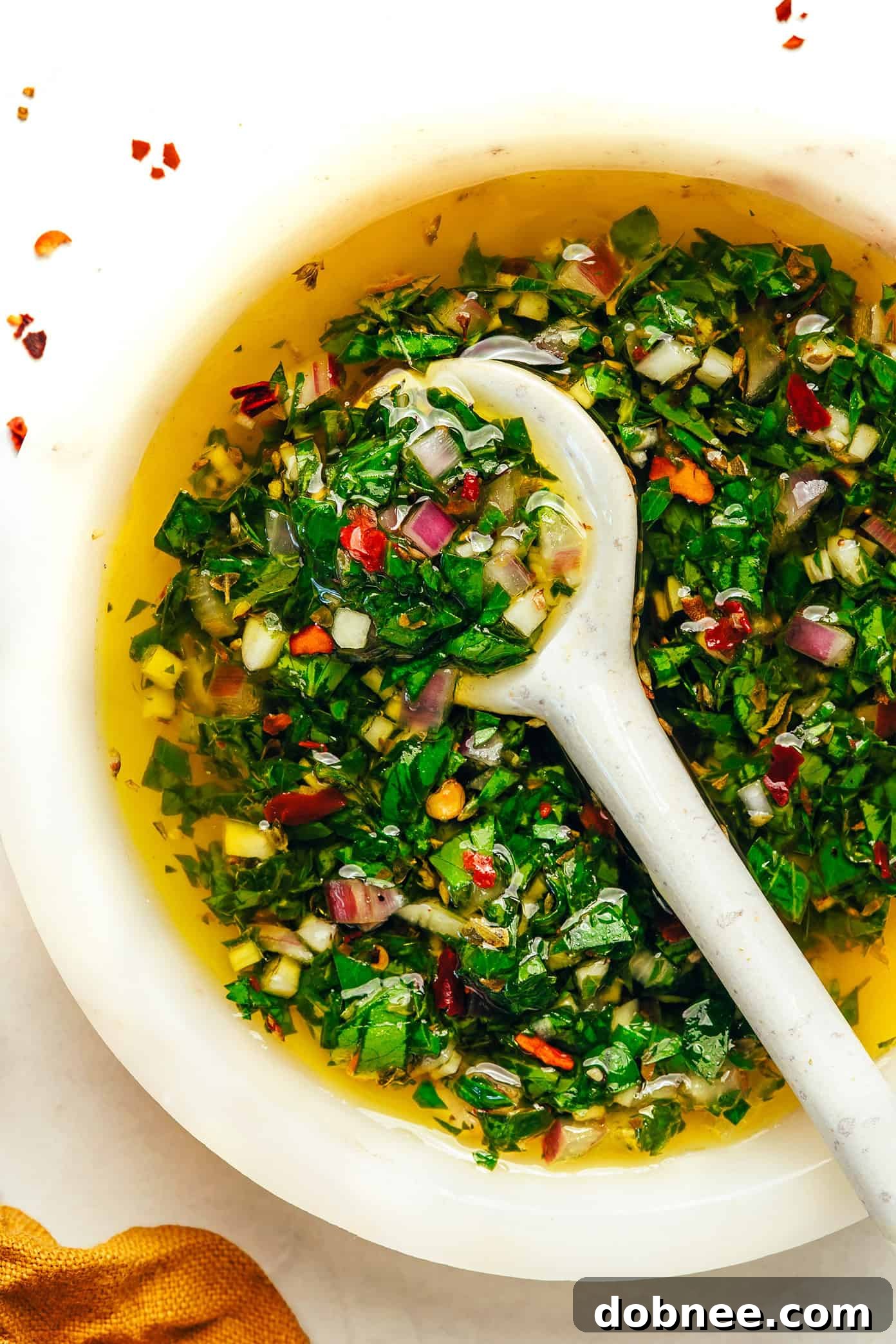
Delightful Ways to Use Chimichurri Sauce
The magic of chimichurri lies not just in its easy preparation, but in its incredible versatility. Once you have a batch ready, you’ll find countless ways to incorporate this vibrant sauce into your meals. Here are some of my favorite and most popular applications for chimichurri:
- Drizzled Over Meat or Seafood: This is arguably the most classic and celebrated use. Chimichurri is phenomenal spooned generously over grilled steak (especially flank, skirt, or sirloin), chicken, pork chops, lamb, or even delicate fish fillets, shrimp, and scallops. It adds a bright, herbaceous, and garlicky finish that cuts through the richness of the protein.
- Tossed with Roasted or Grilled Vegetables: Elevate simple vegetables into something spectacular. Toss warm roasted potatoes, grilled asparagus, green beans, mushrooms, zucchini, bell peppers, or corn with chimichurri for an instant burst of flavor. It’s a fantastic way to make your vegetable sides irresistible.
- As a Marinade: Chimichurri makes an exceptional marinade due to its oil and vinegar base, which tenderizes and infuses meat with flavor. Marinate steak, chicken, pork, shrimp, or even firm tofu for at least 30 minutes (or several hours for deeper flavor) before grilling, baking, or pan-frying.
- A Vibrant Dip or Spread: Serve chimichurri with crusty bread, pita bread, or a platter of fresh crudités (carrots, celery, cucumbers) for a vibrant and impressive appetizer or side. It’s also delicious as a spread for cheese boards or charcuterie.
- Condiment for Sandwiches or Burgers: Replace your usual condiments with a generous smear of chimichurri on sandwiches, wraps, or burgers. It provides an herby, tangy kick that takes your everyday lunch to a new level. Try it on a grilled chicken sandwich or a juicy beef burger.
- Breakfast Booster with Eggs: Drizzle chimichurri over scrambled eggs, fried eggs, omelets, or a hearty breakfast hash. The fresh flavors are a delightful surprise to wake up your breakfast routine and add a gourmet touch.
- Tossed with Pasta or Gnocchi: For a quick and flavorful meal, toss warm pasta or potato gnocchi with chimichurri. Add some cherry tomatoes, fresh mozzarella, or grilled chicken for a complete and utterly delicious dish that’s simple yet elegant.
- With Soups or Stews: A dollop of chimichurri can add a fresh, bright element to rich soups or stews, especially those with beef or vegetables, just before serving.

Tips for Making the Best Chimichurri
- Use Fresh Ingredients: The quality of your herbs and other fresh ingredients truly makes a difference. Always opt for fresh, vibrant parsley and pungent garlic.
- Mince Finely: For optimal flavor distribution and texture, ensure your parsley, garlic, and shallot are very finely minced. A sharp knife is your best friend here, or a food processor for a quicker, slightly smoother consistency (pulse, don’t over-blend, to avoid a paste).
- Resting Time is Key: While chimichurri is quick to make, allowing it to rest for at least 15-30 minutes (or even an hour) before serving lets the flavors meld and deepen beautifully.
- Taste and Adjust: Don’t be afraid to taste your chimichurri and adjust the seasoning. You might want more salt, a touch more vinegar for tang, or an extra pinch of red pepper flakes for heat.
- Don’t Cook It: Chimichurri is a fresh, uncooked sauce. Its vibrant flavors are best preserved by adding it after cooking or as a marinade.
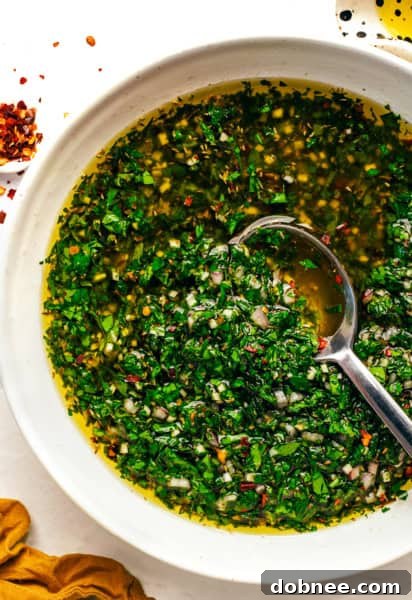
Chimichurri Sauce Recipe
- Prep Time: 5 minutes
- Cook Time: 0 minutes
- Total Time: 5 minutes
- Yield: About 1 cup
Description
You will absolutely love this fresh, vibrant, and utterly delicious Chimichurri recipe. It’s incredibly flavorful, naturally healthy, and can be prepared in under 5 minutes, making it the perfect last-minute addition to any meal!
Ingredients
- 1/2 cup extra virgin olive oil
- 1/2 cup (1 ounce) finely-minced fresh parsley
- 2 tablespoons red wine vinegar
- 1 tablespoon lemon juice
- 1 teaspoon dried oregano
- 1/2 teaspoon fine sea salt
- 1/2 teaspoon crushed red pepper flakes
- 1/4 teaspoon freshly-ground black pepper
- 3 to 4 large garlic cloves, minced or grated
- 1 small shallot, finely minced (about 1/4 cup)
Instructions
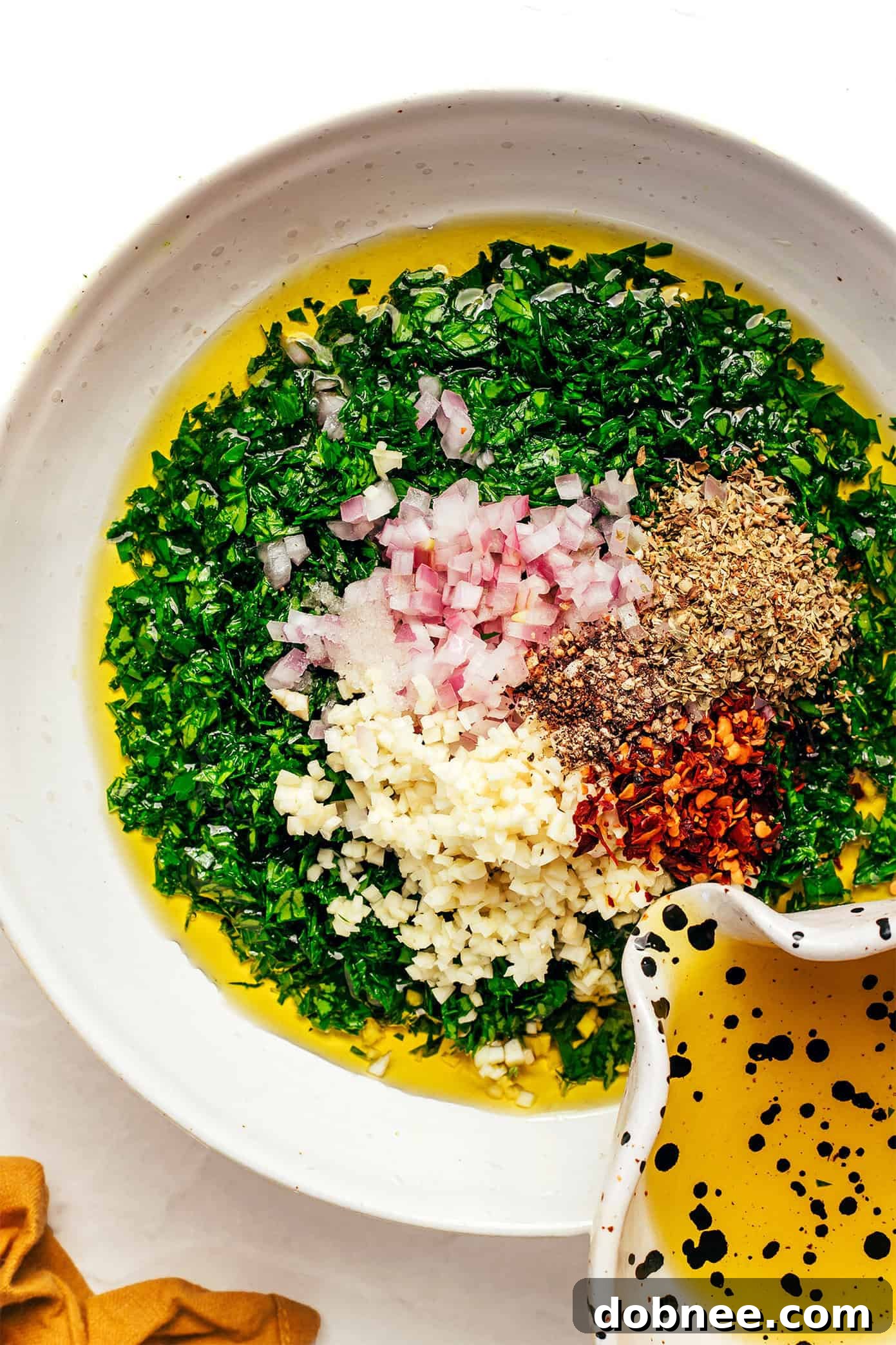
- Combine. Whisk all of the prepared ingredients together in a medium bowl until thoroughly combined.
- Season. Taste the chimichurri and adjust the seasoning as needed. You may want to add a bit more salt, pepper, or a splash of additional vinegar to achieve your desired flavor balance.
- Serve. Serve your freshly made chimichurri immediately, or allow it to rest for 15-30 minutes for the flavors to meld beautifully. Enjoy!
Notes
Storage instructions: Leftover chimichurri can be stored in an airtight container in the refrigerator for up to 5 days. For the best flavor and consistency, allow it to come to room temperature and give it a good stir before serving, as the olive oil may solidify slightly when chilled. You can also freeze chimichurri in small portions (such as in an ice cube tray) for up to 3 months. Simply thaw the desired amount as needed, and stir before using.