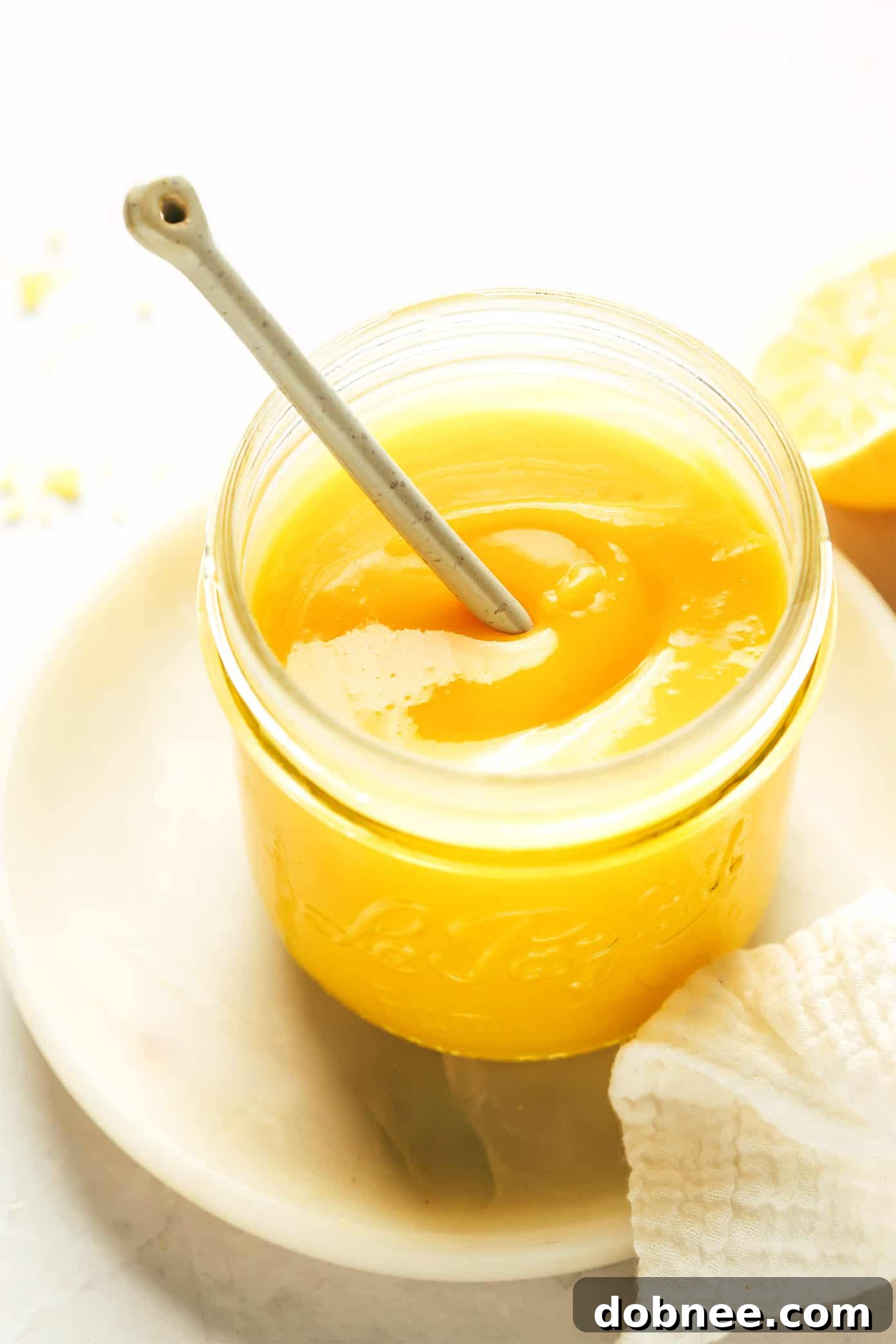
Crafting the Perfect Homemade Lemon Curd: A Simple Guide
This classic homemade lemon curd recipe is incredibly easy to make with just 5 essential ingredients in about 15 minutes of active preparation time.
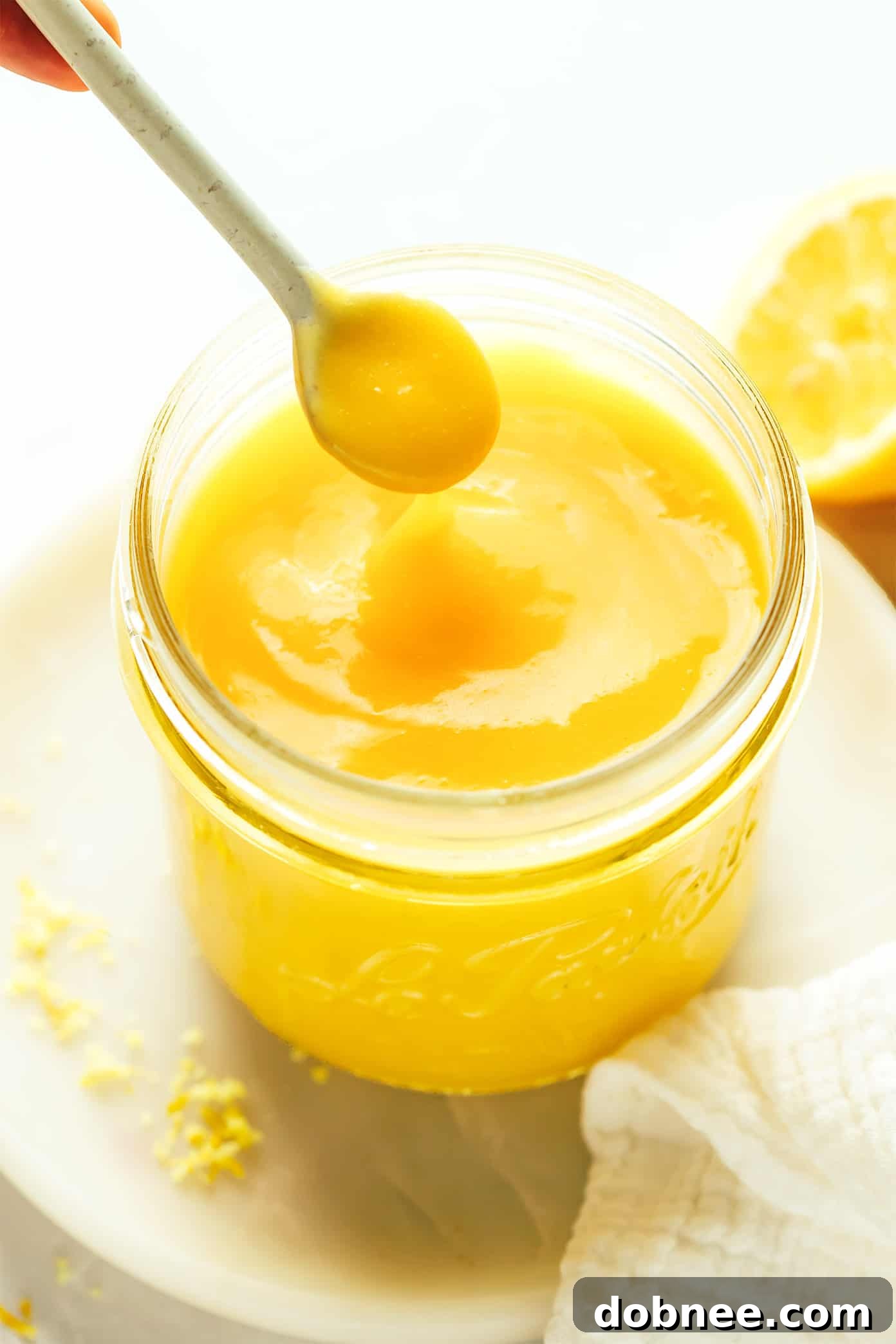
While I often appreciate the convenience of store-bought alternatives in the kitchen, there’s one indulgence where homemade truly shines: lemon curd. The difference in flavor, texture, and overall quality between a jar from the supermarket and a batch lovingly made from scratch is simply incomparable. Once you experience the bright, electrifying zing of fresh lemon juice and the aromatic essence of lemon zest infused into a creamy, homemade curd, you’ll understand why it’s a culinary endeavor well worth the minimal time and effort.
The magic of this classic lemon curd recipe lies in its simplicity. You only need five basic ingredients: fresh lemons, eggs, sugar, a touch of salt, and butter. These humble components transform effortlessly on your stovetop into a velvety, luscious spread that’s both tart and sweet in perfect harmony. In a mere 15 minutes of hands-on cooking, you can create a jar of this irresistibly creamy, vibrant delight, ready to elevate countless dishes.
The versatility of homemade lemon curd is truly remarkable. Imagine spreading its sunny goodness on your morning bagel, flaky biscuits, warm croissants, or freshly baked muffins. It’s a sublime topping for pancakes, waffles, and scones, turning an ordinary breakfast into an extraordinary treat. Beyond spreads, lemon curd serves as an exquisite filling for elegant cakes, delicate cookies, airy cream puffs, thin crêpes, sophisticated macarons, or light meringues. Swirl it into a bowl of creamy ice cream or plain yogurt for a burst of flavor, or use it to crown a decadent cheesecake or a majestic pavlova. For a touch of gourmet flair, offer a small jar alongside your next charcuterie board. And if you’re feeling generous, package a jar as a thoughtful, homemade gift. The delicious possibilities are truly endless when you have a jar of exceptional homemade lemon curd at your fingertips.
So, gather your freshest lemons and let’s embark on this delightful culinary journey to create a batch of this golden elixir!
Essential Ingredients for a Perfect Lemon Curd
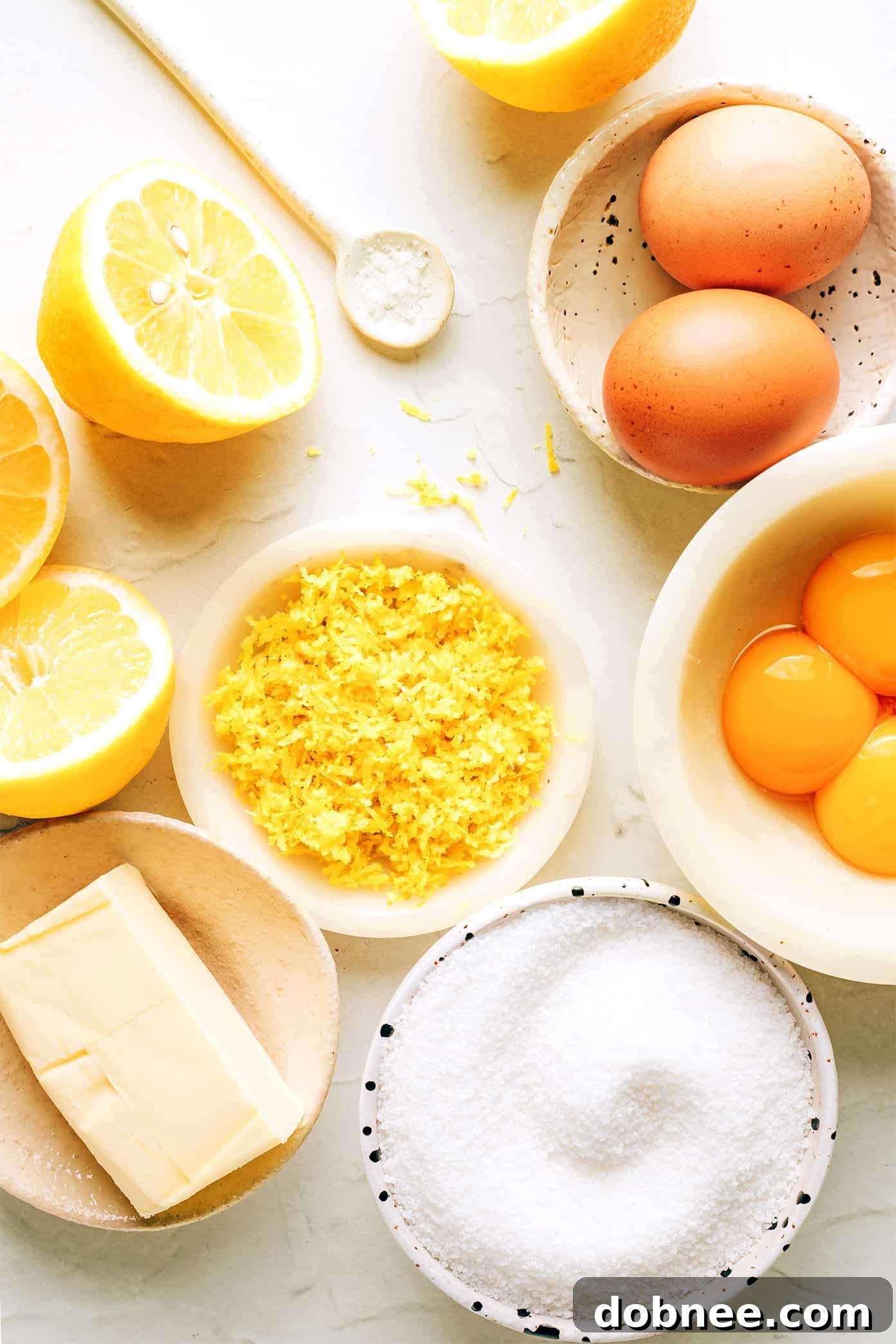
Making a truly exceptional lemon curd starts with understanding the role of each key ingredient. Here’s a closer look at what you’ll need and why:
- Fresh Lemons: This is non-negotiable for vibrant, authentic lemon curd. We utilize both the zest and the juice to impart maximum citrus flavor. The zest contains essential oils that provide a deep, aromatic lemon essence, while the juice delivers the characteristic tartness and helps thicken the mixture. For the best flavor and peace of mind, especially since we’re using a lot of zest, consider purchasing organic lemons. However, any fresh, ripe lemons will yield delicious results. Varieties like Eureka or Lisbon lemons are excellent choices due to their high juice content and robust flavor.
- Sugar: Granulated sugar, whether cane sugar or basic white sugar, is crucial for balancing the intense tartness of the lemon juice. It also contributes to the curd’s smooth texture and helps prevent the eggs from scrambling too quickly by increasing the temperature at which the proteins coagulate. For an even finer texture, you could opt for caster sugar, which dissolves more readily.
- Eggs: Our recipe uses a combination of 2 whole large eggs and 4 large egg yolks. Whole eggs contribute to the overall volume and set of the curd, while the extra egg yolks are key to achieving that signature rich, creamy, and deeply golden color. The proteins in the eggs are responsible for thickening the curd as it cooks, creating its luxurious consistency.
- Butter: Unsalted cold butter is stirred into the lemon curd after it’s removed from the heat. This step is vital for emulsifying the curd, resulting in an incredibly smooth, glossy, and velvety texture. The cold butter helps to cool the mixture slightly, preventing further cooking of the eggs, and adds a wonderful richness that rounds out the flavors beautifully. Ensure it’s cold and cut into small pieces for quicker melting and emulsification.
- Salt: A small pinch of fine sea salt might seem insignificant, but it plays a crucial role. Salt enhances and balances all the other flavors, making the tartness brighter and the sweetness more profound. It prevents the curd from tasting one-dimensional, instead creating a complex and harmonious flavor profile.
Expert Tips for Achieving Perfect Lemon Curd
While the full recipe instructions are provided below, incorporating these helpful tips will ensure your homemade lemon curd turns out flawlessly every time:
- Always Use Fresh Lemon Juice and Zest: This tip cannot be stressed enough. The vibrant, complex flavor of homemade lemon curd comes almost entirely from fresh lemons. Bottled lemon juice, while convenient, lacks the nuanced brightness and aromatic oils found in fresh zest and juice. Investing a few extra minutes in zesting and juicing fresh lemons will make an enormous difference in the final taste. For effortless zesting, a Microplane zester is highly recommended, and a good citrus juicer will make quick work of extracting the juice.
- Cook the Lemon Curd Gently (Low and Slow): Patience is key when cooking lemon curd. The goal is to slowly heat the mixture of lemon, eggs, and sugar over medium-low heat, whisking constantly. This gradual heating prevents the egg proteins from coagulating too quickly, which would result in scrambled eggs. Resist the urge to rush the process by increasing the heat. Continuously whisking ensures even cooking and a smooth consistency. If, despite your best efforts, a few tiny bits of egg do scramble, don’t despair—they can easily be removed by straining the finished curd through a fine-mesh sieve.
- Opt for Non-Metallic Equipment if Possible: Lemon juice is acidic and can sometimes react with certain metals, potentially imparting a faint metallic taste to your curd. While many home cooks, myself included, have successfully used stainless steel saucepans and whisks without issue, if you want to be absolutely safe, consider using a non-metallic saucepan (such as ceramic or enameled cast iron) or a double boiler. A silicone whisk is an excellent non-reactive choice.
- Consider Using a Double Boiler: If you’re new to making curds, or if your stove tends to heat unevenly or too intensely, a double boiler offers a gentler, more controlled cooking environment. This method helps prevent the eggs from overheating and scrambling, providing a more foolproof way to achieve a silky-smooth curd. To set up a double boiler, simply place a heat-proof bowl over a saucepan of simmering water, ensuring the bottom of the bowl does not touch the water.
- Cover Directly While Chilling: As lemon curd cools, a thin “skin” or film can form on its surface, which is completely safe to eat but can detract from its perfectly smooth texture. To prevent this, gently press a piece of lightly-oiled parchment paper or plastic wrap directly onto the surface of the warm lemon curd before refrigerating it. This creates a barrier that keeps the surface moist. Once chilled, simply peel off the wrap, and your curd will be beautifully smooth and ready to enjoy.
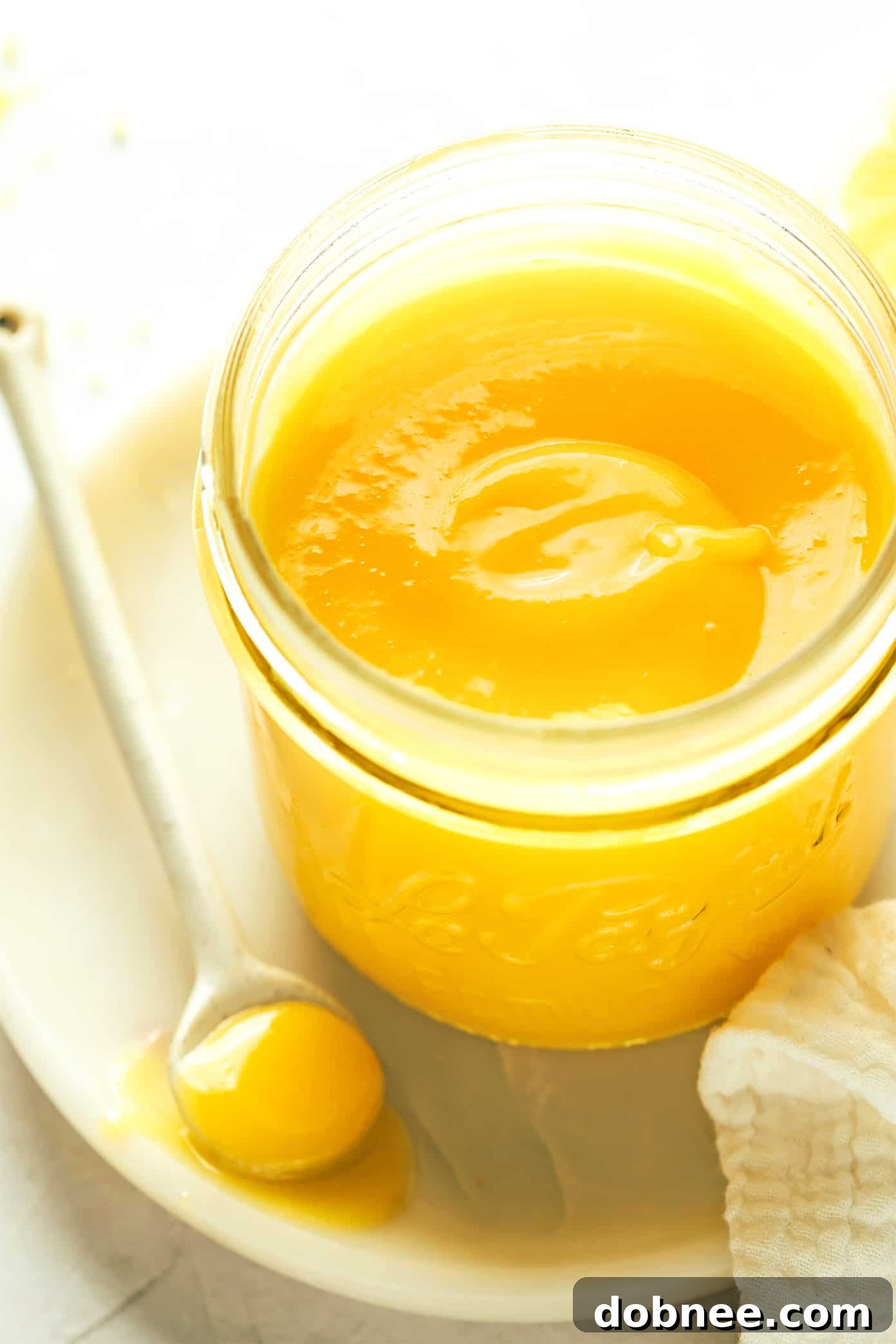
- Knowing When It’s Done: The lemon curd is ready when it reaches approximately 170°F (77°C) on an instant-read thermometer. If you don’t have a thermometer, look for the consistency where the curd is thick enough to coat the back of a spoon, and when you draw a line across the spoon with your finger, the line holds without the curd running back together. Remember, it will continue to thicken significantly as it cools in the refrigerator.
Exciting Lemon Curd Variations to Explore
Once you master the classic lemon curd, a world of flavorful variations awaits! Here are some creative ways to customize your homemade curd:
- Experiment with Different Citrus Fruits: While lemon is classic, nearly any citrus can be transformed into a delightful curd. Try using lime for a tangy key lime curd, grapefruit for a sophisticated bitter-sweet profile, Meyer lemons for a sweeter, more floral note, or various oranges (like navel, blood orange, mandarins, or tangerines) for a vibrant, less tart experience. Each citrus brings its unique character.
- Beyond Citrus: Fresh Fruit Curds: The “curd” technique isn’t limited to citrus! You can make delicious curds from a wide array of fresh fruits. Consider creating a vibrant blackberry, sweet blueberry, tart cranberry, exotic kiwi, tropical mango, passion fruit, juicy raspberry, or classic strawberry curd. For non-citrus fruits, you might need to adjust the amount of acid (lemon juice can be added) or consider a small amount of cornstarch or pectin to help with thickening, as their natural pectin levels and acidity vary.
- Infuse with Extra Mix-ins: Elevate your curd with additional flavor agents. A hint of vanilla extract or a scraped vanilla bean will add warmth and depth. Almond extract can provide a lovely nutty undertone, especially when paired with berries. For a spicy kick, try a touch of grated fresh ginger, a pinch of ground cinnamon, cardamom, or even a subtle grind of black pepper for an unexpected complexity.
- Add Aromatic Herbs: Fresh herbs can lend a surprisingly refreshing and sophisticated twist. Finely chop or muddle herbs like mint for a bright lift, basil for a unique sweet-savory note, rosemary for an earthy aroma, or thyme for a subtle, peppery freshness. Stir them into the curd during the cooking process or infuse them into the milk/cream if you’re making a dairy-based curd.

Delightful Ways to Enjoy Your Homemade Lemon Curd
The culinary applications for homemade lemon curd are truly boundless. Its vibrant flavor and silky texture make it a versatile ingredient, perfect for sweet and even some unexpected savory pairings. Don’t hesitate to get creative when putting your fresh batch to use!
- As a Luxurious Spread: Elevate your breakfast or brunch by spreading lemon curd on bagels, flaky biscuits, hearty bread, warm crepes, buttery croissants, soft English muffins, fluffy pancakes, tender scones, classic toast, or golden waffles. It’s a delightful alternative to jam or butter.
- An Exquisite Filling: Transform your baked goods into masterpieces. Use lemon curd as a vibrant filling for cakes (especially sponge cakes), sandwich cookies (like thumbprints or shortbread), light cream puffs, delicate crêpes, elegant macarons, crisp meringues, or layered trifles. It adds moisture, tang, and a burst of color.
- A Dazzling Topping: Drizzle or dollop lemon curd generously over your favorite desserts. It makes a show-stopping topping for a rich cheesecake, a cloud-like pavlova, or individual fruit tarts.
- A Refreshing Sauce: Lighten up a fresh fruit salad by tossing it gently with a spoonful of lemon curd. It binds the fruits together with a tangy-sweet glaze.
- A Gourmet Dip: Serve a small bowl of lemon curd as a bright, unexpected dip on a charcuterie or dessert board, paired with shortbread cookies, fresh berries, or even mild cheeses.
- A Flavorful Swirl: Stir a generous swirl of lemon curd into homemade or store-bought vanilla ice cream for a zesty twist, or mix it into plain Greek yogurt for a healthy yet indulgent snack.
- Beyond Sweet: For the adventurous palate, a dollop of lemon curd can surprisingly complement savory dishes. Think about pairing it with roasted chicken or duck for a sweet-tart glaze, or serving it with goat cheese and crackers for an intriguing appetizer.
Lemon Curd Frequently Asked Questions (FAQ)
Here are answers to some common questions about making and enjoying lemon curd:
Why is it called lemon curd? The term “curd” traditionally refers to milk that has been coagulated or thickened with an acid, like lemon juice. While modern lemon curd is primarily made with eggs, sugar, and butter, and not usually milk, the name has historical roots in similar dairy-based preparations where acid was used for thickening. In the case of lemon curd, the acidity of the lemon juice plays a crucial role in interacting with the egg proteins to create the desired thick consistency.
Can you freeze lemon curd? Absolutely! Lemon curd freezes beautifully, allowing you to prepare it in advance or store leftovers for a longer period. To freeze, transfer the completely cooled lemon curd to an airtight, freezer-safe container or a heavy-duty freezer bag. It can be frozen for up to 3 months. When you’re ready to enjoy it, simply transfer the frozen curd to the refrigerator and allow it to thaw overnight. This slow thawing helps to preserve its smooth, creamy texture.
Do you really need to strain lemon curd? Straining is an optional but highly recommended step if you desire an incredibly smooth, restaurant-quality lemon curd. If you notice any small bits of scrambled egg (which can sometimes happen despite careful cooking) or pulp from the lemons, straining the warm curd through a fine-mesh sieve will remove these impurities, leaving you with a perfectly silky texture. However, if your curd looks smooth and you don’t mind a tiny bit of zest, you can certainly skip this step.
Why did my lemon curd split? Lemon curd can split for a few common reasons. Most frequently, it’s due to the butter not being cold enough when added, or not being whisked in thoroughly enough to emulsify properly. Cold butter helps the emulsification process and stabilizes the curd. Another reason could be that the eggs were cooked too quickly or at too high a temperature, causing them to scramble rather than thicken gently. Scrambled egg proteins lose their ability to act as a binding agent, leading to a split or grainy texture. Always cook low and slow, whisking constantly, and ensure your butter is cold.
How thick is lemon curd supposed to be? The ideal thickness of lemon curd can vary slightly based on personal preference and the amount of butter used, but it should generally be soft, spreadable, and spoonable. While cooking, it will appear thinner than its final consistency. The key indicator that it’s cooked enough is when it coats the back of a wooden spoon (around 170°F or 77°C) and you can draw a clean line with your finger. Remember, lemon curd thickens significantly as it cools in the refrigerator, achieving its rich, luscious texture.
How long does homemade lemon curd last? When stored properly in a sealed airtight container in the refrigerator, homemade lemon curd will maintain its freshness and quality for up to 1 week. Always use a clean spoon when serving to avoid introducing contaminants, which can shorten its shelf life. If you don’t plan to use it within a week, freezing is your best option.
Can I make lemon curd dairy-free? While this classic recipe relies on butter for richness, it is possible to make a dairy-free lemon curd using plant-based butter alternatives. Ensure your chosen alternative is suitable for cooking and baking and has a good flavor profile. The texture may vary slightly, but it can still be delicious.
Print Recipe
Lemon Curd
- Author: Ali
- Prep Time: 5 mins
- Cook Time: 10 mins
- Total Time: 15 mins
- Yield: About 2 cups 1x
Ingredients
Scale
- 1 cup cane sugar (or white granulated sugar)
- 3/4 cup freshly-squeezed lemon juice + 2 tablespoons lemon zest
- 1/4 teaspoon fine sea salt
- 2 large eggs + 4 large egg yolks
- 6 tablespoons unsalted cold butter, cut into small pieces
Instructions
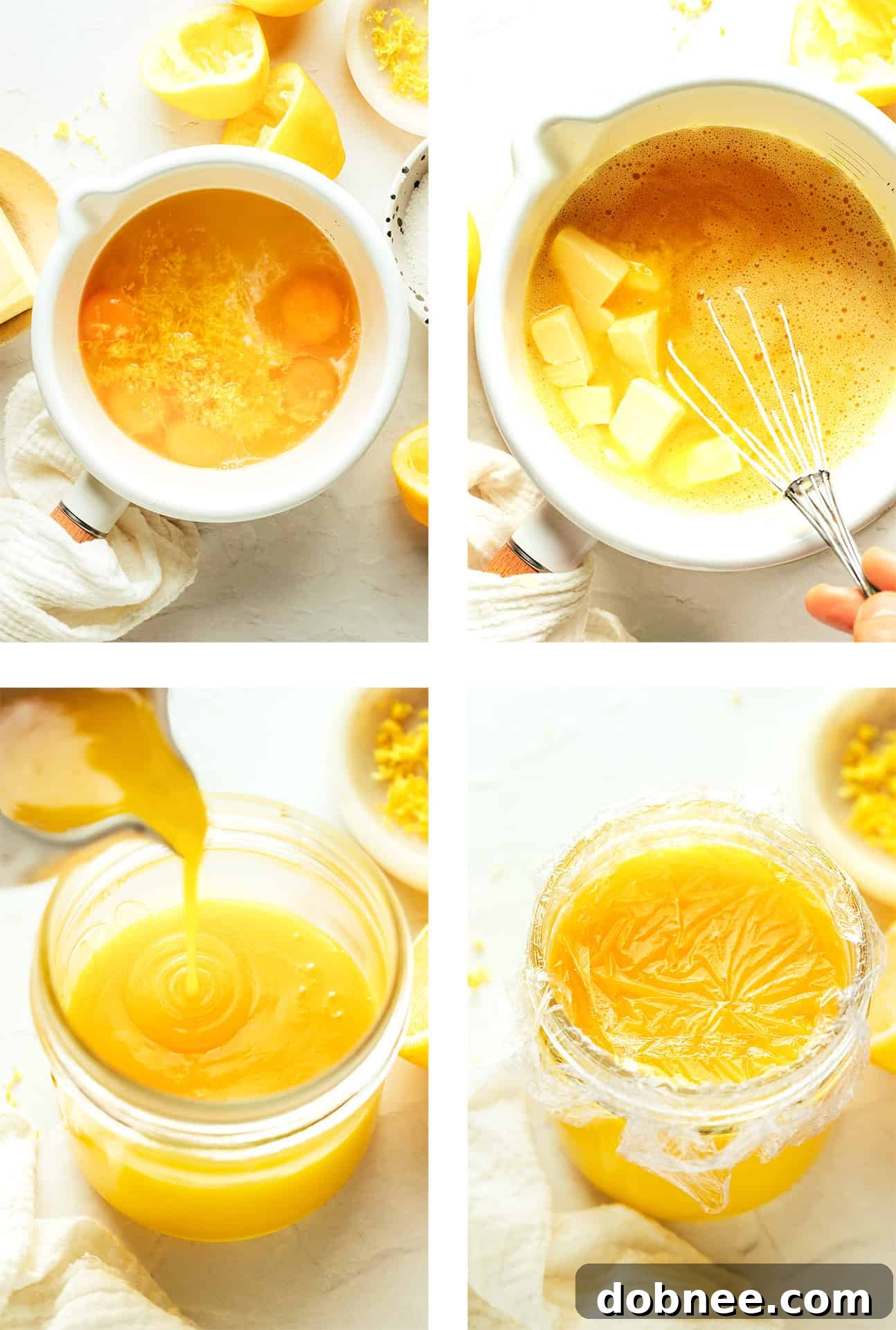
- Cook. Whisk all of the ingredients except butter in a small saucepan or double boiler until evenly combined. Cook over medium heat, whisking constantly, until the mixture reaches 170°F (77°C). This is the temperature at which it will thicken to coat the back of a wooden spoon.
- Add butter. Remove the pan from the heat. Immediately add in the cold butter pieces and whisk continuously until they are completely melted and smoothly combined into the curd.
- Strain (optional). For an extra-smooth and refined texture, especially if you notice any small bits of egg have scrambled during cooking, carefully pour the mixture through a fine-mesh strainer into a clean bowl or jar.
- Chill. Transfer the warm lemon curd to a heat-safe jar or bowl. To prevent a “skin” from forming, press a piece of lightly-oiled parchment paper or plastic wrap directly onto the surface of the lemon curd. Refrigerate for at least 1 hour, or until thoroughly chilled and thickened.
- Serve. Once chilled, remove the cover and serve your delicious homemade lemon curd. Leftover lemon curd can be stored in a sealed container in the refrigerator for up to 1 week.
Equipment
Zester
Buy Now →
Citrus Juicer
Buy Now →
1-Quart Jar
Buy Now →