An Exclusive Interview with Christopher Elbow: The Art of Artisan Chocolate in Kansas City
This comprehensive feature is brought to you in partnership with Haagen-Dazs and their “Moment for Me” campaign, celebrating life’s meaningful experiences.
Discovering Kansas City’s Chocolate Maestro
Years ago, shortly after my move to the vibrant Kansas City, I embarked on an adventure with friends to explore the Crossroads district’s renowned First Fridays art crawl. We meandered from one captivating gallery to another, soaking in the city’s creative spirit. Then, as we strolled down the bustling streets, one friend paused abruptly, her eyes lighting up with an undeniable urgency. “We must stop by Christopher Elbow’s,” she insisted, a tone of reverence in her voice.
Christopher who? I wondered, intrigued yet unfamiliar with the name. Little did I know, I was about to step into an entirely different realm of artistry.
The moment I crossed the threshold into his establishment, the air itself seemed to transform. It was a symphony of sweet aromas, a breathtaking blend of creativity and craftsmanship that instantly commanded attention. This wasn’t merely a store; it was a sensory experience, a place where the exquisite scent alone could stop you in your tracks, inviting you to savor every sweet note.
Christopher Elbow, as I quickly learned, is far more than just a name; he is Kansas City’s preeminent chocolatier. His reputation precedes him, and for good reason. His celebrated chocolate store and the enchanting chocolate factory housed within the Crossroads district have become an iconic landmark. But his influence extends far beyond this single location. Today, his meticulously crafted chocolates and delightful treats can be discovered throughout the city, gracing the displays of upscale coffee shops and specialty grocers, making his artistry accessible to a wider audience.
As if mastering the art of chocolate wasn’t enough, a few years prior, Christopher Elbow ventured into the world of artisan ice cream, opening Glace. Conveniently, one of its locations was just blocks from my old home – and, rather dangerously, a mere block from where I diligently worked out each weekend. Later, a second Glace store appeared tantalizingly close to my workplace. I liked to imagine these openings were orchestrated specifically for my enjoyment, a sweet conspiracy in the heart of the city.
The past holiday season saw Christopher Elbow make headlines once again, this time with a truly unique collaboration. He partnered with Kansas City’s beloved local brewery, Boulevard, to concoct a limited-edition chocolate ale. The demand was unprecedented, sending orders through the roof. Everyone I knew in town was scrambling to get their hands on a bottle of this rare brew. A fortunate friend managed to secure one, sharing it generously with a group of about 15 of us one evening. Each precious sip was savored, a moment that, in the words of Anchorman, was “kind of a big deal.”
The Visionary Behind the Brand: Christopher Elbow’s Legacy
Beyond the widespread acclaim, Elbow Chocolates and Glace are celebrated for Christopher’s distinctive creative flavors, his unwavering attention to design and intricate detail, and, most importantly, the consistently high quality of his melt-in-your-mouth chocolates and premium ingredients. Yet, what many locals truly appreciate is the man himself. Christopher Elbow is a Kansas City native, born and raised. After refining his culinary skills as a chef across various global kitchens, he chose to return to his roots, investing his talent and passion back into the city’s burgeoning culinary scene.
Should you ever have the delightful opportunity to encounter him while selecting a rosemary caramel chocolate or sampling a scoop of goat cheese and wildflower honey ice cream, you’ll meet a remarkably down-to-earth and genuinely kind individual. He’s a true enthusiast, eager to delve into passionate discussions about cacao beans, the nuances of ice cream, or even the complexities of tequila. His approachable demeanor and profound knowledge make every interaction a memorable one.
Despite living in the same city for years, I had never had the fortune of meeting Christopher Elbow in person, relying instead on glowing testimonials from friends. However, a few weeks ago, an exciting opportunity arrived. I opened my monthly surprise box from Haagen-Dazs, with whom I was participating in their inspiring Moments for Me campaign – a delightful initiative dedicated to celebrating life’s meaningful moments. And there it was: my eyes immediately locked onto a familiar white box emblazoned with the distinctive “E” logo. A letter inside confirmed my wildest Kansas City foodie dream: I was going to meet Christopher Elbow! Even better, Haagen-Dazs had arranged for me to visit his shop for an exclusive interview and a guided tour of the magical chocolate factory! It was truly a dream come true for any culinary enthusiast in Kansas City.
An Inside Look: My Interview and Factory Tour
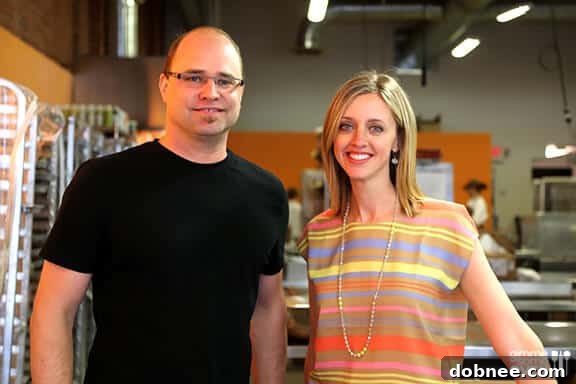
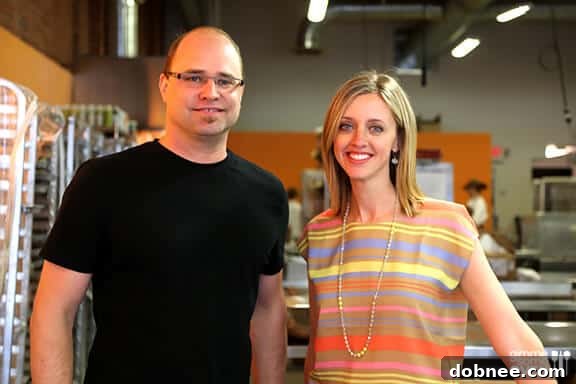
So, one crisp Wednesday morning, armed with my laptop and a heart full of anticipation, I made the short ten-block journey from my home to the Elbow Chocolates shop. There, I was warmly greeted at the door by Christopher (or Chris, as he preferred to be called) himself. He graciously welcomed me, settling down for an engaging interview before leading me on an exhilarating journey through what musicians might call the “back of the house” – his captivating chocolate factory. It was an experience that truly made my day, offering an unparalleled glimpse into his world.
What follows are highlights from my fascinating conversation with Chris, presented alongside a dedicated companion post featuring a detailed photo tour of Elbow Chocolates. I must confess, I am by no means a professional journalist or interviewer! In my excitement, I even forgot to bring a tape recorder, so I did my best to furiously type a million miles an hour as we delved into all things chocolate. Despite my amateur recording methods, it was an incredibly insightful and enjoyable conversation, and I sincerely hope you find it as engaging as I did.
Whether you’re a proud Kansas City local or reside states or even countries away, I wholeheartedly encourage you to treat yourself to the extraordinary experience of ordering some of his exquisite chocolates. It’s an indulgence that promises to deliver pure magic directly to your palate.
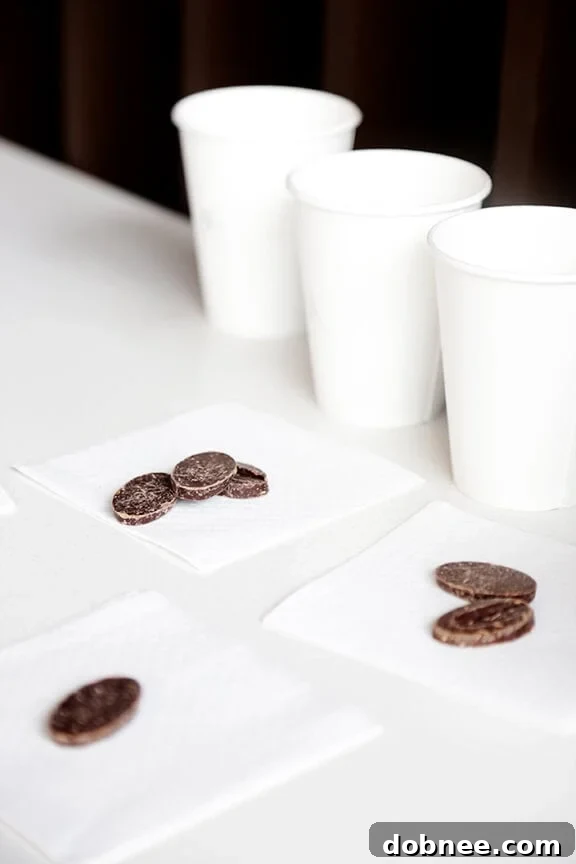
For a more comprehensive understanding of Christopher’s journey and achievements, I recommend exploring his official bio here.
Interview Highlights: A Deep Dive with Christopher Elbow
Where did your chocolate-making journey begin?
My foray into chocolate making was largely serendipitous. My initial exposure came during my time living in Las Vegas. The pastry chef I worked with at the time would craft chocolates, but he never actually taught us the intricate process. Consequently, I didn’t have the opportunity to truly delve into it until I became the pastry chef at The American, a prestigious restaurant here in Kansas City. There, we would send out small, exquisite chocolates as part of the dessert experience.
It was at The American that I began to teach myself the art of chocolate making. Gradually, customers started expressing their delight and requesting to purchase more of these handcrafted confections. The demand grew rapidly, almost organically, and we soon found ourselves selling them regularly. However, the business quickly escalated to an overwhelming degree, and it was at that point I realized it was time to pursue something different – to dedicate myself entirely to the world of chocolate.
As a chef, do you miss the restaurant world?
(Laughs.) Honestly, I don’t miss the restaurant world in the slightest. While I certainly don’t miss the notoriously long hours and the intense, high-pressure environment, it’s not to say that I don’t work extensive hours here at Elbow Chocolates. We put in a tremendous amount of hard work. The key difference, however, is that outside of the incredibly busy holiday season, my evenings and weekends are generally my own. So no, I genuinely don’t miss the restaurant world. This transition has afforded me the luxury of enjoying cooking at home again, transforming it back into a cherished hobby rather than a demanding profession.
So, speaking of “cooking,” I have to ask the question everyone wants to know – how do you come up with new flavors?
Flavor creation is, fundamentally, a process of extensive trial and error. My mind is perpetually engaged in contemplating new flavor combinations. Whether I’m dining at a restaurant, exploring a new market, or even traveling in a different country, it’s almost a delightful curse now – my thoughts immediately drift to how a particular taste or ingredient could be translated into a chocolate or ice cream concept. It’s a constant, ongoing exploration.
Once an idea sparks, we bring those flavor components into the kitchen and meticulously experiment with them, playing around to see if they truly harmonize and achieve the desired profile. We also dedicate significant time to reading various food magazines, constantly seeking out fresh ideas and emerging trends. Above all, travel remains an invaluable source of inspiration. Witnessing what’s new and important in culinary landscapes around the world is paramount to staying innovative.
A core tenet of our mission and vision is to never become complacent. It’s incredibly challenging, verging on a logistical nightmare, to completely change our chocolate flavors twice a year. However, this commitment deliberately forces us to maintain a high level of innovation. Without such a rigorous schedule, I can easily envision us falling into the trap of repeating the same successful formulas year after year, which would stifle our creativity.
How much testing do you do with a new flavor?
Occasionally, we strike gold on the very first attempt; a new flavor simply clicks into place perfectly. More often than not, however, it requires several weeks of dedicated trials and refinements. Our approach is grounded in authenticity and a genuine appeal to the palate. We don’t pursue anything that feels overtly “crazy” or experimental for the sake of it. Our guiding principle is never to create something purely for the sake of being trendy or to achieve a momentary “shock value.” If a flavor combination sounds truly unconventional, or more importantly, if it’s not something I personally crave to eat and taste – and then desire to eat and taste again and again – then it simply doesn’t make it past our development stage.
Take the bacon trend, for example, which was quite popular for a while. We certainly experimented with it; it was fun for a single try. However, it didn’t feel like a sustainable or truly appealing flavor profile for our brand in the long term, nor did it seem to align with a very sound business model for gourmet chocolate.
On the business note, would you say your development process is more artistic or market-driven? Or does the market now support whatever artistic ventures you want to try?
It’s a delicate balance, and we certainly listen intently to our customers. Generally, they are incredibly supportive of our creative endeavors. We maintain a core collection of 10-12 signature flavors, and then we rotate the remaining selection twice a year to introduce new experiences. It’s true, occasionally when we retire a particularly beloved flavor, we receive some passionate feedback from disappointed customers. However, this rotational setup provides us with the essential creative freedom to continuously experiment with novel flavors and, crucially, fosters a dynamic dialogue with our clientele.
If we happen to discontinue a customer’s long-standing favorite, it opens an opportunity to enthusiastically encourage them to explore and try a new creation. More often than not, these customers discover a new favorite among our innovative offerings. One significant area where we’ve had to actively engage with customers is in educating them about the inherent value of truly fresh chocolate. Our artisan chocolates have a relatively short shelf life, typically 2-3 weeks, which was a significant departure from the perception of chocolate bars found in drugstores that can sit for 6-12 months.
So, we actively work to help shift the customer’s mindset: rather than purchasing one enormous box, we encourage them to buy smaller quantities more frequently, ensuring they always enjoy our chocolates at their peak freshness. This educational effort has been successful; people are increasingly understanding and appreciating the profound difference that freshness makes in the quality and flavor of our product.
Will you let us in on your flops?
Honestly, some of our biggest “flops” have surprisingly been among the more simple, seemingly straightforward flavor ideas. Chocolate itself possesses such an incredibly bold and dominant flavor profile that it can often overpower or “railroad” new, more delicate flavor concepts. For instance, every single holiday season, I make an earnest attempt to incorporate cranberry into a chocolate creation. However, the delicate, nuanced flavor of cranberry consistently proves too light to truly shine through against the richness of the chocolate.
We’ve experimented extensively, trying it within a ganache, as part of a caramel, and even as a distinct layer of fruit, all in an effort to amplify its presence. Yet, to me, the robust chocolate always seems to simply “kick it” out of contention, diminishing its impact. We strive for a perfect balance in our flavors – that’s one of the qualities I believe we excel at. If one flavor element overshadows the other, then the product, in our view, is not a successful one.
Ice cream, on the other hand, presents a vastly different scenario. With ice cream, it often feels like anything goes! It acts as a remarkably neutral flavor vehicle, making it considerably easier to develop innovative and exciting flavor combinations. Despite this flexibility, we still adhere to our principle of not venturing into overtly “crazy” territory. If I cannot vividly visualize and anticipate how a flavor will taste in my mind’s palate, it’s probably something we should meticulously test. I trust my palate enough to largely predict how a combination will work, ensuring our ice cream offerings are as thoughtfully crafted as our chocolates.
Who comes up with your chocolate designs?
The majority of our production staff actively contributes to the chocolate designs. Additionally, my wife, who is a talented designer at Hallmark Cards, also lends her creative expertise and valuable input. Our process is always flavor-first. The primary goal is for the design to intuitively evoke the flavor profile of the chocolate. Therefore, about 90% of the time, the visual design is directly representative of what’s inside the chocolate. For instance, if we’re developing a lemon-flavored chocolate, we would typically steer the color palette towards vibrant yellows to immediately convey that essence.
While I certainly contribute to some of the designs, we place a strong emphasis on getting our entire staff involved in the creative process. It’s incredibly rewarding and fun for them to participate in developing new flavors and recipes from concept to completion. Since our summer months tend to be a bit slower in terms of sales, that period typically becomes our dedicated time for extensive Research & Development (R&D) activities.
The majority of the questions that my friends had centered around the topic of fair-trade chocolate. What are your thoughts on that, and how does it affect what you do?
Fair-trade practices are undeniably a profoundly important and increasingly relevant aspect of the global chocolate culture. I firmly believe that as we look to the future, its significance will only continue to grow. We feel very confident and comfortable with our primary bean supplier, Velrano, a company that has been in business since the 1940s. Velrano was actually one of the pioneering distributors to establish direct working relationships with farmers and plantations.
They undertook this approach not solely for humanitarian reasons, but also because it consistently yielded a superior product. This creates a mutually beneficial “win-win” situation: we receive higher-quality cacao beans, and the farmers, in turn, earn a much better, more sustainable living. I personally had the invaluable opportunity to visit one of the plantations in Madagascar and meet directly with our buyer. Throughout his extensive career, this individual has witnessed truly terrible conditions within the chocolate trade – including widespread child labor, instances of slavery, and other exploitative practices.
I want to be unequivocally clear: we absolutely do not purchase beans from farms that engage in poor treatment of their workers. Is our chocolate officially certified “fair-trade”? No. Our buyer has explained that the bureaucratic hurdles and extensive requirements farmers must navigate to achieve official certification are often not worth the effort or cost to them, particularly for smaller operations. However, the underlying ethical issue is paramount, and public awareness regarding responsible sourcing is steadily increasing.
When you encounter an article discussing fair trade, it typically refers to beans purchased on the commodities market. For the vast majority of large-scale bean farmers, the price of their product is dictated by global demand, market fluctuations, and the activities of speculators. In this complex system, the primary beneficiaries are often the speculators themselves. These farmers are often obligated to sell a predetermined quantity of beans, leaving them with little choice in pricing. It’s a system largely driven by mass demand for chocolate in, say, the cookie aisle, where ethical sourcing often takes a backseat to volume and cost efficiency.
What trends do you see in the chocolate world right now?
Overall, there’s an undeniable and significant trend towards dark chocolate. American consumers, in particular, are rapidly developing a more sophisticated appreciation for high-quality dark chocolate. This isn’t to diminish milk chocolate, which certainly serves its own delicious purpose. However, the rise of dark chocolate is very distinct. We initially launched a 70% cacao bar, and now we’ve introduced an 80% bar, both of which are incredibly popular, indicating a clear shift in consumer preference.
We are also observing evolving trends in flavor profiles, particularly a growing inclination towards using more unusual and adventurous ingredients. This constitutes a huge trend within nouveau American chocolate making. In stark contrast to the more traditional palates of French, Swiss, or Belgian chocolate consumers, Americans are actively seeking out bolder, more innovative flavors. They are truly pushing the boundaries of what chocolate can be.
Another monumental trend gaining significant momentum is “bean-to-bar” chocolate making. Essentially, this involves smaller, dedicated producers – much like myself, though I don’t produce my own beans – who meticulously source the finest cacao beans they can find and work directly with the farmers. Here in Missouri, we are fortunate to have two of the top bean-to-bar chocolate makers around: Askinose and Patric. Their unwavering focus and meticulous attention to every detail are what truly set them apart. This encompasses everything from selecting superior beans and employing better roasting methods to refining conching techniques, utilizing higher quality sugar, and choosing exceptional vanilla. Every single step makes a profound difference in the final product’s quality and flavor complexity.
Is bean-to-bar something you would ever want to pursue?
While the idea of venturing into full bean-to-bar chocolate making is certainly appealing, it’s currently a little unfeasible for us. To undertake such an endeavor properly would require a completely separate facility and a substantial investment in specialized equipment. Our current focus remains on perfecting our existing operations and ensuring the highest quality in what we already do, before considering such a significant expansion.
Okay, so… Boulevard? Is this happening again?
(Laughs.) Well, Boulevard wanted to take a year off to thoroughly evaluate their options and assess what improvements could be made. Given the immense demand and the logistical challenges that arose from the previous collaboration, they were understandably cautious about immediately launching another round. So, we mutually decided to pause for a year, allowing the initial overwhelming demand to subside, and then revisit the possibility. I sincerely hope they decide to do it again; I was genuinely very happy with the final product we created together.
What did that development process look like?
It looked like a lot of beer drinking at 10 in the morning! It was an incredibly casual and collaborative process – Boulevard is such a fantastic, laid-back company to work with. The whole journey began very organically, simply with the question, “Hey, do you think this will work? Do you want to help us with flavor ingredients?”
The development involved approximately 24 different batches, each tested in small, controlled amounts. This meticulous process was essential for us to understand precisely how to best pair chocolate flavors with both traditional and non-traditional brewing methods, especially considering that chocolate is fat-soluble, which presents unique challenges in a liquid medium like beer. My conviction was that if we truly wanted to capture the authentic chocolate flavor, we should start directly with the crushed cacao bean rather than pre-made chocolate. Once the bean is processed into chocolate, the range of choices and flavor manipulation possibilities significantly narrows.
Okay, so when do you say “cacao” and when do you say “cocoa”?
The distinction is quite simple in the industry: “Cacao” (pronounced ka-kow) is the term we use when referring to the raw bean itself, or aspects directly related to the bean before significant processing. “Cocoa,” on the other hand, is the appropriate term when you’re specifically talking about cocoa powder, which is a processed product of the cacao bean.
For someone who doesn’t “talk chocolate” all that intelligently, how do you break things down?
I typically categorize chocolate flavor profiles into a few distinct groups to help people understand them better. First, there’s the “red fruity” profile, which encompasses notes of berries, currant, blackberry, and raspberry – those bright, slightly tart fruit flavors. Then, we have the “yellow fruity” profile, characterized by essences like banana, various tropical fruits, passion fruit, and generally leaning towards a more sour or zesty note. Beyond fruits, there are “nutty” profiles, which are self-explanatory, and “earthy” profiles, which can sometimes be described as having a “dirty” or deeply grounded flavor.
Finally, there’s simply “chocolate-y.” Despite all the other nuanced descriptions, at the end of the day, there is a fundamental, unmistakable flavor to chocolate that is uniquely its own, and we simply call that “chocolate-y.”
The role of vanilla also makes a significant difference. Our supplier, Velrano, intentionally uses very little vanilla in their chocolate. Historically, vanilla was often employed as a way to mask the flavors of inferior or poorly processed beans, and it has remained a common ingredient in chocolate ever since. However, more and more, modern bean-to-bar producers are either using considerably less vanilla or opting to exclude it entirely. You can genuinely taste a substantial difference in the purity and complexity of flavor when chocolate is made with minimal or no vanilla.
How do you describe the chocolate you use?
Throughout the history of Elbow Chocolates, I’ve actually switched our base chocolate blend many times. The primary reason for these changes was a persistent balance issue: with such a wide array of different flavors that we wanted to create, many of the existing chocolate’s inherent fruity or nutty profiles simply didn’t harmonize effectively with the specific infusions we were aiming for. So, about four years ago, I set a very clear goal for myself: to develop our own custom blend, a “bulls eye” flavor that would complement 95% or more of the diverse flavors we wished to pair with it.
Our unique chocolate blend is meticulously crafted from beans sourced from five different origins. It includes a small proportion from Madagascar and Ghana, but the primary bulk of it comes from Venezuela. This blend yields a predominantly “chocolate-y” centered flavor profile, possessing a sufficiently high acid content that allows it to mix exceptionally well with a broad spectrum of other ingredients, providing the versatility we need for our creative confections.
What is the percentage of cacao?
Our signature blend contains 63% cacao. Generally speaking, the higher the cacao percentage, the stronger and more intense the chocolate flavor is perceived to be. However, this can be somewhat misleading because “cacao percentage” doesn’t tell the whole story.
The cacao bean itself is composed of various parts, including cocoa butter (which has a very mild flavor) and cocoa fiber (which carries more of the intense, bitter notes). So, you could theoretically have two chocolates, both labeled as 70% cacao, but their precise makeup could be entirely different. One might have a higher proportion of cocoa butter and less cocoa fiber, while the other could be the reverse. The remaining percentage in dark chocolate is typically made up of sugar.
In milk chocolate, the remaining percentage, after cacao, is primarily milk solids, which naturally pushes the overall cocoa content down quite significantly. Typically, the mass market milk chocolate found on shelves has a cocoa content ranging from 28-30%, and a substantial portion of that is often cocoa butter. This is precisely why milk chocolate, in general, does not taste as strong or intense as dark chocolate.
So you do chocolate and ice cream…is there anything else coming next?
I certainly have a few other exciting things I’d love to pursue, but frankly, I simply don’t have the time at present. I am a strong advocate for focusing intensely on one thing and striving to do it exceptionally well. This philosophy is precisely why we made the strategic decision to move our ice cream production out of the chocolate shop, establishing completely separate production facilities and dedicated staffs for each venture. It allows each team to concentrate fully on their craft, ensuring unparalleled quality.
I observe too many businesses attempting to do too many different things simultaneously. I affectionately refer to this as the “Applebee’s syndrome” (with no disrespect intended towards them, of course). They often have an incredibly extensive menu, which, while offering variety, often means they struggle to execute any single dish with exceptional quality. The prevailing trend now, particularly in culinary hubs like New York and San Francisco, is to identify what you can do truly well and then refine that to perfection. It’s about developing a solid, focused menu that isn’t overly large or sprawling. This approach mirrors the more traditional European style, where you have a dedicated cheese maker, a skilled bread baker, and so forth, each specializing in their craft. That, in essence, is what we aspire to be in Kansas City: masters of our chosen domain.
What are your thoughts on the KC food scene?
The Kansas City food scene is currently as good as it has ever been, if not better. I am an incredibly enthusiastic proponent of Kansas City; I truly champion our city everywhere I go. I spend a considerable amount of time in San Francisco, and inevitably, whenever I’m there at our shop, a customer will give me a questioning look and ask, “Why Kansas City?”
But I genuinely love this city, and I firmly believe we are heading in a wonderfully promising direction, especially with the vibrant renaissance happening in the Crossroads district. However, I also believe we still have a significant journey ahead of us. The stage is definitely set for much more to unfold and flourish, but at this very moment, our scene is still relatively small and burgeoning. I also hold a deep affection for Kansas City because it’s where my family and friends reside, which is incredibly important to me.
When I was first contemplating starting this business, I did question whether Kansas City would be the right fit. However, from a financial perspective – considering the cost-effective real estate, the comparatively lower cost of doing business – I really didn’t have another choice, as I had very limited capital. Moving to expensive cities like New York or San Francisco simply wasn’t an option. So, right from the outset, Kansas City proved to be an exceptional city in which to launch a business. The public embraced us with open arms, the local media provided incredible support, and we genuinely appreciated every bit of that community backing.
Do you hope to expand to other cities besides KC and San Fran?
That’s a question I often ponder, and I’m not entirely sure of the answer. I would absolutely love to have a shop in New York, but perhaps for what I consider the “wrong reasons” – essentially, I’d love an excuse to simply have a presence there. However, from a purely financial standpoint, it doesn’t currently make sense. Furthermore, we are still navigating significant challenges with our current production levels and consistently keeping up with demand.
Even after ten years in business, we continue to struggle during peak holiday seasons to produce enough product to meet the overwhelming demand. Introducing an additional city into our operational framework would, at this stage, likely present an enormous logistical challenge that could compromise our existing quality and service. So, while the thought is enticing, our focus remains on strengthening our current foundations.
Final thoughts?
So far, this business journey has been incredibly fun and rewarding. I often tell people that we were truly in the right place at the right time. In many ways, I probably did more to inadvertently sabotage the business than to help it along the way, especially in the early days. I’m fundamentally not a businessman by training or inclination, so the very fact that we are still thriving after ten years is, to me, pretty remarkable and very cool. I believe it speaks volumes about the quality and integrity of what we do, and it’s also a powerful testament to Kansas City itself, the incredible city that has provided the unwavering support and environment to help us make it all happen.