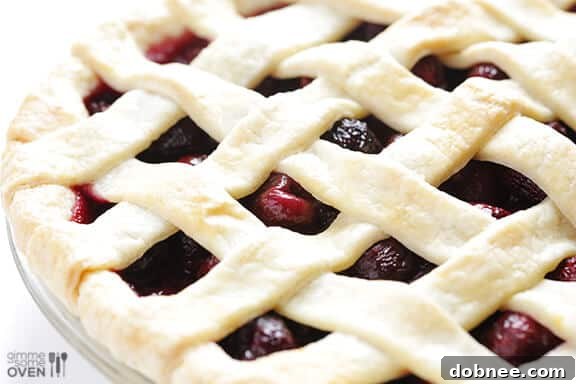
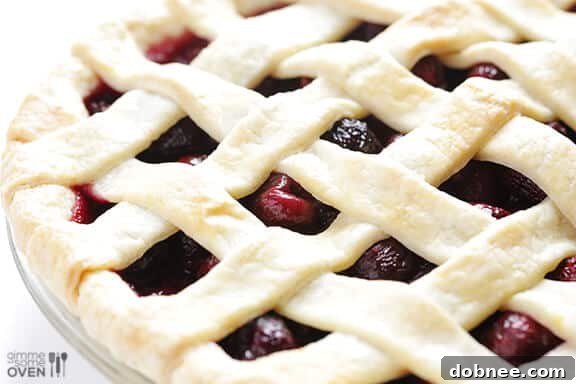
Welcome, fellow pie enthusiasts, to what has affectionately become “Pie Weeks”! Our initial plans for a single week of delightful pie recipes have happily expanded, and we’re thrilled to share even more incredible creations with you. As we delve deeper into the wonderful world of homemade pies, there’s one decorative technique that consistently captures hearts and elevates any pie to a true masterpiece: the lattice pie crust. Often perceived as complex and intimidating, creating a beautiful lattice topping is surprisingly straightforward and immensely rewarding.
You might have mastered the basics of crafting a perfect pie dough and assembling a standard double-crust pie with our detailed How To Make A Pie Crust tutorial. But a lattice crust offers not just a stunning visual appeal, but also practical benefits for your pie’s overall baking success. It truly deserves its own dedicated guide. Contrary to popular belief, the weaving process is far less daunting than it appears. Once your strips of dough are perfectly cut, assembling the classic basket-weave pattern takes just minutes, followed by a simple crimp to seal the edges.
Imagine the satisfying moment when you pull a golden-brown pie from the oven, its filling bubbling tantalizingly through a perfectly woven lattice. It’s a moment of culinary triumph that is well within your reach. We promise, this tutorial will demystify the process and empower you to create a lattice pie crust that will impress everyone at your table. Let’s embark on this journey to transform your pies from simply delicious to truly unforgettable!
Mastering the Lattice Pie Crust: A Visual Guide and Expert Tips
While a video can provide an excellent visual aid for the weaving process, demonstrating each step in real-time, this comprehensive guide aims to provide all the detailed instructions and tips you need to confidently create a stunning lattice pie crust. If you prefer a visual demonstration, many excellent tutorials are available by searching “How To Make A Lattice Pie Crust Video” on your preferred video platform.
This post contains affiliate links, which means we may earn a small commission if you make a purchase through these links, at no extra cost to you.
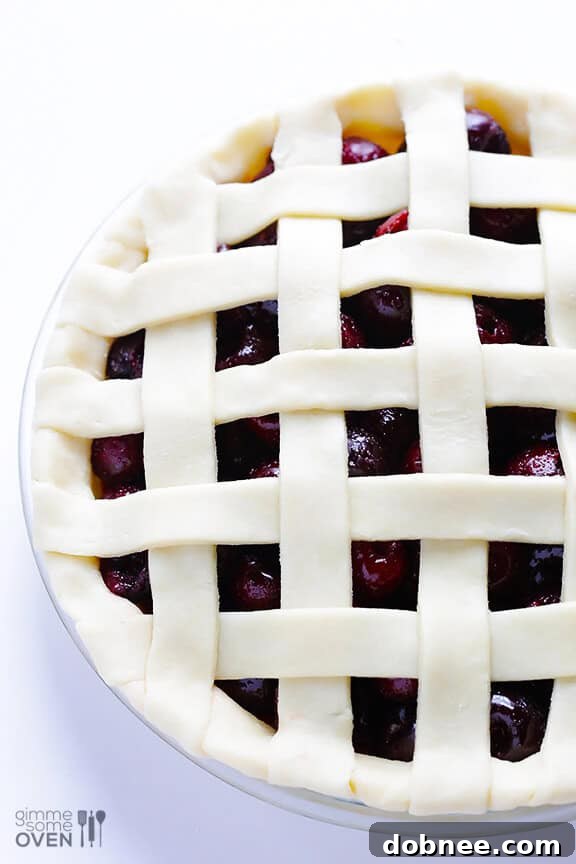
The Art of the Lattice Pie Crust: A Comprehensive Step-By-Step Tutorial
Creating a lattice pie crust is an art form that adds elegance and professionalism to any homemade pie. Beyond its aesthetic appeal, a lattice top allows steam to escape during baking, preventing a soggy bottom crust and ensuring your filling cooks evenly to perfection. Follow these steps for a beautifully woven pie:
Step 1: Preparing Your Pie Dough
The foundation of any great pie, especially one with a decorative crust, is excellent pie dough. We recommend preparing your favorite homemade pie dough recipe well in advance and ensuring it’s thoroughly chilled. For a lattice top, you’ll need one disc of pie dough for the bottom crust and another disc (or an equivalent amount if making a large lattice) for the lattice strips. Roll out the bottom crust and gently place it into your pie dish, trimming any excess. Place the pie dish with the bottom crust back into the refrigerator while you prepare the lattice.
Next, lightly flour a clean work surface. Take your second disc of chilled pie dough and roll it out into an even circle, approximately 1/8 inch thick. The size of this circle should be slightly larger than your pie dish to ensure you have enough length for your strips. Aim for a consistent thickness across the entire circle, as this will result in evenly baked strips.
Step 2: Cutting the Dough Strips
Precision is key to a neat lattice, but don’t obsess over ruler-perfect measurements. Your aim is uniformity. You’ll need about 10-12 strips for a standard 9-inch pie, but this can vary depending on your preferred strip width.
- Strip Width: This is entirely a matter of personal preference. I typically use strips that are about 3/4-inch wide, which creates a classic, substantial lattice. For a more delicate look, you could aim for 1/2-inch strips. Wider strips (1-inch or more) result in a bolder, more rustic appearance. Experiment to find what you love!
- Cutting Tools: For perfectly straight lines, a ruler is your best friend. Place it on the rolled-out dough and use one of the following tools:
- Pastry Wheel: If you’re serious about your pastry, an $8 investment in a pastry and ravioli wheel offers versatility. It usually comes with interchangeable blades for straight edges, wavy edges, or even scalloped designs, adding an extra touch of flair to your lattice.
- Pizza Wheel/Cutter: Don’t have a pastry wheel? A standard pizza cutter works wonderfully. Its sharp, rolling blade makes quick work of cutting straight lines.
- Sharp Knife: A simple, sharp kitchen knife can also be used, though it might take a bit more careful effort to ensure perfectly straight cuts.
Once cut, gently transfer your dough strips to a baking sheet lined with parchment paper. If your kitchen is warm, or if you find the dough becoming too soft, pop the strips into the refrigerator or freezer for 5-10 minutes to chill. Cold dough is significantly easier to handle and less prone to stretching or tearing.
Step 3: The Weaving Process – Creating Your Lattice
This is where the magic happens! Remove your chilled pie dish with the bottom crust and your chilled dough strips from the refrigerator.
- Lay the Foundation (Horizontal Strips): Arrange half of your dough strips (e.g., 5-6 strips) parallel to each other across the top of your pie filling. Space them evenly, ensuring they extend slightly beyond the edge of your pie dish. These will be your stationary strips.
- Start the Weave (First Vertical Strip): Fold back alternate horizontal strips (e.g., every other strip, like the 2nd, 4th, and 6th strips) to about the middle of the pie. Place one of your remaining dough strips vertically over the unfolded horizontal strips and across the fold. Gently unfold the folded horizontal strips back over this new vertical strip. You’ve just created your first ‘under’ and ‘over’ section.
- Continue the Weave (Second Vertical Strip): Now, fold back the *other* set of alternate horizontal strips (e.g., the 1st, 3rd, and 5th strips) from the opposite side. Place another vertical strip parallel to the first, sliding it under the folded strips. Unfold the horizontal strips back over the vertical strip. You should start seeing the classic woven pattern emerge.
- Repeat the Pattern: Continue this process, alternating which horizontal strips you fold back, and placing vertical strips until you’ve used all your vertical strips and covered the entire pie surface with your lattice. Always ensure your strips are relatively straight and evenly spaced for the best appearance.
Don’t be afraid to gently adjust the strips as you go to tighten the weave or correct any spacing issues. If a strip tears, you can usually gently pinch it back together or even patch it with a small piece of dough.
Step 4: Finishing the Edges
Once your lattice is complete, it’s time to seal it to the bottom crust. Trim any excess dough from both the lattice strips and the bottom crust, leaving about a 1/2-inch overhang. Fold this overhang under itself to create a neat, thick edge. Now, you can crimp or flute the edges decoratively. Use your fingers to create a classic fluted edge, or press with a fork for a simpler design. This step not only adds a beautiful finish but also securely seals the crust, preventing the filling from bubbling out.
Step 5: Pre-Baking Touches and Chilling
- Pastry Brush: A pastry brush is indispensable here! For a gorgeous, golden-brown crust, lightly brush the entire lattice with an egg wash (one egg yolk mixed with a tablespoon of milk or water) or just milk.
- Sweet Sprinkle: For an extra layer of sweetness and a delightful crunch, sprinkle coarse sugar over the egg-washed lattice. This also adds a beautiful sparkle.
- Final Chill: Just like with the initial dough, chilling the assembled pie before baking is crucial. This helps the butter in the dough firm up, preventing shrinking and ensuring the lattice holds its shape better in the oven. Pop the entire pie into the freezer for about 10-15 minutes, or in the refrigerator for 30 minutes, before baking according to your pie recipe’s instructions.
Pro Tips for Lattice Pie Crust Success
- Dough Temperature is Paramount: As we emphasized in our basic pie crust tutorial, chilled dough is cooperative dough. If your dough strips become too warm and soft while handling, they’ll stretch, tear, and be difficult to weave. Don’t hesitate to place your strips or even the partially woven pie back into the refrigerator or freezer for a quick chill whenever needed. Working quickly also helps.
- Don’t Strive for Unrealistic Perfection: While a neat lattice is desirable, remember that homemade charm is part of the appeal. Even the most meticulously woven crusts tend to shift slightly during baking. Furthermore, if you’re baking a fruit pie, the delicious juices from the filling will naturally bubble up and caramelize onto the crust. This is not a flaw; it’s a sign of a perfectly juicy pie and contributes to its rustic beauty and incredible flavor! So, weave your best, but then enjoy every delicious, imperfect bite.
- Use a Baking Sheet: Always place your pie on a rimmed baking sheet before putting it in the oven. This catches any delicious filling that might bubble over, saving you from a messy oven clean-up and potential burning.
- Prevent Over-Browning: If the edges of your lattice crust start to brown too quickly, you can cover them loosely with aluminum foil or use a pie crust shield for the latter part of the baking process.
- Experiment with Designs: Once you’ve mastered the basic over-under weave, consider trying diagonal lattice patterns or even incorporating cut-out shapes (like leaves or stars) between your lattice strips for an even more intricate design.
Explore More Delicious Pie Creations!
Now that you’re a lattice crust master, it’s time to put your skills to delicious use! Here are some of our favorite pie recipes that would be absolutely stunning with your newly acquired lattice technique:
Sweet Cherry Pie Recipe
Peach Bourbon Pie Recipe
French Silk Pie (Chocolate Pie) Recipe
The Best Pecan Pie Recipe
The Best Key Lime Pie Recipe
The Best Apple Pie Recipe
Disclaimer: This post contains affiliate links, which means we may earn a small commission if you make a purchase through these links, at no extra cost to you.