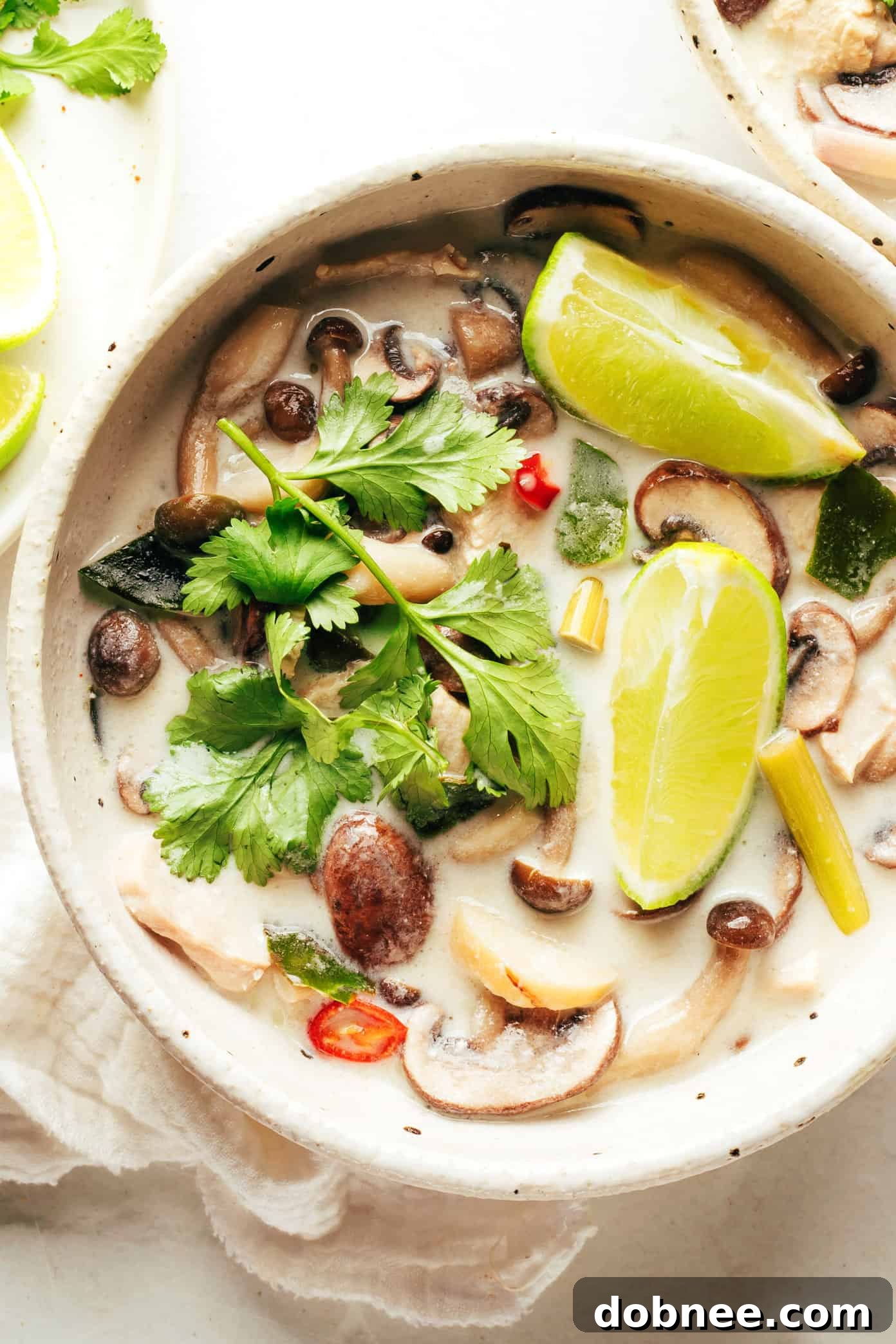
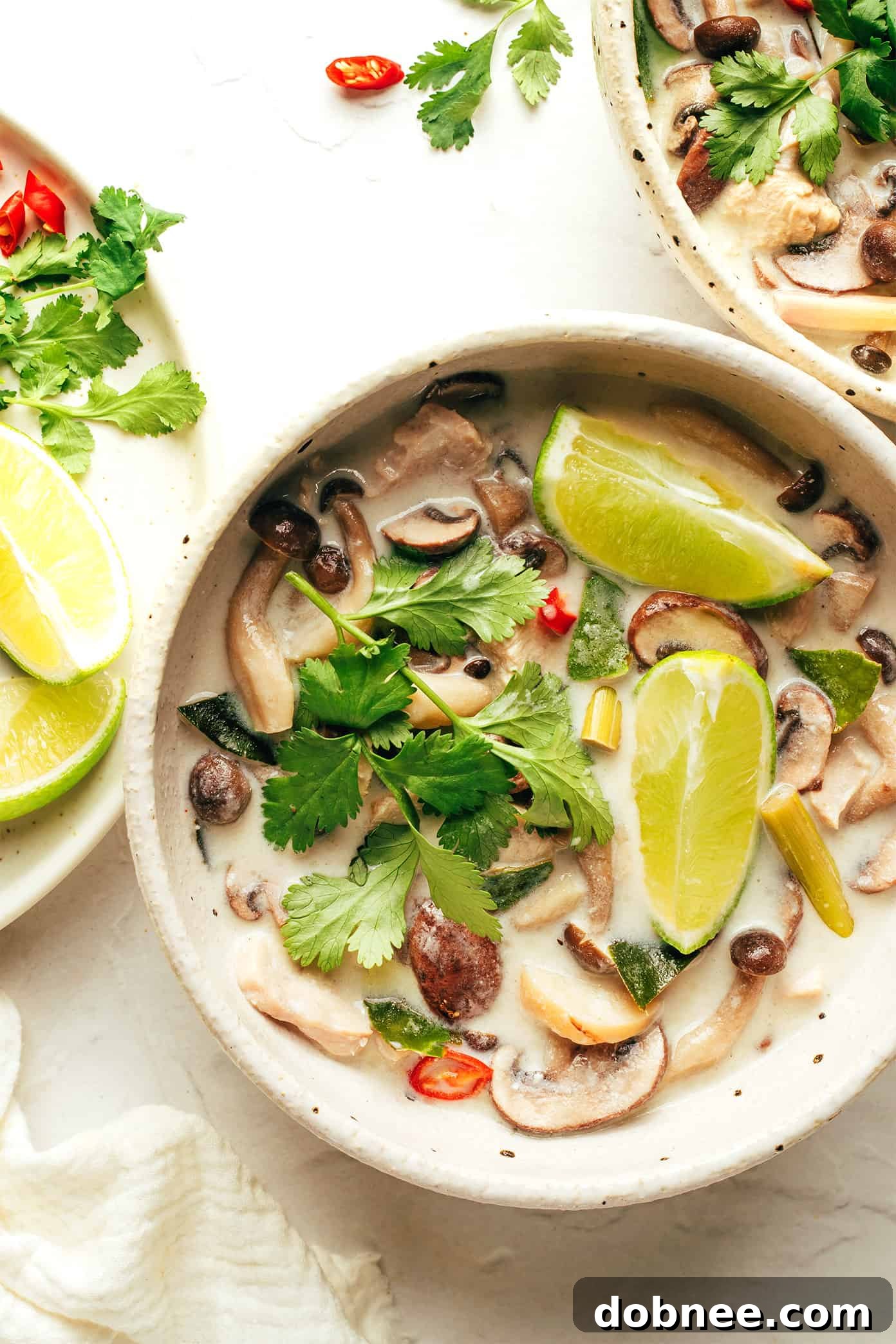
Experience Thai Comfort Food in Your Own Kitchen

Imagine a spoonful of pure culinary bliss: the velvety richness of coconut milk, the vibrant tang of lime, and the exotic aroma of fragrant herbs, all harmoniously blended in a bowl of classic Tom Kha Gai. This iconic Thai coconut chicken soup is more than just a meal; it’s an immersive experience that transports your taste buds straight to the heart of Thailand, right from your dining table. Loved by food enthusiasts worldwide, Tom Kha Gai offers a perfect symphony of creamy, tangy, sweet, and spicy notes, making it an irresistible choice for any occasion.
Often hailed as the ultimate comfort food in Thai cuisine, Tom Kha Gai is renowned for its ability to soothe and invigorate simultaneously. Its luscious base, infused with the unmistakable flavors of lemongrass, galangal, and kaffir lime leaves, provides a deeply aromatic foundation. Combined with tender chicken and earthy mushrooms, then brightened with fresh lime juice and a gentle kick of chili, this soup achieves a remarkable balance that is both profoundly comforting on a chilly evening and wonderfully refreshing during warmer months. It’s a versatile dish that truly satisfies year-round.
For many, including my own family, Tom Kha Gai holds a special place, making frequent appearances in our weekly menu. Its relatively straightforward preparation, especially once you’ve familiarized yourself with a few key Thai ingredients, means that this restaurant-quality dish is entirely achievable in your home kitchen. The process of gathering and preparing these unique aromatics is part of the joy, promising a delightful culinary adventure. In a world where comfort and flavor often come with complexity, Tom Kha Gai stands out as a luxurious yet accessible treat.
If you’ve always savored this exquisite soup at your favorite Thai restaurant but hesitated to try making it yourself, now is the perfect moment to dive in. We’ll guide you through every step to recreate this authentic Tom Kha Gai, ensuring your homemade version is as vibrant and flavorful as any you’d find abroad. Prepare to impress your palate and your loved ones with this truly special dish!
Mastering the Essential Ingredients for Authentic Tom Kha Gai
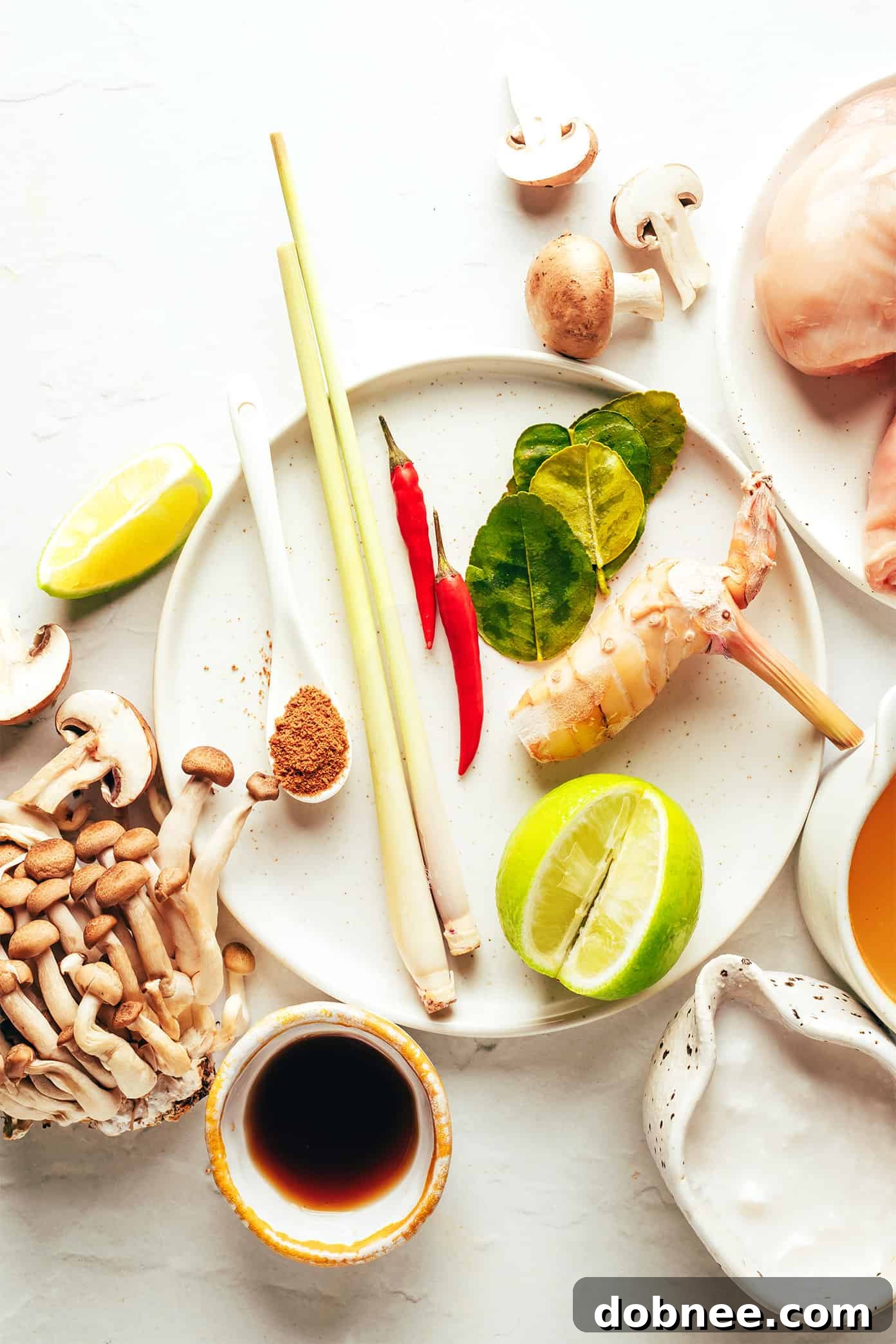
The magic of Tom Kha Gai lies in its distinctive blend of aromatic ingredients. If you’re embarking on your journey into homemade Thai cuisine, understanding and sourcing these key components will be your first step towards culinary success. While some may seem exotic, they are readily available in most Asian markets and increasingly in larger mainstream grocery stores. Here’s a detailed guide to the essential ingredients that give this beloved soup its unparalleled flavor profile:
- Lemongrass: The Citrusy Heart. This fragrant stalk is indispensable for Tom Kha Gai, imparting a unique lemony, minty, and subtly gingery note that cannot be replicated. To unlock its full potential, always use the tender inner stalks. Before simmering, gently smash them with the back of a knife or a rolling pin; this crucial step bruises the fibers, allowing their aromatic oils to infuse deeply into the broth. If fresh lemongrass is elusive, a high-quality refrigerated lemongrass paste can be a convenient alternative, typically requiring about 2 tablespoons for this recipe. However, fresh is always preferred for the most vibrant flavor.
- Galangal: The Sharper Cousin of Ginger. Often mistaken for ginger, galangal (also known as “Thai ginger”) offers a distinctly sharper, more citrusy, and slightly piney flavor. It’s foundational to the authentic taste of Tom Kha Gai. You’ll typically find it in the produce section of Asian grocery stores. While fresh ginger can be used as a substitute in a pinch, be aware that it will yield a slightly different, though still delicious, flavor profile. Seek out fresh galangal for the true experience.
- Kaffir Lime Leaves: Deep Aromatic Zest. These unique leaves contribute an incredibly deep, perfumed, and aromatic lime flavor that is far more complex than simple lime zest or juice. They are pivotal for achieving the signature fragrance of Tom Kha Gai. Look for them fresh or frozen in Asian markets. If fresh leaves are absolutely unavailable, you can substitute with a combination of lime zest and a squeeze of fresh lime juice, but be prepared for a noticeable difference in the final aroma and depth. Their distinctive fragrance is truly irreplaceable.
- Coconut Milk: The Creamy, Luxurious Base. Coconut milk forms the rich, velvety foundation of Tom Kha Gai, lending it a luscious texture and subtly sweet flavor that balances the tart and spicy elements. Always opt for full-fat coconut milk for the most decadent and authentic results. Shake the can well before opening to ensure the cream and liquid are thoroughly combined.
- Fish Sauce: The Umami Powerhouse. A cornerstone of Thai cooking, fish sauce (Nam Pla) provides essential saltiness and a profound umami depth that rounds out all the flavors. Do not skip this ingredient, as it’s crucial for authentic taste. Good quality fish sauce should have a clear, reddish-brown color and a robust, savory aroma.
- Coconut Sugar: Sweetness to Balance. A touch of sweetness is vital in Thai cuisine to balance the savory, sour, and spicy notes. Coconut sugar, with its caramel-like undertones, is the traditional choice, harmonizing beautifully with the other ingredients. Brown sugar or palm sugar can also be used as suitable alternatives.
- Thai Chili Paste (Nam Prik Pao): The Smoky-Sweet Kick. While optional, adding a spoonful of Thai chili paste, specifically “Nam Prik Pao,” introduces a wonderful smoky-sweet heat and a layer of complexity to the soup. It’s a caramelized chili paste that enhances the depth without overwhelming the other flavors. Adjust the amount according to your preferred spice level.
- Fresh Lime Juice: The Finishing Brightness. The vibrant, zesty flavor of fresh lime juice is added right at the very end of the cooking process. This preserves its bright, fresh acidity, which is crucial for balancing the richness of the coconut milk and the heat of the chilies. Always use freshly squeezed lime juice for the best results.
- Mushrooms and Chicken: Hearty and Satisfying Fillings. Tender slices of chicken (often breast or thigh) and various mushrooms (such as white button, shiitake, or oyster) are classic additions that make Tom Kha Gai a hearty and satisfying meal. The mushrooms absorb the flavorful broth beautifully, adding an earthy depth and delightful texture.
Expert Tips for Crafting the Perfect Tom Kha Gai
Creating an authentic and delicious Tom Kha Gai at home is a rewarding experience, and with these expert tips, you can ensure your soup is perfectly balanced, wonderfully creamy, and bursting with traditional Thai flavors every single time. Pay attention to these details, and you’ll be serving up a restaurant-quality dish that will impress everyone.
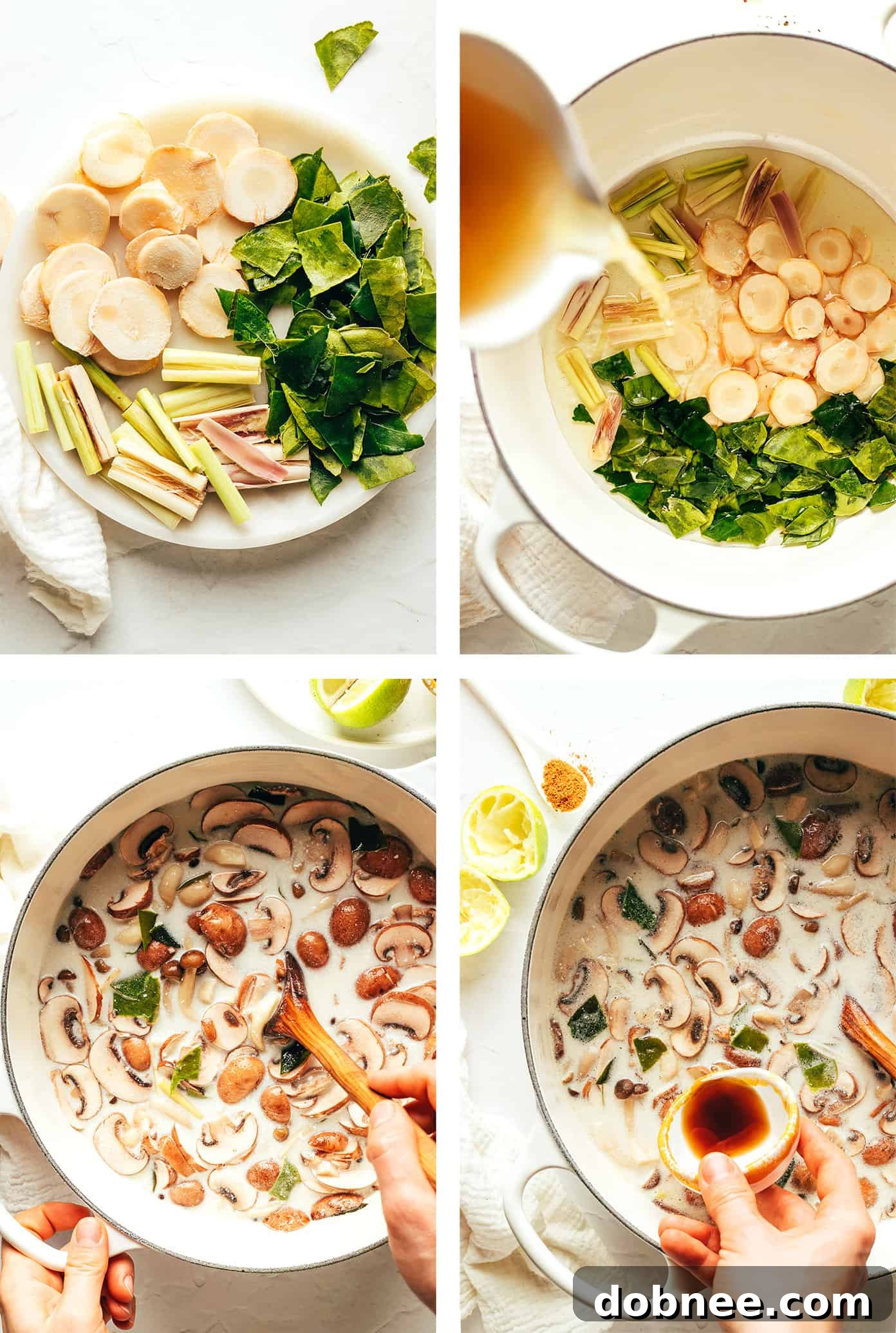
- Properly Prepare Lemongrass: The Key to Aroma. Don’t just slice your lemongrass; it’s essential to activate its full aromatic potential. Use the flat side of a sturdy knife or a meat mallet to gently bruise the bottom third of the lemongrass stalks. This breaks down the fibers, allowing the fragrant essential oils to release more readily into your broth during simmering. This simple step makes a significant difference in the final depth of flavor.
- Master the Gentle Simmer for Coconut Milk. Once you add the coconut milk to your soup, it’s crucial to maintain a gentle simmer and avoid vigorous boiling. High heat can cause the coconut milk to curdle or separate, resulting in a less appealing texture and appearance. A low, steady simmer is ideal for allowing the flavors to meld beautifully while preserving the creamy consistency.
- Prioritize Fresh Galangal and Kaffir Lime Leaves. While substitutes exist, the true essence of Tom Kha Gai comes from fresh galangal and kaffir lime leaves. These are the core aromatics that infuse the broth with its signature bright, citrusy, and subtly floral notes. Making a trip to an Asian market to find these ingredients is highly recommended and truly worth the effort for an authentic taste experience. Many markets also stock them frozen, which is a great option.
- Taste and Adjust: The Art of Thai Flavor Balance. Thai cuisine is all about balancing the five fundamental flavors: salty, sour, sweet, spicy, and umami. Before serving, taste your Tom Kha Gai carefully. Is it too bland? Add a touch more fish sauce for saltiness and umami. Lacking brightness? A squeeze of fresh lime juice will awaken the flavors. If it’s too tart or spicy, a little more coconut sugar can provide balance. Don’t be afraid to adjust until it tastes perfect to you.
- Add Fresh Lime Juice Last. To preserve its vibrant acidity and prevent any potential bitterness from prolonged cooking, fresh lime juice should always be stirred into the soup right at the very end, just before serving. This ensures that the citrus notes remain lively and fresh, providing that essential bright finish to the soup.
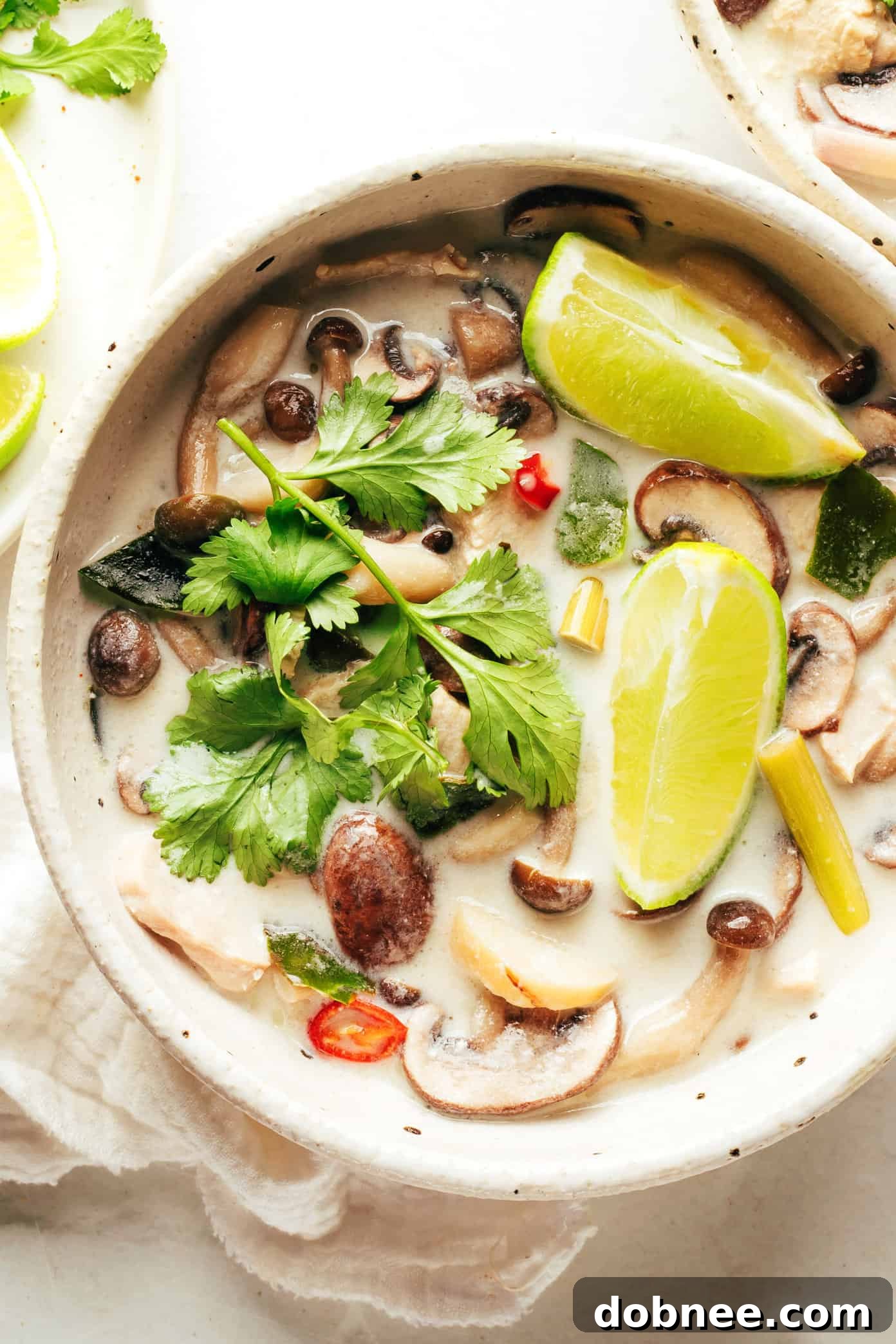
- Embrace Generous Toppings. Toppings are not merely decorative; they are integral to the Tom Kha Gai experience. Fresh cilantro leaves, thinly sliced red chilies (for an extra kick and visual appeal), and wedges of lime for an optional squeeze of extra zest not only add a burst of color and freshness but also provide contrasting textures and additional layers of flavor. Don’t underestimate their power to elevate the soup from good to extraordinary.
- Don’t Overcook Your Chicken. If you’re using raw chicken, add it during the last few minutes of simmering to ensure it remains tender and juicy. Overcooked chicken can become tough and stringy, detracting from the soup’s delicate texture. If using pre-cooked chicken, simply add it at the very end to warm through.
Creative Variations to Customize Your Tom Kha Gai
One of the many wonderful aspects of Tom Kha Gai is its versatility. While the classic recipe is undeniably delicious, it also provides an excellent canvas for customization. Feel free to experiment with these variations to tailor the soup to your personal preferences or dietary needs, making it truly your own signature dish.
- Vegetarian or Vegan Tom Kha Gai: Easily adapt this recipe for plant-based diets. Substitute chicken broth with a good quality vegetable broth. Omit the chicken entirely and bolster the soup with additional mushrooms (like cremini, shiitake, or oyster mushrooms for varying textures and depths of flavor), firm or extra-firm tofu cut into cubes and lightly pan-fried for texture, or even tempeh. Ensure your fish sauce substitute is a vegan alternative (often soy-based or mushroom-based umami sauces).
- Boost Heartiness with Noodles: Transform your Tom Kha Gai into a more substantial meal by incorporating noodles. Cooked rice vermicelli, flat rice noodles (like those used in Pad Thai), or glass noodles can be stirred directly into individual bowls just before serving. They absorb the rich broth wonderfully, adding a comforting and filling dimension.
- Enhance with Additional Vegetables: Increase the nutritional value and visual appeal of your soup by adding a variety of colorful vegetables. Sliced red bell peppers, crisp baby corn, tender bok choy, vibrant snap peas, or fresh spinach can be added during the last few minutes of simmering, ensuring they remain slightly crisp and retain their bright colors. Consider thinly sliced carrots or bamboo shoots for extra texture.
- Adjust the Spice Level: Tom Kha Gai can be as mild or fiery as you desire. For more heat, add extra Thai red chilies (fresh or dried), a spoonful of spicy chili crisp, or a generous dollop of Nam Prik Pao (Thai chili paste). If you prefer a milder soup, reduce or omit the chilies, and you can even add a touch more coconut milk to soften the spice.
- Alternate Protein Choices: Beyond chicken, many other proteins work beautifully in this soup. Succulent shrimp, added during the last 2-3 minutes of cooking until pink and opaque, is a popular and delicious alternative. Cubed firm tofu, pan-fried until golden, also absorbs the flavors wonderfully and adds a satisfying bite. Thinly sliced pork or beef could also be used for a different twist.
- Elevate with Creative Garnishes: Beyond the traditional cilantro and lime, experiment with additional garnishes to add extra texture and layers of flavor. Toasted coconut flakes, crispy fried shallots, a drizzle of high-quality chili oil, or even a sprinkle of chopped roasted peanuts can provide a delightful crunch and enhanced aroma.
- Include Thai Eggplant: For an even more authentic touch, consider adding small Thai eggplants, quartered, during the last phase of simmering. They absorb the broth beautifully and offer a unique texture.
Frequently Asked Questions About Tom Kha Gai
Here are answers to some common questions about making and enjoying Tom Kha Gai, designed to help you master this delightful Thai soup.
Absolutely! Tom Kha Gai is one of those soups where the flavors truly deepen and meld beautifully after a few hours or even overnight. You can store the cooked soup (without the final lime juice) in an airtight container in the refrigerator for up to 3 days. When reheating, do so gently over low heat, stirring occasionally, and avoid bringing it to a rolling boil, as this can cause the coconut milk to separate or curdle. Add fresh lime juice and any garnishes just before serving.
While technically possible, freezing the entire soup with coconut milk can sometimes lead to a slightly altered texture upon thawing; the coconut milk may separate or become grainy. For the best results when freezing, we recommend freezing only the infused broth (without the coconut milk, chicken, mushrooms, or lime juice). Once thawed, reheat the broth, then add fresh coconut milk, cooked chicken, mushrooms, and finally, the lime juice. This method ensures maximum creaminess and fresh flavor.
Although they look similar, galangal and ginger have distinct flavor profiles. Galangal, often referred to as “Thai ginger,” is much more pungent, citrusy, and slightly piney, with a sharper, almost peppery bite. Ginger, on the other hand, is milder, spicier, and has a more prominent sweetness and warmth. While fresh ginger can serve as an acceptable substitute if galangal is unavailable, be aware that your Tom Kha Gai will have a slightly different, less authentic aromatic depth. For the truest Thai flavor, galangal is key.
These essential Thai aromatics are increasingly accessible. Your best bet is almost always a local Asian grocery store, where you’ll typically find them fresh in the produce section or frozen in bags. Many larger supermarkets with well-stocked international sections also carry them. Sometimes, you can find lemongrass paste in the refrigerated produce or herb section, but fresh is always superior for its potent aroma.
Yes, absolutely! To make a delicious vegan Tom Kha Gai, simply use vegetable broth instead of chicken broth. Omit the chicken and instead add extra firm tofu, thinly sliced tempeh, or a greater variety and quantity of mushrooms. Ensure your fish sauce is replaced with a vegan alternative like a mushroom-based umami sauce or a soy-based “fish” sauce substitute, which are available in most specialty or Asian markets.
Tom Kha Gai (Thai Coconut Chicken Soup)
- Author: Ali
Prep Time: 10 minutes
Cook Time: 25 minutes
Total Time: 35 minutes
Yield: 4 to 6 servings
Description
Unlock the secrets to making an authentic and incredibly delicious Tom Kha Gai (Thai Coconut Chicken Soup) right in your home kitchen. This easy-to-follow recipe brings together aromatic Thai herbs, creamy coconut milk, tender chicken, and savory mushrooms for a truly comforting and invigorating meal that will become a staple in your culinary repertoire.
Ingredients
Scale
- 2 stalks fresh lemongrass, tough outer layers removed and lightly smashed
- 2 tablespoons thinly-sliced galangal (or substitute fresh ginger)
- 6 kaffir lime leaves, torn into large pieces
- 6 cups good-quality chicken stock
- 4 green onions, thinly sliced (white and green parts separated)
- 8 ounces white, shiitake, or oyster mushrooms (or a mix), sliced
- 2 cups cooked shredded chicken
- 2 (13.5-ounce) cans full-fat coconut milk
- 2 tablespoons fish sauce
- 1–3 teaspoons coconut sugar (to taste, or use another favorite sweetener like palm sugar)
- 1–2 tablespoons Thai chili paste (nam prik pao), optional, for smoky-sweet heat
- 2 tablespoons fresh lime juice, plus more to taste
- Fine sea salt, to taste
Instructions
- Prepare the Aromatic Broth. Begin by preparing your lemongrass: using the back of a heavy knife or a meat mallet, gently smash the lower third of the lemongrass stalks on a cutting board to release their essential oils, then cut them into roughly 1-inch pieces. In a large stockpot or Dutch oven, combine the prepared lemongrass, thinly sliced galangal, torn kaffir lime leaves, chicken broth, and the white parts of your sliced green onions. Bring this mixture to a rolling boil over high heat. Once boiling, reduce the heat immediately to medium-low and allow it to gently simmer for 10 minutes. This slow infusion process is key to extracting maximum flavor from the aromatics. Stir occasionally to ensure even heat distribution.
- Strain the Infused Broth. Carefully pour the entire contents of the pot through a fine-mesh strainer set over a clean bowl or back into the same cleaned pot. Discard all the solids – the lemongrass, kaffir lime leaves, and galangal – as they have now imparted their full flavor to the broth. You should be left with a clear, fragrant, and intensely aromatic broth that forms the foundation of your Tom Kha Gai.
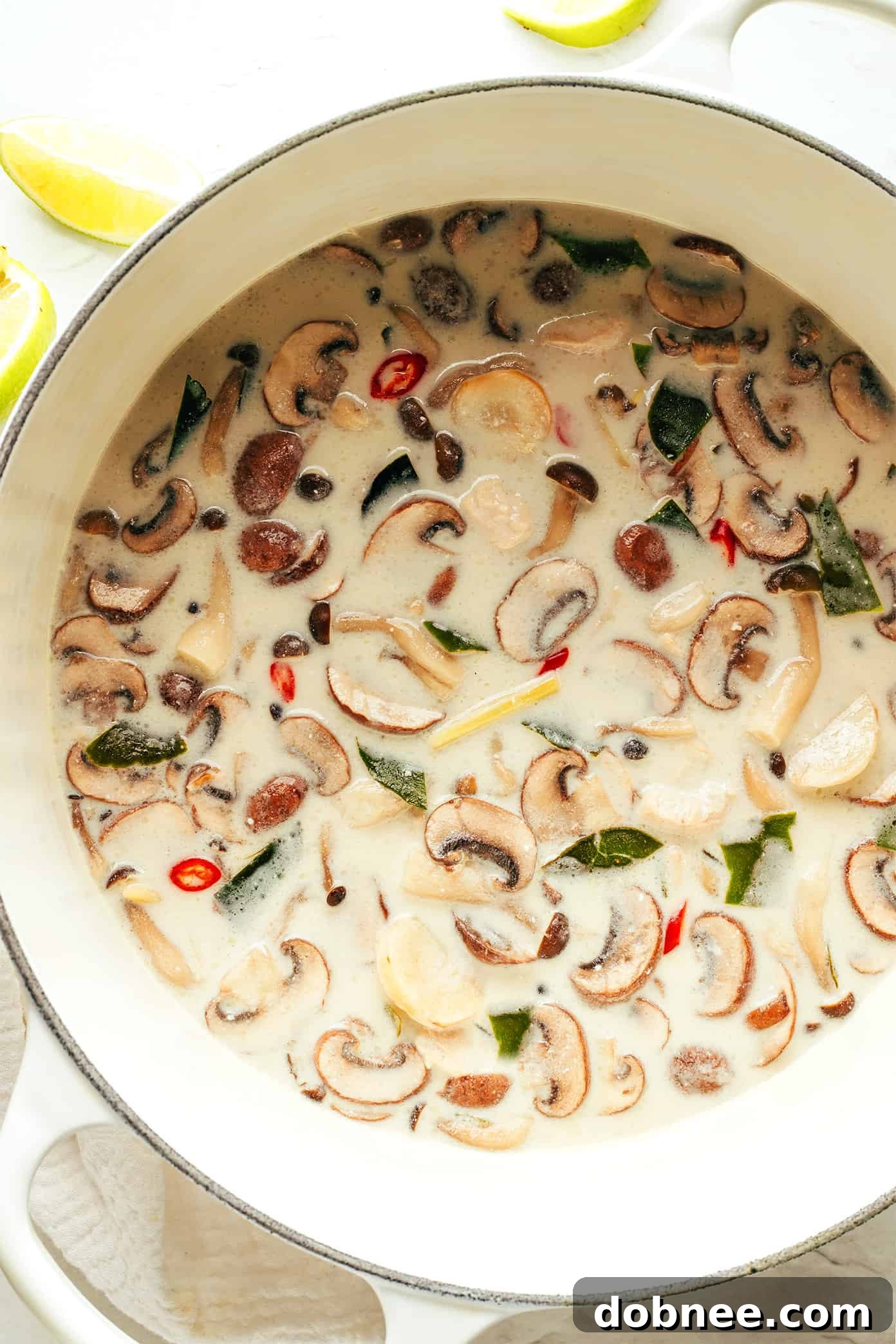
- Build the Soup’s Richness. Return the strained, aromatic broth to the pot. Add the sliced mushrooms, both cans of full-fat coconut milk, fish sauce, coconut sugar, and the optional Thai chili paste (nam prik pao). Stir all the ingredients thoroughly to combine them. Increase the heat to medium-high and bring the soup back to a gentle simmer. Be careful not to let it boil vigorously, as coconut milk can curdle. Cook for approximately 3–5 minutes, or until the mushrooms have softened and the flavors have had a chance to meld beautifully.
- Incorporate Chicken and Final Adjustments. Stir in the cooked shredded chicken, ensuring it is fully submerged in the hot broth. Continue to cook for just 1–2 minutes, allowing the chicken to warm through without overcooking. Remove the pot from the heat. This is a crucial moment for flavor adjustment: stir in the fresh lime juice. Taste the soup and season as needed. You might want to add more fish sauce for increased saltiness and umami, an extra squeeze of lime juice for brighter acidity, a bit more coconut sugar for sweetness, or additional chili paste if you desire more heat. Aim for a harmonious balance of all these elements.
- Serve and Garnish. Ladle the hot, fragrant Tom Kha Gai into individual serving bowls. For an authentic and visually appealing presentation, garnish generously with fresh cilantro leaves, the green parts of the sliced green onions, additional thinly sliced red chilies (if desired for extra color and heat), and fresh lime wedges on the side for guests to add more citrus as they please. Serve immediately and savor every spoonful of this exquisite homemade Thai coconut chicken soup!