
This delightful Thai-inspired curry recipe features tender white fish simmered in a rich, creamy coconut curry broth, perfectly complemented by a vibrant array of fresh vegetables.
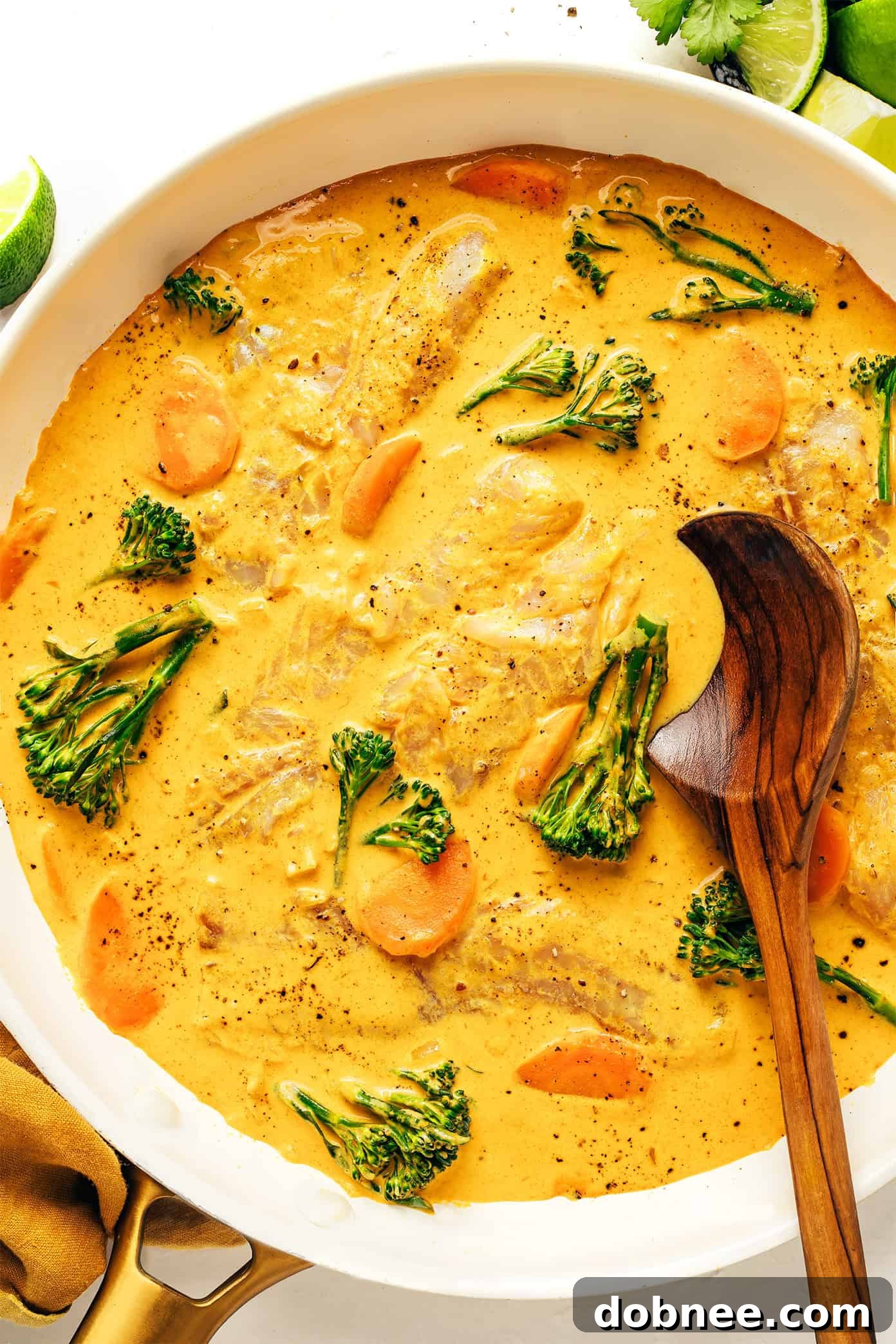
Thai Fish Curry: A Quick, Flavorful, and Healthy Weeknight Dinner
As the days grow longer and evenings invite lighter fare, our cravings turn to meals that are both comforting and refreshingly bright. This easy Thai Fish Curry perfectly captures that essence, offering a harmonious blend of creamy textures and zesty flavors that will transport your taste buds straight to Thailand.
Imagine tender, flaky white fish gently poaching in a rich, aromatic yellow coconut curry broth, infused with a symphony of fresh ginger, garlic, and lemongrass notes from the curry paste. This vibrant one-pan dinner comes together with remarkable speed and simplicity, making it an ideal choice for busy weeknights without compromising on flavor. We’ve opted for a Thai yellow curry paste in this recipe, celebrated for its subtle heat and fragrant blend of turmeric and lemongrass, which beautifully complements the delicate taste of various white fish. A generous squeeze of fresh lime juice and a generous pour of creamy coconut milk tie all these exquisite flavors together, creating a truly unforgettable meal. Serve this luxurious curry over fluffy rice or slippery noodles to ensure not a single drop of that incredible broth goes to waste.
Beyond its incredible taste, this Thai Fish Curry is remarkably versatile. Feel empowered to customize it with your favorite vegetables or experiment with different proteins like succulent shrimp, tender chicken, or hearty tofu. It’s a dish that tastes impressively complex, yet its preparation is wonderfully straightforward – a culinary magic trick for any home cook. Plus, the flavors deepen overnight, meaning leftovers are often even more delicious the next day. We’re confident this recipe will quickly become a cherished favorite in your kitchen!
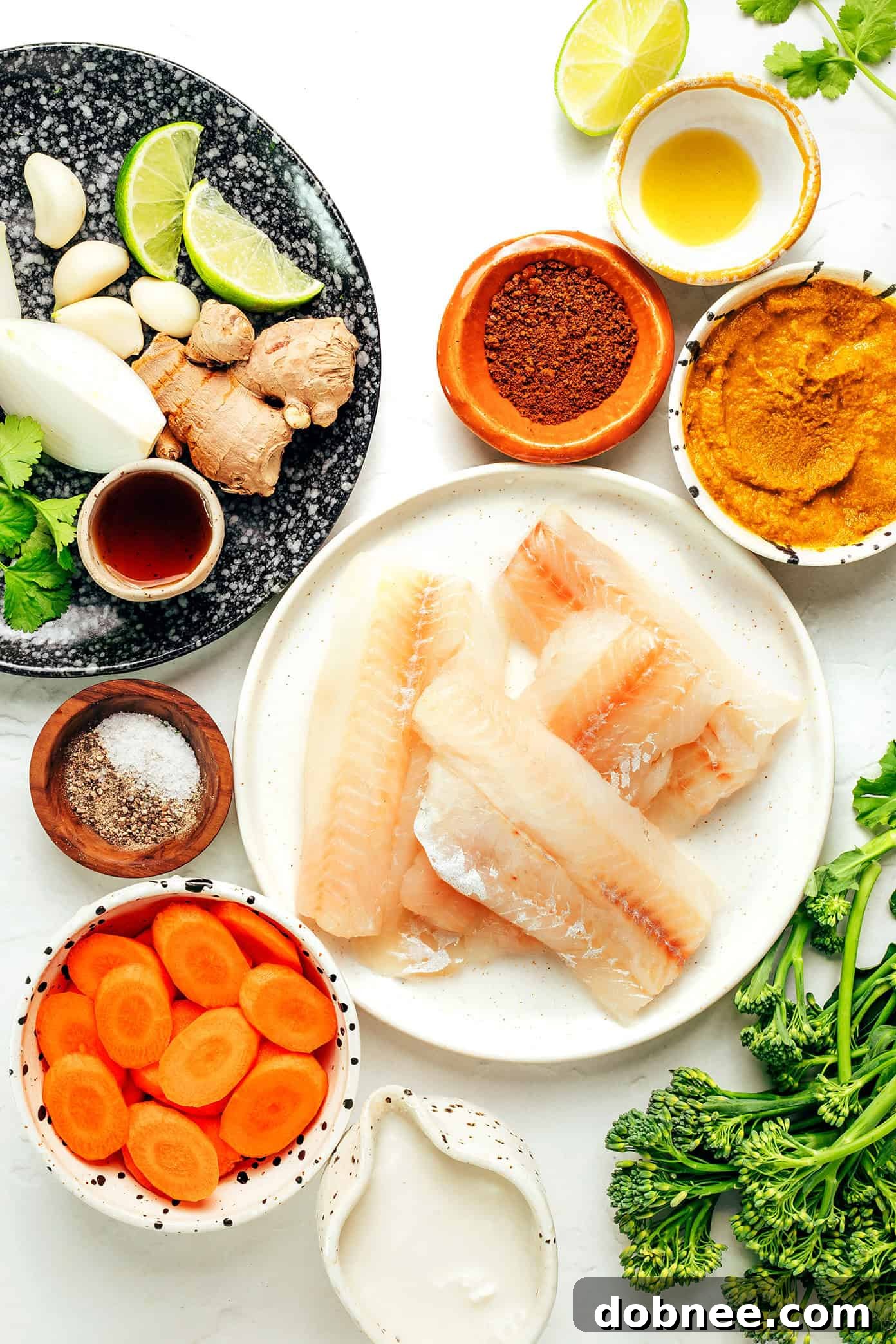
Key Ingredients for a Perfect Thai Fish Curry
Crafting an authentic and flavorful Thai Fish Curry begins with selecting the right ingredients. Here’s a closer look at what you’ll need and why each component is essential:
- White Fish: The star of our curry! Mild-flavored, flaky white fish varieties such as cod, halibut, snapper, or tilapia are perfect for absorbing the rich curry flavors. Their delicate texture holds up well during simmering. When selecting your fish, look for firm, white fillets that smell fresh and oceanic. Ensure the fish is sturdy enough to maintain its integrity as it cooks in the broth.
- Veggies: We’ve used a delightful combination of sliced onion, sweet carrots, and crisp broccolini florets in the recipe shown. This trio adds beautiful color, varied texture, and a lovely earthy sweetness to the curry. However, don’t hesitate to get creative! Bell peppers, zucchini, green beans, or mushrooms are fantastic alternatives or additions that sauté beautifully. For a touch of greens, you can wilt in some baby spinach or kale just before serving.
- Aromatics: Freshly minced garlic and ginger are non-negotiable for an authentic Thai curry. They provide a foundational layer of warmth, pungency, and aromatic depth that elevates the entire dish. Always opt for fresh over pre-minced for the best flavor.
- Thai Curry Paste: This is where the magic happens! Thai yellow curry paste, with its vibrant yellow hue from turmeric and notes of lemongrass, galangal, and mild chilies, offers a balanced and fragrant profile that pairs exceptionally well with fish. If you prefer a bolder heat, consider Thai red curry paste, or for a more herbaceous and spicier kick, green curry paste would also be delicious. Each paste brings its unique character, so feel free to experiment to find your favorite.
- Coconut Milk: The backbone of any creamy Thai curry. Full-fat coconut milk is crucial for achieving that velvety, luxurious texture and rich flavor that defines this dish. It beautifully mellows the spice from the curry paste and binds all the ingredients together. Shake the can well before opening to ensure the cream and liquid are fully integrated. (This is a highly recommended brand.)
- Sweetener: A touch of sweetness is vital for balancing the heat and acidity in Thai curries. Coconut sugar is traditionally used, providing a subtle caramel note, but brown sugar or even a dash of maple syrup can be substituted if preferred. The goal is to achieve a harmonious balance, not to make the curry overtly sweet.
- Fish Sauce (optional but recommended): A small splash of good quality fish sauce (our favorite brand) adds an incredible depth of umami and a savory, salty tang that is quintessential to Thai cuisine. It’s the secret ingredient that makes the flavors truly sing, enhancing the overall richness of the broth.
- Lime Juice: Fresh lime juice is the bright, zesty finish your curry needs. Added at the end, it cuts through the richness of the coconut milk and curry, providing a refreshing burst of acidity that awakens all the flavors. Always use fresh lime juice – bottled juice simply doesn’t compare. Serving extra lime wedges allows everyone to adjust the brightness to their liking.
- Salt and Pepper: Essential for seasoning to taste. A final adjustment before serving ensures your curry is perfectly balanced. Don’t forget to taste and season as needed!
- Toppings: Don’t underestimate the power of fresh toppings! A generous sprinkle of chopped fresh cilantro and vibrant scallions adds a burst of fresh flavor, aroma, and color, enhancing both the taste and visual appeal of your curry.
- Rice or Noodles: To truly enjoy every drop of this magnificent broth, serve your Thai Fish Curry over a mild and absorbent base. Steamed jasmine rice or delicate rice noodles are classic choices, soaking up the rich flavors and making each bite incredibly satisfying.
Customizing Your Thai Fish Curry: Delicious Variations
One of the best aspects of this Thai Fish Curry recipe is its incredible adaptability. Feel free to unleash your creativity and tailor it to your personal preferences or what you have on hand. Here are some fantastic twists you can try:
- Explore Different Proteins: While white fish is superb, this curry base welcomes other proteins with open arms. Try succulent salmon fillets for a richer flavor, plump shrimp or scallops for a quick-cooking option, hearty tofu or tempeh for a vegetarian or vegan version, or even shredded rotisserie chicken for an extra easy meal. Each protein will bring its unique texture and slightly alter the flavor profile.
- Boost Your Veggies: Enhance the nutritional value and texture by incorporating more vegetables. Bell peppers (red, yellow, or orange), tender zucchini slices, crunchy snap peas, or earthy mushrooms (cremini, shiitake) are wonderful additions to sauté alongside (or in place of) the carrots and broccolini. For a nutrient boost, stir in a handful of baby spinach or kale just before serving, allowing the residual heat to gently wilt them.
- Switch Up the Curry Paste: The choice of curry paste can dramatically change the character of your dish. If you enjoy a bolder, spicier heat, opt for Thai red curry paste. For a more intensely herbaceous and fiery kick, Thai green curry paste is an excellent choice. Remember that heat levels can vary between brands, so always taste and adjust.
- Dial Up the Heat: For those who love a serious kick, it’s easy to make your curry spicier. Add a few thinly sliced fresh Thai chilies (bird’s eye chilies) along with the garlic and ginger, or stir in a pinch of red chili flakes with the curry paste. You can also drizzle in some chili oil or Sriracha at the end.
- Add a Crunchy Topping: Introduce a delightful textural contrast by garnishing each serving with a crunchy element. Toasted peanuts or cashews provide a lovely nutty crunch and complement the creamy curry beautifully. A sprinkle of crispy fried shallots or garlic would also be fantastic.
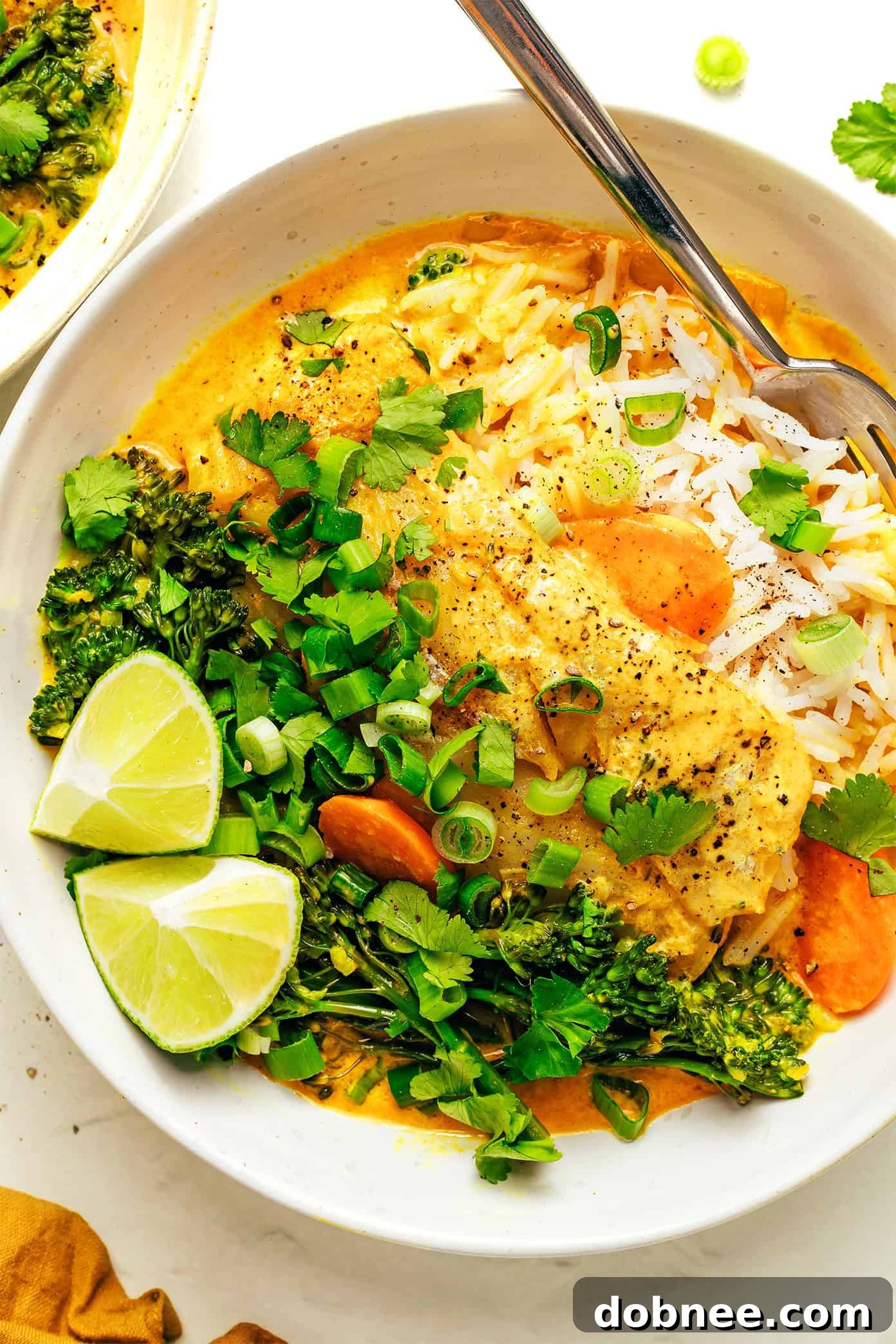
Serving Suggestions for Your Thai Fish Curry
While jasmine rice and rice noodles are classic accompaniments for Thai Fish Curry, don’t limit your options! Here are some creative ways to serve this flavorful dish:
- Steamed Jasmine Rice: The quintessential choice. Its delicate fragrance and soft texture are perfect for soaking up the rich curry sauce.
- Brown Rice or Quinoa: For a healthier, whole-grain option, brown rice or quinoa provide a nuttier flavor and added fiber.
- Cauliflower Rice: A fantastic low-carb alternative that still absorbs the flavors beautifully. Sautéed or steamed, it makes for a lighter meal.
- Rice Noodles: Thin vermicelli or thicker flat rice noodles are excellent for a slurpable, satisfying experience.
- Naan Bread or Roti: Scoop up every last drop of that delicious sauce with warm, fluffy naan bread or flaky roti.
- Fresh Salad: Serve alongside a simple green salad with a light vinaigrette to add a refreshing contrast to the rich curry.
- Lime Wedges: Always offer extra lime wedges on the side for guests to squeeze over their individual bowls, enhancing the brightness.
- Fresh Herbs: Beyond cilantro and scallions, consider a few fresh mint leaves for an unexpected cooling touch.
Tips for Success and Storage
To ensure your Thai Fish Curry turns out perfectly every time, and to enjoy it beyond the first meal, keep these tips in mind:
- Don’t Overcook the Fish: White fish cooks quickly, typically in 4-6 minutes depending on thickness. Overcooked fish can become dry and rubbery. Keep an eye on it and remove it from the heat as soon as it flakes easily with a fork.
- Sauté Aromatics Properly: Cooking the onions, garlic, and ginger until fragrant but not browned releases their essential oils and builds the flavor foundation for your curry.
- Bloom the Curry Paste: Sautéing the curry paste for a minute or two before adding liquids helps to deepen its flavor and release its aromatic compounds.
- Taste and Adjust: Thai cuisine is all about balancing sweet, sour, salty, and spicy. Before serving, taste your curry and adjust with more fish sauce (for saltiness/umami), coconut sugar (for sweetness), or lime juice (for acidity) as needed.
- Choose Quality Coconut Milk: Full-fat coconut milk makes a significant difference in the creaminess and richness of your curry. Skimping on this ingredient can lead to a less satisfying result.
- Leftovers: Thai Fish Curry makes excellent leftovers. Store any remaining curry in an airtight container in the refrigerator for up to 3-4 days.
- Reheating: Gently reheat the curry on the stovetop over medium-low heat, stirring occasionally, until warmed through. Be careful not to boil vigorously, especially if reheating fish, as it can cause it to break apart or dry out.
- Freezing: While the curry broth freezes well, fish can sometimes change texture upon freezing and reheating. If you plan to freeze, it’s best to cook the curry without the fish, freeze the broth, and then add freshly cooked fish when reheating.
Frequently Asked Questions (FAQs)
Here are answers to some common questions about making Thai Fish Curry:
Q: Can I make this vegetarian or vegan?
A: Absolutely! Simply replace the white fish with firm tofu or tempeh (cubed and pan-fried until golden before adding to the curry) and omit the fish sauce. You can substitute a vegetarian “fish sauce” alternative or simply add an extra pinch of salt and a dash of soy sauce or tamari for umami.
Q: What if I can’t find Thai yellow curry paste?
A: You can easily substitute with Thai red or green curry paste. Keep in mind that red curry paste is generally spicier than yellow, and green curry paste is often the spiciest and most herbaceous. Adjust the amount to your heat preference.
Q: Can I add other seafood?
A: Yes! Shrimp, scallops, mussels, or even calamari would be delicious in this curry. Add shrimp and scallops in the last few minutes of cooking, as they cook very quickly. Mussels can be added with the coconut milk and cooked until they open.
Q: How can I make this dish milder for kids?
A: Reduce the amount of curry paste significantly, or use a very mild brand. You can also add an extra splash of coconut milk or a spoonful of plain yogurt to individual servings to mellow the heat. Serve with plenty of rice to absorb the spice.
Q: Is this curry gluten-free?
A: Most Thai curry pastes and coconut milk are naturally gluten-free. However, always check the labels on your curry paste and fish sauce, as some brands may contain hidden gluten. If using soy sauce for a vegan version, opt for tamari.
Q: What’s the best way to get the fish to not break apart?
A: Choose firm white fish and handle it gently. Avoid over-stirring once the fish is added to the pot. Nestle the fillets into the broth and spoon sauce over them rather than aggressively tossing. Ensure your fish is not overcooked.
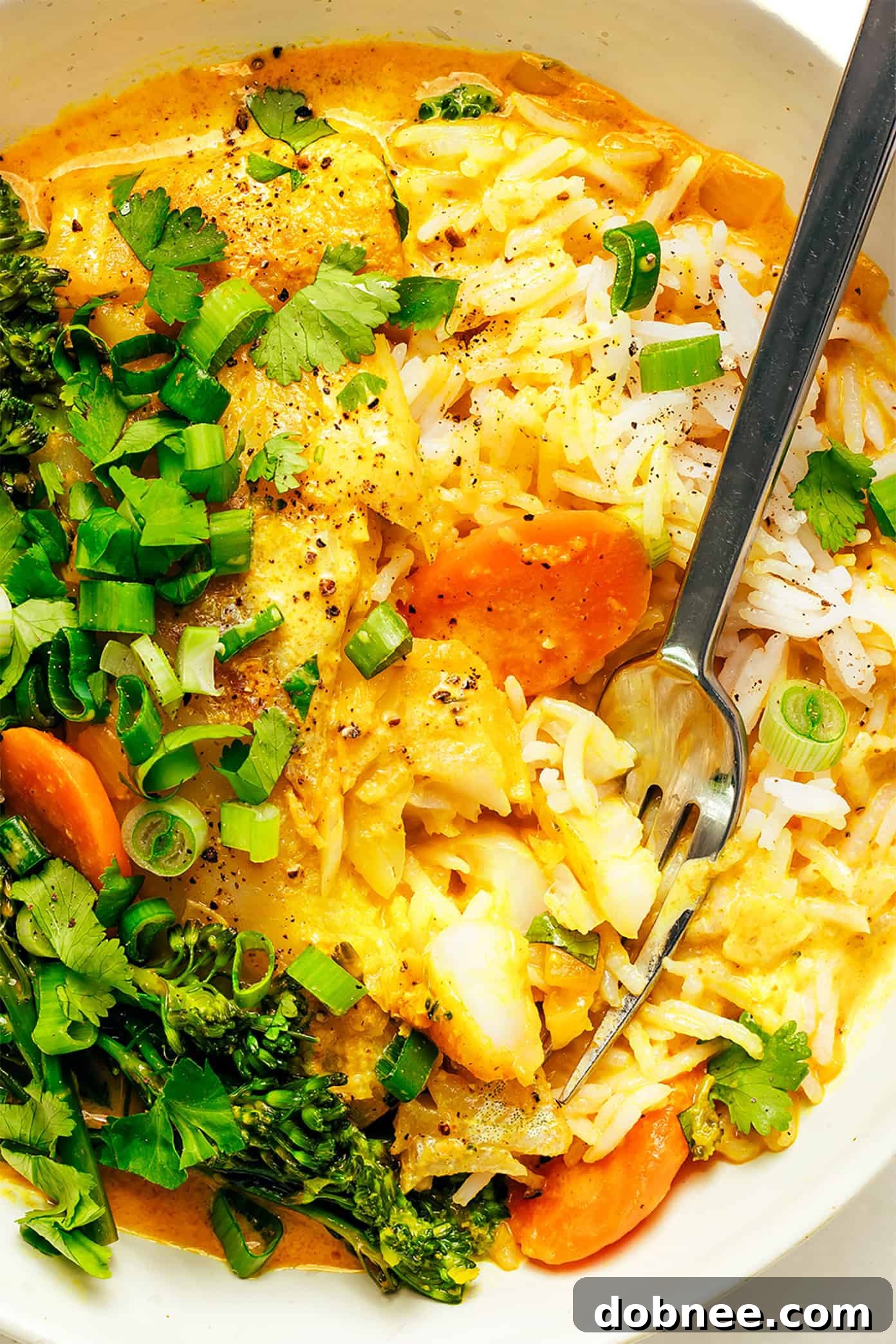
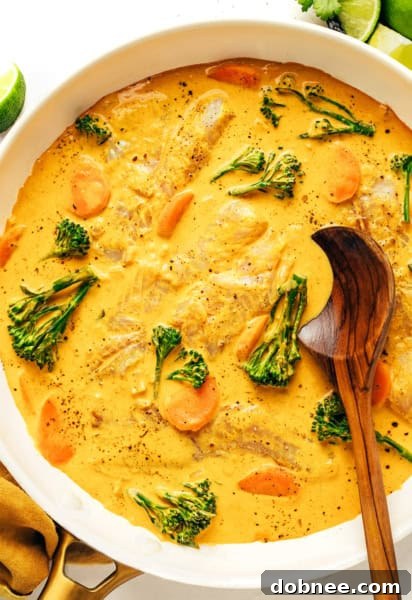
Thai Fish Curry
- Author: Ali
- Prep Time: 10 mins
- Cook Time: 15 mins
- Total Time: 25 mins
- Yield: 4 servings
Description
This lovely Thai-inspired curry recipe features tender white fish simmered in a creamy coconut curry broth with veggies.
Ingredients
- 1 tablespoon olive oil
- 1 small white onion, diced
- 1 carrot, thinly sliced
- 4 large cloves garlic, minced
- 2 to 3 tablespoons Thai yellow curry paste
- 1 tablespoon grated or minced fresh ginger
- 1 (15-ounce) can full-fat coconut milk
- 1 tablespoon coconut sugar (or brown sugar)
- 2 teaspoons fish sauce (optional)
- 2 cups broccolini florets
- 4 large cod filets (about 6 ounces each, or other white fish)
- 1 large lime, juiced
- Fine sea salt and freshly-ground black pepper, to taste
- Toppings: lots of chopped cilantro, chopped scallions, and extra lime wedges
- 4 cups cooked rice, for serving
Instructions
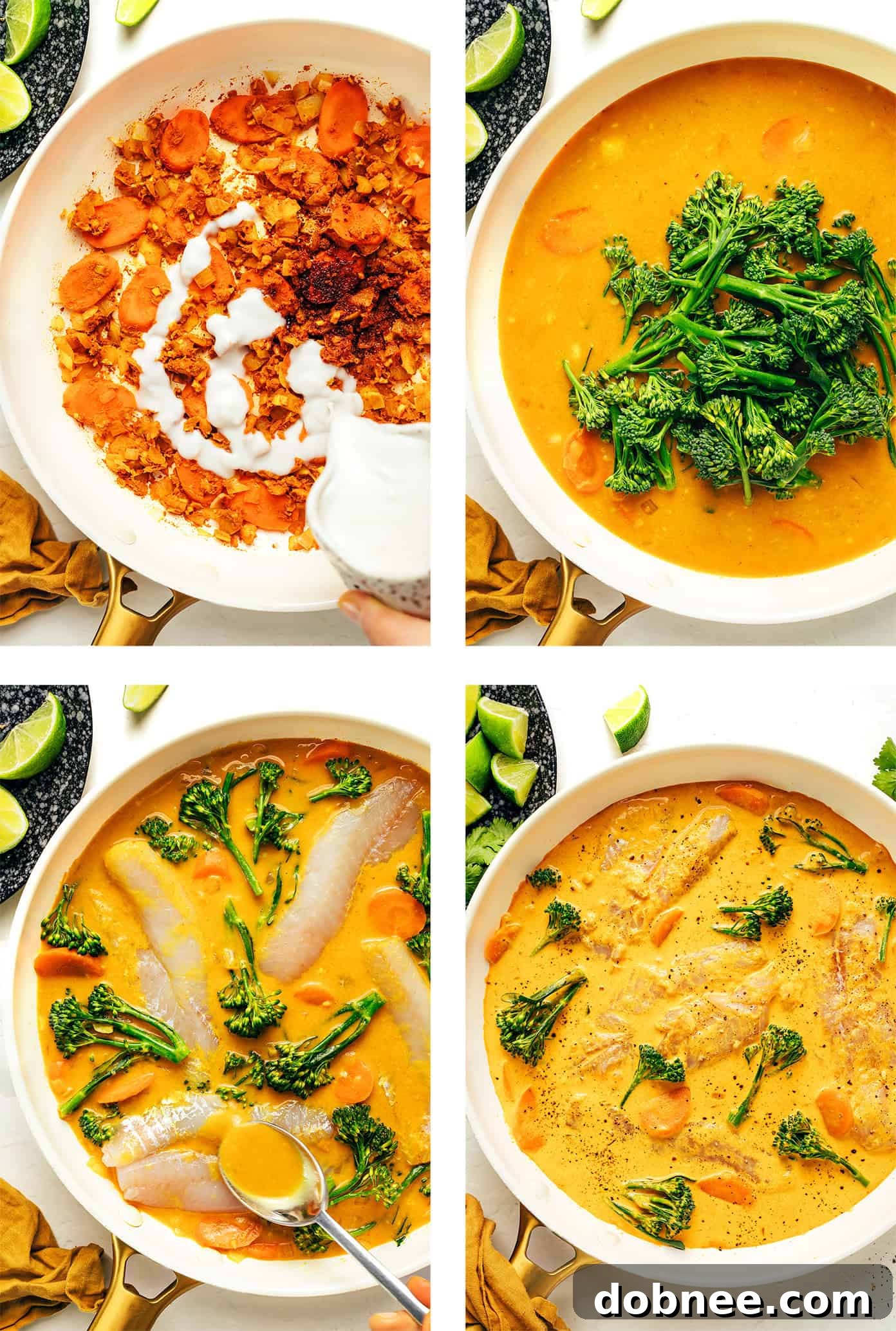
- Sauté the veggies. Heat the olive oil in a large nonstick sauté pan or Dutch oven over medium heat. Add the diced onion and sauté, stirring occasionally, for about 5 minutes until softened. Stir in the thinly sliced carrot, minced garlic, Thai curry paste (adjusting the amount to your preferred spice level), and grated fresh ginger. Continue to sauté, stirring frequently, for another 2 minutes until fragrant. Pour in the full-fat coconut milk, coconut sugar, and optional fish sauce, stirring well to combine all ingredients. Bring the sauce to a gentle simmer, then reduce the heat to medium-low.
- Cook the fish. Add the broccolini florets to the simmering sauce and toss briefly to coat. Carefully nestle the cod fillets into the sauce amongst the broccolini. Spoon a little of the fragrant curry broth over the fish fillets. Cover the pan with a lid and let it cook for 4 to 5 minutes, or until the fish is opaque throughout and flakes easily with a fork. The exact cooking time will vary based on the thickness of your fish fillets.
- Finish and season. Once the fish is cooked, remove the lid. Drizzle the fresh lime juice evenly over the entire pan. Season the curry with a few twists of freshly-ground black pepper. Before serving, taste the sauce and adjust seasonings as needed, adding more salt, pepper, or a squeeze of extra lime juice to achieve your perfect balance of flavors.
- Serve. Ladle the warm Thai Fish Curry generously over bowls of freshly cooked rice. Garnish each serving with a generous sprinkle of chopped fresh cilantro and scallions. Offer extra lime wedges on the side for squeezing, allowing everyone to add an additional burst of brightness. Serve immediately and enjoy!
Equipment
- Coconut Milk (recommended brand)
- Fish Sauce (recommended brand)
- Thai Yellow Curry Paste (recommended brand)
- Large nonstick sauté pan or Dutch oven with a lid
- Cutting board and sharp knife
- Measuring spoons and cups
Exploring More Thai Curry Delights
If this aromatic Thai Fish Curry has sparked your love for vibrant Thai flavors, you’re in for a treat! Thai cuisine offers an incredible variety of curries, each with its unique character and charm. Whether you’re a fan of rich and nutty, bold and spicy, or herbaceous and tangy, there’s a Thai curry out there waiting to become your next favorite dish. We encourage you to explore beyond this recipe and delve deeper into the delicious world of Thai-inspired meals. Here are a few more of our go-to Thai curry recipes that we think you’ll absolutely adore:
- Saucy Thai Curried Peanut Noodles
- Thai Red Curry Potsticker Soup
- Thai Chicken Curry
- Thai Green Curry Salmon