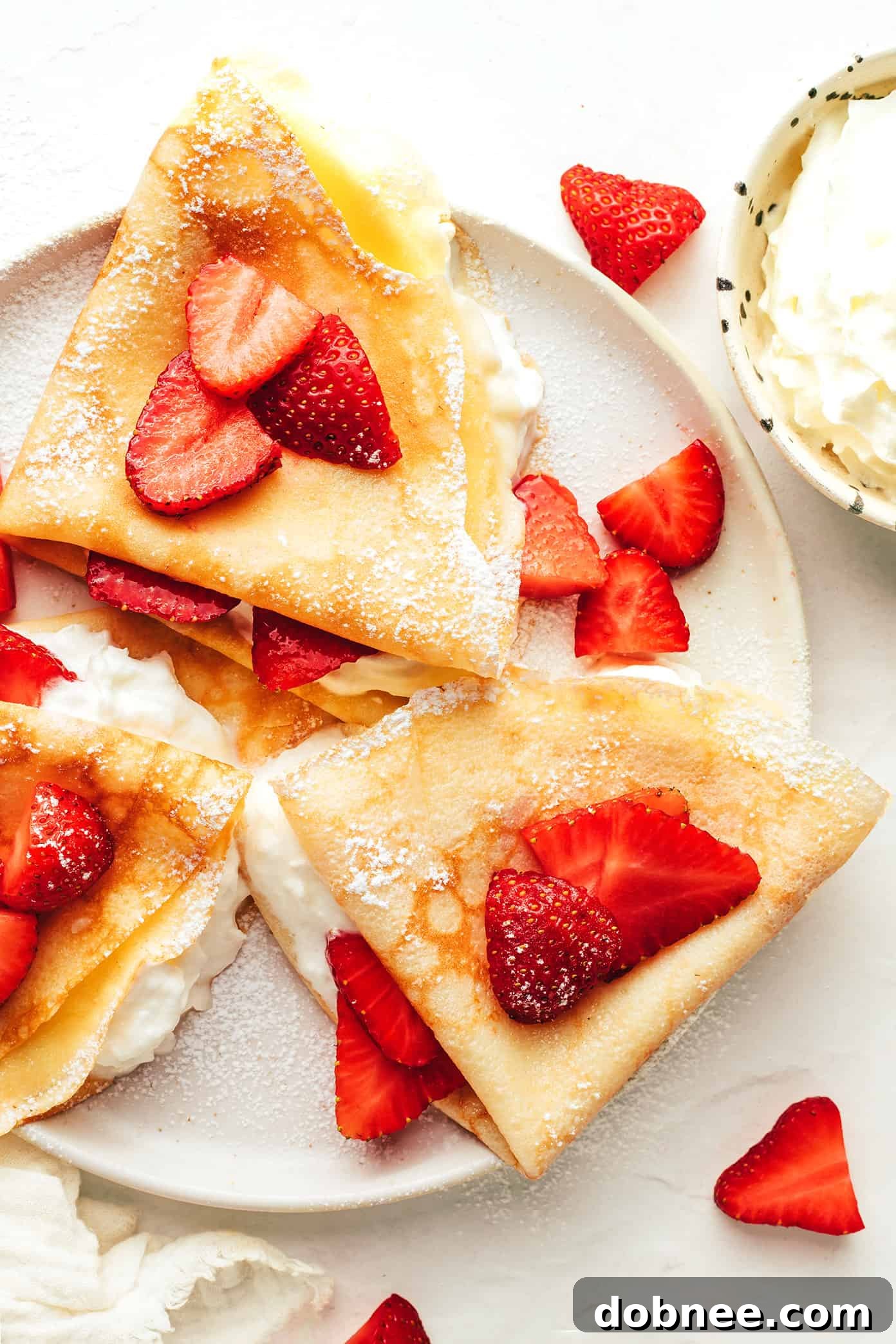
This classic French crepe recipe makes incredibly delicate, flavorful crepes with just 7 simple ingredients. Perfect for any meal, they can be customized with an endless variety of sweet or savory fillings!
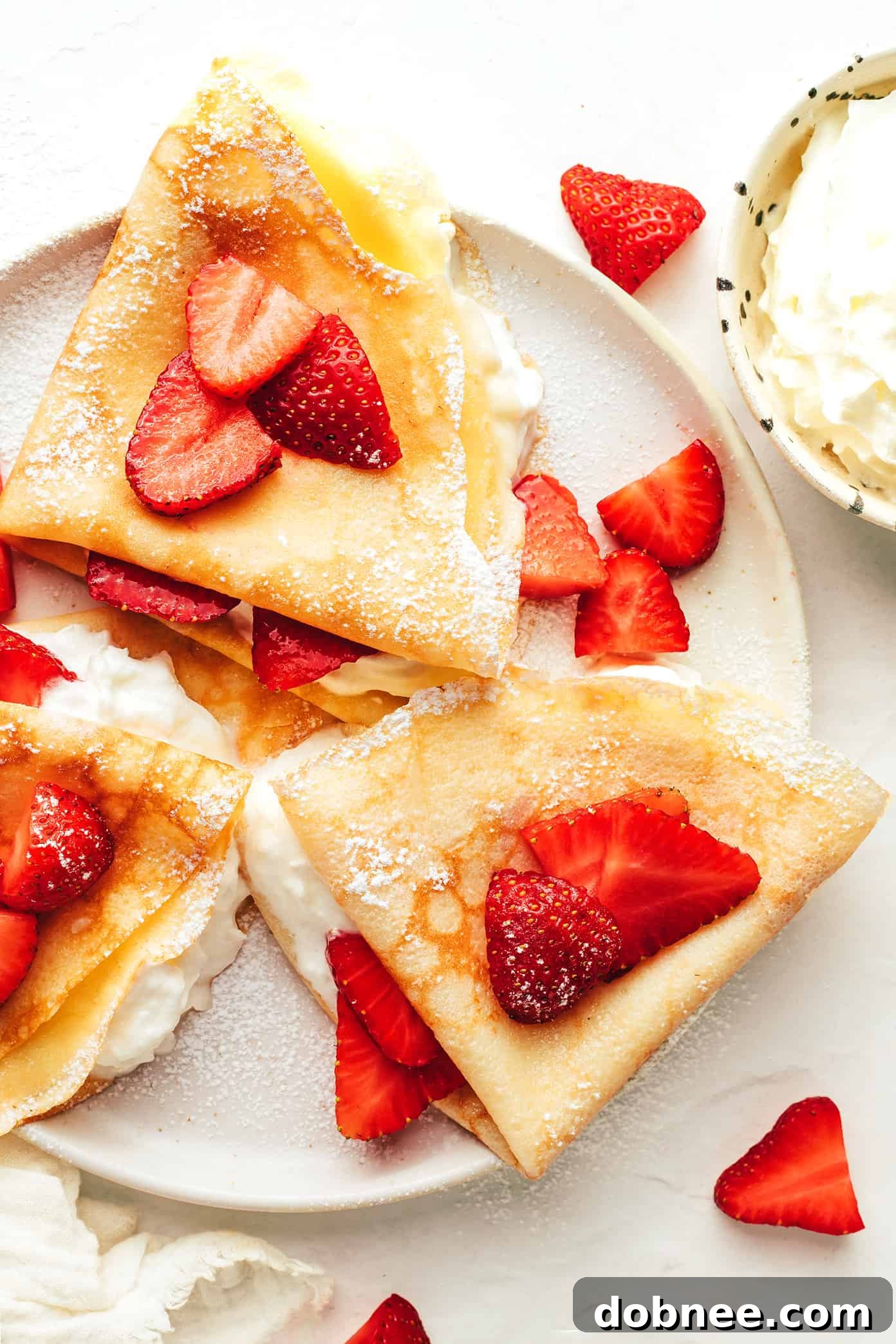
The Irresistible Allure of Classic French Crêpes
Few dishes evoke the charm and culinary elegance of France quite like a perfectly crafted crêpe. Imagine a plate piled high with warm, impossibly thin, and subtly buttery French crêpes – a true delight for the senses. These delicate pancakes, with their signature lacy edges, are a testament to the beauty of simple ingredients coming together to create something truly extraordinary. Whether enjoyed plain, dusted with sugar, or generously filled, crêpes offer an unparalleled gastronomic experience that transcends mere breakfast fare.
During our travels through Europe, particularly our cherished visits to France, the experience of stepping into a bustling crêperie became a cherished tradition. There’s an undeniable magic in watching a skilled chef pour batter onto a hot griddle, expertly swirling it into a paper-thin disc, then flipping it with effortless grace. Each crêpe, served fresh off the pan, is a masterpiece of texture and flavor – light, tender, and incredibly satisfying in its simplicity. They truly are the ideal canvas for a myriad of delicious sweet and savory combinations, inviting endless creativity in the kitchen.
The wonderful news for home cooks is that mastering classic French crêpes is surprisingly achievable. You don’t need a special trip to Paris; with just 7 fundamental pantry staples and your choice of delectable fillings, you can transform your own kitchen into a charming French café. This recipe emphasizes ease and accessibility, making it perfect for both novice and experienced cooks alike. While some prefer the traditional bowl and whisk method, I’ve found that preparing crêpe batter in a blender offers unparalleled convenience, yielding a consistently smooth, lump-free mixture every time. Be sure to explore the comprehensive tips and customization ideas below to ensure your crêpe-making journey is a resounding success.
Let’s embark on this delightful culinary adventure and craft some truly spectacular crêpes!
Essential Ingredients for Perfect French Crêpes
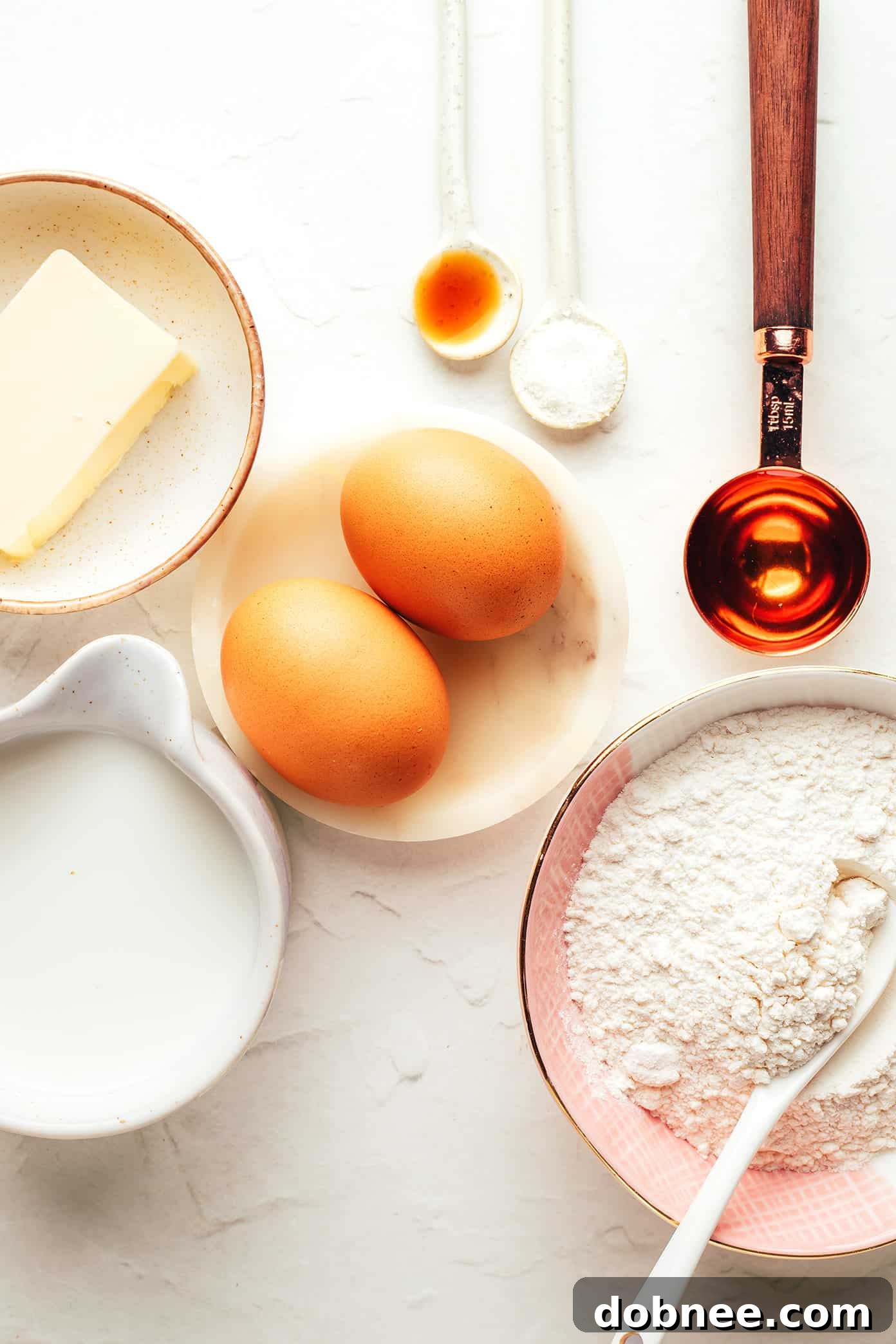
Crafting exquisite crêpes begins with understanding the role of each component. This recipe relies on a handful of basic ingredients, each contributing to the crêpes’ signature delicate texture and rich flavor profile:
- Unsalted Butter: Melted butter is a crucial element, infusing the crêpe batter with a rich, nutty flavor. Beyond taste, it plays a vital functional role by helping to prevent the crêpes from sticking to the pan, ensuring easy flipping and a beautiful golden finish. Using unsalted butter allows you to control the overall sodium content of your batter.
- Milk: The liquid foundation of our batter, milk (whether dairy or a non-dairy alternative like almond or oat milk) provides the necessary hydration for the flour. It contributes to the crêpes’ smooth, velvety texture and ensures they remain pliable and tender once cooked.
- Large Eggs: Eggs are the primary binding agent in crêpe batter, holding all the ingredients together and providing structure. They also add richness, contribute to the crêpes’ golden color, and help achieve that characteristic delicate, almost translucent quality.
- All-Purpose Flour: As the main dry ingredient, all-purpose flour gives the crêpes their fundamental structure. Its specific protein content allows for the development of a thin, pliable batter that spreads easily and cooks into a resilient yet tender crêpe. For best results, measure flour accurately by weight or by spooning it into a measuring cup and leveling it off.
- Maple Syrup (or preferred sweetener): While optional for savory crêpes, a touch of sweetener elevates the flavor of sweet crêpes. Maple syrup is our preferred choice due to its natural sweetness and complementary flavor notes that enhance the other ingredients without overpowering them. Granulated sugar can also be used.
- Vanilla Extract: A dash of pure vanilla extract adds a traditional warmth and aromatic depth to the crêpes, making them even more inviting. This subtle addition truly rounds out the flavor profile, especially for sweet applications.
- Fine Salt: Even in a sweet dish, a pinch of salt is essential. It acts as a flavor enhancer, balancing the sweetness, bringing out the subtle notes of butter and vanilla, and preventing the crêpes from tasting flat.
Crafting Your Own French Crêpes: A Step-by-Step Guide
Making crêpes is a truly enjoyable process that becomes intuitive with a little practice. Follow these detailed steps and helpful tips to achieve beautifully thin and delicious crêpes every time:
- Prepare the Batter: The quickest and easiest method for a smooth batter is using a blender. Simply add all your ingredients – melted butter, milk, eggs, flour, sweetener (if using), vanilla, and salt – into the blender. Pulse for about 5 seconds to initially combine. Then, use a rubber spatula to scrape down any flour or ingredients clinging to the sides of the blender jar. Pulse again for another 5-10 seconds until the mixture is completely smooth and uniform, resembling the consistency of heavy cream. If your batter appears too thick, slowly add an extra tablespoon or two of milk until the desired fluidity is reached. Conversely, if it seems too thin, incorporate a small amount of additional flour, one teaspoon at a time.
- The Essential Chill Time: This step is non-negotiable for achieving perfect crêpes. Once your batter is smooth, cover the blender jar or transfer the batter to an airtight container and refrigerate it for a minimum of 30 minutes. Ideally, you can chill it for up to 36 hours. Resting the batter allows the flour to fully hydrate, which prevents the crêpes from tearing, creates a smoother texture, and develops deeper flavors. It also allows any air bubbles incorporated during blending to dissipate, resulting in a more even cook.
- Mastering the Cook: When you’re ready to cook, begin by melting approximately 1/4 tablespoon of butter in an 8- to 10-inch non-stick sauté pan or crêpe pan over medium heat. A good non-stick pan is highly recommended for easy flipping and to prevent sticking. Once the butter is melted and the pan is hot (but not smoking), pour exactly 1/4 cup of the chilled crêpe batter directly into the center of the pan.
- The Swirl Technique: Immediately after pouring the batter, swiftly tilt and swirl the pan in a circular motion. This traditional technique is critical for spreading the batter evenly and thinly across the entire bottom of the pan, forming a large, round, paper-thin circle. Work quickly, as the batter sets almost instantly.
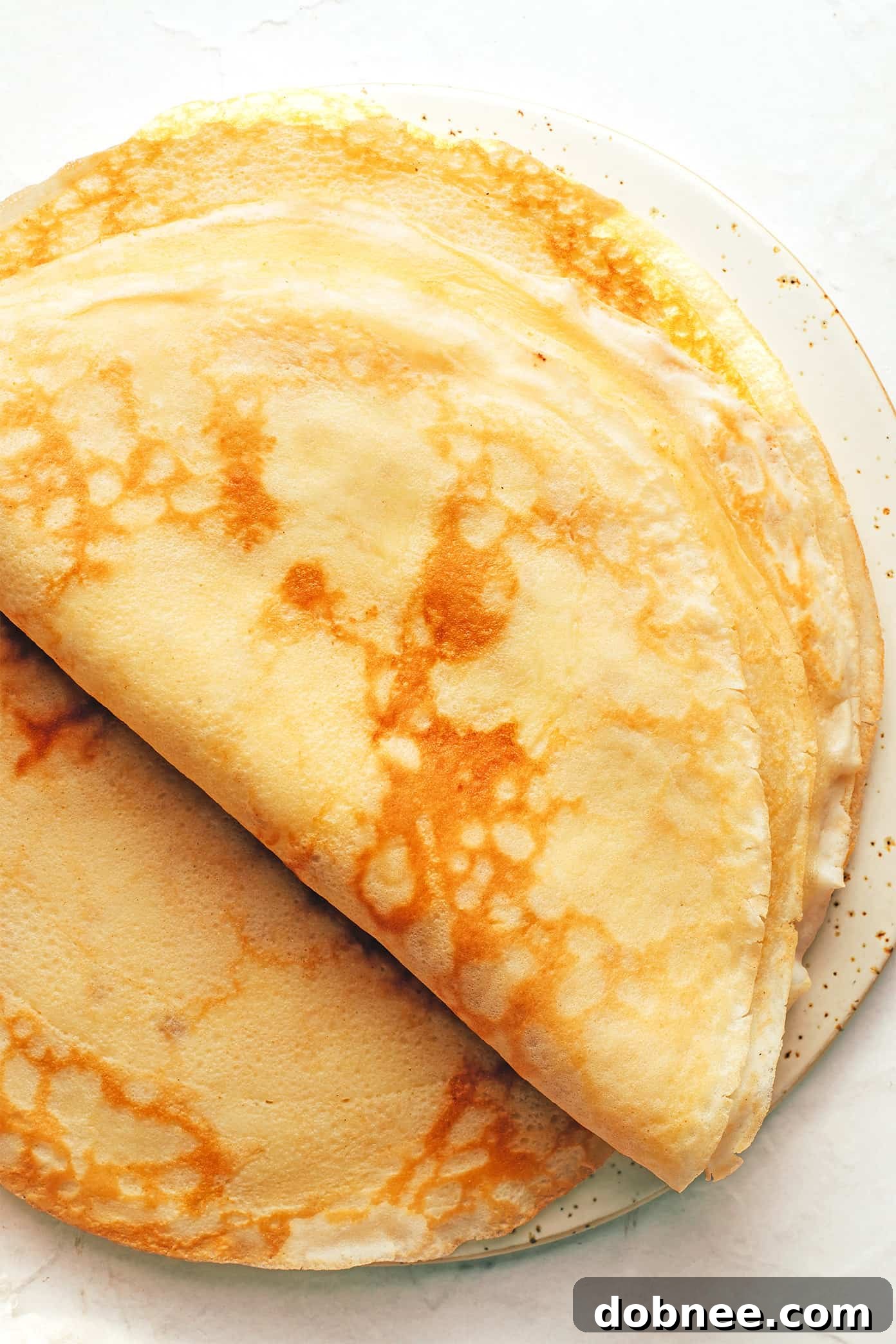
- First Side Cook: Allow the crêpe to cook for about 1 minute on the first side. You’ll know it’s ready when the edges begin to appear slightly crispy and golden brown, and the surface looks set, losing its wet sheen.
- The Gentle Flip: Carefully slip a thin, flexible spatula (a rubber spatula can also work well) underneath the crêpe, ensuring it’s completely detached from the pan. With a confident but gentle motion, flip the crêpe over to cook the second side.
- Second Side Cook: Cook the second side for another 45-60 seconds, or until it achieves a light golden color and is fully cooked through.
- Repeat and Stack: Once cooked, carefully transfer the crêpe to a separate plate. Continue this process with the remaining batter, remembering to occasionally add a very thin coating of butter to the pan before each new crêpe. This re-greasing step is essential to prevent sticking and ensure consistent results. I find it easiest to just rub a stick of butter lightly around the pan or use a pastry brush. Don’t worry if your first few crêpes aren’t perfect – they often take a little practice to get the hang of!
- Serve Warm: Crêpes are best enjoyed immediately while they are warm and tender. Fill them or top them with your favorite ingredients without delay.
Helpful Tips for Crêpe Perfection:
- Don’t Skip the Rest: As mentioned, resting the batter is paramount. It results in a more pliable crêpe that’s less likely to tear.
- Keep it Greased: A thinly greased pan before *each* crêpe is key. Too much butter will make the crêpes greasy; too little and they will stick. A non-stick pan greatly simplifies this.
- Perfect Portion Control: Using precisely 1/4 cup of batter is usually ideal for an 8-10 inch pan, ensuring your crêpes are as thin as possible without being too delicate to handle.
- Swift Swirl: The quicker you swirl the pan after adding batter, the thinner and more uniform your crêpe will be.
- Monitor Heat: Pay attention to your pan’s temperature. It can get hotter as you cook more crêpes. Adjust the heat down slightly if they start browning too quickly, or up if they are cooking too slowly.
- Embrace Imperfection: Your first crêpe (or two!) might be a “test crêpe” – that’s perfectly normal. Don’t stress about slight imperfections; you’ll quickly develop a feel for the timing and technique.
Storing and Reheating Your Homemade Crêpes
Crêpes are wonderful because they can be made ahead of time, making them a fantastic option for meal prep or entertaining. Proper storage ensures they remain fresh and delicious.
Refrigeration:
To store cooked crêpes in the refrigerator, allow them to cool completely. Then, stack them with a layer of parchment paper or wax paper placed between each crêpe. This critical step prevents them from sticking together. Once stacked, place them in an airtight container or seal them securely in a large zip-top bag. When stored correctly, crêpes will stay fresh in the refrigerator for up to 3-4 days.
Freezing:
For longer-term storage, crêpes freeze beautifully. Follow the same method of placing parchment paper or wax paper between each cooled crêpe before stacking them. Then, transfer the stack to an airtight freezer-safe bag or container. Frozen crêpes can be kept for up to 2-3 months without a significant loss in quality.
Reheating:
When you’re ready to enjoy stored crêpes, thaw frozen ones overnight in the refrigerator or at room temperature for a few hours. Once thawed (or if reheating refrigerated crêpes), you can gently warm them up. A quick reheat in a lightly buttered skillet over medium-low heat for about 30 seconds per side is ideal. Alternatively, you can briefly warm them in the microwave for 10-15 seconds per crêpe, though this method may not produce the same crisp edges.
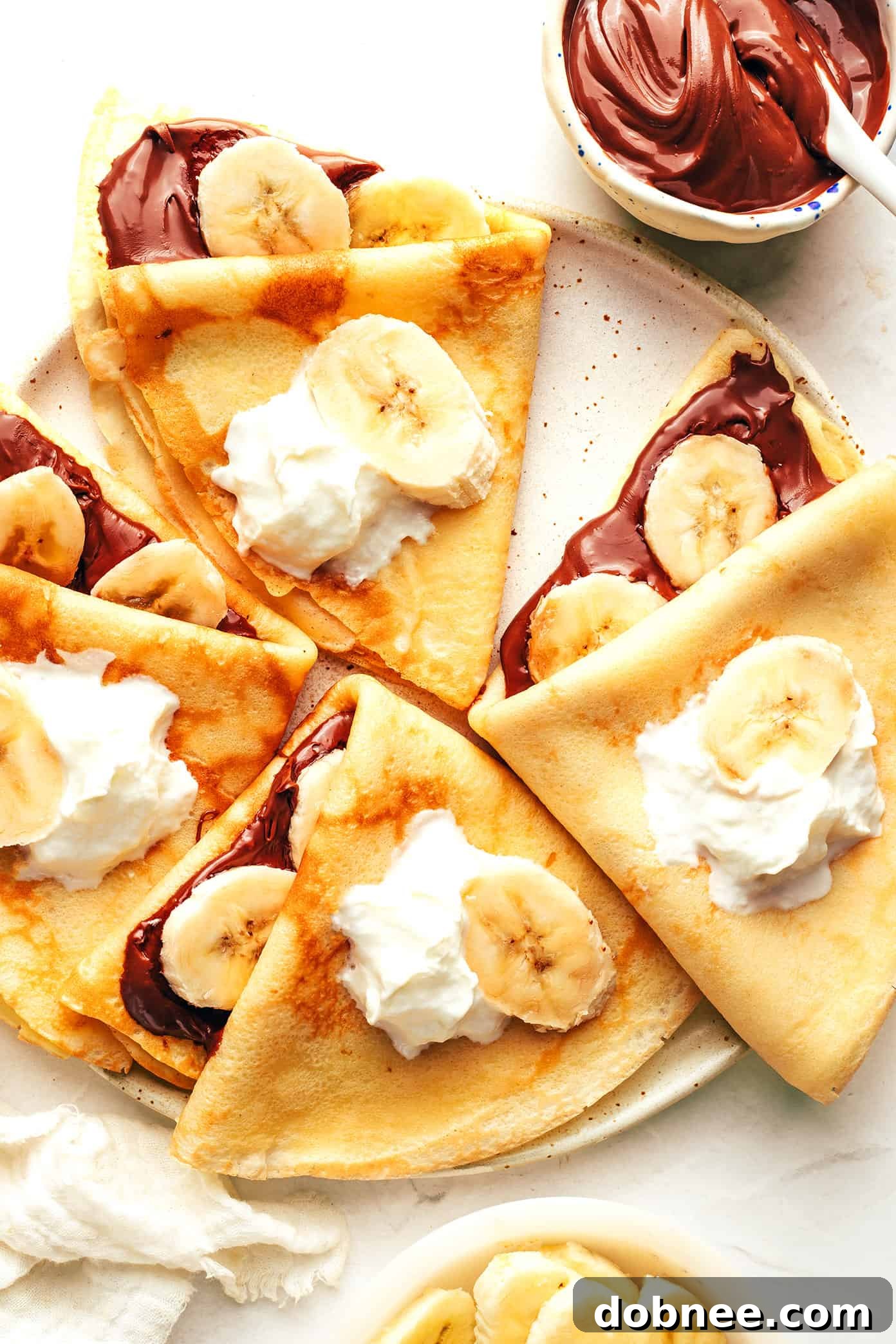
Customizing Your Crêpe Experience: Recipe Variations
The beauty of a classic crêpe recipe lies in its adaptability. This foundation allows for wonderful variations to suit different dietary needs or flavor preferences. Here are a few ways to customize your French crêpes:
- Gluten-Free Crêpes: Easily adapt this recipe by substituting traditional all-purpose flour with a 1:1 gluten-free all-purpose flour blend. Ensure the blend contains xanthan gum for optimal texture and elasticity, or add a quarter teaspoon per cup of flour if it doesn’t.
- Vegan Crêpes: To make this recipe entirely plant-based, replace the large eggs with a flax egg (1 tablespoon ground flaxseed mixed with 3 tablespoons water, allowed to sit for 5 minutes until gel-like). For the butter, use your favorite plant-based butter substitute. Ensure your milk choice is also dairy-free.
- Spice it Up: For a delightful aromatic twist, incorporate a hint of your favorite warming spices into the batter. Ground cinnamon, ground cardamom, ground ginger, or even a pre-mixed pumpkin pie spice blend can add a wonderful cozy dimension, particularly for autumn-inspired crêpes. Start with 1/4 to 1/2 teaspoon per batch.
- Savory Herb Infusion: For savory crêpes, finely chopped fresh herbs can transform the batter. Consider adding chives for a delicate oniony note, basil for a Mediterranean touch, dill for a fresh, slightly tangy flavor, rosemary for an earthy aroma, or tarragon for its distinctive anise-like essence. Approximately 1-2 tablespoons of fresh herbs work well.
Beyond the Batter: 10 Inspiring Crêpe Filling Ideas
The true magic of crêpes comes alive with their fillings. From simple classics to gourmet creations, the possibilities are virtually endless. Here are some beloved sweet and savory ideas to spark your culinary imagination:
Sweet Crêpe Sensations:
- Nutella and Sliced Bananas: A timeless combination. Spread a generous layer of creamy hazelnut spread and top with freshly sliced ripe bananas for a decadent treat.
- Fresh Strawberries and Whipped Cream: Simple elegance. Fill with juicy, ripe strawberries and a dollop of homemade whipped cream, perhaps with a sprinkle of powdered sugar.
- Bright Lemon Curd and Blueberries: A burst of sunshine. The tangy sweetness of lemon curd perfectly complements plump, fresh blueberries.
- Sautéed Apples with Cinnamon: A comforting, autumnal classic. Cook thinly sliced apples with a touch of butter, brown sugar, and cinnamon until tender.
- Sweet Ricotta and Mixed Berries: Light and refreshing. Combine creamy ricotta cheese with a touch of honey or vanilla, then fold in a medley of fresh raspberries, blackberries, and blueberries.
Savory Crêpe Delights:
- Classic Ham and Cheese: A French bistro staple. Fill with thinly sliced ham and your favorite melting cheese, like Gruyère or Swiss, then fold and lightly warm until the cheese is gooey.
- Sautéed Spinach and Feta: A wholesome and flavorful vegetarian option. Sauté fresh spinach with garlic until wilted, then crumble in tangy feta cheese.
- Hearty Sautéed Chicken, Mushrooms, and Onions: A satisfying meal. Cook diced chicken with sliced mushrooms and caramelized onions for a savory main course filling.
- Smoked Salmon, Cream Cheese, and Capers: An elegant brunch or appetizer. Spread a thin layer of cream cheese, add delicate slices of smoked salmon, and sprinkle with briny capers and fresh dill.
- Goat Cheese, Honey, and Walnuts: A sophisticated sweet and savory blend. Crumble creamy goat cheese inside, drizzle with a little honey, and add a sprinkle of toasted walnuts for crunch.

Crêpes FAQ: Your Questions Answered
To help you confidently create and enjoy your crêpes, here are answers to some frequently asked questions:
How do you pronounce crêpe in French? In French, the word crêpe is pronounced “krep.” The final “e” is silent. For a quick audio guide, you can listen here.
What is the fundamental difference between French crêpes and American pancakes? The primary distinction lies in their thickness and texture. French crêpes are notably thin, delicate, and often have slightly crispy, lacy edges, designed to be rolled or folded around fillings. American pancakes, conversely, are typically much thicker, fluffier, and leavened with baking powder or soda, resulting in a spongy texture meant to be stacked.
How can I prevent crêpes from sticking to the pan? A high-quality non-stick pan is your best friend when making crêpes. If you don’t have one, ensure your pan is very well seasoned and adequately greased with a thin layer of butter before *each* new crêpe. Overly hot pans can also cause sticking, so maintain a steady medium heat. Crucially, always wait for the crêpe to fully cook and release itself from the pan on the first side before attempting to flip it.
What is the best way to flip crêpes without tearing them? Patience and the right tool are key. Ensure the crêpe is fully cooked and has set on the first side – it should easily detach from the pan when gently nudged. Use a thin, wide, and flexible spatula to carefully slide beneath the entire crêpe. With a swift and confident wrist flick, flip the crêpe over. Avoid hesitant movements, which can cause tearing. This large thin spatula is highly recommended for its effectiveness.
Can I make crêpe batter ahead of time? Absolutely! In fact, resting the batter in the refrigerator for at least 30 minutes (and up to 36 hours) is highly recommended. This allows the flour to fully hydrate and the gluten to relax, resulting in a much smoother, more pliable batter that yields superior crêpes.
What kind of pan is best for making crêpes? While a dedicated crêpe pan (which typically has low sides and a flat bottom) is ideal, a good quality 8- to 10-inch non-stick sauté pan will work perfectly. The key is a flat bottom and a non-stick surface to ensure even cooking and easy flipping.
Why are my crêpes not thin enough? This is often due to using too much batter or not swirling the pan quickly enough. For an 8-10 inch pan, 1/4 cup of batter is typically the maximum. The moment the batter hits the hot pan, immediately tilt and swirl the pan to spread the batter into a thin, even layer before it sets. Practice makes perfect with this technique!
My crêpes are tearing when I try to flip them. What am I doing wrong? Tearing usually indicates one of two issues: the batter hasn’t rested long enough (leading to weaker gluten structure), or the crêpe isn’t fully cooked on the first side. Ensure you’ve chilled your batter for at least 30 minutes, and wait until the edges are golden and the center appears set and dry before attempting to flip.
Print Recipe

Classic French Crêpes Recipe
Author: Ali
Prep Time: 5 minutes
Cook Time: 10 minutes
Total Time: 15 minutes (plus 30 minutes chill time)
Yield: 8 to 10 crêpes 1x
Description
Unlock the secret to perfect French crêpes with this straightforward and incredibly delicious recipe! Using just 7 basic ingredients, you can effortlessly create thin, delicate crêpes that are ideal for any meal. Customize them with your favorite sweet or savory fillings for an unforgettable culinary experience.
Ingredients
Scale
- 2 tablespoons unsalted butter, melted (plus extra for greasing the pan)
- 1 1/4 cups whole milk (dairy or preferred non-dairy alternative)
- 2 large eggs
- 1 cup all-purpose flour
- 1 tablespoon maple syrup (optional, adjust to taste for sweet crêpes)
- 1 teaspoon pure vanilla extract
- 1/4 teaspoon fine salt
Instructions
- Blend the Batter: Combine all ingredients—melted butter, milk, eggs, flour, maple syrup (if using), vanilla extract, and salt—into a blender. Pulse for approximately 5 seconds. Use a rubber spatula to carefully scrape down any batter or flour clinging to the sides of the blender jar. Continue to pulse for another 5-10 seconds, or until the mixture is completely smooth and thoroughly combined. The ideal batter consistency should resemble that of heavy cream. If you find the batter too thick, stir in an additional tablespoon or two of milk, one at a time, until the desired fluidity is achieved. Conversely, if the batter seems too thin, add a small amount of extra flour, perhaps a teaspoon at a time, and blend until corrected.
- Chill for Perfection: Transfer the smooth batter to an airtight container, or simply cover your blender jug with its lid or plastic wrap. Refrigerate the batter for a minimum of 30 minutes. This resting period is crucial as it allows the flour to fully hydrate and the gluten to relax, which is essential for producing smooth, delicate, and non-tearing crêpes. The batter can be chilled for up to 36 hours, making this an excellent make-ahead option.
- Cook Your Crêpes: Once your batter is properly chilled and you are ready to cook, place an 8- to 10-inch non-stick sauté pan or crêpe pan over medium heat. Add approximately 1/4 tablespoon of butter to the pan and allow it to melt, swirling to coat the bottom evenly. Pour 1/4 cup of the chilled crêpe batter directly into the center of the hot pan. Immediately tilt and swirl the pan in a quick circular motion so that the batter spreads out into a large, thin, even circle across the entire bottom of the pan. Let the crêpe cook for about 1 minute, or until the edges begin to turn slightly golden brown and appear set, and the surface looks dry.
- Flip and Finish: Carefully slide a thin, flexible spatula (or a rubber spatula) underneath the crêpe, ensuring it is fully detached from the pan. With a swift, confident motion, flip the crêpe over to cook the second side. Continue to cook for another 45-60 seconds, or until it is lightly golden and cooked through. Once finished, transfer the cooked crêpe to a separate plate. Repeat this process with the remaining batter, adding a very thin coating of butter to the pan as needed before each new crêpe to prevent sticking and ensure a beautiful golden finish.
- Serve and Enjoy: Serve your freshly cooked crêpes immediately while they are delightfully warm and tender. Customize each crêpe by filling and/or topping it with your favorite sweet or savory ingredients. Whether it’s a simple sprinkle of sugar or an elaborate savory combination, these crêpes are sure to impress!