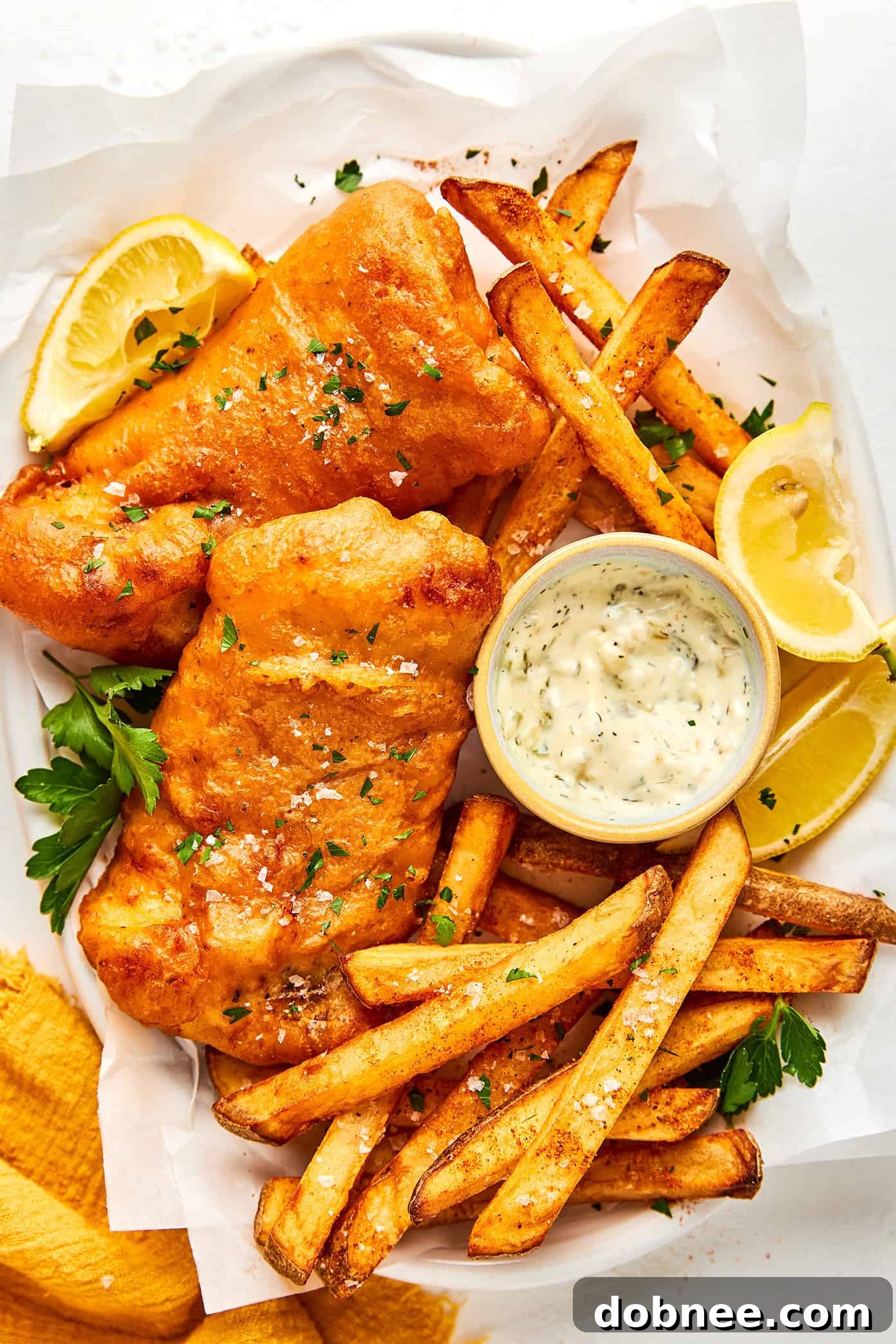
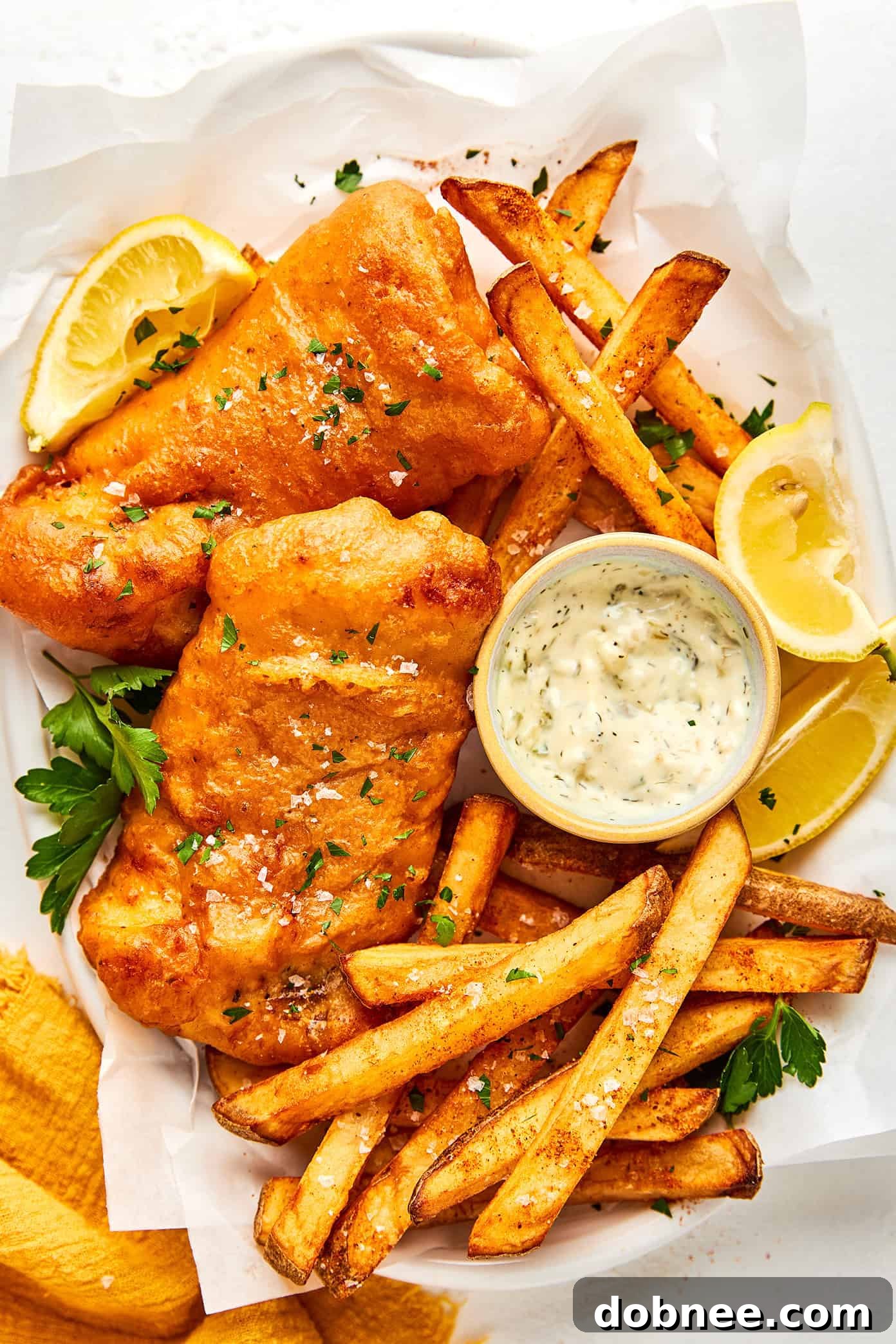
The Ultimate Old Bay Fish and Chips Recipe: A Culinary Journey to Crispy Perfection

For many, the mere mention of “Fish and Chips” conjures images of bustling British pubs, salty sea air, and a truly satisfying meal. This iconic dish, with its flaky, tender fish encased in a golden, crispy batter, perfectly paired with thick-cut, seasoned fries, holds a special place in the hearts of food lovers worldwide. While often reserved for takeout from beloved local establishments, the dream of recreating that unparalleled experience at home has inspired countless culinary adventures. If you’ve ever hesitated to tackle deep frying in your own kitchen, let me assure you: this Old Bay Fish and Chips recipe is not just worth the effort, it’s a revelation. Prepare to discover the best homemade fish and chips you’ve ever had, hands down. ♥
My own journey to mastering homemade fish and chips began with a simple craving and a determination to unlock the secrets of restaurant-quality results. For years, I, too, was content to leave the deep-frying to the professionals. Yet, the desire for a truly exceptional, consistently crispy, and flavor-packed version — one where the fish isn’t bland, the batter shatters with every bite, and the chips achieve an enviable golden crunch — became irresistible. After extensive experimentation and refinement in my test kitchen, I can confidently say that this recipe delivers precisely that. It’s a game-changer for anyone seeking authentic, incredibly delicious fish and chips right from their stovetop.
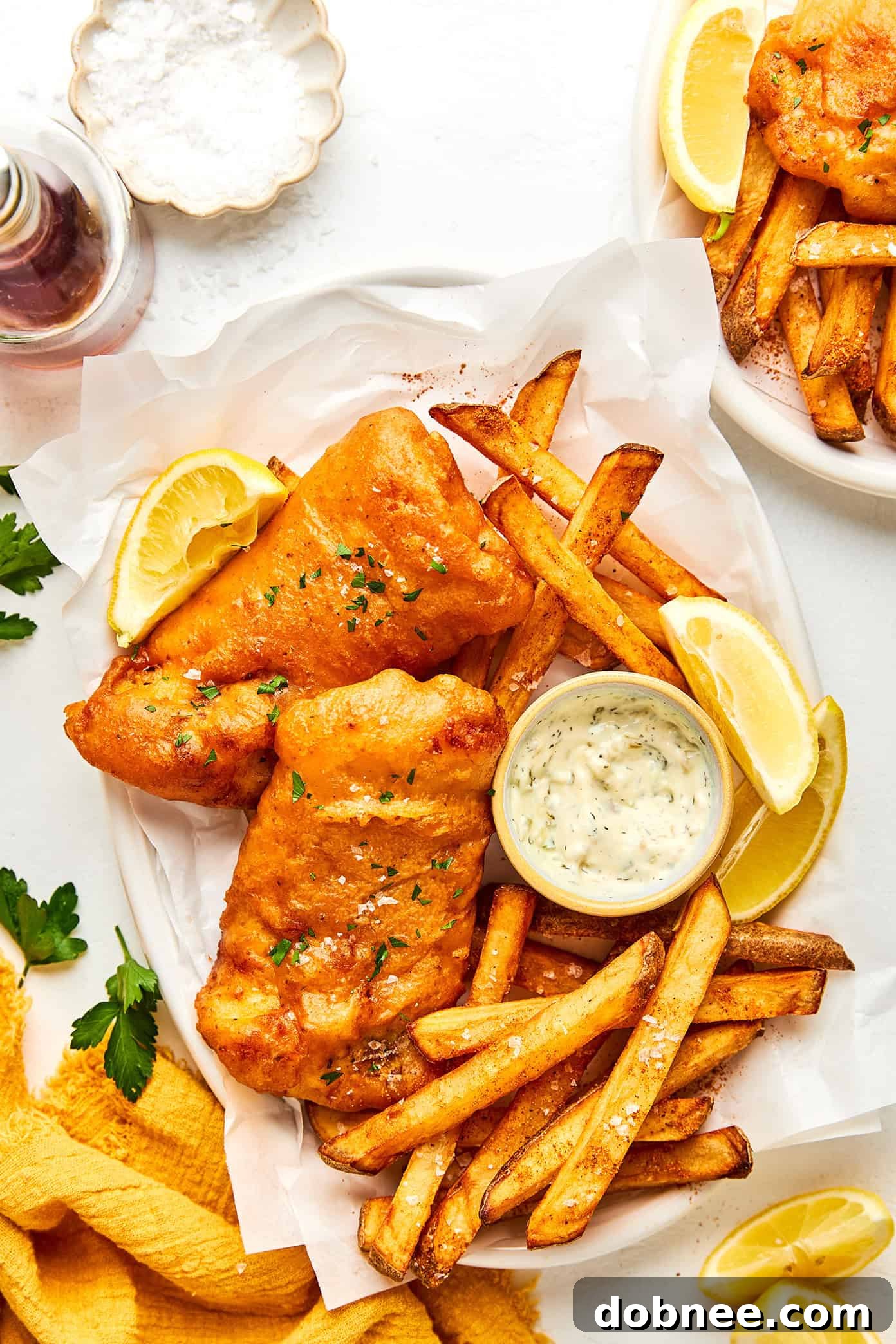
The magic truly lies in two pivotal, yet simple, secret ingredients: Old Bay seasoning and ice-cold beer. Old Bay infuses the batter with a distinctive, savory, and slightly spicy depth that elevates the fish from good to extraordinary. Coupled with the effervescence of cold beer, it creates a remarkably light, airy, and shatteringly crisp coating that adheres beautifully to the fish, sealing in its moisture. The accompanying chips are treated to the classic double-fry technique, ensuring they emerge golden brown, tender on the inside, and exceptionally crispy on the outside – a crunch that lasts! A generous squeeze of fresh lemon, a dollop of creamy tartar sauce, and a splash of malt vinegar complete this magnificent meal, transforming it into an unforgettable feast. It’s truly fish and chips perfection.
Deep frying can seem intimidating, but with the right guidance, it’s a skill anyone can master. Below, I’ve meticulously detailed all my essential test kitchen tips and tricks to ensure your first attempt is not just successful, but spectacular. Whether you’re a seasoned fryer or a complete novice, these insights will empower you to achieve flawless results. Trust me when I say, the joy and satisfaction of making this dish will have you wondering why you didn’t try it sooner. Get ready to impress yourself and everyone at your table!
Mastering the Fry: Essential Recipe Tips for Perfect Fish and Chips
Achieving truly exceptional homemade fish and chips involves a few key techniques that make all the difference. These invaluable tips, refined through countless batches, will guide you to a consistently delicious and perfectly textured outcome:
- Keep Your Batter Ice Cold. This isn’t just a suggestion; it’s a cornerstone for achieving that signature airy, crisp batter. The thermal shock created when cold batter hits hot oil prevents excess oil absorption, leading to a lighter, less greasy, and more shatteringly crisp coating. The carbonation in cold beer also contributes to the batter’s lightness, creating tiny air pockets during frying. If your kitchen is warm, don’t hesitate to pop your batter mixture into the refrigerator while your frying oil comes up to temperature. A chilled batter is your secret weapon for superior crispness.
- Thoroughly Dry Your Potatoes. After their essential soak in cold water (which removes excess starch for crispier fries), it’s absolutely crucial to pat your cut potatoes very dry. Any lingering moisture will react violently with the hot oil, causing splattering and drastically reducing the crispness of your fries. Lay them out on a clean kitchen towel or several layers of paper towels and blot them meticulously. Dry potatoes are happy potatoes, and happy potatoes make perfectly crispy chips.
- Utilize a Reliable Thermometer. Deep frying demands precision, and a good thermometer is your best friend. Frying oil that is too cool will result in greasy food because the batter and potatoes absorb too much oil before they have a chance to crisp up. Conversely, oil that is too hot will burn the exterior of your food before the interior is properly cooked. Maintaining the precise temperature, especially for the double-fry method, is paramount for golden, perfectly cooked, and non-greasy results. I highly recommend investing in a dependable deep-fry thermometer for consistent success.
- Never Overcrowd the Pot. This is another critical rule for successful deep frying. Adding too much food to your hot oil at once will significantly drop the oil’s temperature, leading to all the problems associated with frying in oil that’s too cool – greasy, soggy food. Fry your fish and chips in small, manageable batches, allowing the oil to recover its temperature between additions. This ensures even cooking and optimal crispness for every single piece. Patience here truly pays off!
- Rest Fried Items on a Wire Rack. Once fried, resist the urge to pile your crispy fish and chips directly onto a flat plate lined with paper towels. While paper towels help absorb excess oil, placing hot fried food directly on them or on a flat surface will trap steam underneath, quickly turning your perfectly crisp exterior soggy. Instead, transfer your cooked items to a wire rack set over a baking sheet. This allows air to circulate around all sides, preserving that coveted crispness while you finish frying the remaining batches.
- Embrace the Double-Fry for Unbeatable Chips. This classic technique is non-negotiable for truly spectacular, golden, and persistently crispy fries. The first fry, at a lower temperature (around 325°F), cooks the potatoes through, making them tender on the inside. After a brief rest, the second fry, at a higher temperature (375°F), is where the magic happens – it crisps up the exterior to a beautiful golden brown and locks in that tender interior. This two-stage process ensures your chips are perfectly cooked throughout and remain wonderfully crispy long after they come out of the oil. It’s an extra step that is absolutely worth the remarkable difference in texture and flavor.
Creative Culinary Twists: Variations to Elevate Your Fish and Chips
While the classic Old Bay Fish and Chips recipe is undoubtedly a masterpiece, there’s always room to explore and customize it to your personal preferences or mood. Here are several exciting variations to try, allowing you to put your own unique spin on this beloved dish:
- Sparkling Water for a Non-Alcoholic Batter. If you prefer to avoid alcohol or simply don’t have beer on hand, fear not! Chilled sparkling water or club soda makes an excellent substitute. The carbonation provides the same lift and crispness that beer offers, resulting in a light and airy batter without any alcoholic flavor. Ensure it’s very cold for the best results.
- Introduce a Spicy Kick. For those who appreciate a bit of heat, consider stirring a pinch of smoked paprika or cayenne pepper into your beer batter. Smoked paprika adds a delightful smoky undertone and a gentle warmth, while cayenne will deliver a more noticeable, fiery kick. Start with a small amount and adjust to your preferred spice level.
- Go Gluten-Free. Adapting this recipe for gluten sensitivities is surprisingly simple. Replace the all-purpose flour in both the fish dredging and the beer batter with a high-quality 1:1 gluten-free flour blend. Adding an extra tablespoon of cornstarch to the batter can help ensure it maintains its desired crispness and structure. Always check that your Old Bay seasoning is also certified gluten-free.
- Sweet Potato Fries as an Alternative. Craving something a little different for your “chips”? Swap out the russet potatoes for sweet potatoes. Cut them into similar ½-inch thick fries, soak them, and double-fry them just as you would regular potatoes. Sweet potato fries offer a delicious contrast of sweetness and earthiness to the savory fish, creating a delightful flavor profile.
- Amplify the Lemon Zest. Lemon is a traditional accompaniment to fish, and you can enhance its bright, refreshing notes even further. Add a teaspoon of finely grated lemon zest directly into your beer batter for an aromatic lift. Then, serve with an abundance of fresh lemon wedges and a generous squeeze of juice over the finished dish.
- Transform it into a Fried Shrimp Platter. Don’t limit yourself to just fish! This Old Bay-infused beer batter is also fantastic with shrimp. Use large, peeled, and deveined shrimp (tails on or off, as you prefer) in place of the fish. Follow the same dredging and frying instructions for a delectable fish-and-chips-inspired fried shrimp platter. Serve with the same classic accompaniments for a delightful seafood feast.
- Herb-Infused Batter. For a fresher, more aromatic batter, finely chop a tablespoon of fresh dill, chives, or parsley and fold it into the beer batter just before frying. These herbs will add a vibrant, herbaceous note that complements the fish beautifully.
- Experiment with Different Beers. While a cold lager or pale ale is recommended for its crispness, feel free to experiment with other beer styles. A stout can add a deeper, malty flavor, while a light IPA might introduce a subtle hoppy bitterness. Just ensure the beer is cold and carbonated.
Frequently Asked Questions About Homemade Fish and Chips
For classic fish and chips, the best choices are firm, white, flaky fish varieties with a mild flavor. Cod and haddock are traditionally considered the top contenders due to their excellent texture and ability to hold up well to frying. However, halibut, pollock, or even tilapia can also work beautifully. Look for fresh fillets that are at least 1-inch thick, as thinner fillets can overcook quickly. Avoid oily fish like salmon, as they don’t typically achieve the same desired texture in batter.
Yes, absolutely! Preparing components in advance can make the frying process much smoother. You can cut and soak the potatoes for the chips several hours or even a day ahead. After cutting, keep them submerged in cold water in the refrigerator. Just remember to drain them very thoroughly and pat them completely dry right before you’re ready to fry to ensure maximum crispness.
Keeping your fried fish and chips warm and crispy while you cook in batches is key to serving a cohesive meal. Preheat your oven to a low temperature, around 200°F (95°C). As each batch of fish and fries finishes frying, transfer them to a wire rack set over a baking sheet and place them in the warm oven. This setup prevents them from steaming and becoming soggy, while keeping them hot until you’re ready to serve everything together.
Yes, high-quality frying oil can typically be reused a few times, depending on what you’ve fried and how clean you keep it. Once the oil has completely cooled, carefully strain it through a fine-mesh sieve lined with cheesecloth (if you have it) into a clean, airtight container. Store the container in a cool, dark place or in the refrigerator. Avoid reusing oil that smells rancid, has changed color significantly, or has a lot of burnt bits, as this will impart off-flavors to your next batch of food. Proper straining helps extend its life.
For deep frying, you want a neutral-flavored oil with a high smoke point. Excellent choices include canola oil, vegetable oil, peanut oil, and avocado oil. These oils can withstand the high temperatures required for frying without breaking down or imparting undesirable flavors to your food. Avoid olive oil or butter, as they have lower smoke points and will burn easily.
There are a few common reasons why batter might not stick. Firstly, ensure your fish fillets are thoroughly patted dry before seasoning and dredging in flour. Excess moisture on the fish can prevent the batter from adhering. Secondly, the initial dredge in plain flour helps create a surface for the wet batter to cling to. Make sure you shake off any excess flour, leaving a thin, even coat. Finally, ensure your beer batter is the right consistency – it should be thick enough to coat the back of a spoon without being overly heavy or too thin.
The Secret Weapon: Why Old Bay Seasoning Makes All the Difference
While many fish and chips recipes rely on a simple salt and pepper seasoning, our special twist comes from the inclusion of Old Bay seasoning. This iconic blend, with its roots in Maryland, is far more than just a seasoning for seafood; it’s a flavor powerhouse. Composed of a unique blend of 18 herbs and spices, including celery salt, paprika, red pepper, and black pepper, Old Bay delivers a complex, savory, and subtly spicy profile that perfectly complements the delicate flavor of white fish.
Incorporating Old Bay into both the fish seasoning and the beer batter achieves a consistent flavor throughout the dish. It prevents the fish from tasting bland, which can often be the pitfall of homemade fried fish. The nuanced spices in Old Bay don’t just add flavor; they enhance the natural sweetness of the fish and provide a depth that makes each bite utterly irresistible. It’s the distinguishing factor that truly elevates this recipe from good to gourmet, bringing a coastal, restaurant-quality taste right to your home kitchen. If you’ve never cooked with Old Bay before, prepare for a delightful surprise – it’s a staple you’ll want to keep on hand!
Perfect Pairings: What to Serve with Your Old Bay Fish and Chips
No plate of fish and chips is complete without its traditional accompaniments. These thoughtful additions not only enhance the flavor but also add to the overall authentic experience:
- Classic Tartar Sauce: Creamy, tangy tartar sauce is an absolute must. Its rich texture and bright flavor, often featuring dill, capers, and pickles, cut through the richness of the fried fish beautifully.
- Fresh Lemon Wedges: A generous squeeze of fresh lemon juice is essential. The acidity brightens the flavors of both the fish and the chips, adding a refreshing contrast to the savory, fried elements.
- Malt Vinegar: For a truly authentic British experience, a drizzle of malt vinegar over your chips is highly recommended. Its distinct tangy and slightly sweet flavor is a classic pairing that shouldn’t be missed.
- Chopped Fresh Parsley: While optional, a sprinkle of fresh, chopped parsley adds a pop of color and a fresh, herbaceous note that elevates the presentation and flavor.
- Coleslaw or Mushy Peas: For a more complete meal, consider serving your fish and chips with a crisp, homemade coleslaw or traditional British mushy peas. These sides add texture, freshness, and a touch of authenticity.
- Pickled Onions or Gherkins: Small, tangy pickled onions or gherkins can provide an excellent sharp counterpoint to the rich flavors of the fried elements.
Deep Frying Safety First: Precautions for Your Kitchen
Deep frying can be one of the most rewarding cooking methods for achieving crispy textures, but it also requires careful attention to safety. Handling large quantities of hot oil demands respect and adherence to basic precautions to prevent accidents:
- Choose the Right Equipment: Always use a heavy-bottomed pot or Dutch oven that is large enough to hold the oil and food without overflowing. The sides should be high enough to prevent splattering. A sturdy set of tongs and a spider strainer are also essential for safely handling food in hot oil.
- Never Fill the Pot Too Full: Only fill your pot with oil about one-third to one-half full. This leaves ample room for the oil to bubble up when food is added without overflowing, which could lead to dangerous spills and fires.
- Keep a Lid and Fire Extinguisher Handy: In the event of a grease fire, never use water. Water will cause the oil to splatter and intensify the fire. Instead, carefully slide a tight-fitting lid over the pot to smother the flames. A Class K fire extinguisher, designed for kitchen fires, should always be easily accessible.
- Maintain a Stable Temperature: Use a deep-fry thermometer and adjust your heat source to keep the oil at a consistent temperature. Overheating oil can make it smoke and potentially ignite.
- Add Food Carefully: Always lower food gently into the hot oil, away from your body, to minimize splattering. Never drop food in from a height.
- Ensure a Dry Workspace: Keep your cooking area clean, dry, and free from clutter. Water near hot oil is extremely dangerous.
- Ventilation is Key: Ensure good ventilation in your kitchen to dissipate cooking fumes and prevent the buildup of smoke. Turn on your range hood or open a window.
- Supervise Constantly: Never leave hot oil unattended. Stay in the kitchen and monitor the frying process at all times.
By following these safety guidelines, you can enjoy the delicious results of deep frying with confidence and peace of mind.
Storage and Reheating Tips for Leftover Fish and Chips
While fish and chips are undeniably best enjoyed fresh, you might occasionally find yourself with leftovers. Reheating fried food can be tricky, as the goal is to revive its crispness without drying it out. Here’s how to store and reheat your Old Bay Fish and Chips effectively:
Storage Tips:
- Cool Completely: Before storing, allow the fried fish and chips to cool completely at room temperature. This prevents condensation, which can lead to sogginess in storage.
- Airtight Container: Place the cooled fish and chips in an airtight container. You can separate the fish from the chips with a piece of parchment paper to help maintain their individual textures.
- Refrigerate Promptly: Store in the refrigerator for up to 2-3 days. While they can last a bit longer, the quality of fried foods diminishes quickly.
Reheating Tips:
Avoid the microwave, as it will make your fish and chips soggy. The best methods for reheating prioritize dry heat:
- Oven Method (Recommended for Best Crispness):
- Preheat your oven to 375°F (190°C).
- Arrange the fish and chips in a single layer on a wire rack set over a baking sheet (this helps air circulate and keeps them crisp).
- Heat for 10-15 minutes, or until thoroughly heated through and crisp to your liking. The exact time will depend on the thickness of the fish and fries.
- Air Fryer Method (Quick and Effective):
- Preheat your air fryer to 350°F (175°C).
- Place the fish and chips in a single layer in the air fryer basket, ensuring not to overcrowd it.
- Air fry for 5-8 minutes, shaking the basket halfway through for fries, and flipping the fish once, until hot and crispy.
With these tips, you can still enjoy your delicious homemade Old Bay Fish and Chips even a day or two after preparing them!
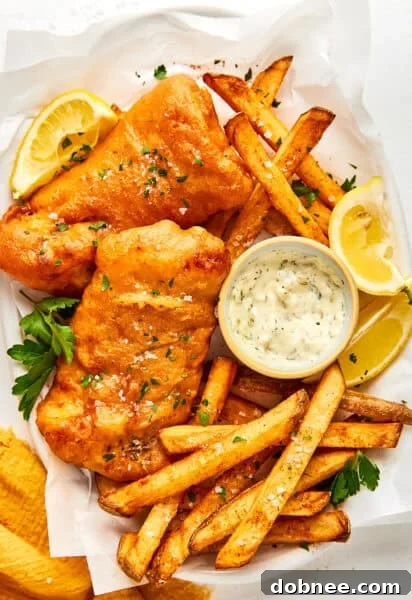
Old Bay Fish and Chips
Author: Ali
Prep Time: 25 mins
Cook Time: 20 mins
Total Time: 45 mins
Yield: 4 servings 1x
Ingredients
Scale
For the Fish:
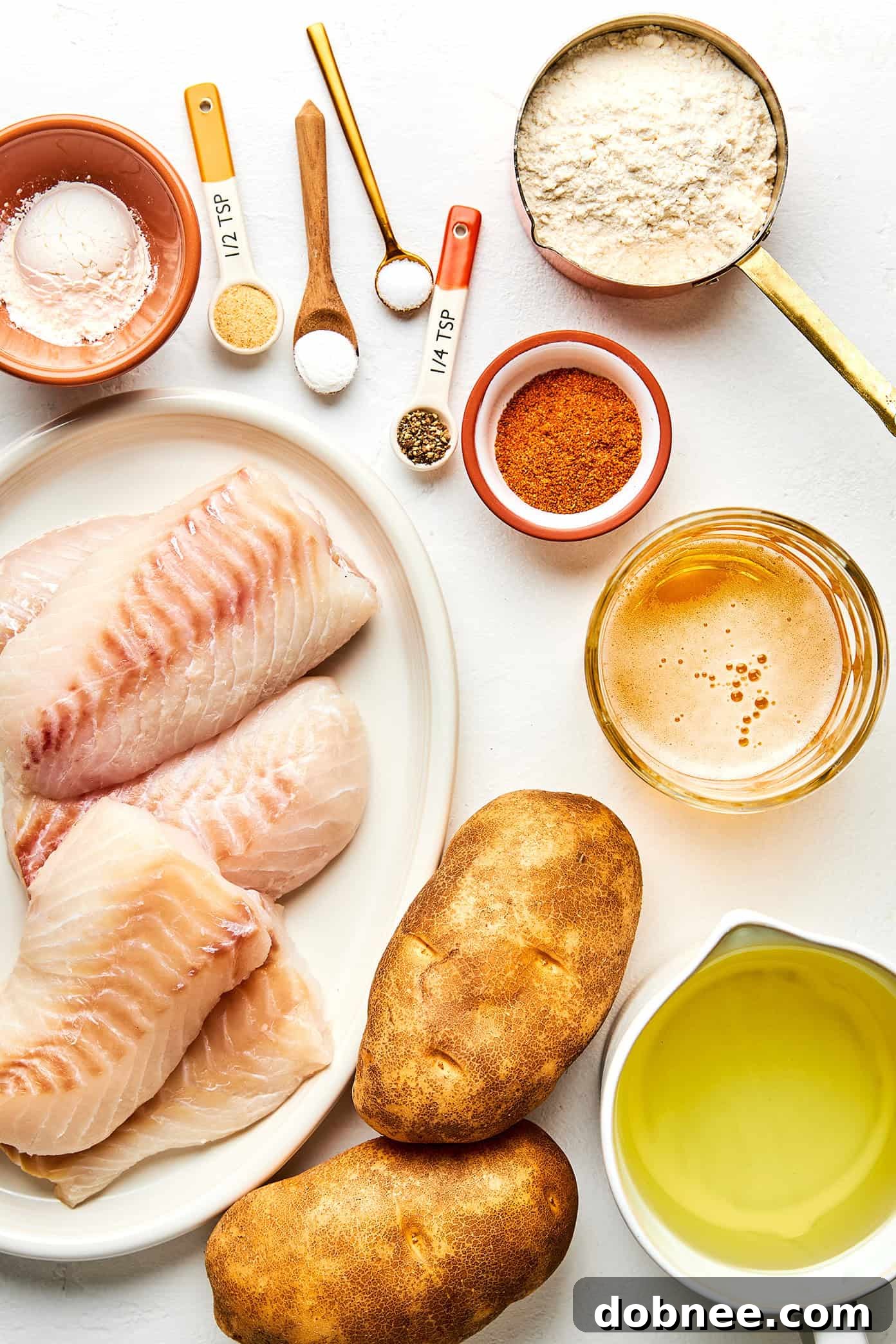
- 1 1/2 pounds (680g) firm white fish (such as cod, haddock, halibut or pollock), cut into 4–6 portions
- 1/2 teaspoon Old Bay seasoning
- 1/4 teaspoon fine sea salt
- 1/4 teaspoon freshly-ground black pepper
- 1/2 cup (60g) all-purpose flour
For the Beer Batter:
- 1 cup (120g) all-purpose flour
- 2 tablespoons cornstarch
- 1 1/2 teaspoons Old Bay seasoning
- 1/2 teaspoon garlic powder
- 1/2 teaspoon baking powder
- 1/2 teaspoon fine sea salt
- 1 cup cold lager or pale ale
For the Chips (Fries):
- 2 large russet potatoes (about 1½ pounds / 680g), cut into ½-inch-thick fries
- Neutral oil, for frying (such as canola, vegetable, peanut or avocado oil)
For Serving:
- Flaky sea salt
- Lemon wedges
- Tartar sauce
- Malt vinegar
- Chopped fresh parsley (optional)
- Extra Old Bay seasoning and fine sea salt, for finishing the fries
Instructions
- Prepare the Potatoes. Cut the russet potatoes into uniform, thick-cut fries, approximately ½-inch wide. Place them immediately into a large bowl of cold water and let them soak for at least 20 minutes (or up to several hours in the fridge). This crucial step removes excess surface starch, which is key to achieving that desirable crispy texture when fried.
- Preheat the Frying Oil. In a large, heavy-bottomed pot or Dutch oven, pour about 2–3 inches of neutral frying oil (such as canola, vegetable, peanut, or avocado oil). Heat the oil over medium-high heat. Using a deep-fry thermometer, bring the oil temperature to precisely 325°F (160°C).
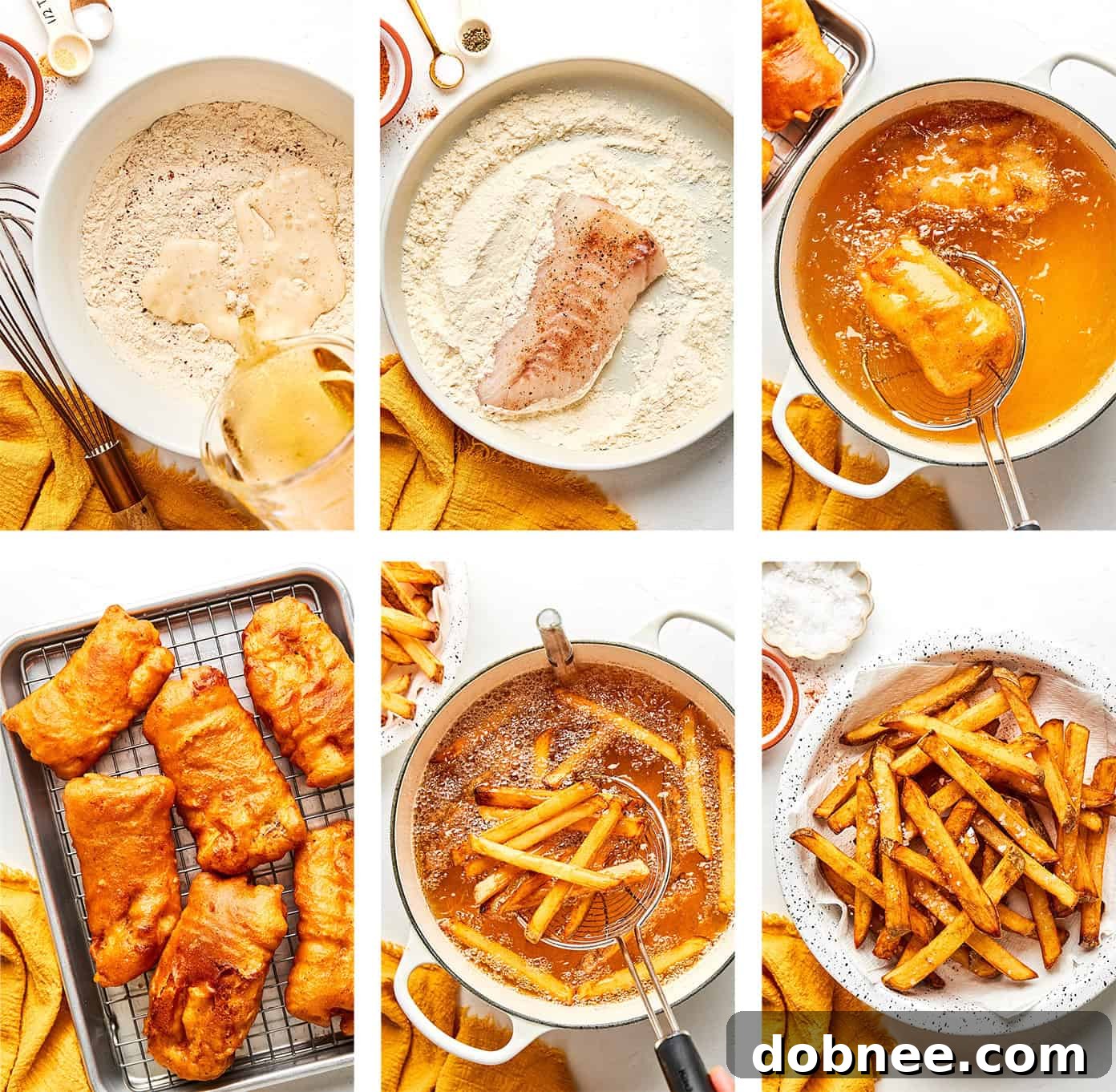
- Par-Cook the Fries (First Fry). Drain the soaked potatoes thoroughly and pat them exceptionally dry with clean kitchen towels or paper towels. Fry the potatoes in small, manageable batches to avoid overcrowding the pot, which would drop the oil temperature. Fry each batch for about 4–5 minutes, or until the fries are tender but still pale and not yet golden. Using a spider strainer, transfer the par-cooked fries to a wire rack set over a baking sheet. Set aside. Increase the oil temperature to 375°F (190°C) for the second fry and fish.
- Prepare the Beer Batter. In a medium-sized mixing bowl, whisk together the all-purpose flour, cornstarch, Old Bay seasoning, garlic powder, baking powder, and fine sea salt until all dry ingredients are thoroughly combined and no lumps remain. Gradually pour in the ice-cold lager or pale ale, whisking continuously until a smooth, thick batter forms. The batter should be thick enough to evenly coat the back of a spoon without being too heavy. Keep it cold if your kitchen is warm.
- Season and Dredge the Fish. Pat the fish portions thoroughly dry with paper towels – this is vital for the batter to adhere properly. Lightly season each piece of fish on all sides with a pinch of Old Bay seasoning, fine sea salt, and freshly-ground black pepper. Next, dredge each fish portion in the ½ cup of all-purpose flour, ensuring it’s fully coated, then gently shake off any excess flour. This flour layer creates a perfect surface for the wet batter.
- Batter and Fry the Fish. Once the oil reaches 375°F (190°C), carefully dip one piece of the floured fish into the cold beer batter, ensuring it’s completely coated. Let any excess batter drip off for a few seconds. Gently lower the battered fish into the hot oil, away from your body. Fry in batches for about 4–5 minutes per side (approximately 8-10 minutes total, depending on thickness), turning once if needed, until the batter is deeply golden brown, incredibly crisp, and the fish inside flakes easily with a fork. Using your spider strainer, carefully transfer the cooked fish to a clean wire rack set over a baking sheet to drain excess oil and maintain crispness.
- Finish Frying the Chips (Second Fry). Return the par-cooked fries to the hot oil (still at 375°F / 190°C). Fry them for another 2–3 minutes, or until they are beautifully golden brown and irresistibly crispy. Remove them promptly with the spider strainer and transfer them to a fresh paper-towel-lined plate or a clean wire rack. Immediately sprinkle them generously with flaky sea salt and an additional light pinch of Old Bay seasoning for extra flavor.
- Serve Immediately. Arrange the hot, crispy beer-battered fish and golden fries on serving plates. Garnish with plenty of fresh lemon wedges, a generous dollop of creamy tartar sauce, and a side of malt vinegar. If desired, sprinkle with fresh chopped parsley for a touch of color and freshness. Enjoy your authentic homemade Old Bay Fish and Chips right away while everything is at its peak crispness and temperature!
Equipment
Old Bay Seasoning
Buy Now →
Spider Strainer
Buy Now →
Wire Rack
Buy Now →
Deep Fry Thermometer
Buy Now →