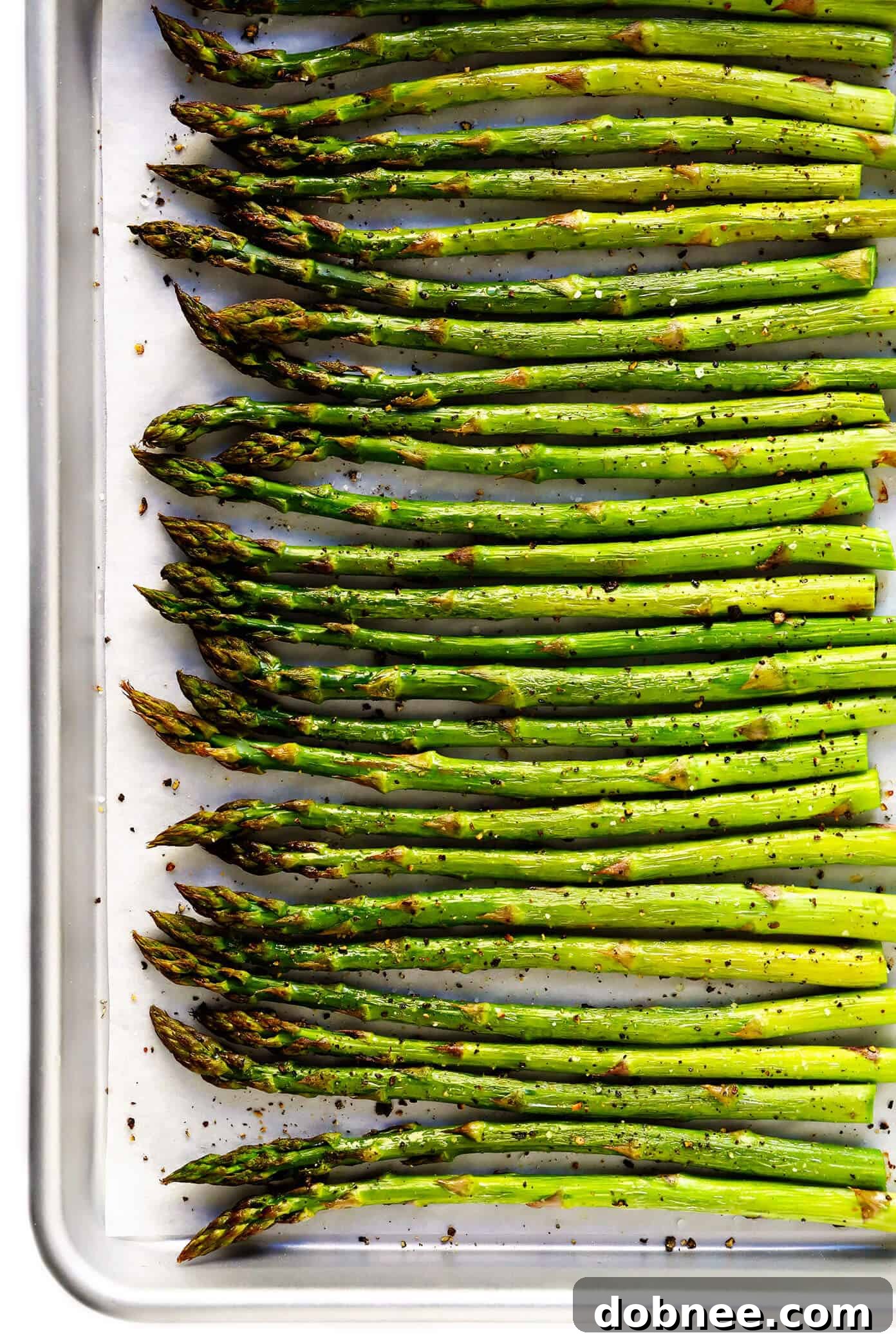
Unlock the secret to delicious, perfectly roasted asparagus every time with our expert tips, seasoning ideas, and versatile serving suggestions!
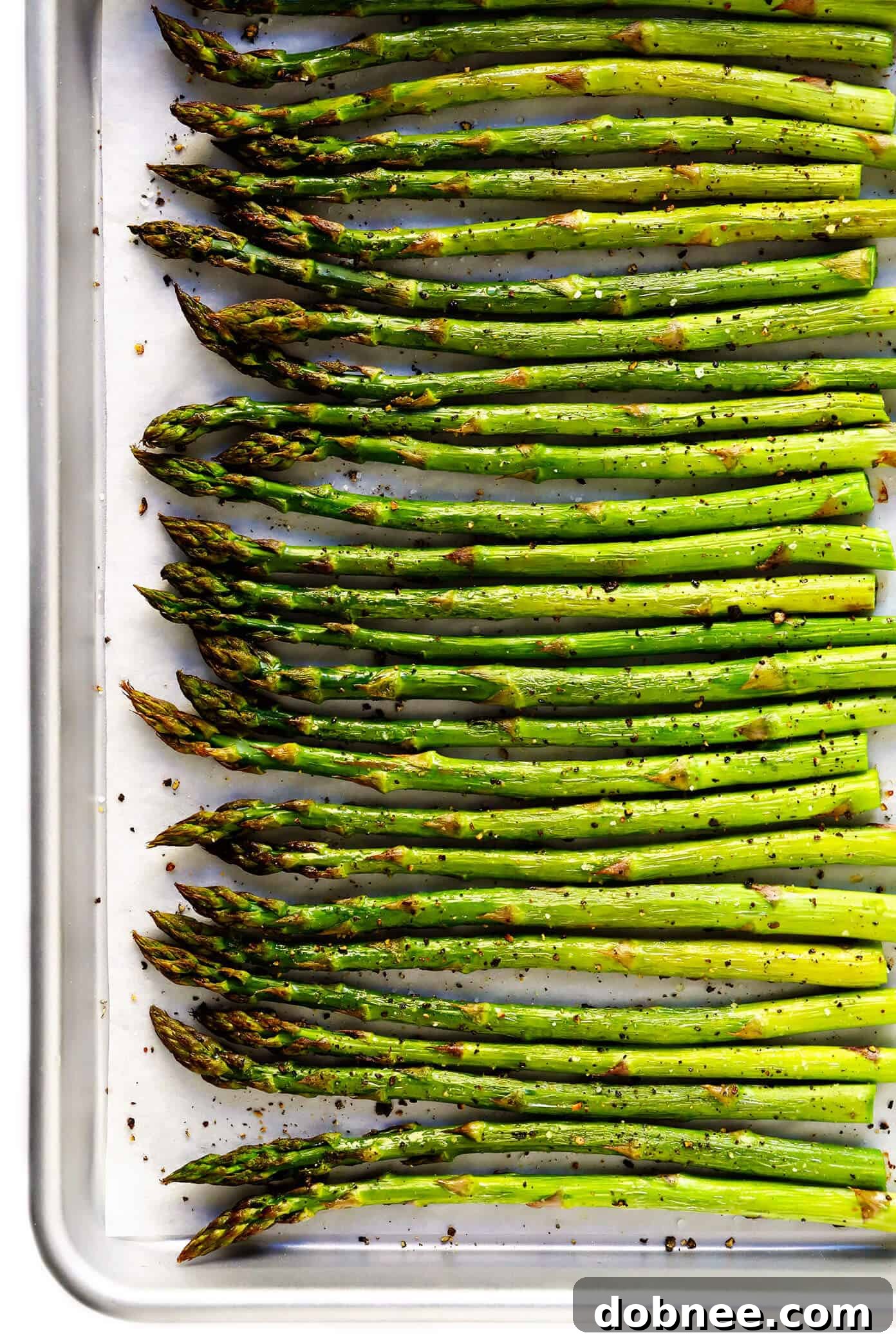
The Ultimate Guide to Perfectly Roasted Asparagus
As the days grow longer and nature reawakens, so does our craving for fresh, vibrant produce. And for many, the arrival of springtime signals the peak season for one of the garden’s most exquisite treasures: asparagus! Here in our kitchen, roasted asparagus isn’t just a dish; it’s a seasonal celebration. We embrace this versatile vegetable with enthusiasm, roasting it as often as possible while it’s at its freshest and most flavorful. Whether enjoyed as a stand-alone healthy side dish or incorporated into more complex meals, perfectly cooked asparagus elevates any plate.
While a simple preparation of olive oil, salt, and pepper often yields the most sublime results, there’s a world of flavor waiting to be explored with additional seasonings and sauces. This comprehensive guide will walk you through everything you need to know: from selecting the freshest spears at your local market, mastering the art of trimming those stubborn tough ends, to our go-to roasting method. Plus, we’ll dive deep into creative variations, storage tips for any mythical leftovers, and how to seamlessly integrate this nutritional powerhouse into a myriad of dishes. Get ready to transform your kitchen into an ode to spring!
Why Roasting is the Best Way to Cook Asparagus
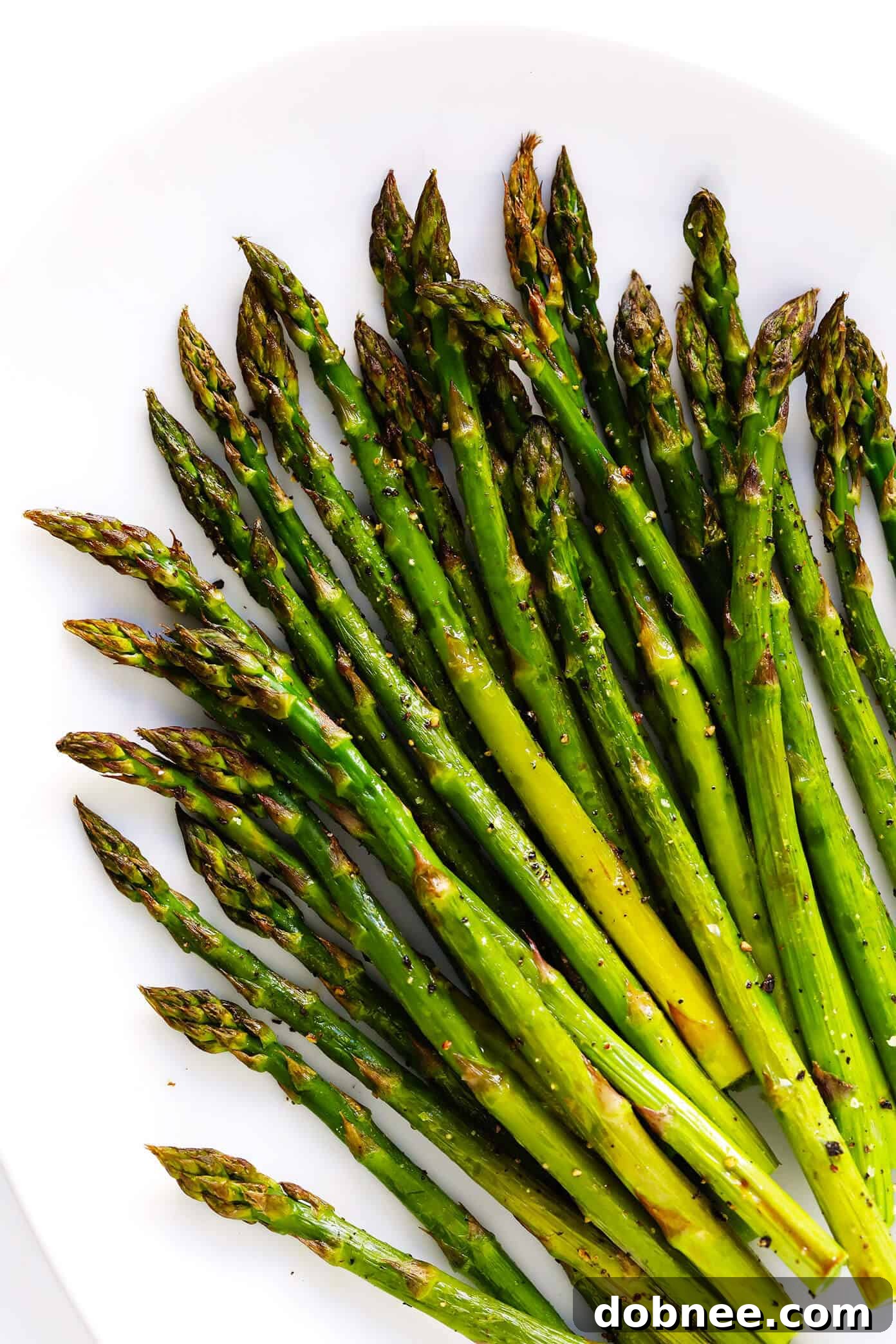
When it comes to preparing asparagus, roasting stands out as arguably the best method, transforming simple green spears into a caramelized, tender, and intensely flavorful treat. Unlike steaming or boiling, which can sometimes leave asparagus watery and bland, roasting brings out its natural sweetness and creates a delightful slightly crisp texture on the outside while maintaining tenderness within. The high heat of the oven not only cooks the asparagus quickly but also imparts a subtle nutty flavor through the Maillard reaction, a browning process that enhances its natural sugars. This method requires minimal effort and supervision, making it perfect for busy weeknights or as an elegant addition to a special meal. Plus, the dry heat of the oven ensures even cooking, resulting in consistent perfection across every spear.
Selecting the Best Fresh Asparagus
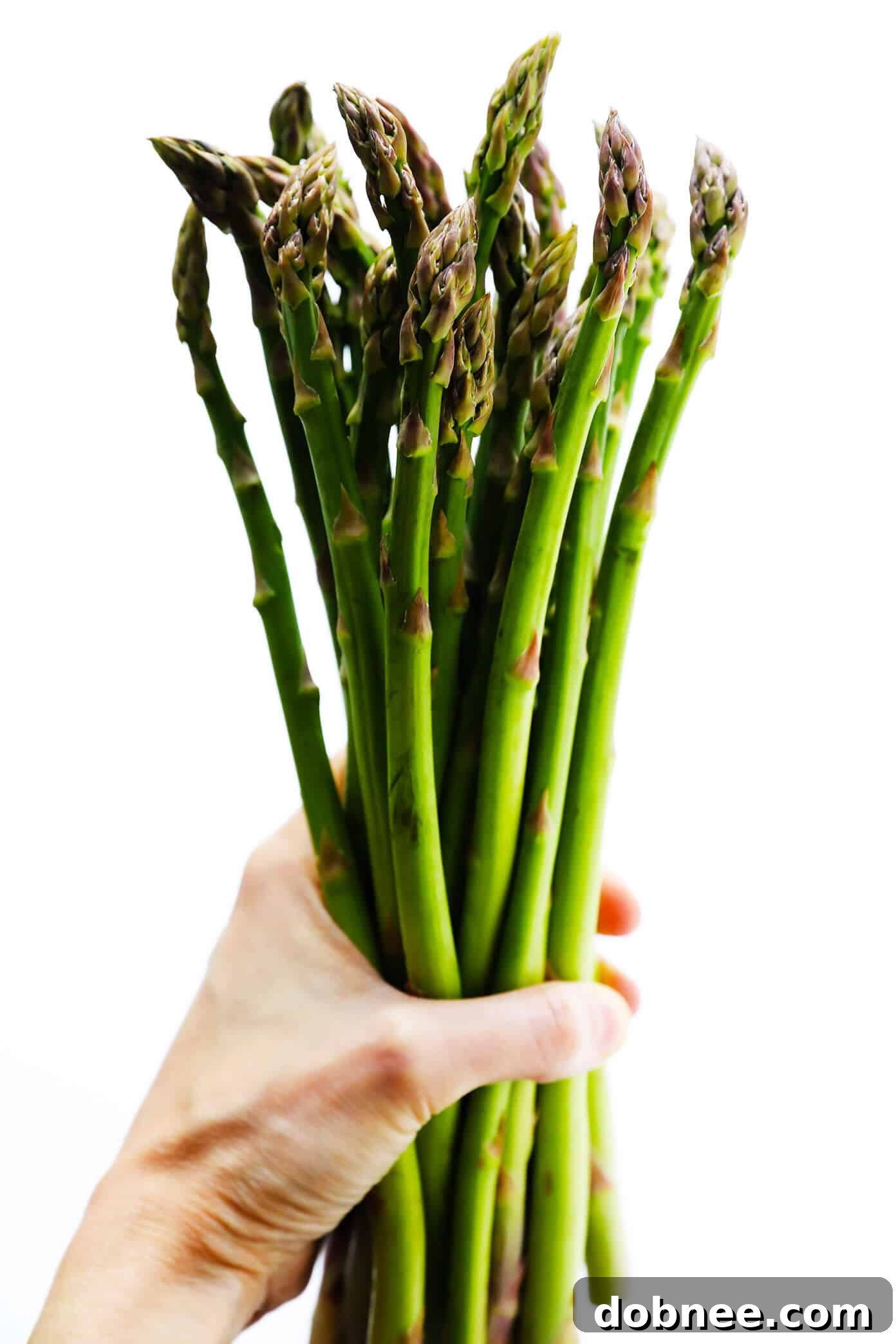
The foundation of any great dish begins with quality ingredients, and roasted asparagus is no exception. Choosing the freshest asparagus is crucial for achieving the best flavor and texture. Here’s what to look for when you’re at the grocery store or farmer’s market:
- Color and Firmness: Seek out spears that are vibrantly green, almost jewel-toned, with a slight purple tinge often visible towards the tips. They should feel firm and crisp to the touch, not rubbery or limp. Avoid any asparagus that shows signs of wilting, dullness, or yellowing, as these are indicators of age.
- Tips: The tips of the asparagus spears should be tightly closed and compact. If they are splayed open or slimy, the asparagus is past its prime.
- Stalks: Whether you prefer thick or thin asparagus, the stalks should be smooth and uniform in appearance. The thickness typically dictates cooking time but doesn’t necessarily indicate a difference in quality or flavor, it’s more a matter of personal preference. Thinner spears tend to be more tender and cook faster, while thicker spears offer a meatier bite.
- Smell: Fresh asparagus should have a subtle, earthy aroma. An unpleasant or strong sulfuric smell suggests that it has started to spoil.
Preparing Asparagus: Trimming the Tough Ends
Before roasting, proper trimming of asparagus is essential to remove the woody, fibrous ends that can be unpleasant to eat. The natural breaking point of an asparagus spear is an excellent guide. To find it, gently bend a spear towards its base until it naturally snaps. This will reveal where the tough, woody part ends and the tender, edible portion begins. Use this as a guide to trim the rest of the bunch with a sharp knife, ensuring minimal waste and perfectly tender results. After trimming, give the asparagus a good rinse under cold water to remove any dirt or grit, then pat them thoroughly dry with a clean kitchen towel or paper towels. Removing excess moisture is key to achieving that desirable crisp-tender texture and promoting beautiful caramelization in the oven.
Our Essential Oven Roasted Asparagus Recipe
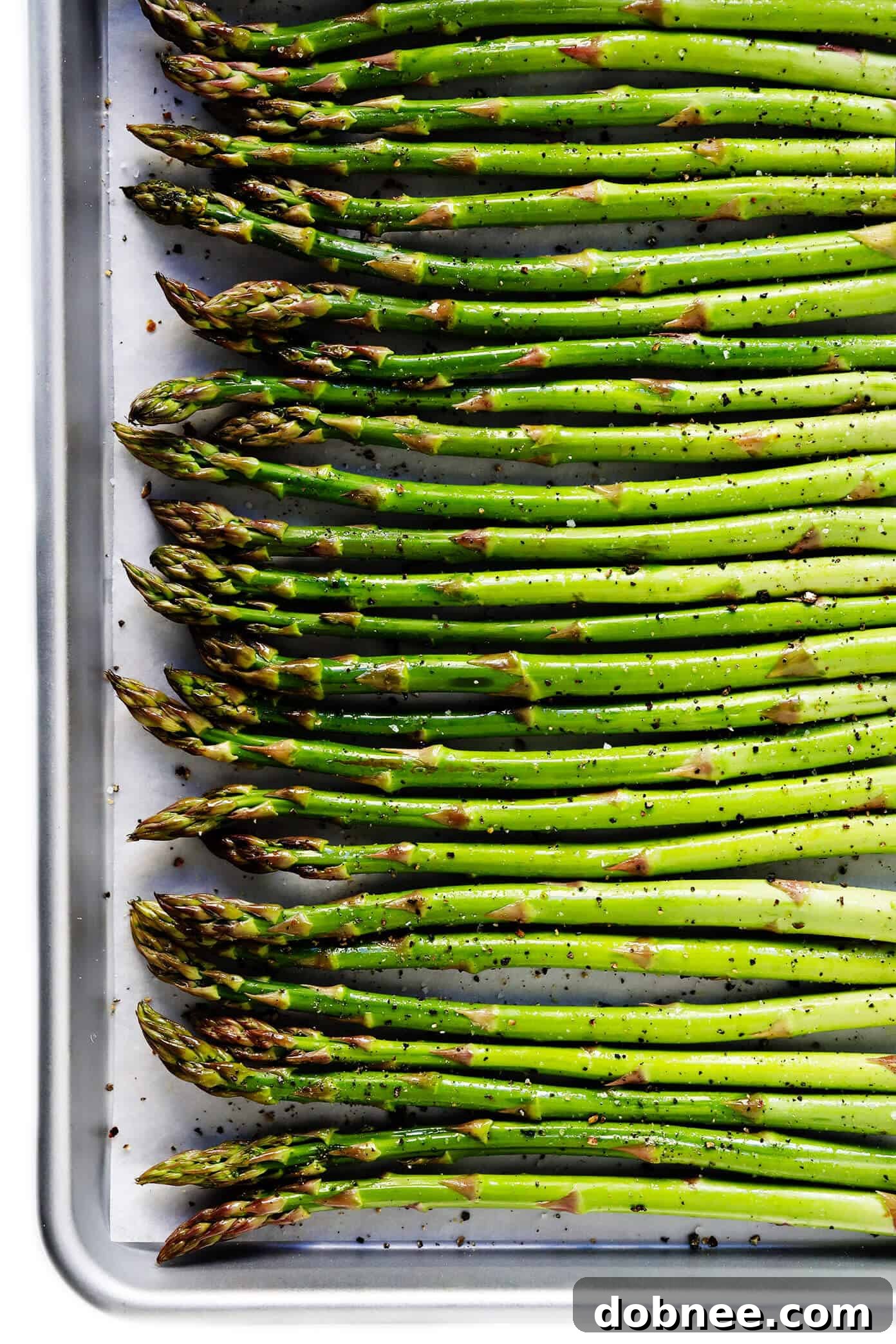
This is our ultimate, foolproof method for roasting asparagus, ensuring perfectly tender and flavorful spears every single time. It’s incredibly simple, requiring just a few basic ingredients, but yields impressive results that will make roasted asparagus a staple in your meal rotation.
Ingredients:
- 1 pound Fresh Asparagus: Washed and tough ends trimmed (as described above). This amount typically serves 2-4 people as a side dish.
- 1 tablespoon Olive Oil: Extra virgin olive oil is preferred for its flavor, but any good quality cooking oil like avocado oil will work. The oil helps to tenderize the asparagus and encourages beautiful caramelization.
- Fine Sea Salt: To enhance the natural flavors of the asparagus. Start with a generous pinch and adjust to your taste preferences.
- Freshly-Cracked Black Pepper: Adds a subtle warmth and aromatic complexity. Again, season generously to your liking.
Step-by-Step Instructions:
- Preheat Your Oven: Begin by preheating your oven to a robust 425°F (220°C). This high temperature is crucial for achieving that ideal crisp-tender texture. Line a large baking sheet with parchment paper. Parchment paper prevents sticking and makes cleanup a breeze, ensuring your asparagus doesn’t fuse to the pan.
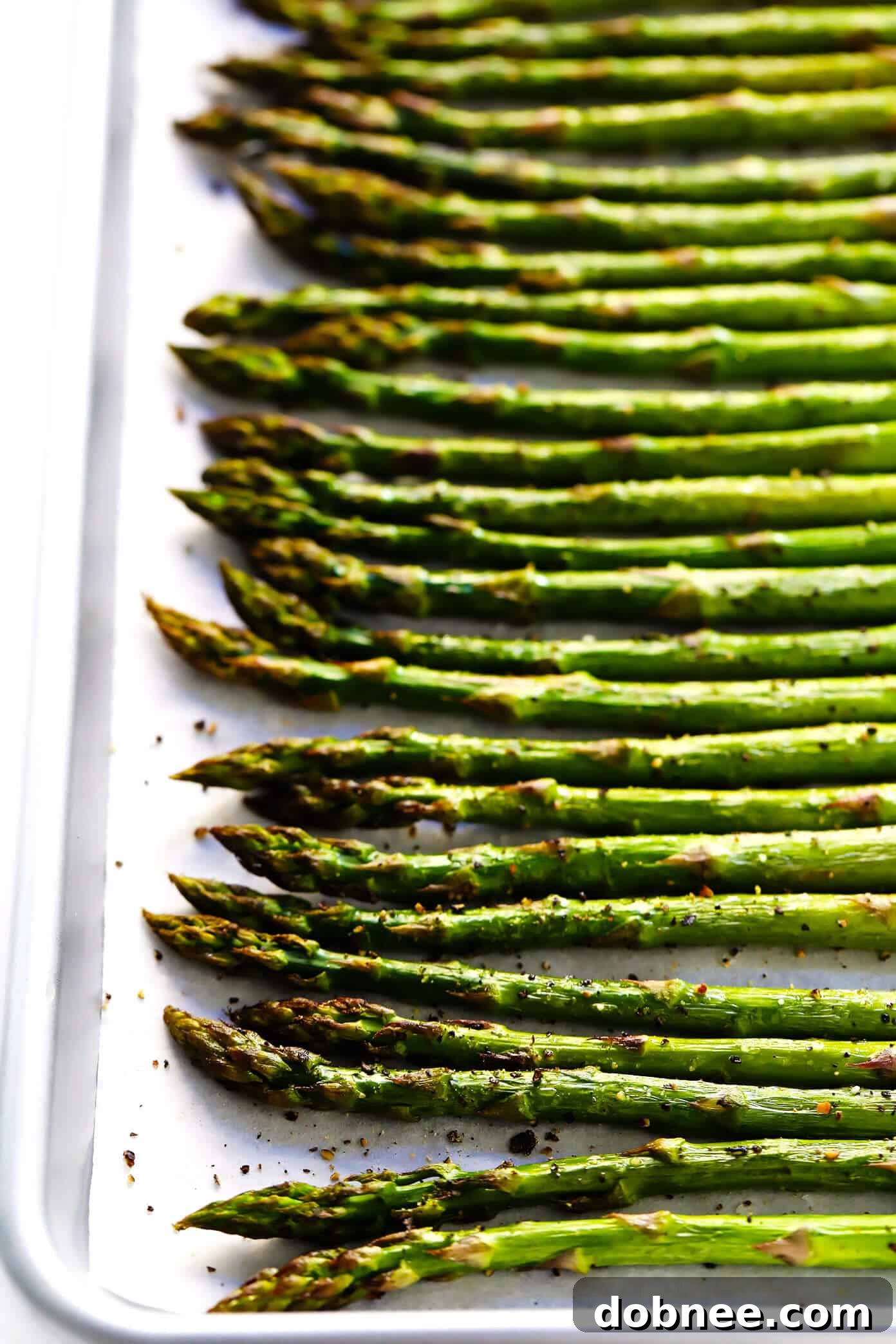
- Prepare the Asparagus: Spread the trimmed and dried asparagus spears in a single, even layer on the prepared baking sheet. It’s important not to overcrowd the pan; overcrowding can lead to steaming instead of roasting, resulting in soggy asparagus. Drizzle the olive oil evenly over the asparagus, then use your hands to gently toss the spears, ensuring each one is lightly coated. Even coating ensures consistent cooking and browning. Finish by sprinkling generously with fine sea salt and freshly-cracked black pepper.
- Roast to Perfection: Transfer the baking sheet to the preheated oven and roast for 10-12 minutes. The exact cooking time will depend on the thickness of your asparagus spears and your desired level of tenderness. Thinner spears will cook faster, typically closer to 8-10 minutes, while thicker ones might need 12-15 minutes. You’ll know they’re done when they are bright green, slightly tender-crisp, and perhaps a little browned at the tips.
- Serve Immediately: Carefully remove the baking sheet from the oven. Taste a spear and adjust seasoning with additional salt and pepper if needed. Serve your perfectly roasted asparagus immediately to enjoy its optimal texture and flavor. Leftovers can be stored for later (see notes below), but it’s truly best straight from the oven!
Elevating Your Roasted Asparagus: Delicious Variations & Seasonings
While the basic roasted asparagus recipe is undeniably delicious, it also serves as a fantastic canvas for endless flavor creativity. Don’t hesitate to experiment with different seasonings and sauces to match your meal or personal preferences. Here are some of our favorite ways to enhance your roasted asparagus:
- Spice It Up with Dry Seasoning Blends: The possibilities are truly limitless here! After coating the asparagus in olive oil, toss it with a teaspoon or two of your favorite seasoning blend. Italian seasoning adds a classic herbaceous touch, Cajun seasoning brings a zesty kick, while Ranch seasoning offers a creamy, savory note. For a unique and incredibly popular twist, try a roasted asparagus with everything bagel seasoning – the crunchy, garlicky, sesame-packed flavor is absolutely addictive!
- Brighten with Lemon: A simple squeeze of fresh lemon juice over the hot roasted asparagus just before serving can work wonders. The acidity brightens the flavors, adds a zesty finish, and cuts through the richness of other dishes. You can also add a pinch of lemon zest along with the oil and seasonings before roasting for a more infused citrus flavor.
- Cheesy Goodness with Parmesan: For an irresistible savory boost, sprinkle freshly-grated Parmesan cheese over the asparagus. You can do this either before roasting, allowing the cheese to become slightly golden and crispy, or immediately after roasting, so it melts beautifully into the hot spears. Other cheeses like crumbled feta or goat cheese also pair wonderfully.
- Tangy Balsamic Glaze: Balsamic vinegar offers a lovely sweet-tangy counterpoint to asparagus. You can toss the asparagus in a tablespoon of balsamic vinegar along with the olive oil before baking for a subtle flavor. For a more intense experience, reduce balsamic vinegar in a saucepan over medium heat until it thickens into a glaze, then drizzle it generously over the roasted asparagus just before serving. This creates a sophisticated, restaurant-quality finish.
- Delectable Finishing Sauces: Elevate your asparagus with a decadent finishing sauce. Classic hollandaise sauce adds luxurious richness, while a tangy honey mustard provides a sweet and savory kick. Romesco sauce, with its roasted red peppers and nuts, offers a robust, complex flavor. Even a simple browned butter with a hint of garlic can transform your asparagus into a gourmet delight.
- Wrap It Up with Prosciutto or Bacon: For a truly special appetizer or side, wrap small bundles of 3-5 asparagus spears in a thin slice of prosciutto. Arrange these bundles on your baking sheet and roast for an extra 1-2 minutes compared to plain asparagus, or until the prosciutto is crispy and the asparagus is cooked to your liking. Bacon-wrapped asparagus is another fantastic option, just be sure to adjust cooking time as bacon requires longer to crisp.
Serving Suggestions: Making Asparagus a Meal Hero
Roasted asparagus is incredibly versatile and can be incorporated into countless meals beyond just a simple side dish. Here are some ideas to make this healthy vegetable a star:
- Classic Side Dish: Serve alongside grilled salmon, roasted chicken, steak, or any main protein. It’s a perfect complement to almost any meal.
- Salads: Chop cooled roasted asparagus and add it to green salads, grain bowls, or pasta salads for added texture and nutrients.
- Pasta Dishes: Stir into pasta with a light sauce like lemon-garlic butter or pesto, or toss with primavera-style pasta for a burst of spring flavor.
- Eggs and Breakfast: Add to frittatas, quiches, omelets, or serve alongside scrambled eggs for a gourmet breakfast or brunch.
- Risotto and Grains: Fold into creamy risotto or pilafs, or add to healthy grain bowls with quinoa or farro for a complete meal.
- Soups: Roughly chop and add to pureed vegetable soups for a thicker consistency and extra flavor, or float whole spears in clear broths.
Beyond Asparagus: Explore More Roasted Vegetable Delights
Once you’ve mastered the art of roasting asparagus, you’ll find that many other vegetables benefit from the same high-heat treatment, bringing out their natural sweetness and creating wonderfully crisp textures. Roasting vegetables is one of the simplest and most delicious ways to boost your intake of nutrient-rich produce. If you loved this asparagus recipe, we highly recommend exploring these other fantastic roasted vegetable recipes to diversify your healthy meal repertoire:
- Roasted Broccoli
- Roasted Brussels Sprouts
- Roasted Cauliflower
- Roasted Butternut Squash
- Roasted Artichokes
- Baked Potatoes
Health Benefits of Asparagus
Beyond its delightful taste and versatility, asparagus is a nutritional powerhouse. It’s low in calories and packed with essential vitamins and minerals, making it an excellent addition to any healthy diet. Asparagus is a fantastic source of Vitamin K, crucial for blood clotting and bone health, and Vitamin A, important for vision and immune function. It also provides a significant amount of folate, vital for cell growth and DNA formation. Rich in antioxidants, asparagus helps protect your body’s cells from damage caused by free radicals, potentially reducing the risk of chronic diseases. Furthermore, it’s a good source of dietary fiber, which aids in digestion, promotes gut health, and helps maintain stable blood sugar levels. Incorporating roasted asparagus into your meals is an easy and delicious way to boost your overall well-being.
Troubleshooting & Expert Tips for Perfect Asparagus
- Soggy Asparagus? This usually happens if the pan is overcrowded, causing the asparagus to steam instead of roast. Ensure a single, even layer of spears on the baking sheet. Also, make sure your asparagus is thoroughly dry before tossing with oil.
- Uneven Cooking? If some spears are thicker than others, they might cook at different rates. Try to select asparagus of similar thickness, or separate thicker and thinner spears onto different trays for more even cooking. A quick toss halfway through roasting can also help.
- Bitterness: While fresh asparagus is rarely bitter, some people are more sensitive to its natural compounds. A squeeze of lemon juice or a drizzle of balsamic glaze can effectively counteract any perceived bitterness. Ensure you’re trimming enough of the tough, woody end, as this part can contribute to bitterness.
- Don’t Overcook! Overcooked asparagus loses its vibrant color, becomes mushy, and can develop a sulfurous smell. Keep an eye on it and remove it from the oven as soon as it reaches your desired tenderness.
Print Recipe
Roasted Asparagus Recipe
Average Rating: 4.8 from 4 reviews
- Prep Time: 5 mins
- Cook Time: 10 mins
- Total Time: 15 mins
- Yield: 2-4 servings
Description
My go-to method for classic roasted asparagus. See suggestions above for extra seasonings and sauces that you can add too!
Ingredients
- 1 pound asparagus, tough ends trimmed
- 1 tablespoon olive oil
- fine sea salt and freshly-cracked black pepper, to taste
Instructions
- Heat oven. Heat oven to 425°F. Line a baking sheet with parchment paper.
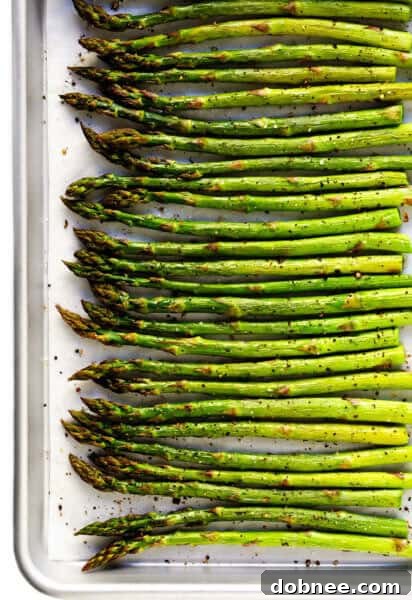
- Prepare asparagus. Arrange the asparagus on the baking sheet in an even layer. Drizzle evenly with the olive oil, then briefly toss the asparagus so that it is evenly coated in the oil. Sprinkle evenly with a few generous pinches of salt and pepper.
- Roast. Bake for 10-12 minutes, or until the asparagus reach your desired level of tenderness. (Cook time will vary depending on the thickness of your asparagus spears.)
- Serve. Taste and season with extra salt and pepper, if needed. Then serve immediately and enjoy!
Equipment
Parchment Paper
Buy Now →
Half Sheet Pan
Buy Now →
Fine Sea Salt
Buy Now →
Notes
Storage instructions: Cooked roasted asparagus can be stored in a sealed container in the refrigerator for up to 3 days. For longer storage, it can be frozen for up to 3 months. To freeze, spread the cooked asparagus in a single layer on a baking sheet and freeze for 1-2 hours until solid. This prevents them from clumping together. Once frozen, transfer to a freezer-safe bag or container.
Reheating instructions: To reheat, spread the asparagus on a baking sheet and warm in a preheated oven at 350°F (175°C) for 5-7 minutes, or until just heated through. Avoid microwaving if possible, as it can make the asparagus soggy. You can also quickly sauté them in a pan with a little olive oil.
We hope this comprehensive guide has inspired you to make perfectly roasted asparagus a staple in your kitchen. This simple, healthy, and incredibly flavorful dish is a testament to the beauty of fresh, seasonal ingredients prepared with care. Whether you stick to the classic olive oil, salt, and pepper, or venture into more adventurous seasoning combinations, you’re in for a treat. Happy cooking, and enjoy the vibrant flavors of spring!