Master the Art of Cutting Bell Peppers Like a Professional

Transform your cooking experience by mastering the art of cutting bell peppers! A simple yet essential kitchen skill, knowing the correct techniques for how to cut bell peppers will save you time, reduce waste, and ensure beautifully uniform pieces for all your culinary creations. Whether you’re aiming for delicate julienne strips, perfect dice, or elegant rings, this comprehensive guide will equip you with the expertise to handle any bell pepper with confidence. ♡
Once you learn these straightforward methods, you’ll be able to prepare bell peppers in mere minutes, achieving precise cuts without seeds scattering or valuable flesh going to waste. This foundational skill makes meal preparation significantly quicker and more enjoyable, whether you’re batch cooking for the week or simply adding a vibrant splash of color and nutrition to tonight’s dinner. Proper bell pepper prep elevates both the presentation and texture of your dishes.
Bell peppers are truly one of the most versatile and beloved vegetables. They are delicious in countless applications – delightful when raw in salads, robust when roasted, flavorful when grilled, and tender when sautéed. From enhancing the savory kick of fajitas to brightening fresh salads and hearty soups, bell peppers add a unique sweetness and crunch to almost any meal. Beyond their culinary appeal, they are a nutritional powerhouse, brimming with vitamin C, dietary fiber, and powerful antioxidants. These nutrients are vital for boosting your immune system, supporting overall health, and ensuring your meals are as healthy as they are delicious. For a visual demonstration, be sure to scroll down to the recipe box where you’ll find a step-by-step video guide!
How To Choose The Best Bell Peppers for Optimal Flavor and Texture
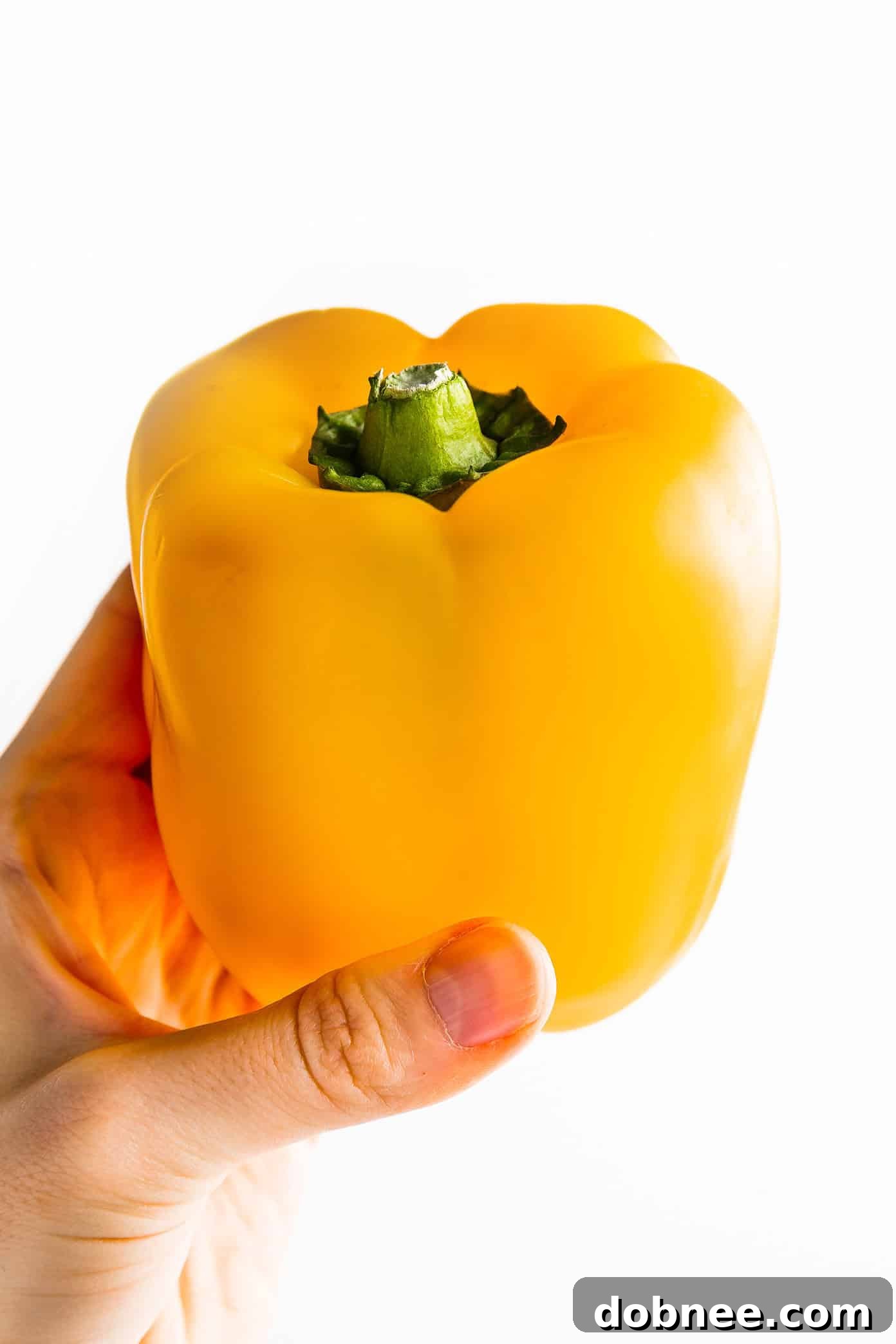
Selecting the finest bell peppers is the first step toward a delicious meal. When you’re at the grocery store or farmer’s market, look for bell peppers that are firm to the touch and feel surprisingly heavy for their size. This weight indicates a juicy interior and thick walls, which are ideal for all cutting methods. Their skin should be smooth, taut, and possess a healthy, glossy sheen, free from any soft spots, wrinkles, or visible blemishes. The stem should also appear fresh and green, not dry or shriveled, as this is another indicator of recent harvest and peak freshness.
The color of the bell pepper should be vibrant and consistent throughout – whether you’re opting for a bright red, sunny yellow, rich orange, or crisp green. Each color offers a slightly different flavor profile and level of sweetness. Bell peppers are typically in season during the warm months of summer and early fall, usually from July through September. During this period, they tend to be at their sweetest, most flavorful, and most affordable. However, thanks to advancements in year-round greenhouse cultivation, you can reliably find high-quality bell peppers in most grocery stores throughout the entire year, ensuring you can enjoy this versatile vegetable regardless of the season.
Fun Fact About Bell Pepper Colors 🫑
Did you know that red, yellow, and orange bell peppers are actually the fully ripened versions of green bell peppers? As they mature, their chlorophyll breaks down, and they develop more complex sugars, resulting in a sweeter, milder flavor and a richer color. Green bell peppers, being less ripe, have a slightly more bitter and grassy taste.
Effective Storage Tips for Fresh and Frozen Bell Peppers
Proper storage is key to extending the life of your bell peppers, whether whole or already prepped. For whole, uncut bell peppers, simply store them in the crisper drawer of your refrigerator. They can typically last for up to 1-2 weeks when stored this way. Avoid washing them until you are ready to use them, as excess moisture can accelerate spoilage.
Once you’ve cut your bell peppers, they will stay fresh in an airtight container in the fridge for approximately 3–5 days. To maximize their freshness and prevent them from becoming soggy, line the container with a paper towel. This absorbs any excess moisture that can lead to sliminess and spoilage, keeping your pre-cut bell peppers crisp and vibrant.
For longer-term storage, freezing bell peppers is an excellent option, and thankfully, it requires no blanching! To freeze cut bell peppers, first spread them out in a single layer on a baking sheet. Place the baking sheet in the freezer until the pepper pieces are completely solid, usually a few hours. This step, known as flash freezing, prevents the pieces from clumping together, allowing you to easily grab only what you need later. Once frozen solid, transfer the pieces to a freezer-safe bag or container, removing as much air as possible to prevent freezer burn. They can be stored in the freezer for up to 3 months. Keep in mind that frozen bell peppers tend to have a softer texture once thawed, making them best suited for cooked dishes like warming soups, hearty stews, flavorful fajitas, or casseroles, rather than raw applications like salads where crunch is desired.
Frequently Asked Questions About Bell Pepper Preparation and Storage
Yes, absolutely! Pre-cutting bell peppers is a fantastic way to save time during meal prep. Once cut into your desired shapes (slices, dice, julienne, etc.), they will keep well in the refrigerator for up to 5 days. For best results, store them in a completely airtight container, and place a paper towel at the bottom or on top to absorb any excess moisture, which helps maintain their crispness and prevents spoilage. This makes healthy eating even more convenient!
For efficient and safe bell pepper cutting, a sharp chef’s knife is your best tool. Its broad blade allows for clean cuts through the pepper’s firm flesh and stability on your cutting board. A sharp knife is crucial because a dull knife can slip, crush the pepper, and even be more dangerous. A paring knife can also be useful for removing the core or any small blemishes, offering more precision for smaller tasks.
Yes, you can certainly freeze bell peppers, and it’s a great way to preserve them for future use in cooked dishes. There’s no need to blanch them first. Simply wash and cut the bell peppers into the desired shape (strips or diced are most common for freezing). Then, spread the cut pieces in a single layer on a baking sheet and freeze until they are solid. This flash-freezing technique prevents them from sticking together. Once frozen, transfer them to a heavy-duty freezer bag or an airtight container, ensuring to remove as much air as possible. They will keep well for up to 3 months. Frozen bell peppers are perfect for adding directly to stir-fries, soups, stews, or casseroles.
Bell peppers are incredibly healthy and packed with nutrients! They are an excellent source of Vitamin C, providing more than 100% of your daily recommended intake in a single serving, which is vital for immune function and skin health. They also contain a good amount of Vitamin A, Vitamin B6, Folate, and dietary fiber, supporting digestion and overall wellness. Additionally, bell peppers are rich in antioxidants like carotenoids, which help protect your cells from damage. Best of all, they are low in calories and fat, making them a fantastic addition to any diet.

Delicious Recipes Featuring Bell Peppers
Bell peppers are not just a healthy choice; they’re also incredibly versatile, lending their vibrant color and sweet, crisp flavor to a multitude of dishes across various cuisines. Their ability to adapt makes them a favorite ingredient in kitchens worldwide. Here are a few Gimme Some Oven favorites that prominently feature bell peppers:
- Zesty Philly Cheesesteak Skillet (shown above) – Perfect for a quick and flavorful weeknight dinner.
- Authentic Greek Salad – Bell peppers add a delightful crunch and sweetness to this classic Mediterranean salad.
- Jambalaya – An essential ingredient in the “holy trinity” of Cajun and Creole cooking.
- Shakshuka – Peppers add depth and color to this savory, spiced tomato and egg dish.
- Sheet Pan Chicken Fajitas – Sliced bell peppers are a must-have for these sizzling, savory fajitas.
- Classic Stuffed Peppers – A hearty and comforting meal, using whole peppers as edible bowls.
How To Cut A Bell Pepper: Your Ultimate Guide
Prep Time: 2 minutes
Cook Time: 0 mins
Total Time: 2 minutes
Yield: 1 bell pepper 1x
Description
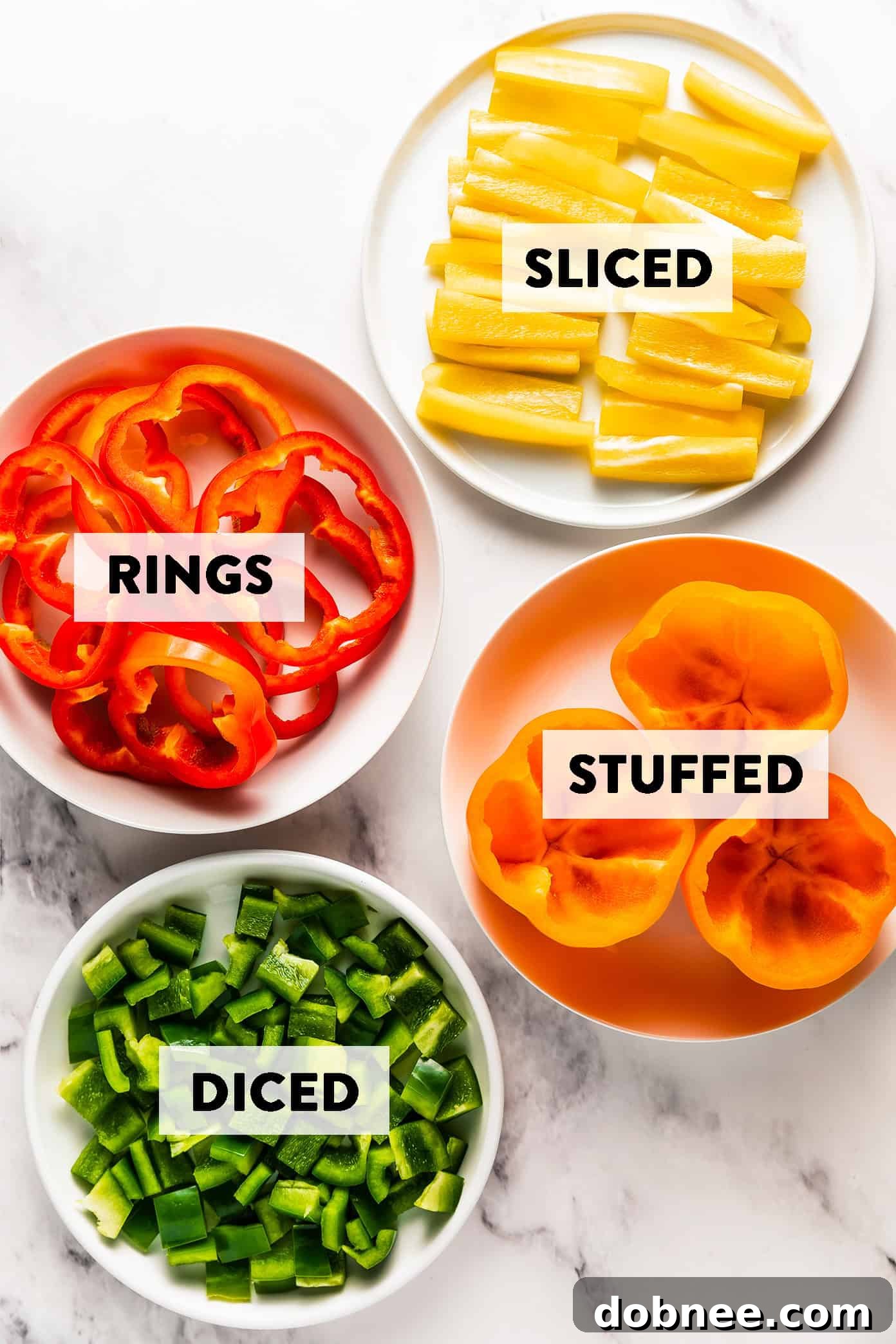
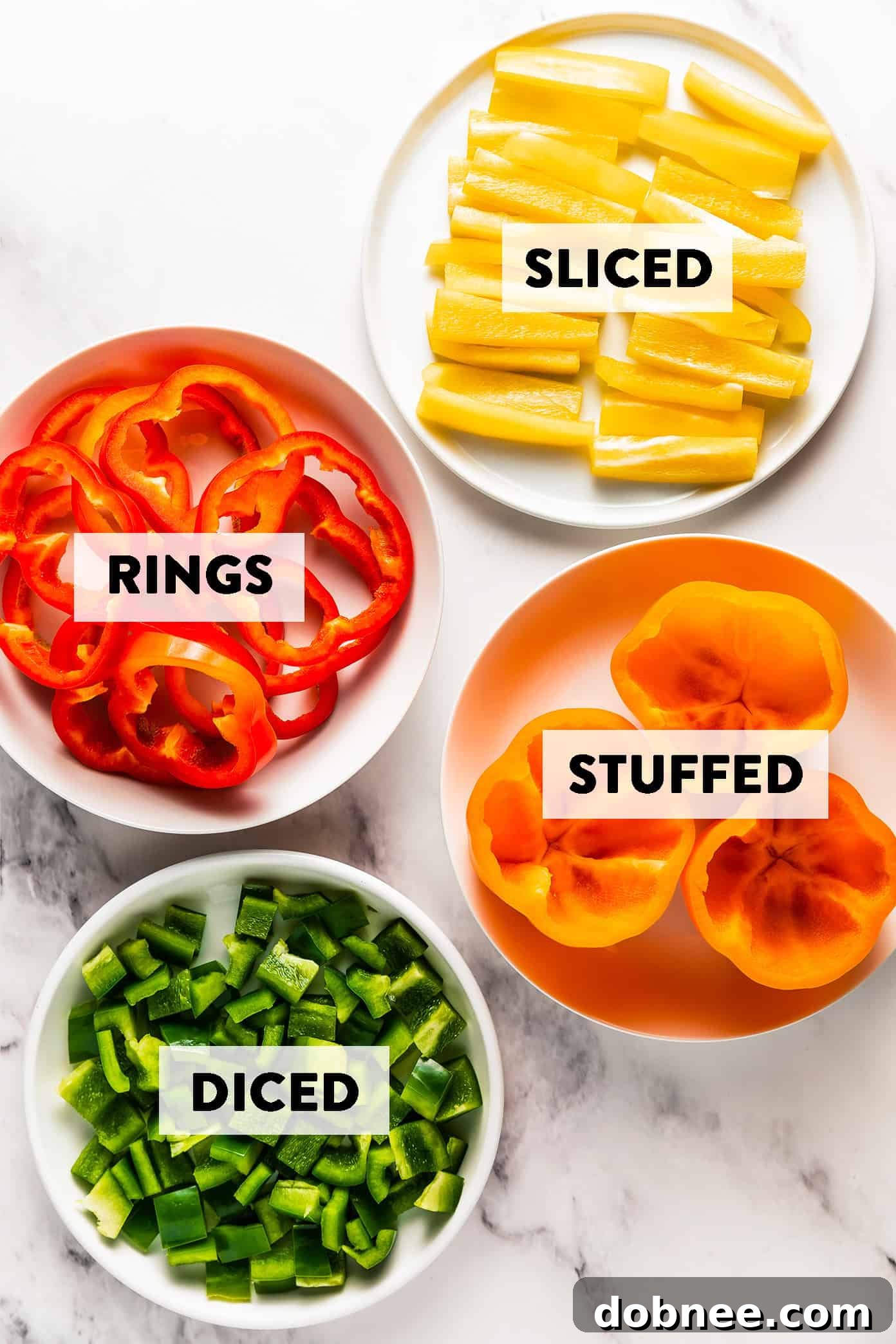
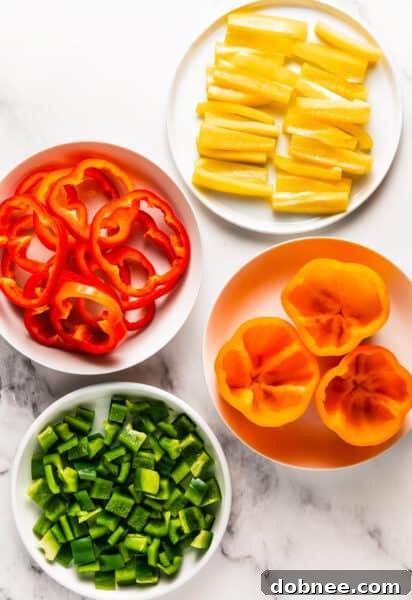
Unlock the full potential of your bell peppers with this comprehensive guide! Learn how to cut a bell pepper into four distinct and essential shapes — elegant slices, uniform dice, perfect rings, and preparing them specifically for stuffing. Each method is designed to maximize yield and minimize waste, ensuring you get the most out of every pepper. Whether you’re a novice or an experienced home cook, these techniques will elevate your cooking. Be sure to watch the recipe video below for a clear, step-by-step visual demonstration of each cut!
Ingredients
Scale
- 1 fresh bell pepper (any color: red, yellow, orange, or green)
Instructions: Master These Essential Bell Pepper Cutting Techniques
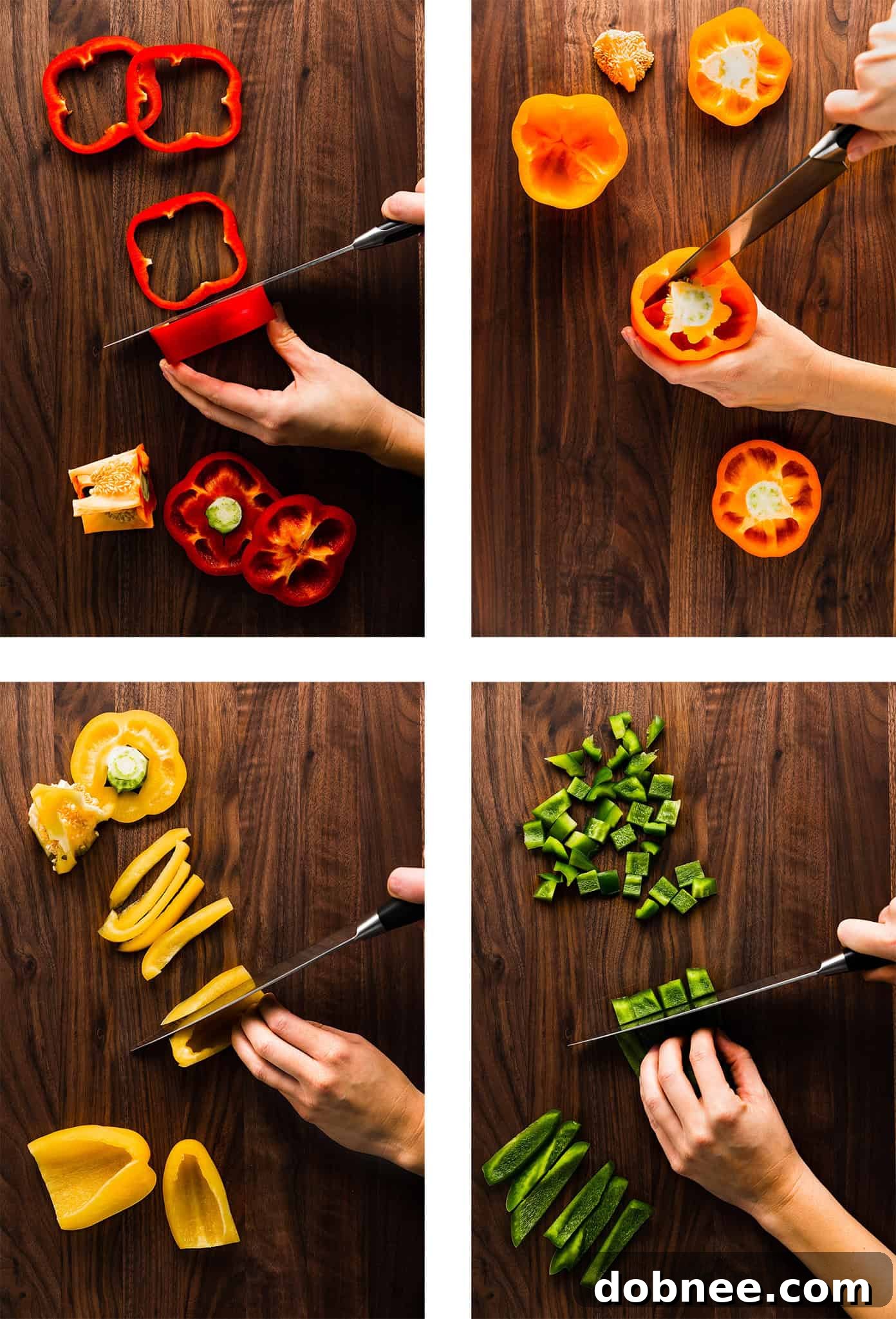
Method 1: How To Cut Bell Pepper Slices (Strips): Begin by laying the bell pepper on its side on a stable cutting board. Using a sharp chef’s knife, carefully slice off the stem end and the bottom end, creating two flat surfaces. Stand the pepper upright on one of the cut ends. Now, gently cut down along the inside walls of the pepper, following its natural curves, to remove the core in large, flat pieces. Discard the core, seeds, and any white pith. Lay each remaining bell pepper section skin-side down on your cutting board. Slice lengthwise into even strips, typically about ¼ to ½ inch wide, depending on your recipe’s needs. Ensure consistency for even cooking. Perfect for: vibrant stir-fries, flavorful fajitas, fresh salads, sautéed side dishes, or roasting with other vegetables.
Method 2: How To Cut Bell Pepper Dice (Cubes): Start with the same initial steps as for slices: lay the bell pepper on its side and slice off both the stem and bottom ends. Stand the pepper upright and cut down along the inside walls to remove the core cleanly. Discard the core and seeds. Once you have the flattened bell pepper sections, lay each piece skin-side down. First, cut into thin strips (julienne, see next method) of your desired width, typically about ¼ to ½ inch. Then, turn the strips crosswise and dice them into small, even cubes of the same dimension. Aim for uniform pieces to ensure they cook evenly and look appealing in your dish. Perfect for: chunky salsas, hearty soups and stews, scrambled eggs, omelets, grain bowls, and adding texture to ground meat dishes.
Method 3: How To Julienne Bell Peppers (Fine Strips): For a more refined presentation, the julienne cut creates long, thin matchstick-like strips. Start by preparing your bell pepper as you would for slices: remove the top and bottom, then carve out the core. Lay the cleaned bell pepper sections skin-side down. Using your sharp knife, first slice the bell pepper into wider strips, approximately 1-inch wide. Then, stack these wider strips neatly on top of each other. Carefully slice through the stack lengthwise again to create very thin, uniform matchsticks, typically about ⅛ to ¼ inch thick and 1-2 inches long. Precision here yields the best results. Perfect for: fresh spring rolls, elegant salads, delicate stir-fries, garnishes, and quick-cooking dishes where tender-crisp vegetables are desired.
Method 4: How To Cut Bell Pepper Rings: Bell pepper rings are visually appealing and excellent for certain dishes. Begin by laying the bell pepper on its side. Use a sharp knife to slice off both the stem end and the bottom end cleanly. These ends can be diced and used in other recipes to prevent waste. Reach inside the pepper with your fingers or a paring knife and gently pull out the central core and any loose seeds. Ensure the interior is clean. Now, simply cut the pepper crosswise into rings of your desired thickness – whether thin for quick cooking or thicker for a more substantial bite. Keep cuts even for consistent results. Perfect for: topping burgers and sandwiches, adding to pizzas, roasting whole on a sheet pan, or grilling as a vibrant side dish.
Method 5: How To Prepare Bell Peppers for Stuffing: Preparing bell peppers for stuffing requires creating a stable, edible cup. Start by slicing off the stem end of the pepper, aiming for a clean cut that removes the stem and the top portion, creating an opening. Stand the pepper upright on your cutting board. Gently reach inside with your fingers or a small paring knife to pull out the central core and all the seeds. Take care not to break the walls of the pepper. Trim the bottom of the pepper slightly if needed, creating a small flat surface, so the pepper sits stably without wobbling. This ensures it won’t tip over when filled with your chosen stuffing and baked. Perfect for: classic stuffed peppers baked with savory fillings like grains, beans, seasoned rice, ground meats, or a vegetarian protein blend.
Essential Equipment for Cutting Bell Peppers
Having the right tools makes all the difference when tackling bell peppers. A sharp knife and a sturdy cutting board are your best friends in the kitchen, ensuring safety and precision with every cut.
8-Inch Chef’s Knife
A versatile and indispensable tool for almost all kitchen tasks, especially for cleanly cutting bell peppers. Buy Now →
Paring Knife
Ideal for smaller, more intricate tasks like removing the core or any blemishes from the bell pepper with precision. Buy Now →
Non-Toxic Cutting Board (Dishwasher Safe!)
A stable and hygienic surface is crucial for safe and effective cutting. Choose one that stays put. Buy Now →