Butternut Squash: Your Ultimate Guide to Effortless Preparation

Have you ever found yourself grappling with a challenging butternut squash in the kitchen? The struggle is real: its notoriously tough outer skin, unique curves, and dense interior can make preparation feel like a daunting task, often discouraging even seasoned home cooks. Many shy away from this delicious winter squash simply because of the perceived difficulty in peeling, seeding, and chopping it. But what if we told you there’s a straightforward, safe, and highly efficient technique that will transform your squash prep experience from a wrestling match into a smooth, confident culinary step? It’s time to bid farewell to frustration and welcome perfectly prepared butternut squash into your cooking repertoire.
This comprehensive guide is meticulously crafted to equip you with all the knowledge and practical skills required to confidently peel, seed, and dice a butternut squash with remarkable ease. Mastering this fundamental kitchen skill is a game-changer; it not only saves you invaluable time and minimizes food waste but also unlocks a world of cozy, flavorful meal possibilities. Imagine the joy of preparing hearty fall soups, roasted vegetable medleys, or creamy purées without the usual prep-day stress. This simple technique promises to make your autumn and winter cooking so much more enjoyable and rewarding.
Beyond its delightful culinary versatility, butternut squash stands out as a true nutritional powerhouse, making it a staple in healthy kitchens worldwide. Celebrated for its naturally sweet and nutty flavor, it shines whether it’s roasted to a tender, caramelized perfection, puréed into luxuriously creamy soups, or simmered in robust stews and curries. But its appeal extends far beyond taste. Butternut squash is brimming with vital nutrients, notably an abundance of beta-carotene, which your body efficiently converts into vitamin A—essential for maintaining healthy vision, robust immune function, and radiant skin. It’s also an excellent source of vitamin C, a powerful antioxidant that boosts your immune system, along with potassium for balanced blood pressure, and ample dietary fiber to support digestive health and promote satiety. Incorporating this vibrant, nourishing vegetable into your diet is a truly delicious and comforting way to fuel your body.
Throughout this guide, we’ll walk you through every critical aspect of butternut squash management. We’ll start with expert tips on how to meticulously choose the best squash at your local grocery store, ensuring you select a ripe and flavorful specimen. We’ll then delve into effective storage instructions for both whole and cut squash, helping you preserve its freshness for longer. Finally, we’ll share an inspiring array of delicious ways to cook with butternut squash, sparking new ideas for your meal planning. For those who benefit most from visual instruction, make sure to scroll all the way down to our detailed recipe box where you’ll find a complete step-by-step video tutorial, guaranteeing you master every facet of butternut squash preparation with absolute clarity and ease.
Selecting the Perfect Butternut Squash: Your Buyer’s Guide
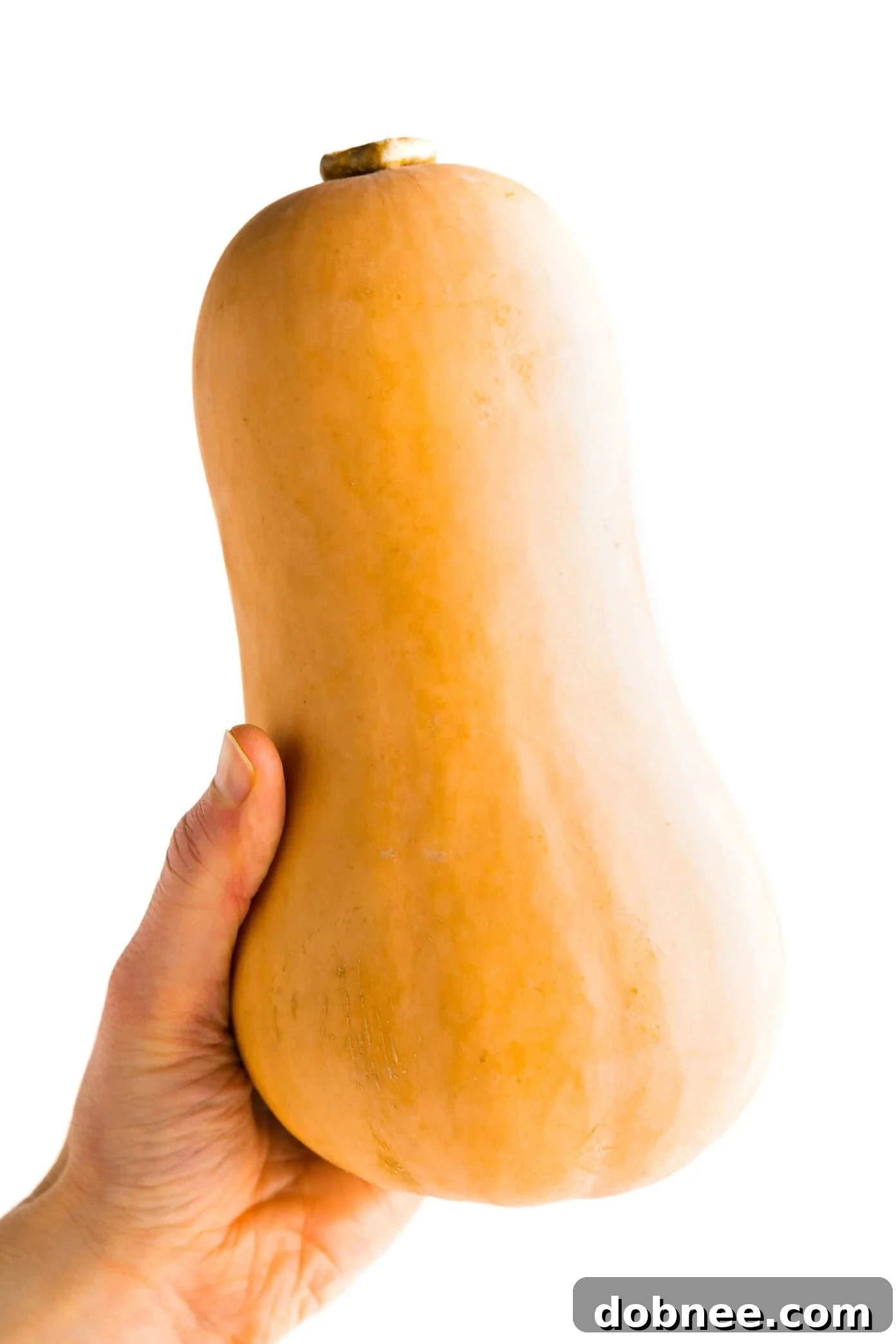
Choosing a ripe, fresh, and flavorful butternut squash is the crucial first step toward creating a truly delicious meal. When you’re browsing the produce aisle, take a moment to carefully inspect the available options. The best butternut squash will feel surprisingly heavy for its size. This weightiness is an excellent indicator of dense, moist flesh inside, which translates directly to superior flavor and texture once cooked. Avoid squash that feels unusually light, as this can suggest it’s dry, stringy, or less flavorful.
The skin of an ideal butternut squash should be smooth and matte, rather than shiny or waxy. Run your hand over it; it should be firm to the touch, without any soft spots, blemishes, or cracks. The color is also a key indicator: look for an even, pale beige or light tan hue consistent across the entire squash. Green streaks are a sign that the squash was harvested prematurely and likely won’t have developed its full sweetness. Finally, check the stem: it should be firm, intact, and dark, securely attached to the squash. A missing or soft stem can be a red flag, indicating that the squash might be past its prime or was improperly handled, making it more susceptible to spoilage.
Butternut squash truly thrives and is at its peak during the cooler months, typically designated as in season from early fall through winter, generally spanning from September through February. During this natural season, the squash will be at its absolute sweetest and will boast the most robust, nutty flavor profile. While you can often find butternut squash available year-round in many markets, purchasing it within its prime season guarantees the best quality, taste, and nutritional value. If you do find yourself buying butternut squash during the off-season, a clever tip is to select specimens with noticeably thicker necks and proportionally smaller bulbs. These varieties often yield a higher flesh-to-seed ratio, meaning you’ll get more edible squash and less waste from the seed cavity.
Fun Fact: Unpacking the Name “Butternut” 🎃
The delightful and evocative name “butternut” isn’t just a simple descriptor of its exterior color. It’s actually a charming nod to the squash’s most prized culinary characteristics: its exquisitely creamy, almost buttery texture, and the rich, naturally nutty flavor that blossoms so wonderfully once it’s cooked. This unique and appealing combination is precisely what makes it such a beloved and versatile ingredient in kitchens around the world!
Proper Storage for Butternut Squash: Maximizing Freshness
Understanding the correct way to store butternut squash, whether it’s whole and untouched or already peeled and diced, is absolutely essential for preserving its freshness, flavor, and nutritional integrity. This robust winter squash boasts a surprisingly impressive shelf life when stored under optimal conditions, allowing you to enjoy its goodness over an extended period and reduce food waste.
Storing Whole Butternut Squash
Uncut, whole butternut squash is remarkably durable and can last for a considerable time. For optimal long-term storage, find a cool, dark pantry, a cellar, or any dry, well-ventilated area in your home. Ideal temperatures typically range between 50-60°F (10-15°C). It’s crucial to avoid storing it in direct sunlight, near heat sources, or in areas with high humidity, as these conditions can significantly accelerate the ripening and spoilage process. Ensure good air circulation around the squash to prevent moisture buildup. Under these ideal conditions, a whole butternut squash can remain fresh and perfectly usable for an impressive 1–2 months, and sometimes even longer depending on its initial ripeness and storage environment. Make it a habit to check on your stored squash periodically for any early signs of soft spots, mold, or changes in skin texture, and prioritize using it promptly if any imperfections begin to appear.
Storing Peeled and Diced Butternut Squash
Once you’ve invested the effort into peeling, seeding, and dicing your butternut squash, proper storage becomes even more critical to maintain its quality and prevent it from drying out. Place the prepared pieces immediately into an airtight container. This minimizes its exposure to air, which is the primary culprit behind dehydration and accelerated spoilage. Store the sealed container in the refrigerator. When stored correctly in this manner, your diced butternut squash will typically stay fresh and ready to use for approximately 3–5 days. This makes it an ideal candidate for meal prepping, allowing you to have a healthy, pre-cut vegetable ready for quick weeknight dinners or any recipe that calls for it without the hassle of on-the-spot preparation.
Freezing Butternut Squash for Extended Storage
For even longer-term storage, freezing is an excellent and highly effective option that allows you to enjoy the deliciousness of butternut squash for many months to come. To freeze diced squash, begin by ensuring the pieces are completely dry. Then, spread them out in a single layer on a parchment-lined baking sheet. This initial flash-freezing step is vital as it prevents the individual pieces from clumping together, making them much easier to portion and use later. Freeze the squash on the sheet until the pieces are solid, which usually takes a few hours. Once frozen solid, swiftly transfer the pieces to a durable freezer-safe bag or container. Press out as much air as possible from the bag to prevent freezer burn, which can degrade texture and flavor. Properly frozen butternut squash can be stored effectively for up to 3 months, sometimes even longer if vacuum-sealed.
It’s important to note that while freezing beautifully preserves the flavor and nutrients of butternut squash, the texture of the squash does tend to soften slightly after it has been thawed. Because of this textural change, frozen squash is ideally suited for recipes where a very firm texture isn’t critical. It performs exceptionally well in creamy soups, smooth purées, comforting casseroles, and roasted dishes where its tenderness will be a desirable characteristic anyway. Freezing is a fantastic and convenient method to ensure you always have this healthy and versatile vegetable readily available, even when it’s out of season.
Frequently Asked Questions About Butternut Squash
The easiest and safest way to tackle the notoriously tough skin of a butternut squash is by using a sharp vegetable peeler, and many find a Y-peeler particularly effective due to its ergonomic grip and efficient blade. For those times when the squash skin feels exceptionally stubborn or difficult to penetrate, here’s a simple trick: microwave the whole squash for just 30 to 60 seconds. This brief zap in the microwave will slightly soften the outer skin, making it significantly easier and safer to peel without actually cooking the flesh. Always use a stable cutting surface and a firm grip to prevent slips.
Yes, absolutely you can! The skin of butternut squash is completely edible, and when roasted, it becomes wonderfully tender and slightly crispy, adding a rustic texture and additional fiber to your dish. Leaving the skin on is a fantastic way to save prep time. However, if your recipe calls for a very smooth, creamy consistency, such as in soups, purées, or mashes, it’s generally recommended to peel the squash first to achieve that desired velvety texture. For most roasted applications, leaving the skin on is perfectly fine.
Indeed, butternut squash seeds are entirely edible and surprisingly nutritious, quite similar to their popular cousin, pumpkin seeds! It’s a waste to discard them. To prepare them for snacking or as a topping, first rinse them thoroughly under cold running water to remove any clingy stringy pulp. Then, pat them completely dry with paper towels. Toss the dried seeds with a small drizzle of olive oil and your favorite seasonings – a pinch of sea salt, smoked paprika, cumin, garlic powder, or even a touch of maple syrup for a delightful sweet and savory crunch. Spread them in a single layer on a baking sheet and roast them in a preheated oven at approximately 300°F (150°C) for about 15-25 minutes, or until they turn golden brown and are satisfyingly crispy. Remember to stir them occasionally to ensure even roasting. These make a delicious, healthy, and zero-waste snack, or a fantastic crunchy garnish for salads, creamy soups, or roasted vegetable dishes.
Butternut squash is a genuine nutritional powerhouse, offering a wide array of health benefits! It is exceptionally rich in beta-carotene, a potent antioxidant that the body readily converts into vitamin A. Vitamin A is crucial for maintaining healthy vision, bolstering immune function, and promoting vibrant skin. Additionally, butternut squash provides a significant amount of vitamin C, another powerful antioxidant vital for immune system support and collagen production. It’s also a good source of potassium, which plays a key role in regulating blood pressure and fluid balance. Furthermore, its high dietary fiber content aids in healthy digestion, promotes feelings of fullness, and can help manage blood sugar levels. Its low-calorie and high-nutrient profile makes it an excellent choice for a balanced and health-conscious diet.
Absolutely! Butternut squash is an ideal vegetable for efficient meal prepping. You can easily peel, seed, and dice the entire squash a few days in advance without compromising its quality. Once prepared, simply store the raw, cut cubes in an airtight container in the refrigerator for up to 3-5 days. This foresight makes weeknight cooking incredibly convenient, as you can simply grab the pre-cut squash and add it directly to your recipes, bypassing the time-consuming and often messy initial prep work. It’s a great way to ensure you have healthy ingredients on hand for quick and easy meals throughout the week.
Delicious Butternut Squash Recipes to Elevate Your Meals
Once you’ve confidently mastered the art of preparing butternut squash with our easy guide, a vast and exciting world of culinary possibilities opens up! This incredibly versatile winter squash lends itself beautifully to an impressive array of dishes, ranging from comforting, timeless classics to innovative and modern creations. Its inherent sweetness and nutty undertones make it a star ingredient in both savory and sweet preparations. Here are some of our absolute favorite recipes that truly highlight the exquisite flavor and adaptable nature of butternut squash:
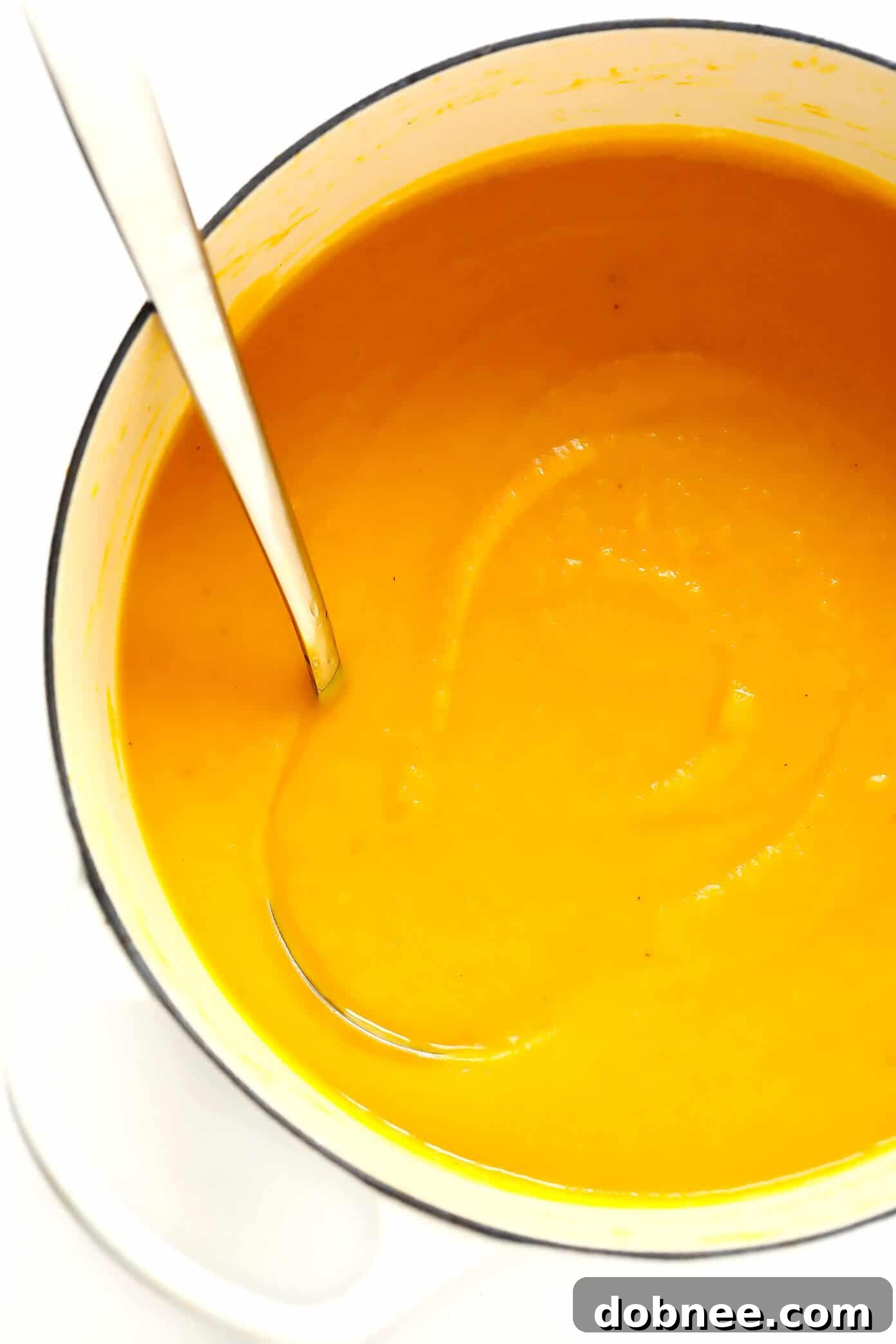
- Creamy Butternut Squash Soup: A quintessential fall and winter favorite, this soup is renowned for its rich, velvety texture and profoundly comforting flavor. It’s perfect for chilly evenings and can be easily adapted with coconut milk for a lighter, dairy-free version, or made with a touch of heavy cream for extra indulgence. Garnish with roasted squash seeds for added crunch.
- Butternut Squash Mac and Cheese: Elevate your beloved classic macaroni and cheese to new heights with the clever addition of puréed butternut squash. This ingenious twist not only imparts a beautiful, vibrant color but also introduces a subtle sweetness and a significant boost of nutrients, making this ultimate comfort food dish even more irresistible and subtly healthier.
- Healthy Butternut Squash Muffins: These incredibly moist, tender, and flavorful muffins offer a delightful way to enjoy butternut squash for a wholesome breakfast, a satisfying snack, or even a healthier dessert. Expertly spiced with warm cinnamon, nutmeg, and ginger, they pair perfectly with a hot cup of coffee or a comforting tea.
- Gnocchi with Butternut Squash and Sage Brown Butter Sauce: This sophisticated yet surprisingly simple dish marries tender potato gnocchi with perfectly roasted butternut squash, earthy kale, and a fragrant brown butter sauce infused with fresh sage. It creates an exquisite and hearty meal, ideal for a special occasion or a cozy, elevated dinner at home.
- Roasted Butternut Squash with Maple and Pecans: For a side dish that’s both simple and elegant, roasting truly brings out the natural sweetness of butternut squash. Simply toss uniformly diced squash with a generous drizzle of olive oil, a hint of maple syrup, and a handful of chopped pecans, then roast until the squash is tender and beautifully caramelized. It’s a wonderful accompaniment to any fall or winter meal, adding vibrant color and irresistible flavor.
- Butternut Squash Risotto: For a hearty and profoundly flavorful main course, consider incorporating finely diced or velvety puréed butternut squash into a creamy, slow-cooked risotto. Its natural sweetness and smooth texture harmonize exquisitely with savory Parmesan cheese, fresh herbs like thyme or rosemary, and a splash of white wine, creating a truly satisfying dish.
- Butternut Squash and Black Bean Tacos: For a vibrant and healthy weeknight meal, roast diced butternut squash with chili powder and cumin, then combine with seasoned black beans, corn, and a zesty lime crema in warm tortillas.
Print Recipe Guide

How To Cut Butternut Squash Safely and Efficiently
- Author: Ali
Prep Time: 10 minutes
Cook Time: 0 mins
Total Time: 10 minutes
Yield: 1 medium butternut squash 1x
Description
This comprehensive guide will teach you the simplest and safest method for peeling, seeding, and expertly dicing a butternut squash. Stop struggling with tough skin and uneven cuts! Our clear, step-by-step instructions, complete with a helpful recipe video, will have you confidently preparing this delicious winter squash in no time, making it ready for any recipe you desire. Master this essential kitchen skill and make butternut squash preparation a true breeze!
Ingredients
- 1 medium to large butternut squash (choose one that feels heavy for its size with smooth, unblemished skin for best results)
(For optimal flavor and nutrient density, consider selecting an organic squash, though any well-chosen butternut squash will work beautifully with this simple method.)
Instructions for Cutting Butternut Squash
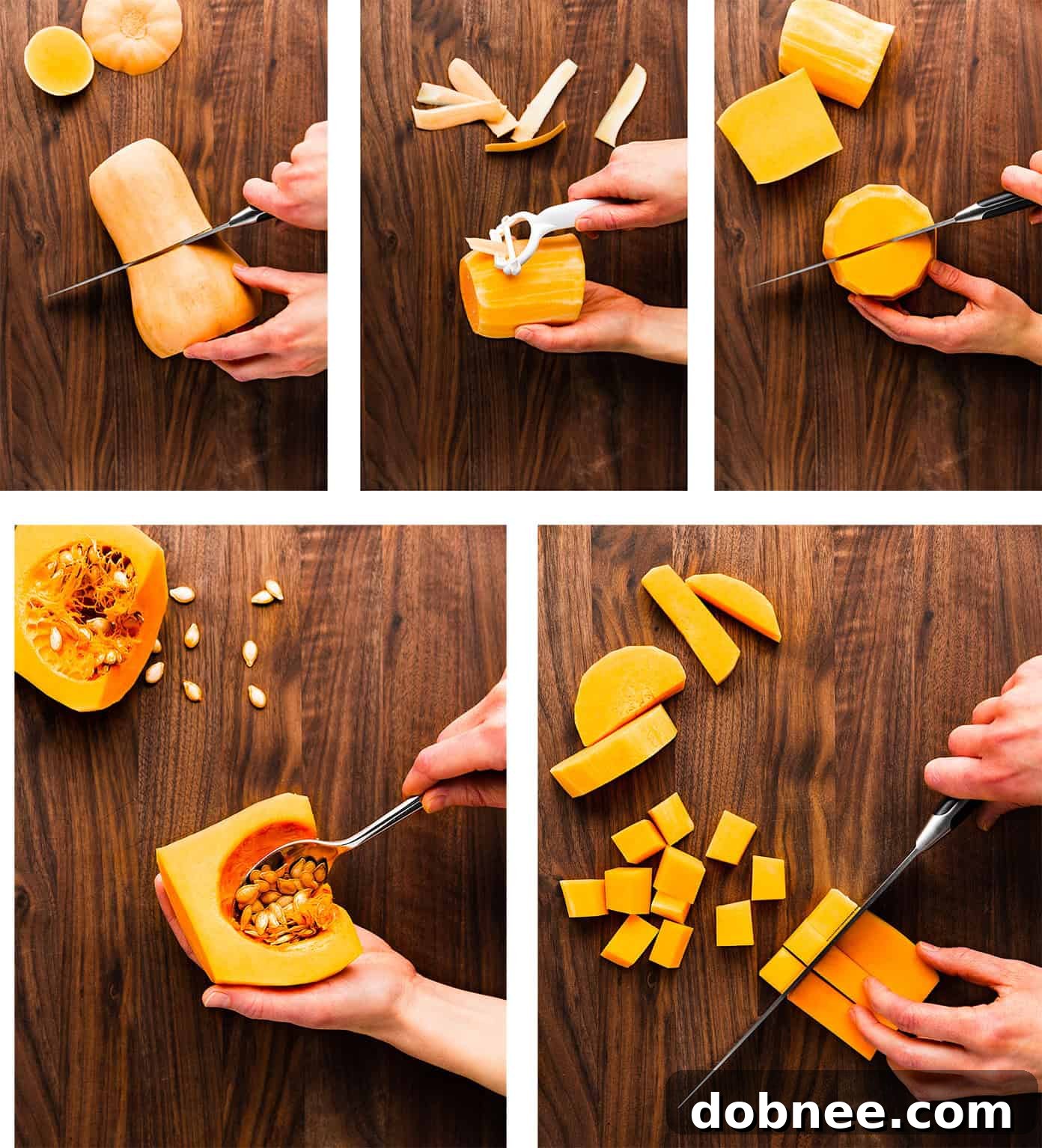
- Prepare Your Workspace and Trim the Ends. Begin by ensuring you have a clean, stable, and non-slip cutting surface, such as a large cutting board, and a very sharp chef’s knife. Lay the butternut squash horizontally on its side. Carefully and firmly slice off both the top (stem end) and the bottom (blossom end) of the squash. Aim to create two perfectly flat surfaces. This crucial first step provides a solid, stable foundation, preventing the squash from rolling or wobbling as you work, which significantly enhances safety during all subsequent cutting steps.
- Peel the Squash Thoroughly. Stand the squash upright on one of its freshly cut flat ends. Using a sharp vegetable peeler (many home cooks find a Y-peeler offers superior grip and control), begin to remove the tough outer skin. Work systematically from top to bottom, applying steady, even pressure and peeling in consistent strips. Rotate the squash as you go, ensuring that every bit of the pale beige or light tan skin is completely removed, revealing the beautiful, vibrant orange flesh underneath. If the skin feels exceptionally stubborn or difficult to peel, a helpful trick is to microwave the whole squash for 30-60 seconds before peeling; this brief zap will soften the skin just enough to make removal much easier.
- Separate the Neck and Bulb Sections. Once the squash is entirely peeled, lay it back on its side on the cutting board. Locate the natural junction where the long, cylindrical neck section meets the wider, round bulbous section. Carefully make a clean, crosswise cut at this point to separate the squash into two distinct and more manageable parts. This separation makes handling and dicing each section much easier and safer.
- Halve and Seed the Bulb. Take the round bulb section and stand it upright on one of its flat ends. With your sharp chef’s knife, carefully cut straight down through the middle, halving the bulb lengthwise. This action will expose the central cavity, which is filled with seeds and fibrous, stringy pulp. Using a sturdy spoon, thoroughly scoop out all the seeds and fibrous strands. You can either discard these or, for a delicious zero-waste snack, save the seeds for roasting (refer to our FAQ section for detailed instructions!). The neck section typically contains solid flesh and no seeds.
- Slice the Squash into Uniform Planks. Take each squash half (both the neck and the now-empty bulb portions) and lay it cut-side down on your cutting board. This flat, stable surface provides excellent security for the next step. Slice the squash into even planks, aiming for a consistent thickness of approximately ½ inch (1.25 cm). Consistency in thickness is paramount for ensuring that all pieces cook evenly later. For the crescent-shaped pieces from the bulbous section, simply adjust your knife to follow their natural curve.
- Cut the Planks into Strips. Stack a few of the uniformly sliced squash planks neatly on top of each other. Carefully slice lengthwise into uniform strips. Again, aim for a consistent width, typically about ½ inch (1.25 cm). This step efficiently preps the squash for the final dicing process and further ensures that all pieces will cook at approximately the same rate, resulting in a perfectly cooked dish.
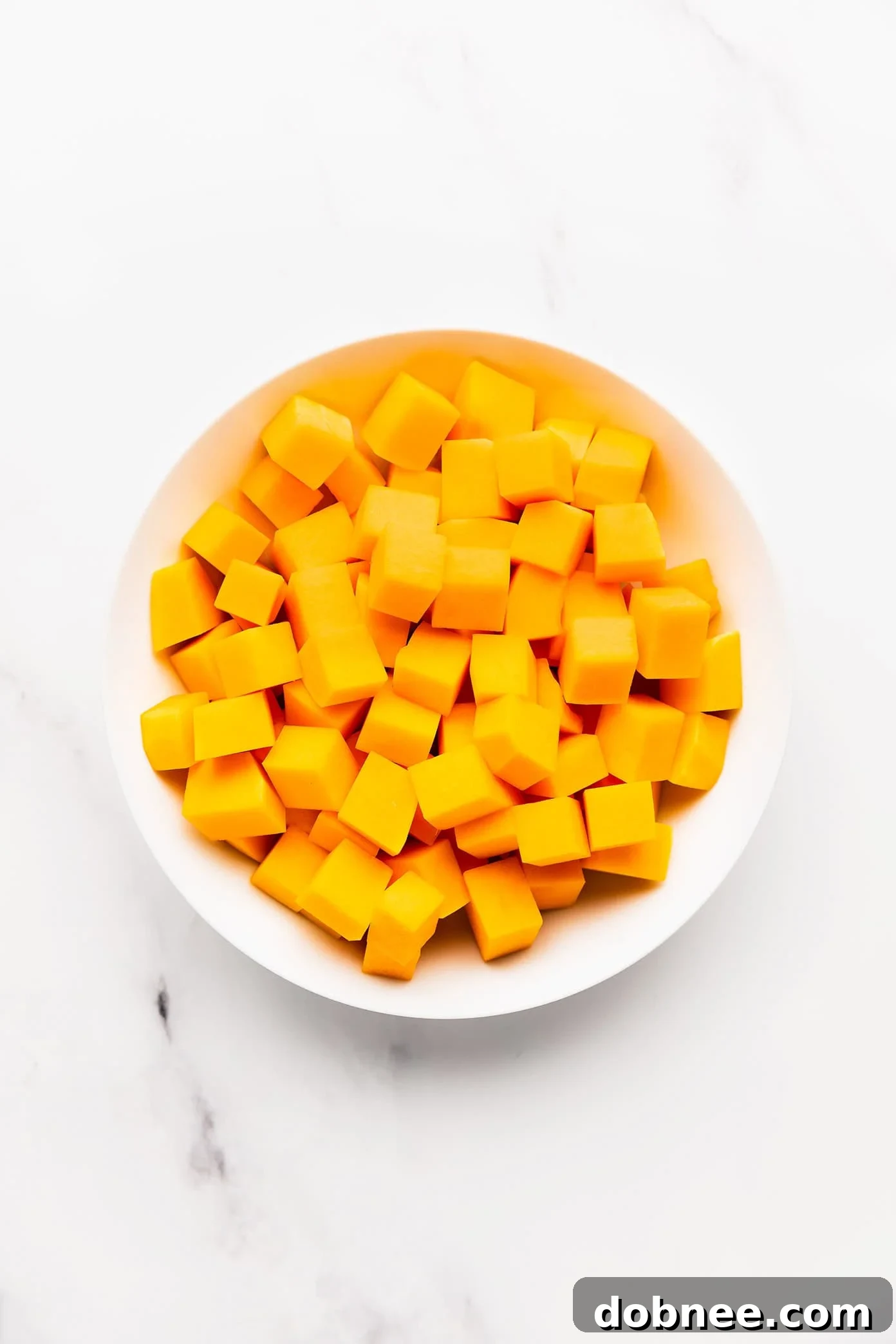
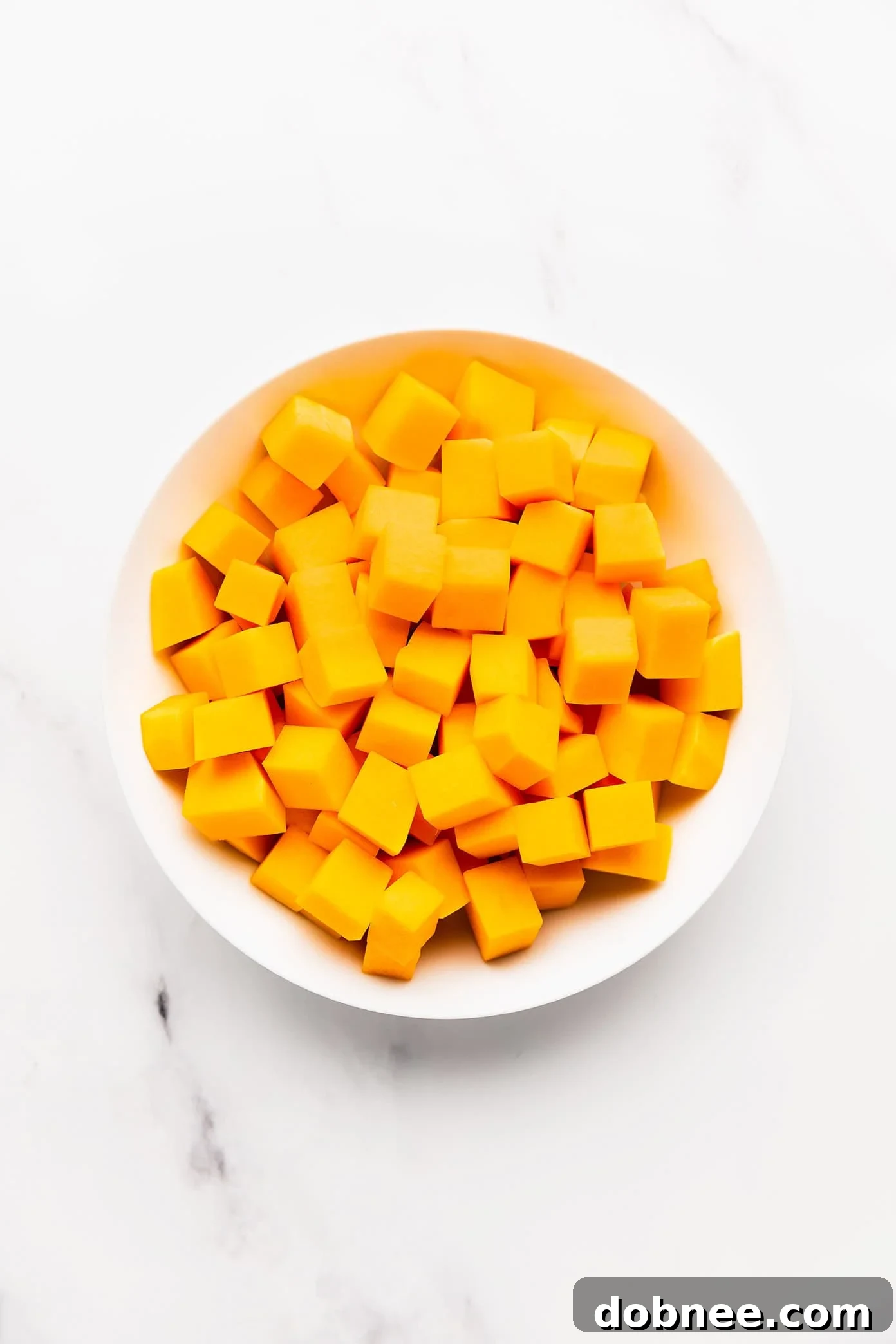
- Dice the Strips into Cubes. Gather all the squash strips together and turn them crosswise on your cutting board. Now, proceed to cut the strips into even cubes, aiming for pieces that are approximately ½ inch (1.25 cm) in size. You have the flexibility to adjust the size of the cubes – make them smaller for quick-cooking applications like soups or larger for roasting. Always maintain a firm, stable grip on the squash and use a controlled, rocking motion with your knife for maximum safety and efficiency. Your perfectly peeled, seeded, and diced butternut squash is now ready for any culinary adventure!
Watch the Video Tutorial!
This comprehensive video provides a clear, visual walkthrough of each crucial cutting step, making it even easier to follow along and perfect your butternut squash preparation technique. Watch and learn to master this skill!
Essential Equipment for Butternut Squash Preparation
Having the right tools at your disposal makes a significant difference when preparing butternut squash. These essential items will not only ensure a safer and more efficient experience but also help you achieve professional-looking results with minimal effort:
8-Inch Chef’s Knife: A sharp, sturdy 8-inch chef’s knife is an indispensable tool for safely and effectively trimming the ends and cutting through the dense, fibrous flesh of butternut squash. Investing in a good quality knife and keeping it regularly sharpened is paramount for both safety and precision in the kitchen. A dull knife is a dangerous knife!
Buy Now →
Y Peeler: While a standard straight vegetable peeler will get the job done, a Y-peeler often provides a more ergonomic and comfortable grip, allowing for quicker, more efficient, and safer peeling of the butternut squash’s often tough and curved surfaces. Its design makes it easier to apply consistent pressure.
Buy Now →
Non-Toxic Cutting Board (Dishwasher Safe!): A large, sturdy, and preferably non-slip cutting board is absolutely essential for safety when working with hard vegetables like butternut squash. A non-slip surface prevents the board from shifting during cutting, reducing the risk of accidents. Furthermore, one that is dishwasher safe simplifies cleanup, ensuring hygiene and convenience after handling produce.
Buy Now →