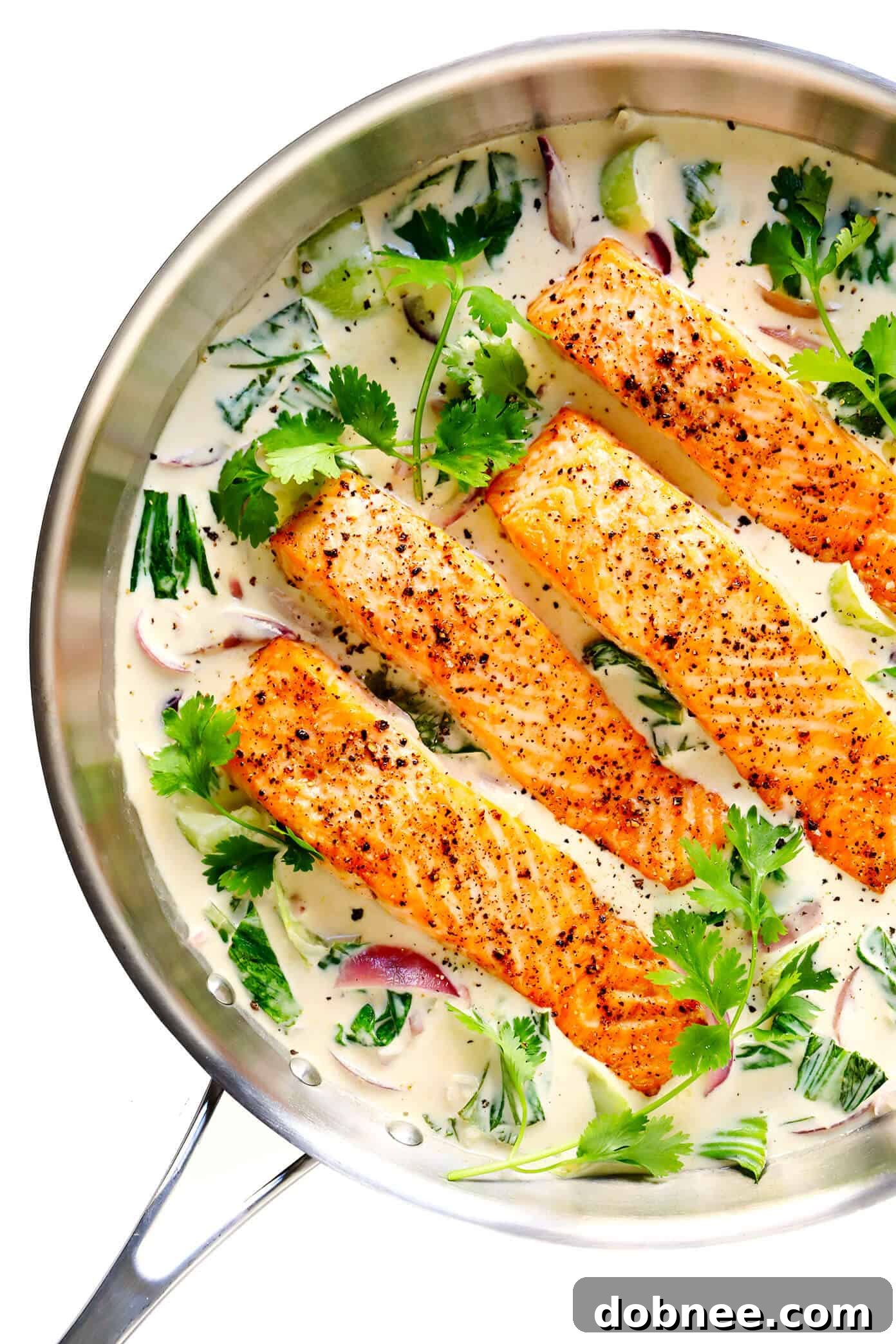
Experience the vibrant flavors of Thailand with this incredibly quick and easy Green Curry Salmon recipe. Featuring tender, flaky salmon fillets, fresh baby bok choy, and a luscious, aromatic lime coconut green curry sauce, this dish comes together in under 30 minutes, making it the perfect weeknight meal that feels gourmet.
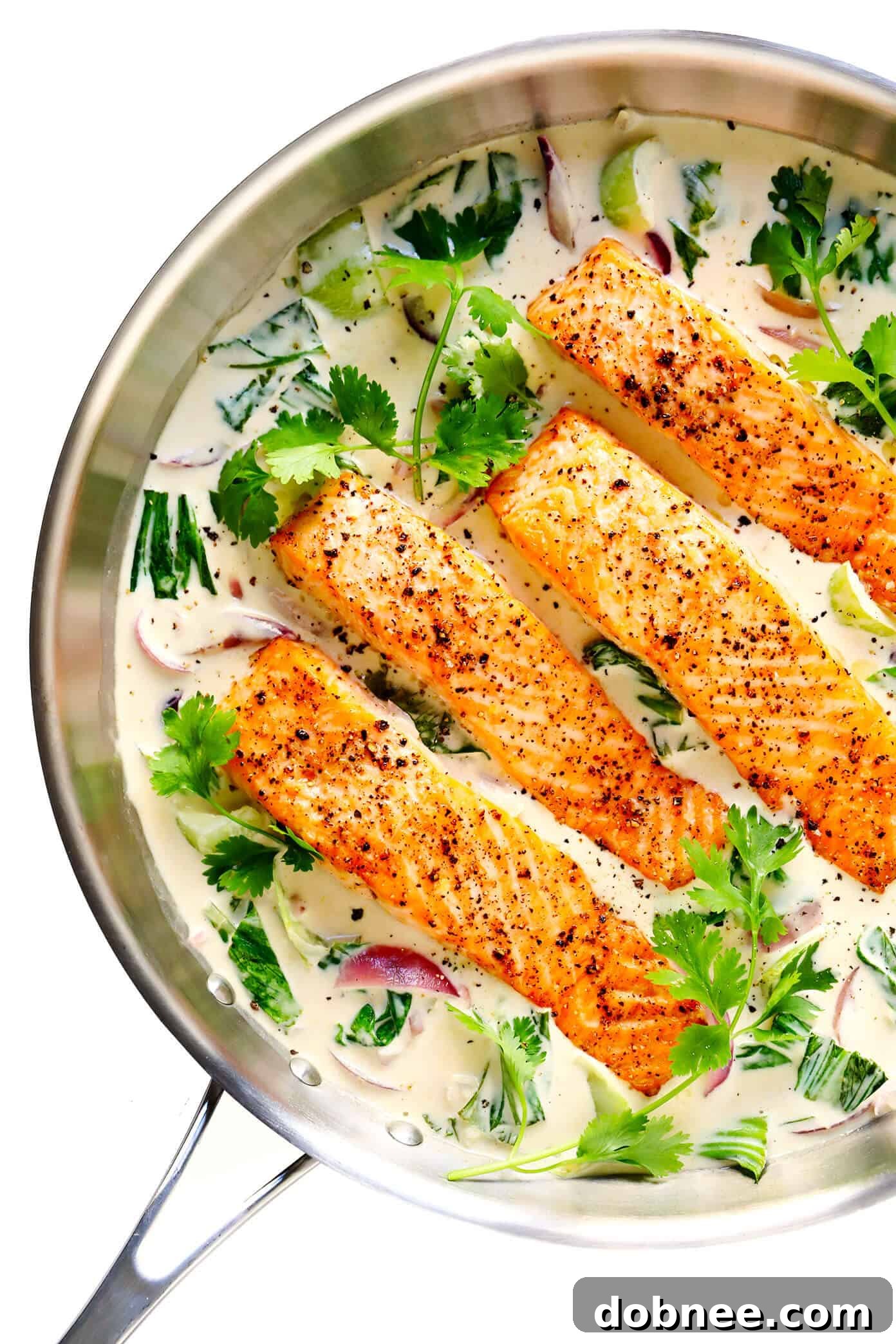
Get ready to discover your new favorite salmon recipe! This Green Curry Salmon has quickly become a staple in our household, and for good reason. It’s not just impressively fast to prepare – clocking in at around half an hour – but it also delivers an unforgettable flavor experience. The star of the show is undeniably the coconut-lime green curry sauce, a truly divine concoction that balances creaminess with a zesty, fragrant kick. It’s the kind of dish that transports you straight to a Thai beach with every bite, yet is simple enough for any home cook to master.
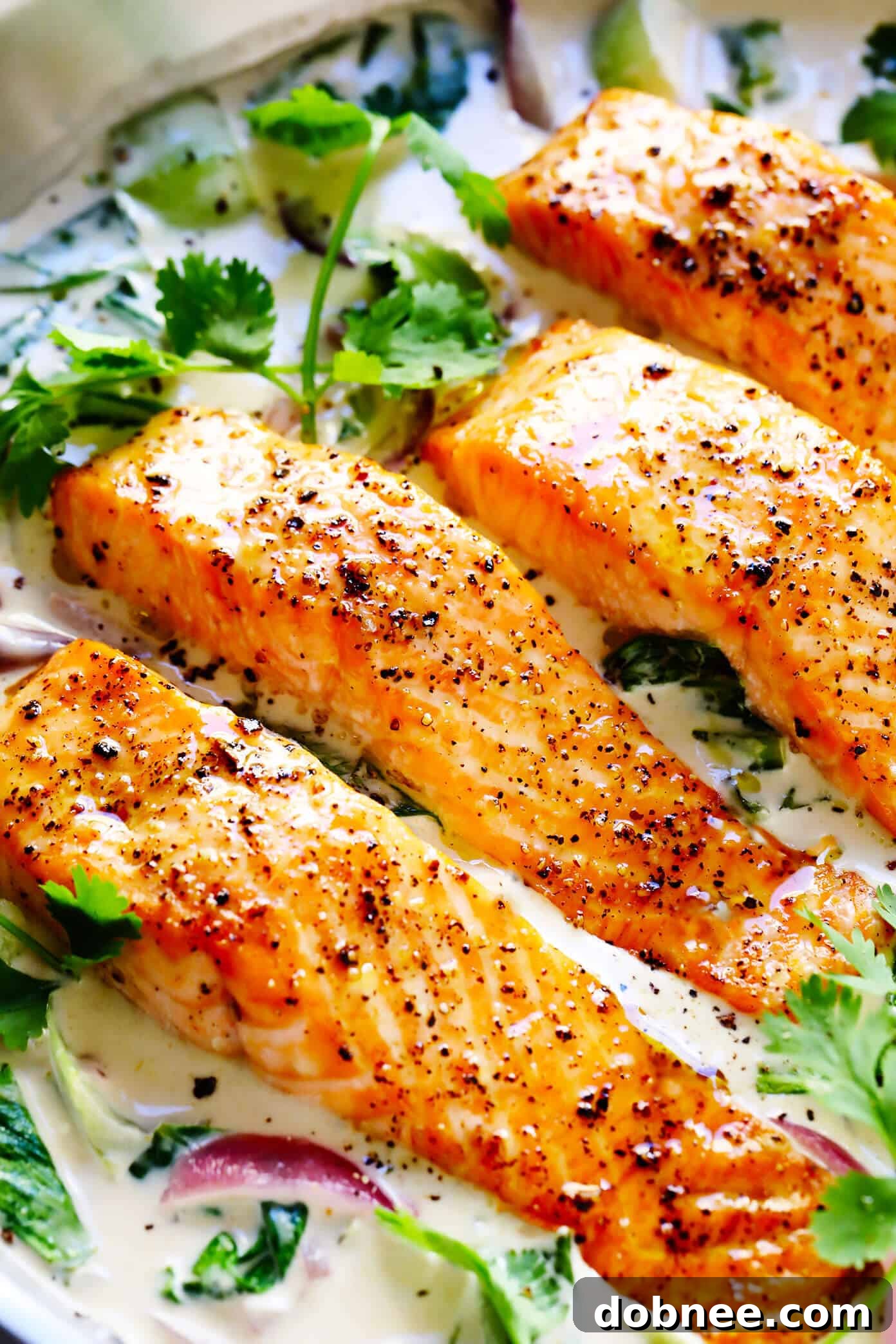
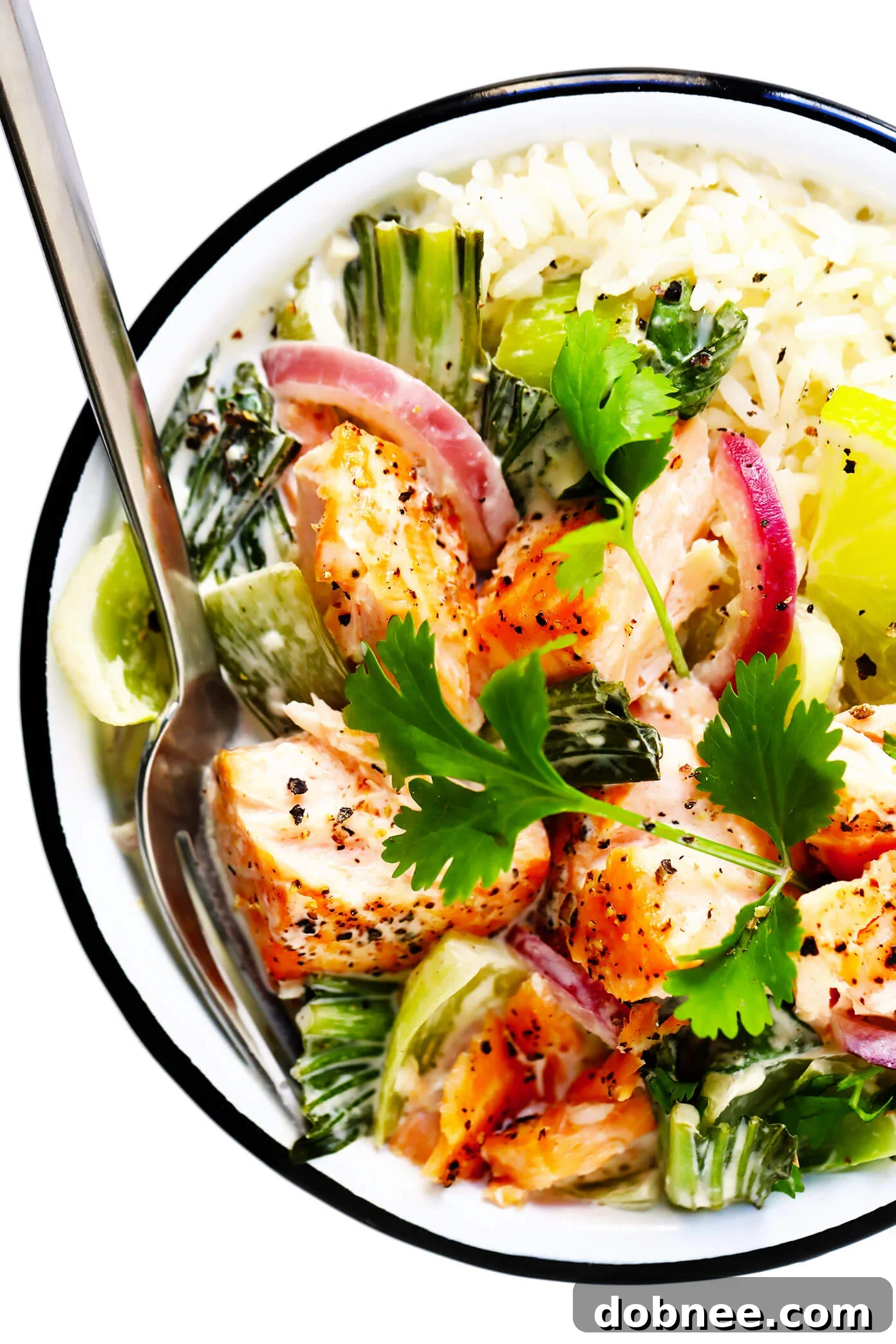
Imagine perfectly roasted salmon fillets, cooked to flaky perfection, nestled in a bed of vibrant baby bok choy and tender red onions. These fresh vegetables are then enrobed in a rich sauce made from coconut milk, aromatic green curry paste, fresh ginger, and bright lime juice. The interplay of sweet, sour, spicy, and umami flavors creates a harmonious and deeply satisfying meal. Serve it over fluffy rice or delicate noodles, finish with a generous sprinkle of fresh cilantro and an extra squeeze of lime, and prepare for a culinary delight that will have everyone asking for seconds. This recipe offers that perfect bridge, transitioning us from light, citrusy summer meals to the comforting warmth we crave as cooler weather approaches. Don’t wait – bring home some salmon today and treat yourself to this incredible dish!
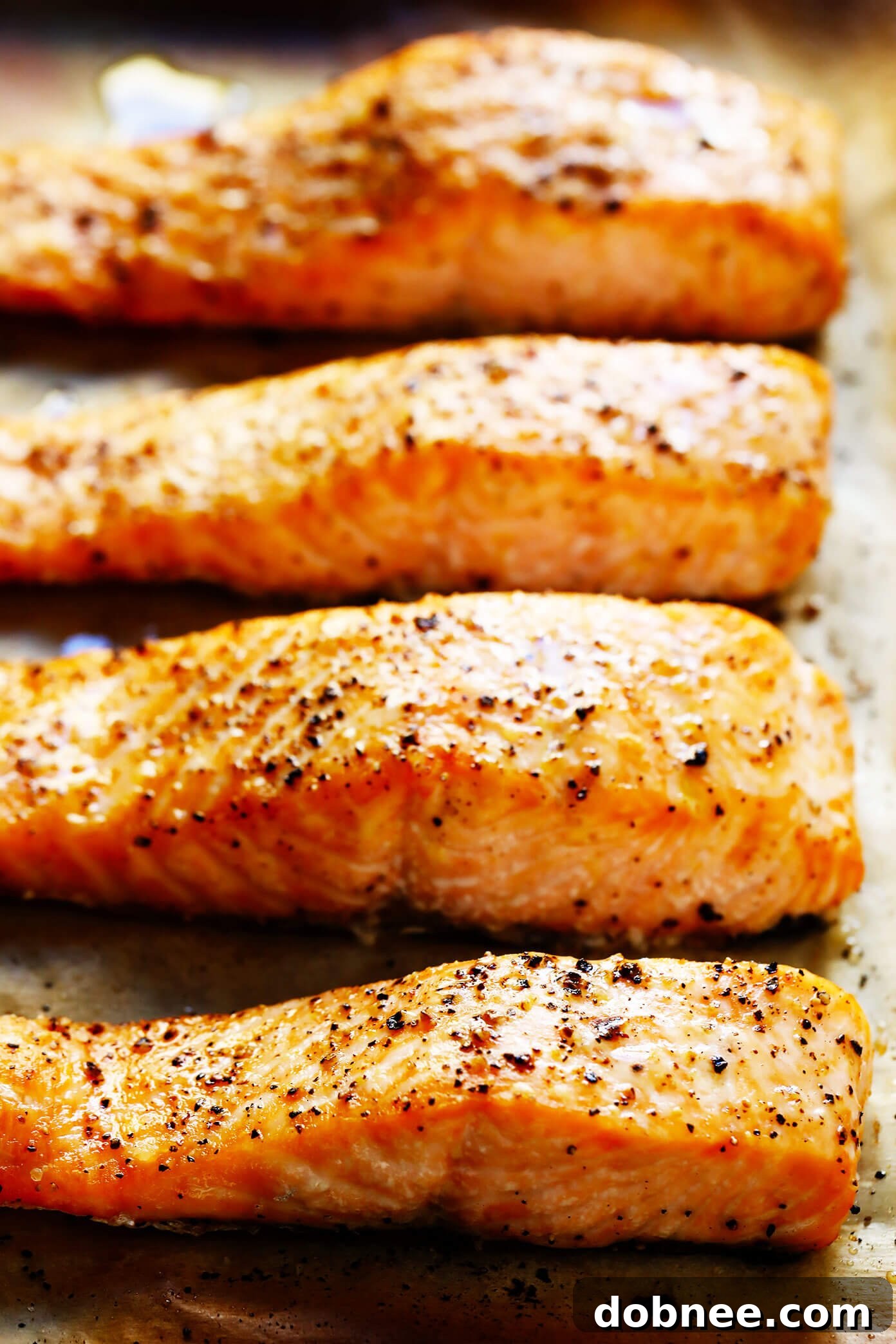
Essential Ingredients for Thai Green Curry Salmon
Crafting this incredible Thai-inspired green curry salmon relies on a selection of fresh, high-quality ingredients that build layers of flavor. Here’s a closer look at what you’ll need:
- Salmon Filets: The star protein of our dish. Choose your favorite type of salmon, whether it’s wild-caught sockeye for its rich flavor and firm texture or Atlantic salmon for its buttery tenderness. Aim for fillets of similar thickness to ensure even cooking.
- Fresh Vegetables: We typically use a delightful mix of thinly sliced red onion and crisp baby bok choy. The red onion adds a subtle sweetness and aromatic depth, while the bok choy provides a refreshing crunch and vibrant green color. However, this recipe is incredibly versatile – feel free to incorporate other stir-fry friendly vegetables like bell peppers, snap peas, spinach, or mushrooms based on what you have on hand or what’s in season.
- Aromatic Seasonings: The foundation of our curry sauce begins with a zesty trio: vibrant green curry paste, pungent fresh garlic, and spicy fresh ginger. Green curry paste is crucial for that authentic Thai flavor, offering a complex blend of herbs and spices. Using fresh garlic and ginger amplifies the aroma and adds a bright, invigorating warmth. If fresh ginger isn’t available, a teaspoon of ground ginger can be substituted.
- Coconut Milk: Full-fat coconut milk is highly recommended for this recipe. It’s what gives the sauce its wonderfully creamy texture and rich, slightly sweet foundation. While low-fat coconut milk can be used for a lighter option, the full-fat version delivers a more luxurious mouthfeel and depth of flavor that truly elevates the dish.
- Limes: Fresh lime juice and zest are absolutely essential. Don’t skimp on the lime – its bright, tangy notes cut through the richness of the coconut milk and curry paste, bringing a remarkable freshness and vibrancy to the entire sauce. It truly makes the flavors pop!
- Fresh Cilantro: As a finishing touch, a generous sprinkle of freshly chopped cilantro adds a burst of herbaceous freshness and a beautiful garnish. Its distinctive flavor complements the Thai profile perfectly.
Detailed ingredient amounts and measurements are conveniently listed in the comprehensive recipe card below.
Mastering Your Green Curry Salmon: Step-by-Step Guide
This recipe is designed for efficiency and maximum flavor. To streamline your cooking process, we recommend prepping all your ingredients while your oven preheats for the salmon. This “mise en place” approach ensures a smooth, stress-free cooking experience. For perfectly cooked salmon every time, a reliable cooking thermometer is an invaluable tool. Here’s a quick overview of how to bring this sensational salmon curry to life:
- Prepare and Roast the Salmon: Begin by preheating your oven to 450°F (230°C). Line a baking sheet with parchment paper or foil for easy cleanup. Arrange your salmon fillets on the prepared sheet, brush them lightly with one tablespoon of olive oil, and season generously with sea salt and freshly cracked black pepper. Roast the salmon for approximately 4-6 minutes per half inch of thickness, or until the internal temperature reaches your desired doneness (we recommend pulling it at 135-140°F, as it will continue to cook slightly out of the oven). The fish should be opaque throughout and flake easily with a fork. Once cooked, remove from the oven and set aside.
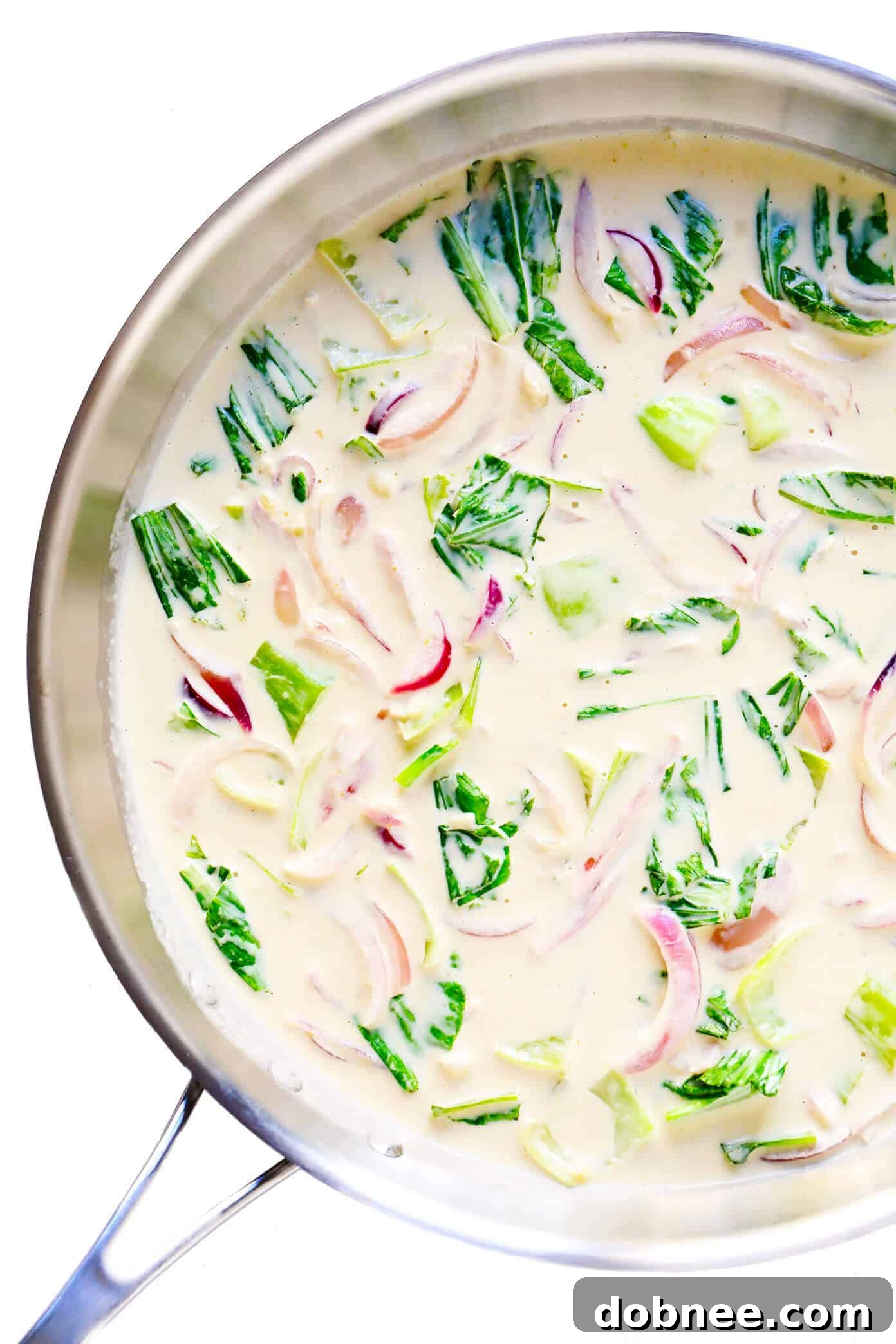
- Sauté the Aromatic Vegetables: While the salmon is roasting, heat the remaining tablespoon of olive oil in a large sauté pan or wok over medium-high heat. Add the thinly sliced red onion and sauté for about 4 minutes, stirring occasionally until softened and slightly translucent. Next, incorporate the chopped light green stalks of the baby bok choy (reserving the dark green leaves for later), minced garlic, and fresh ginger. Sauté for another 2 minutes, stirring frequently, allowing the aromatics to become fragrant. Finally, add the green curry paste and sauté for just 1 minute more, stirring constantly to release its full aromatic potential.
- Develop the Luscious Curry Sauce: Pour the full can of coconut milk into the pan, stirring well to ensure the green curry paste completely dissolves and integrates into the liquid. Continue cooking over medium heat until the sauce nearly reaches a gentle simmer, but avoid a rolling boil to prevent the coconut milk from separating. Once it’s just simmering, reduce the heat to low. Stir in the reserved dark green bok choy leaves and the fresh lime juice. Cook for another minute or two, just until the bok choy leaves are wilted. Taste the sauce and adjust seasonings as needed, adding more salt, pepper, or an extra splash of lime juice to perfect the flavor balance.
- Assemble and Serve: Carefully transfer your perfectly roasted salmon fillets to individual serving plates. Spoon the aromatic green curry sauce generously over and around the salmon and vegetables. Serve immediately, preferably over a bed of steamed jasmine rice or your favorite noodles. Garnish each serving with a vibrant sprinkle of fresh chopped cilantro and an extra lime wedge for an added burst of freshness. Prepare to savor every single bite of this exquisite, healthful, and satisfying meal!
Find detailed instructions, including precise timings and quantities, in the comprehensive recipe card located below.
Creative Variations to Customize Your Green Curry Salmon
One of the best things about this Green Curry Salmon recipe is its incredible adaptability. Feel free to experiment with these variations to suit your taste preferences or whatever ingredients you have on hand:
- Pan-Sear Instead of Roast: If you prefer to keep your oven off or want an even quicker cooking method, pan-searing the salmon is a fantastic alternative. Simply cook your salmon fillets in a separate non-stick skillet with a little oil until golden brown and cooked through, while simultaneously preparing the coconut curry sauce.
- Explore Different Proteins: While salmon is exceptional, this green curry sauce pairs beautifully with other proteins. Consider swapping in your favorite firm white fish (like cod or halibut), shrimp for a faster-cooking seafood option, tender chicken breast or thighs, lean steak, or even plant-based tofu for a vegetarian twist. Adjust cooking times as necessary for your chosen protein.
- Introduce More Vegetables or Greens: Beyond bok choy and red onions, almost any stir-fry friendly vegetable can be incorporated. Think colorful bell peppers (red, yellow, orange), crisp snap peas, broccoli florets, sliced mushrooms, bamboo shoots, or even a handful of fresh spinach or kale for added nutrients. Use what’s in your crisper drawer to minimize waste and maximize flavor.
- Adjust the Spice Level for Mildness: Green curry paste can vary in heat, and individual spice preferences differ. If you prefer a milder curry, start with just 1 tablespoon of green curry paste. You can always add more later when tasting the sauce if you desire a bit more kick.
- Amp Up the Heat for Spice Lovers: For those who crave extra heat, the green curry paste already provides a noticeable warmth. To make it even spicier, finely slice a few Thai bird chilies or serrano peppers and add them to the coconut curry sauce along with the garlic and ginger. Be cautious, as these peppers pack a punch!
- Alternative Serving Options: While rice is a classic accompaniment, this green curry is equally delicious served over rice noodles, which absorb the sauce beautifully. For a heartier meal, serve it with some crusty bread to sop up every last drop of that amazing sauce. It also pairs wonderfully with quinoa or cauliflower rice for a low-carb option.
More Favorite Salmon Recipes to Explore
If you’ve fallen in love with the ease and flavor of this Green Curry Salmon, you’re in luck! Salmon is a incredibly versatile and healthy fish, perfect for a variety of quick and delicious meals. Here are a few more of our all-time favorite salmon recipes that we think you’ll adore:
- Classic Baked Salmon
- Honey Mustard Salmon In Foil
- Mediterranean Greek Salmon Salad Bowls
- Salmon Asparagus Orzo Salad
- Super Simple Salmon Tacos with Juicy Citrus Salsa
Print
Green Curry Salmon
Author: Ali
Prep Time: 10 mins
Cook Time: 15 mins
Total Time: 25 mins
Yield: 4 servings 1x
Description
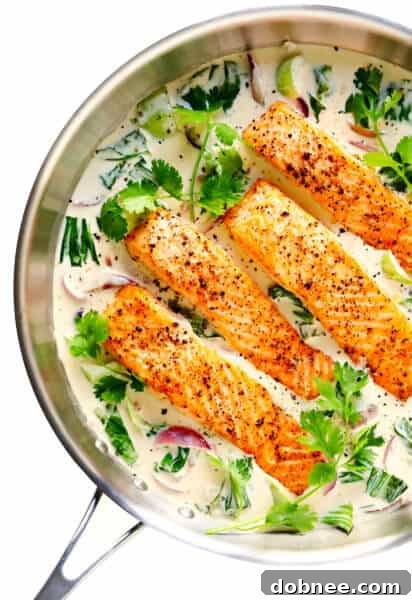
This quick and easy Green Curry Salmon recipe is made with tender salmon, fresh baby bok choy, and the most delicious Thai-inspired lime coconut green curry sauce. Ready to go in less than 30 minutes!
Ingredients
Scale
- 4 salmon filets
- 2 tablespoons olive oil, divided
- fine sea salt and freshly-cracked black pepper
- 1 red onion, peeled and thinly-sliced
- 8 ounces baby bok choy, roughly chopped (with light green stalks and dark green leaves separated)
- 3 cloves garlic, minced
- 1 tablespoon minced fresh ginger*
- 1 to 2 tablespoons green curry paste
- 1 (15-ounce) can full-fat coconut milk
- zest and juice of 1 large lime
- toppings: chopped fresh cilantro, extra lime wedges
Instructions
- Roast the salmon. Heat oven to 450°F. Line a baking sheet with parchment* or foil. Place the salmon filets on the parchment, brush evenly with 1 tablespoon oil, then sprinkle evenly with a generous pinch of salt and black pepper. Bake until the internal temperature of the salmon reaches 135-140°F*, about 4-6 minutes per half inch of thickness (measured by the thickest part of the filet). You can also test for doneness by inserting a fork or knife in the salmon and twisting it a bit; the fish should be opaque and flake easily. Remove from the oven and set aside.
- Sauté the veggies. Meanwhile, as your oven is heating for the salmon, heat the remaining 1 tablespoon olive oil in a large sauté pan over medium-high heat. Add the onion and sauté for 4 minutes, stirring occasionally. Add in the chopped light green parts of the bok choy, garlic, ginger and sauté for 2 minutes, stirring often. Add in the green curry paste* and sauté for 1 minute, stirring often.
- Finish the sauce. Add in the coconut milk, giving it a good stir until the curry paste has evenly dissolved into the sauce. Continue cooking until the sauce nearly reaches a simmer, then reduce the heat to low. Stir in the dark green bok choy leaves and the lime juice until combined. Then give the sauce a taste, and season with salt, pepper, and/or extra lime juice as needed.
- Serve. Serve the salmon, veggies and sauce over rice, garnished with lots of fresh cilantro and an extra lime wedge.
Equipment
Coconut Milk
Buy Now →
Green Curry Paste
Buy Now →
Oven-Safe Thermometer
Buy Now →
Notes
Ginger: Feel free to substitute 1 teaspoon ground ginger in place of fresh ginger, if you prefer.
Parchment warning: Use parchment in this recipe at your own risk. Most brands do not recommend using parchment in ovens above 420-450°F, but I often do without a problem. If you do use parchment at high heat, it’s always a safe practice to keep an eye on it.
Salmon temperature: The FDA recommends cooking salmon to an internal temperature of 145°F, measured in the thickest part of the salmon filets. The salmon will continue to cook a bit more once it has been removed from the oven, so I would pull it out of the oven once it reaches an internal temperature of 140°F. Or if you like your salmon a bit less cooked (as I do), I would recommend pulling it out at 135°F.
Green curry paste: I really love this recipe with a full 2 tablespoons of green curry paste. But if you are new to cooking with curry paste, or prefer a less intense curry flavor, I recommend starting with 1 tablespoon. Then you can always add more when you are seasoning the sauce if you would like. (Note that different curry paste brands also have slightly different flavors/intensities.)
Storage instructions: Leftovers can be refrigerated in a sealed container for up to 2 days.
Source: Recipe losely adapted from The New York Times. We went the green curry paste route instead of using miso.