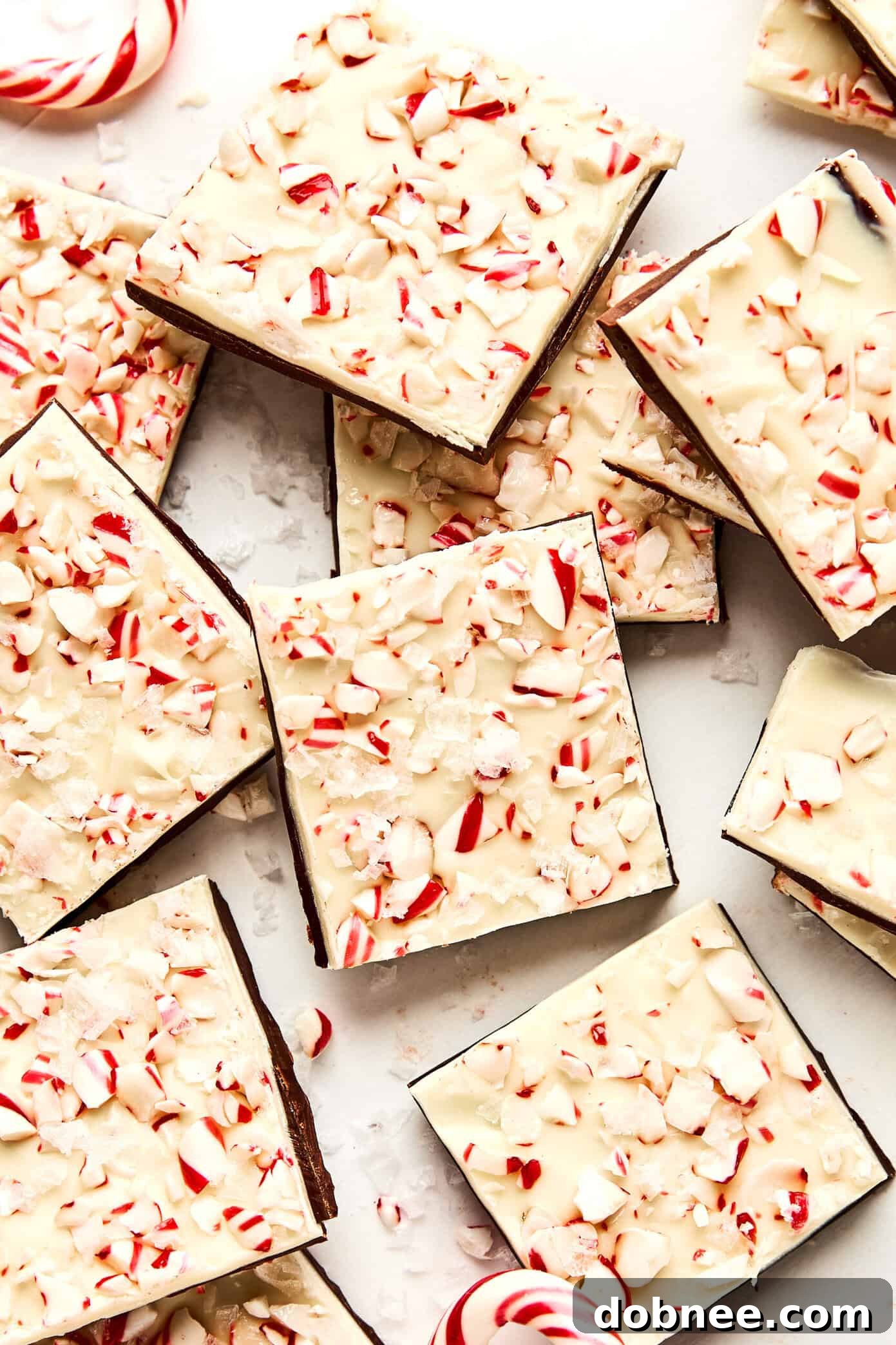
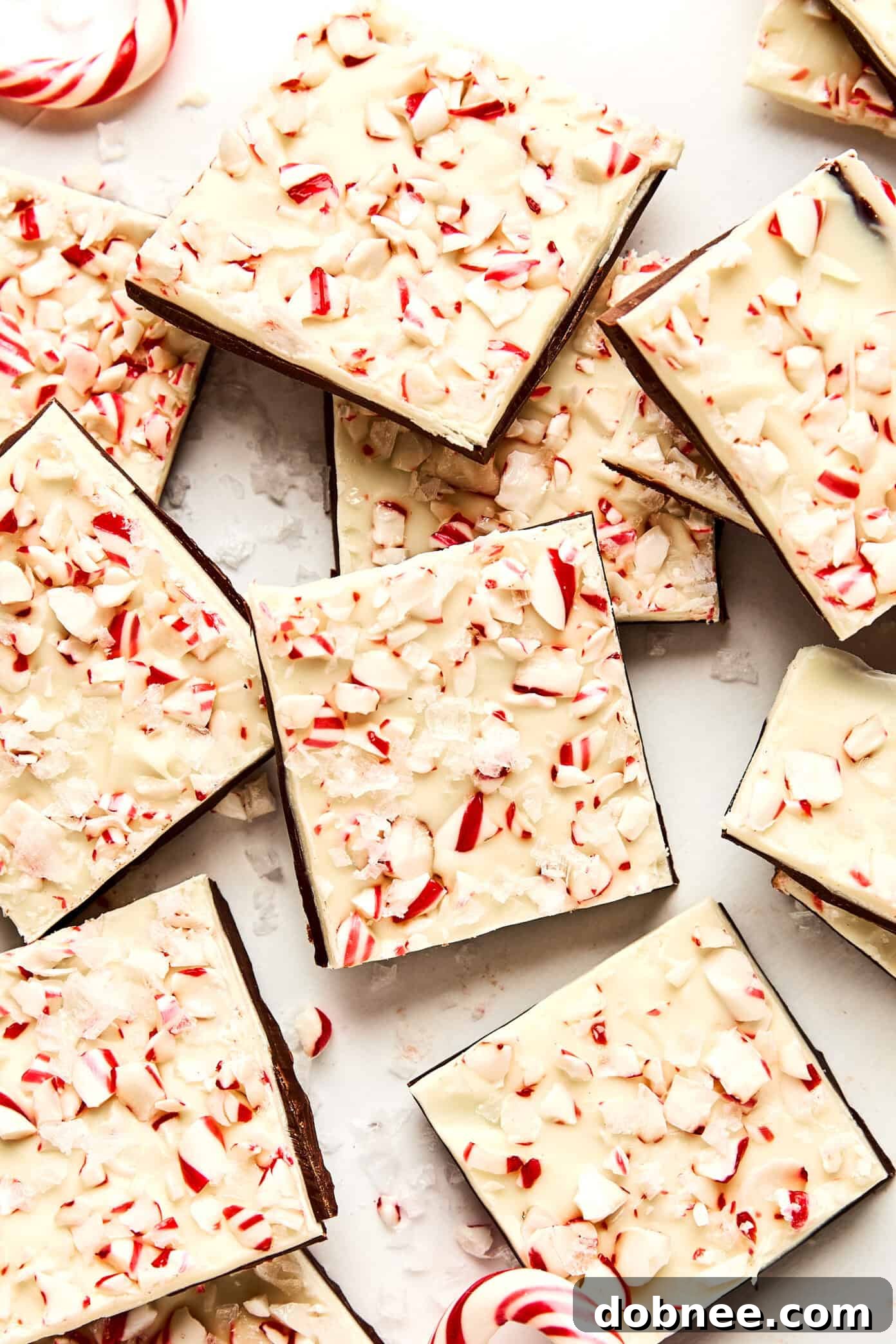
The Ultimate Guide to Perfect Peppermint Bark

There’s an undeniable magic that peppermint and chocolate create, especially during the holiday season. For as long as I can remember, anything combining these two iconic flavors, from mint chocolate chip ice cream to decadent chocolate mint cookies, has held a special place in my heart. So, it comes as no surprise that the beloved classic, Peppermint Bark, always emerges as a resounding favorite this time of year. Its festive charm and irresistible taste make it a staple in holiday celebrations and a joy to share.
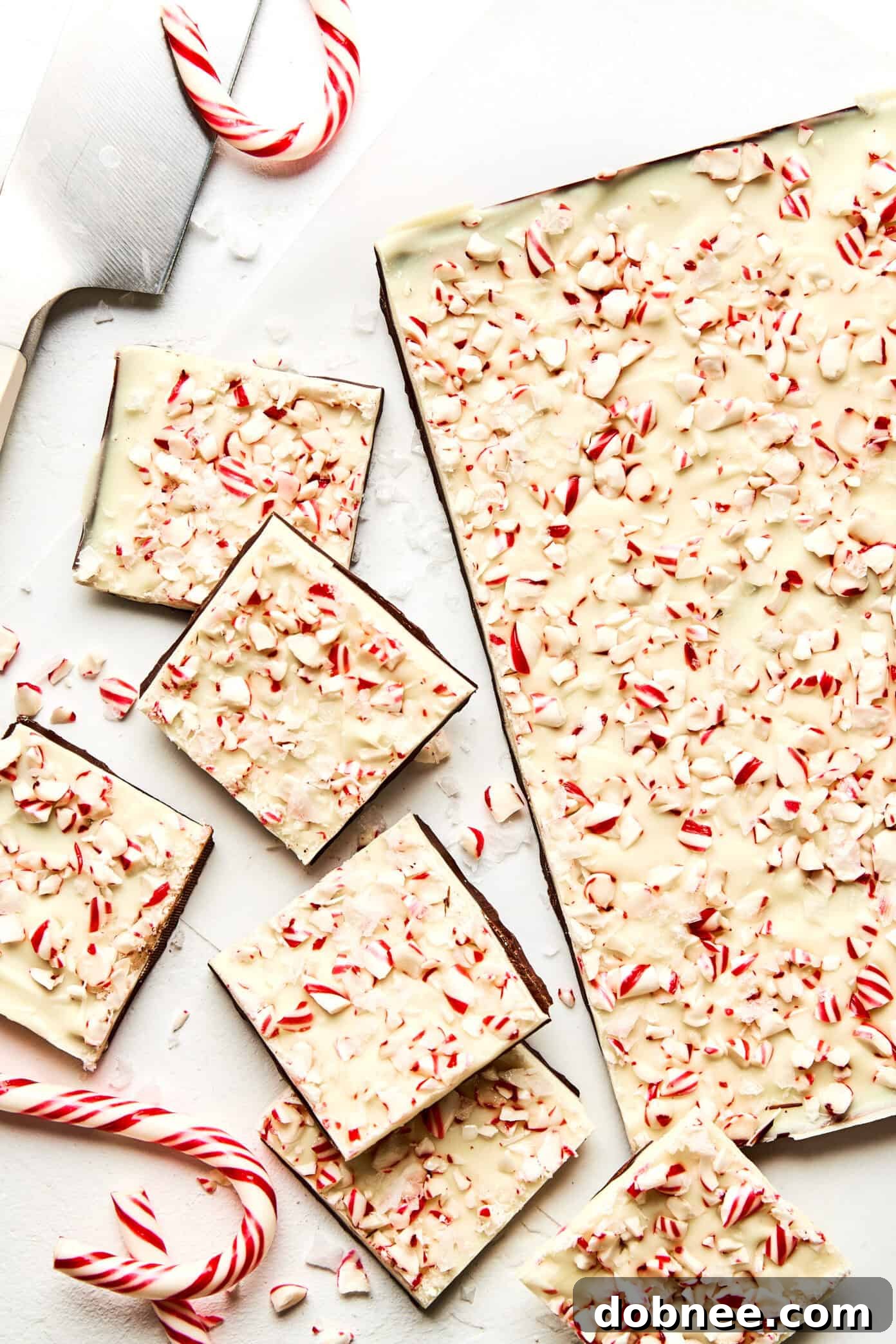
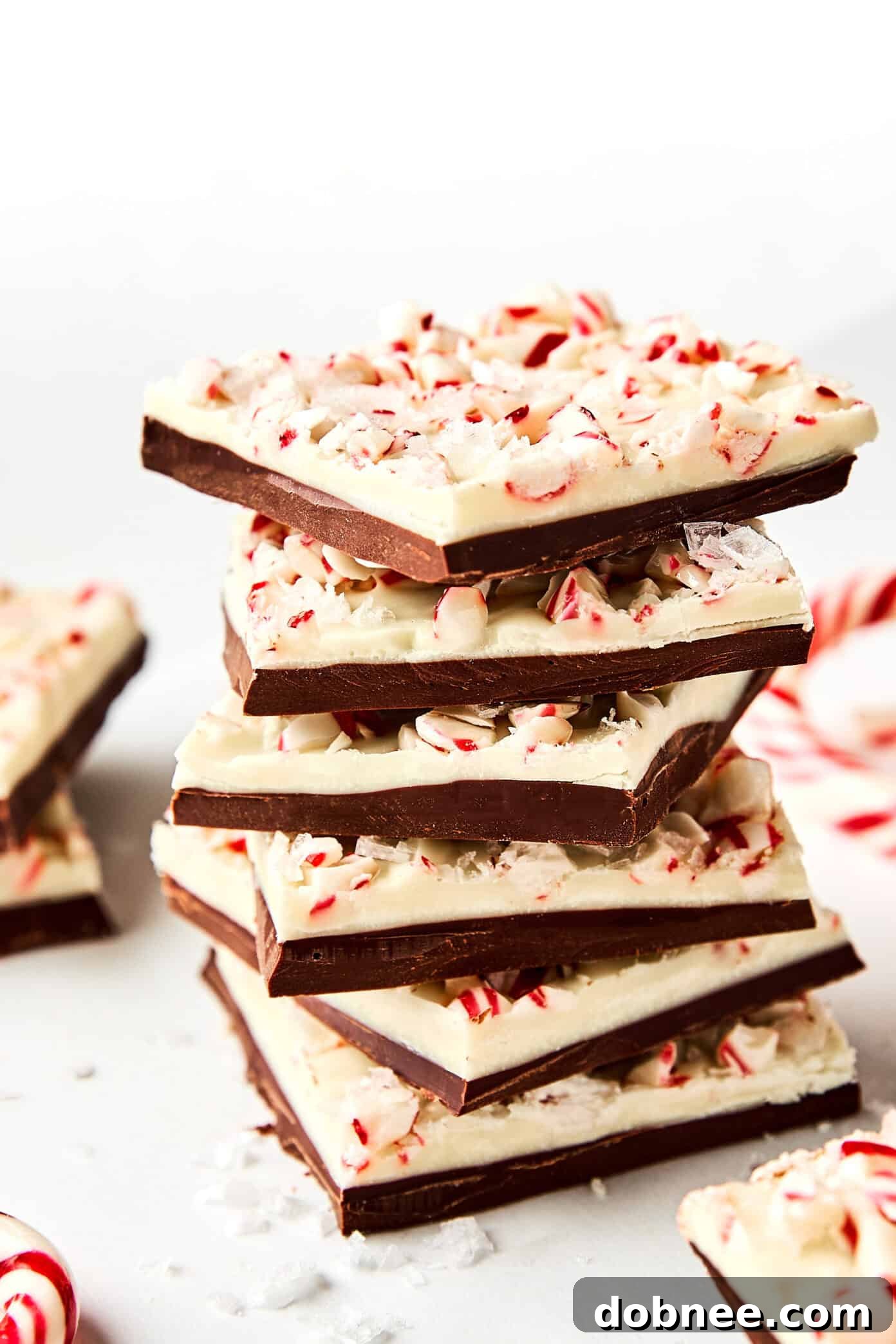
With its luxurious layers of rich, bittersweet chocolate and creamy, vibrant white chocolate, infused with a cool, refreshing peppermint essence, and crowned with the sweet, satisfying crunch of crushed candy canes, peppermint bark isn’t just a treat; it’s a quintessential Christmas experience. It’s one of those crowd-pleasing confections that instantly evokes the spirit of the holidays, making every bite a delightful celebration of the season.
While making peppermint bark might seem straightforward, working with melted chocolate can sometimes be surprisingly delicate and, dare I say, a little finicky. But fear not! I’ve spent countless hours perfecting this recipe to ensure consistently flawless results. This comprehensive guide includes my tried-and-true method, alongside a collection of indispensable tips and tricks, designed to help you achieve perfectly set, beautifully layered peppermint bark every single time. And the best part? This recipe is wonderfully quick and easy to execute, making it ideal for those bustling December days, a perfect last-minute homemade gift, or for simply sneaking a few festive bites straight from the fridge when a craving strikes. Let’s dive into the delicious world of homemade peppermint bark and create some holiday magic!
Crafting Flawless Peppermint Bark: Expert Tips for Success
Achieving perfectly smooth, distinct layers of chocolate in your peppermint bark can be a delicate art. Melting and layering chocolate correctly is crucial for both aesthetic appeal and texture. Here are my top tips to help you master the process and ensure your peppermint bark sets up beautifully every time, delivering that professional finish you desire:
- Prioritize Real Chocolate Bars, Not Chips. This is perhaps the most critical tip for superior peppermint bark. Chocolate chips, while convenient for baking, contain added stabilizers and less cocoa butter, which are designed to help them hold their shape during baking. This makes them melt less smoothly and can result in a grainy or thick texture that doesn’t spread well. For silky, glossy, and beautifully tempered bark, always opt for high-quality chocolate bars (bittersweet, semi-sweet, or white) that are specifically designed for melting. Avoid “white almond bark” or “candy melts,” as these are not true chocolates and won’t deliver the same rich flavor or snap.
- Allow the First Layer to Cool Completely Until Matte. This step is incredibly important for preventing your chocolate layers from melding together and creating a muddy swirl. After spreading your dark chocolate layer, it must be allowed to set sufficiently. The surface should transform from shiny and wet to a dull, matte finish, indicating that the chocolate has begun to crystallize and firm up. While the center should still be slightly soft to the touch (not liquid), it must not be glossy. Rushing this step will cause the warm white chocolate to melt into the dark layer, compromising the distinct visual appeal.
- Cool the White Chocolate Slightly Before Pouring. White chocolate is particularly delicate and prone to seizing or scorching, but also, if it’s too hot when poured, it can re-melt the dark chocolate layer beneath it. After melting your white chocolate until smooth and creamy, let it cool for a few minutes, stirring frequently. It should feel barely warm to the touch, or “body temperature.” This ensures it won’t disturb the set dark chocolate layer. Once poured, allow the white chocolate to naturally spread out as much as possible before gently assisting with an offset spatula. Minimal manipulation helps maintain clean layers.
- Press Candy Canes In Gently But Firmly. Once the white chocolate layer is spread, timing is key for adding the crushed candy canes. Sprinkle them evenly and immediately. Then, use the back of a spoon or your fingertips to gently press them into the soft white chocolate. This light pressure helps them adhere securely without sinking too deep into the chocolate, which can cause color bleeding or melting as the bark cools.
- Warm Slightly Before Cutting for Clean Breaks. Peppermint bark, when chilled, becomes quite brittle. Attempting to cut it straight from the refrigerator can lead to cracking, shattering, or uneven pieces. To achieve clean, crisp cuts, let the bark sit at room temperature for 15-20 minutes before cutting. This slight warming softens the chocolate just enough to allow a sharp chef’s knife to slice through it smoothly without splintering. Press straight down with the knife rather than sawing for the best results.
- Consider Tempering for the Ultimate Snap and Shine (Advanced Tip). For those who want to take their bark to the next level, tempering your chocolate can significantly improve its gloss, snap, and resistance to bloom (the white, powdery film that can form on untempered chocolate). While not strictly necessary for delicious bark, it’s a technique worth exploring if you’re aiming for professional-grade results.
- Use a Double Boiler for Controlled Melting. While microwaving in short bursts is convenient, a double boiler offers more controlled and gentle heating, reducing the risk of scorching or seizing, especially with white chocolate. This method involves placing a heatproof bowl over a pot of simmering water, ensuring the bowl does not touch the water.
Creative Twists and Customizations for Your Peppermint Bark
While the classic peppermint bark is perfect in its simplicity, this recipe is incredibly versatile and open to your creative interpretation. Don’t hesitate to experiment with different flavors and textures to personalize your holiday treat. Here are a few exciting twists you’re welcome to try, guaranteed to add a unique flair to your homemade bark:
- Embrace Dark Chocolate Exclusively: For the purists and dark chocolate aficionados, skipping the white chocolate layer entirely creates an intensely rich and sophisticated bark. Simply sprinkle your crushed candy canes directly onto the set dark chocolate layer, perhaps adding an extra dash of sea salt to enhance the cocoa notes. This variation offers a more profound chocolate experience, allowing the bitterness of the dark chocolate to perfectly balance the sweetness of the peppermint.
- Introduce a Decadent Third Layer: Elevate your bark with an additional layer of luscious milk chocolate placed between the dark and white layers. This adds another dimension of creamy sweetness and a beautiful visual contrast. Melt the milk chocolate and spread it over the fully set dark chocolate before adding the white chocolate and candy canes. Ensure each layer is properly set before adding the next to maintain distinct lines.
- Incorporate Crunchy Nuts for Texture: Add an earthy, nutty crunch by sprinkling finely chopped pistachios, almonds, or pecans along with (or instead of) the candy canes. Pistachios offer a vibrant green color that beautifully complements the red and white, while almonds and pecans provide a classic, comforting flavor profile that pairs wonderfully with chocolate. Toasting the nuts lightly beforehand can enhance their flavor significantly.
- Swap Candy Canes for Crushed Oreos: If you’re a fan of the classic cookies and cream combination, this variation is a must-try. Replace the crushed candy canes with an equal amount of crushed Oreo cookies. The dark chocolatey cookies provide a delightful contrast in flavor and texture to the white chocolate and a playful twist on the traditional bark. For an extra festive touch, you could even use half crushed Oreos and half candy canes!
- Create a Beautifully Marbled Effect: Instead of distinct layers, lightly swirl the still-wet white and dark chocolate together with a toothpick or a skewer for a stunning, artistic marbled effect. This technique creates an elegant visual, making each piece of bark a unique masterpiece. Just be careful not to overmix, as you want to see the beautiful swirls rather than a uniform blend.
- Explore Other Extracts: While peppermint is traditional, don’t limit yourself! Try almond extract for a nutty twist, orange extract for a chocolate-orange delight, or even a hint of espresso extract to deepen the chocolate flavor. Just a small amount can transform the entire profile of your bark.
- Add a Pop of Color with Food Coloring: For themed parties or specific occasions, use gel food coloring to tint your white chocolate. Imagine vibrant green for St. Patrick’s Day or shades of blue for a winter wonderland theme. Always use oil-based gel colors for chocolate, as water-based colors can cause the chocolate to seize.
- Garnish with Other Festive Toppings: Beyond candy canes, consider sprinkles, mini chocolate chips, toasted coconut flakes, or even crushed pretzels for a salty-sweet crunch. The possibilities are endless for creating a truly unique and personalized holiday treat.
Your Peppermint Bark Questions Answered
When properly stored in an airtight container at cool room temperature (ideally below 70°F or 21°C), homemade peppermint bark will maintain its freshness, snap, and flavor for approximately 1 to 2 weeks. If you prefer to extend its shelf life, storing it in the refrigerator in an airtight container can keep it fresh for up to 3 weeks. Always ensure it’s protected from air to prevent oxidation and absorption of other food odors.
While technically you can freeze peppermint bark, it’s generally not recommended unless absolutely necessary for very long-term storage. The primary reason is that freezing can cause condensation to form on the chocolate surface once the bark is thawed. This moisture can lead to sugar bloom (white spots) or alter the texture, making it slightly less crisp. If you must freeze it, wrap it very tightly in plastic wrap, then place it in an airtight freezer bag or container to minimize exposure to air and moisture. Thaw slowly in the refrigerator overnight before bringing to room temperature.
The most common reason for layers mixing is that the bottom chocolate layer (usually dark chocolate) was still too warm or glossy when the next layer was poured. For distinct, clean layers, the first layer must be sufficiently set and cool. Its surface should appear matte, not shiny, and be firm to the touch (though still slightly pliable in the center). If it’s still glossy, it indicates the chocolate hasn’t fully set, and the heat from the new layer will cause them to blend. Patience during the cooling step is key!
White chocolate is incredibly sensitive to heat and moisture, making it prone to seizing (turning thick, grainy, and unworkable). This often happens due to overheating in the microwave or if even a tiny drop of water or steam gets into the chocolate. To prevent this, always microwave white chocolate in very short bursts (15-20 seconds at a time) and stir thoroughly between each interval, even if it doesn’t look melted yet. Continue until just smooth, avoiding any direct contact with steam or water. If it does seize, sometimes adding a teaspoon of vegetable oil or melted coconut oil can help salvage it, but it might affect the final texture.
The easiest and most efficient way to crush candy canes is to place them in a sturdy freezer bag (like a Ziploc bag) and seal it tightly, removing as much air as possible. Then, use a rolling pin, a meat mallet, or the bottom of a heavy pan to gently but firmly tap and crush them into small pieces. Avoid pulverizing them into a fine powder; you want varying textures for that satisfying crunch. A food processor can also work, but be careful not to over-process them into dust. For best results, crush them just before sprinkling.
A white, powdery film on chocolate is called bloom, and it can be either sugar bloom or fat bloom. Sugar bloom occurs when moisture condenses on the chocolate’s surface, dissolving sugar crystals that then recrystallize as a white film once the moisture evaporates. Fat bloom happens when the cocoa butter separates and rises to the surface, often due to improper storage temperatures (fluctuations between warm and cool). While bloom doesn’t make the chocolate unsafe to eat, it does affect its appearance and can impact texture. Proper tempering and consistent storage temperatures can help prevent it.
Yes, you can use peppermint oil, but with extreme caution! Peppermint oil is significantly more concentrated and potent than peppermint extract. You’ll need only a tiny fraction of the amount; typically, a drop or two is sufficient for the entire batch. Using too much peppermint oil will result in an overpowering, almost medicinal flavor. Always add a very small amount, taste, and add more sparingly if needed.
Classic Peppermint Bark
Author: Ali
Prep Time: 15 mins
Cook Time: 0 mins
Total Time: 45 mins
Yield: About 20 pieces 1x
Description
Discover the magic of homemade Peppermint Bark, a truly quintessential holiday confection that’s both elegant and effortlessly delicious. This easy-to-follow recipe guides you through creating luxurious layers of rich, bittersweet dark chocolate and velvety smooth white chocolate, each infused with a refreshing hint of pure peppermint extract. The masterpiece is then generously crowned with vibrant, crunchy crushed candy canes and a delicate sprinkle of flaky sea salt, offering a perfect balance of sweet, cool, and a touch of savory. Ideal for festive gatherings, thoughtful gifting, or simply indulging in a blissful holiday moment, our guide ensures you achieve a perfect batch every time with its foolproof tips and simple instructions. Get ready to impress your friends and family with this classic, visually stunning, and utterly irresistible holiday treat!
Ingredients
Scale
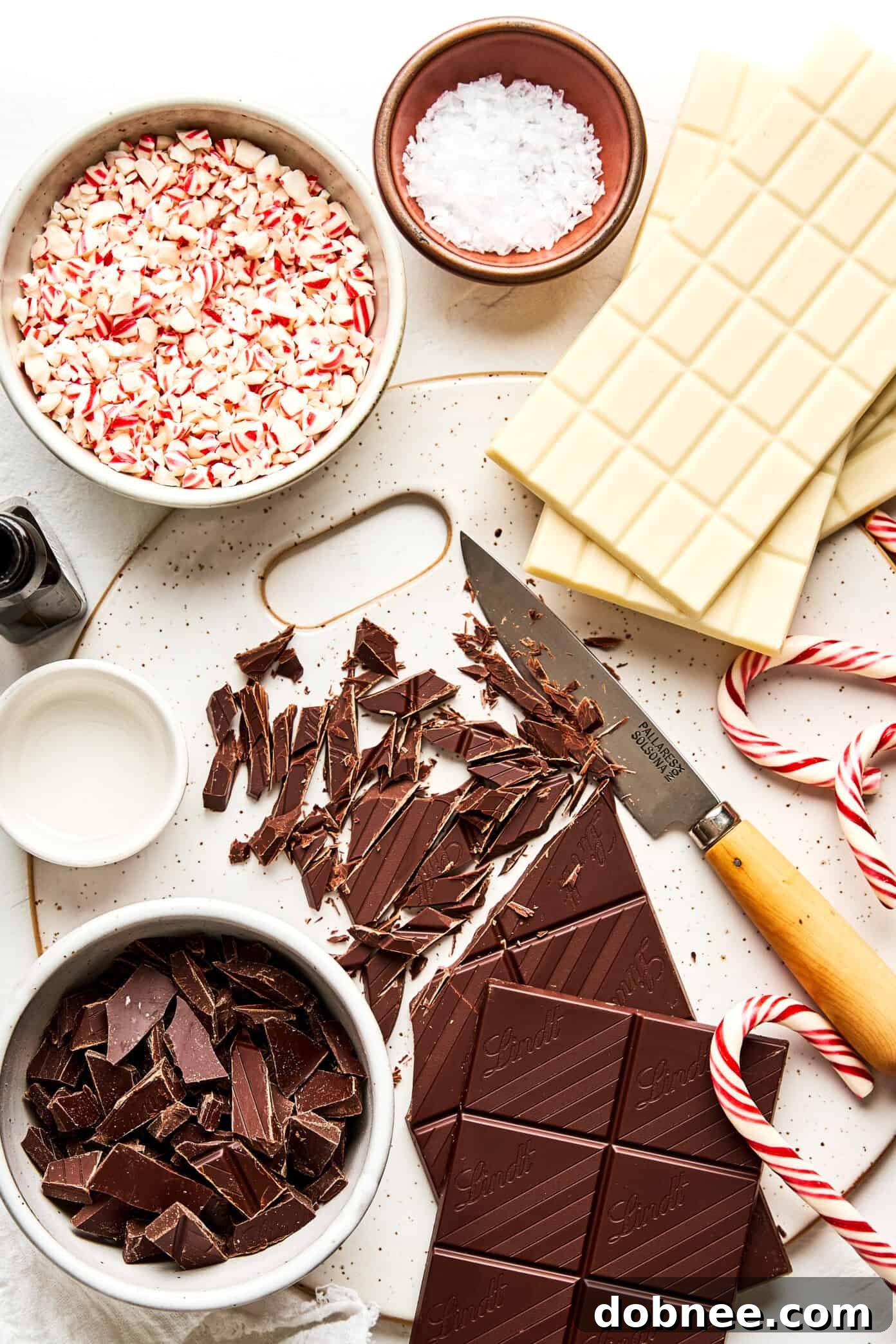
- 12 ounces bittersweet or semisweet chocolate bars, finely chopped (quality matters for smooth melting!)
- 12 ounces white chocolate bars, finely chopped (ensure it’s real white chocolate, not almond bark)
- 1/2 teaspoon pure peppermint extract, divided (adjust to your taste for intensity)
- 3/4 cup crushed candy canes (this is typically about 5 regular-size candy canes, crushed into varying small pieces for texture)
- Flaky sea salt (optional, but highly recommended for a delicious sweet and salty contrast)
Instructions
- Prepare your baking pan with precision. Begin by lining a standard 9×13-inch baking pan with parchment paper. Make sure to leave a generous overhang on the longer sides of the pan; this thoughtful detail will make lifting the cooled, hardened bark out of the pan incredibly easy and mess-free. This parchment layer is crucial for preventing sticking and ensuring a clean release.
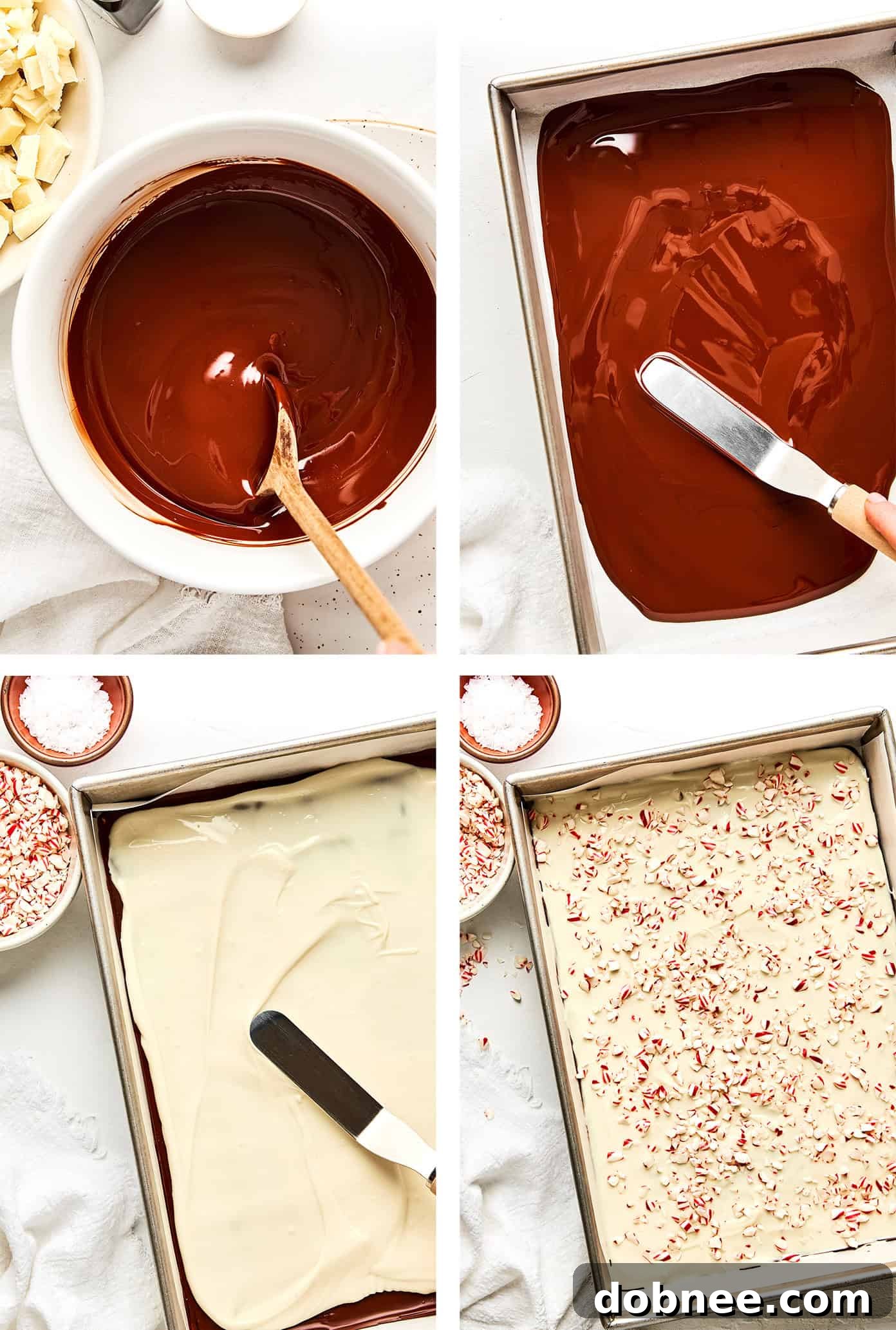
- Melt the bittersweet chocolate carefully. Place your finely chopped bittersweet (or semisweet) chocolate bars into a clean, microwave-safe, heatproof bowl. Microwave the chocolate in short, controlled intervals of 20–30 seconds. After each interval, remove the bowl and stir the chocolate thoroughly with a rubber spatula, even if it doesn’t appear fully melted. Continue this process until the chocolate is just melted, smooth, and beautifully glossy. It should be pourable but not hot to the touch. Stir in ¼ teaspoon of the peppermint extract. If the chocolate feels overly warm, allow it to cool for 2–3 minutes, stirring occasionally, before proceeding.
- Spread the first chocolate layer evenly. Pour the perfectly melted bittersweet chocolate into the prepared parchment-lined baking pan. Using an offset spatula or the back of a spoon, gently and evenly spread the chocolate across the entire surface of the parchment paper, aiming for a consistent ¼-inch thick layer. Work quickly but carefully to ensure an even coating.
- Allow the dark chocolate layer to set properly. This is a critical step for achieving distinct, beautiful layers. You must allow the dark chocolate layer to set until its edges are firm and the entire surface looks matte (no longer shiny) and soft but no longer liquid. For optimal results, first let the pan rest at cool room temperature for 10–15 minutes, then transfer it to the refrigerator for an additional 3–5 minutes. Alternatively, you can refrigerate it for 12–15 minutes straight. The key is to ensure the center is no longer glossy; if it is, the next layer will blend.
- Melt the white chocolate with care. In a separate, clean, dry heatproof bowl, add your finely chopped white chocolate bars. Just like with the dark chocolate, microwave in short 20–30 second bursts, stirring diligently between each. White chocolate is particularly sensitive to heat and can seize easily, so gentle, incremental heating is essential until it is completely smooth and creamy. Stir in the remaining ¼ teaspoon of peppermint extract. Then, allow the white chocolate to cool down to “body temperature” (it should feel just slightly warm, not hot) for 3–5 minutes, stirring it every 30 seconds to prevent it from setting up prematurely. This cooling prevents it from melting the dark layer below.
- Add the white chocolate layer gently. Carefully pour the slightly cooled white chocolate over the center of the set bittersweet chocolate layer. Using an offset spatula, very gently and slowly spread the white chocolate outwards towards the edges of the pan. Be extremely careful not to disturb the dark chocolate layer underneath. If you notice the spatula picking up dark chocolate, stop spreading immediately and rely solely on pouring to encourage the white chocolate to spread, minimizing contact.
- Immediately add the candy canes and sea salt. As soon as the white chocolate layer is spread, generously and evenly sprinkle the crushed candy canes over the entire surface. Use your fingertips or the back of a spoon to gently press the candy cane pieces into the soft white chocolate, ensuring they adhere well without sinking too deeply. Follow this with a light, even sprinkling of flaky sea salt, if desired, which beautifully enhances both the chocolate and peppermint flavors.
- Chill the bark to set completely. Transfer the pan back to the refrigerator and chill for approximately 20–25 minutes, or until the entire peppermint bark is completely firm and hard. It should have a good snap when tested at the edges.
- Cut or break into delightful pieces. Once fully set, lift the peppermint bark out of the pan using the parchment paper overhang. Carefully peel away the parchment. For clean, sharp edges, let the bark rest at room temperature for about 15–20 minutes to prevent it from shattering. Then, use a large, sharp chef’s knife, pressing straight down (avoiding a sawing motion), to cut the bark into desired pieces or irregular shards.
- Store for prolonged enjoyment. Store your delicious homemade peppermint bark in an airtight container at cool room temperature for 1–2 weeks, or in the refrigerator for up to 3 weeks. Keep it away from direct sunlight and strong odors to maintain its fresh taste and vibrant colors.