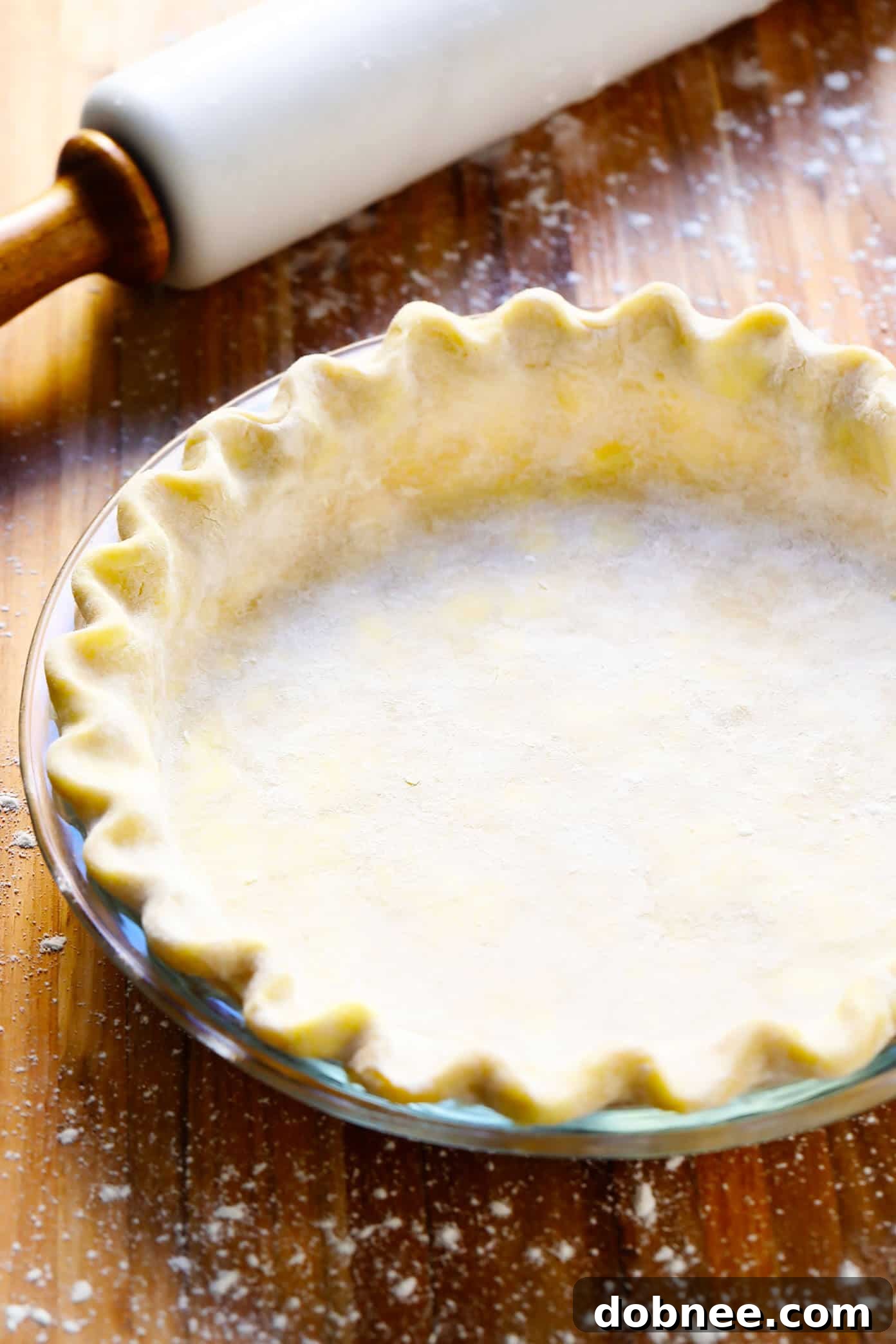
Discover the definitive guide to crafting a spectacular pie crust — whether you prefer the tactile satisfaction of working by hand or the efficiency of a food processor. This tutorial features our celebrated all-butter homemade pie crust recipe, guaranteed to deliver unparalleled flakiness and flavor.
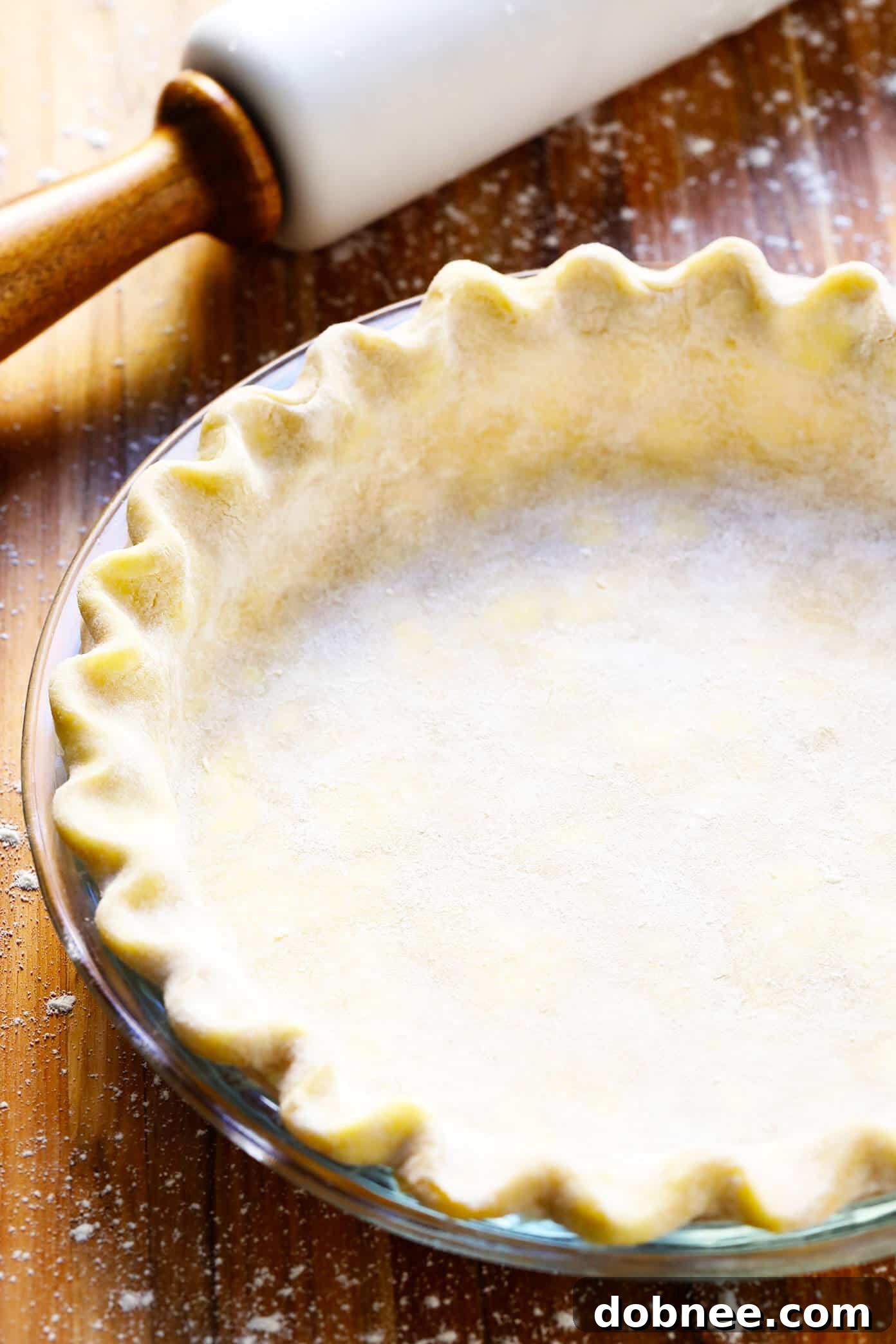
As the holidays approach and baking season flourishes, the aroma of freshly baked pies fills homes with warmth and anticipation. While the fillings often steal the show, the true unsung hero of any exceptional pie is its crust. A truly magnificent pie requires a crust that is tender, flaky, and rich with buttery flavor – qualities that elevate a simple dessert into an unforgettable culinary experience. If the thought of making pie crust from scratch has ever intimidated you, rest assured, you’re not alone. Many home bakers find pie crust daunting, but with the right techniques and a clear guide, it’s genuinely much simpler and more rewarding than you might imagine.
Today, we’re diving deep into the art of creating the perfect homemade pie crust, featuring our absolute favorite all-butter recipe. This recipe is your reliable companion for achieving a consistently flaky, golden, and utterly delicious foundation for all your sweet and savory pie creations. It’s designed to be approachable for beginners while offering valuable insights for seasoned bakers looking to refine their technique.
This incredible recipe requires just five basic ingredients: all-purpose flour, cold butter, a pinch of salt, a touch of sugar (optional, but recommended for sweetness and browning), and ice water. With these simple components and about 15 minutes of active preparation time, you can craft a pie crust that far surpasses any store-bought alternative. For those who own a food processor, the prep time can be reduced to under 10 minutes, making this a lightning-fast option for busy bakers.
We first introduced this classic pie crust recipe on our blog several years ago, marking the beginning of our own extensive journey into the world of pie baking. Since then, after countless pies and many learning experiences, we’ve gathered invaluable tips and tricks. This updated guide incorporates all that accumulated wisdom, alongside brand-new, step-by-step photos illustrating both the traditional by-hand method and the convenient food processor approach. Whether you’re making your very first pie or your fiftieth, our aim is to provide helpful guidance that makes your baking endeavors more joyful and, of course, more delicious, especially during the festive holiday season.
So, grab your ingredients and your rolling pin, and let’s embark on the delightful journey of making the best homemade pie crust!
Understanding Your Pie Crust Ingredients
Before we dive into the mixing process, let’s take a moment to understand the role of each crucial ingredient in this homemade pie crust recipe. Each component contributes uniquely to the final texture and flavor, and knowing their functions will help you achieve consistent, excellent results. You will need these five simple ingredients:
- All-Purpose Flour: This is the backbone of your pie crust. We stick with classic all-purpose flour for its balanced gluten content, which allows for both structure and tenderness. To ensure accuracy, especially for baking, we highly recommend using a kitchen scale to measure your flour by weight (grams). If a scale isn’t available, avoid scooping your measuring cup directly into the flour bag, as this can compact the flour and lead to an excessive amount. Instead, lightly spoon the flour into your measuring cup and level it off with a straight edge, such as a knife. Over-packing flour results in a tough, dense crust due to too much gluten development.
- Granulated Sugar (Optional, but Recommended): We like to add about a tablespoon of granulated sugar to our pie crust. This addition provides a subtle hint of sweetness that complements many pie fillings and also aids in achieving that beautiful golden-brown crust. Sugar contributes to tenderness and helps with caramelization during baking. If you prefer a completely unsweetened crust, especially for savory pies, feel free to omit it.
- Salt: A crucial flavor enhancer, salt brightens and balances the richness of the butter and the overall taste of the pie dough. Don’t skip it, even for sweet pies; it’s essential for a well-rounded flavor profile.
- Cold Unsalted Butter: This is arguably the most vital ingredient for a truly flaky pie crust. The butter must be completely chilled, straight from the refrigerator, and then roughly diced into 1/4-inch cubes. The goal is to keep the butter as cold as possible throughout the mixing process. When cold butter pieces melt in the oven, they release steam, which creates pockets of air within the dough, resulting in that desirable flaky texture. Using unsalted butter allows you to control the exact amount of salt in the recipe. Add the diced butter to the dry ingredients immediately after cutting to prevent it from warming up.
- Ice Water: Just like the butter, the water you add to your pie dough must be as cold as possible. We typically keep a cup of ice water (with actual ice cubes) near our baking station, straining the cold water into a measuring cup just moments before incorporating it into the dough. Cold water helps to minimize gluten development, which is critical for a tender crust. Some bakers go a step further and use a 50/50 mixture of ice water and frozen vodka. The alcohol in vodka inhibits gluten formation even further, potentially leading to an even more tender crust. While it’s a popular trick, we’ve found that using simply very cold ice water yields fantastic results, and we usually stick to that for simplicity.
Essential Tools for the Perfect Pie Crust
Having the right tools can make the pie crust-making process significantly easier and more enjoyable. Here’s a list of equipment you’ll need to achieve homemade pie crust perfection:
-
Food Processor or Pastry Cutter (or Two Forks): This tool is used to “cut” the butter into the flour, a key step for creating flakiness.
- A food processor is a game-changer, making this step incredibly quick and effortless with just a few pulses. It’s ideal for those who want speed and minimal contact with the dough.
- If you’re working by hand, a pastry cutter (also known as a pastry blender) is specifically designed for this task, efficiently cutting butter into small pieces without warming it too much.
- Alternatively, two forks can also be used, though this method requires a bit more patience and elbow grease.
- Mixing Bowl: You’ll need a large mixing bowl for combining your dry ingredients and later for incorporating the ice water. We recommend either a glass mixing bowl or a stainless steel mixing bowl, as both can be chilled if desired to help maintain the cold temperature of your ingredients.
-
Rolling Pin: Essential for rolling out your dough to the perfect thickness.
- A standard rolling pin, ideally at least 12 inches long, offers good leverage.
- A flat rolling pin (French-style) offers more control.
- A marble rolling pin is particularly excellent for pie crusts, as its naturally cool surface helps to keep the butter in the dough from melting while you roll.
- Glass Pie Plate: While any pie plate will work, we prefer baking pies in glass pie plates. Glass conducts heat more evenly than ceramic or metal, which helps to achieve a consistently baked and beautifully browned bottom crust, preventing sogginess.
- Pastry Brush (Optional): A pastry brush is handy for applying an egg wash to your crust before baking. An egg wash (an egg whisked with a splash of milk or water) gives the crust a gorgeous golden sheen and a slightly crispier finish. You can also use it to brush off excess flour.
- Kitchen Scale (Optional, but Highly Recommended): As mentioned earlier, a kitchen scale is invaluable for accurate measuring of ingredients, especially flour, ensuring precise ratios for consistent results every time. This is especially important if you’re adapting recipes or for those outside the US where butter is often sold in blocks and needs precise measurement.
- Pie Crust Shield (Optional): For recipes with longer baking times, a pie crust shield (or strips of aluminum foil) can be placed over the edges of the crust. This prevents the edges from over-browning or burning before the rest of the pie is cooked through.
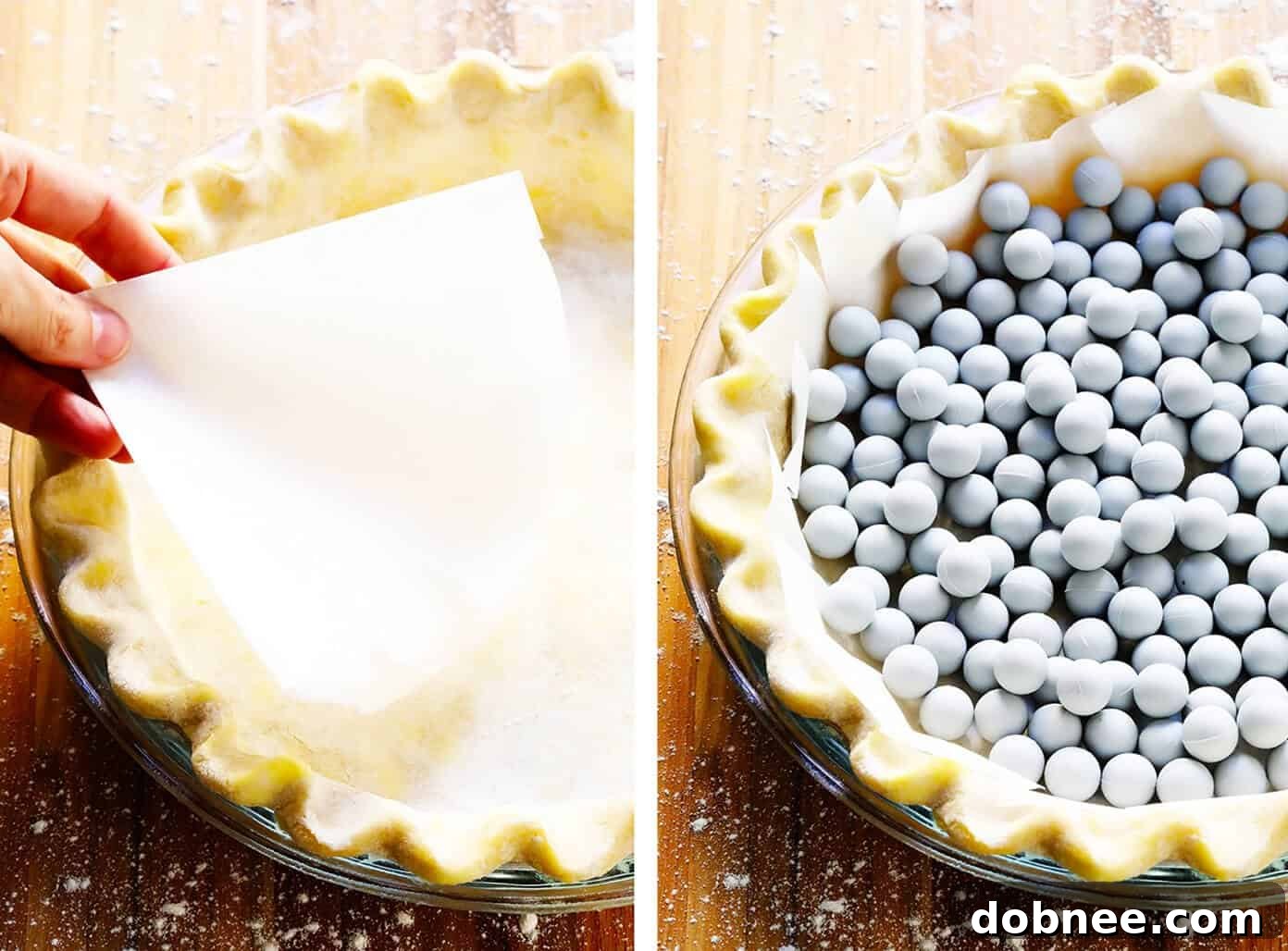
- Pie Weights or Dried Beans (for Blind Baking): If your pie recipe requires a “blind-baked” or pre-baked crust, you’ll need pie weights or dried beans. These are used to weigh down the parchment paper or foil lining the crust during initial baking, preventing the dough from puffing up and ensuring a flat, even bottom. Pie weights are reusable and retain heat well, but dried uncooked beans (like kidney or pinto beans) are an excellent and readily available substitute.
Crafting Your Flaky Pie Crust: Step-by-Step
The detailed instructions for making this pie crust by hand or with a food processor are provided in the recipe card below. Here’s a concise overview of the process:
- Mix the Dry Ingredients: In a large mixing bowl (or the bowl of your food processor), combine the all-purpose flour, optional sugar, and salt. Whisk them together thoroughly by hand or pulse briefly in the food processor to ensure they are well combined and evenly distributed. This step prepares the foundation for your dough.
-
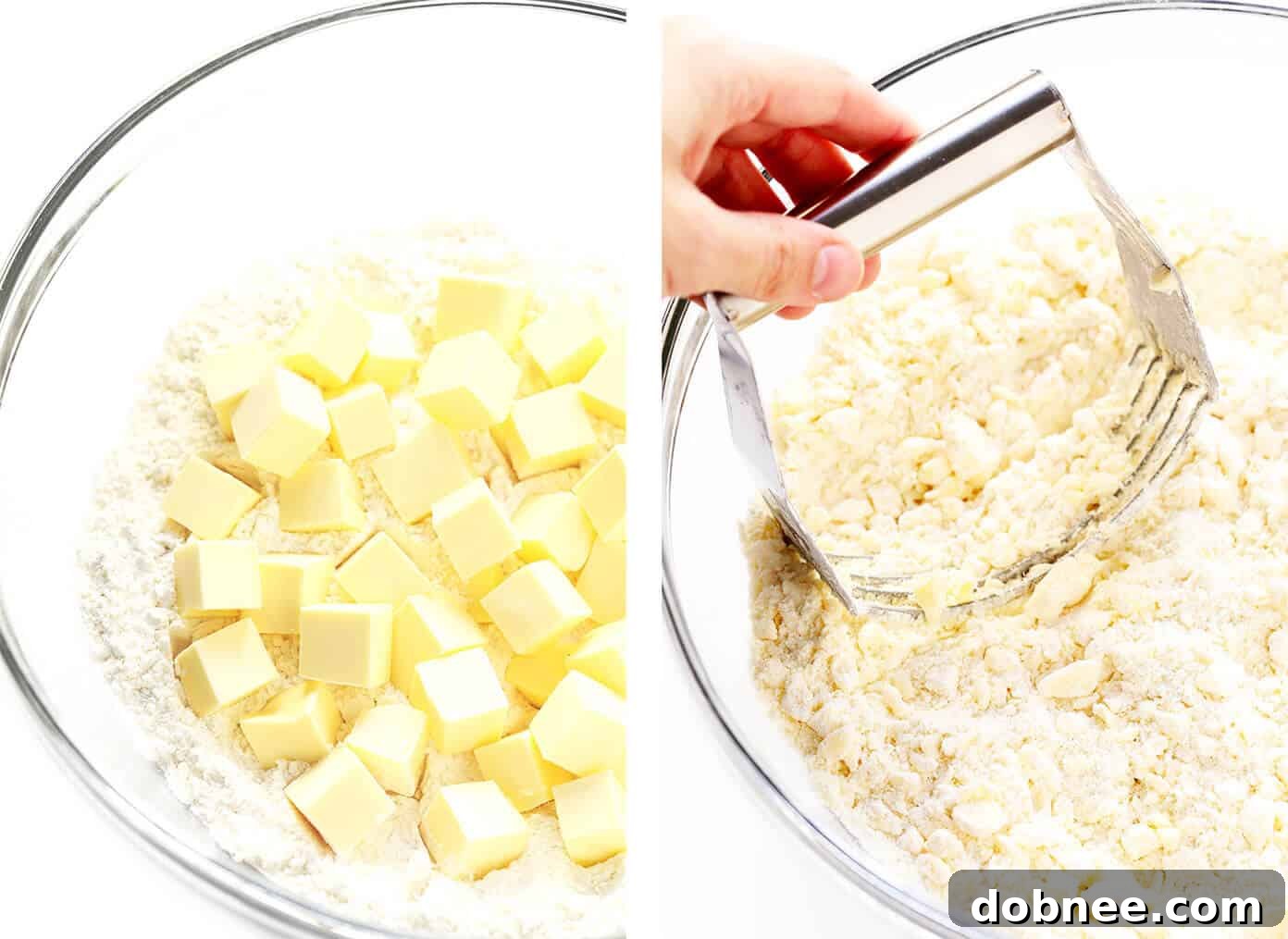
Cut the Butter into the Dry Ingredients: This is a critical step for achieving flakiness. “Cutting in the butter” refers to incorporating the cold diced butter into the flour mixture until it resembles coarse crumbs with some pea-sized pieces of butter remaining.
- If working by hand: Use a pastry cutter or two forks. Work quickly, pressing and breaking up the butter into the flour until it forms pea-sized bits. Avoid overworking, as the warmth from your hands can melt the butter, hindering flakiness.
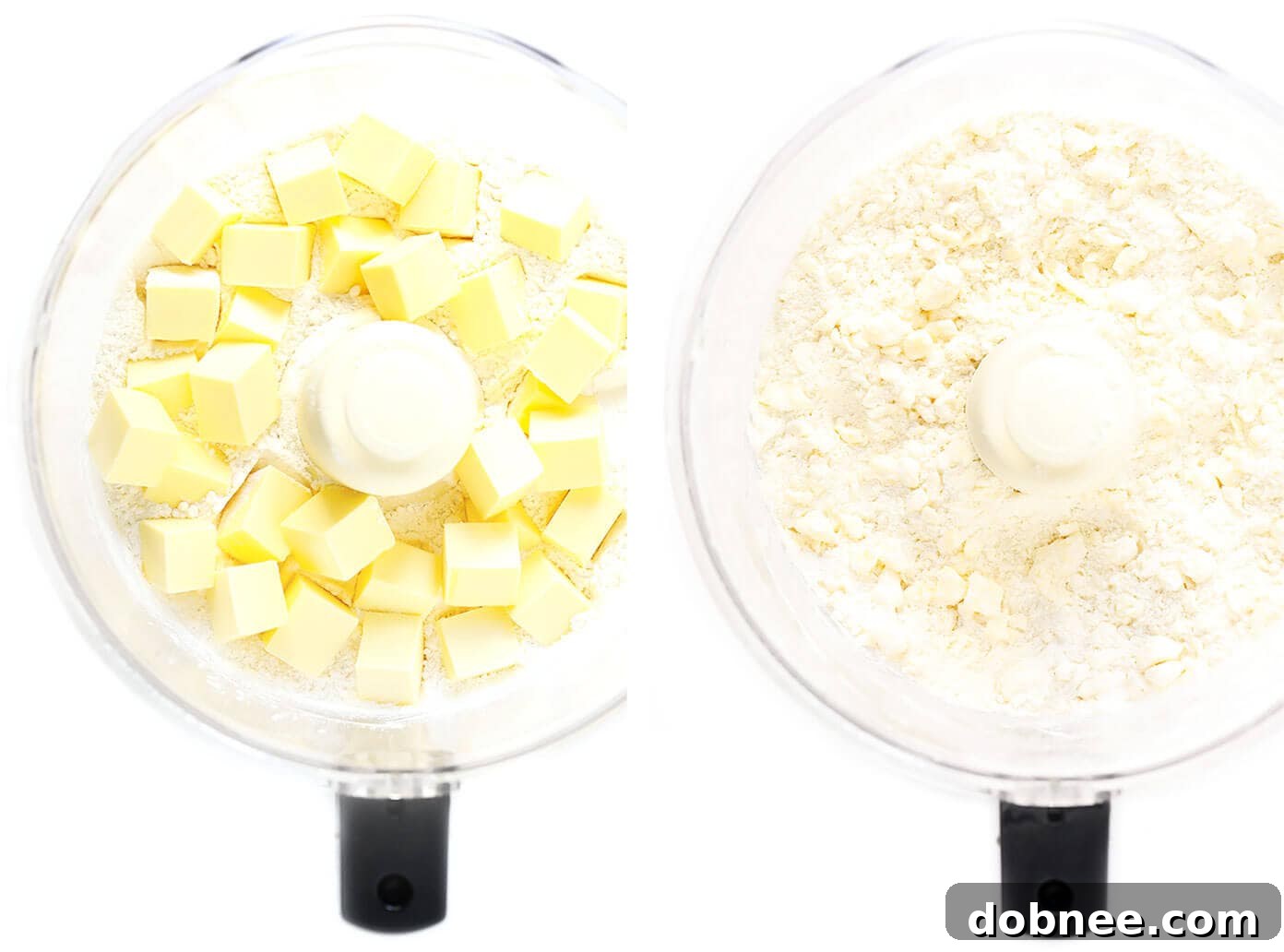
- If using a food processor: Add the cold butter cubes to the dry ingredients and pulse 5 to 7 times in short bursts. The goal is to get pea-sized pieces of butter, with some smaller bits. Transfer the mixture to a large mixing bowl after processing. Seeing some visible clumps of butter is absolutely desirable for a flaky crust!
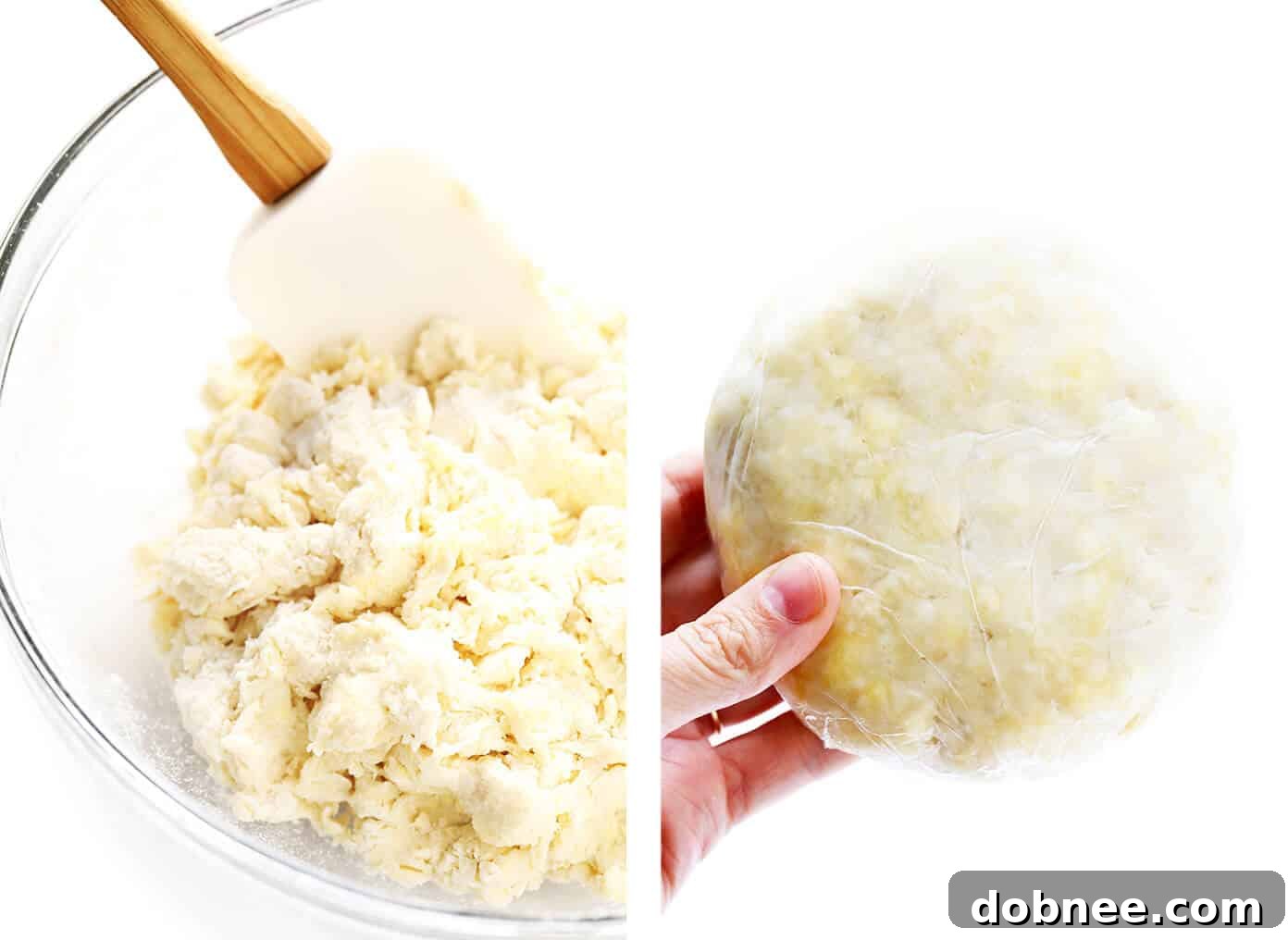
- Add Ice Water: Carefully sprinkle the measured ice water over the butter-flour mixture. Using a spatula, quickly mix the water into the dough until it’s evenly combined and the dough just begins to come together into moist clumps. The dough should still look a bit shaggy, but when squeezed, it should hold its shape. If the dough seems too dry and isn’t sticking, add 1 to 2 more tablespoons of ice water, one at a time, mixing minimally after each addition. Be cautious not to overmix the dough at this stage, as this can overdevelop the gluten, resulting in a tough crust. The less you work the dough once water is added, the more tender your crust will be.
- Form a Dough Ball: Gently gather the moist clumps of dough with your hands and quickly press them together to form a cohesive ball, similar to packing a snowball. Once formed, flatten this ball into an even disk, about 3/4-inch thick. The disk shape will make it much easier to roll out later. Again, handle the dough as little as possible to keep it cold and prevent gluten development.
- Wrap and Chill the Dough: Tightly wrap the dough disk in plastic wrap, ensuring it’s sealed to prevent drying out. Refrigerate the dough for a minimum of 1 hour, and ideally for at least 2 hours, or even up to 3 days. This chilling period is crucial: it allows the gluten to relax (preventing shrinkage during baking), and it re-chills the butter, which is essential for that signature flaky texture. Properly chilled dough is also much easier to roll out.
Expert Tips for Pie Crust Success (Please Read!)
Mastering pie crust involves more than just following steps; it’s about understanding the nuances of the ingredients and process. These expert tips will help you avoid common pitfalls and ensure your pie crust turns out perfect every time.
- Above All — Keep Everything As Chilled As Possible! This cannot be stressed enough. The golden rule for a flaky pie crust is cold, cold, cold. Warm butter melts into the flour, leading to a tough, cookie-like crust rather than a delicate, layered one. Ensure your butter is straight from the fridge and your water is ice-cold. Work quickly, and try to minimize direct contact with your warm hands. If your kitchen is very warm, consider chilling your mixing bowl and even your flour for 10-15 minutes before starting. The colder the dough, the better your chances of achieving superior flakiness and preventing shrinkage.
- Measure Your Ingredients Accurately: Precision is key in baking, especially with pie crusts. As mentioned, we highly recommend using a kitchen scale to weigh your ingredients, particularly flour. It’s remarkably easy to accidentally add too much flour when scooping it by volume, which leads to a dry, crumbly, or tough dough. For butter, especially in regions where it’s sold in larger blocks, accurate weighing ensures the correct fat-to-flour ratio.
- Don’t Overwork the Dough: Overworking the dough is the nemesis of tenderness. When flour is mixed with water, gluten develops. The more you mix or knead, the more gluten develops, making the dough elastic and tough. This is why we advise mixing the water just until the dough comes together, and handling it minimally when forming the disk and rolling it out. A tender crust is achieved through gentle handling and limited mixing.
- Don’t Skip the Resting/Chilling Times: These steps are absolutely essential and are not mere suggestions. The chilling period allows the gluten strands, which have been activated during mixing, to relax. Without adequate chilling, the dough will be elastic and prone to shrinking dramatically when it bakes in the oven, resulting in a small, misshapen crust. Chilling also re-firms the butter, ensuring it creates those steam pockets for flakiness. Plan your baking schedule to accommodate these crucial resting periods.
- Don’t Stretch the Dough: When you’re rolling out the dough and transferring it to your pie plate, resist the urge to pull or stretch it to fit or create your desired shape. Stretched dough will snap back and shrink significantly during baking. If you find a hole or need to extend an edge, it’s much better to trim off a small piece of excess dough, press it into the gap, and then gently blend it in, rather than stretching the existing dough.
- Flour Your Work Surface Wisely: Lightly flour your work surface and rolling pin to prevent sticking, but avoid excessive flour. Too much added flour can dry out your dough and make it tough. Dust just enough to prevent sticking, and add more sparingly if needed while rolling.
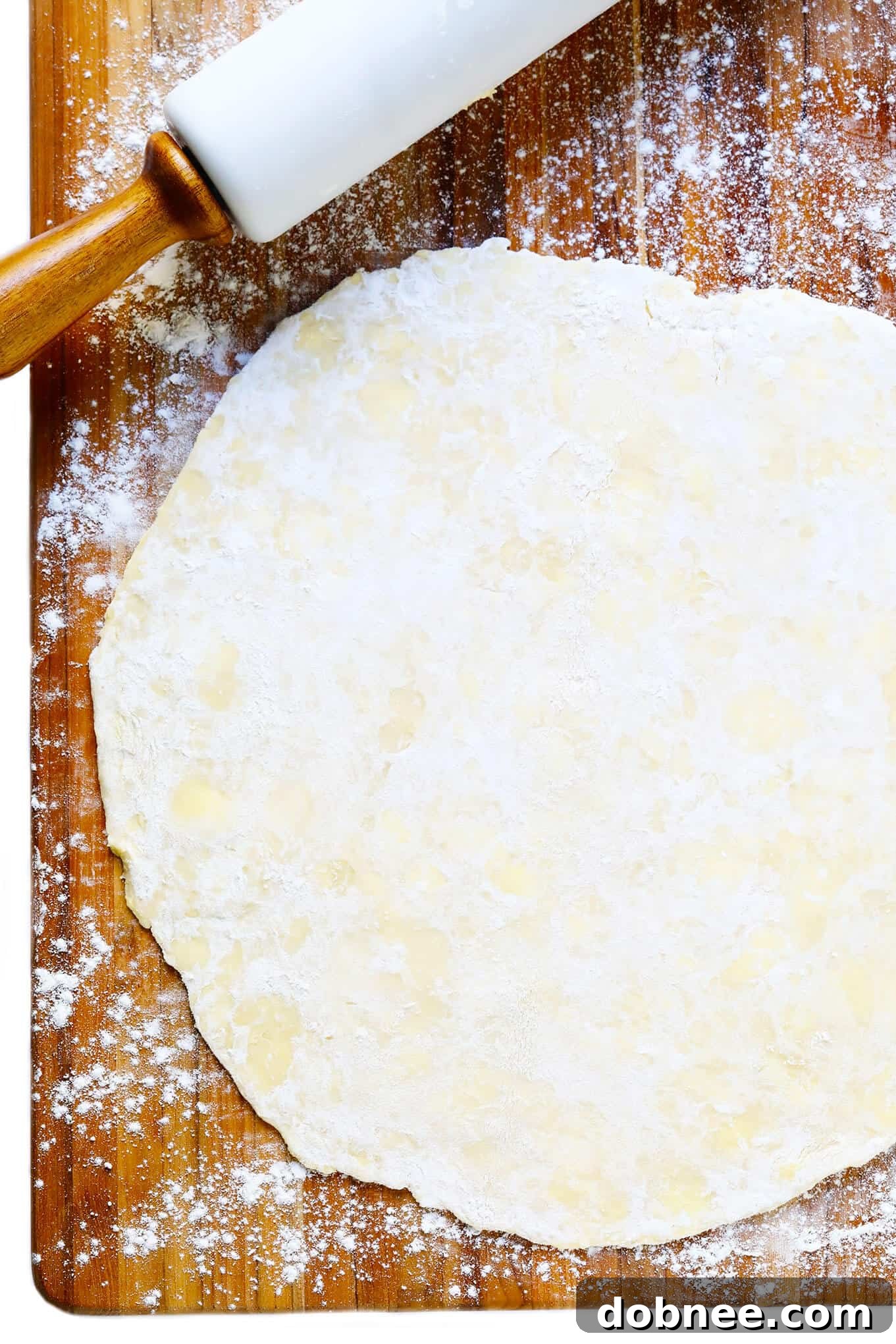
- Even Rolling Technique: To ensure an even crust thickness, apply even pressure as you roll. Start from the center and roll outwards, turning the dough periodically (about a quarter turn after every few rolls) to maintain a circular shape and prevent sticking. This also helps keep the butter evenly distributed.
- Transferring Dough Safely: Once rolled, handling delicate pie dough can be tricky. You can gently roll the dough around your rolling pin and then unroll it over the pie plate, or carefully fold the dough into quarters, place it in the pie plate, and then unfold it. Practice makes perfect here!
Favorite Pie Recipes Featuring This Crust
This versatile, all-butter pie crust serves as the perfect base for an endless array of delicious pies. While we have two new, naturally-sweetened pie recipes coming to the blog later this week that we’re very excited about, in the meantime, here are a few more of our beloved pie recipes where this crust truly shines:
- The Best Pumpkin Pie
- French Silk Pie (Chocolate Pie)
- Lemon Meringue Pie
- Pecan Pie
Print Recipe
Homemade Pie Crust
5 out of 5 stars from 13 reviews
-
Prep Time: 10 minutes -
Cook Time: 30 minutes -
Total Time: 40 minutes -
Yield: 1 pie crust
Description
Our go-to all-butter pie crust recipe, incredibly easy to prepare either entirely by hand or efficiently with a food processor. This recipe makes enough for one standard 9-inch pie crust. Please remember to double the ingredients if your recipe calls for a double crust (e.g., a top and bottom crust).
Ingredients
- 1 1/4 cups (150 grams) all-purpose flour
- 2 teaspoons granulated sugar (optional)
- 1/2 teaspoon salt
- 1/2 cup (115 grams) cold unsalted butter*, diced into 1/4-inch cubes
- 1/4 cup ice water
Instructions
- Mix the dry ingredients: Combine the flour, sugar (if using), and salt in a large mixing bowl or the bowl of a food processor. Whisk or pulse briefly until thoroughly combined.
- Cut the butter into the dry ingredients: Evenly sprinkle the diced cold butter over the dry ingredient mixture. If working by hand, use a pastry cutter or two forks to cut the butter into the dry ingredients. Continue until the butter is dispersed into pea-sized bits or smaller. If using a food processor, briefly pulse the butter and dry ingredients together 5 to 7 times until the butter is evenly dispersed into pea-sized (or smaller) bits. Then, transfer the mixture to a large mixing bowl.
- Add water: Sprinkle the ice water evenly over the dough mixture. Use a spatula to quickly mix the water into the dough until it is just evenly combined and the dough begins to form moist clumps. If the dough appears too dry and isn’t sticking together, add 1 or 2 more tablespoons of ice water, mixing gently after each addition, until it clumps. Avoid overmixing the dough during this step to prevent gluten development.
- Form a dough ball: Using your hands, quickly press the dough clumps together to form a cohesive ball (like packing a snowball). Then, gently flatten the ball into an even disk, approximately 3/4-inch thick.
- Wrap and chill the dough: Tightly wrap the dough disk in plastic wrap. Refrigerate it for at least 1 hour, or up to 3 days, until it is thoroughly chilled and ready to be rolled out and used in your desired pie recipe.
Equipment
Rolling Pin
Buy Now →
Pastry Cutter
Buy Now →
Glass Pie Plate
Buy Now →
Notes
*Chilled Butter Explained: For optimal flakiness, your butter must be straight from the refrigerator—cold, but not frozen solid—when you dice it and add it to the dry ingredients. This ensures it creates those vital steam pockets during baking.
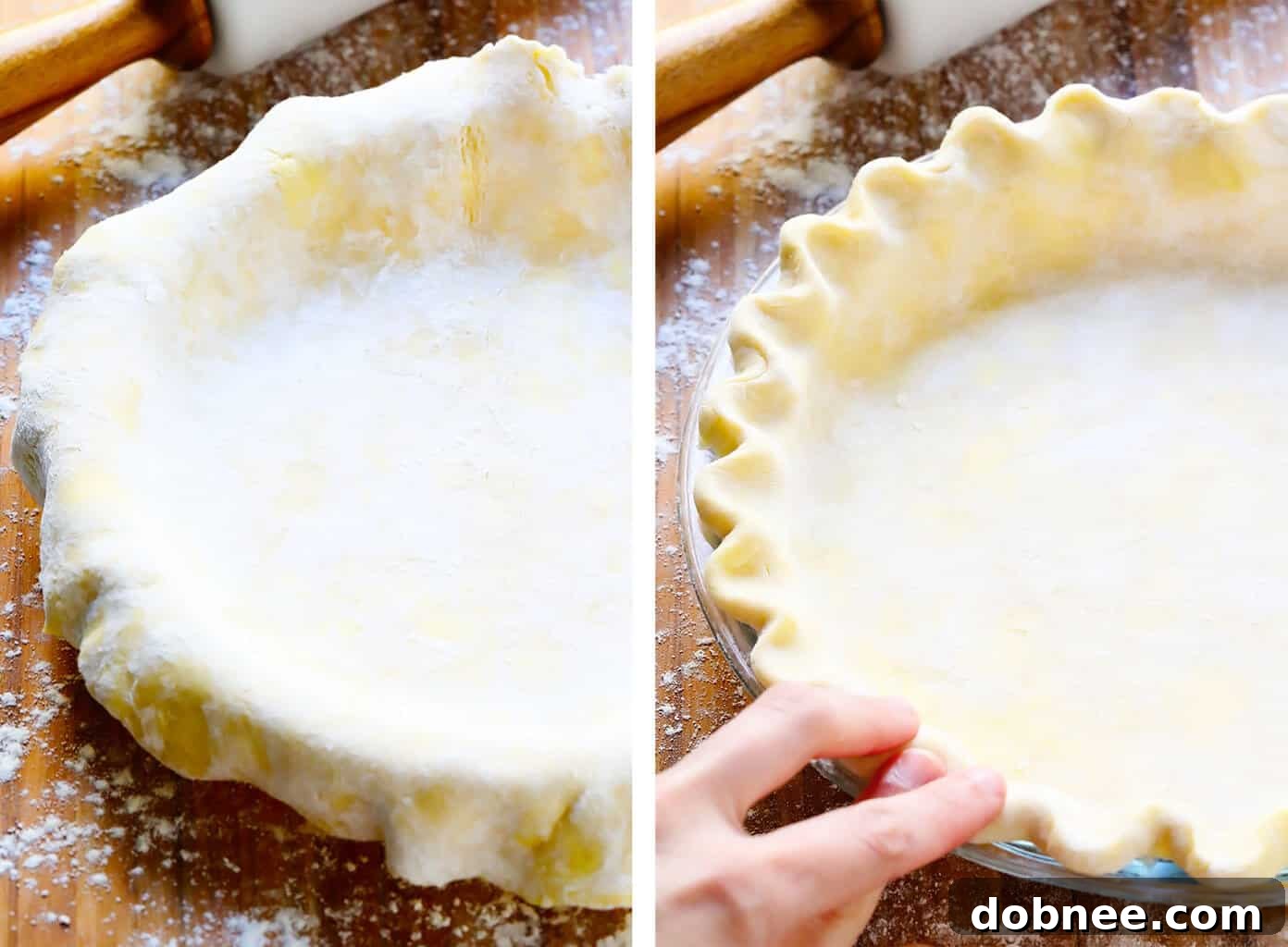
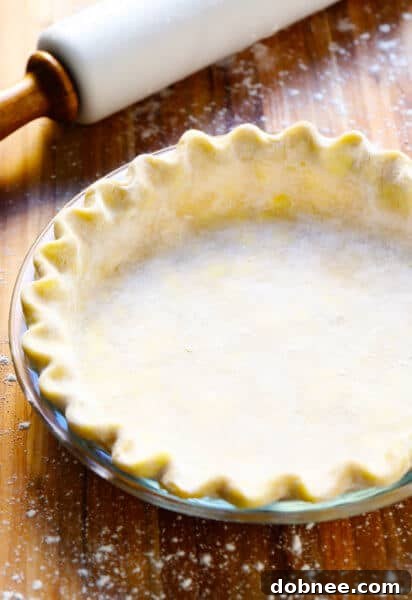
Detailed Guide to Rolling Out the Dough: Once your dough has completed its minimum 1-hour chilling period, transfer it to a lightly floured work surface. Allow it to rest at room temperature for 10-15 minutes; this slight warming makes it more pliable and prevents cracking. Unwrap the dough, lightly dust both its top and your rolling pin with flour. Gently roll the dough from the center outwards, turning it a quarter turn after every few rolls, until it forms a uniform circle at least 12 inches in diameter and about 1/8 inch thick. This size is perfect for a standard 9-inch pie plate. Carefully transfer the rolled dough into your pie plate, gently pressing it into the sides without stretching it. Use kitchen shears or a knife to trim any excess pastry, leaving approximately a 1-inch border around the top edge of the pie plate. Lift and fold this outer 1/2-inch edge back under itself, gently pinching to create an upstanding ridge. Finally, use your fingers to crimp the dough, forming a decorative scalloped edge, or create any other preferred decorative crust design. Return the pie crust to the refrigerator to chill for at least another 15 minutes before proceeding with your recipe; this final chill helps maintain its shape during baking.
How to Blind-Bake (Pre-Bake) Your Pie Crust: If your pie recipe specifically calls for a blind-baked or partially pre-baked crust, here’s how to do it. First, use a fork to prick several series of holes across the bottom of the chilled pie crust; this allows steam to escape and prevents bubbling. Line the inside of the crust with parchment paper or aluminum foil, gently shaping it to fit snugly against the inner edges and sides. Fill the bottom of the crust generously with pie weights or dried beans; this prevents the crust from puffing up. Bake immediately in a preheated oven at 400°F (200°C) for 15 minutes. Carefully remove the pie plate from the oven, and gently lift out the foil/parchment along with the weights/beans. If the bottom of the crust has started to bubble, prick it a few more times with a fork. Return the crust to the oven: bake for an additional 10-12 minutes for a partially baked (lightly browned) pie shell, or 15-17 minutes for a fully pre-baked (deep golden brown) pie shell, depending on your recipe’s requirements.
Crafting a Lattice Crust: For those interested in adding a beautiful woven top to their pies, check out our comprehensive, step-by-step photo tutorial on How To Make A Lattice Pie Crust. It walks you through the process for a stunning presentation.
For an Extra Golden and Sugary Crust: To achieve a beautifully golden and slightly sweetened crust, brush the surface of the dough with an egg wash using a pastry brush just before baking. An egg wash is simply one egg whisked together with a splash of milk or water. For added sparkle and a hint of sweetness, you can also sprinkle a little granulated sugar over the crust before it goes into the oven.
Recipe Updates and Refinements: This recipe was significantly updated in November 2019 to include clearer instructions for both hand-mixing and food processor methods, alongside new helpful tips. We now specifically recommend mixing the ice water into the dough by hand using a spatula, rather than in the food processor. This is because it’s very easy to accidentally over-mix the water and overdevelop gluten when using a food processor for this delicate final step, leading to a tougher crust.
This post contains affiliate links.