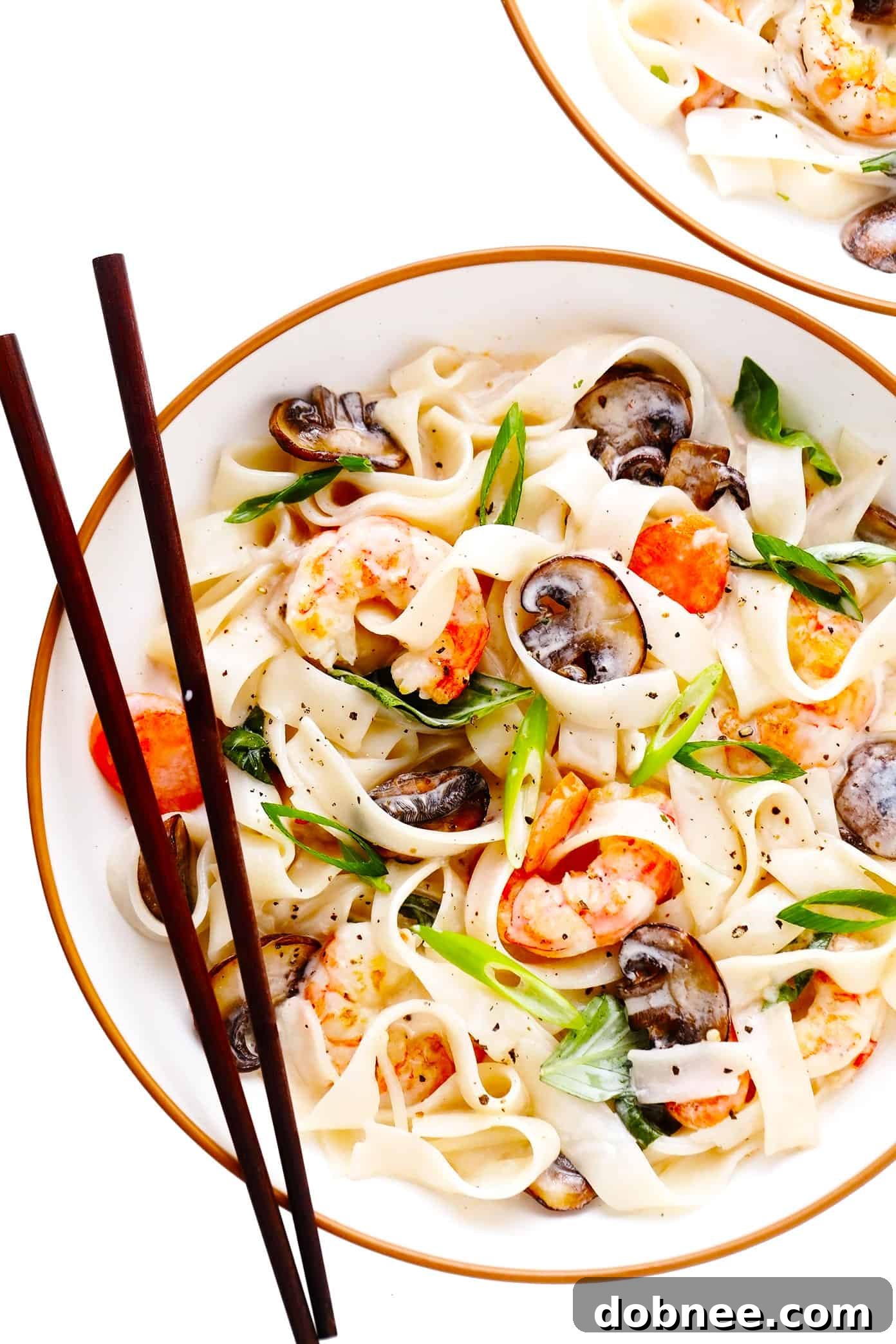
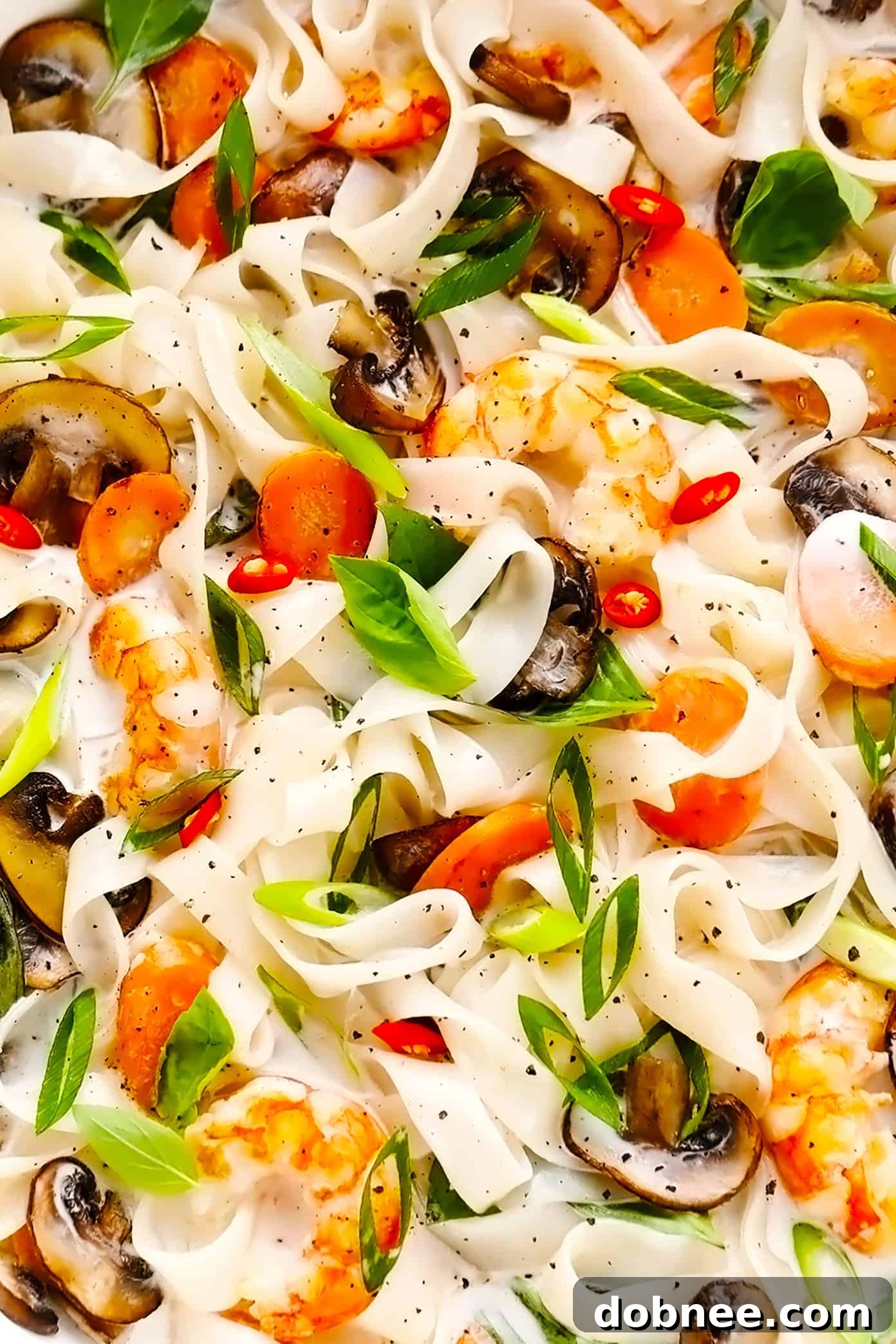
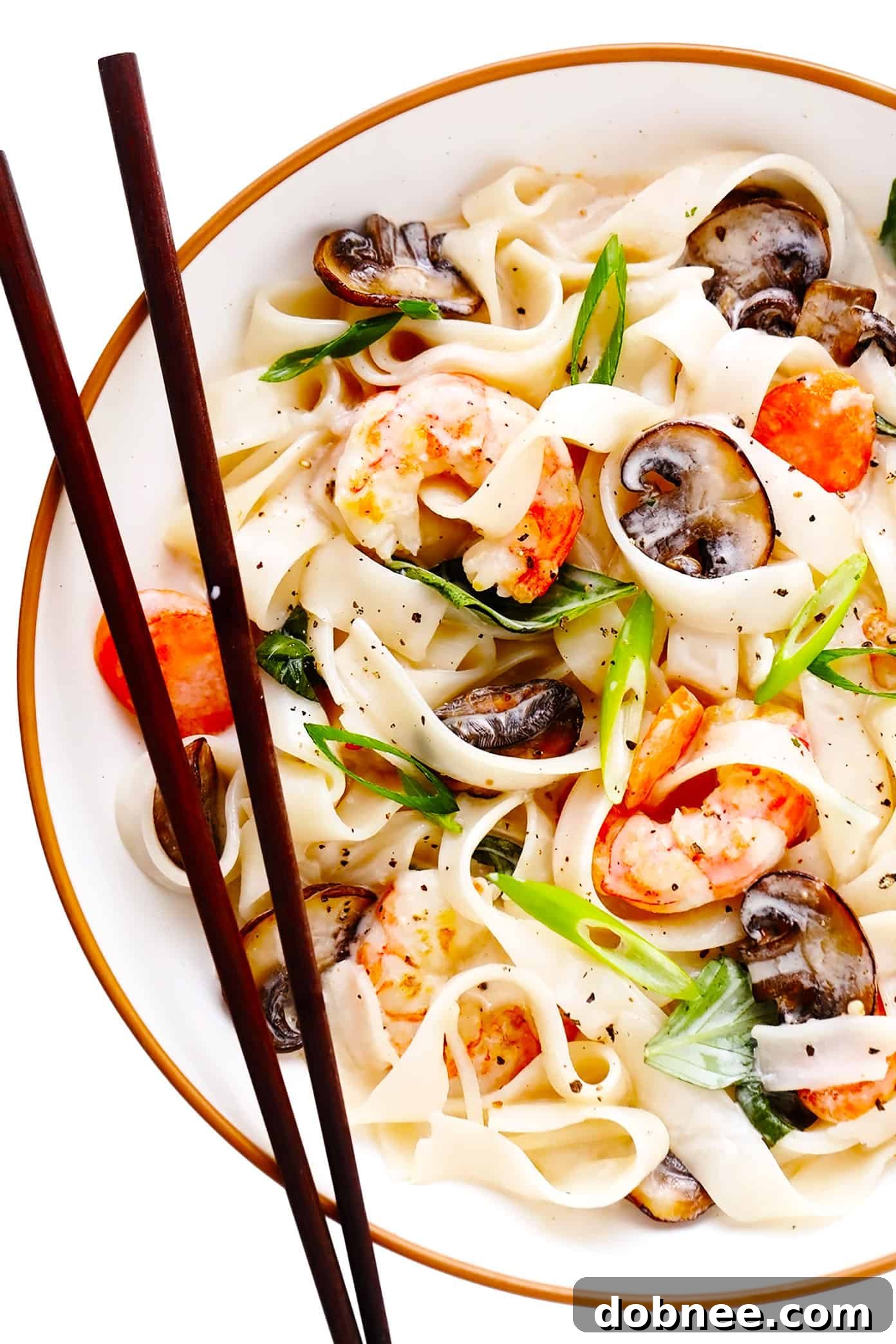
This Thai-inspired noodle stir-fry is a vibrant symphony of flavors, featuring tender shrimp, fresh vegetables, and a tantalizing lemongrass coconut sauce. It’s incredibly easy to prepare and bursts with bright, citrusy notes that will transport your taste buds.
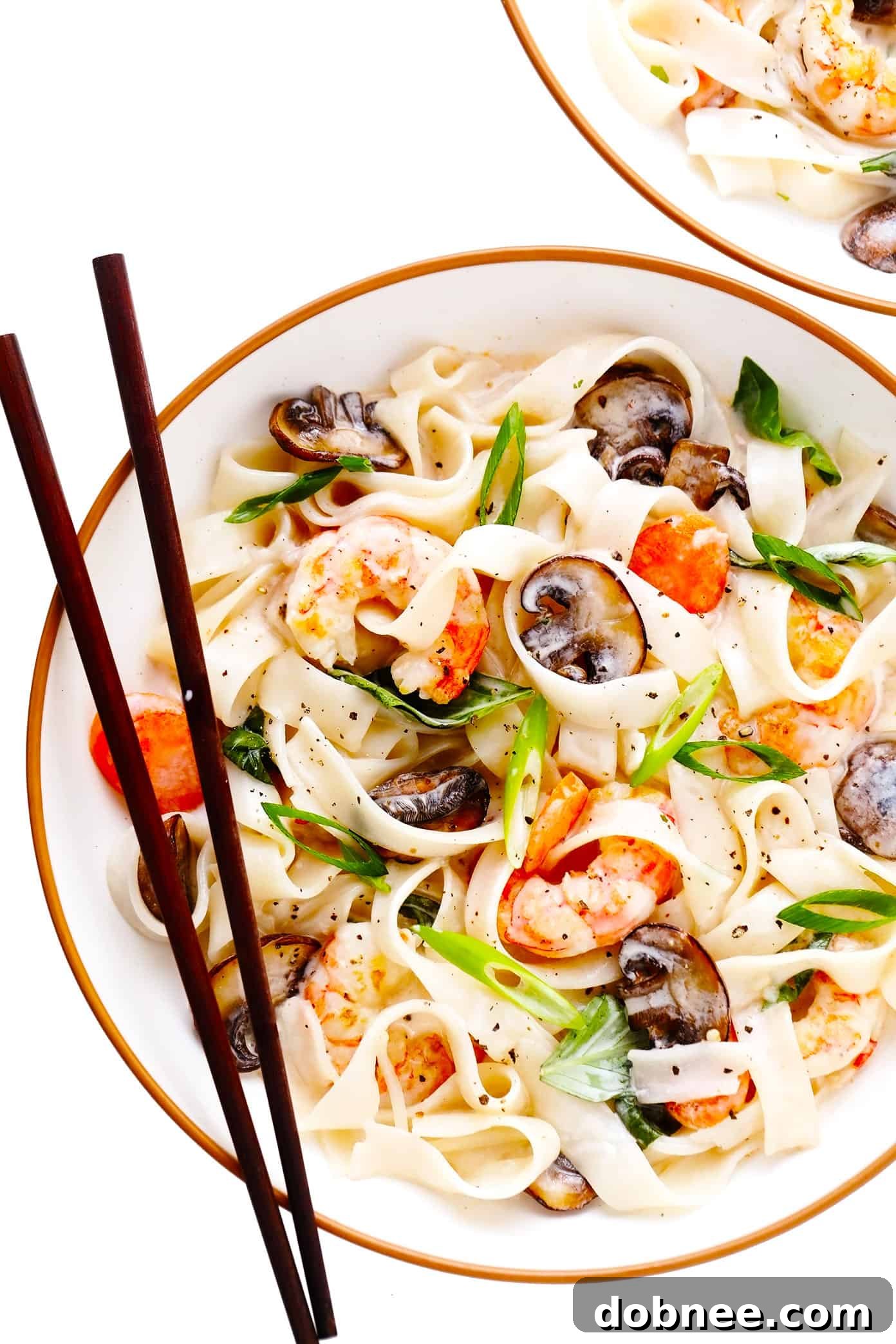
Zesty Lemongrass Coconut Noodles with Shrimp: An Easy Thai-Inspired Stir-Fry
Prepare to fall in love with this Lemongrass Coconut Noodle Stir-Fry, a dish that has quickly become a beloved favorite in our home. This recipe is a delightful culinary journey, offering a taste of Thailand with the convenience of a quick weeknight meal.
Our inspiration for this delectable dish comes from the classic Thai Tom Kha Gai, a rich and aromatic coconut soup that holds a special place in my husband’s heart. As the cooler autumn air settles in, especially here in Barcelona, we find ourselves craving those warm, comforting, yet vibrant flavors. Instead of a traditional soup, we’ve reimagined those iconic creamy, citrusy, earthy, sweet, and subtly spicy elements into a concentrated, irresistible stir-fry sauce. This sauce perfectly coats a medley of simple stir-fried ingredients and tender rice noodles, resulting in a dish that is not only bursting with fresh flavors but is also incredibly satisfying.
The Star of the Show: Lemongrass
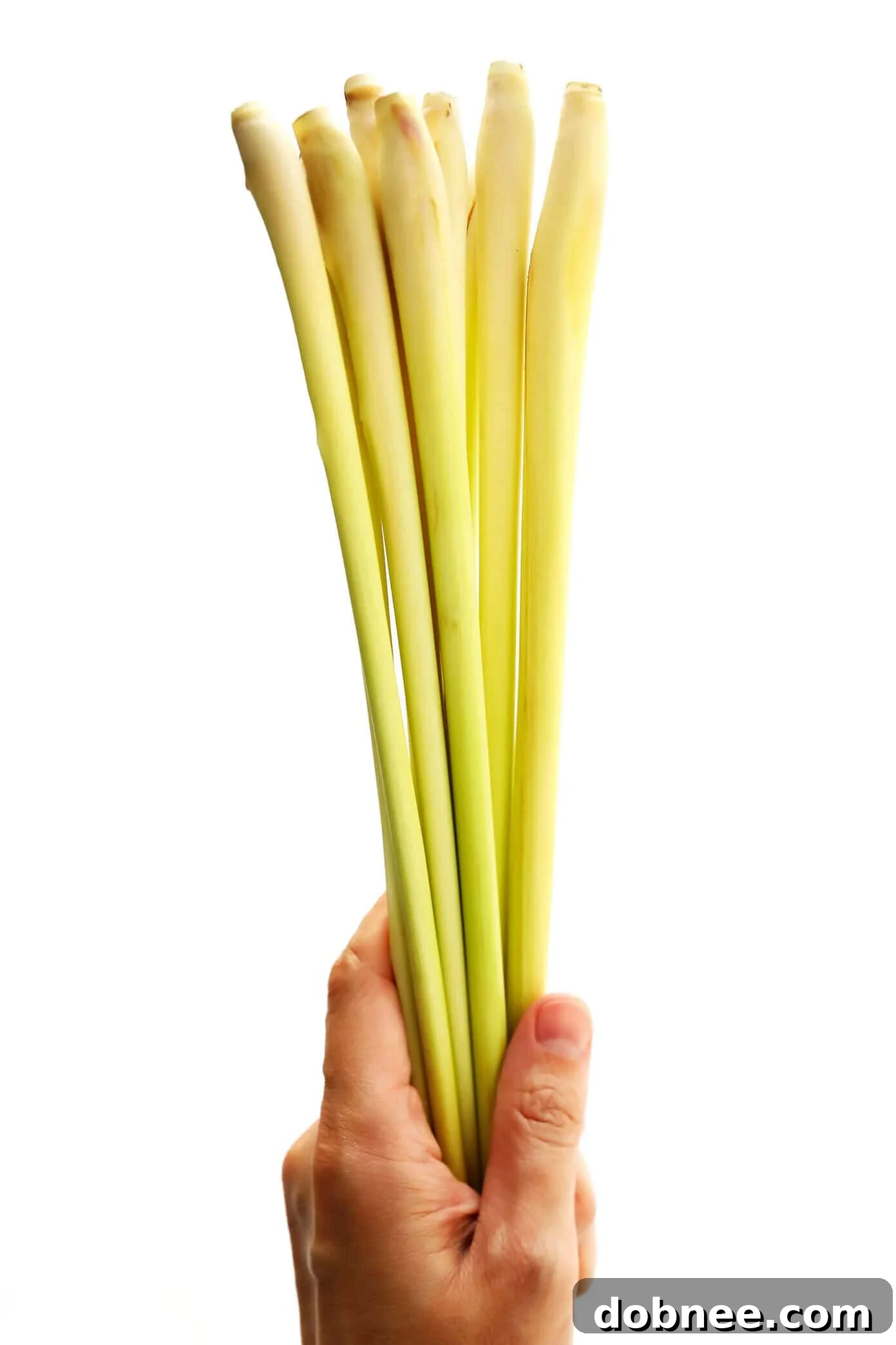
At the heart of this exquisite coconut sauce lies fresh lemongrass, an ingredient you absolutely won’t want to skip. Its uniquely fragrant profile offers a harmonious blend of citrus, mint, and earthy undertones that is simply unparalleled. The next time you visit your local market, be sure to pick up a few stalks of fresh lemongrass. If fresh stalks are hard to come by, a tube of lemongrass paste makes an excellent substitute and offers a fantastic burst of flavor. This key ingredient elevates the creamy coconut milk, creating a depth of flavor that is truly remarkable.
Alongside lemongrass, our sauce features a generous amount of fresh ginger, the bright zest and juice of a ripe lime, a touch of brown sugar for sweetness, and a splash of fish sauce to deliver that essential umami kick. While this ingredient list draws inspiration from traditional Thai cuisine, it’s a more accessible version tailored for home cooks. Authentic Tom Kha Gai often incorporates galangal instead of ginger, kaffir lime leaves in place of fresh lime juice, and palm sugar instead of brown sugar. If you have access to these traditional ingredients and wish to infuse your dish with even more authentic Thai notes, I wholeheartedly encourage you to make those substitutions – they will only enhance the experience.
Versatile Proteins and Fresh Vegetables
For our stir-fry, tender shrimp is typically our protein of choice, especially since my husband is pescatarian. However, the beauty of this lemongrass coconut sauce is its incredible versatility. The sauce itself is naturally vegan and gluten-free, making it easy to adapt to various dietary preferences. Feel free to swap the shrimp for crispy baked tofu to create a completely plant-based meal. Alternatively, you can incorporate any other protein you prefer, such as succulent chicken, savory steak, tender pork, or even hearty sausage. The options are limitless, allowing you to tailor the dish to your taste.
When it comes to vegetables, don’t hesitate to get creative with whatever fresh produce you have on hand. This recipe is a fantastic way to utilize ingredients from your crisper drawer. While we love a simple mix of mushrooms, carrots, and garlic, vibrant bell peppers, crisp snow peas, nutrient-rich broccoli, or fresh spinach would all be delicious additions. For an extra layer of authentic Thai flavor, I highly recommend seeking out fresh Thai basil to fold into your stir-fry at the end. It’s an optional step, but the sweet, peppery, anise-like notes of Thai basil truly elevate the dish to another level. If Thai basil isn’t available, sweet basil or fresh cilantro can make wonderful substitutes.
Quick & Easy Lemongrass Coconut Noodles with Shrimp
Discover how effortlessly this vibrant stir-fry comes together with this quick video guide.
(Video Player placeholder for “Lemongrass Coconut Noodles” recipe demonstrating preparation.)
Key Ingredients for Your Lemongrass Coconut Noodle Stir-Fry
Before diving into the full recipe, let’s explore some key ingredients and essential tips to ensure your Lemongrass Coconut Noodle Stir-Fry is nothing short of spectacular:
- Rice Noodles: The foundation of our stir-fry! I typically opt for wide rice noodles, which provide a satisfying chew and absorb the sauce beautifully. However, any width of rice noodles will work perfectly. If you prefer, this versatile stir-fry can also be served over a bed of fluffy white or brown rice for a hearty meal.
- Shrimp: We recommend using large shrimp, peeled and deveined, for convenience and optimal texture. A quick seasoning with fine sea salt and freshly-cracked black pepper enhances their natural sweetness and ensures they cook up perfectly flavorful.
- Veggies: A simple yet effective combination of baby bella (cremini) or shiitake mushrooms, thinly sliced carrots, and minced garlic forms the core of our vegetable medley. However, feel free to raid your refrigerator and include any other stir-fry-friendly vegetables you love, such as bell peppers, asparagus, snap peas, or broccoli florets.
- Thai Basil Leaves: This herb is a game-changer! Thai basil brings a unique sweet, peppery, and slightly anise-like flavor that truly distinguishes this dish. If you can find it, don’t hesitate to use it. If not, sweet basil makes a good alternative, or you can omit it and add extra fresh cilantro for a bright, herbal finish.
- Lemongrass: The essence of our sauce! When using fresh lemongrass stalks, remember to trim the ends and peel away the tough outer layers to reveal the tender, fragrant inner white core. Roughly chop these inner stalks into 1/2-inch pieces for maximum flavor extraction during simmering. They will be strained out before serving. For a shortcut, 2-3 tablespoons of lemongrass paste can be used; it blends seamlessly into the sauce and doesn’t require straining.
- Coconut Milk: For a lusciously creamy and thick sauce, a can of high-quality, full-fat coconut milk is highly recommended. It provides a rich body and authentic flavor. If you’re aiming for a lighter dish, low-fat coconut milk can be used, though the sauce will be less decadent.
- Fresh Ginger: Thinly sliced fresh ginger infuses the coconut milk with its warm, pungent, and slightly spicy notes. While you can peel the ginger, it’s not strictly necessary since the slices will be strained out. The flavor will still be beautifully imparted.
- Brown Sugar: A tablespoon of light brown sugar provides a subtle sweetness that balances the savory, spicy, and tangy elements of the sauce. Adjust the amount to your preference for a sweeter or more savory profile.
- Lime Juice: Freshly squeezed lime juice adds a crucial burst of bright acidity, cutting through the richness of the coconut milk and enhancing all the other flavors. We recommend adding a generous amount to the sauce and serving extra lime wedges for a final squeeze over each bowl.
- Fish Sauce: A foundational ingredient in Thai cuisine, fish sauce delivers a powerful punch of salty, savory umami. A tablespoon (or more, to taste) brings depth and complexity to the sauce, making it truly authentic.
- Garnishes: Don’t underestimate the power of garnishes! A generous sprinkling of thinly-sliced green onions, fresh cilantro, and additional Thai basil (if using) adds freshness and visual appeal. For those who love a little heat, thinly-sliced Thai bird chiles or a pinch of crushed red pepper flakes provide a fantastic spicy kick.
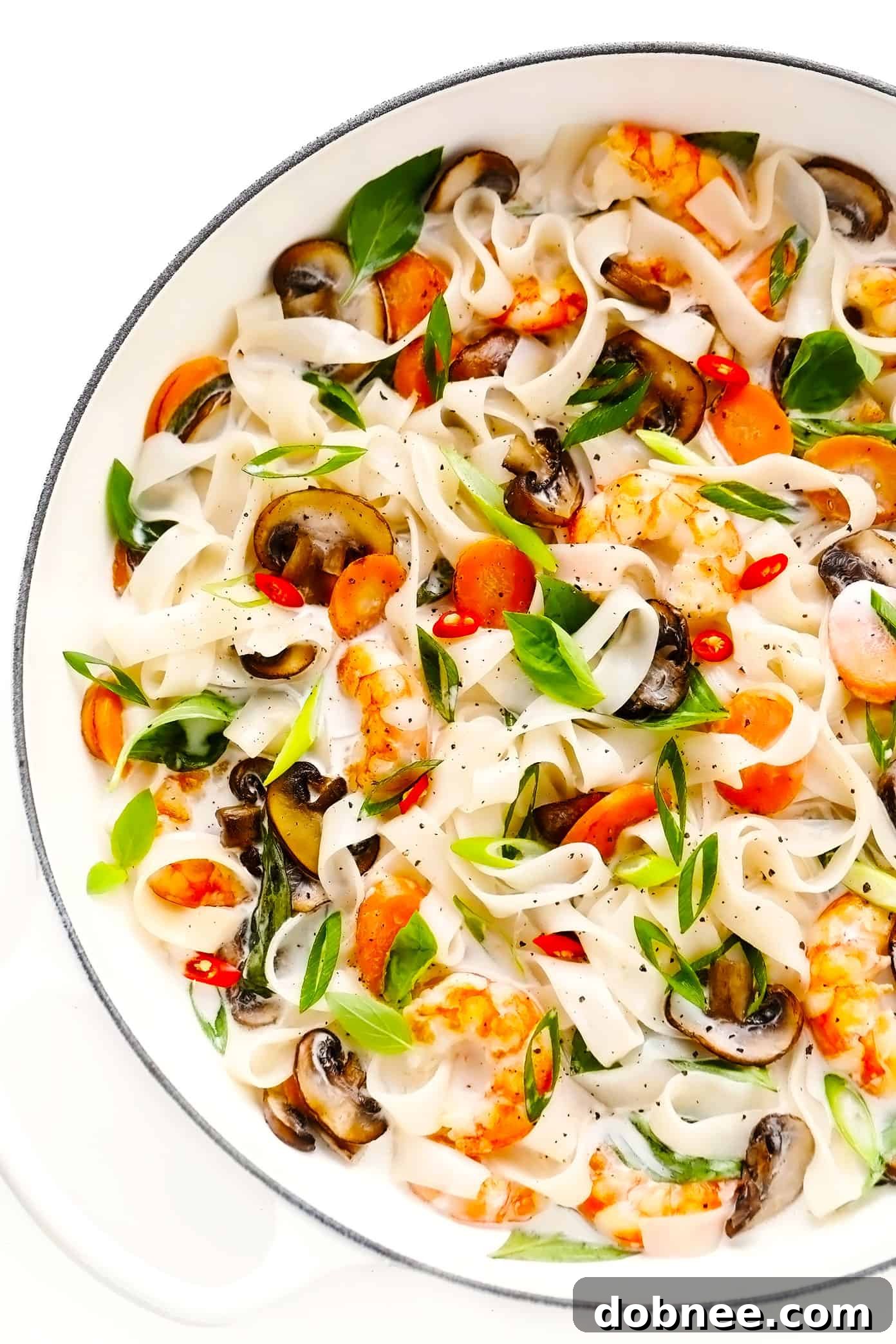
Customize Your Lemongrass Noodle Experience: Delicious Variations
This lemongrass noodle recipe is wonderfully adaptable, allowing you to tailor it to your preferences or whatever ingredients you have on hand. Here are some fantastic ways to customize your dish:
- Explore Different Vegetables: Beyond mushrooms and carrots, consider adding a colorful array of stir-fry friendly vegetables. Asparagus spears, vibrant bell peppers, crunchy snow peas, tender broccoli florets, or quick-cooking spinach would all make excellent additions. Feel free to use a pre-packaged stir-fry vegetable mix for ultimate convenience.
- Swap Your Protein: While shrimp is a fantastic choice, this dish shines with other proteins too. Cubed chicken breast or thighs, thinly sliced steak, savory pork, or even plant-based options like crispy tofu or tempeh are all delicious alternatives. Adjust cooking times accordingly; chicken and pork will typically require slightly longer cooking than shrimp.
- Adjust Creaminess with Coconut Milk: If you prefer a lighter sauce, feel free to use low-fat coconut milk instead of full-fat. Just be aware that the sauce will have a thinner consistency and less richness. For maximum creaminess, full-fat is definitely the way to go.
- Serve Over Rice: For a gluten-free option or simply a different texture, serve the flavorful shrimp, vegetables, and lemongrass coconut sauce over your favorite type of rice (jasmine, basmati, or brown rice) instead of tossing it with noodles.
More Irresistible Noodle Recipes to Explore
If you love the comfort and flavor of noodle dishes, here are a few more favorites to inspire your next meal:
- Saucy Thai Curried Peanut Noodles
- Thai Drunken Noodles (Pad Kee Mao)
- Five Spice Tofu with Sesame Noodles
- Quick Peanut Soba Noodles
Print Recipe
Lemongrass Coconut Noodles with Shrimp
- Author: Ali
Prep Time: 15 mins
Cook Time: 25 mins
Total Time: 40 mins
Yield: 3 to 4 servings
Description
This Thai-inspired noodle stir-fry combines fresh vegetables, succulent shrimp, and a vibrant, zesty lemongrass ginger coconut sauce. It’s a quick and easy dinner option packed with bright and citrusy flavors!
Ingredients
Noodle Stir-Fry Ingredients:
- 9 ounces rice noodles
- 1 pound large shrimp, peeled and deveined
- fine sea salt and freshly-cracked black pepper
- 3 tablespoons olive oil, divided
- 8 ounces baby bella or shiitake mushrooms, sliced
- 1 large carrot, thinly sliced
- 4 cloves garlic, minced
- 1 cup (lightly-packed) Thai basil leaves*
- Garnishes: thinly-sliced green onions, lime wedges, thinly-sliced Thai bird chiles (or crushed red pepper flakes), fresh cilantro and/or extra Thai basil
Lemongrass Coconut Sauce Ingredients:
- 2 stalks fresh lemongrass,*
- 1 (15-ounce) can full-fat coconut milk
- 2 inches fresh ginger, thinly sliced into long strips
- 1 tablespoon brown sugar
- 2 to 4 tablespoons fresh lime juice, to taste
- 1 tablespoon fish sauce
Instructions
- Prepare the lemongrass coconut sauce. Peel and discard the tough outer layers of the lemongrass stalks, then trim and discard the ends. Roughly chop the remaining tender inner stalks into approximately 1/2-inch pieces. Combine the chopped lemongrass, full-fat coconut milk, thinly sliced ginger, 2 tablespoons of lime juice (you’ll add more to taste later), and brown sugar in a medium saucepan. Heat this mixture over medium heat until it nearly reaches a simmer – avoid a rolling boil. Reduce the heat to low, cover the saucepan, and allow the sauce to gently infuse for at least 15 minutes, or until you are ready to combine it with the noodle stir-fry. Before serving, use a fine-mesh strainer to remove and discard the ginger and lemongrass solids from the sauce, ensuring a smooth texture. Stir in the remaining lime juice and fish sauce, then taste and season with salt and pepper as needed.
- Cook the noodles. While the sauce simmers, prepare your rice noodles according to package directions, cooking them until just barely al dente. Drain the cooked noodles thoroughly in a strainer, then rinse them under cold water until they reach room temperature. This rinsing prevents them from sticking together. Lightly toss the cooled noodles with a drizzle of oil (toasted sesame oil adds extra flavor, but olive oil works well) and set them aside.
- Season the shrimp. Pat the shrimp dry with paper towels. Season both sides generously with fine sea salt and freshly-cracked black pepper. Set aside until you’re ready to cook them.
- Sauté the veggies. Heat 2 tablespoons of olive oil in a large non-stick sauté pan or wok over medium-high heat. Add the sliced mushrooms and sauté for about 4 minutes, stirring occasionally, until they begin to soften and brown. Add the thinly sliced carrots and continue to sauté for another 2 minutes, stirring. Finally, add the minced garlic and sauté for 1 minute, stirring frequently, until fragrant.
- Add the shrimp. Push the sautéed vegetables to one side of the pan, creating an empty space. Add the remaining 1 tablespoon of olive oil to this empty space. Place the seasoned shrimp in the hot oil and sauté for 2 to 3 minutes, flipping them occasionally, until they are fully cooked through, turning pink and opaque. Be careful not to overcook them, as they can become tough.
- Combine everything. Immediately pour the prepared lemongrass coconut sauce into the sauté pan with the cooked shrimp and vegetables. Add the fresh Thai basil leaves and the cooled, cooked noodles. Toss everything together gently but thoroughly until all ingredients are evenly coated in the rich, fragrant sauce. Taste the stir-fry and adjust seasonings with additional salt and pepper if desired.
- Serve. Serve the Lemongrass Coconut Noodles with Shrimp warm. Garnish generously with thinly-sliced green onions, extra lime wedges for squeezing, chopped fresh cilantro, more Thai basil if you have it, and thinly-sliced Thai bird chiles or crushed red pepper flakes for those who enjoy a spicy kick. Enjoy this delightful and flavorful Thai-inspired meal!
Equipment
Thin Rice Noodles
Buy Now →
Fish Sauce
Buy Now →
Coconut Milk
Buy Now →
Notes
Thai basil substitute: If fresh Thai basil is unavailable, you can substitute an equal amount of sweet basil. Alternatively, omit the basil entirely and enhance the dish with extra fresh cilantro for a bright, herbal note.
Lemongrass paste substitution: For convenience, you can use lemongrass paste instead of fresh stalks. We recommend starting with 2 tablespoons of paste and adjusting to your preferred taste. The paste does not need to be strained out.
Protein variations: If substituting shrimp with chicken or pork, slice the meat thinly and ensure it is cooked through before combining with the sauce. For tofu, use extra-firm or baked tofu for best results.