
Bake the Perfect Rosemary Focaccia Bread: An Easy & Delicious Recipe Guide
This delightful Rosemary Focaccia Bread recipe is incredibly simple to create, featuring a perfect topping of fresh rosemary, rich olive oil, and crunchy flaky sea salt.

Welcome to your new favorite bread recipe – Rosemary Focaccia! This isn’t just any bread; it’s a culinary journey to the sun-drenched shores of Italy, brought right into your kitchen. For years, this particular focaccia recipe has been a cherished staple in my baking repertoire, standing out not only for its incredible flavor but also for its remarkable simplicity. If you’re new to the world of baking or even a seasoned pro, you’ll find immense joy and ease in preparing this classic Italian flatbread.
What makes this Rosemary Focaccia truly exceptional? It’s the perfect harmony of textures and flavors. Imagine a bread that is wonderfully soft, airy, and tender on the inside, yet satisfyingly chewy with a delicate, crisp crust. Each bite is deeply infused with the fragrant essence of fresh rosemary, beautifully complemented by the subtle richness of high-quality olive oil, which seeps perfectly into those iconic dimples. A delightful crunch from flaky sea salt provides the finishing touch. It’s a naturally vegan recipe, adaptable to various shapes – whether a rustic free-form round or a neat rectangle pressed into a baking dish – and offers the ultimate comfort in every carbohydrate-rich slice. This bread is not just food; it’s an experience, a moment of cozy indulgence.
Many aspiring bakers hesitate when it comes to working with yeast, often intimidated by the process. However, I assure you, focaccia is one of the most forgiving and rewarding yeast bread recipes to start with. This comprehensive guide is designed to demystify every step, walking you through the entire process with clear, concise instructions and helpful tips. We’ll address common questions and provide insights to ensure your success. Consider this your personal invitation to dive into the wonderful world of homemade bread. You absolutely have what it takes to create a masterpiece!
Let’s embark on this delicious adventure together and bake some exquisite rosemary focaccia!

Understanding the Recipe: Key Details at a Glance
Before we gather our ingredients and roll up our sleeves, here’s a quick overview of what to expect from this recipe, derived from numerous successful attempts and glowing reviews:
- Prep Time: Approximately 75 minutes (this includes the crucial rising time for the dough, which is mostly hands-off).
- Cook Time: Roughly 20 minutes (baking time for that perfect golden crust).
- Total Time: About 95 minutes.
- Yield: This recipe typically yields 8 to 12 generous servings, perfect for a family meal or entertaining guests.
- Community Rating: This recipe consistently receives high praise, boasting an average rating of 4.8 out of 5 stars from hundreds of satisfied bakers.
This recipe is renowned for its straightforward approach, making it exceptionally accessible for home bakers of all skill levels. Whether you prefer the hands-on satisfaction of kneading by hand or the convenience of a stand mixer, the result will be a loaf that’s both visually impressive and incredibly satisfying to eat.
Essential Ingredients for Rosemary Focaccia Bread
Crafting this delectable rosemary focaccia (pronounced “foh-kah-chah,” a delightful sound that rolls off the tongue) requires a handful of basic, high-quality ingredients, each playing a crucial role in achieving that perfect texture, aroma, and flavor profile. Choosing fresh and good quality ingredients will truly elevate your final product.
- Warm Water: The foundation for activating your yeast. It’s imperative that the water is within a specific temperature range—ideally around 110°F (43°C). Water that’s too hot will kill the yeast, preventing it from rising, while water that’s too cold will inhibit its activation, leading to a dense loaf. Using a cooking thermometer is highly recommended to ensure precision and success.
- Sugar or Honey: A small amount of sugar or honey serves as the initial food source for the yeast, kickstarting its activity and encouraging a robust rise. Beyond its role in yeast activation, it also imparts a very subtle hint of sweetness to the finished bread, which beautifully balances the savory, earthy notes of the rosemary and olive oil.
- Active Dry Yeast: You will need one standard packet, which typically contains 2.25 teaspoons. Always check the expiration date on your yeast; fresh, active yeast is paramount for a proper, airy rise. If your yeast doesn’t foam after proofing, it’s best to discard it and use a fresh packet.
- All-Purpose Flour: Good old reliable all-purpose flour works wonderfully for focaccia. Its moderate protein content provides a tender yet satisfyingly chewy crumb that is characteristic of this Italian bread. While specialty bread flours can be used for a slightly chewier texture, they are not necessary for a fantastic result with this recipe.
- Extra Virgin Olive Oil: This is unequivocally a star ingredient and a cornerstone of authentic focaccia. You’ll incorporate a quarter cup of it directly into the dough for richness, moisture, and elasticity. Furthermore, you’ll generously drizzle more high-quality extra virgin olive oil over the top of the focaccia both before and after baking. A superior olive oil will lend a fruity, peppery depth and a beautiful sheen that is synonymous with true Italian focaccia.
- Flaky Sea Salt: Absolutely essential for that signature textural contrast and bursts of savory flavor. A portion of the flaky sea salt is mixed into the actual bread dough to season it from within. A more generous sprinkle goes directly on top of the dough before baking, creating delightful crystalline pockets of saltiness. If you don’t have flaky sea salt on hand, fine sea salt can be substituted, but be sure to reduce the quantity by half (e.g., 1 teaspoon) to prevent the bread from becoming overly salty, as fine salt is much denser.
- Fresh Rosemary: The aromatic heart and soul of this bread. Fresh sprigs, either left whole for a rustic look or finely chopped for a more even distribution, are scattered generously over the dough surface. The heat of the oven works its magic, releasing their earthy, piney, and slightly citrusy fragrance, permeating every part of the focaccia and creating an irresistible aroma in your kitchen.
Step-by-Step Guide to Making Perfect Focaccia Bread
Follow these detailed steps carefully to create a beautiful, airy, and delicious Rosemary Focaccia. Precision and patience are your best friends in bread baking!
- Proof the Yeast: Begin by combining the warm water (remember, around 110°F or 43°C is ideal, verifiable with a thermometer) and sugar or honey in a large mixing bowl. Stir gently until the sweetener has dissolved. Evenly sprinkle the packet of active dry yeast over the water’s surface. Give it a quick, gentle stir to incorporate the yeast. Now, let this mixture sit undisturbed for 5 to 10 minutes. During this crucial time, the yeast should “bloom” – meaning it will become visibly foamy and bubbly on the surface. This effervescence confirms your yeast is active and ready to work. If no foam appears, your water temperature might have been off, or your yeast may be expired; in this case, it’s best to discard and start fresh with new yeast.
- Knead the Dough: Gradually add the 3 1/2 cups of all-purpose flour, 1/4 cup of olive oil, and 2 teaspoons of flaky sea salt to the proofed yeast mixture. If using a stand mixer with a dough hook attachment, start on a low speed until the ingredients are just combined and a shaggy dough begins to form. Then, increase the speed to medium-low and continue mixing for 5 to 7 minutes. The dough should become smooth, elastic, and eventually pull away cleanly from the sides of the bowl. If it remains excessively sticky, add an extra 1/4 cup of flour, one tablespoon at a time, until the desired consistency is reached. If kneading by hand, mix the ingredients thoroughly in a large bowl with a sturdy spoon until a cohesive, shaggy dough forms. Turn the dough out onto a lightly floured work surface and knead vigorously for 8 to 10 minutes. Use the heel of your hand to push the dough away, fold it back over itself, and rotate, repeating the motion until the dough is smooth, pliable, and elastic.
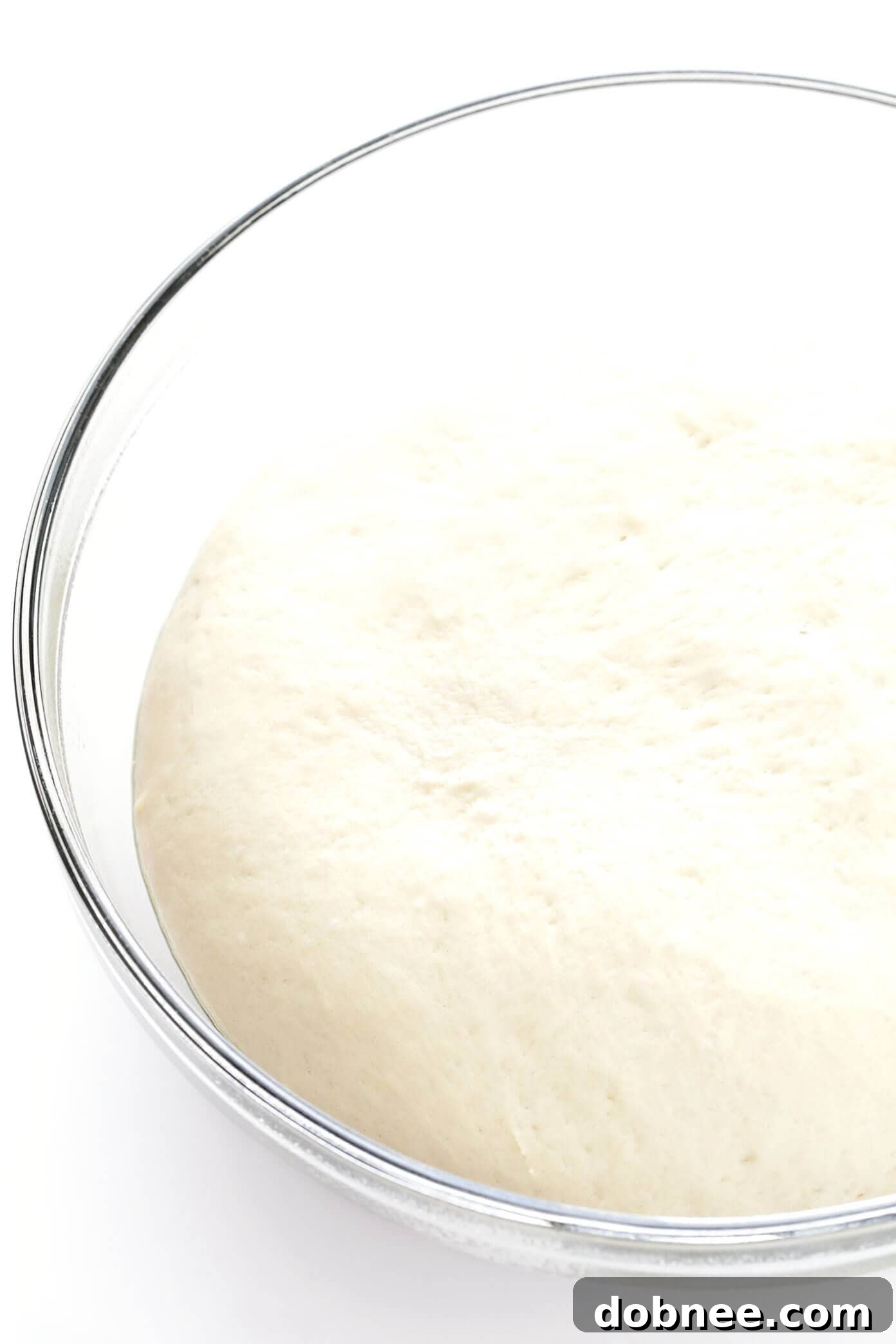
- First Dough Rise (Bulk Fermentation): Once kneaded, gently shape the dough into a smooth ball. Lightly grease the mixing bowl (or another clean, spacious bowl) with olive oil or cooking spray. Place the dough ball into the greased bowl, turning it once to ensure all sides are lightly coated with oil. Cover the bowl snugly with a damp kitchen towel or plastic wrap to prevent the dough from drying out. Place the bowl in a warm, draft-free location. Ideal spots include a sunny windowsill, near a warm (but not hot) oven, or even inside a slightly warmed (then turned off) oven. Allow the dough to rise for 45 to 60 minutes, or until it has noticeably doubled in size. This first rise is vital for developing the bread’s flavor and texture.
- Second Dough Rise (Proofing): After the first rise, gently turn the dough out onto a lightly floured surface. Carefully stretch or roll the dough into your desired shape – typically a large circle or a rectangle – aiming for a thickness of about 1/2-inch. Avoid overworking or deflating the dough too much, as we want to preserve its airy structure. If you intend to bake the focaccia in a rectangular baking dish (like a 9×13 inch pan), gently press it into the prepared dish at this stage. Cover the dough again with the damp towel and let it rest for another 20 minutes. This shorter second rise, or proofing, helps the focaccia become even more tender and ensures a light, open crumb structure.
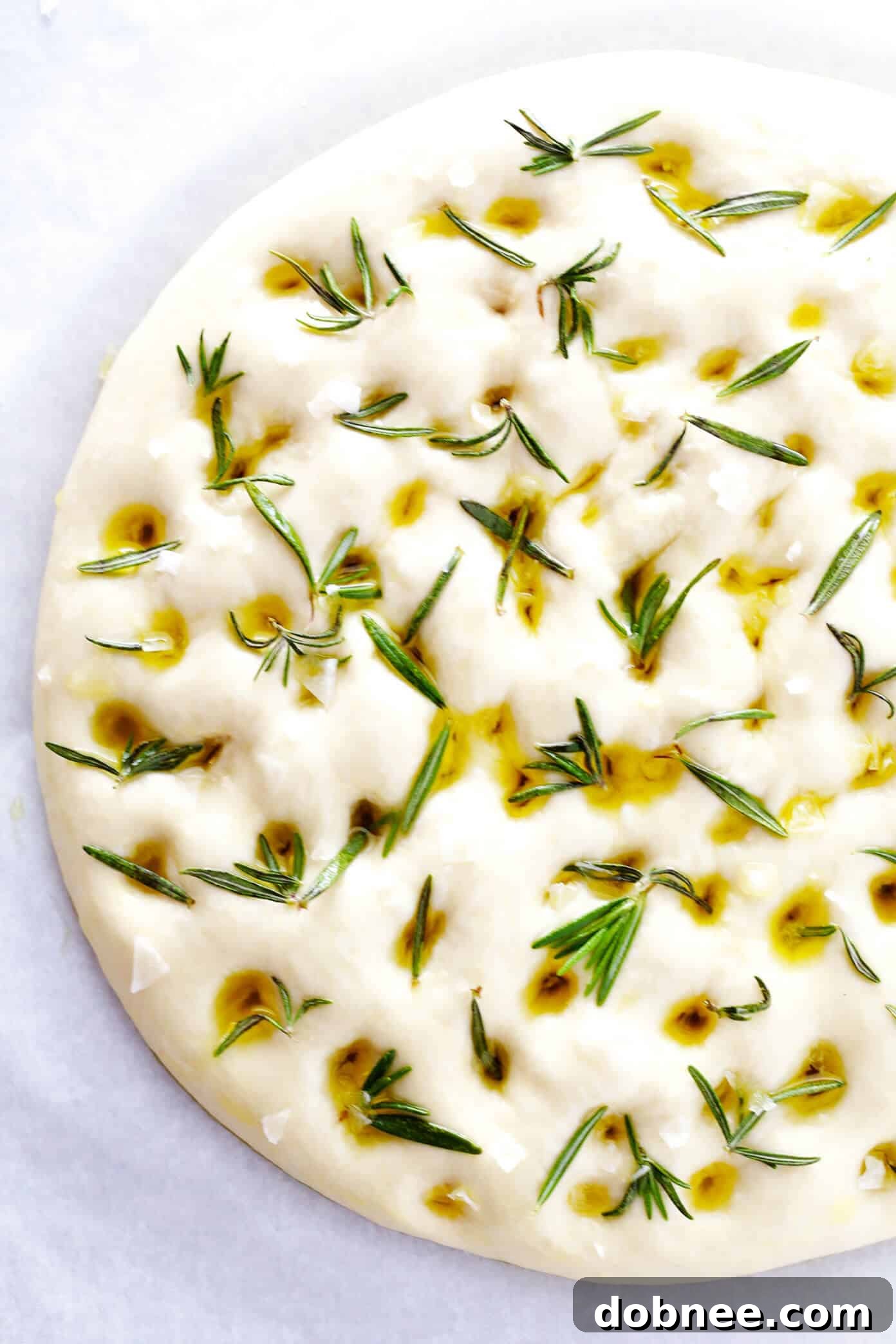
- Prepare for Baking (Dimpling and Topping): Preheat your oven to a steady 400°F (200°C). If you’re baking your focaccia free-form, carefully transfer the risen dough to a large baking sheet lined with parchment paper. If using a baking dish, ensure it’s lightly oiled for easy removal. Now for the signature focaccia step: use your fingertips to deeply poke dents all over the surface of the dough. Don’t be shy – really press down firmly until you feel the baking sheet or the bottom of the dish beneath the dough. These dimples are crucial; they create those iconic pockets that hold the olive oil and salt, prevent large air bubbles from forming, and contribute to the focaccia’s characteristic texture. Drizzle one to two tablespoons of extra virgin olive oil evenly over the dimpled dough, ensuring it pools in the depressions. Finally, generously sprinkle with fresh rosemary needles and the remaining flaky sea salt.
- Bake the Focaccia: Carefully place the prepared focaccia into the preheated oven. Bake for approximately 20 to 25 minutes, or until the top is beautifully golden brown, the crust is crisp, and the kitchen is filled with an irresistible aroma. The internal temperature, if checked with an instant-read thermometer, should register around 200-210°F (93-99°C), indicating it’s fully cooked through.
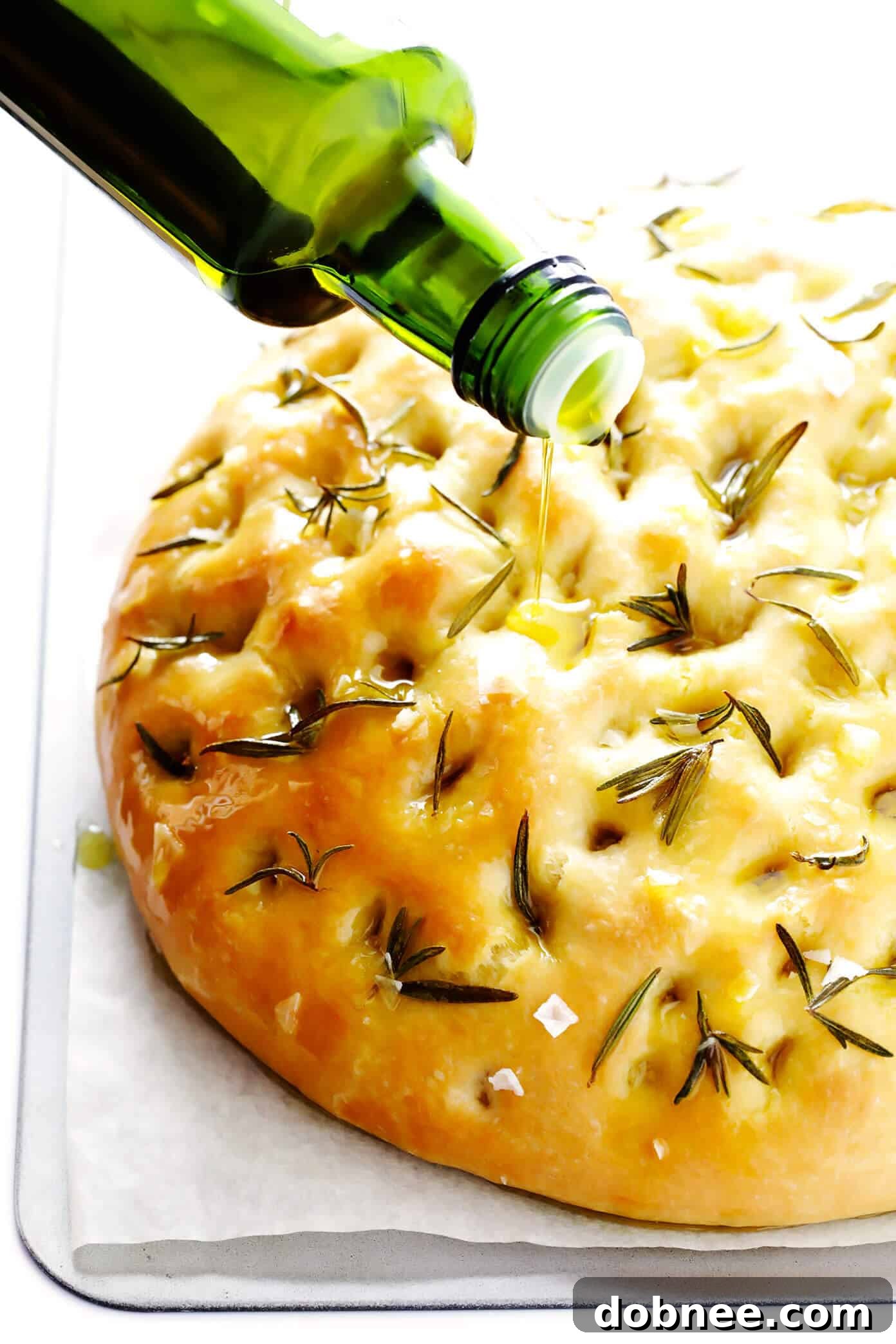
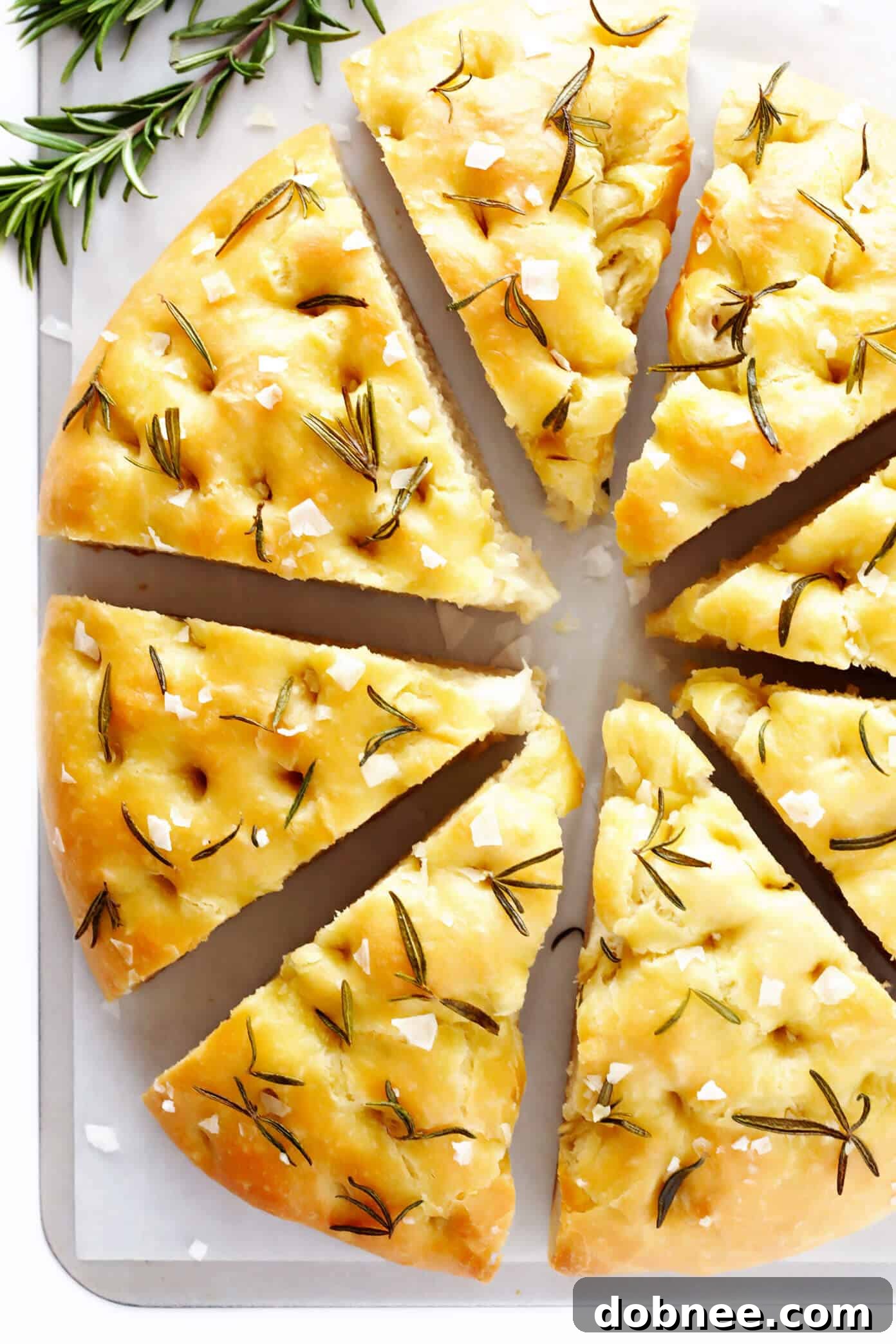
- Serve and Enjoy: Once baked to perfection, carefully remove the focaccia from the oven. For an extra touch of richness, flavor, and a beautiful glistening finish, drizzle a little more high-quality extra virgin olive oil over the warm bread immediately after baking. This allows the oil to soak into the crust and dimples. Let it cool on the baking sheet or in the dish for a few minutes before slicing into generous squares, wedges, or strips. Serve warm as a delightful appetizer, a perfect side dish for any meal, or as the foundation for incredible gourmet sandwiches.
Note for Hand Kneading: If you do not have access to a stand mixer, no problem at all! Simply complete step 1 (yeast proofing) in a large mixing bowl. Gradually stir in the flour, olive oil, and salt using a sturdy spoon or spatula until a shaggy, cohesive dough begins to form. Then, turn the dough out onto a lightly floured surface and knead vigorously by hand for 5 to 8 minutes until it becomes smooth, elastic, and no longer overly sticky. If the dough feels too tacky, add a touch more flour, one tablespoon at a time, until it is manageable. Afterward, proceed with the remainder of the recipe as directed from step 3 onwards.
Creative Variations and Customizations for Your Focaccia
While this classic Rosemary Focaccia is absolutely perfect on its own, its simple base makes it a fantastic canvas for culinary creativity. Don’t hesitate to personalize your loaf with these delicious additions and flavor twists:
- Garlic Infusion: For those who adore garlic, you have a couple of options. Finely mince one or two large cloves of fresh garlic and knead them directly into the dough during step 2. This infuses the entire bread with a subtle garlicky aroma. Alternatively, for a milder, roasted garlic flavor, thinly slice garlic and scatter it over the dough along with the rosemary before baking.
- Parmesan Perfection: A generous sprinkle of freshly grated Parmesan cheese over the top of the dough during step 5 adds a delightfully savory, umami-rich crust that pairs exquisitely with the fragrant rosemary and rich olive oil. The cheese will crisp up beautifully in the oven.
- Herbaceous Alternatives: Don’t limit yourself to just rosemary! Experiment with other fresh herbs from your garden or local market. In place of (or in addition to) fresh rosemary, consider using fresh thyme, oregano, marjoram, or even sage for different aromatic profiles. A blend of mixed Italian herbs can also be wonderfully aromatic.
- Dried Herb Option: If fresh herbs aren’t readily available, dried herbs can certainly be used. When opting for dried rosemary or a pre-mixed Italian seasoning blend, I highly recommend kneading them directly into the dough itself rather than sprinkling them solely on top. This prevents the delicate dried herbs from burning in the oven and allows their flavors to meld more deeply throughout the bread.
- Sun-Dried Tomatoes or Olives: For a burst of Mediterranean flavor, chop up some oil-packed, drained sun-dried tomatoes or pitted Kalamata olives. Gently press these savory morsels into the dough surface when you’re creating the dimples. Their salty, tangy notes are a fantastic complement to the focaccia.
- Caramelized Onions: For a sweet and savory twist, thinly slice one large onion and slowly sauté it in olive oil until it’s deeply caramelized and wonderfully tender. Spread these luscious caramelized onions evenly over the focaccia dough before baking for a truly gourmet experience.
Tips for Focaccia Success: Mastering Your Bake
Achieving a consistently perfect focaccia is well within reach for every home baker, especially with a few key considerations and insider tips:
- Water Temperature is Crucial: As emphasized in the ingredients section, the 110°F (43°C) mark for your warm water is not just a suggestion – it’s a critical component for successful yeast activation. Too hot, and the yeast organisms are destroyed; too cold, and they remain dormant. A reliable kitchen thermometer is a small investment that guarantees consistent results.
- Don’t Rush the Rise: Dough rising (fermentation) is a magical, living process that genuinely should not be rushed. The specified rising times in the recipe are guidelines; actual times can vary based on factors like your kitchen’s ambient temperature, humidity levels, and the activity of your yeast. Instead of strictly adhering to the clock, learn to look for the visual cues: the dough should have clearly doubled in size, appearing puffy and airy. Patience here is rewarded with superior flavor and texture.
- Deep Dimples, Happy Focaccia: Those deep pokes you make with your fingertips are more than just for aesthetics. They serve several vital purposes: they create the characteristic pockets that beautifully hold the olive oil and sea salt, and critically, they prevent the dough from puffing up excessively like a regular loaf of bread. This ensures that unique, flat yet airy focaccia texture. Don’t be afraid to press firmly, almost to the bottom of your baking surface!
- Quality Olive Oil Makes a Difference: Given that olive oil is such a prominent flavor in focaccia – both within the dough and as a generous drizzle on top – the quality of your olive oil truly impacts the final product. Use the best extra virgin olive oil you can reasonably afford. A good quality oil will lend a rich, complex, and authentic Italian flavor profile.
- Flaky Sea Salt for Texture and Flavor: The large, irregular crystals of flaky sea salt are not merely for decoration; they provide bursts of concentrated flavor and a delightful textural crunch that fine salt simply cannot replicate. If you absolutely must substitute with fine sea salt, remember to halve the amount, as fine salt is denser and much saltier by volume.
- Prevent Sticking for Easy Handling: To avoid frustration and ensure easy removal, always generously oil your mixing bowl for the first rise and either line your baking sheet with parchment paper or thoroughly oil your baking dish before placing the dough for its second rise and baking. This small step saves a lot of hassle.
Storage, Freezing, and Serving Suggestions
While freshly baked focaccia is undeniably at its peak on the day it’s made, it can be stored and even frozen for later enjoyment, making it a convenient staple:
- Storing Leftovers: Once your focaccia has completely cooled to room temperature, wrap any leftover portions tightly in plastic wrap or aluminum foil. It will maintain its freshness and soft texture at room temperature for up to 2-3 days. For slightly longer storage, you can refrigerate it for up to 5 days, though refrigeration can sometimes alter the texture slightly.
- Freezing for Future Feasts: Focaccia freezes beautifully, making it an excellent candidate for meal prep. Once completely cooled, wrap individual slices or the entire loaf tightly in plastic wrap, ensuring it’s well-sealed. Then, add an additional layer of aluminum foil for extra protection against freezer burn. It can be frozen for up to 3 months.
- Reheating for Freshness: To revive leftover or thawed focaccia, simply place slices directly onto a baking sheet in a preheated oven at 350°F (175°C) for 5-10 minutes, or until it’s warmed through and the crust has regained some crispness. If reheating from frozen, it’s best to thaw it at room temperature first before warming.
- Versatile Serving Ideas: Beyond being a delightful accompaniment to hearty Italian meals, focaccia is incredibly versatile. It makes excellent base for gourmet sandwiches, can be cut into strips for dipping in olive oil and balsamic vinegar, or even topped with additional ingredients to serve as a quick personal pizza. It pairs wonderfully with a wide array of dishes, from light soups and fresh salads to elaborate charcuterie boards and grilled vegetables.
More Delicious Bread Recipes to Explore
If you’ve thoroughly enjoyed the rewarding experience of baking this Rosemary Focaccia and are eager to continue your bread-making journey, you’re in luck! Here are a few more easy and highly-rated bread recipes from our collection that are sure to impress your taste buds and expand your baking repertoire:
- Honey Beer Bread: An incredibly simple quick bread with a hint of sweetness and the subtle complexity of beer.
- Healthy Banana Bread: A wholesome and moist version of a classic favorite, perfect for breakfast or a snack.
- 1-Hour Soft and Buttery Dinner Rolls: Impress your guests with these fluffy, homemade rolls that come together surprisingly quickly.
We sincerely hope you love making, sharing, and savoring this Rosemary Focaccia Bread as much as we do. It’s a recipe that truly brings warmth and flavor to any table. Happy baking, and enjoy every delicious bite!