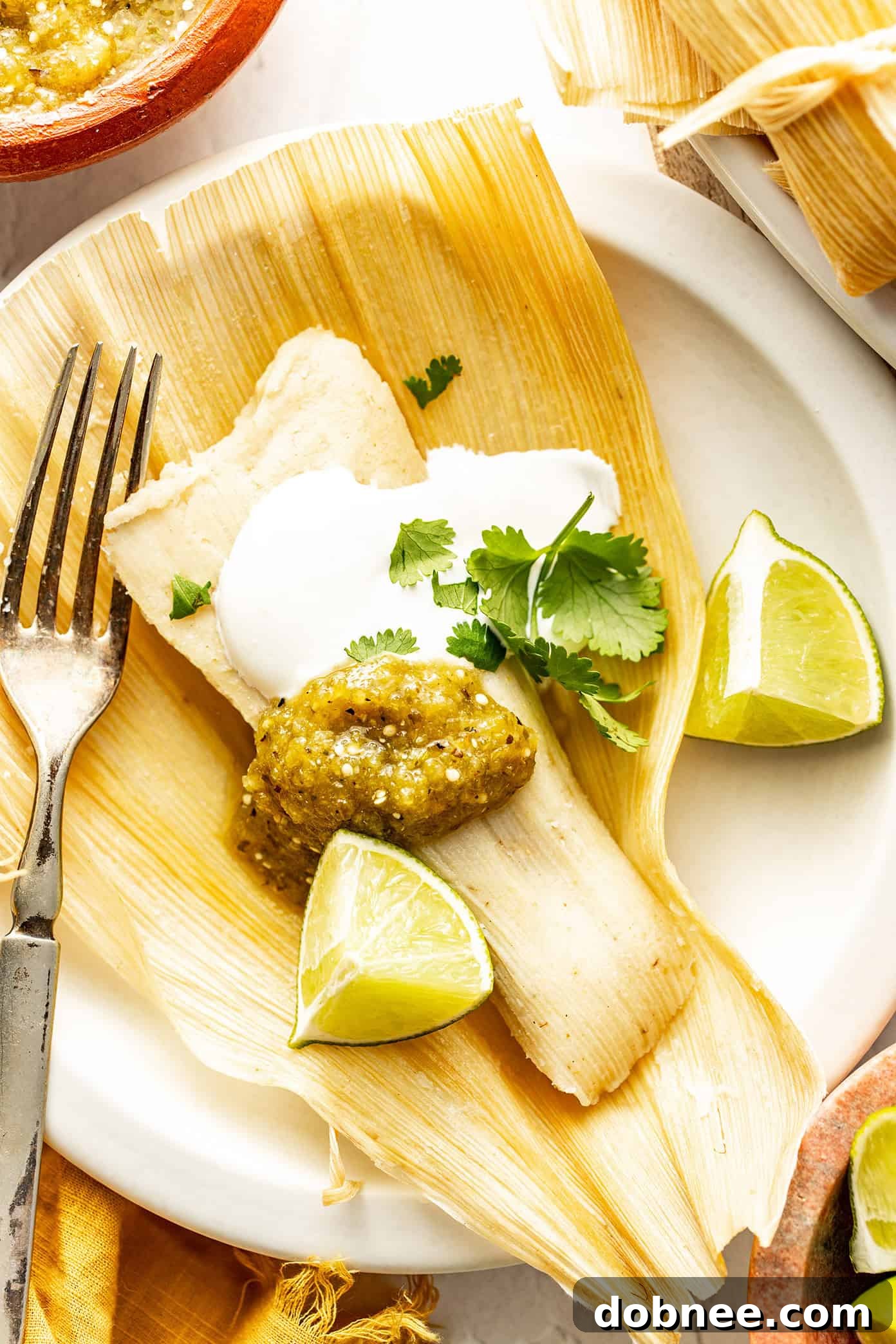
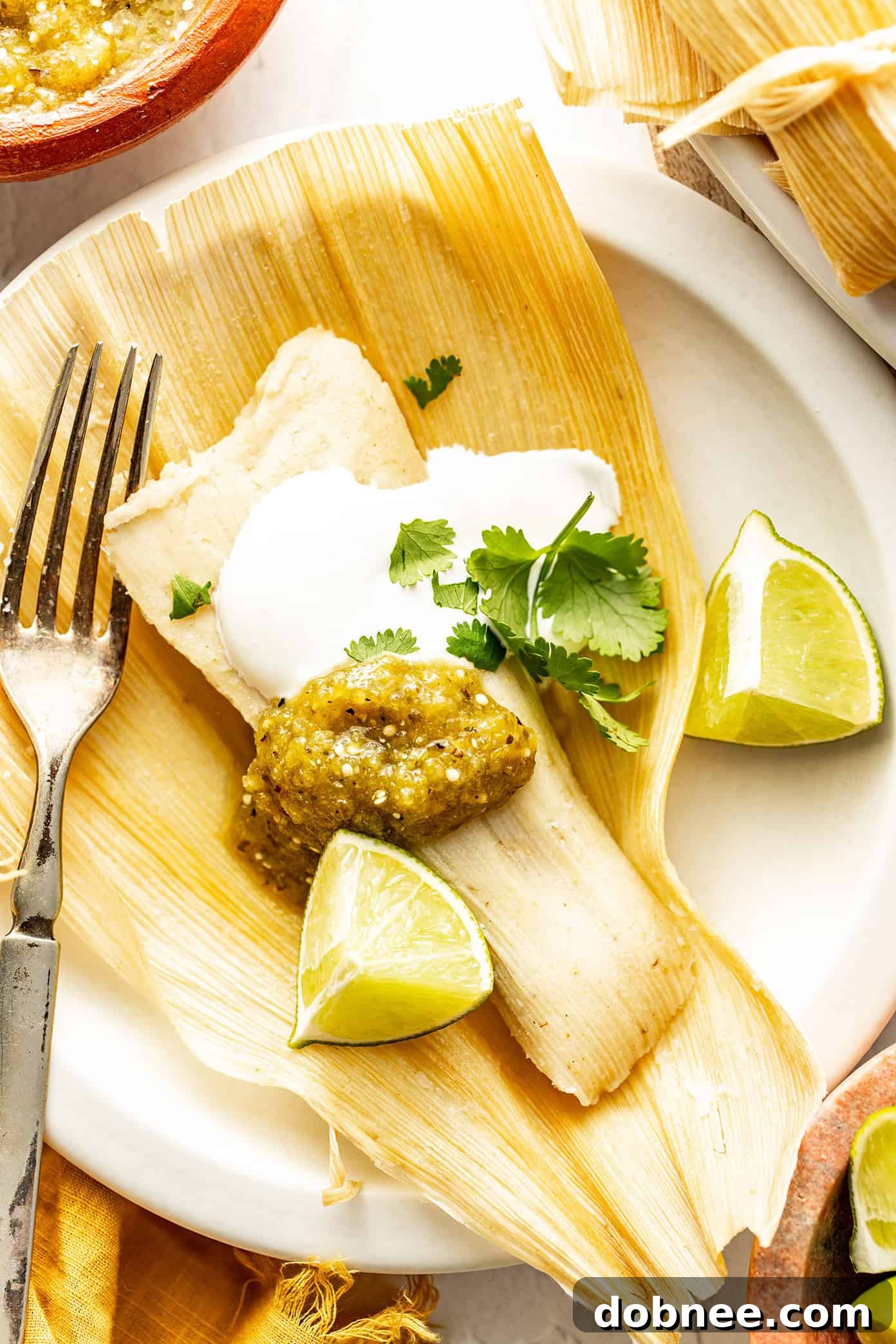
Flavorful Green Chicken Tamales: A Simpler Approach to Tamales Verdes

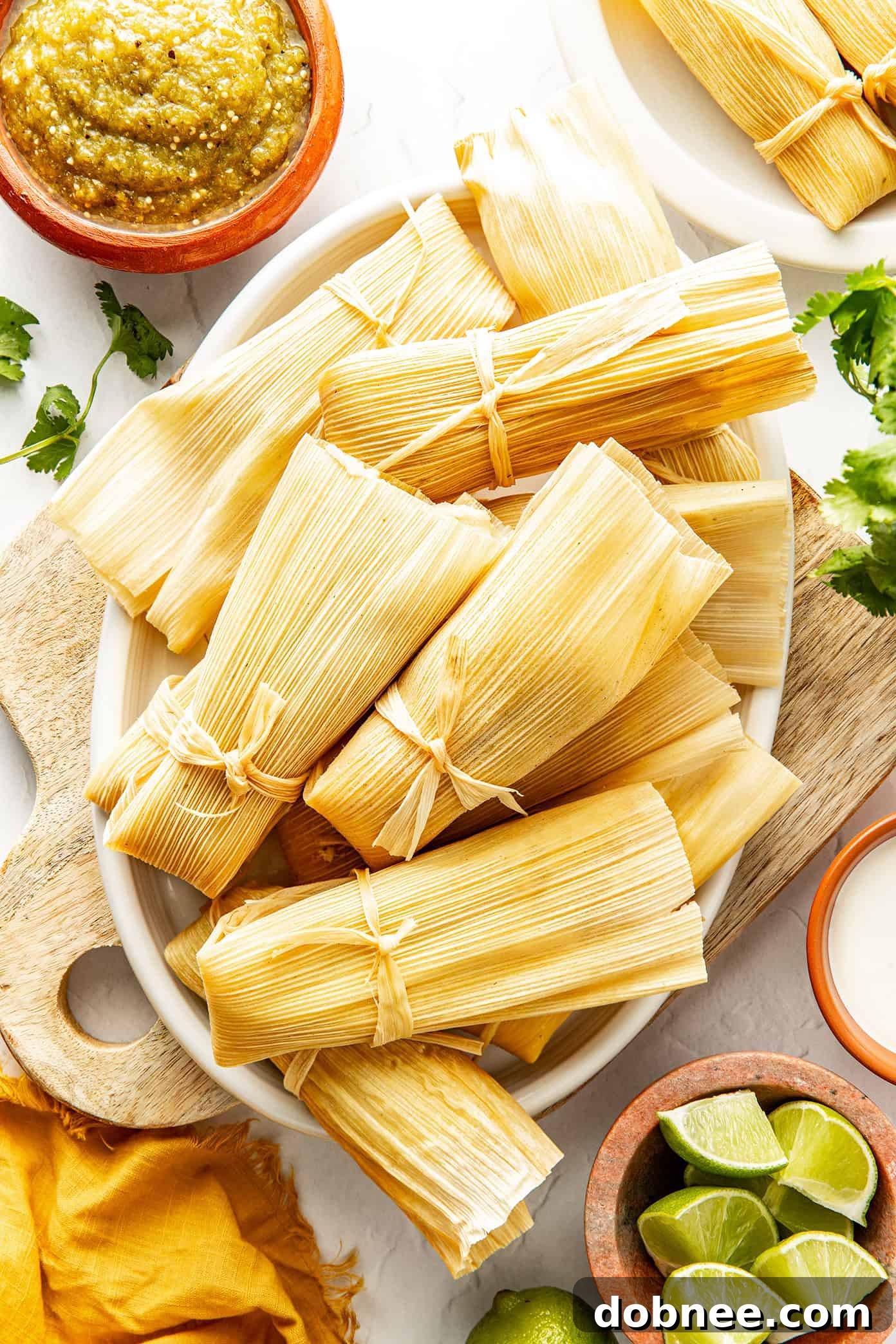
Embark on a culinary journey to Mexico with these incredibly delicious Green Chicken Tamales, also known as Tamales Verdes. While tamale making often carries a reputation for being an all-day, labor-intensive affair, this recipe proves that authentic, soul-satisfying tamales don’t have to be. We’ve crafted a method that incorporates a few clever shortcuts, allowing you to enjoy the rich flavors of homemade tamales without sacrificing your entire weekend. This approach makes the process surprisingly approachable, perfect for a cozy weekend cooking project or for preparing a batch to stock your freezer with convenient, delicious meals.
Our secret lies in streamlining the most time-consuming steps. We start with tender, pre-cooked shredded chicken and generously coat it with a vibrant, zesty salsa verde. You have the option to make your own quick homemade salsa or use a high-quality store-bought version, saving you precious time in the kitchen. By focusing your energy on perfecting the masa – ensuring it’s beautifully fluffy and tender – and mastering the assembly, you’ll discover that making tamales from scratch (mostly!) is far more enjoyable than you might imagine.
Just like with our popular red pork tamales, we believe that the best tamales boast a generous filling-to-masa ratio. Each bite should be bursting with savory, saucy flavor, not just dense masa. This recipe delivers exactly that: a batch of green chicken tamales that are deeply flavorful, wonderfully comforting, and surprisingly simple to create. Let’s dive into the art of making these delightful tamales!
Essential Ingredients for Perfect Green Chicken Tamales
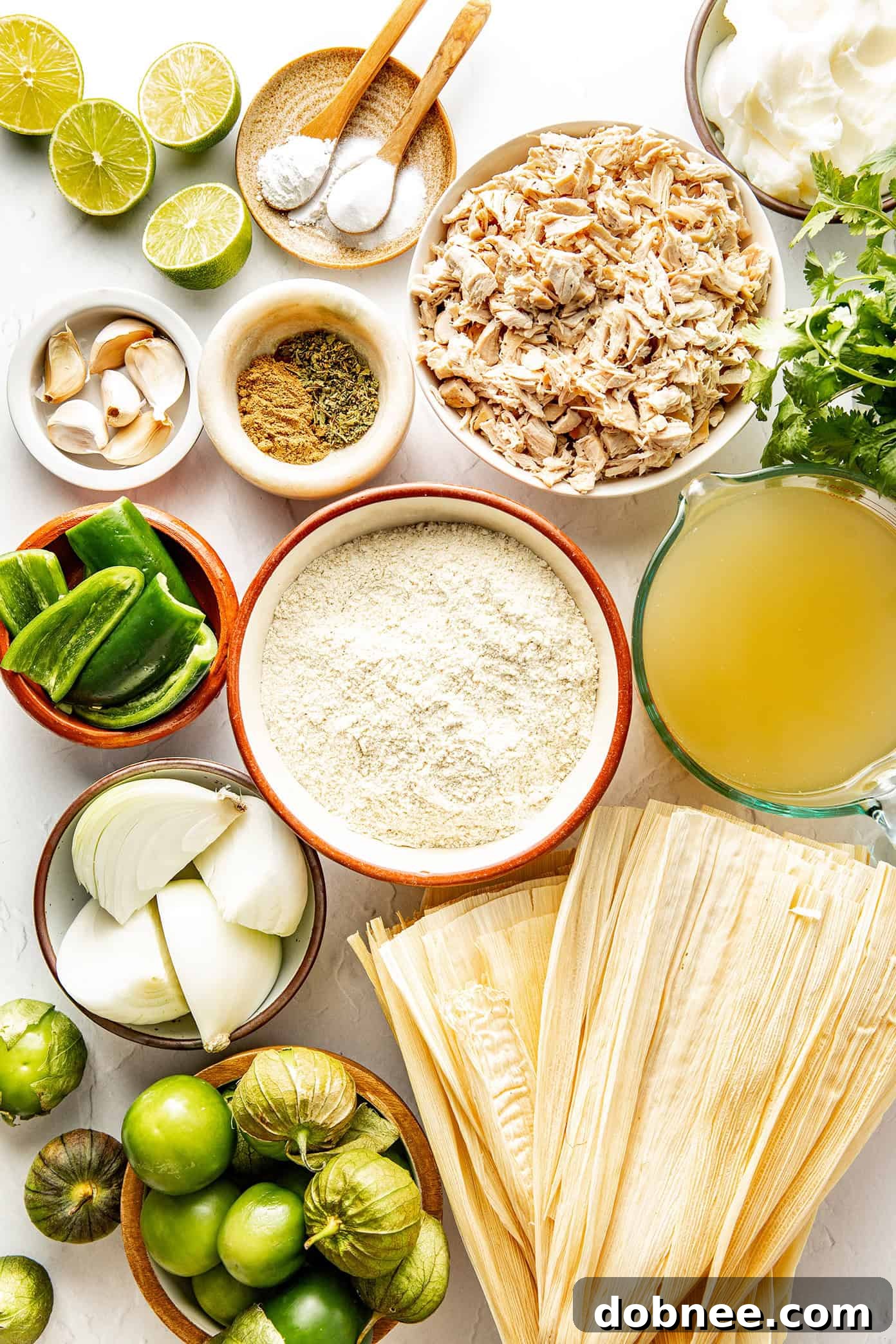
Crafting exceptional tamales begins with understanding your ingredients. Here’s a detailed look at what you’ll need for these flavorful green chicken tamales, along with tips for selecting the best components to ensure a truly delicious outcome:
- Chicken: Our primary shortcut! For ultimate convenience and consistently delicious results, we highly recommend using two pre-cooked rotisserie chickens. They are tender, flavorful, and save a significant amount of preparation time. Simply shred the meat finely to ensure it mixes thoroughly with the salsa verde and packs neatly into each tamale. While rotisserie chicken is ideal, any cooked, shredded chicken will work beautifully here.
- Salsa Verde: The heart and soul of our green chicken tamales! This recipe relies on a vibrant homemade tomatillo salsa verde. It’s made by broiling tomatillos, jalapeños, onion, and garlic until lightly charred, which deepens their flavor considerably. These roasted ingredients are then blended with fresh cilantro, bright lime juice, and warm, earthy Mexican spices. The charring step is crucial for an authentic, smoky depth. Alternatively, if time is short, a high-quality store-bought salsa verde can be used, but adjust seasoning as needed.
- Masa & Fat: The foundation of any great tamale is its masa. You’ll need Maseca Para Tamal, a specific type of masa harina that is coarser in grind and specifically designed to yield the light, fluffy texture quintessential to tamales. Do not substitute with regular Maseca, as it will result in a denser texture. For the traditional, unparalleled flavor and texture, high-quality rendered lard is highly recommended. Look for non-hydrogenated lard if possible. The key isn’t just the amount of lard, but how well it’s whipped – this aeration is what makes the masa incredibly tender. For those who prefer alternatives, vegetable shortening or a neutral oil can be used, though they may slightly alter the traditional flavor profile and richness.
- Liquid & Seasoning: Warm chicken broth is essential for both flavor and achieving the perfect masa consistency. Adding it gradually allows you to control the dough’s texture, ensuring it’s perfectly spreadable. Fine sea salt is added for seasoning, while a small amount of baking powder works wonders to help the masa puff up, resulting in a lighter, more tender tamale.
- Corn Husks: These are the traditional wrappers for tamales. Dried corn husks are typically found in large bags in the ethnic food aisle of most grocery stores, especially where Latin American ingredients are stocked. Choose husks that are wide, intact, and pliable after soaking, as this will make the wrapping process much easier and prevent tearing.
Expert Tips for Tamale Success
Making tamales can feel like an art, but with a few tried-and-true tips, you’ll be steaming perfect batches in no time. While detailed instructions are in the recipe card below, these insights will guide you through the process, especially if this is your first time:
- Broil the Salsa Verde Ingredients for Depth: Don’t skip the charring step for your tomatillos, chiles, onion, and garlic. Broiling them until lightly blackened brings out incredible depth, sweetness, and a subtle smoky flavor that elevates the entire salsa verde. This simple step transforms the sauce from good to exceptional.
- Season the Salsa Generously and Taste: Before mixing it with the chicken, ensure your salsa verde tastes vibrant and perfectly seasoned. It should be tangy, spicy (to your preference), and adequately salty. After combining it with the chicken, taste the filling mixture again. Adjust salt or lime juice as needed – a flavorful filling is key to a delicious tamale.
- Keep the Filling Saucy, Not Runny: The chicken filling should be well-coated and juicy, but without excess liquid. A runny filling can leak during steaming, affecting the masa’s texture. Aim for a consistency where the salsa clings to the chicken without pooling at the bottom of the bowl.
- Whip the Lard Until Truly Fluffy: This is arguably the most critical step for achieving light, tender masa. Do not rush it. Beat the lard on medium-high speed in a stand mixer for a good 4-6 minutes. It should become visibly paler, significantly lighter in texture, and fluffy, almost like whipped cream. This aeration incorporates air, which contributes to the masa’s delicate structure.
- Aim for Spreadable Masa Consistency: Your masa should be soft, creamy, and easily spreadable, akin to the consistency of thick, fluffy hummus or a soft peanut butter. If your masa cracks when you try to spread it, it’s too dry; gradually add more warm chicken broth, a tablespoon at a time, until it reaches the desired texture.
- Let the Masa Rest: After mixing, allow the masa to rest for 20-30 minutes. This hydration time allows the corn flour to fully absorb the liquid, resulting in a more pliable, uniform, and ultimately tender masa. If it thickens too much during resting, a splash more warm broth can loosen it.
- Perform the Masa Float Test: To confirm your masa is perfectly whipped and hydrated, drop a small, pea-sized ball of masa into a cup of cold water. If it floats to the top, it’s ready! If it sinks, continue mixing for a few more minutes, adding a tiny bit more lard or broth if necessary, and retest.
- Stand Tamales Upright While Steaming: Arrange the tamales vertically in your steamer basket with their open ends facing upwards. This prevents the filling from leaking out during the steaming process and allows them to cook evenly.
- Let Tamales Rest After Steaming: Once steamed, resist the urge to unwrap them immediately. Remove the tamales from the steamer and let them rest for 10-15 minutes. This crucial resting period allows the masa to firm up further, making them easier to unwrap cleanly and enhancing their fluffy texture.
Frequently Asked Questions (FAQ) About Green Chicken Tamales
Absolutely! The green chicken filling can be prepared up to a day in advance. Store it in an airtight container in the refrigerator, ensuring it’s thoroughly chilled before you begin assembling your tamales. This is a great way to break up the tamale-making process.
While traditional lard imparts the most authentic flavor and incredibly tender texture to tamales, you can certainly use alternatives. Vegetable shortening or butter can be substituted. When using a substitute, it’s even more crucial to whip it very well to incorporate as much air as possible, mimicking lard’s light structure. Be aware that the masa might be slightly less rich in flavor compared to tamales made with lard.
Masa sticking to the husks is a common sign of undercooked tamales. It generally means they need more steaming time to fully set. If this happens, simply return them to the steamer for an additional 10-15 minutes, then check again. The masa should pull away cleanly and easily from the husk when properly cooked.
No dedicated steamer? No problem! You can easily improvise. Use any large pot (like a stockpot) and place a metal colander or a heat-safe wire rack inside, ensuring the tamales will sit above the water, not directly in it. If you don’t have a colander or rack, create a raised platform by rolling several balls of aluminum foil and arranging them in the bottom of your pot. Add water just below the level of your improvised platform, then stand the tamales upright and steam as directed.
Absolutely! Tamales are excellent for freezing, making them perfect for meal prep. Once fully cooked and cooled, wrap them tightly in plastic wrap or foil, then place them in freezer-safe bags. They can be frozen for up to 2-3 months. To reheat, steam them directly from frozen until they are hot all the way through, typically 20-30 minutes.
Yes, you can adapt this recipe for a vegetarian version. Simply omit the chicken and use vegetable broth instead of chicken broth for the masa. For the filling, you can use roasted vegetables (like corn, zucchini, bell peppers, or sweet potatoes) mixed with the salsa verde, or a plant-based shredded meat substitute. Ensure your lard alternative is also vegetarian, such as vegetable shortening.
Serving Suggestions and Variations
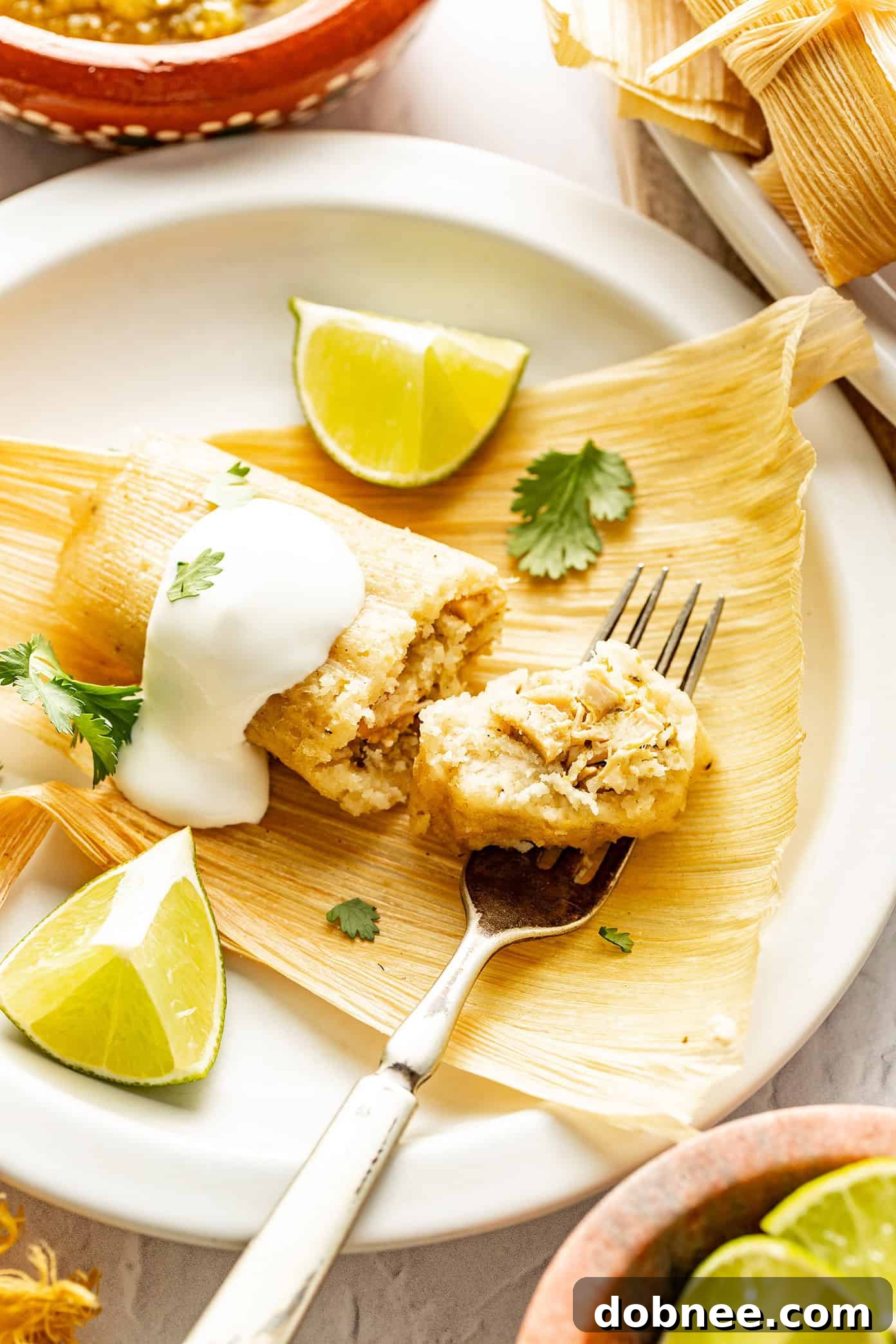
Once your delectable green chicken tamales are ready, the feast truly begins! Tamales are fantastic on their own, but they also pair wonderfully with a variety of sides and toppings. Serve them warm, unwrapped from their corn husks, and let your guests customize their plate.
Some popular serving suggestions include:
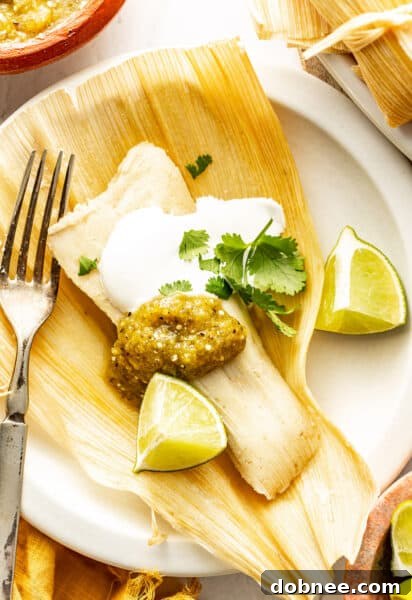
- Extra Salsa Verde: A generous drizzle of fresh salsa verde enhances the vibrant flavors of the filling.
- Crema or Sour Cream: A dollop of Mexican crema or sour cream adds a cooling, creamy contrast to the zesty tamales.
- Cotija Cheese: Crumbled Cotija cheese provides a salty, tangy finish that complements the chicken and salsa.
- Pico de Gallo or Diced Avocado: Fresh, chunky salsas or creamy avocado slices add texture and brightness.
- Side Dishes: Pair your tamales with simple sides like refried beans, Mexican rice, or a fresh green salad with a lime vinaigrette for a complete meal.
While this recipe focuses on green chicken tamales, feel free to explore variations once you’ve mastered the basic technique. You could experiment with different fillings, such as roasted pork with red chile sauce, cheese and jalapeño, or sweet tamales with fruit. The possibilities are endless, and each variation offers a new culinary adventure.
Print
Green Chicken Tamales (Tamales Verdes) Recipe
- Author: Ali
Ingredients
Scale
Green Chicken Filling
- 2 to 2.5 pounds pre-cooked shredded chicken
- 2 pounds tomatillos, husked and rinsed
- 4 jalapeños, stemmed (and seeded, for less heat if you prefer)
- 1 medium white onion, peeled and quartered
- 6 garlic cloves, unpeeled
- 1 cup tightly packed cilantro
- 2 teaspoons Mexican oregano
- 2 teaspoons ground cumin
- juice of 2 limes
- fine sea salt, to taste
Masa Dough
- 4 cups (480g) Maseca Para Tamal
- 2 cups lard
- 4.5–5 cups warm chicken broth, as needed
- 1.5 teaspoons fine sea salt
- 1 teaspoon baking powder
Corn Husks
- 40–50 dried corn husks
- hot water for soaking
Instructions
- Soak the Husks: Place the dried corn husks into a large bowl or stockpot. Cover them completely with very hot water, then weigh them down with a heavy plate to ensure they remain submerged. Allow the husks to soak for 30 to 60 minutes, or until they become fully pliable and soft. Once softened, drain the water and pat the husks dry. Set aside the largest, most intact husks for wrapping the tamales.
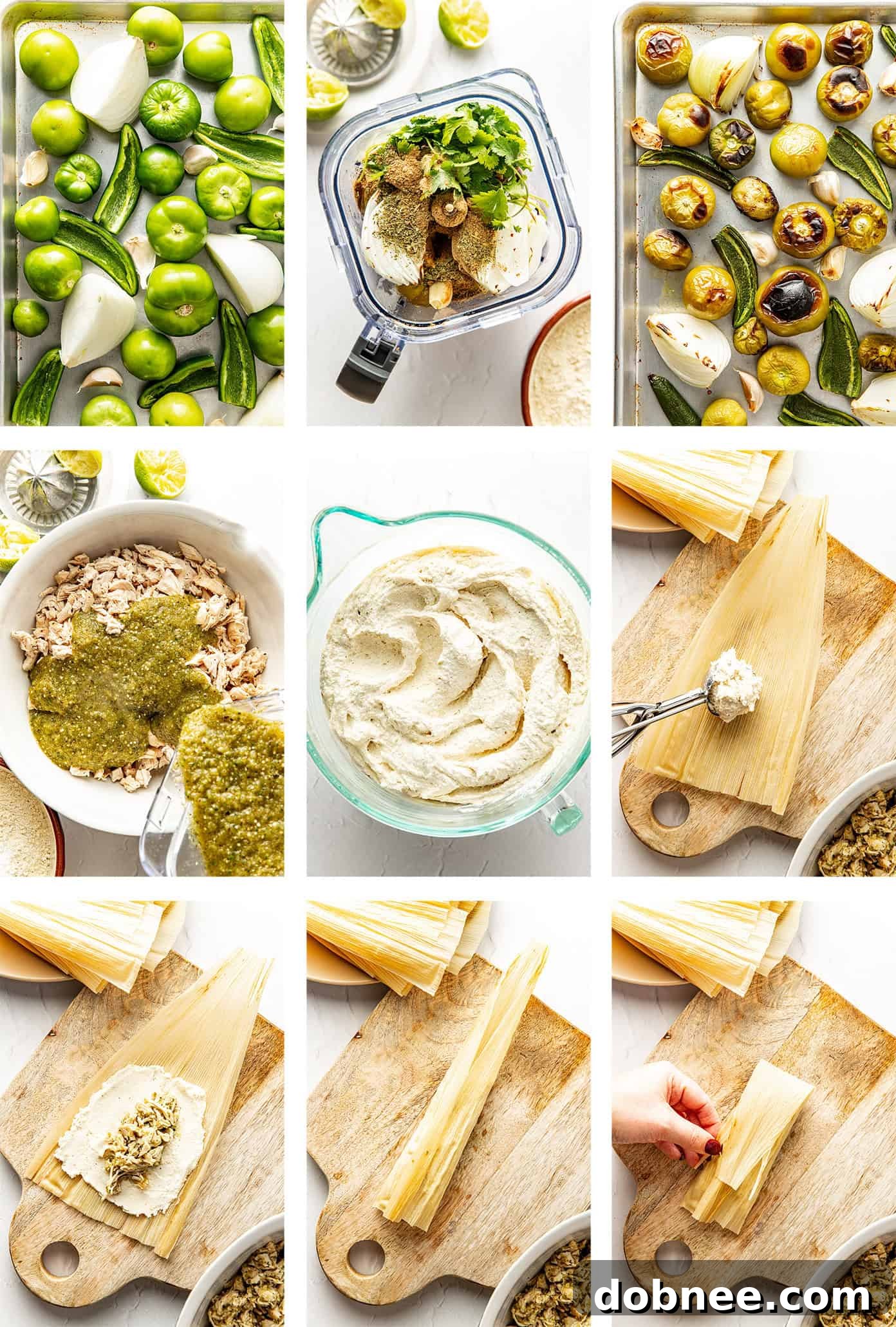
- Prepare the Salsa Verde: Arrange the husked tomatillos, stemmed jalapeños (seeded if you prefer less heat), quartered white onion, and unpeeled garlic cloves on a baking sheet. Broil under high heat for about 10 minutes, flipping the ingredients halfway through, until they are lightly charred and softened. Remove the pan from the oven. Carefully squeeze the soft roasted garlic flesh out of its peels into a blender, discarding the skins. Add the broiled tomatillos, chiles, onion, and any accumulated pan juices to the blender, along with the fresh cilantro, lime juice, Mexican oregano, ground cumin, and a generous pinch of fine sea salt. Blend until the salsa is smooth. Taste and adjust seasoning as needed for perfect balance.
- Create the Green Chicken Filling: In a large mixing bowl or pot, combine the pre-cooked shredded chicken. Pour in approximately 2 to 2½ cups of the prepared salsa verde, or enough to thoroughly coat the chicken. Stir until the chicken is evenly combined and well-sauced. The filling should be juicy and flavorful but not excessively runny, as this could lead to leakage during steaming. Add more salsa if desired, then set the filling aside to cool while you prepare the masa dough.
- Whip the Lard: Add the softened lard to the bowl of a stand mixer fitted with the paddle attachment. Beat the lard on medium-high speed for 4 to 6 minutes. Continue beating until the lard transforms into a pale, fluffy, and noticeably lighter texture. This essential step incorporates air, which is crucial for creating the light and tender masa dough that makes tamales so irresistible.
- Mix Dry Masa Ingredients: In a separate medium-sized bowl, whisk together the Maseca Para Tamal, fine sea salt, and baking powder until these dry ingredients are thoroughly combined and evenly distributed.
- Combine and Hydrate the Masa: With the stand mixer running on low speed, gradually begin adding the dry masa mixture to the whipped lard, a few spoonfuls at a time. Alternate with splashes of warm chicken broth. Continue adding the broth gradually—you’ll typically use between 4½ to 5 cups in total—until the masa achieves a soft, creamy, and easily spreadable consistency, similar to fluffy hummus. Briefly increase the mixer speed at the end to further lighten the texture. Now, let the masa rest for 20 to 30 minutes to allow the corn flour to fully hydrate. If the mixture thickens during this time, you can loosen it with a little more warm broth. To confirm readiness, perform the float test: drop a pea-sized ball of masa into a cup of cold water; if it floats, your masa is perfectly ready. If it sinks, mix in a bit more lard or broth and test again.
- Assemble the Tamales: Take a softened corn husk and lay it smooth-side up on your clean work surface. Scoop about 3 tablespoons of masa dough onto the wider end of the husk and spread it into a ¼-inch-thick rectangle, leaving a small border at the bottom and along the sides. Spoon approximately 2 tablespoons of the green chicken filling down the center of the masa. Carefully fold both sides of the corn husk inward so that the masa meets and encases the filling. Then, fold the bottom flap of the husk upward to seal the tamal. Leave the top end open. If desired, you can tie the tamal with a thin strip of corn husk to secure it. Repeat this process with the remaining masa and filling until all tamales are assembled.
- Prepare the Steamer: Line the bottom of your steamer insert with a few extra corn husks. This prevents the tamales from sticking and provides additional flavor. Add water to the pot below the steamer insert, ensuring the water level is just below the bottom of the insert itself, so the tamales steam, not boil.
- Steam the Tamales: Arrange the assembled tamales upright in the steamer basket, with their open ends facing upwards. If using a stovetop steamer, cover the pot tightly and steam the tamales for 1 hour 45 minutes to 2 hours. Periodically check the water level and add more hot water as needed to prevent it from evaporating completely. For Instant Pot steaming, preheat the water using the Sauté mode, then switch to Steam mode with the vent open and steam for 50-60 minutes.
- Check for Doneness: Tamales are cooked through when the masa easily pulls away from the corn husk and feels firm and set, rather than sticky or doughy. If the masa still clings to the husk or appears undercooked, continue steaming the tamales for an additional 10-15 minutes and then recheck.
- Rest and Serve: Once cooked, carefully remove the tamales from the steamer. Allow them to rest for 10-15 minutes before unwrapping and serving. This resting period is crucial for the masa to firm up further and achieve its ultimate fluffy texture. Serve warm with extra salsa verde, a dollop of crema, or your favorite fresh toppings. Enjoy the delicious fruits of your labor!