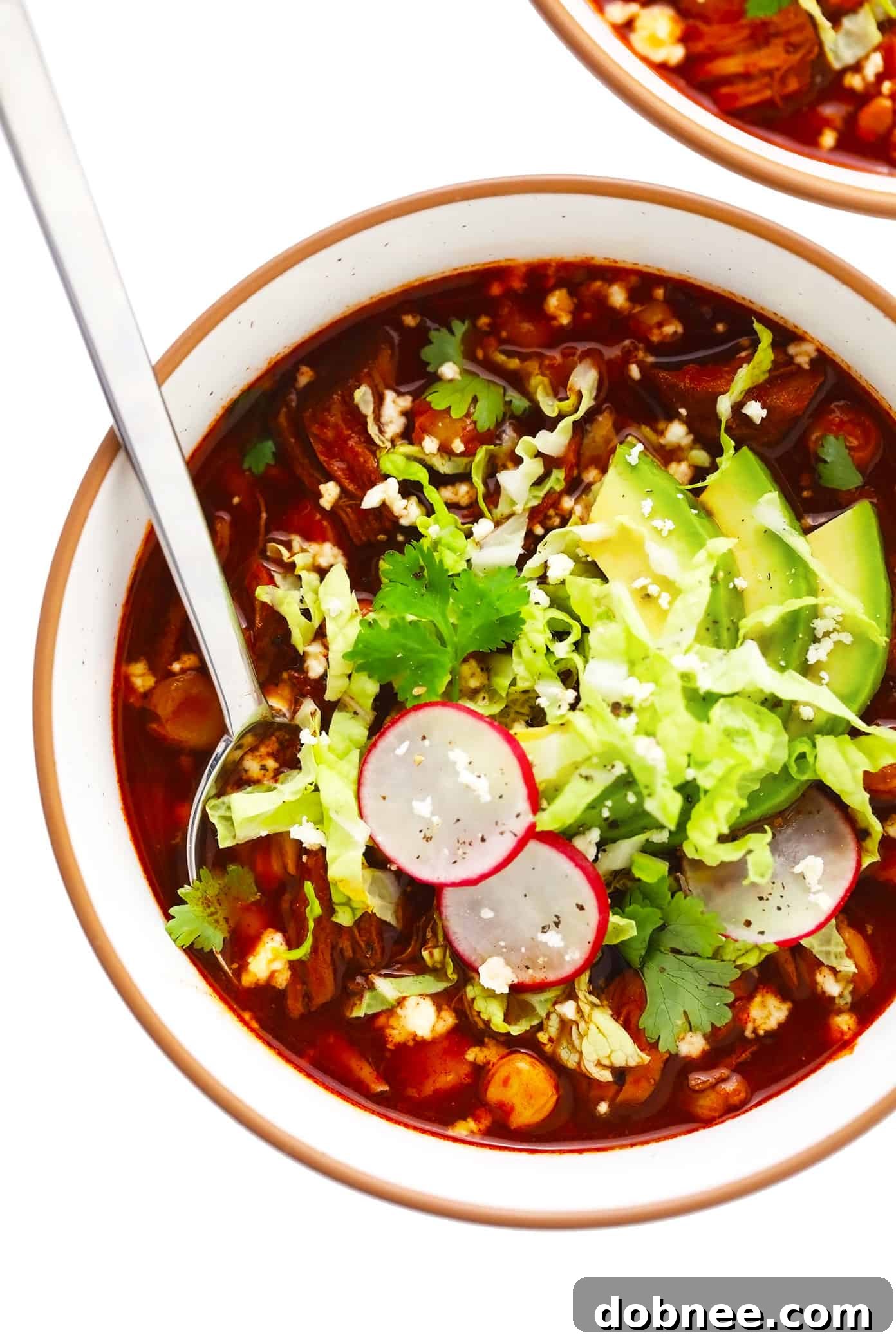
Discover the rich, authentic flavors of Mexico with our traditional Pozole Rojo recipe. Featuring tender, slow-simmered pork and hearty hominy in a vibrant, deeply flavored red chile broth, this comforting soup is a culinary masterpiece. Pile it high with your favorite fresh toppings for an unforgettable meal. This comprehensive guide includes instructions for stovetop, Crock-Pot, and Instant Pot methods, making it accessible for every home cook.
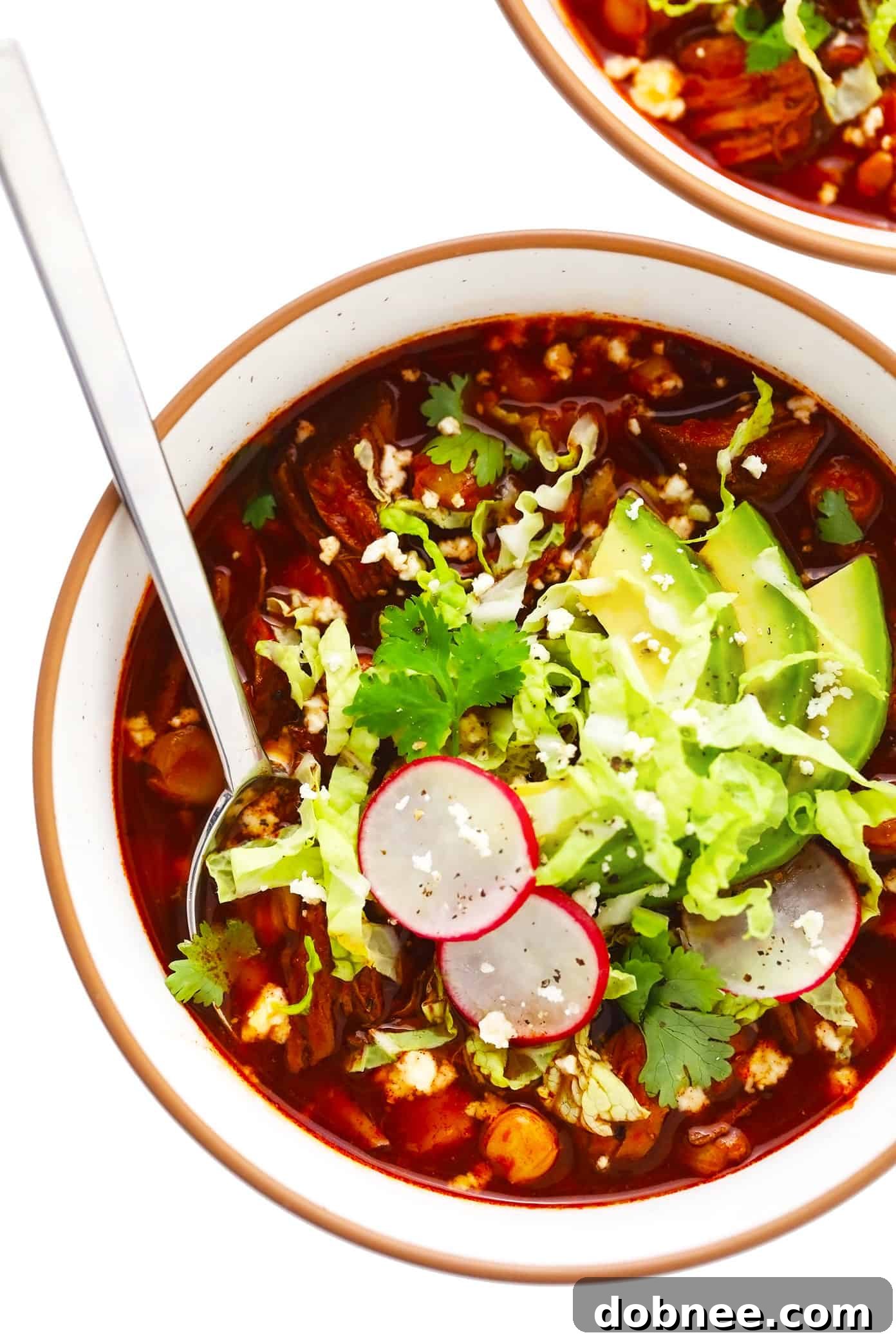
There are countless reasons to cherish a warm, comforting bowl of Pozole. But for many, the true magic of this iconic Mexican soup lies in its incredibly rich, deeply aromatic, and gorgeously vibrant red chile broth. It’s more than just a soup; it’s a celebration of flavor, a testament to traditional Mexican culinary art, and a dish that brings people together across generations.
Unlike its counterparts, Pozole Blanco (white) or Pozole Verde (green), Pozole Rojo distinguishes itself with a carefully selected blend of dried red chiles. These chiles are the secret to crafting a broth that achieves an exquisite balance of savory depth, smoky undertones, earthy richness, a hint of sweetness, and a perfect, customizable touch of spice. When this complex broth is slow-simmered with succulent, tender pork and plump, chewy hominy, then generously adorned with a medley of fresh, crisp toppings, it transforms into the ultimate expression of cozy comfort food. Each spoonful is an explosion of flavor, a delightful journey to the heart of Mexico’s culinary traditions.
My admiration for this recipe’s Pozole broth runs so deep that I’ve often prepared smaller quantities just to savor from a mug on crisp winter evenings. It’s a soulful elixir that warms from within. However, when a hearty and deeply satisfying meal is what you crave, the classic combination of tender pork and robust hominy in this recipe will never disappoint. The beauty of this dish also lies in its adaptability; you can patiently simmer all the ingredients together for several hours on the stovetop, or opt for the modern convenience of an Instant Pot or Crock-Pot. While I strongly advocate for the use of authentic dried Mexican chiles to achieve the signature depth of this broth (no shortcuts with chili powder here, please!), I assure you they are surprisingly simple to prepare and absolutely indispensable for genuine Pozole. I’ve also included detailed notes on how to effortlessly adjust the spice level, ensuring your batch is precisely as mild or fiery as your palate desires. And here’s a pro-tip for busy home cooks: this recipe freezes beautifully, making it perfect for meal prepping or entertaining. Don’t hesitate to prepare a double batch – you’ll thank yourself later!
Over the years, thousands have embraced and cherished our Pozole Rojo recipe, making it a beloved staple in many kitchens. As autumn makes its grand entrance – heralding the glorious return of soup season! – I felt it was the perfect moment to highlight this timeless dish once more for anyone yet to experience its profound deliciousness. Let’s embark on this culinary adventure and learn how to make some truly exceptional Pozole!
Mastering Pozole Rojo: A Culinary Journey
Embark on the journey of creating an authentic Pozole Rojo with this guide. From selecting the perfect dried chiles to achieving that melt-in-your-mouth pork, every step contributes to a symphony of flavors that is both comforting and exhilarating. This section provides an overview of the entire process, ensuring you’re confident in preparing this Mexican classic in your own kitchen.
Watch our 1-minute video for a visual guide to making the perfect Pozole Rojo!
The Essential Ingredients for Authentic Pozole Rojo
Crafting an exceptional Pozole Rojo begins with selecting the right ingredients. Each component plays a crucial role in developing the profound, layered flavors that define this traditional Mexican dish. Here’s a detailed look at what you’ll need and why each element is so important for achieving that authentic taste:
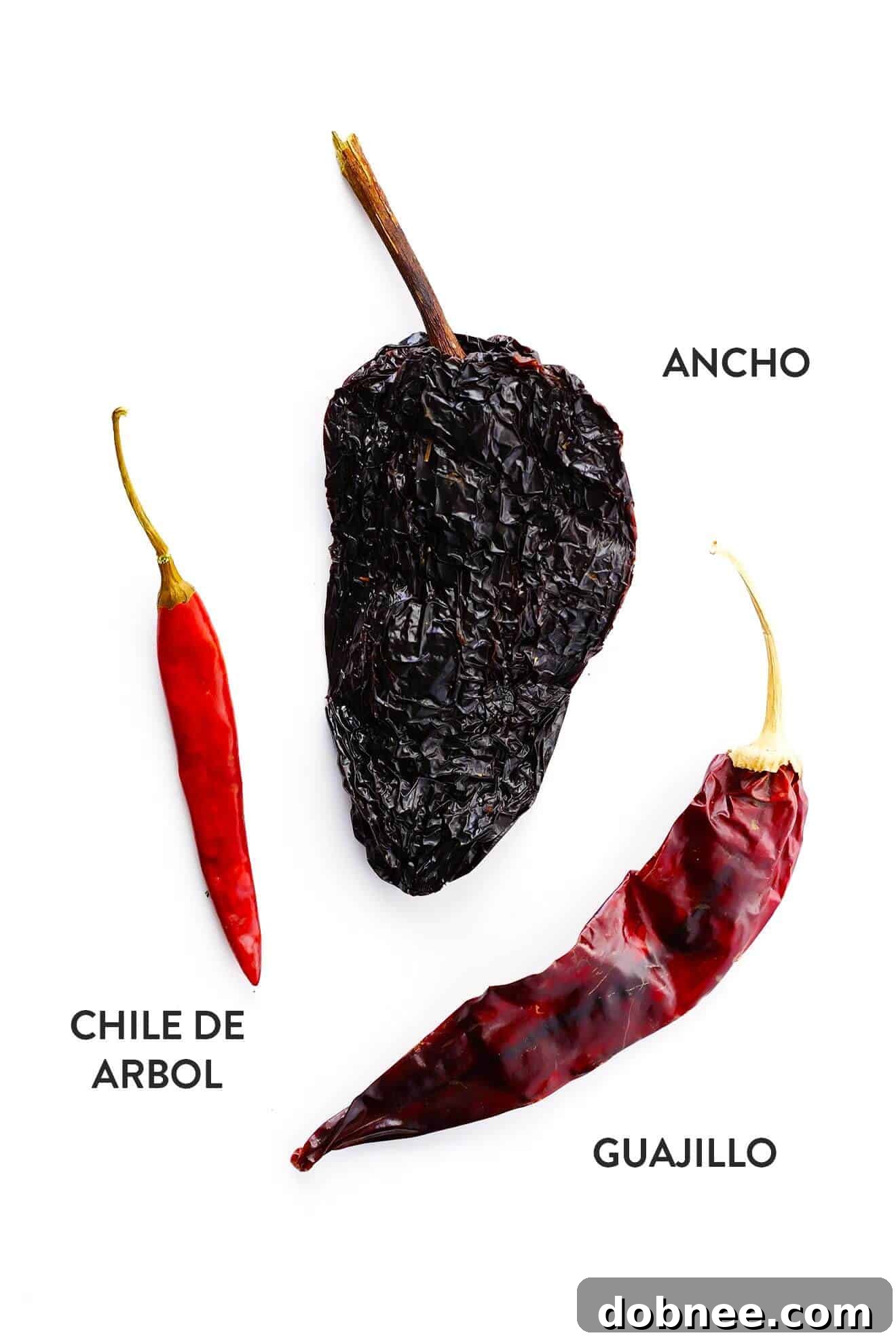
- Dried Chile Peppers: The Soul of the Broth: The vibrant red color and complex flavor profile of Pozole Rojo come directly from a carefully curated blend of dried Mexican chiles. While many varieties can be used, our recipe focuses on a classic trio that offers an ideal balance of heat, earthiness, and fruitiness. These chiles are typically available at Latin grocery stores, specialty markets, or through online retailers. For the absolute best flavor, remember to briefly toast them before soaking – this crucial step truly unlocks their aromatic oils and deepens their flavor profile.
- Ancho Chiles: These are dried poblano peppers, distinguished by their mild heat and rich, smoky, earthy, and slightly raisin-like sweetness. They form the foundational flavor and body of the broth, contributing a deep, dark hue.
- Guajillo Chiles: Offering a moderate heat level, guajillo chiles contribute a bright, tangy, and subtly fruity note to the broth. Their vibrant red color is also key to the ‘rojo’ (red) aspect of the soup, adding a beautiful luster.
- Chiles de Árbol: These small, slender, bright red chiles pack a fiery punch. They are your go-to for adjusting the soup’s overall heat level. If you prefer a milder Pozole, feel free to reduce their quantity or omit them entirely to control the spice.
- Pork: The Hearty Protein Component: For the most tender, succulent, and flavorful results, boneless pork shoulder (often sold as pork butt) is highly recommended. This cut is perfect for slow cooking, as its marbling renders down beautifully, infusing the broth with incredible richness and becoming effortlessly shreddable after hours of simmering.
- Aromatic Base: Onion and Garlic: These humble yet powerful ingredients lay the groundwork for a rich flavor base. Sautéing them gently before adding other liquids softens them and releases their sweet and pungent aromas, preparing the pot for the main simmering process. You can either sauté them as directed or, for an even smoother broth, purée them directly into the chile sauce.
- Broth Base: Chicken Stock: A good quality chicken stock or vegetable stock serves as the essential liquid foundation for our Pozole. The amount can be adjusted to achieve your desired consistency – whether you prefer a thicker, stew-like soup or a more brothy, lighter version.
- Hominy: The Traditional Thickener and Hearty Element: These wonderfully puffy, chewy maize kernels (often labeled maíz para pozole in Spanish-speaking grocery sections) are a signature and indispensable component of Pozole. They give the soup its characteristic texture, absorb the rich flavors of the broth, and make it extra hearty. You can typically find canned hominy in the canned vegetable aisle or the Latin foods section of your local grocery store.
- Essential Seasonings: We keep the seasoning blend simple yet impactful, using classic spices that beautifully enhance the chile flavors and complement the pork:
- Ground Cumin: Adds a warm, earthy dimension that is characteristic of Mexican cuisine.
- Ground Oregano: Mexican oregano is highly preferred for its distinct citrusy, earthy, and slightly peppery notes, which differ from Mediterranean oregano. However, standard dried oregano works well if Mexican oregano is unavailable.
- Bay Leaves: Contributes a subtle, herbaceous aroma and depth during the long simmering process, adding to the overall complexity.
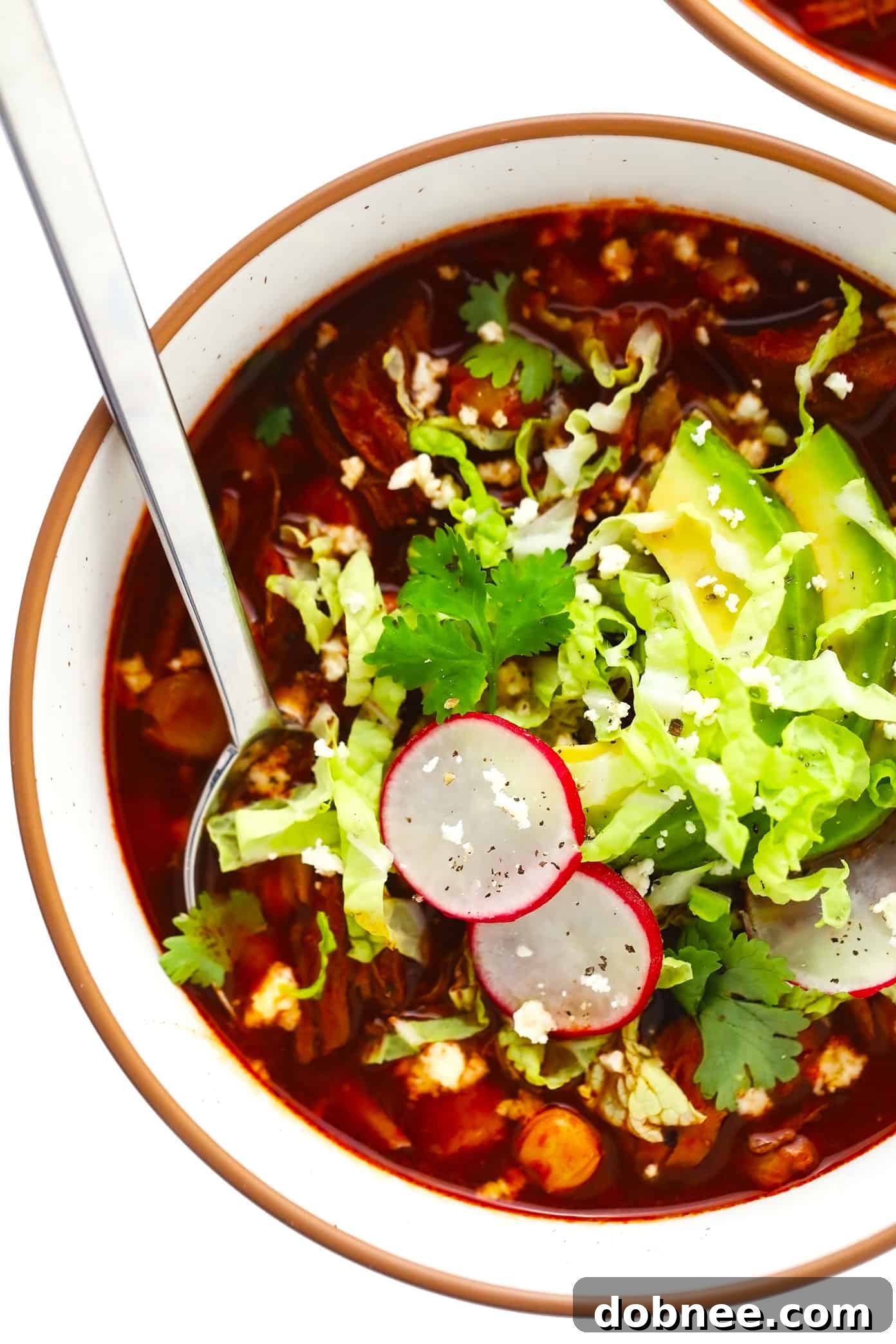
- Fresh Toppings: The Grand Finale of Texture and Flavor: No bowl of Pozole is truly complete without a generous array of fresh toppings. These additions provide crucial contrasting textures, brighten the rich flavors of the soup, and allow for personal customization. Customize each serving with your favorites for an enhanced dining experience:
- Chopped fresh cilantro: Offers a vibrant, herbaceous burst of freshness.
- Crumbled cotija cheese: Adds a salty, tangy, and slightly crumbly creaminess.
- Diced avocado: Provides rich, buttery smoothness that balances the spice.
- Fresh lime wedges: A generous squeeze of fresh lime juice brightens the entire dish, cutting through the richness.
- Shredded cabbage or lettuce: Offers a refreshing, crisp crunch and a cooling element.
- Mexican crema or sour cream: To mellow the heat and add a creamy, tangy touch.
- Crumbled tortilla chips or tostadas: For an extra layer of irresistible crunch and texture.
- Thinly-sliced radishes: Offers a peppery bite and a beautiful visual contrast.
How To Masterfully Prepare Pozole Rojo
Crafting a delectable Pozole Rojo is a rewarding experience, and this guide walks you through each essential step with clarity. Whether you prefer the traditional, patient stovetop method, the convenient, hands-off approach of a slow cooker, or the rapid, efficient cooking of a pressure cooker, we’ve got you covered. Detailed, specific instructions for each method are provided within the comprehensive recipe card below, but here’s an overarching look at the essential stages involved in bringing this incredible soup to life:
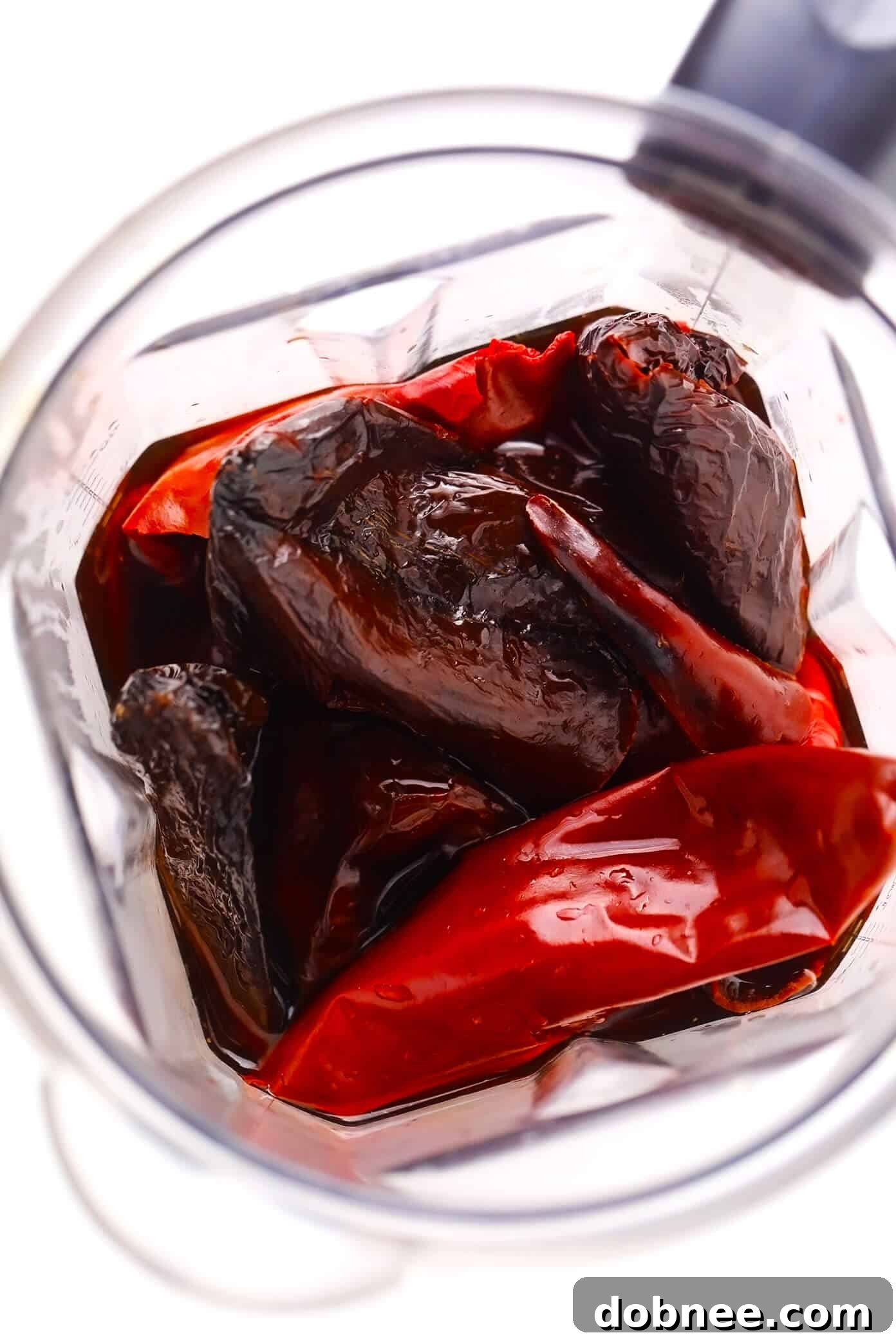
- Crafting the Signature Chile Sauce: This is arguably the most crucial step, as it forms the very heart and soul of your Pozole Rojo. Begin by cutting off and discarding the stems and seeds from your dried ancho, guajillo, and chiles de árbol. Then, briefly toast the chiles – you can do this over an open gas flame or by pressing them into a hot, dry stockpot over medium-high heat for a few seconds per side until they become fragrant. This crucial step awakens their deep, earthy flavors. Transfer all the toasted chiles to a heat-safe mixing bowl and cover them completely with boiling water. Allow the chiles to soak for about 30 minutes, or until they become pliable and soft. This rehydration is key to achieving a smooth sauce. Carefully use tongs to transfer the softened chiles to a blender or food processor, along with 2 cups of their soaking liquid. Purée for about 1 minute or until you achieve a perfectly smooth, vibrant sauce. Remember, when blending hot liquids, always vent the lid slightly to allow steam to escape safely. Set this rich chile sauce aside for later.
- Searing the Pork for Added Depth (Optional but Recommended): For an added layer of robust flavor and a beautiful browned crust, we highly recommend cutting your boneless pork shoulder into uniform 1.5-inch cubes and searing them briefly over high heat in a large stockpot. Rotate the pieces every few minutes until all sides are lightly browned, approximately 8-10 minutes. This caramelization contributes significantly to the final taste and complexity of the broth. Once seared, transfer the pork to a clean plate and set aside. While this step is optional, especially if you’re short on time or opting for the Crock-Pot/Instant Pot method, it truly elevates the dish.
- Building the Flavor Base with Aromatics (Stovetop Method Specific): If you are proceeding with the stovetop method, add the remaining 1 tablespoon of avocado oil to the same stockpot used for searing. Add the diced white onion and sauté for 4-5 minutes, stirring occasionally, until it becomes tender and translucent. Then, add the minced garlic and sauté for another 1-2 minutes until it becomes fragrant, stirring frequently to prevent burning. This foundational step releases their sweet and pungent aromas, preparing the pot for the main simmer.
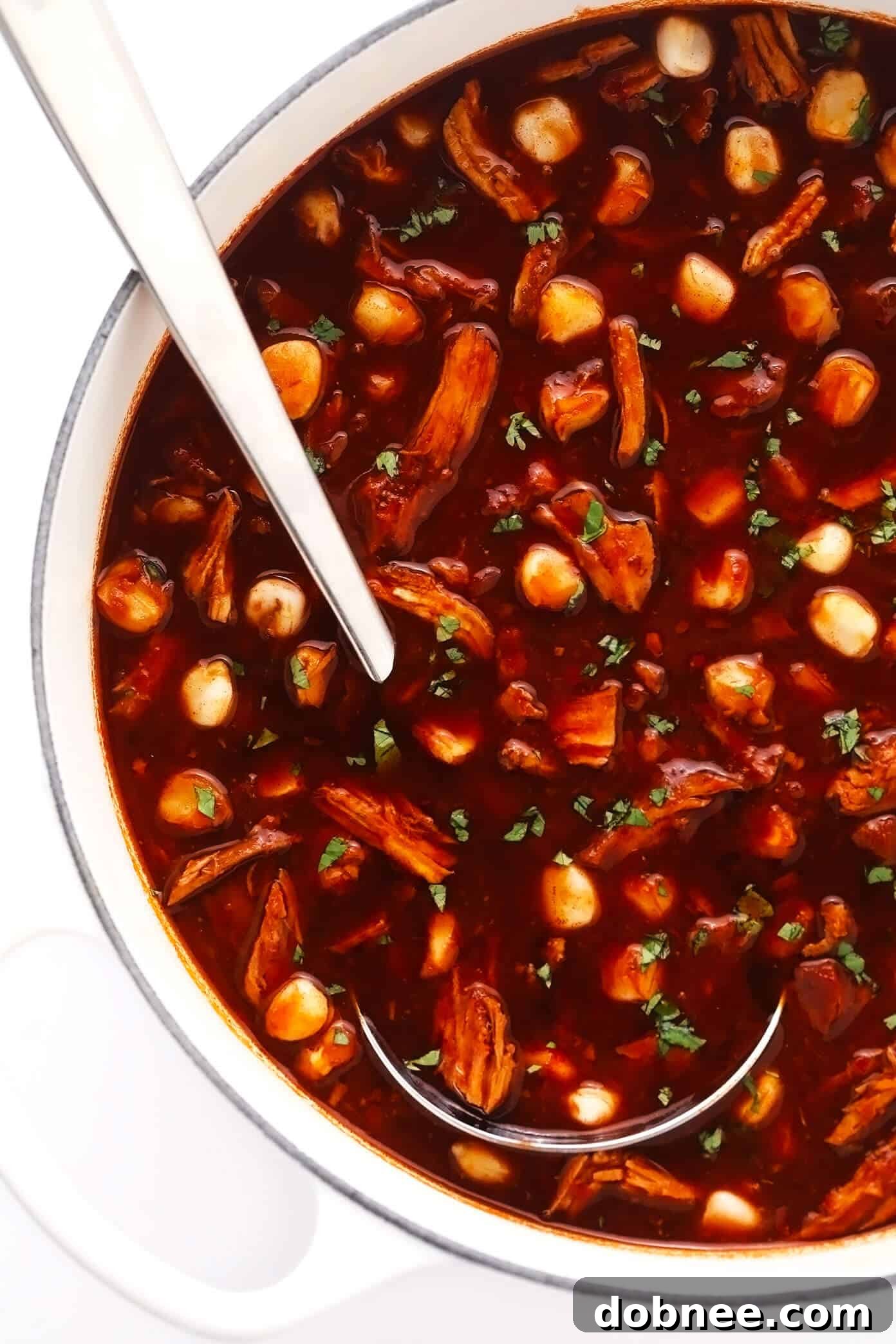
- The Slow Simmer: Uniting All Flavors: Now, all the key players come together for the magic of the simmer. Return the seared pork (or unseared, if skipping that step) to the stockpot. Add the 7-8 cups of chicken stock, the rinsed and drained hominy, bay leaves, ground cumin, dried oregano, and the freshly puréed chile sauce. Stir everything thoroughly to combine all the ingredients. Continue cooking until the soup reaches a gentle simmer. Once simmering, reduce the heat to medium-low to maintain a very low simmer, cover the pot, and allow it to cook for 1 1/2 to 2 hours, stirring occasionally. The soup is ready when the pork is incredibly tender and easily shreds with a fork.
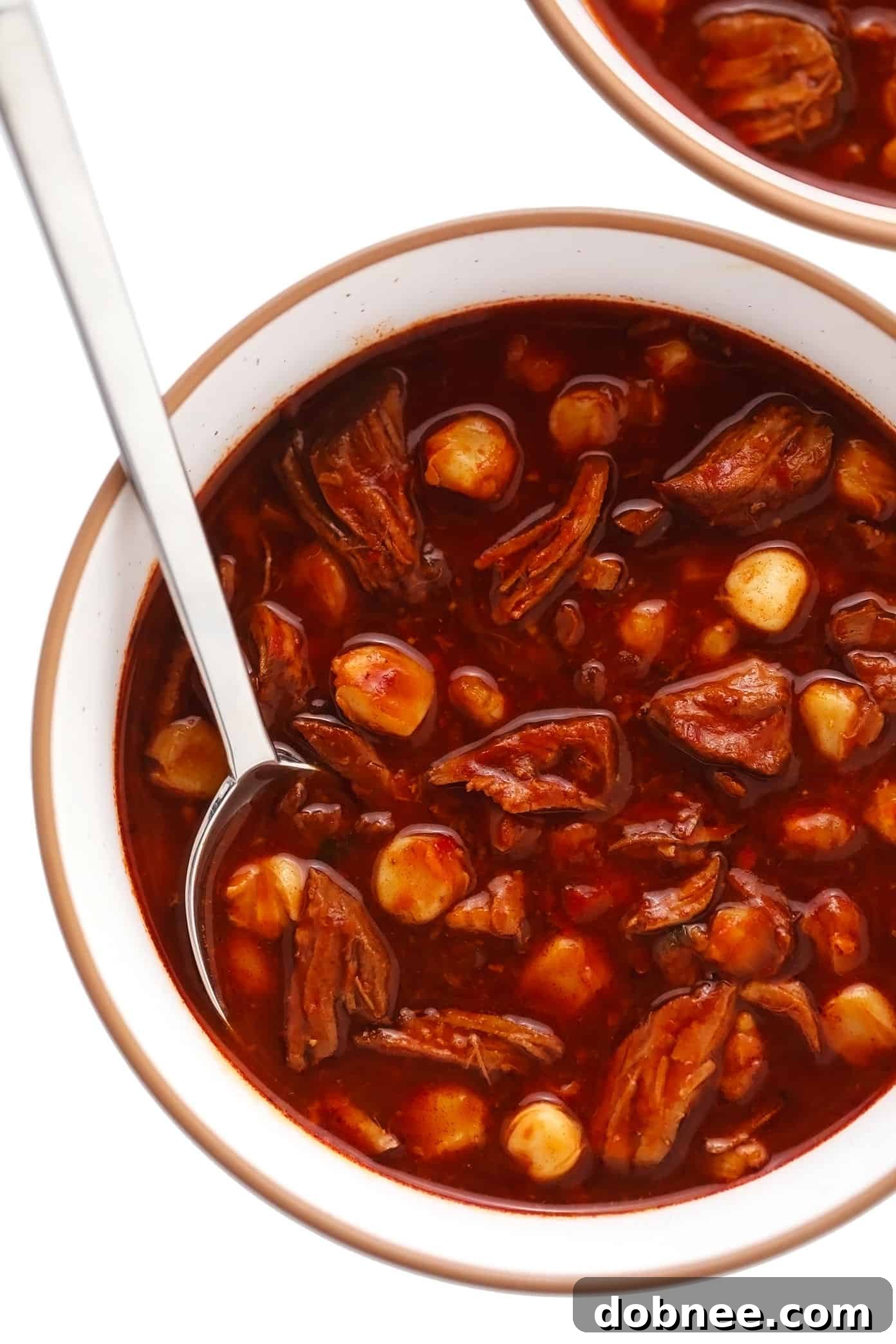
- Shredding the Tender Pork: Once the pork reaches peak tenderness, carefully use tongs to transfer it from the soup to a cutting board. Using two forks, effortlessly shred the succulent meat into bite-sized pieces. Return all the shredded pork to the simmering soup, stirring to ensure every morsel is infused with the Pozole’s delicious essence.
- Final Seasoning and Consistency Check: Taste the Pozole and adjust the seasoning as needed with salt and freshly ground black pepper. This is also the perfect moment to fine-tune the consistency of your broth. If it’s too thick for your preference, feel free to add in 1 more cup of chicken stock (or water) to thin it to perfection. Stir again to combine.
- Serving with Abundant Toppings: Ladle the piping hot Pozole into individual serving bowls. Now comes the most exciting part: let everyone customize their serving with an generous assortment of fresh toppings. From crisp shredded cabbage to creamy avocado, tangy lime wedges, and crumbly cotija cheese, these additions provide essential texture, refreshing contrast, and beautiful visual appeal, completing the authentic Pozole experience.
Creative Variations and Customizations for Your Pozole
While our traditional Pozole Rojo recipe is a masterpiece on its own, it’s also wonderfully adaptable and lends itself beautifully to personal customizations. Feel free to explore these variations to tailor the soup to your personal taste, spice preference, or dietary needs:
- Refining the Chile Sauce for a Silky Broth: For an ultra-smooth and slightly thinner broth, some traditional preparations involve straining the puréed chile sauce through a fine-mesh strainer or sieve before adding it to the Pozole. This extra step removes any small bits of chile skin or pulp, resulting in an incredibly velvety texture that many find appealing.
- Adjusting the Spice Level: The beauty of making your own chile sauce is complete control over the heat!
- For Extra Heat: If you adore a fiery kick, add a few more chiles de árbol to your initial blend for the chile sauce. Remember, these small but mighty chiles pack a powerful punch!
- For a Milder Flavor: To temper the heat, you can easily reduce the number of chiles de árbol or omit them entirely from your chile blend. You might also consider using slightly fewer guajillo chiles if you’re very sensitive to spice. It’s always easier to add more heat later (e.g., with a dash of hot sauce or a few whole chiles de árbol dropped into the simmering broth, then removed before serving) than to try and remove it!
- Incorporating Additional Vegetables: While not strictly traditional, adding extra vegetables can boost the nutritional value, fiber content, and overall complexity of your Pozole. Consider stirring in nutrient-rich options like sliced mushrooms, small cauliflower florets, diced potatoes, colorful bell peppers, or tender zucchini during the simmering stage for a delightful addition.
- Adding Beans for Extra Heartiness: For a more substantial and protein-packed meal, a can of rinsed and drained pinto beans (or even black beans) can be a wonderful addition. Stir them into the soup during the final hour of simmering to allow them to warm through and absorb the delicious broth flavors. This is a great way to stretch the meal and add another textural element.
- Chicken Pozole Alternative: If pork isn’t your preference, this recipe easily adapts to chicken pozole. Simply substitute boneless, skinless chicken breasts or thighs for the pork. The cooking time will be significantly shorter for chicken (usually 30-45 minutes on the stovetop after adding the chicken), so ensure you simmer until the chicken is cooked through and easily shreddable. Once cooked, remove, shred, and return to the soup as you would the pork.
Frequently Asked Questions About Pozole
Pozole is a dish rich in history, flavor, and cultural significance. Here are some common questions and answers to deepen your understanding and appreciation for this beloved Mexican classic:
- How do you pronounce pozole? In Spanish, Pozole is correctly pronounced as “poh-SOH-leh,” with a clear emphasis on the second syllable. Practice saying it aloud to impress your friends and family!
- Is it spelled pozole or posole? The traditional and technically correct Spanish spelling is with a “z” (Pozole). However, in certain regions of the United States, particularly in New Mexico and among some Tex-Mex communities, it is quite common to see it spelled with an “s” (Posole). Both spellings refer to the same hearty, corn-based stew.
- What does pozole mean? The word “Pozole” is believed to originate from the Nahuatl word, pozoll, which refers to “a variety of corn or maize.” This etymology perfectly highlights hominy’s central and indispensable role in the dish, as hominy itself is made from specially treated and dried corn kernels.
- When is Pozole traditionally served? In Mexico, Pozole is more than just a meal; it’s a dish of celebration, tradition, and community. It is frequently served during significant gatherings and holidays, making it a festive centerpiece. Common occasions include Mexican Independence Day (September 16th), Christmas, New Year’s Eve, and other family fiestas or special occasions. The regional variations in red, white, and green Pozole recipes are distinct across Mexico, with each region boasting its unique culinary signature and preferred ingredients. Beyond Mexico, New Mexican and Tex-Mex versions of Pozole have also evolved, adapting the classic recipe with local influences and ingredients, becoming cherished traditions in their own right within those communities.
- Can I make Pozole ahead of time? Absolutely! Pozole is one of those fantastic dishes that often tastes even better the next day, as the flavors have more time to meld, deepen, and truly develop. This makes it an excellent candidate for make-ahead meals, batch cooking, or preparing in advance for entertaining guests.
- How do I store and reheat leftover Pozole? To store any leftover Pozole, allow it to cool completely before transferring it to an airtight container. It can be kept in the refrigerator for up to 3-4 days. To reheat, gently warm it on the stovetop over medium-low heat, stirring occasionally, until it is heated through. You may find it beneficial to add a splash of extra chicken stock or water to loosen the broth if it has thickened considerably in the fridge. For longer storage, Pozole freezes beautifully! Allow it to cool completely, then transfer it to freezer-safe containers or heavy-duty freezer bags. It can be frozen for up to 3 months. Thaw overnight in the refrigerator before reheating gently on the stovetop.
Explore More Delicious Mexican-Inspired Soup Recipes
If you’ve fallen in love with the rich and comforting flavors of Mexican cuisine, especially its incredible array of soups, you’ll be delighted to explore some of our other favorites. These recipes are perfect for expanding your culinary repertoire and bringing more vibrant, heartwarming tastes to your table for any occasion:
- Sopa Azteca (Traditional Tortilla Soup): A smoky, rich broth generously filled with crispy tortilla strips, tender chicken, and fresh, zesty toppings.
- 5-Ingredient Easy White Chicken Chili: A quick, creamy, and incredibly flavorful chili that comes together with minimal effort.
- Sweet Potato Enchilada Soup: A wholesome and slightly sweet twist on classic enchilada flavors, perfect for a cozy evening.
- Mexican-Inspired Chicken Lentil Soup: A hearty, healthy, and satisfying soup, bursting with aromatic Latin spices and fresh ingredients.
Pozole Rojo Recipe
- Prep Time: 15 minutes
- Cook Time: 2 hours
- Total Time: 2 hours 15 minutes
- Yield: 8 to 10 servings 1x
Description
This traditional Mexican pozole recipe is made with tender pork and hominy and simmered in the most delicious chile broth, then piled high with your favorite fresh toppings. Crock-Pot and Instant Pot options included in the notes below.
Ingredients
Scale
- 2 ounces dried ancho chiles
- 2 ounces dried guajillo chiles
- 2 to 3 chiles de arbol (optional*)
- 2 tablespoons avocado oil, divided
- 2 pounds boneless pork shoulder*, cut into 1.5-inch cubes
- 1 medium white onion, peeled and diced
- 8 cloves garlic, peeled and minced
- 7 to 8 cups chicken stock
- 3 (15-ounce) cans hominy, rinsed and drained
- 2 bay leaves
- 1 tablespoon ground cumin
- 1 tablespoon dried oregano (preferably Mexican oregano)
- optional toppings: chopped fresh cilantro, crumbled cotija cheese, diced avocado, fresh lime wedges, shredded cabbage, Mexican crema, and/or thinly-sliced radishes
Instructions
- Make the chile sauce. Cut off and discard the stems of the ancho chiles, guajillo chiles and chiles de arbol. Then shake out and discard their seeds. Briefly toast the chiles over an open gas flame (or you can press them into a hot stockpot over medium-high heat) for a few seconds per side until fragrant. Transfer all of the chiles in a heat-safe mixing bowl and cover them completely with boiling water. Let the chiles soak for about 30 minutes or until softened. Carefully use tongs to transfer the chiles to a blender or food processor, along with 2 cups of their soaking liquid. Puree for 1 minute or until completely smooth. (As always when blending hot liquids, be sure to tent the cap on the blender lid slightly open so that any hot air can escape while blending.) Set the chile sauce aside for later.
- Brown the pork. While the chiles are soaking, heat 1 tablespoon oil in a large stockpot over medium-high heat. Add the pork and sauté, rotating the pieces every few minutes, until all sides are seared and lightly browned, about 8-10 minutes. Transfer the pork to a clean plate and set aside.
- Sauté the veggies. Add the remaining 1 tablespoon oil to the same stockpot. Add the diced onion, and sauté for 4-5 minutes until softened, stirring occasionally. Add the garlic and sauté for 1-2 minutes more until fragrant, stirring frequently.
- Combine and simmer. Add in the 7 cups of the chicken stock, hominy, bay leaves, cumin, oregano, cooked pork, and the puréed chile sauce and stir to combine. Continue cooking until the soup reaches a simmer, then reduce heat to medium-low to maintain a very low simmer, cover, and cook for 1 1/2 to 2 hours, stirring occasionally, until the pork is tender and shreds easily.
- Shred the pork. Once the pork is tender, use tongs to transfer it to a cutting board and shred it into bite-sized pieces using two forks. Return the pork to the soup and stir to combine.
- Season. If the broth is too thick for your liking, feel free to add in 1 more cup of chicken stock to thin it out. Stir, taste, and season the soup with salt and pepper as needed.
- Serve. Serve hot, garnished with lots of your favorite toppings, and enjoy!
Equipment
Dried Ancho Chiles
Buy Now →
Dried Guajillo Chiles
Buy Now →
Dried Chiles de Árbol
Buy Now →
Notes
Chiles de árbol for Spice Control: These small, bright red chiles are significantly spicier than the guajillo and ancho chiles. If you prefer a milder soup, consider reducing their quantity or omitting them entirely from the chile mixture for your initial batch. You can always add a few whole chiles de árbol directly to the simmering broth later if you decide you’d like to increase the heat. Just remember to discard them before serving to avoid an overwhelming spice level.
Crock-Pot (Slow Cooker) Pozole Instructions: To adapt this hearty recipe for a slow cooker, first follow Step 1 (Make the chile sauce) to meticulously prepare your flavorful chili mixture in a blender or food processor. Once the vibrant chile paste is ready, add it along with all the remaining ingredients (excluding the fresh toppings) into a large slow cooker. Cover the slow cooker with its lid and set it to cook for either 6-8 hours on the low setting, or 4-5 hours on the high setting. Cook until the pork becomes exceptionally tender and can be easily shredded with a fork. After the pork is tender, proceed with Steps 5-7 from the main instructions to shred the pork, adjust the seasoning of the soup, and serve generously with your favorite fresh toppings.
Instant Pot (Pressure Cooker) Pozole Instructions: For a quicker Pozole experience using a pressure cooker, begin by completing Step 1 (Make the chile sauce) as described above to prepare the essential chili mixture. Next, transfer the prepared chili paste and all other ingredients (again, excluding fresh toppings) into the inner pot of your Instant Pot. Secure the lid in place, ensure the valve is set to the sealing position, and pressure cook on high for 30 minutes. Once cooking is complete, perform a quick release of the pressure according to your Instant Pot’s instructions. Then, follow Steps 5-7 from the main instructions to shred the pork, taste and adjust seasoning, and serve your delicious, quickly prepared Pozole.
Recipe Source: This recipe has been thoughtfully adapted and refined from trusted culinary sources, including The Food Network and Simply Recipes, ensuring an authentic and delicious Pozole Rojo experience for your kitchen.
This post contains affiliate links, which means we may earn a small commission if you make a purchase through these links, at no extra cost to you. We only recommend products we trust and believe will add value to your cooking.