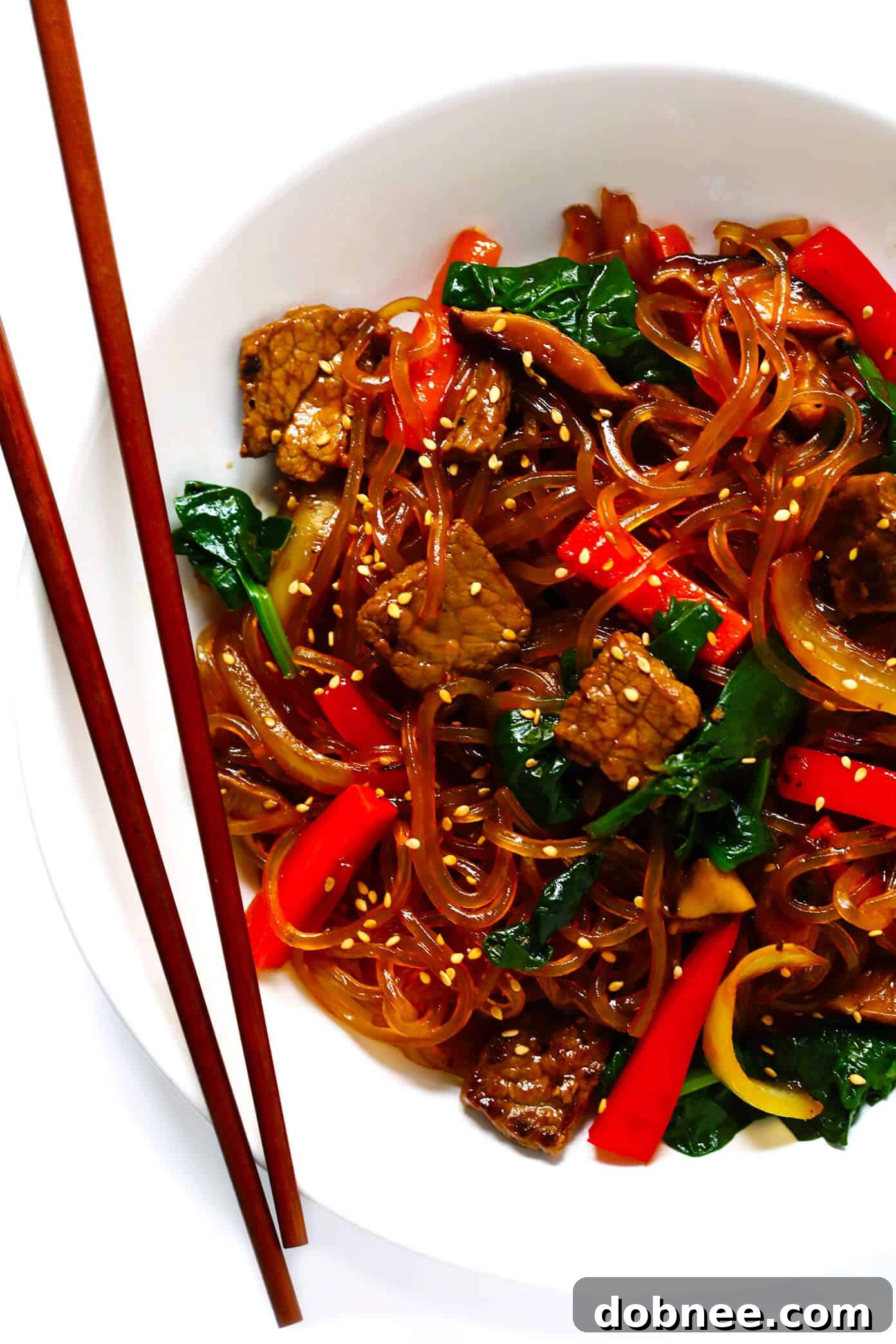
Japchae: Your Ultimate Guide to Korean Glass Noodle Stir-Fry
Discover the magic of Japchae, a vibrant and flavorful Korean glass noodle stir-fry. This recipe is incredibly easy to make in just about 30 minutes, highly customizable with your favorite veggies and protein, and promises an unforgettable taste experience!
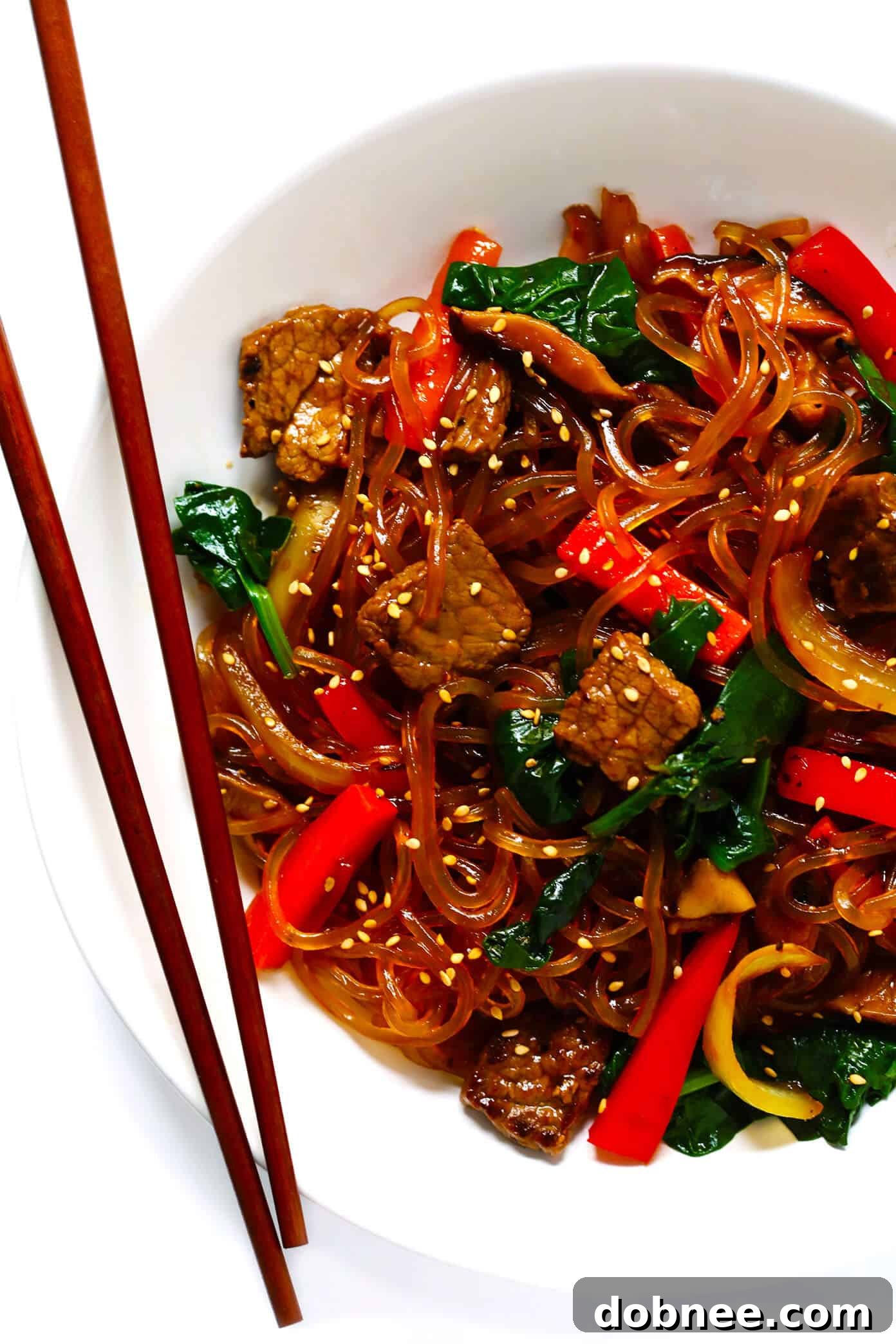
Welcome to the delightful world of Japchae, the Korean stir-fry noodles that have become an absolute favorite in our home! If you’re looking for a dish that’s quick, healthy, and bursting with flavor, you’ve come to the right place. My husband, Barclay, has perfected this recipe over the years, making it a regular on our dinner table, much to our joy (and the delight of our friends!).
I first introduced Barclay to Japchae a few years ago, and he was instantly captivated by the unique, chewy texture of the sweet potato noodles—known as dangmyeon. These aren’t just any noodles; they’re made from sweet potato starch, giving them a delightful bite and a slightly sweet undertone that’s truly irresistible. Since then, ensuring our pantry is always stocked with dangmyeon has become a top priority, preventing any potential “noodle crises” when those Japchae cravings strike. His dedication has transformed him into an expert Japchae chef, preparing this fantastic dish dozens of times for us and countless friends.
As a food blogger, people often ask what I truly eat behind the scenes. And I can honestly say, a significant portion of our meals these past few years has been Japchae! It’s a dish we adore for many reasons. Its incredible versatility means we can easily customize it with whatever leftover vegetables and protein we have on hand. While I initially photographed this recipe using steak, we frequently enjoy it with succulent shrimp or protein-packed tofu. Beyond its adaptability, Japchae is incredibly flavorful, remarkably easy to prepare in about 30 minutes, and offers a wonderful blend of savory and subtly sweet notes. For me, this recipe also holds a special place, evoking warm memories of dear friends in Korea who first introduced me to this culinary gem during a visit years ago.
So, if you’ve yet to experience the wonders of Japchae, consider this your invitation to dive in! We’re bringing this beloved recipe back to the forefront today, hoping to inspire your next meal planning adventure. Trust us, if your household is anything like ours, you’ll find yourself falling in love with this Korean classic!
What is Japchae? A Korean Culinary Delight
Japchae (잡채) is a classic Korean dish celebrated for its colorful presentation and harmonious blend of flavors and textures. The name itself, “japchae,” means “mixed vegetables,” although it’s the distinctive sweet potato starch noodles that truly define the dish today. Traditionally served at special occasions, holidays, and celebrations, Japchae has evolved into a popular everyday meal due to its appealing taste and relative ease of preparation.
At its heart, Japchae consists of bouncy glass noodles (dangmyeon) stir-fried with a variety of vibrant vegetables and often a choice of protein, all tossed in a savory-sweet soy sauce and sesame oil dressing. The beauty of Japchae lies in its balance—the earthy sweetness of the noodles, the crispness of the vegetables, the richness of the protein, and the aromatic depth of the sauce create a symphony for your taste buds. It’s a fantastic dish for potlucks, family dinners, or a satisfying weeknight meal, offering both nutritional value and incredible satisfaction.
Essential Japchae Ingredients: Building Flavor and Texture
Crafting authentic and delicious Korean Japchae relies on a few key ingredients that contribute to its distinctive taste and texture. Here’s a detailed look at what you’ll need:
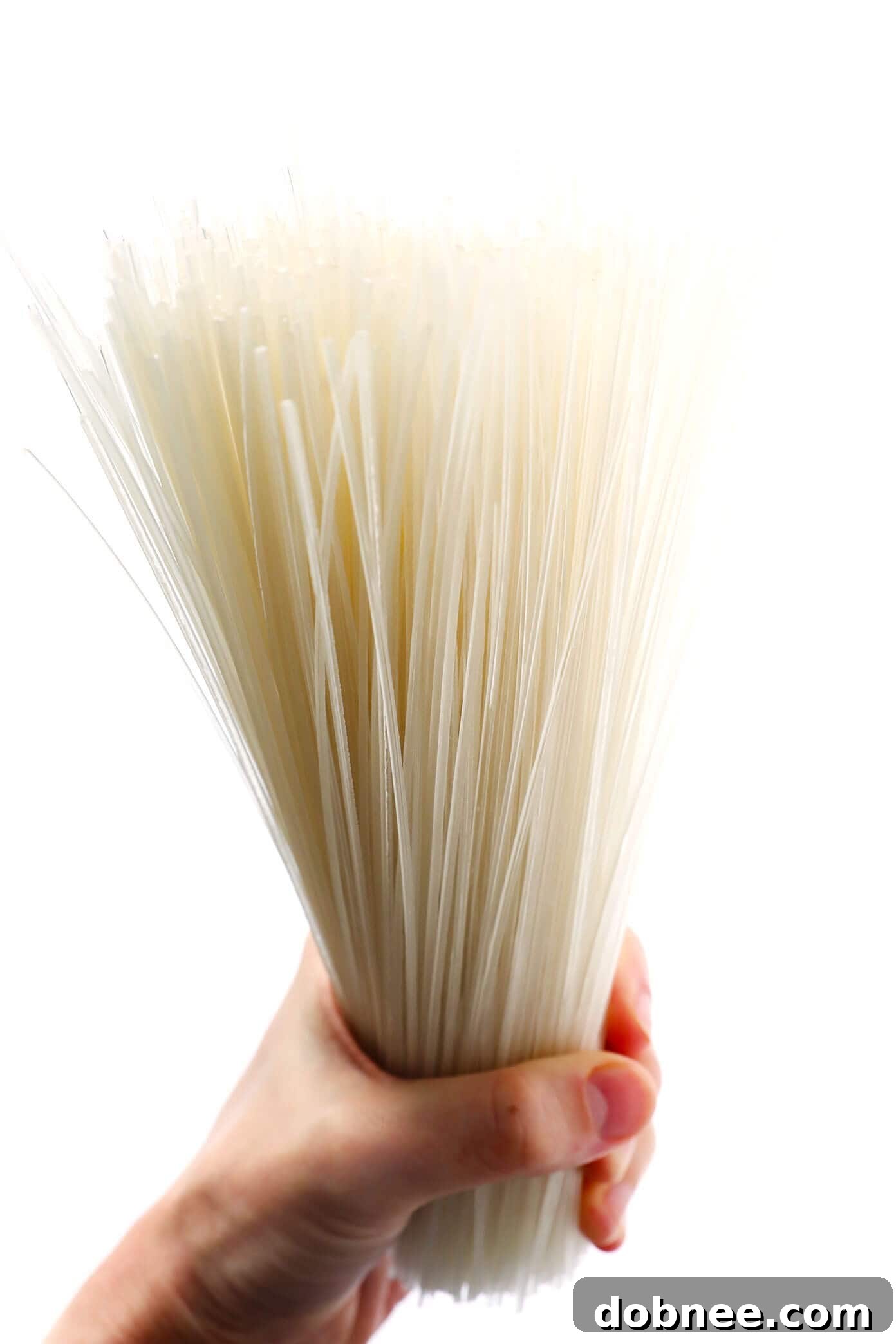
- Dangmyeon Noodles (Sweet Potato Starch Noodles): These are the star of the show. Also known as “glass noodles,” dangmyeon are made primarily from sweet potato starch and water. Their defining characteristics are their translucent appearance when cooked, slightly sweet flavor, and incredibly satisfying chewy, springy texture. They are naturally gluten-free, making Japchae an excellent option for those with dietary restrictions. You can typically find dangmyeon at your local Asian market or conveniently online. Be aware that most brands make these noodles quite long, so having kitchen scissors handy to snip them after cooking and draining can make for easier eating.
- Your Choice of Protein: The beauty of Japchae lies in its adaptability. While traditional recipes often feature thinly sliced beef (like sirloin or flank steak), you have the freedom to select your favorite protein. Chicken, shrimp, or tofu are all fantastic choices that absorb the sauce beautifully. For a hearty vegetarian or vegan option, simply increase the amount of mushrooms or other vegetables.
- Vibrant Vegetables: A colorful medley of vegetables not only adds visual appeal but also a range of textures and nutrients. Our preferred mix includes thinly sliced onion, earthy shiitake mushrooms, crisp red bell pepper, sweet carrots, fragrant garlic, and tender baby spinach. However, feel free to get creative! Many stir-fry friendly vegetables like broccoli, asparagus, snap peas, green beans, zucchini, or bok choy would also be delicious additions.
- The Signature Stir-Fry Sauce: This simple yet powerful sauce brings all the ingredients together with a perfect balance of savory, sweet, and nutty notes. It’s typically made from low-sodium soy sauce (or tamari for a gluten-free version), a touch of maple syrup (or sugar/honey), and aromatic toasted sesame oil. The sesame oil, in particular, is crucial for that authentic Korean flavor.
- Flavorful Toppings: A sprinkle of toasted sesame seeds is a traditional and essential garnish, adding both crunch and a nutty aroma. For an extra layer of freshness and mild onion flavor, we love adding thinly sliced green onions right before serving.
How To Make Japchae: A Simple Step-by-Step Guide
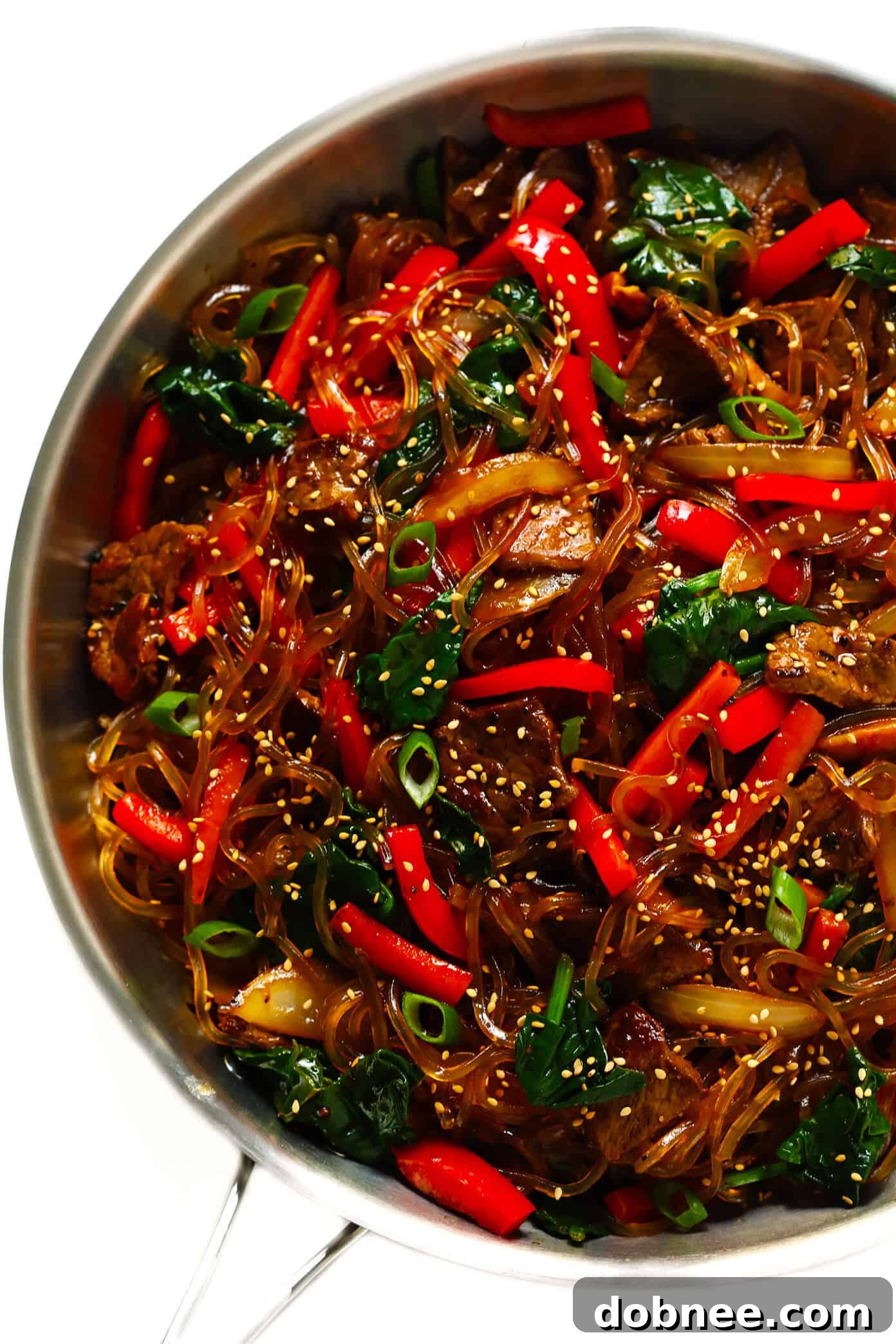
Making this Korean Japchae stir-fry is straightforward and incredibly rewarding. Follow these steps for a perfect dish every time:
- Prepare the Noodles: Begin by cooking the sweet potato starch noodles (dangmyeon) according to their package directions in a large pot of boiling water. It’s crucial to cook them until they are al dente—chewy but not mushy—as overcooking can make them too soft for stir-frying. Once cooked, immediately transfer the noodles to a strainer and rinse them thoroughly with cold water. This stops the cooking process and prevents them from sticking together. Drain any excess water completely, then drizzle the cooled noodles with a touch of sesame oil and toss gently to ensure they are lightly coated. Set them aside while you prepare the other components.
- Marinate the Protein: If using steak (or another meat-based protein), thinly slice it against the grain into bite-sized pieces. In a large bowl, combine the sliced steak with 1 tablespoon of soy sauce and a generous pinch of both fine sea salt and freshly cracked black pepper. Toss well to ensure the meat is evenly coated. Let it marinate for at least 5 minutes to absorb the flavors, or up to 30 minutes if time allows.
- Whisk the Sauce: In a separate small bowl, whisk together all the sauce ingredients: low-sodium soy sauce, maple syrup, and toasted sesame oil. Mix until thoroughly combined. This ensures an even distribution of flavors when you add it to the stir-fry later.
- Stir-Fry the Protein: Heat 1 tablespoon of olive oil (or another mild-flavored oil) in a large sauté pan or wok over high heat. Once shimmering, add the marinated steak and stir-fry for 4-5 minutes, stirring occasionally, until it is fully cooked through and lightly browned. Transfer the cooked steak to a clean plate and set aside.
- Stir-Fry the Vegetables: Reduce the heat to medium-high. Add the remaining 1 tablespoon of oil to the pan. Add the thinly sliced onion and sauté for about 3 minutes, stirring occasionally, until it begins to soften and become translucent. Next, add the shiitake mushrooms, red bell pepper, carrot, and minced garlic cloves. Continue to sauté for another 4-5 minutes, stirring frequently, until the vegetables reach your desired level of tenderness. We prefer them with a slight crispness for texture. Finally, add the fresh baby spinach and cook for 2 more minutes, using tongs to toss the mixture frequently until the spinach has wilted.
- Combine Everything: Remove the pan from the heat. Return the cooked steak to the pan with the vegetables. Add the prepared sweet potato noodles and pour the whisked sauce over the entire mixture. Using tongs, gently toss all the ingredients together until the noodles and vegetables are evenly coated with the delicious sauce.
- Taste and Season: Give the Japchae a taste test. This is your chance to adjust the flavors. If you prefer it saltier, add a bit more soy sauce. A dash more black pepper can also enhance the overall taste.
- Serve Warm: Transfer the finished Japchae to serving bowls. Garnish generously with toasted sesame seeds and thinly sliced green onions for a final flourish of flavor and visual appeal. Serve immediately and enjoy!
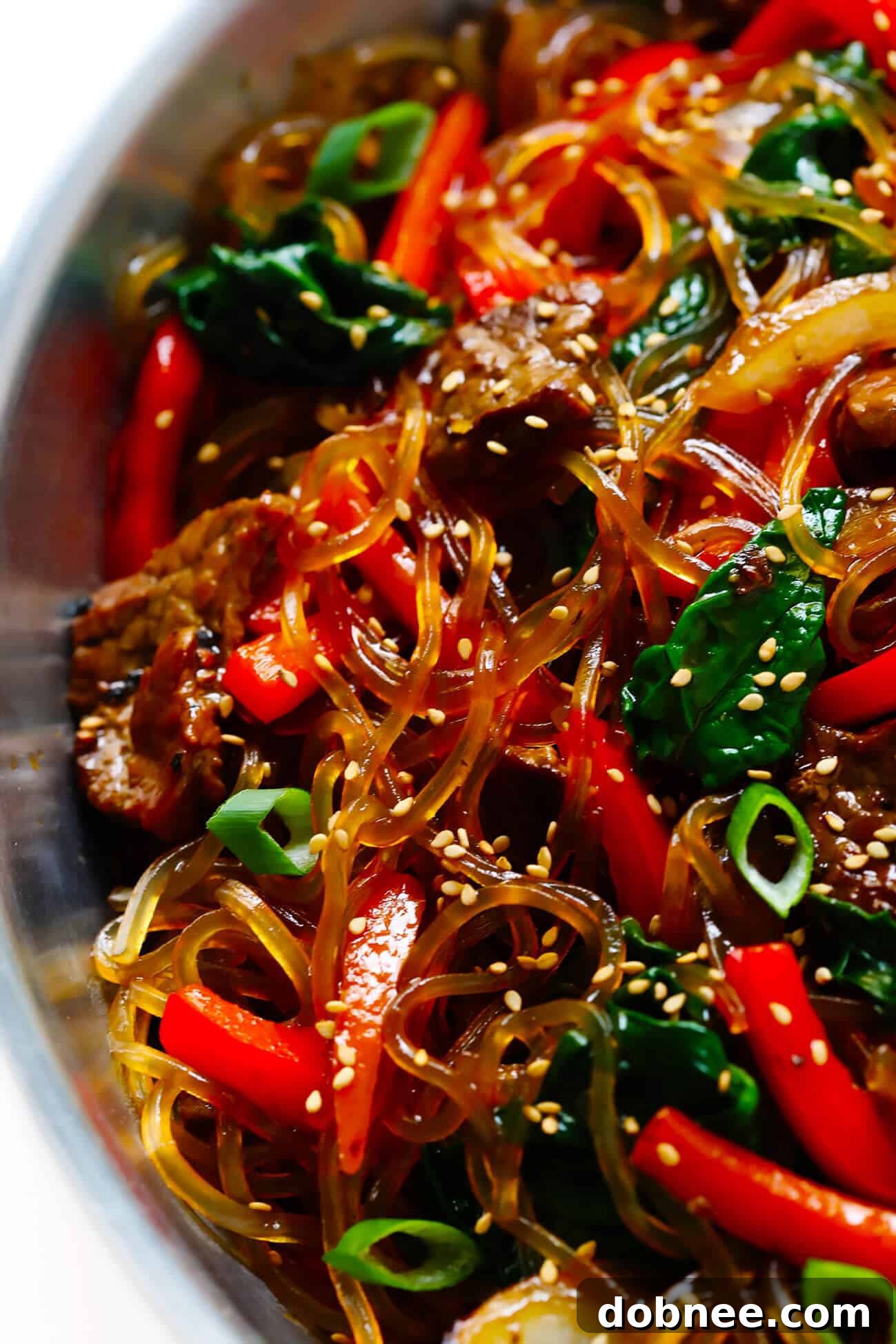
Customizing Your Japchae: Delicious Variations to Explore
One of the best aspects of Japchae is how wonderfully adaptable it is to different tastes and dietary needs. Here are several ways you can customize this recipe:
- Make it Gluten-Free: The sweet potato noodles are naturally gluten-free, which is a great start! To ensure your entire dish is gluten-free, simply substitute regular soy sauce with a high-quality gluten-free tamari. Always double-check that any other packaged ingredients you use (like sauces or broths) are certified gluten-free.
- Embrace Vegetarian or Vegan Options: For a plant-based version, simply omit the meat or seafood protein. You can easily substitute it with firm or extra-firm tofu, pressed and cubed, then stir-fried until golden. Alternatively, boost the vegetable content by adding extra mushrooms (like cremini or oyster mushrooms) or other plant-based proteins such as edamame or chickpeas.
- Add a Spicy Kick: If you love a bit of heat, Japchae is fantastic with a spicy twist. Incorporate thinly sliced Thai bird chilies during the stir-frying process, or drizzle sriracha over the finished dish. A pinch of crushed red chili flakes added to the sauce or as a garnish also works wonderfully to elevate the spice level.
- Experiment with Different Proteins: While beef is classic, this stir-fry shines with other protein choices. Try thinly sliced chicken breast or thigh, tender pork tenderloin, plump shrimp, or even scallops. Each protein will absorb the savory sauce beautifully and add its own unique texture and flavor profile to the dish.
- Mix and Match Your Veggies: Don’t limit yourself to the suggested vegetables! Japchae is an excellent way to use up whatever fresh produce you have on hand. Consider adding crisp broccoli florets, tender asparagus spears, crunchy snap peas, vibrant green beans, delicate zucchini ribbons, or nutrient-rich bok choy. The more variety, the more colorful and nutritious your Japchae will be.
- Explore Alternative Noodles: While dangmyeon noodles are traditional, if you can’t find them or prefer a different type, several alternatives work well. Udon noodles offer a thick, chewy bite; egg noodles provide a classic stir-fry texture; soba noodles add an earthy, nutty flavor; and rice noodles can also be a good gluten-free option. Adjust cooking times according to package directions.
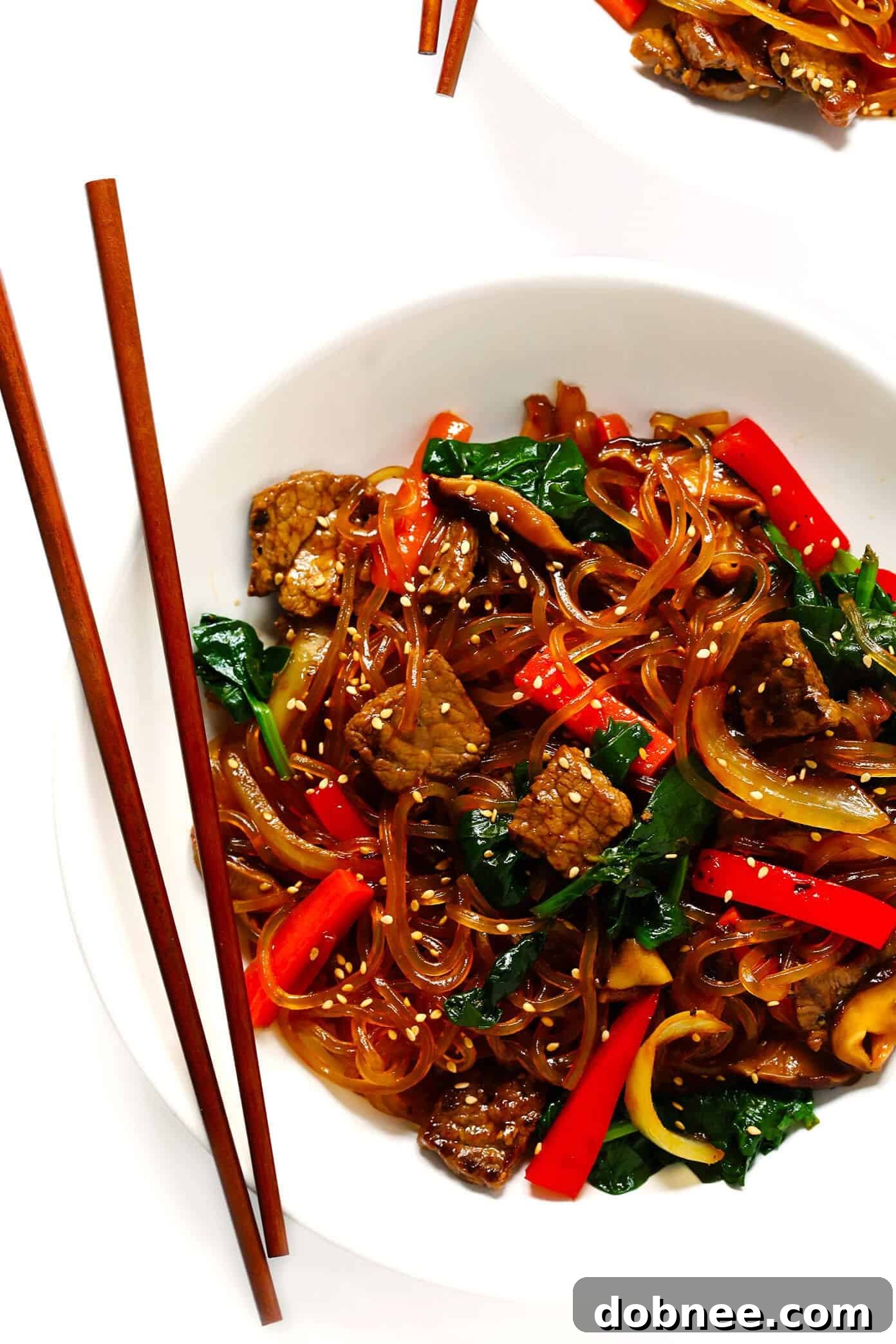
Tips for the Perfect Japchae Every Time
Achieving a truly outstanding Japchae is simple with a few helpful tips:
- Prep Everything Ahead: Stir-frying happens quickly, so having all your ingredients prepped and ready (mise en place) is key. Slice vegetables, mince garlic, marinate protein, and whisk the sauce before you even turn on the stove. This ensures a smooth and stress-free cooking process.
- Don’t Overcook the Noodles: Dangmyeon noodles can become mushy if overcooked. Keep a close eye on them and cook them just until al dente. The cold water rinse immediately after cooking is crucial to maintain their chewy texture.
- Individual Stir-Frying: While tempting to throw everything in the pan at once, stir-frying ingredients separately ensures each component cooks perfectly and maintains its distinct texture and flavor. Cook protein, then vegetables, then combine with noodles and sauce at the end.
- High Heat for Stir-Frying: Use high heat when stir-frying the protein and vegetables to achieve a delicious sear and keep them from becoming watery. Ensure your pan or wok is hot before adding ingredients.
- Taste and Adjust: Always taste your Japchae before serving. The balance of sweet and savory can be adjusted to your preference by adding a little more soy sauce, maple syrup, or even a dash of salt and pepper.
- Serving Suggestions: Japchae is often served as a side dish (banchan) in Korean cuisine, but it’s substantial enough to be a main course. Pair it with a side of steamed rice, kimchi, or other Korean small dishes for a complete meal. It’s also delicious served cold as a noodle salad.
- Storage and Reheating: Leftover Japchae stores beautifully in an airtight container in the refrigerator for up to 3-4 days. To reheat, gently warm it in a microwave or a pan over medium heat, adding a splash of water or a tiny bit of sesame oil if the noodles seem a bit dry.
More Favorite Stir-Fry Recipes to Inspire You
If you’ve enjoyed the vibrant flavors and ease of this Japchae recipe, you’re in for a treat! Stir-fries are a fantastic way to create quick, nutritious, and incredibly flavorful meals, perfect for busy weeknights or relaxed weekends. The beauty of stir-frying lies in its versatility, allowing you to easily swap out proteins and vegetables based on what you have on hand or what seasonal ingredients are fresh. Explore these other beloved stir-fry recipes, and feel free to customize them with your preferred ingredients:
- Thai Basil Noodle Stir-Fry: Aromatic basil, tender beef, and savory noodles create a truly addictive dish.
- Kung Pao Noodle Stir-Fry: Experience the delightful kick of this classic Chinese-inspired stir-fry, reimagined with noodles.
- Sesame Beef & Cabbage Stir-Fry: A healthy and hearty stir-fry featuring crisp cabbage and rich sesame beef.
- Sizzlin’ Spicy Szechuan Stir-Fry: For those who love a bold and fiery flavor, this Szechuan-style stir-fry delivers.
- Cashew Tofu Stir-Fry: A wonderful plant-based option, combining crispy tofu and crunchy cashews in a savory sauce.
Each of these recipes offers a unique flavor profile and can be easily adapted to suit your taste preferences and pantry staples. Happy cooking!
—
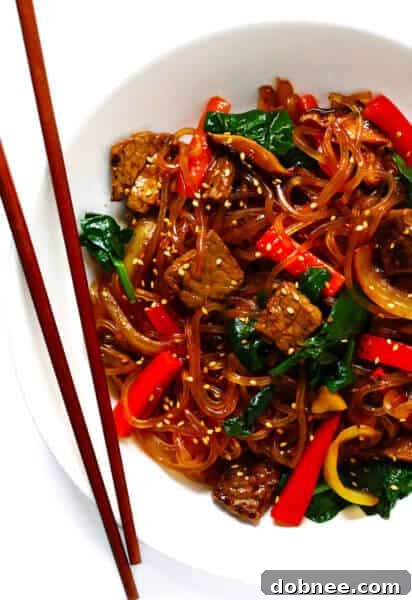
Japchae (Quick Korean Noodle Stir-Fry) Recipe
Recipe Summary:
- Prep Time: 15 minutes
- Cook Time: 15 minutes
- Total Time: 30 minutes
- Yield: 4-6 servings
This Japchae recipe is designed for ease and flavor, making it perfect for a quick and satisfying meal. It’s incredibly versatile, allowing you to incorporate your preferred vegetables and protein (such as beef, chicken, shrimp, or tofu). The result is a truly delicious and vibrant Korean noodle stir-fry!
Ingredients
Stir-Fry Ingredients:
- 8 ounces dangmyeon (sweet potato starch noodles)*
- 2 tablespoons olive oil (or any mild-flavored oil), divided
- 1 small white onion, thinly sliced
- 6 shiitake mushrooms, thinly sliced
- 1 red bell pepper, cored and thinly sliced
- 1 carrot, peeled and thinly sliced
- 3 garlic cloves, minced or pressed
- 3 handfuls fresh baby spinach
- Toppings: toasted sesame seeds, thinly-sliced green onions
Sauce Ingredients:
- 1/4 cup low-sodium soy sauce* (or more, to taste)
- 2 tablespoons maple syrup
- 1 tablespoon toasted sesame oil
Steak Ingredients:
- 1 pound sirloin or flank steak, thinly-sliced against the grain into bite-sized pieces
- 1 tablespoon soy sauce
- Fine sea salt and freshly-cracked black pepper
Instructions
- Cook the noodles: Cook the sweet potato noodles al dente, according to package directions, in a large stockpot of boiling water. (Be careful not to overcook the noodles, or they will become mushy in the stir-fry.) Transfer the noodles to a strainer, and rinse with cold water until chilled. Strain out any extra water, drizzle the noodles with a touch of sesame oil, toss until the noodles are evenly coated, and set aside.
- Marinate the steak: Combine the steak, soy sauce, and a generous pinch of salt and black pepper in a large bowl, and toss to combine. Let the steak marinate for 5 minutes (or up to 30 minutes).
- Prep the sauce: Whisk all of the sauce ingredients together in a small bowl until combined.
- Stir-fry the steak: Heat 1 tablespoon oil in a large sauté pan over high heat. Add the steak and sauté for 4-5 minutes, stirring occasionally, until cooked through. Transfer steak to a separate clean plate, and set aside.
- Stir-fry the veggies: Reduce heat to medium-high. Add the remaining 1 tablespoon oil and the onion. Sauté for 3 minutes, stirring occasionally. Then add in the mushrooms, bell pepper, carrot and garlic cloves and sauté for 4-5 more minutes, stirring occasionally, until the veggies reach your desired level of softness. (We like ours to still be a touch crispy.) Stir in the spinach, and cook for 2 more minutes, using tongs to toss the veggie mixture frequently, until the spinach has wilted.
- Combine everything: Remove pan from heat. Add the cooked noodles, steak and sauce to the veggie mixture, and toss to combine.
- Taste and season: Give the noodles a taste, and season with extra soy sauce and/or black pepper if needed.
- Serve warm: Garnished with lots of toasted sesame seeds and green onions.
Recommended Equipment
-
Large Sauté Pan
Buy Now →
-
Sweet Potato Noodles
Buy Now →
-
Toasted Sesame Oil
Buy Now →
Notes
- Noodle substitution: If dangmyeon (sweet potato noodles) are difficult to find, feel free to use rice noodles, udon, egg noodles, or soba noodles as a substitute. Adjust cooking times according to the package directions for your chosen noodle type.
- Gluten-free option: To ensure this recipe is entirely gluten-free, swap out regular soy sauce for tamari. Always check the labels of all other ingredients to confirm they are certified gluten-free.
Share Your Creation!
We absolutely love seeing your culinary adventures! If you make this Japchae recipe, please share it with us. Tag @gimmesomeoven on Instagram and use the hashtag #gimmesomeoven so we can see your delicious results!