How to Carve a Turkey Like a Pro: The Ultimate Step-by-Step Guide

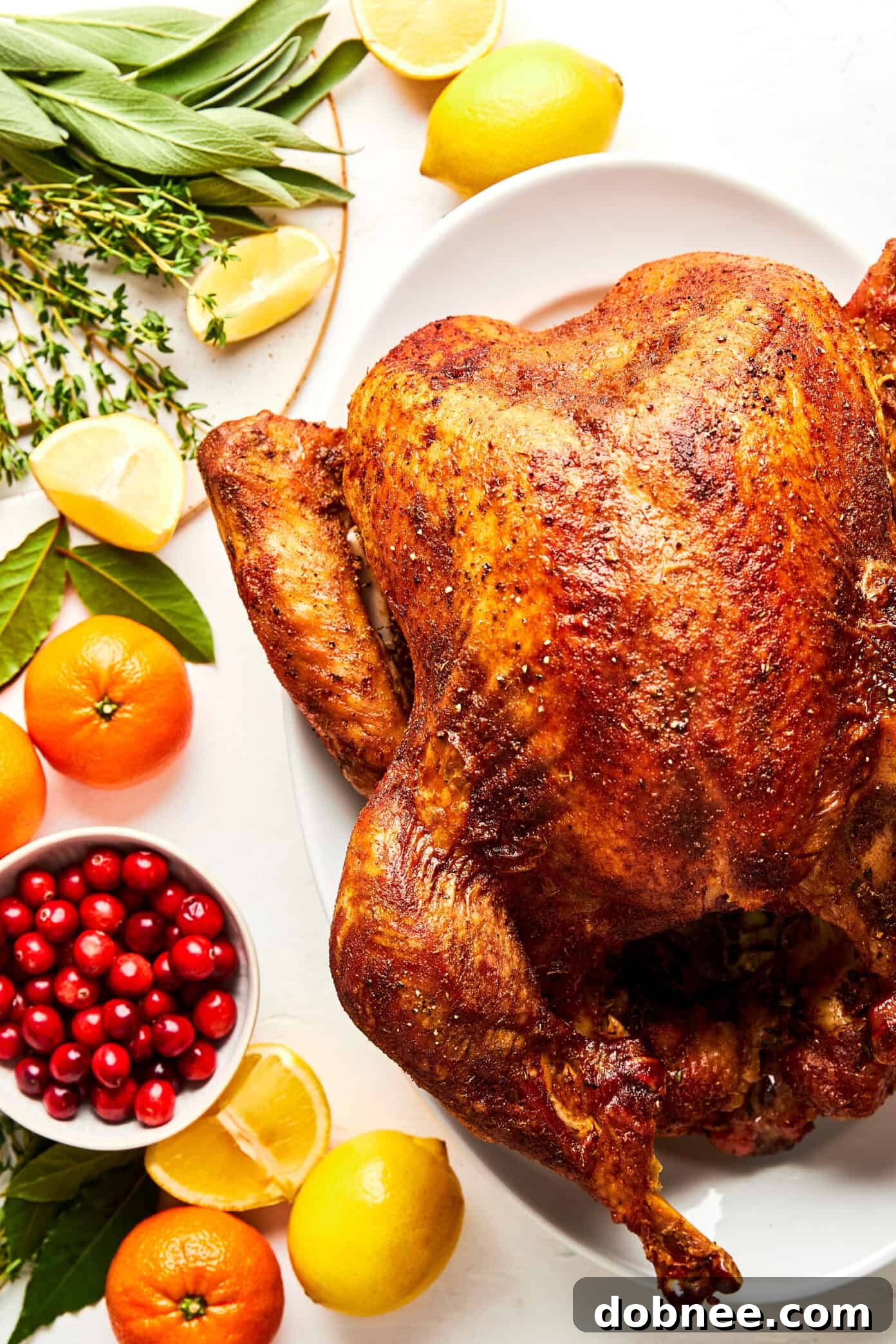
The moment of truth arrives after hours of roasting: a perfectly golden, aromatic turkey emerges from the oven, promising a magnificent holiday feast. Yet, for many, the joy quickly turns to apprehension when faced with the task of carving. If you’ve ever found yourself thinking, “Now what?” as you gaze at that beautifully roasted bird, rest assured, you’re not alone. Carving a turkey can seem daunting, but it’s actually a straightforward process once you understand the basic techniques and natural structure of the bird.
This comprehensive guide will demystify turkey carving, transforming you into a confident carver ready to tackle any holiday meal. We’ll walk you through each step, from separating the dark meat to expertly slicing the breast, ensuring every piece is tender, juicy, and beautifully presented. By following the natural joints, slicing against the grain, and utilizing a few professional tips, you’ll soon be serving up perfectly carved turkey with ease and impressing all your guests. So, grab your sharpest knife – a small but crucial first step – and let’s turn that delicious roast into a culinary masterpiece!
Why Master Turkey Carving?
Beyond simply getting meat onto the plate, mastering turkey carving offers several advantages. A well-carved turkey ensures uniform slices, making it easier for guests to serve themselves and creating a more appealing platter. It also helps preserve the juiciness of the meat and maximizes the yield from your bird, ensuring no delicious morsel goes to waste. Presenting a neatly carved turkey elevates the entire dining experience, turning a simple meal into a memorable event.
Essential Tools for the Perfect Carve
Having the right tools makes all the difference. While you don’t need a professional chef’s arsenal, a few key items will simplify the carving process significantly:
- A Sharp Carving Knife: This is non-negotiable. A long, thin, sharp carving knife (or a high-quality chef’s knife) is crucial for clean cuts. Dull knives can tear the meat and skin, making the job harder and less appealing.
- Carving Fork: A sturdy carving fork with two long prongs helps stabilize the turkey on the cutting board, preventing it from slipping as you cut.
- Sturdy Cutting Board: Choose a large, stable cutting board, preferably one with a groove around the edge to catch precious turkey juices. This prevents a messy countertop and allows you to collect those flavorful drippings for gravy.
- Kitchen Towels: Keep a few clean kitchen towels handy for wiping your hands and the knife.
Before You Begin: The Crucial Resting Period
One of the most important steps in ensuring a juicy, tender turkey is letting it rest after roasting. This isn’t just a suggestion; it’s a vital part of the cooking process. As the turkey roasts, its juices are driven towards the center. Resting allows these juices to redistribute throughout the meat, resulting in a more flavorful and succulent bird. If you carve immediately, all those delicious juices will run out onto your cutting board, leaving you with dry meat.
For a standard-sized turkey, allow at least 20-30 minutes of resting time. For larger birds, 45 minutes to an hour is even better. Simply tent the turkey loosely with aluminum foil to keep it warm during this period. This patience will be richly rewarded with every tender slice.
Your Step-by-Step Guide to Carving a Turkey
With your turkey rested and your knife sharpened, it’s time to carve! Follow these steps to expertly dissect your bird into beautiful, serving-ready pieces.
- Position the Turkey: Place the turkey breast-side up on your sturdy cutting board. Ensure it’s stable. If you have a carving fork, use it to secure the bird.
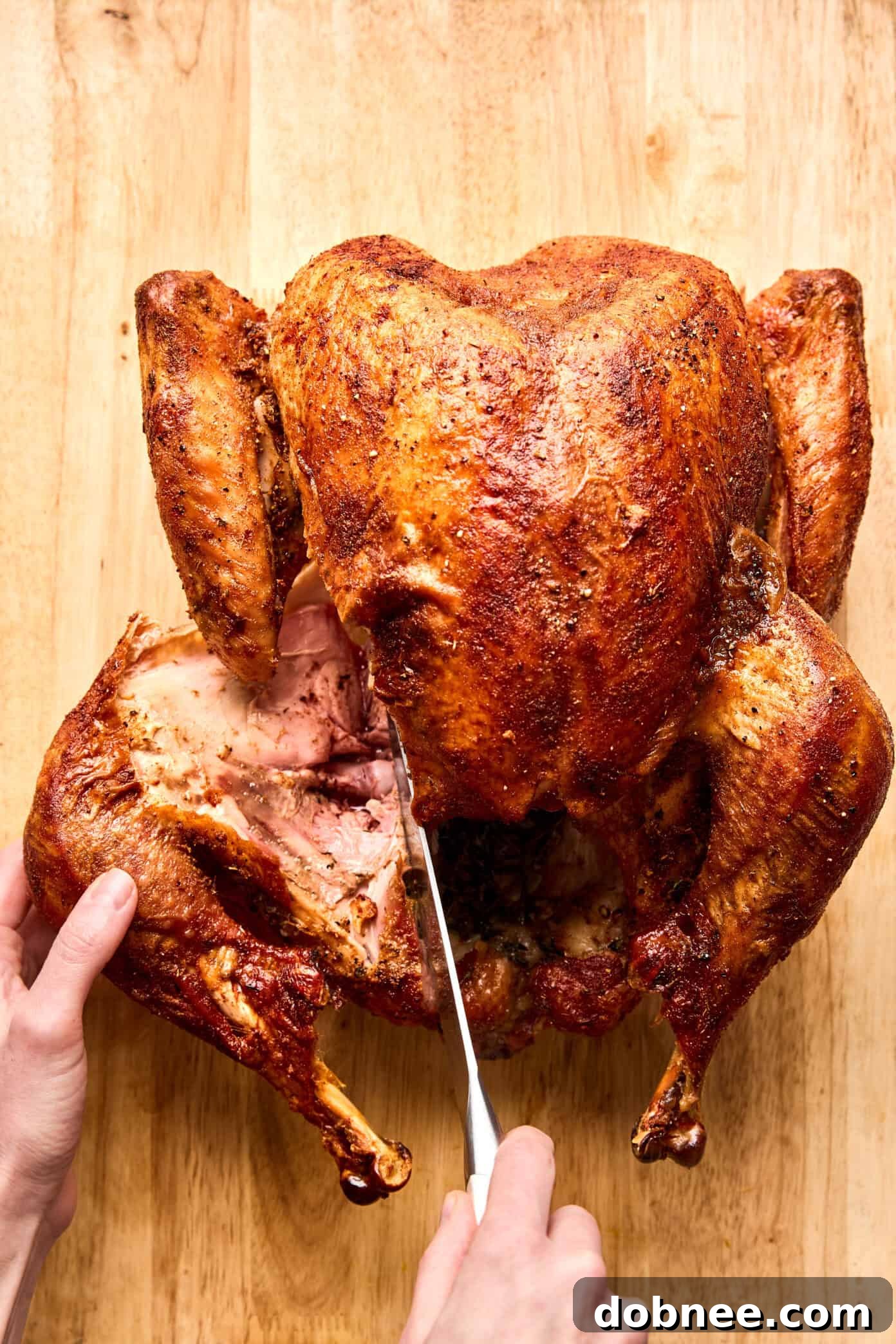
- Remove the Legs and Thighs: Begin by locating the natural seam where the leg and thigh meet the body of the turkey. Using your sharp knife, cut along this seam, applying gentle pressure. Pull the leg outward to fully expose the hip joint. Once the joint is visible, slice firmly through it to cleanly detach the entire leg-and-thigh piece from the carcass. Repeat this process on the other side. Remember, you should always be cutting through joints or soft tissue, not bone. If you encounter resistance, slightly adjust your angle to find the joint.
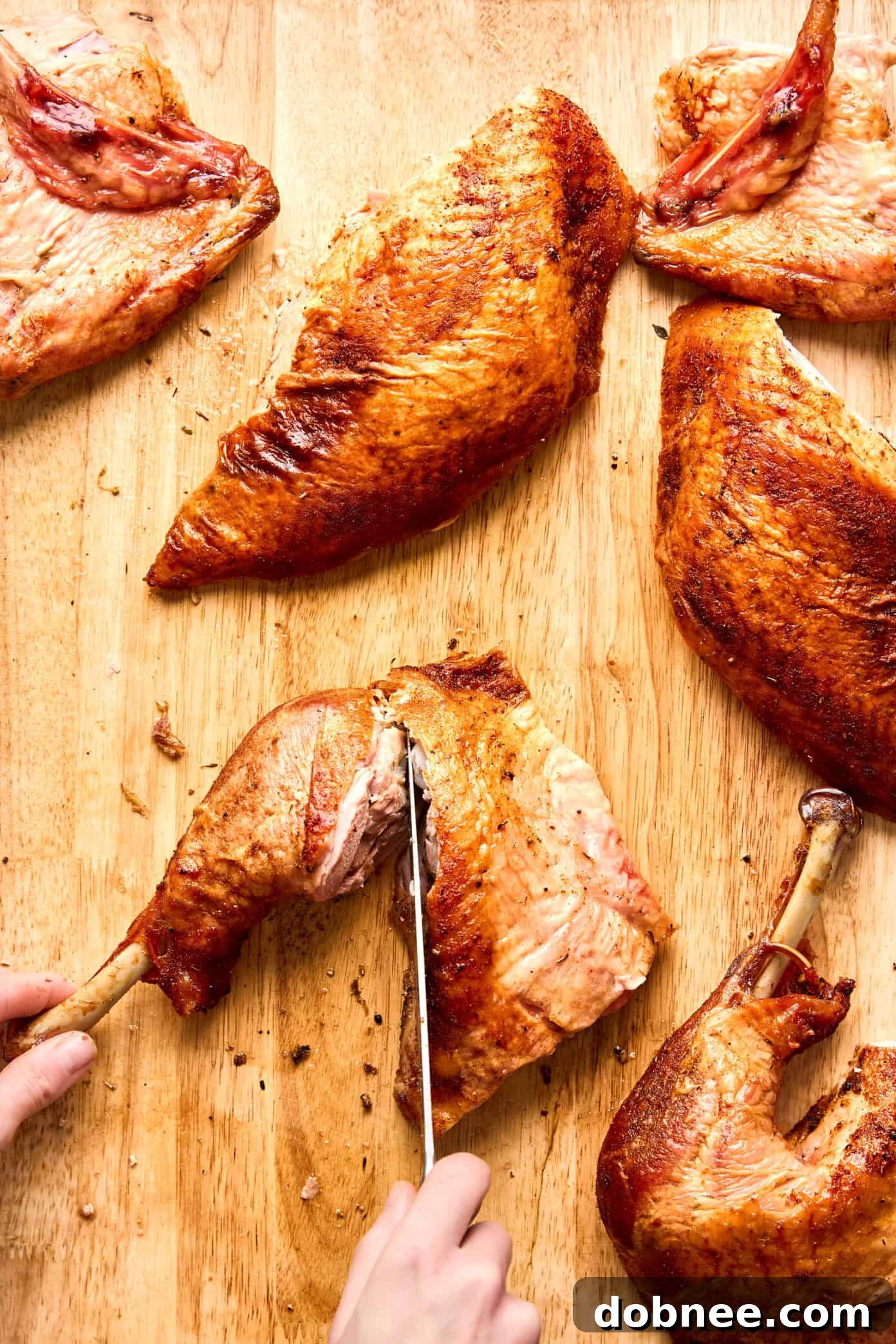
- Separate Thigh from Drumstick: Lay the detached leg-and-thigh piece skin-side down on the cutting board. Feel for the joint that connects the drumstick and the thigh; it’s typically a ball-and-socket joint. Slice directly through this joint to separate the two pieces. For the drumstick, you can serve it whole for a rustic presentation or carve the meat off the bone if preferred. For the thigh, slice the meat parallel to the bone, creating neat, even pieces.
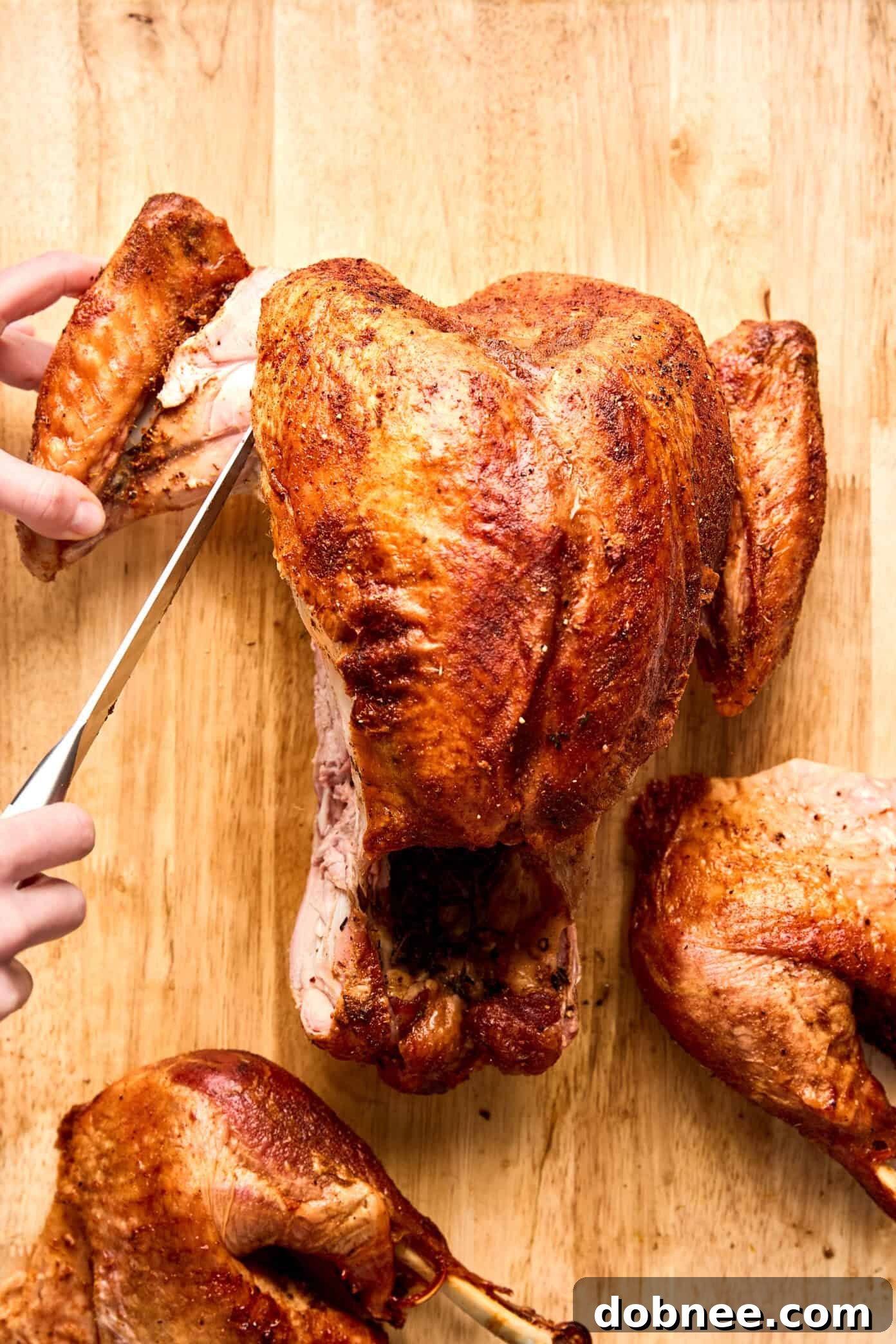
- Detach the Wings: Similar to the legs, locate where each wing connects to the turkey’s body. Gently pull the wing away from the body to expose the joint. Use your knife or kitchen shears to cut through this joint, cleanly detaching the wing. You can trim the wing tips if you desire a neater appearance for presentation. Set the wings aside with the dark meat.
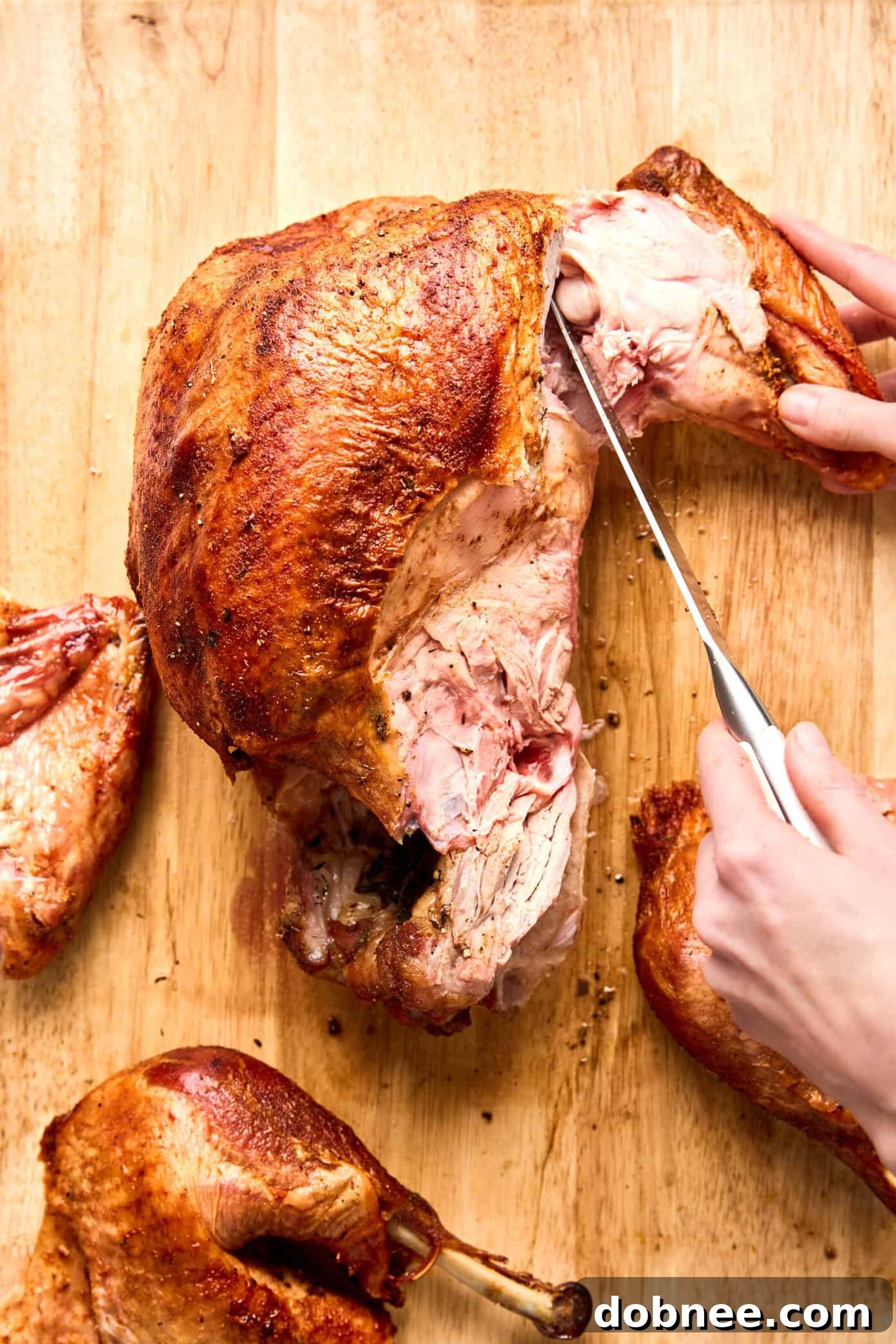
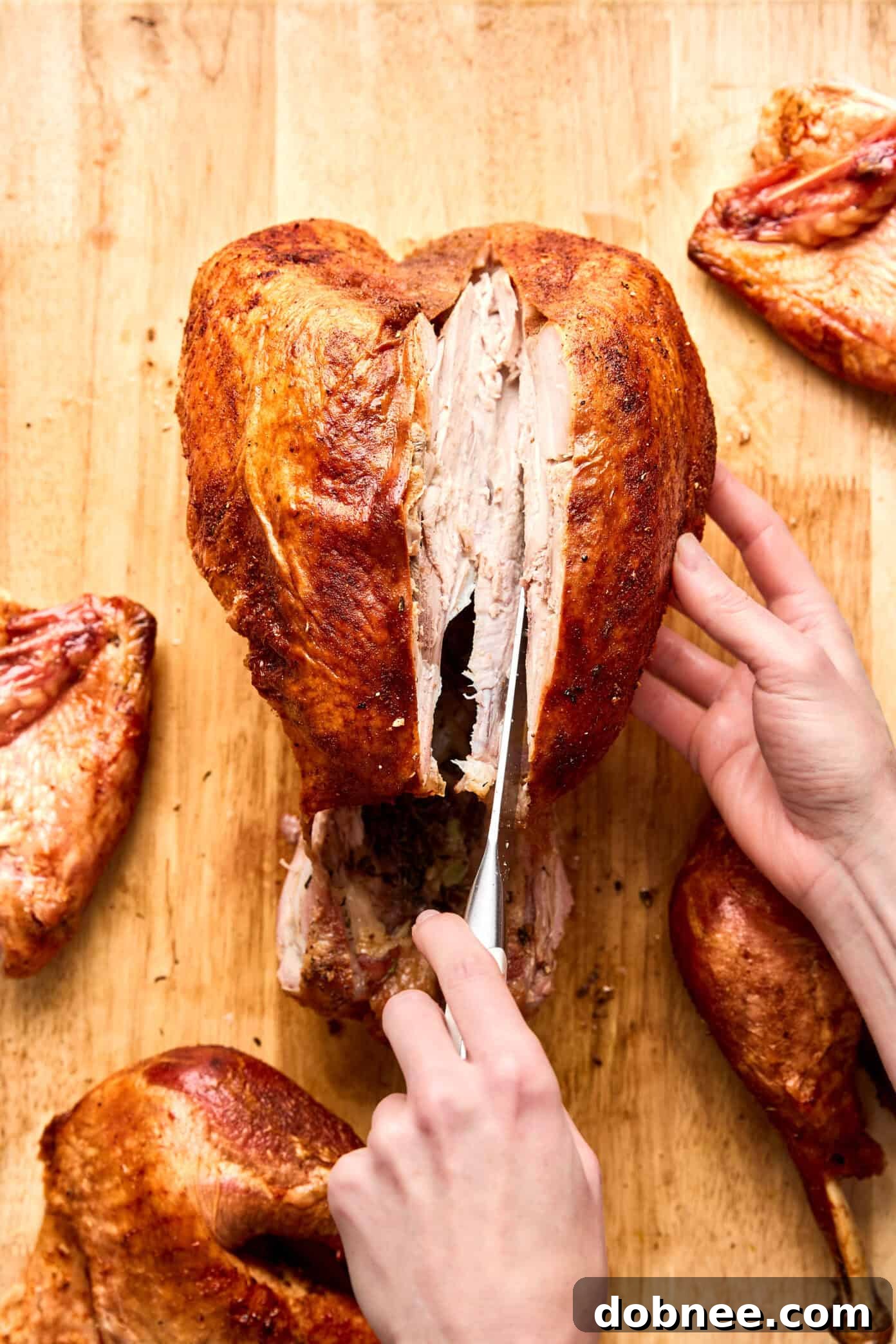
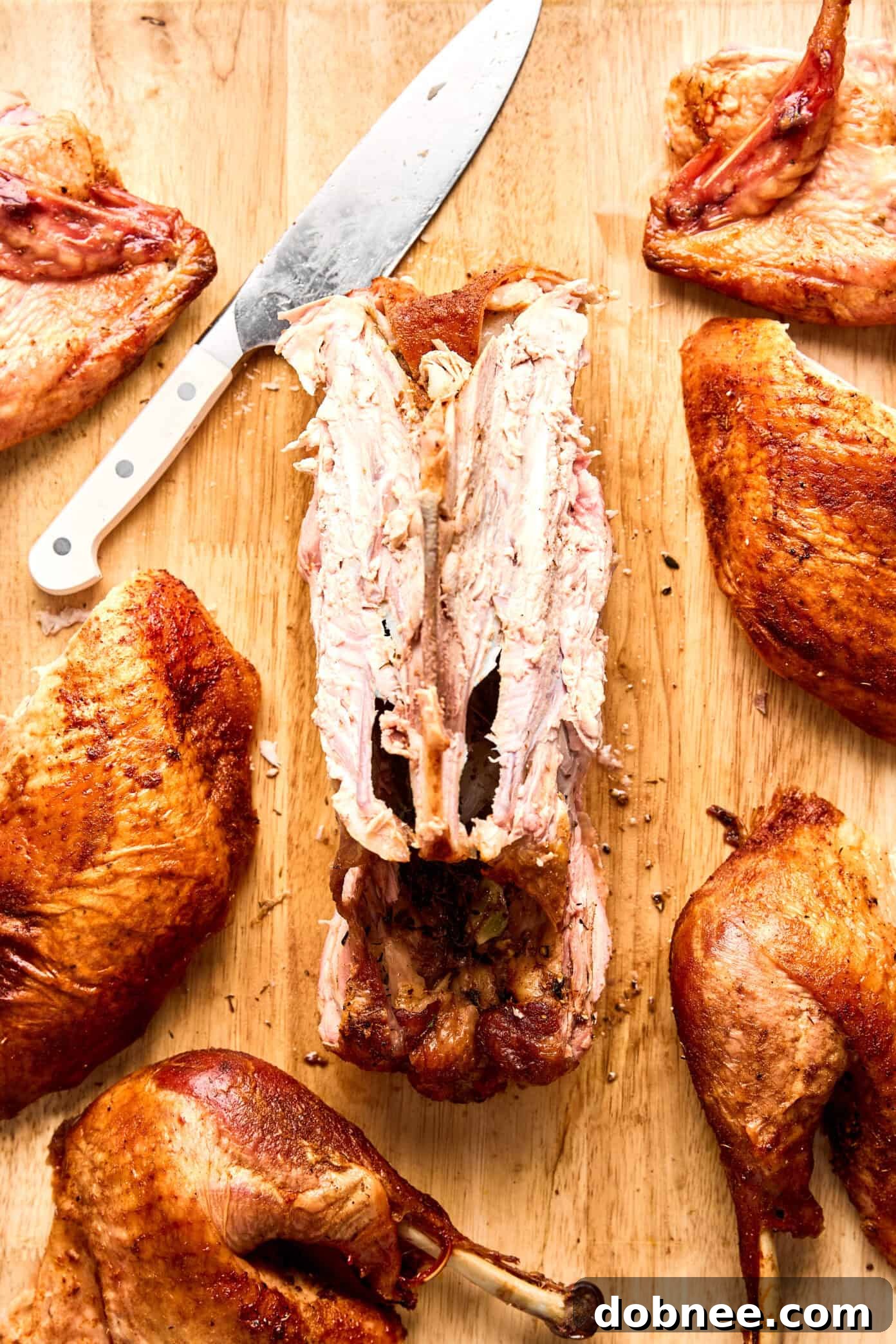
- Remove the Breast Meat: This is often considered the trickiest part, but it’s simple with the right technique. Locate the breastbone running down the center of the turkey. Make a long, clean vertical cut just beside one side of the breastbone, all the way down to the rib cage. Then, follow the contour of the rib cage with your knife, slicing downward and outward until the entire breast half is free from the carcass. Aim to remove it in one large, intact piece. Repeat this process for the other breast half.
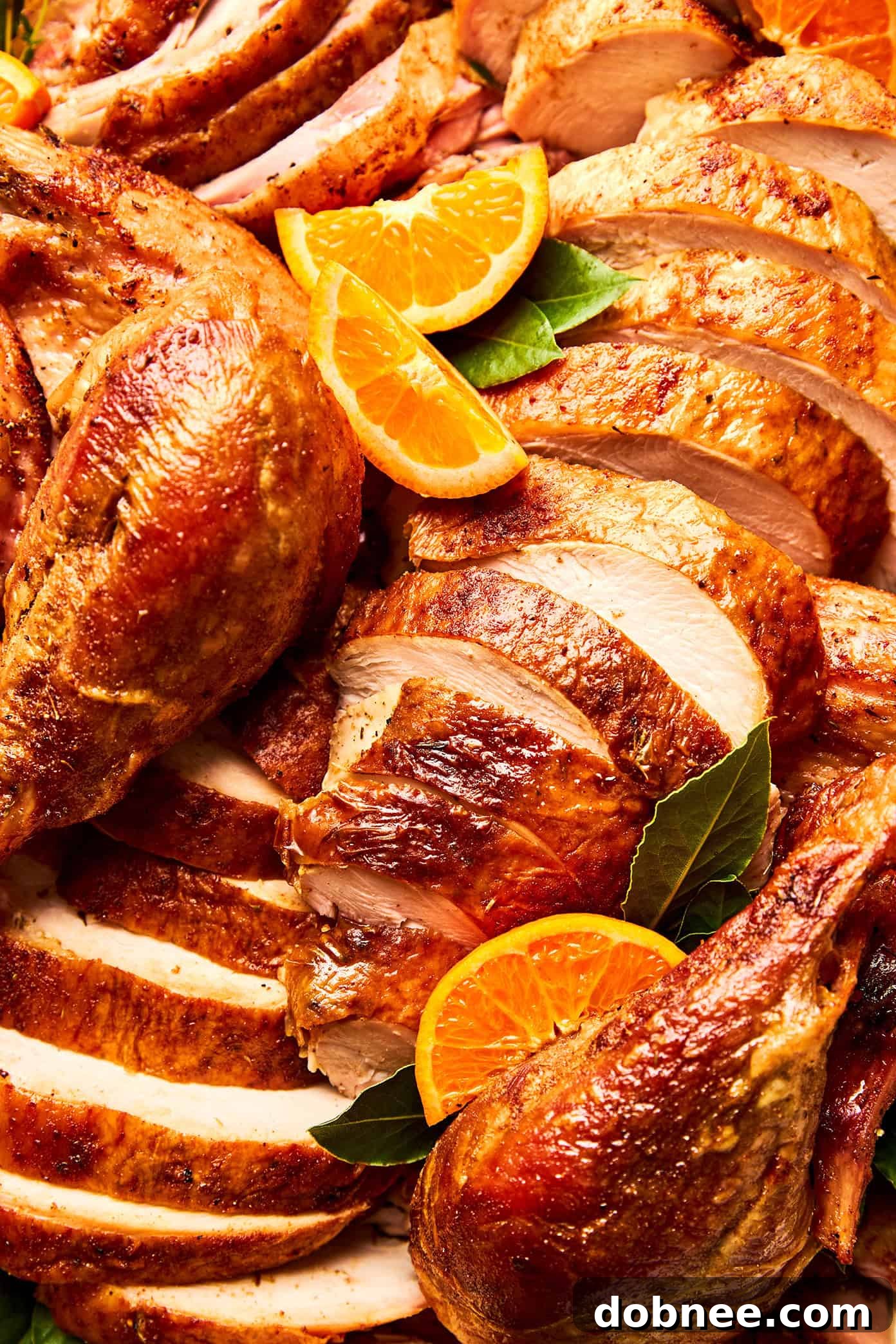
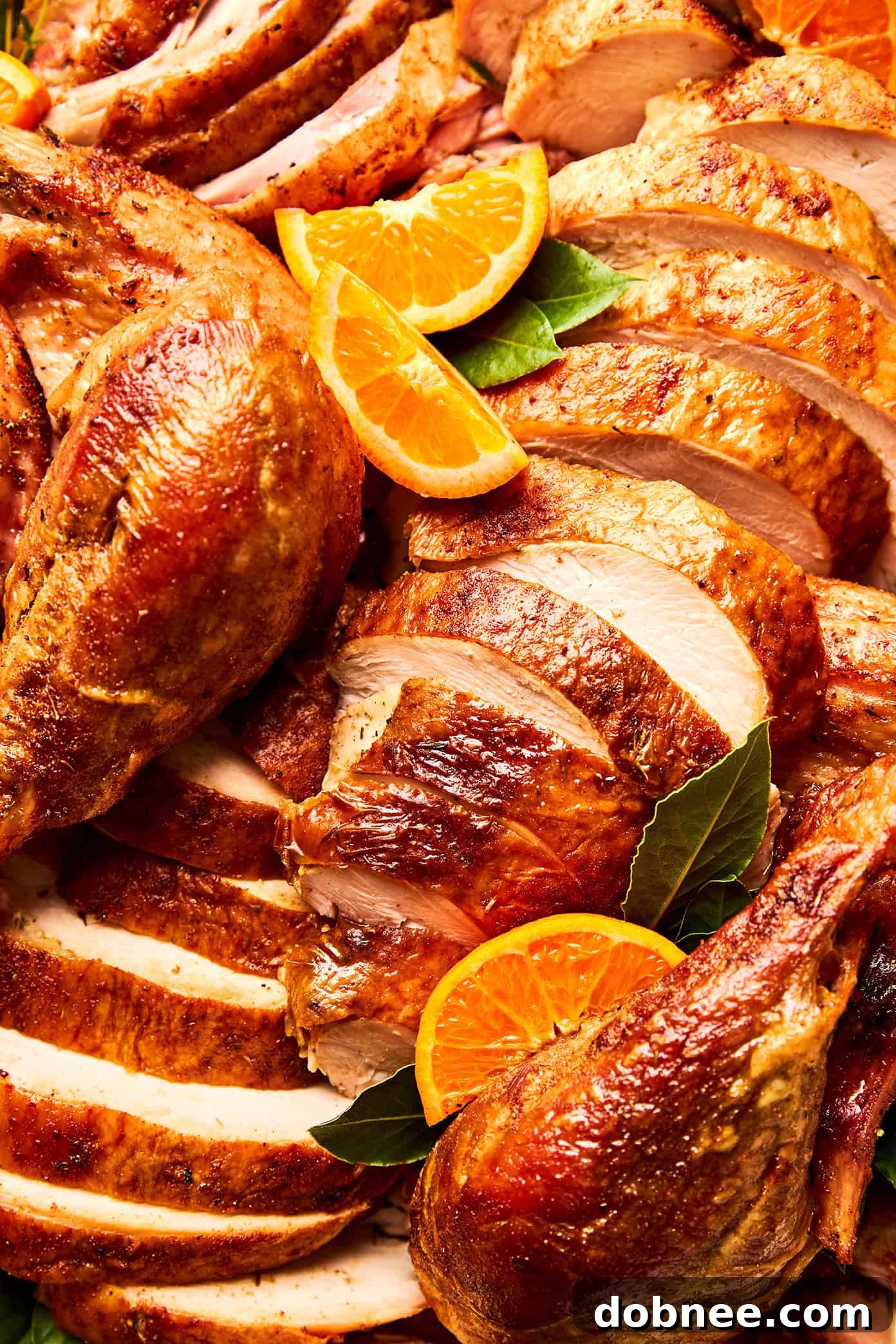
- Slice the Breast Meat: Place each removed breast piece skin-side up on the cutting board. The key here is to slice against the grain. Look closely at the meat; you’ll see lines running in one direction. Slice perpendicular to these lines into even, approximately ¼-inch thick slices. This technique ensures maximum tenderness. Arrange these beautifully sliced white meat pieces on your serving platter.
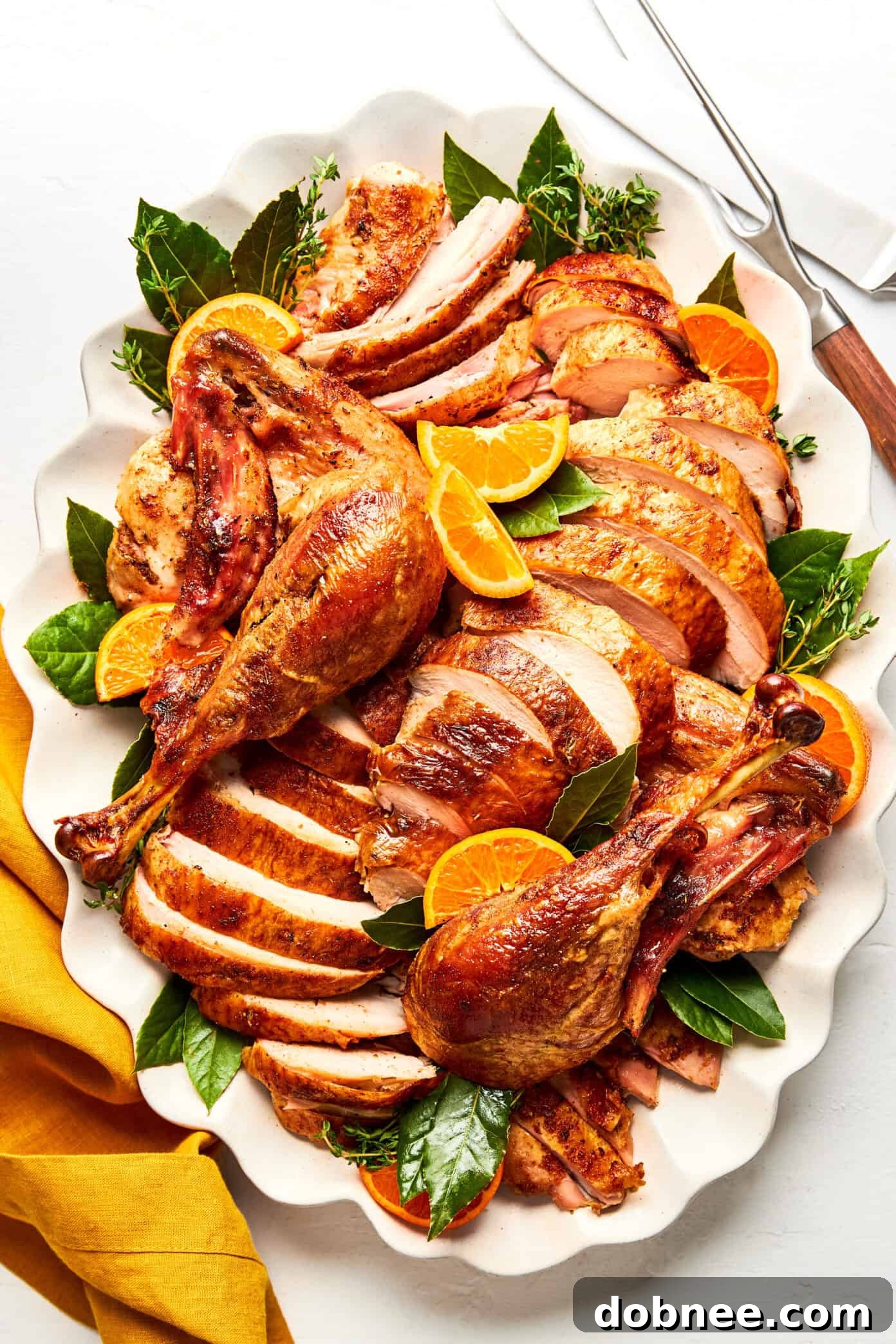
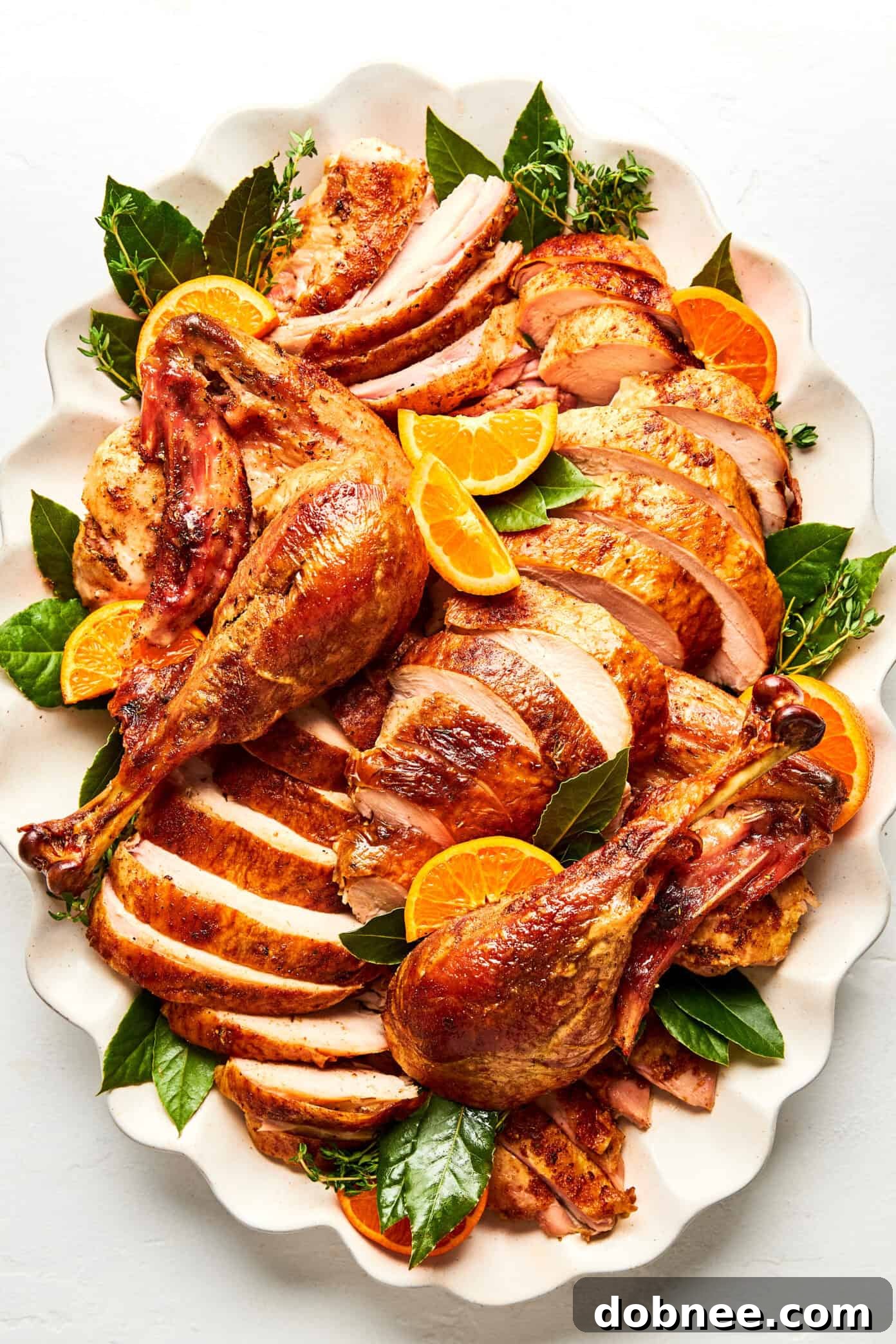
- Arrange on the Platter: The final step is presentation. Neatly arrange the sliced breast meat in the center of your platter, overlapping the slices slightly. Surround the white meat with the drumsticks, carved thigh pieces, and wings. For an extra touch of flavor and moisture, drizzle the carved turkey with any collected pan juices or warm gravy. Garnish with fresh herbs like rosemary, thyme, or sage, and citrus wedges for a vibrant, appealing display.
Expert Tips and Tricks for Flawless Carving
To make your turkey carving experience even smoother and more successful, keep these professional tips in mind:
- Maintain a Sharp Knife: We can’t stress this enough. A properly sharpened carving knife will glide through the meat effortlessly, ensuring clean cuts and preventing tearing. If your knife feels dull, use a sharpening steel or stone before you begin.
- “Find the Joints, Don’t Fight the Bones”: This is the golden rule of carving. If you encounter resistance, don’t force it. Instead, adjust your angle slightly to locate the natural joint. Each major piece of the turkey is designed to separate cleanly at a joint.
- Consider Removing the Wishbone First: While optional, removing the wishbone before you start carving the breast can make the process significantly easier. It creates more space and allows for a cleaner removal of the breast meat in one large piece.
- Use Your Carving Fork Wisely: The carving fork isn’t just for holding the turkey. Use it to gently pull away pieces as you cut, giving you a clearer view of the joints and ensuring you get every morsel of meat.
- Slice Against the Grain for Tenderness: Especially important for breast meat, slicing across the muscle fibers (against the grain) shortens them, resulting in incredibly tender, melt-in-your-mouth slices rather than tough, stringy pieces.
- Don’t Discard the Carcass! After carving, the turkey carcass is a treasure trove of flavor. Use it to make a rich, homemade turkey stock. This stock is perfect for soups, stews, risottos, or as a base for next-day gravy, extending the deliciousness of your holiday meal.
- Strategic Platter Arrangement: Think about presentation. Arrange the white meat in the center, fanning out the slices. Place the dark meat (thighs, drumsticks) and wings around the edges. A thoughtful arrangement makes the platter inviting and easy to serve from.
Frequently Asked Questions About Turkey Carving
Yes, you absolutely can! Carving a turkey up to an hour ahead of time can actually reduce stress on a busy holiday. Arrange the carved meat on a serving platter, cover it loosely with aluminum foil, and keep it warm in a low oven (around 200°F/95°C) or in a warming drawer. Adding a splash of warmed chicken or turkey broth, or some of the pan juices, to the platter before covering can help keep the meat moist.
Preventing skin tearing comes down to two main factors: proper resting and a sharp knife. When the turkey has rested sufficiently, the skin will be less prone to tearing. Use a very sharp knife and employ long, smooth slicing motions rather than a sawing back-and-forth action. This allows the blade to glide through the crisp skin and meat without snagging or ripping.
Never throw away the turkey carcass! It’s an invaluable ingredient for making a flavorful homemade turkey stock. Simply place the bones, along with any leftover bits of meat and roasted vegetables, into a large pot. Cover with water, add some aromatic vegetables like onions, carrots, and celery, and simmer for several hours. Strain, and you’ll have a rich, savory stock perfect for gravies, soups, or even freezing for future meals.
Absolutely! The anatomical structure of a chicken is essentially the same as a turkey, just on a smaller scale. The principles of finding the joints, removing legs, wings, and breasts, and slicing against the grain apply perfectly to carving a roasted chicken. It’s excellent practice for your turkey carving skills!
Besides covering with foil and placing in a low oven, you can also use a heated serving dish or a chafing dish. Alternatively, if serving immediately, present the carved meat on a warm platter (you can warm a platter by running it under hot water or placing it in a low oven for a few minutes) to help retain heat.
Print Recipe
How To Carve A Turkey
- Author: Ali
- Prep Time: 15 mins
- Cook Time: 0 mins
- Total Time: 15 mins
- Yield: 1 turkey
Description
Learn how to carve a turkey step-by-step with this simple guide and video, including the basic cuts, how to slice against the grain, and tips for creating a beautiful serving platter.
Ingredients
- 1 cooked whole turkey
- Optional garnishes: fresh herbs (sage, rosemary, thyme, parsley and/or bay leaves), citrus wedges (lemon or oranges), fresh cranberries
Instructions
-
Remove the legs and thighs. Place the turkey breast-side up on the cutting board. Using your knife, cut along the natural line where the leg/thigh meets the body. Pull the leg outward to expose the joint, then cut through the joint to separate the leg and thigh from the body. Repeat on the other side. (Tip: Always look for the joints — you should never need to cut through bone.)
-
Remove the wings. Cut along the natural line where the wing meets the body while gently pulling the wing outward to reveal the joint. Use your knife (or kitchen shears) to cut through the joint where the wing meets the body. If desired, trim off the end of each wing for a cleaner presentation. Set wings aside for serving.
-
Carve the breast meat. Find the breastbone in the center and make a long vertical cut down one side of it, slicing along the rib cage to free one breast half from the carcass, ideally in one big piece. Place that breast piece skin-side up on the board. Slice across the grain (horizontal slices) at about ¼-inch thickness or as desired. Repeat on the other breast: cut along the breastbone to remove it, then lay flat and slice. Arrange the slices on the serving platter.
-
Separate the thigh from the drumstick. Lay each leg-and-thigh piece skin-side down (or whichever way is comfortable). Feel for the joint between the thigh and the drumstick. Slice through the joint to separate them. For the thigh, slice the meat parallel to the bone for neat pieces. The drumstick can be served whole or you can carve the meat off the bone.
-
Arrange on the platter. Lay slices of breast meat neatly, overlapping slightly. Place thighs, drumsticks, and wings around or beside the breast slices. Drizzle with pan juices or gravy, if desired. Add any garnishes you like, then serve and enjoy!
Congratulations, you’ve now mastered the art of turkey carving! With these steps and tips, you can approach your holiday bird with confidence and flair. The satisfaction of presenting a beautifully carved turkey to your loved ones is immense, adding an extra layer of warmth and joy to your festive gatherings. So, gather around the table, enjoy the fruits of your labor, and savor every perfectly carved, tender bite. Happy carving, and happy feasting!