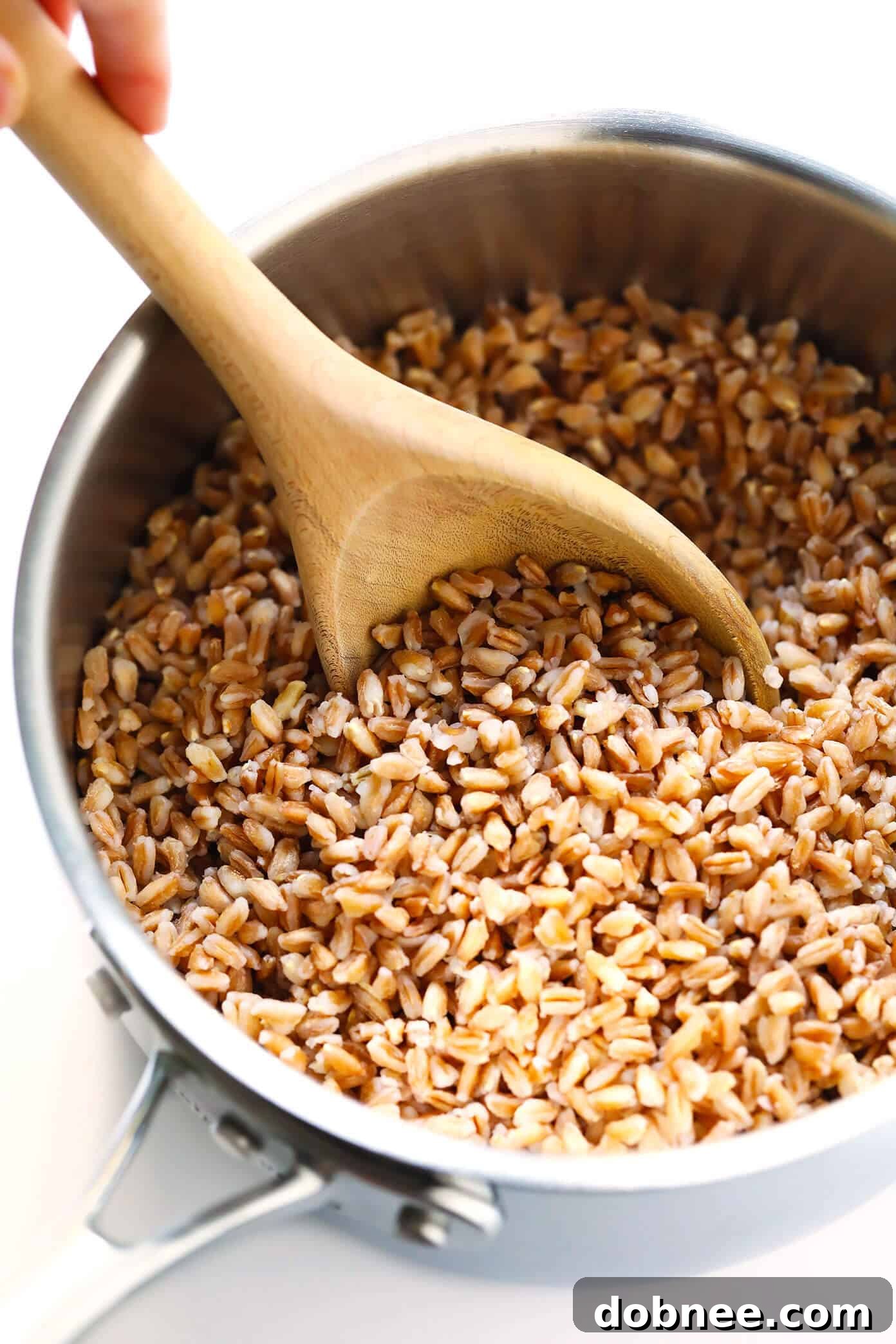
Your go-to guide for mastering farro! Learn the best methods for cooking, toasting, seasoning, and freezing this versatile ancient grain, along with a collection of easy and delicious farro recipes.
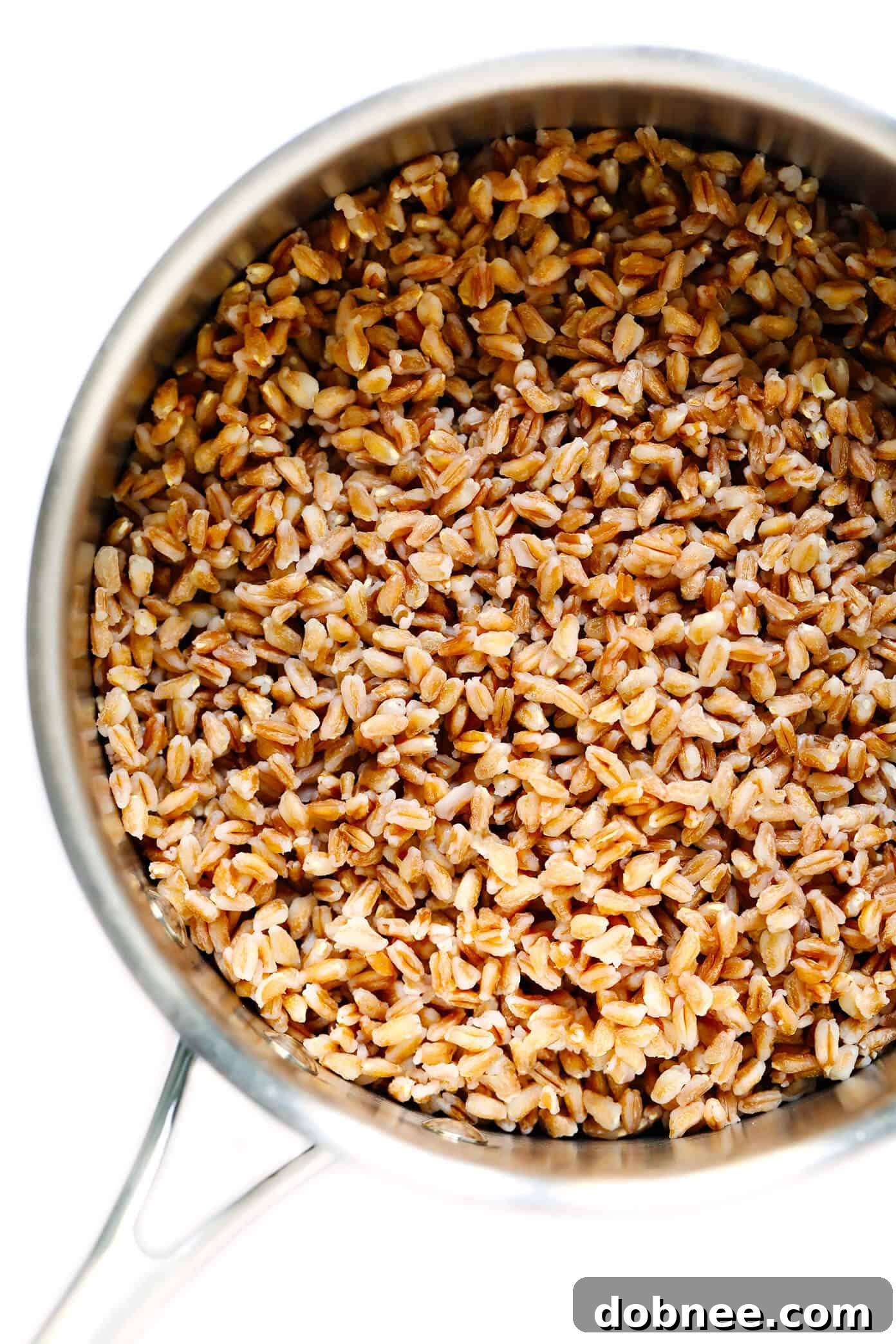
How to Cook Farro Perfectly: Your Ultimate Guide to This Ancient Grain
Welcome to our comprehensive guide on mastering one of the most beloved and nutritious ancient grains: farro! If you’re looking to diversify your pantry staples with a wholesome ingredient that offers both incredible texture and a rich, nutty flavor, farro is an absolute must-try. It has long been a cherished component in Mediterranean and Middle Eastern cuisines, and for good reason—it’s incredibly versatile, satisfying, and packed with health benefits.
Farro’s distinctive chewy bite and earthy aroma make it an exceptional addition to a wide array of dishes. From hearty winter soups and refreshing summer salads to robust grain bowls, creative stuffed vegetables, and even unique risottos, its culinary applications are endless. Not only is it a delightful ingredient to work with, but farro is also celebrated for its impressive nutritional profile, boasting significant amounts of fiber, protein, and essential vitamins and minerals.
This guide will equip you with all the knowledge you need to cook farro to perfection, whether you prefer the traditional stovetop method or the time-saving convenience of an Instant Pot. We’ll delve into understanding the different types of farro available, discuss techniques for enhancing its natural flavor, and provide practical tips for storage and meal preparation. Plus, I’ll share some of my favorite easy farro recipes to inspire your next culinary adventure. Prepare to elevate your cooking with this ancient grain!
What Exactly Is Farro? An Ancient Grain Explained
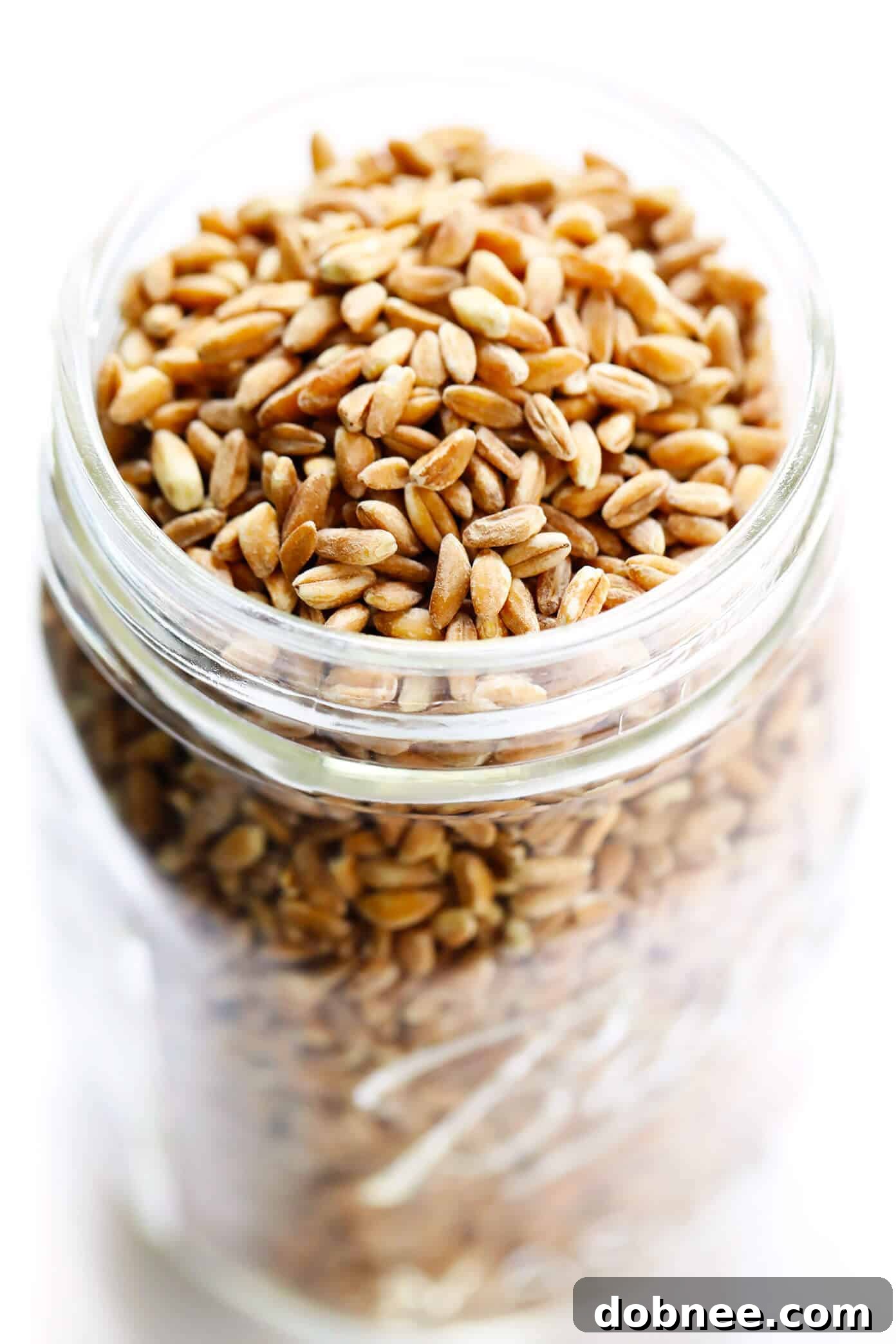
Farro, pronounced “fah-roh,” is an ancient whole grain that belongs to the wheat family. Its history dates back thousands of years, with archaeological evidence suggesting it was one of the first grains cultivated in the Fertile Crescent. This makes it a true heirloom grain, carrying a rich legacy of nourishment and culinary tradition. While often compared to barley or wheat berries, farro possesses its own distinct characteristics, notably its pleasingly chewy texture and a deep, earthy, nutty flavor that sets it apart.
For centuries, farro has been a cornerstone of diets in the Middle East and Italy, where it’s used in everything from hearty soups and savory salads to rustic side dishes. In recent years, its appeal has grown globally as people rediscover the nutritional benefits and unique taste of this versatile grain. Its ability to absorb flavors while maintaining its structural integrity makes it a chef’s favorite for both simple and complex preparations. It’s truly a grain that adds substance and character to any meal.
The Different Types of Farro: Choosing the Right One
When shopping for farro, you’ll typically encounter three main types, each differing in how it’s processed and consequently, its cooking time and nutritional content. Understanding these distinctions will help you select the best farro for your needs:
- Whole Farro: This is the least processed form, meaning it retains its entire bran and husk layers. As such, whole farro offers the maximum nutritional benefits, including the highest fiber content, and the most robust, pronounced nutty flavor. Due to its intact outer layers, it requires the longest cooking time (approximately 30-40 minutes) and can often benefit from an overnight soak to soften the grains and reduce cooking duration.
- Semi-Pearled Farro: With semi-pearled farro, the husk has been removed, and only a portion of the bran layer has been polished away. This variety strikes a excellent balance between nutritional value and faster cooking times. It still retains a good amount of fiber and nutrients while cooking in about 25-30 minutes, offering a slightly milder flavor than whole farro but still a wonderfully chewy texture.
- Pearled Farro: This is the most widely available type of farro in standard grocery stores. All of the bran and husk layers have been polished off, resulting in the quickest cooking time (typically 15-20 minutes). While it has a milder flavor and slightly less fiber compared to the whole or semi-pearled versions, it remains a healthy whole grain and is favored by many cooks for its convenience and lighter texture, making it ideal for salads or quick weeknight meals.
You can typically find farro in the bulk grain section, pasta aisle, or health food section of most well-stocked supermarkets. For a broader selection, specialty stores or online retailers are excellent resources.
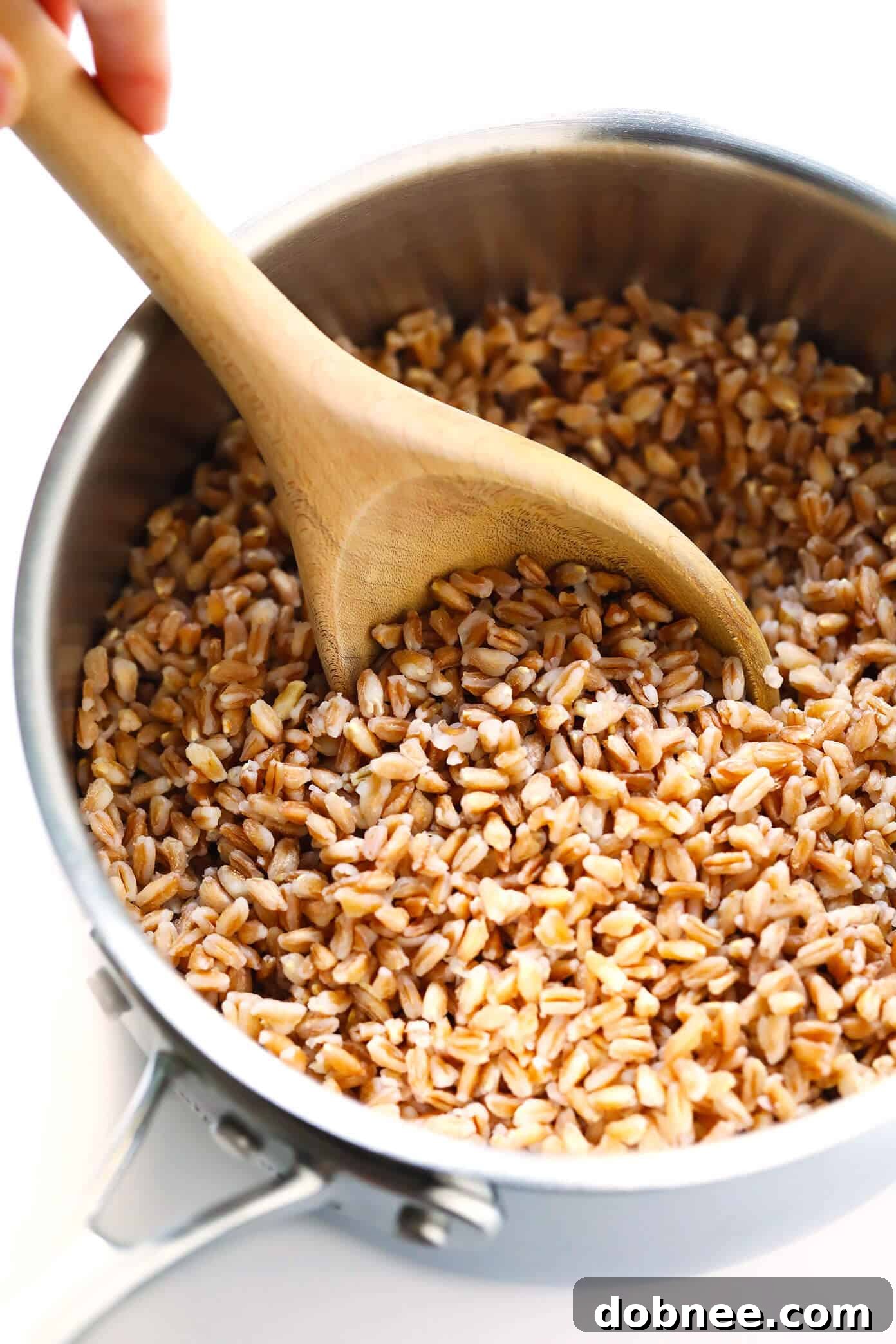
The Nutritional Powerhouse: Why Farro Is So Good For You
Beyond its delightful taste and texture, farro stands out as a true nutritional powerhouse, making it an excellent addition to any balanced diet. This ancient grain is particularly rich in several key nutrients that support overall health and well-being:
- High in Dietary Fiber: Farro is an outstanding source of dietary fiber, which is crucial for maintaining a healthy digestive system. Fiber helps regulate blood sugar levels, promotes satiety (making you feel fuller for longer), and contributes to gut health. The high fiber content in farro can be particularly beneficial for weight management and preventing digestive issues.
- Rich in Protein: Unlike many other grains, farro provides a significant amount of plant-based protein. This makes it an invaluable food for vegetarians, vegans, and anyone looking to boost their protein intake, which is essential for muscle repair, growth, and numerous bodily functions.
- Packed with Essential Vitamins and Minerals: Farro is a great source of B vitamins, including niacin (B3), thiamine (B1), and riboflavin (B2), which are vital for energy metabolism and nerve function. It also supplies important minerals such as iron (essential for oxygen transport), magnesium (critical for bone health and muscle function), and zinc (important for immune support and wound healing).
- Contains Antioxidants: This ancient grain also boasts antioxidants, compounds that help protect your cells from damage caused by harmful free radicals. Including antioxidant-rich foods like farro in your diet can contribute to long-term health and may reduce the risk of chronic diseases.
Its nutrient density and wholesome composition make farro a smart and delicious choice for sustained energy, supporting various bodily systems, and promoting a vibrant, healthy lifestyle.
Essential Ingredients for Cooking Farro
Preparing a perfect batch of farro is incredibly simple and requires just a few basic ingredients. The beauty of farro is that its natural, earthy flavor can shine through with minimal additions, creating a versatile base for countless dishes.
- Farro: Begin with uncooked farro, whether you choose pearled, semi-pearled, or whole. Regardless of the type, it’s always recommended to rinse it thoroughly under cold running water before cooking to remove any residual starches or debris and ensure a clean taste.
- Cooking Liquid: While plain water works perfectly fine, opting for vegetable broth, chicken broth, or even a mushroom broth can infuse your farro with extra layers of delicious flavor, making it richer and more savory.
- Fine Sea Salt: A crucial ingredient for seasoning your farro from the inside out. Adding salt to the cooking liquid enhances farro’s inherent nutty notes and ensures it’s flavorful on its own or when incorporated into other recipes.
- Optional Aromatics: To truly elevate the taste, consider infusing the cooking liquid with aromatics. A bay leaf or two, a couple of smashed garlic cloves, or even a sprig of fresh thyme or rosemary can impart wonderful, subtle flavors that complement farro beautifully.
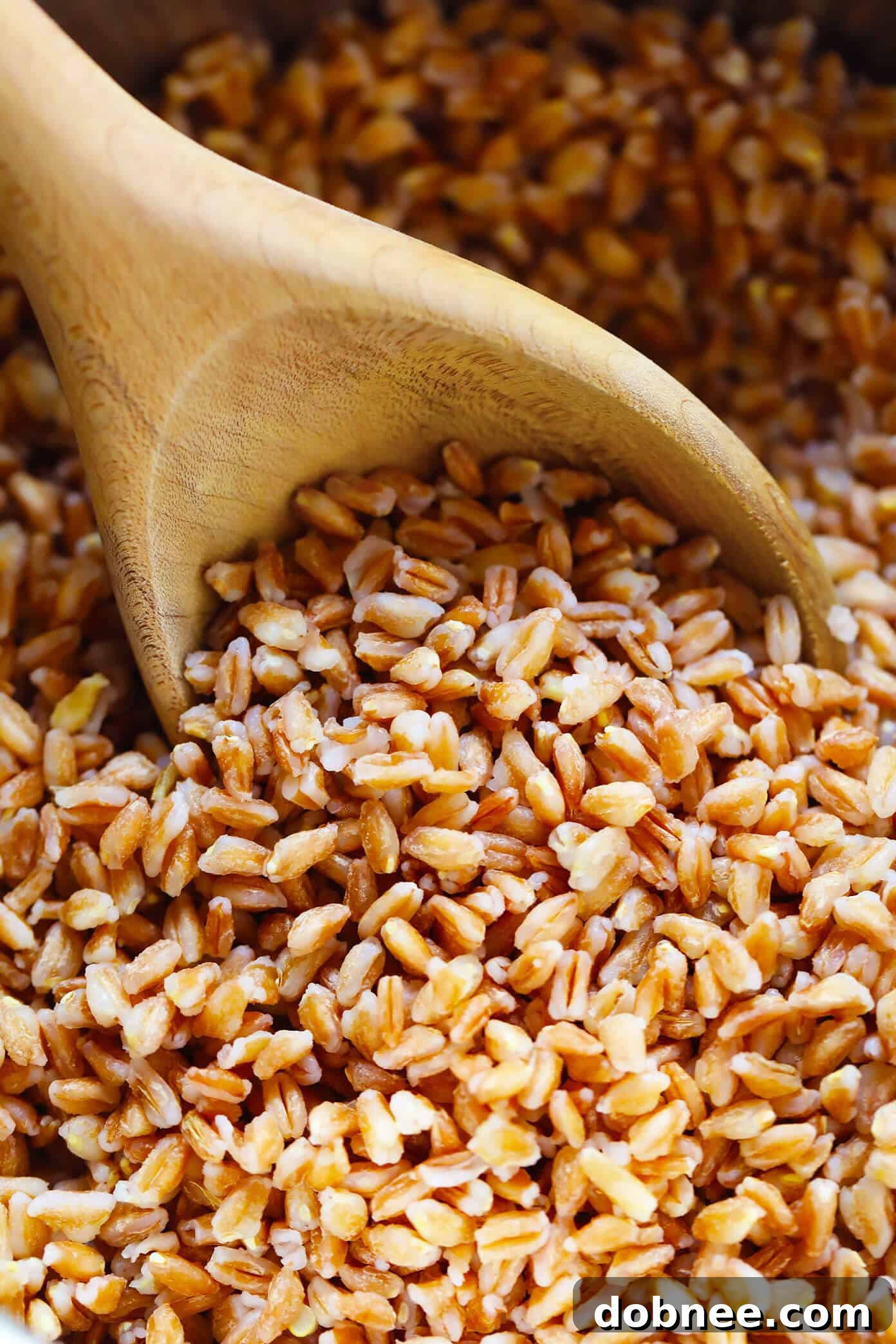
How to Cook Farro: Stovetop Method (The Most Popular Way)
The stovetop method is a classic for a reason: it’s simple, reliable, and consistently yields perfectly tender and chewy farro. This basic approach is my go-to for achieving that ideal al dente texture and maximizing its inherent nutty flavor.
- Rinse the Farro: Start by placing your desired amount of uncooked farro in a fine-mesh strainer. Rinse it thoroughly under cold running water for about 30 seconds to remove any starchy residue or impurities. This step is essential for a clean, non-gummy result.
- Prepare the Cooking Liquid: In a large saucepan or pot, bring your chosen cooking liquid (water or broth) to a vigorous rolling boil over high heat. A general ratio is about 3 cups of liquid for every 1 cup of dry farro. Add 1/2 teaspoon of sea salt and any optional aromatics, such as a bay leaf or a couple of smashed garlic cloves, to the boiling liquid.
- Simmer to Perfection: Once the liquid is rapidly boiling, add the rinsed farro to the pot and give it a gentle stir. Immediately reduce the heat to medium-low to maintain a steady, gentle simmer. This prevents the farro from cooking too aggressively. Continue to cook until the farro reaches your desired texture—tender yet delightfully chewy, or “al dente.” The cooking time will vary depending on the type of farro you’re using:
- Pearled Farro: Approximately 15-20 minutes.
- Semi-Pearled Farro: Approximately 25-30 minutes.
- Whole Farro: Approximately 35-40 minutes (if using whole farro, pre-soaking it overnight can significantly reduce this time and ensure a more even cook).
It’s always a good idea to taste a few grains towards the end of the cooking time to ensure it meets your preferred doneness.
- Drain Thoroughly: Once cooked, carefully pour the farro and any remaining liquid into a fine-mesh strainer. Allow it to drain completely for a minute or two, shaking the strainer gently to remove as much excess water as possible. This prevents a watery final product.
- Fluff and Season: Transfer the drained farro back to the warm, empty pot or into a serving bowl. Use a fork to gently fluff the grains, separating them and allowing any remaining steam to escape. Taste the farro and adjust seasoning as needed, adding more salt or freshly cracked black pepper to taste.
- Serve Warm: Your perfectly cooked farro is now ready to enjoy! Serve it immediately as a nutritious side dish, or use it as a base for your favorite salads, grain bowls, or other recipes.
For precise ingredient measurements and a quick-reference guide, refer to the detailed recipe card provided below.
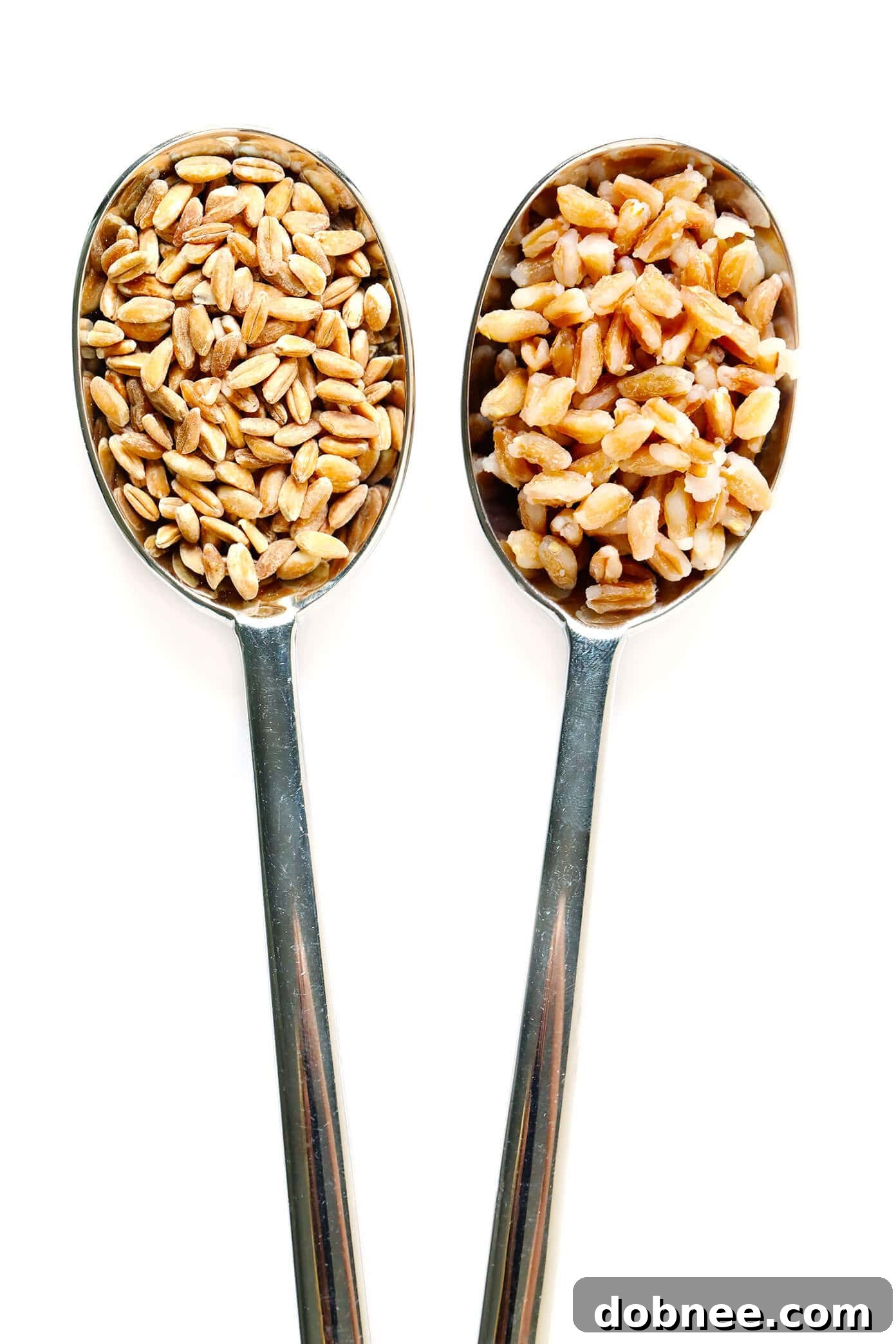
Elevating Flavor: Farro Flavor Boosters and Beyond
While farro’s inherent nutty flavor is delightful on its own, there are several simple yet impactful techniques you can use to enhance its taste and customize it to suit any dish. Don’t hesitate to experiment with these flavor boosters:
- Toast the Farro (Highly Recommended): This quick and easy step makes a profound difference in deepening farro’s flavor profile. Before adding any liquid, heat a dry sauté pan or pot over medium-high heat. Add the dry, uncooked farro and toast it for 3-4 minutes, stirring frequently, until the grains become wonderfully fragrant and exhibit a slightly golden hue. This process significantly amplifies its natural nutty, earthy notes. Remove from heat before proceeding with the cooking instructions.
- Infuse the Cooking Liquid: The liquid you use to cook farro is a prime opportunity for flavor infusion. Instead of plain water, consider using vegetable broth, chicken broth, beef broth, or even a mushroom broth for a richer umami flavor. For an aromatic boost, add a bay leaf, a few lightly smashed garlic cloves, half an onion, or sprigs of fresh herbs like thyme, rosemary, or parsley stems directly to the pot while the farro simmers. A dash of bouillon powder or a pinch of your favorite dried spices (such as smoked paprika, cumin, or a touch of chili powder) can also imbue the grains with fantastic depth.
- Season After Cooking: Once the farro is cooked, drained, and fluffed, it becomes a versatile canvas for additional seasonings. A generous grind of freshly cracked black pepper is always a welcome addition. Experiment with stirring in a tablespoon of high-quality olive oil, a pat of butter, a squeeze of fresh lemon juice, finely chopped fresh herbs (like cilantro, parsley, chives), a sprinkle of nutritional yeast for a cheesy umami, or even a dash of your favorite hot sauce for a kick.
- Sauté Aromatics Before Cooking: For an even deeper flavor foundation, begin by sautéing finely diced onions, shallots, leeks, or garlic in a little olive oil or butter directly in your cooking pot. Once softened and fragrant, add the farro (whether pre-toasted or untoasted) and stir to coat, then proceed by adding your cooking liquid. This method builds a delicious base flavor from the start.
By incorporating one or more of these techniques, you can transform your farro from a simple side into a captivating and flavorful component that perfectly complements a wide range of main courses and culinary styles.
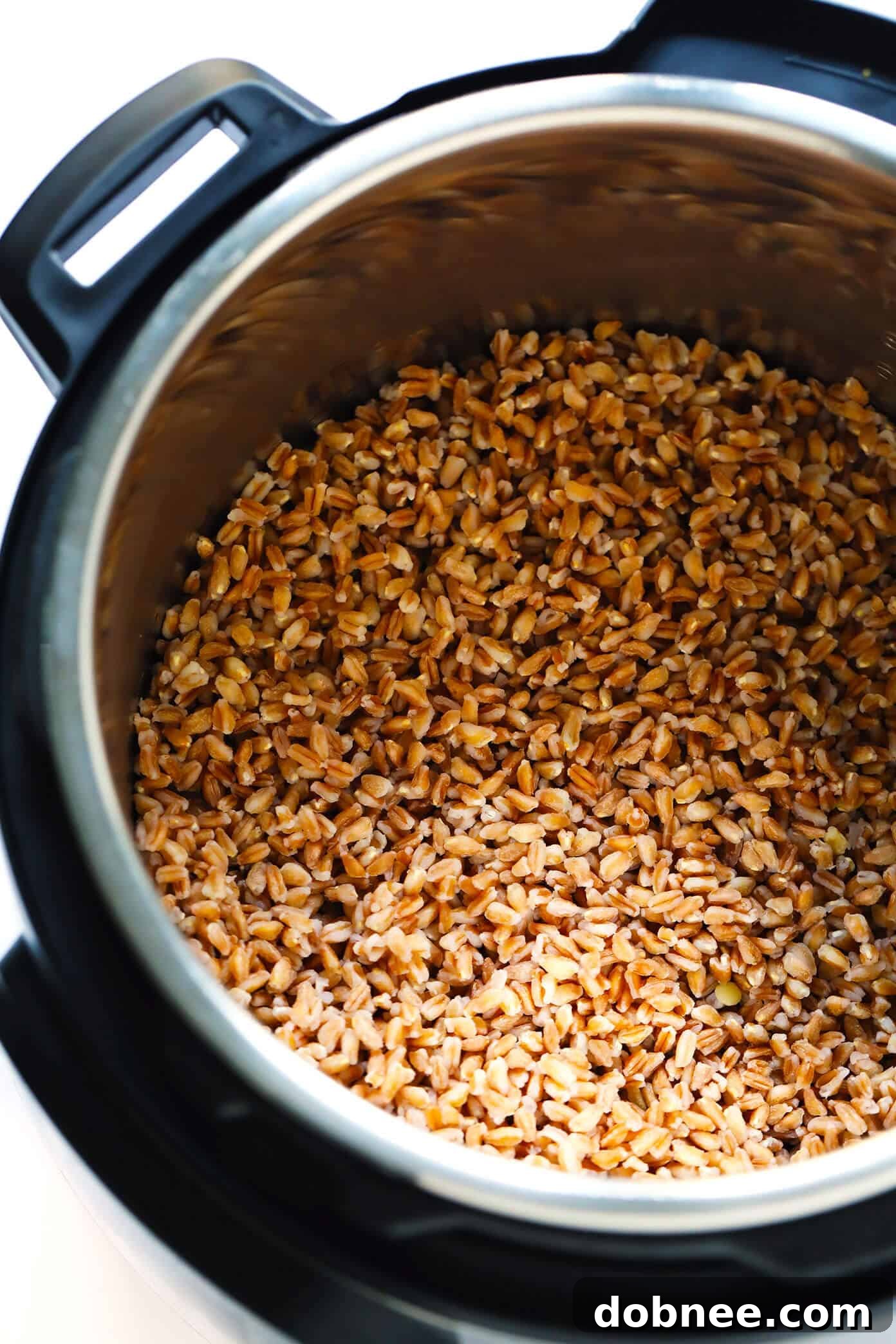
Cooking Farro in the Instant Pot: A Quick & Convenient Method
For those who appreciate efficiency and hands-off cooking, the Instant Pot or any electric pressure cooker offers a fantastic way to prepare farro. This method significantly cuts down on active cooking time and consistently produces perfectly tender and chewy grains, making it ideal for meal prepping or busy weeknights.
- Rinse Farro: Just as with the stovetop method, begin by placing 1 cup of uncooked farro in a fine-mesh strainer and rinsing it thoroughly under cold running water. This step helps ensure a better texture.
- Combine Ingredients: Transfer the rinsed farro to the inner pot of your Instant Pot. Add 2 cups of water or your preferred broth, and 1/2 teaspoon of fine sea salt. This liquid-to-farro ratio is generally consistent for pressure cooking. Feel free to add any optional aromatics here, such as a bay leaf or a clove of garlic, to infuse flavor.
- Pressure Cook: Secure the lid on your Instant Pot and ensure the steam release valve is set to the “Sealing” position. Select the “Manual” or “Pressure Cook” setting and set the cooking time based on the type of farro you are using:
- Pearled Farro: 12 minutes on high pressure.
- Semi-Pearled Farro: 15 minutes on high pressure.
- Whole Farro: 20-25 minutes on high pressure (pre-soaking whole farro for a few hours or overnight can help achieve optimal results and reduce potential inconsistencies in cooking time).
- Quick Release and Drain: Once the cooking cycle is complete, carefully perform a quick release of the pressure by turning the steam release valve to the “Venting” position. Stand clear of the steam. Once the float valve drops and all pressure is released, open the lid. If there is any excess liquid remaining in the pot, drain the farro thoroughly through a fine-mesh strainer.
- Fluff and Serve: Return the cooked farro to the Instant Pot or transfer it to a serving bowl. Use a fork to gently fluff the grains, separating them and creating an airy texture. Taste and adjust the seasoning with additional salt or freshly ground black pepper if desired. Serve warm and savor your perfectly cooked, hassle-free farro!
The Instant Pot method is a game-changer for preparing farro, delivering consistent results with minimal fuss, making healthy eating more accessible than ever.
Farro FAQ: Your Questions Answered
Here are answers to some of the most frequently asked questions about cooking and enjoying farro, designed to help you make the most of this ancient grain:
- How do you pronounce farro? It is pronounced “fah-roh,” rhyming with “sorrow.”
- Is farro gluten-free? No, farro is a type of wheat and inherently contains gluten. Therefore, it is not suitable for individuals with celiac disease or those with gluten sensitivity. For gluten-free alternatives, consider grains like quinoa, brown rice, or millet.
- Is farro keto-friendly? Farro is not typically considered keto-friendly. As a whole grain, it has a relatively high carbohydrate content, which does not align with the strict low-carb requirements of most ketogenic diets.
- Is farro considered a whole grain? Yes, farro is indeed a whole grain. While there are different levels of processing (whole, semi-pearled, pearled), even pearled farro is generally recognized as a whole grain because it retains significant parts of the germ and endosperm, offering much of the nutritional value associated with whole grains.
- Why do you have to rinse farro before cooking? Rinsing farro under cold running water helps remove any dusty or powdery residue that may be present on the grains from processing and packaging. This simple step ensures a cleaner taste and prevents the farro from becoming overly gummy or sticky during cooking.
- How do you know when farro is perfectly cooked? The most reliable way to check for doneness is by tasting it. Perfectly cooked farro should be tender but still possess a satisfying chew—often described as “al dente.” It should not be hard in the center, nor should it be mushy. If you prefer a softer texture, simply simmer it for a few extra minutes until it reaches your desired consistency.
- What’s the best way to freeze cooked farro for meal prep? Freezing cooked farro is an excellent strategy for convenient meal prep. To prevent the grains from freezing into a solid block, first spread the cooled farro in a single, thin layer on a baking sheet. Place the baking sheet in the freezer for 1-2 hours until the individual grains are frozen solid. Once frozen, transfer the farro to an airtight, freezer-safe bag or container. This flash-freezing technique allows you to easily scoop out just the portion you need without thawing the entire batch. Cooked farro can be stored in the freezer for up to 3 months.
- How do you reheat frozen farro? You can reheat frozen farro directly from the freezer. Place the desired amount in a microwave-safe bowl with a tablespoon or two of water or broth, cover, and microwave until heated through, stirring occasionally. Alternatively, you can reheat it in a saucepan on the stovetop with a splash of liquid, stirring gently until it’s warm and tender again.
- What are the general farro nutrition facts? Farro is highly nutritious. One cup of cooked farro typically contains approximately 337 calories, 15 grams of protein, 71 grams of carbohydrates, 2.1 grams of fat, and 11 grams of dietary fiber. These values can vary slightly depending on the specific type of farro and the exact preparation method.
Delicious Ways to Enjoy Farro: Recipes and Serving Suggestions
Once you’ve mastered the art of cooking farro, a world of culinary possibilities opens up! Its versatile texture and flavor make it a wonderful and nutritious addition to a wide array of dishes. Here are some of my favorite ways to incorporate farro into delicious and healthy meals, along with some inspiring recipe ideas:
- Hearty Grain Bowls: Build vibrant and satisfying grain bowls by combining cooked farro with roasted or fresh vegetables, your favorite protein (such as grilled chicken, chickpeas, or tofu), a flavorful dressing, and fresh herbs. The Roasted Broccoli and Farro Bowls (pictured above) are a prime example of a balanced and delicious meal.
- Filling Salads: Farro adds incredible body, chew, and substance to salads, making them far more satisfying than traditional greens alone. Toss it with mixed greens, chopped colorful vegetables, crumbled feta cheese, olives, and a zesty lemon-herb vinaigrette for a refreshing and complete meal, like a delightful Mediterranean Farro Salad.
- Robust Soups and Stews: Incorporate farro into your favorite soups and stews for added texture, thickness, and nutritional value. It holds up beautifully to simmering and contributes a wonderful heartiness, perfect for a cozy Slow Cooker Vegetarian Farro Chili or a chunky vegetable soup.
- “Risotto” Style Dishes: While not a traditional Arborio rice risotto, farro can be cooked in a similar creamy style, slowly absorbing flavorful broths and becoming wonderfully rich and comforting. This method works beautifully in dishes like Creamy Farro with White Beans and Kale.
- Flavorful Pilafs and Side Dishes: Serve seasoned farro as an excellent, nutritious side dish to grilled meats, baked fish, or various plant-based main courses. A simple Cilantro Lime Farro can brighten any plate and offer a refreshing counterpoint to richer flavors.
- Stuffed Vegetables: Cooked farro makes an ideal base for stuffing bell peppers, zucchini, tomatoes, or even mushrooms. Mix it with herbs, cheese, other vegetables, and a protein for a wholesome and impressive meal.
- Unique Breakfast Porridge: For a creative and nourishing breakfast, cook farro until it’s softer and creamier, then serve it warm with your favorite fruits, nuts, seeds, and a drizzle of honey, maple syrup, or a dollop of yogurt.
Do not feel limited to these suggestions! Farro is an incredibly adaptable grain and serves as a fantastic substitute for rice, quinoa, barley, couscous, or even pasta in many recipes. Its versatility makes it an essential and exciting ingredient for exploring new culinary horizons and maintaining a healthy diet.
Print Recipe
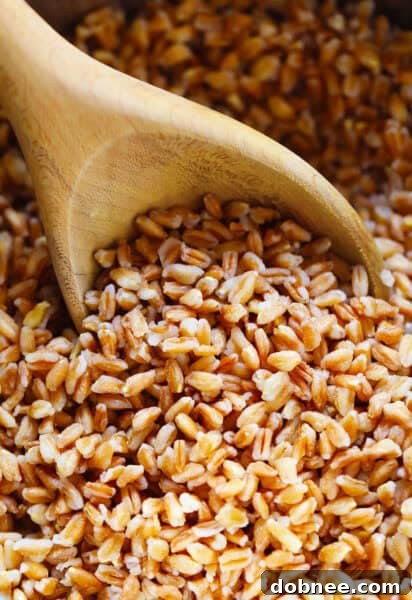
How To Cook Farro
Author: Ali
Prep Time: 5 mins
Cook Time: 15 mins
Total Time: 20 mins
Yield: 3 cups 1x
Description
Learn my favorite, simple method for how to cook farro perfectly on the stovetop. This versatile grain is ideal for meal prep and a healthy addition to many dishes. See notes above for various seasoning options, Instant Pot instructions, and plenty of recipe ideas.
Ingredients
Scale
- 1 cup uncooked farro, rinsed and drained (use pearled for 15-20 min cook time, semi-pearled for 25-30 min, whole for 35-40 min)
- 3 cups water or vegetable/chicken broth
- 1/2 teaspoon fine sea salt
- Optional: 1-2 bay leaves or 1-2 smashed garlic cloves for extra flavor
Instructions
- Prepare the Cooking Liquid: In a large saucepan, bring 3 cups of water (or broth) to a rolling boil over high heat. Add the rinsed farro, 1/2 teaspoon of fine sea salt, and any optional aromatics (like bay leaf or garlic).
- Simmer: Once boiling, reduce the heat to medium-low to maintain a gentle but steady simmer. Cook the farro until it is tender yet chewy. Cooking times vary by farro type:
- Pearled Farro: 15-20 minutes
- Semi-Pearled Farro: 25-30 minutes
- Whole Farro: 35-40 minutes (consider pre-soaking whole farro overnight to reduce cooking time).
Taste a few grains towards the end of the cooking time to ensure it reaches your desired “al dente” consistency.
- Drain: Carefully drain the cooked farro completely through a fine-mesh strainer to remove any excess liquid. Shake gently to remove as much water as possible.
- Fluff and Season: Transfer the drained farro back to the warm pot or a serving bowl. Use a fork to gently fluff the grains. Taste and adjust seasoning with additional salt or freshly ground black pepper as needed.
- Serve: Serve your perfectly cooked farro warm as a versatile side dish or as a wholesome base for your favorite recipes.
Equipment
Semi-Pearled Farro
Buy Now →
Large Fine-Mesh Strainer
Buy Now →
Bay Leaves
Buy Now →