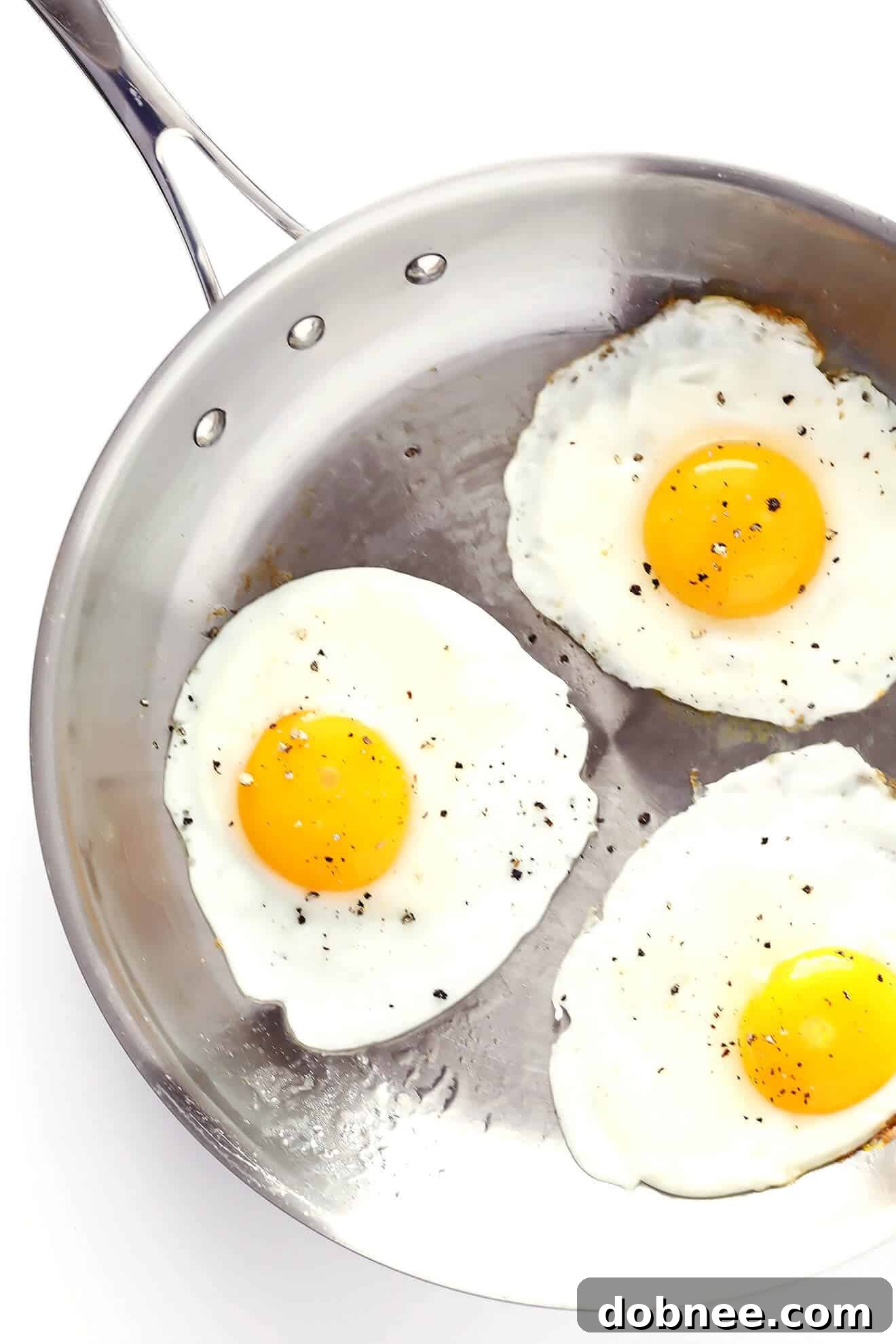
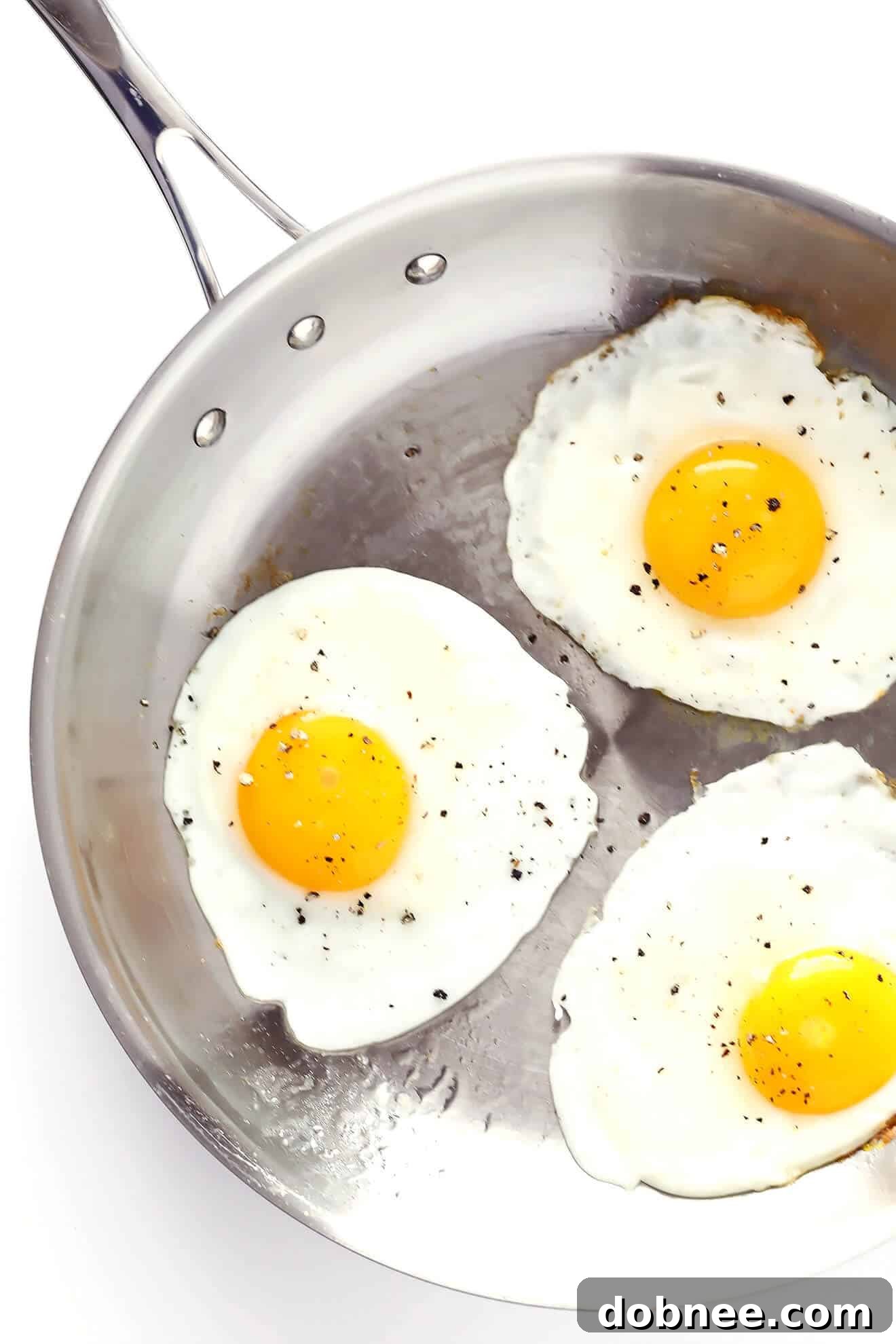
Mastering Fried Eggs: Your Ultimate Guide to Sunny-Side Up, Over Easy, Over Medium, and Over Hard
Few dishes are as universally beloved and versatile as the humble fried egg. It’s a breakfast hero, a brunch star, and a surprisingly effective meal enhancer, capable of transforming simple toast into a gourmet experience or adding a luxurious touch to a weeknight dinner. Yet, despite its apparent simplicity, mastering the various styles of fried eggs – from the delicate sunny-side up to the robust over hard – can feel like a culinary challenge.
For years, I proudly considered myself a sunny-side up enthusiast, rarely venturing beyond its perfectly runny yolk. My journey into the world of over-easy, over-medium, and over-hard eggs felt like unlocking a secret level in cooking. What changed? A few simple techniques and a better understanding of timing. It’s truly amazing how a minor adjustment in cooking duration can yield such distinct and delicious results, each catering to a different craving.
If you, like my former self, have ever wondered about the precise differences between these fried egg variations or how to achieve them consistently, then this guide is for you. We’re diving deep into the art of frying eggs, providing clear, concise instructions, essential tips, and a foundational recipe that will empower you to create your preferred style of fried egg with confidence and ease. Get ready to elevate your egg game and impress everyone at the breakfast table!
Unveiling the Four Classic Styles of Fried Eggs
The magic of fried eggs lies in their adaptability, primarily governed by the degree of yolk doneness. Each style offers a unique texture and appeal, making them perfect for various culinary applications and personal preferences. Let’s break down the four essential categories:
1. Sunny-Side Up: The Golden Liquid Jewel
The quintessential fried egg, sunny-side up, is a marvel of simplicity and elegance. Cooked exclusively on one side without flipping, it features a brilliantly bright, completely liquid yolk resting on a bed of softly set whites. The edges of the whites can be left tender or crisped slightly, depending on your preference and pan temperature. This style is ideal for those who cherish a runny yolk that can gracefully cascade over toast, hash, or any dish that benefits from its rich, natural sauce. The beauty of sunny-side up is its delicate texture and the contrast between the firm whites and flowing yolk.
2. Over Easy: A Gentle Veil for a Runny Heart
Over easy eggs provide a happy medium for those who adore a runny yolk but prefer a slightly more cooked top. After the whites begin to set, the egg is briefly flipped – usually for a mere 10 to 30 seconds. This quick flip creates a thin, barely opaque film over the yolk, cooking it just enough to prevent excessive jiggle while maintaining its entirely liquid interior. The whites are fully set but remain tender, making over easy eggs perfect for sandwiches, breakfast burritos, or any scenario where you want a contained runny yolk that still adds luscious creaminess.
3. Over Medium: The Perfectly Jammy Yolk
For a yolk that’s wonderfully thick and gooey – akin to a rich, molten jam – over medium eggs are the ideal choice. Following the flip, these eggs are cooked for a slightly longer period, typically 30 to 60 seconds. This extended cooking time transforms the yolk into a custardy consistency that holds its shape beautifully but still offers a delightful, yielding center. The whites are thoroughly set, often with a subtle golden hue on both sides. Over medium eggs are exceptionally versatile, adding a luxurious texture to salads, grain bowls, or even pasta dishes, appealing to those who appreciate a richer, more substantial yolk experience without it being completely firm.
4. Over Hard: The Firm and Satisfying Yolk
When a fully cooked, firm yolk is what you desire, over hard eggs deliver. These eggs are flipped and cooked for the longest duration among the variations, usually between 1 to 2 minutes, ensuring the yolk is solid throughout. While sacrificing the runny center, over hard eggs provide a uniform, satisfying texture that is incredibly convenient. They are an excellent choice for kids, for adding to packed lunches, or for sturdy sandwiches where a runny yolk might cause a mess. The flavor remains rich, and they offer a robust protein addition to any meal, providing a consistent bite from edge to center.
Mastering the Technique: Visualizing Your Perfect Fried Egg
While the nuances between each fried egg style might seem subtle, they are achieved through careful attention to heat and timing. Imagine the sizzle as the egg hits the pan, the gradual transformation of translucent whites into opaque perfection, and the decisive flip that determines your yolk’s destiny. Whether you’re aiming for a delicate sunny-side up or a sturdy over hard, the journey from raw egg to perfectly fried involves a blend of patience and precision. These visual cues and the rhythmic dance of cooking are what truly make you a master.
Essential Tips for Crafting Flawless Fried Eggs Every Time
Achieving consistently perfect fried eggs goes beyond just cracking an egg into a pan. A few expert tips and considerations can significantly enhance your results, ensuring deliciousness with every attempt:
- The Right Pan Makes All the Difference: Your choice of cookware is paramount. While skilled cooks can manage with almost any pan, a quality non-stick skillet is a game-changer for beginners and seasoned chefs alike. It ensures the egg doesn’t adhere to the surface, making flipping effortless and keeping the delicate whites intact. A well-seasoned cast-iron skillet is my top recommendation, as it offers exceptional heat retention and, once seasoned, provides an excellent non-stick surface.
- Controlled Pouring for a Beautiful Shape: For visually appealing, compact fried eggs, always crack your egg into a small bowl first. This not only allows you to remove any errant shell fragments but also gives you greater control over how the egg enters the pan. To prevent excessive spreading, hold the bowl just about an inch above the hot pan and pour slowly. Allow the egg whites to begin setting for a second or two before the yolk gently slips into the center. This method helps the egg maintain a desirable, rounded shape.
- Heat Management is Key: Medium Heat Reigns Supreme: The ideal temperature for frying eggs is typically medium heat. Too low, and your egg might take too long to cook, resulting in a rubbery texture. Too high, and the whites will crisp and potentially burn around the edges before the yolk reaches your desired doneness. Medium heat provides a gentle, even cook, giving you ample time to monitor the egg and achieve that perfect balance.
- Butter or Oil? Flavor and Functionality: The choice between butter and oil impacts both flavor and cooking properties. Butter imparts a rich, nutty taste and helps create slightly crispy, golden edges. However, it has a lower smoke point and can brown quickly. Oils like olive, vegetable, or avocado oil have higher smoke points, offering a cleaner flavor and better tolerance for slightly higher temperatures without burning. Experiment to discover which fat best complements your palate.
- Season Thoughtfully and Generously: A fried egg is a canvas for seasoning. A simple sprinkle of fine sea salt and freshly cracked black pepper immediately after cooking can dramatically enhance its flavor. For an added textural crunch and burst of salinity, consider flaky sea salt. Don’t underestimate the power of good seasoning – it truly makes a difference.
- Give Eggs Their Space: Avoid Overcrowding: If you’re cooking multiple eggs, ensure there’s sufficient space between them in the pan. Overcrowding can lower the pan’s temperature, leading to uneven cooking and increasing the likelihood of eggs sticking together or to the pan. When in doubt, cook in batches to ensure each egg receives optimal heat and attention.
- Freshness Matters: Fresher eggs tend to have firmer whites that stay more compact in the pan, resulting in a neater fried egg. Older eggs often have thinner whites that spread out more. While both are delicious, fresh eggs offer a better aesthetic.
Beyond the Plate: Creative Ways to Enjoy Your Fried Eggs
Fried eggs are far too versatile to be confined to just the breakfast table. Their ability to add richness, protein, and a luxurious texture means they can enhance a myriad of dishes throughout the day. Here are some inspiring ideas to integrate your perfectly fried eggs into diverse meals:
- The Ultimate Avocado Toast Topper: Elevate your classic avocado toast with a sunny-side up or over easy egg. The runny yolk perfectly melds with the creamy avocado, creating an irresistible blend of flavors and textures. A sprinkle of chili flakes adds a kick.
- Burger’s Best Friend: Take your burger to the next level by adding an over easy or over medium egg. The yolk acts as a natural, rich sauce, enhancing the juiciness and flavor of the patty.
- Noodle Bowl Nirvana: A fried egg is a fantastic addition to ramen, pho, or any stir-fried noodle dish. Its rich yolk breaks down into the broth or sauce, adding a creamy, comforting element and an extra boost of protein.
- Grain Bowl and Salad Sensation: Transform a simple grain bowl (quinoa, farro, brown rice) or a fresh green salad into a hearty and complete meal by crowning it with a fried egg. The runny yolk can even double as a light, flavorful dressing.
- Leftover Reinventor: Have some leftover pasta, roasted vegetables, or rice? A fried egg is an instant upgrade, breathing new life and flavor into last night’s dinner, making it feel fresh and exciting.
- Steak and Eggs: A Decadent Pairing: Indulge in the classic steak and eggs combination, especially with an over easy or over medium egg. The rich yolk beautifully complements the savory flavors of a perfectly cooked steak.
- Comforting Breakfast Burritos and Tacos: Incorporate fried eggs into your morning burritos or tacos alongside beans, cheese, salsa, and your favorite fillings for a satisfying and portable meal.
- Savory Tart or Pizza Topping: Add a fried egg to a savory tart, quiche, or even a homemade pizza right after it comes out of the oven for a gourmet touch.
The culinary possibilities are truly endless. Don’t hesitate to experiment and discover new, delightful ways to incorporate fried eggs into your everyday cooking!
Simple Fried Egg Recipe
How To Make Fried Eggs (Four Ways!)
Rating: 5 out of 5 stars (based on 7 reviews)
- Prep Time: 1 minute
- Cook Time: 2-4 minutes (depending on desired doneness)
- Total Time: 3-5 minutes
- Yield: 1 serving per egg
Description
Learn the simple techniques to fry eggs in four distinct styles: sunny-side up for a runny yolk, over easy for a delicate film, over medium for a jammy center, or over hard for a fully cooked yolk. This recipe provides clear, step-by-step instructions to achieve your perfect fried egg every single time.
Ingredients
- 1-3 large eggs, preferably fresh
- 2 teaspoons unsalted butter or preferred cooking oil (e.g., olive, avocado, or vegetable oil)
- Pinch of salt and freshly ground black pepper, to taste
Instructions
- Prepare the Egg: Carefully crack one egg into a small bowl. This allows you to check for any shell pieces and provides better control when adding the egg to the pan. If cooking multiple eggs, prepare each in a separate bowl.
- Heat the Pan: Heat 2 teaspoons of butter or oil in a large (preferably non-stick or well-seasoned cast-iron) sauté pan over medium heat. The pan is ready when the butter is melted and slightly foamy, or the oil is shimmering gently.
- Add the Egg: Gently pour the egg from the bowl into the heated pan. For a neater, more compact egg, pour slowly, allowing the whites to set for a second or two before the yolk settles into the center.
- For Sunny-Side Up Eggs: Cook undisturbed for 2-3 minutes, or until the whites are fully set and opaque, but the yolk remains completely runny and warm. Remove immediately from the pan.
- For Over Easy Eggs: Once the whites are mostly set (after about 2 minutes), gently slide a thin spatula underneath the egg. Flip it carefully and cook for an additional 10-30 seconds. The yolk should still be very runny with a thin film over top. Remove immediately.
- For Over Medium Eggs: After flipping, cook for an additional 30-60 seconds. The yolk should be jammy and soft, but no longer liquid. Remove immediately.
- For Over Hard Eggs: After flipping, cook for an additional 1-2 minutes, or until the yolk is completely firm and cooked through. You can gently press on the yolk with your spatula to check for firmness. Remove immediately.
- Serve: Carefully remove the cooked egg(s) from the pan. Season generously with salt and freshly ground black pepper to taste. Serve hot and enjoy your perfectly fried egg!
This post contains affiliate links, which means we may earn a small commission if you make a purchase through these links, at no extra cost to you. This helps support our content creation.
Frequently Asked Questions About Frying Eggs
- Q: Why do my eggs sometimes stick to the pan?
- A: Sticking is a common issue often caused by an insufficiently hot pan, not enough cooking fat, or using a pan that isn’t truly non-stick (or a cast-iron that needs re-seasoning). Ensure your pan is at medium heat and the butter or oil is shimmering before adding the egg. Also, avoid moving the egg too soon; let the whites set and create a natural barrier before attempting to slide it.
- Q: How can I prevent the yolk from breaking when I flip the egg?
- A: The secret to a successful flip lies in a thin, flexible spatula and a confident, swift motion. Wait until the whites are sufficiently set and firm enough to support the yolk. Gently slide your spatula completely under the egg, then execute a quick, decisive flip. Practice makes perfect!
- Q: Can I cook several fried eggs at once?
- A: Yes, you can, but it’s crucial not to overcrowd the pan. Leave ample space between each egg to ensure even cooking and easier flipping. Overcrowding can lower the pan’s temperature and result in unevenly cooked eggs or them sticking together. If your pan is small, cooking in batches is preferable.
- Q: What’s the best way to determine if my egg is cooked to my preferred consistency?
- A: Visual cues are your best friend! For sunny-side up, the whites should be fully opaque, and the yolk completely liquid. For over easy, a thin film should cover the yolk, which still jiggles freely. Over medium yolks will feel softly set and jammy when gently pressed. Over hard yolks will be firm and solid to the touch. With practice, you’ll develop a keen eye for each stage.
- Q: How do I achieve those coveted crispy, lacy edges on my fried eggs?
- A: To get beautiful crispy edges, use a slightly more generous amount of butter or oil in the pan and ensure the heat is on the warmer side of medium. As the egg cooks, you can also spoon some of the hot fat over the edges of the whites to help them crisp up and develop that desirable lacy texture.
- Q: What’s the best way to store and reheat fried eggs?
- A: Fried eggs are best enjoyed immediately after cooking for optimal texture and flavor, especially if you prefer a runny yolk. If you must store them, place them in an airtight container in the refrigerator for up to 1-2 days. Reheating can be tricky; gentle warming in a microwave for short bursts or a quick re-sizzle in a lightly oiled pan on low heat are options, but the yolk consistency, particularly for sunny-side up or over easy, will change.
Conclusion: Your Journey to Perfect Fried Eggs Begins Now!
The journey to mastering fried eggs in all their glorious iterations is a rewarding one, unlocking a simple yet profound culinary skill. Whether your heart yearns for the vibrant, runny yolk of a sunny-side up, the delicate balance of an over easy, the comforting jamminess of an over medium, or the satisfying firmness of an over hard, you now possess the knowledge and tips to achieve it.
With the right pan, a touch of butter or oil, and a keen eye on the clock, you’ll be confidently cracking and flipping your way to breakfast perfection in no time. So, gather your ingredients, fire up your skillet, and embark on this delicious adventure. Happy frying, and enjoy every golden, savory bite!