

Mastering the Mango: Your Ultimate Guide to Selecting, Peeling, and Dicing
Mangoes, with their vibrant colors, intoxicating aroma, and unparalleled sweetness, are truly a gift from nature. For many, this tropical treasure is a hands-down favorite fruit, evoking memories of sunny days and exotic flavors. However, the sheer joy of a ripe mango can often be overshadowed by the daunting task of preparing it. If you’ve ever found yourself wrestling with a slippery fruit, juice dripping everywhere, and more mango on your hands than in a bowl, you’re certainly not alone.
For years, I shared this struggle. The excitement of bringing home a perfectly ripe mango would quickly turn into a sticky, frustrating endeavor. My kitchen counter would become a battleground, my fingers perilously close to the knife as I tried to navigate around the elusive pit, leaving a trail of wasted pulp and a sticky mess. It felt like I needed a professional intervention just to enjoy this wonderful fruit cleanly and safely!
Thankfully, a simple lesson from a friend completely transformed my mango experience. What once seemed like an insurmountable challenge became a straightforward, enjoyable process. This guide is born from that revelation, meticulously crafted to help you unlock the full potential of this magnificent fruit. We’ll cover everything from how to pick a perfect mango and ripen it at home, to the most efficient and mess-free techniques for peeling and dicing. Get ready to elevate your mango game and savor every sweet, juicy bite without the fuss!
Why Mangoes Deserve a Spot in Your Fruit Bowl
Beyond their irresistible taste, mangoes are nutritional powerhouses that offer a wealth of health benefits, making them an excellent addition to any diet. Their versatility also means they can be enjoyed in countless ways, from a simple snack to a sophisticated dessert ingredient.
A Symphony of Flavor and Nutrition
- Rich in Vitamins: Mangoes are an excellent source of Vitamin C, crucial for immune health, and Vitamin A, vital for vision and skin.
- Antioxidant Boost: Packed with antioxidants like mangiferin, catechins, and quercetin, mangoes help combat oxidative stress and may reduce the risk of chronic diseases.
- Digestive Health: High in dietary fiber, mangoes aid digestion and promote gut health, contributing to a feeling of fullness.
- Hydration: With a high water content, mangoes contribute to daily hydration, especially refreshing during warmer months.
- Versatile Delight: From sweet to savory, mangoes can be incorporated into smoothies, salsas, salads, desserts, and even main courses.
Part 1: Selecting the Perfect Mango – A Sensory Experience

Choosing a ripe mango is the first crucial step to a delightful eating experience. Unlike some fruits where color is the primary indicator, mango ripeness is best judged by touch and smell. Here’s how to pick the best one:
The Feel Test: Gently Does It
The most reliable way to assess a mango’s ripeness is to gently squeeze it. A ripe mango should have a slight give, similar to a ripe avocado or peach. Avoid mangoes that are rock hard (unripe) or overly soft and mushy (overripe, though potentially good for purees). Different varieties will have slightly different textures, but a gentle yield is key.
The Aroma Test: A Sweet Scent
Bring the mango to your nose, especially near the stem end. A ripe mango will emit a fragrant, sweet, and fruity aroma. If there’s no scent, it’s likely unripe. If it smells sour, alcoholic, or fermented, it’s probably overripe.
The Visual Test: Color Isn’t Everything
While some mangoes turn a beautiful red or orange when ripe, color alone is not a definitive indicator. Many varieties, like the Ataulfo, remain yellow when ripe, and others like Kent can stay green even when perfectly sweet. Focus more on the absence of major blemishes, shriveled skin, or black spots, which could indicate bruising or spoilage.
The Weight Test: Heavy for its Size
A good mango should feel relatively heavy for its size. This often indicates a juicy, plump fruit, whereas a light mango might be dry or past its prime.
Understanding Mango Varieties
Globally, there are hundreds of mango varieties, each with unique characteristics. In many Western markets, you’ll commonly find:
- Tommy Atkins: Often large, with a firm texture and a milder sweetness. Red blush, but not indicative of ripeness.
- Ataulfo (Honey Mango): Smaller, kidney-shaped, with a rich, buttery, intensely sweet flavor when ripe. Turns golden yellow and develops wrinkles when ready.
- Kent: Large, oval-shaped, known for its juicy, low-fiber flesh and rich, sweet taste. Often remains green with some yellow blush.
- Keitt: Large, with a sweet, tangy flavor and minimal fiber. Can stay green even when fully ripe.
Part 2: Ripening Mangoes at Home for Optimal Sweetness
If you’ve brought home some firm, unripe mangoes, don’t despair! You can easily ripen them at home to achieve that perfect sweetness and texture.
The Countertop Method (Patience is a Virtue)
Simply leave unripe mangoes at room temperature on your kitchen counter. Depending on their initial ripeness, they should soften and develop their characteristic aroma within a few days to a week. Avoid direct sunlight, which can cook the fruit unevenly.
The Paper Bag Method (Speed It Up)
To accelerate the ripening process, place your mangoes in a paper bag. You can add an apple or banana to the bag; these fruits release ethylene gas, a natural plant hormone that speeds up ripening. Fold the bag closed and check daily. This method can ripen a mango in 1-3 days.
Storing Ripe Mangoes
Once your mangoes are perfectly ripe, you can store them in the refrigerator for up to five days to extend their freshness. Whole, ripe mangoes can also be frozen for longer storage after being peeled and diced, though they will lose some texture upon thawing, making them best for smoothies or purees.
Part 3: Essential Tools for Mango Preparation
While a skilled hand is important, having the right tools makes the process smoother and safer.
- Sharp Chef’s Knife: A sharp, sturdy knife (6-8 inches) is crucial for clean cuts and safety. A dull knife is more dangerous as it requires more force and can slip.
- Non-Slip Cutting Board: A stable surface is paramount. Place a damp paper towel or a non-slip mat under your cutting board to prevent it from sliding.
- Vegetable Peeler (Optional): While not strictly necessary for the dicing method we’ll detail, a peeler can be useful if you prefer to peel the mango first for slicing or pureeing.
- Spoon: Great for scooping out the flesh, especially if a mango is very ripe or for getting every bit of fruit off the pit.
Part 4: The Step-by-Step Guide to Peeling and Dicing a Mango Like a Pro
This is where the magic happens! We’ll focus on the most popular and efficient method for dicing, often called the “hedgehog” or “porcupine” method, which minimizes mess and maximizes yield.
Understanding the Mango Pit
Before you begin, it’s helpful to visualize the pit. It’s flat, oval-shaped, and runs through the center of the mango, from stem to bottom. Your goal is to slice around this pit.
Step-by-Step Dicing Method (The Hedgehog)
- Wash the Mango: Always start by thoroughly washing the mango under cool running water to remove any dirt or residues.
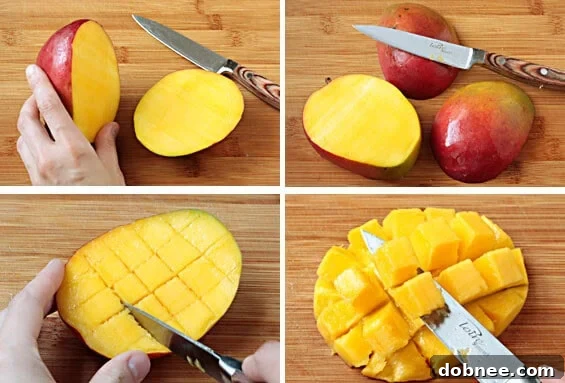
- Steady the Mango: Place the mango vertically on your cutting board, stem end up. You’ll notice it has two flatter “cheeks” on either side of the pit, and two narrower “shoulders.”
- Slice Off the Cheeks: With your sharp knife, make a cut about a quarter-inch from the center line, running parallel to the flat side of the pit. You should feel the pit guiding your knife. Repeat on the other side to remove the second “cheek.” You should now have two large, fleshy halves and a middle section containing the pit.
- Score the Flesh: Take one of the mango cheeks. With the skin side down, use your knife to carefully score the flesh in a crosshatch pattern (vertical and horizontal lines), creating cubes. Be sure to cut all the way through the flesh but *not* through the skin. Maintain even spacing for uniform dice.
- Invert and Dice: Gently push the skin side of the scored mango cheek upwards, causing the cubes of flesh to pop out like a “hedgehog” or “porcupine.” Now, simply slice the cubes off the skin with your knife into a bowl. Repeat with the second cheek.
- Address the Remaining Flesh (Around the Pit): The middle section with the pit still has plenty of delicious fruit. Stand the pit section upright. Carefully slice off any remaining flesh from around all four sides of the pit. You can then peel this flesh with a knife or peeler and cut it into strips or smaller dice. Alternatively, if the mango is very ripe, you can simply gnaw on the pit – many people find this the best part!
A Quick Note on Peeling First (For Slices or Puree)
If you prefer mango slices or are pureeing the fruit, you might opt to peel the entire mango first. To do this, stand the mango upright and carefully slice off the skin in downward strokes with a sharp paring knife or a vegetable peeler. Once peeled, you can then slice the cheeks off the pit and cut the flesh into any desired shape.
Troubleshooting & Tips: Making the Most of Every Mango
Even with the best intentions, not every mango will be perfect. Here are some tips for common mango mishaps and how to prevent them.
“Ali’s Tip” – What to Do with Mushy or Stringy Mangoes:
If you cut into a mango and find it’s too soft, mushy, or stringy for neat dicing, don’t throw it away! These characteristics often indicate an overripe or fibrous variety, but the flavor is usually still fantastic.
- Puree It: Blend it into a smooth puree. This is perfect for sauces, baby food, glazes, or a base for frozen desserts.
- Smoothie Star: Pop it straight into your blender for a delicious and nutritious smoothie. Combine with yogurt, milk, and other fruits.
- Eat It Plain: Sometimes, the simplest solution is the best. Just scoop out the soft flesh with a spoon and enjoy it as is. It might be messy, but it will still be delicious.
- Freeze for Later: Puree and freeze into ice cube trays for future smoothies or sorbets, or freeze chunks for a quick frozen treat.
Dealing with Slippery Mangoes:
A very ripe mango can be incredibly slippery. Here’s how to manage it:
- Ensure your hands and cutting board are as dry as possible.
- Use a very sharp knife; a dull knife requires more pressure and increases the risk of slipping.
- If needed, wear food-safe gloves with some grip.
Creative Ways to Enjoy Your Freshly Cut Mango
Once you’ve mastered the art of cutting, the culinary possibilities are endless!
- Simple Snack: Enjoy diced mango on its own for a refreshing and healthy treat.
- Smoothies & Juices: Blend with other fruits, yogurt, or coconut water for a tropical drink.
- Mango Salsa: Combine with red onion, cilantro, jalapeño, and lime juice. Perfect with grilled fish, chicken, or as a dip with tortilla chips.
- Fruit Salads: A vibrant addition to any fruit salad, complementing berries, melon, and kiwi beautifully.
- Desserts: Incorporate into tarts, parfaits, mousses, or make a simple mango sticky rice.
- Savory Salads: Add a sweet, tangy counterpoint to green salads with chicken, shrimp, or avocado.
- Breakfast Topping: Spoon over oatmeal, yogurt, or cottage cheese for a burst of tropical flavor.
Common Mistakes to Avoid for a Perfect Mango Experience
Learning from common pitfalls can save you time, effort, and mango flesh!
- Trying to Peel an Unripe Mango: Unripe mangoes are firm and their skin adheres tightly to the flesh, making them incredibly difficult to peel. Wait until it’s ripe for easier handling.
- Not Using a Sharp Knife: A dull knife is not only inefficient but also dangerous. It can slip, leading to accidents and squashed fruit.
- Cutting Blindly: Always visualize the flat pit inside. Cutting aimlessly can lead to hitting the pit and wasting good fruit.
- Wasting the Flesh Around the Pit: Don’t discard the pit section without first slicing off all edible flesh. Even the small pieces are delicious!
- Over-scoring the Skin: When doing the hedgehog method, be careful not to cut through the skin entirely, or your cubes won’t hold together when inverted.
Frequently Asked Questions About Mangoes
How long do mangoes last?
Unripe mangoes stored at room temperature will typically ripen in 3-7 days. Once ripe, they can be stored in the refrigerator for up to 5 days, or peeled and frozen for several months.
Can you freeze mangoes?
Absolutely! Peel and dice ripe mangoes, then spread them in a single layer on a baking sheet to freeze individually. Once frozen, transfer them to an airtight freezer bag or container. They are best used in smoothies, purees, or baked goods as their texture may change upon thawing.
What’s the difference between a ripe and unripe mango?
A ripe mango will be slightly soft to the touch, emit a sweet aroma, and have a rich, sweet flavor. An unripe mango will be firm, lack fragrance, and taste tart or starchy. Its skin might also be less vibrant depending on the variety.
Is mango skin edible?
While mango skin contains beneficial nutrients, it also contains urushiol, the same compound found in poison ivy, which can cause an allergic reaction (contact dermatitis) in sensitive individuals. Most people prefer to discard the skin, but some cultures do consume it, particularly from certain varieties. If you’re unsure, it’s best to avoid eating it.
Conclusion: Embrace the Sweetness, Conquer the Challenge
There you have it – a comprehensive guide to mastering the mango. What once seemed like a daunting task can now be a simple, enjoyable process. By understanding how to select a perfectly ripe fruit, employing the right tools, and following these step-by-step techniques for peeling and dicing, you’ll be able to enjoy every succulent, sweet bite without the sticky frustration.
No more messy hands, no more wasted flesh, just pure mango bliss. So, next time you spot those beautiful tropical gems at the market, pick them up with confidence. Give these methods a try, and prepare to elevate your fruit experience. Happy slicing, happy dicing, and most importantly, happy eating!