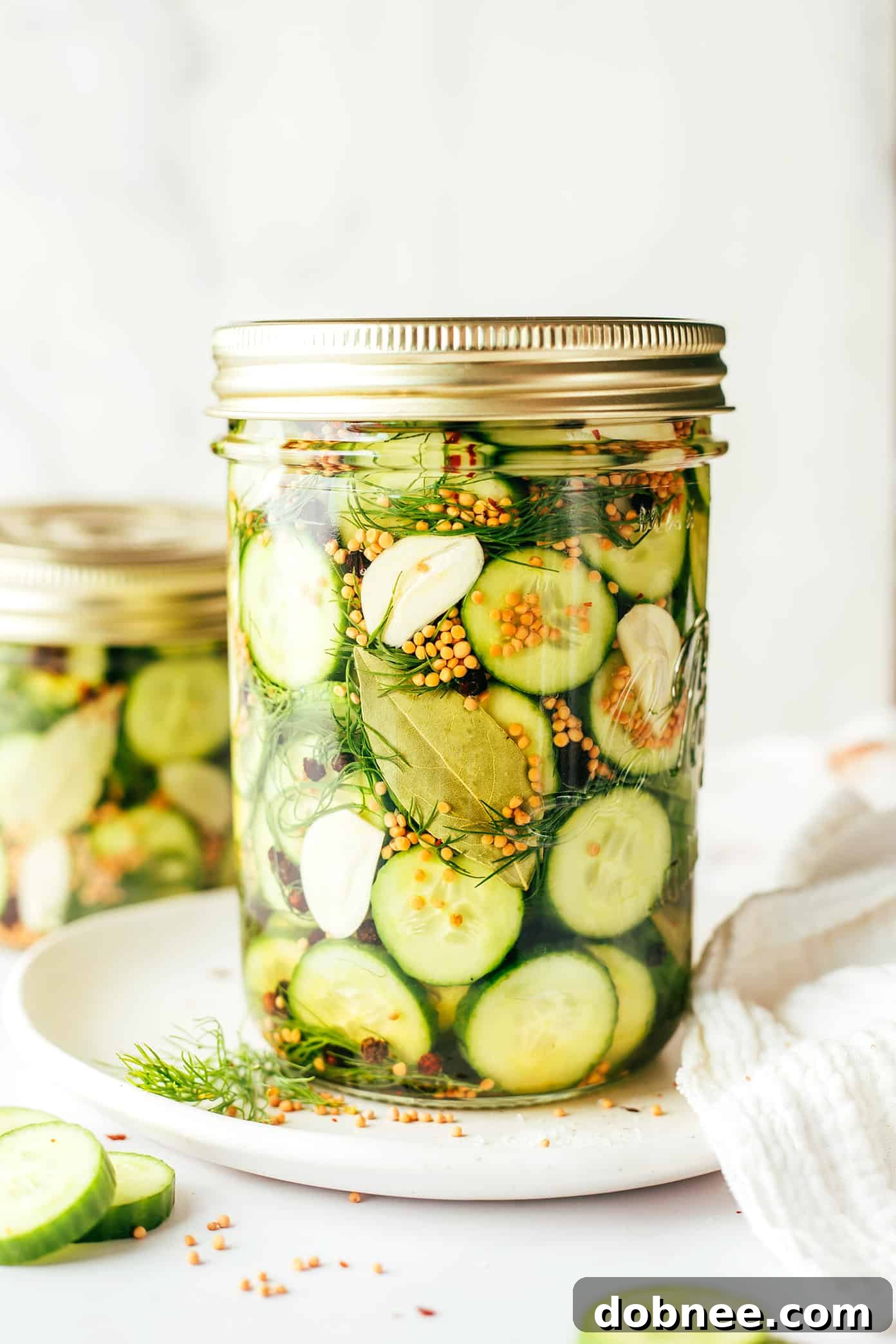
Experience the ultimate in homemade freshness with this incredibly easy refrigerator pickles recipe! Ready in just 5 minutes of active prep time, it’s fully customizable with your favorite seasonings and delivers the most delightful, crisp, and flavorful pickles you’ve ever tasted.
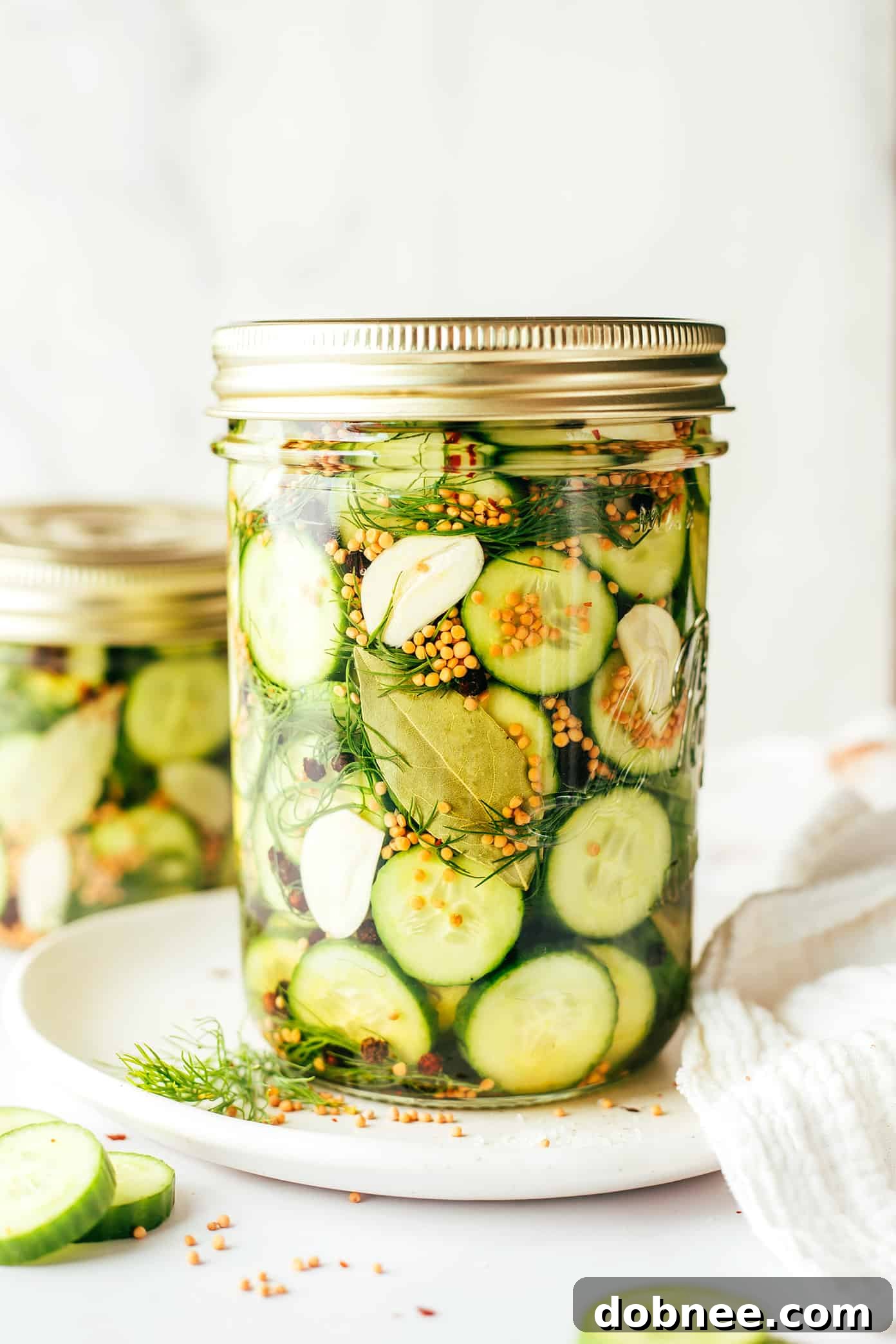
Mastering Homemade Refrigerator Pickles: Your Ultimate Guide to Crisp, Flavorful Delights
Do you ever get that undeniable craving for a perfectly crisp, tangy pickle? What if I told you that the secret to satisfying that craving lies just minutes away, right in your own kitchen? Get ready to ditch store-bought jars because we’re about to dive into making the most delicious homemade refrigerator pickles together!
This summer, as fresh cucumbers hit their peak, this easy refrigerator pickles recipe has been on constant rotation in my kitchen. While everyone has their unique preference for the “perfect pickle,” in my book, it simply doesn’t get any better than this simple yet sensational method. Inspired by the renowned fresh crunch of Grillo’s pickles, these homemade versions offer an unparalleled crispness and a vibrant, fresh flavor profile. They’re infused with a delightful blend of garlicky, dill-infused, and bay leaf seasonings, striking a perfect balance of salty and vinegary without being overwhelming. The result? Pure deliciousness that will have you reaching for more!
Beyond their incredible taste, these pickles are remarkably quick and easy to prepare. You’ll only need about 5 minutes of hands-on prep time, followed by a few hours for the pickling magic to happen in the refrigerator. If you can exercise a little more patience, allowing them to pickle overnight will reward you with an even deeper, more complex flavor. As an added bonus, this recipe is naturally gluten-free and vegan, making it a versatile treat for many dietary preferences. While they make a fantastic addition to burgers, sandwiches, salads, and even cocktails, we’re utterly obsessed with just popping them plain as a quick, satisfying snack. There’s truly nothing more delightful than that satisfying, crisp cucumber crunch!
So, gather your ingredients, and let’s embark on this simple journey to create a batch of homemade pickles that will elevate your culinary game and bring joy to your taste buds!
Why Choose Homemade Refrigerator Pickles?
Making your own pickles at home offers a multitude of benefits that go far beyond just convenience. Here’s why diving into DIY pickling is a truly rewarding experience:
- Unmatched Freshness and Flavor: Store-bought pickles, while convenient, often lack the vibrant, crisp texture and fresh taste of homemade varieties. With refrigerator pickles, you control the quality of your ingredients, resulting in a cleaner, brighter flavor that truly shines.
- Customization at Your Fingertips: This is perhaps the biggest advantage. You can tailor every aspect of your pickles to your personal preference. Love extra garlic? Add more! Crave a bit of heat? Amp up the chili flakes! Want to experiment with different herbs or spices? The possibilities are endless, allowing you to create a unique pickle profile that’s perfectly suited to your palate.
- Quick and Easy: Unlike traditional canning, refrigerator pickles don’t require any special equipment or extensive processing. There’s no hot water bath, no complex sterilization. Just a quick assembly and a chill in the fridge, making it an ideal project for even novice home cooks.
- Healthier Snacking Option: Pickles are naturally low in calories and can be a great way to boost gut health with beneficial probiotics (though the specific probiotic content can vary depending on fermentation). By making them yourself, you avoid unnecessary artificial preservatives, colors, and excessive sodium often found in commercially produced products.
- Cost-Effective: When cucumbers are in season and abundant, making your own pickles can be significantly more economical than continuously buying jars from the store.
- Reduce Food Waste: Have an abundance of garden cucumbers or a great deal at the farmer’s market? Pickling is a fantastic way to preserve your harvest and enjoy fresh produce for longer, minimizing food waste.
- Impress Your Guests: Serving homemade pickles instantly adds a gourmet touch to any meal or gathering. Your friends and family will be amazed by the depth of flavor and quality you’ve achieved with such little effort.
Once you experience the crisp, tangy delight of your own homemade refrigerator pickles, you’ll wonder why you ever settled for anything else!
Essential Ingredients for Your Perfect Homemade Pickles
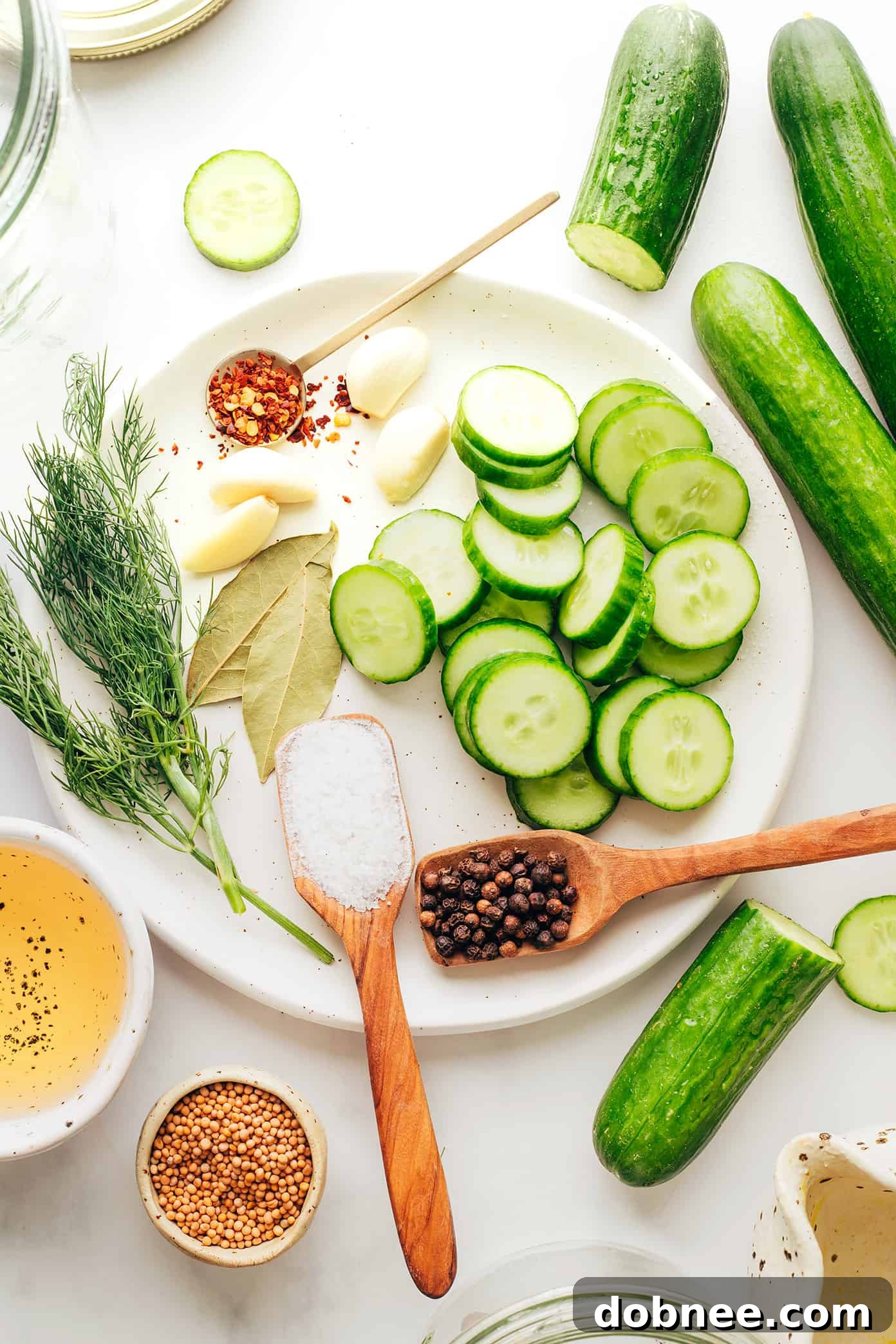
Before we dive into the full recipe, let’s take a moment to discuss the key ingredients that bring these incredible homemade pickles to life. Choosing the right components can make all the difference in achieving that desired crispness and flavor.
- Cucumbers: The star of the show! For this recipe, I highly recommend using mini Persian cucumbers. Their naturally extra-crisp texture and minimal seeds make them ideal for pickling, ensuring a satisfying crunch in every bite. English cucumbers are also an excellent choice, offering a similar mild flavor and thin skin that works beautifully. Avoid standard slicing cucumbers, as they tend to have more seeds and a higher water content, which can result in a softer pickle.
- Fresh Dill: Dill is synonymous with classic pickle flavor. I personally love to pack as much fresh dill as possible into my jars, as it imparts a wonderfully aromatic and slightly tangy herbaceous note. However, feel free to adjust the amount to suit your preference. Fresh dill is key here; dried dill will not yield the same vibrant flavor.
- Garlic: A foundational flavor in many great pickle recipes. Fresh garlic cloves, thinly sliced, are crucial for allowing their robust, pungent flavor to quickly permeate the cucumbers. The thinner the slices, the faster the garlic flavor will infuse the brine and the pickles themselves. Adjust the quantity according to your love for garlic!
- Seasonings: Our go-to blend for refrigerator pickles includes bay leaf, mustard seeds, black peppercorns, fine sea salt, and a touch of crushed red pepper flakes for a subtle kick. This combination creates a complex yet balanced flavor profile. If you’re aiming for a “Grillo’s-style” pickle, you might consider omitting the mustard seeds and crushed red pepper flakes for a cleaner, more straightforward dill-garlic flavor. Don’t be afraid to experiment with other spices (see variations below).
- Vinegar: The acidic backbone of any pickle. For a mellow, clean flavor that allows the cucumber and herb notes to shine, I recommend using either rice vinegar or distilled white vinegar. Both are excellent choices. While apple cider vinegar can also work, I find its flavor to be slightly too sweet and distinct for my personal preference in these classic dill pickles. However, if you enjoy a hint of apple undertone, it’s certainly an option.
- Water: Essential for diluting the vinegar and salt to create a balanced brine. Use filtered water if your tap water has a strong flavor.
- Fine Sea Salt: Crucial for flavor and preservation. It’s important to use fine sea salt or pickling salt, as iodized table salt can sometimes make your brine cloudy and impact the flavor. If you only have iodized table salt, you’ll need to use about half the amount to avoid over-salting (refer to the recipe notes for specifics).
The Simple Steps to Making Incredible Refrigerator Pickles
Crafting these homemade pickles is wonderfully straightforward, requiring minimal effort for maximum flavor. Here’s a detailed breakdown of the simple process:
- Prepare Your Jar and Ingredients: Start by ensuring your chosen jar (a 1-quart or 1-liter jar works perfectly) is sparkling clean. Slice your cucumbers into coins or spears, thinly slice your garlic cloves, and roughly chop your fresh dill.
- Layer the Pickles with Aromatics: This step is key for ensuring an even distribution of flavor. Begin by adding some of the cucumbers to the bottom of your jar. Then, layer in some fresh dill sprigs, a few slices of garlic, and a bay leaf. Continue layering cucumbers, dill, and garlic until the jar is filled. This method makes it much easier to fit all the larger ingredients neatly before adding the liquid brine. Pack them snugly but don’t crush them.
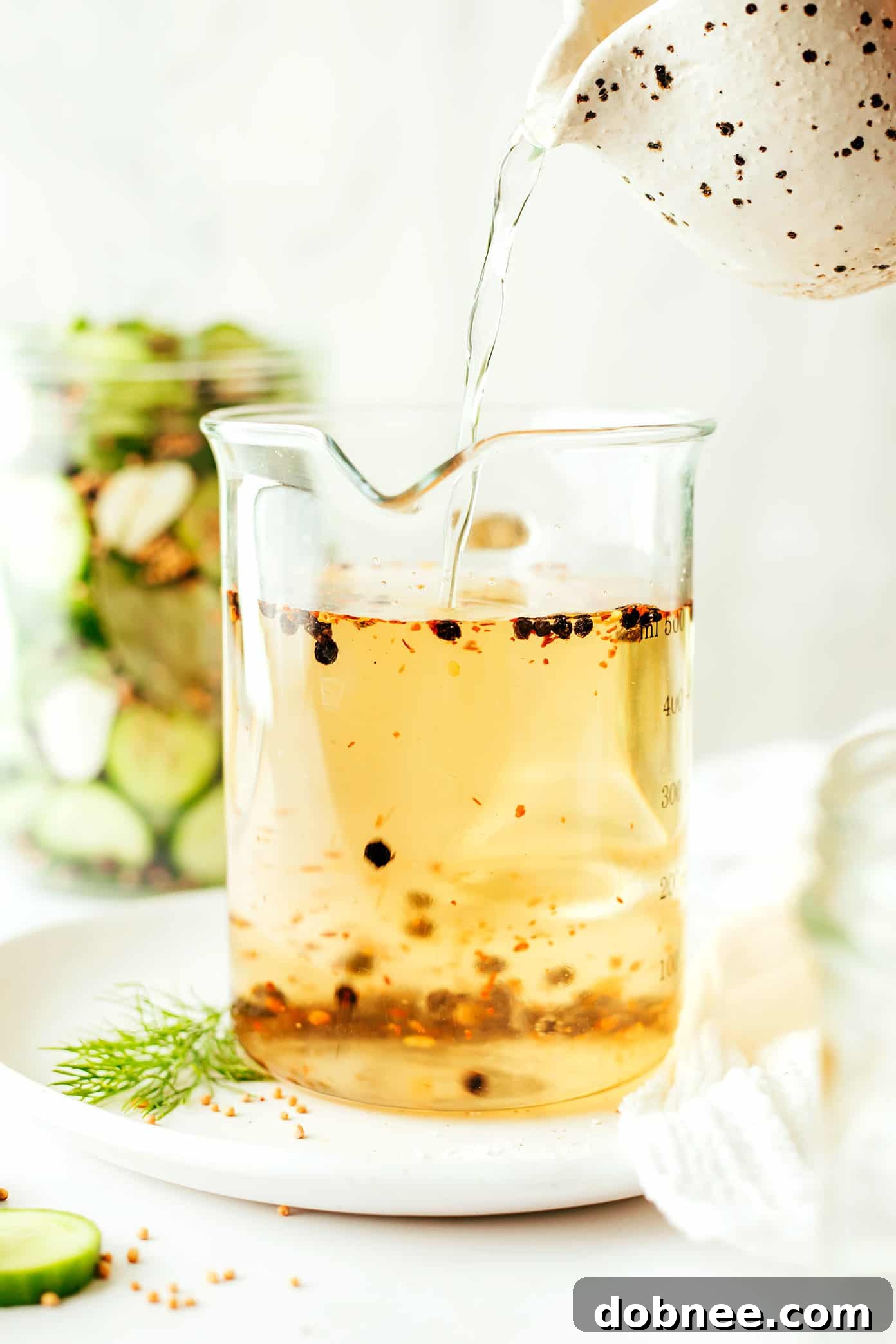
- Mix the Flavorful Brine: In a separate measuring jar or bowl, combine the water, your chosen vinegar (rice or distilled white vinegar are recommended), fine sea salt, black peppercorns, and crushed red pepper flakes (if using). Give everything a good whisk or stir until the salt is fully dissolved. For this type of quick pickle, there’s no need to heat the brine unless you’re incorporating a sweetener (refer to the variations section for sweet pickles). The cold brine keeps the cucumbers crisp.
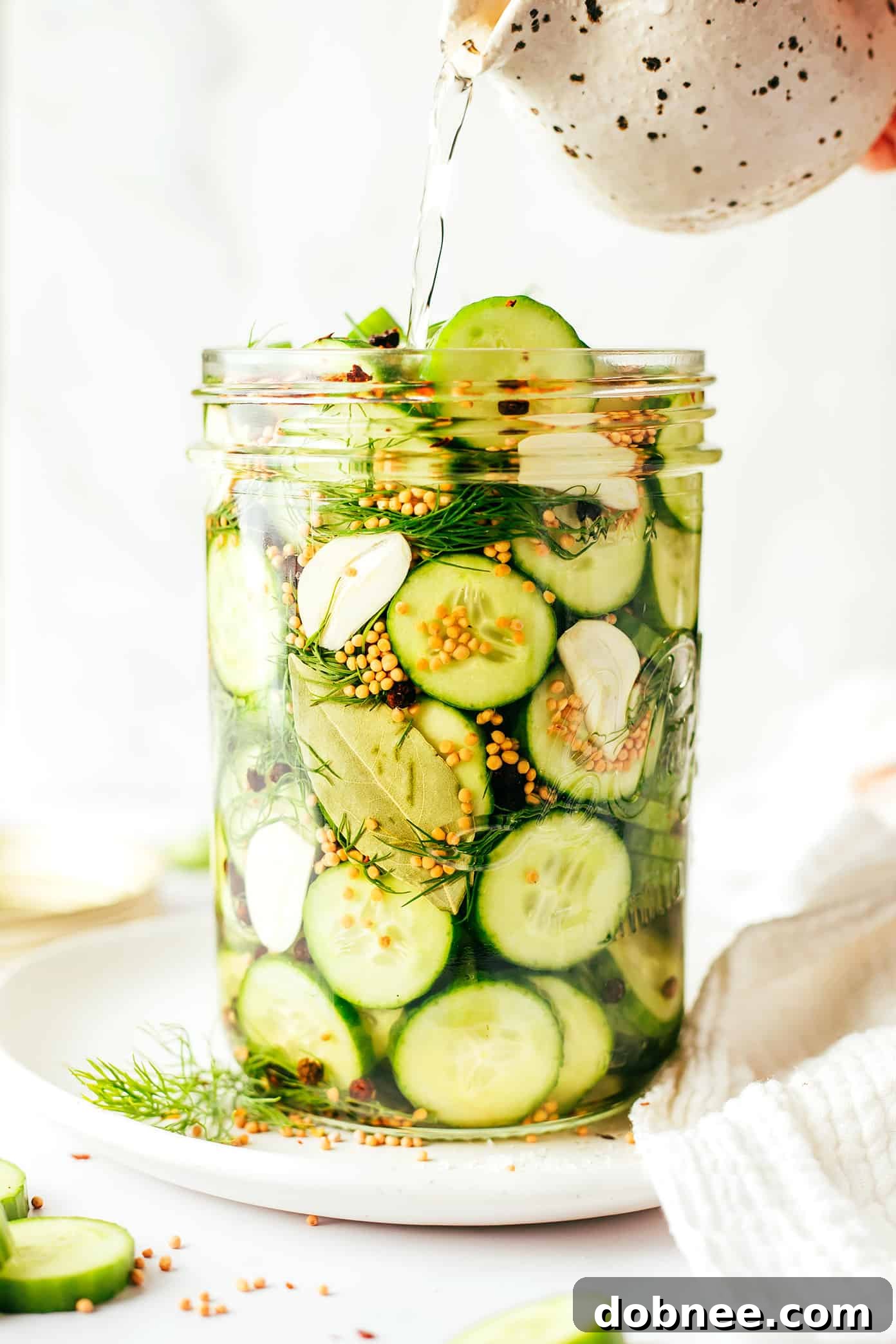
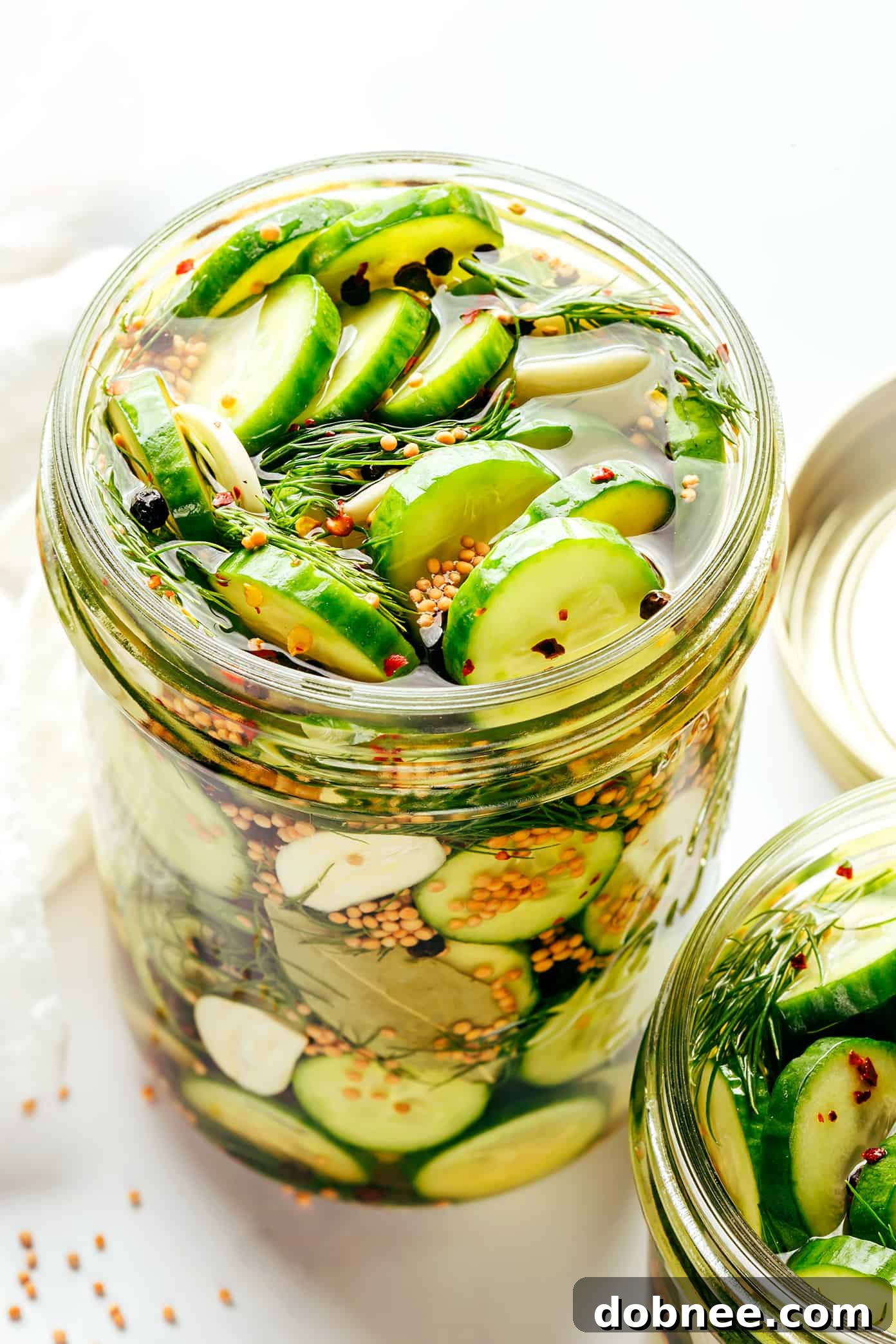
- Combine and Submerge: Carefully pour the freshly mixed brine over the cucumber and aromatic mixture in your jar. Make sure to pour slowly so the liquid settles into all the nooks and crannies. Once the brine is added, securely cover the jar with its lid. Give the jar a gentle but thorough shake to ensure all the ingredients are well combined and the flavors start to meld. It’s important to ensure that the cucumbers are as fully submerged as possible in the brine. If any pieces are floating, gently press them down with a clean utensil or a small plate (like a pickling weight) to keep them under the liquid. This prevents spoilage and ensures even pickling.
- Refrigerate for Flavor Infusion: Place your sealed jar of pickles in the refrigerator. While they will be lightly brined and delicious after just a few hours (perfect if you’re in a hurry!), for the absolute best flavor and crispness, I highly recommend letting them soak overnight, or ideally for at least 24 hours. The longer they sit, the more the flavors will develop and deepen. Your patience will be richly rewarded with an exquisite batch of homemade pickles!
Creative Variations for Your Homemade Pickles
One of the joys of making refrigerator pickles is how incredibly adaptable the basic recipe is. Feel free to unleash your creativity and customize your batch with different flavors and textures. Here are some fantastic ways to vary this homemade pickle recipe:
- Experiment with Fresh Herbs: While dill is classic, don’t limit yourself! Try adding other fresh herbs you adore. Fresh basil can offer a sweet, peppery note, chives provide a mild oniony flavor, mint can add a surprising freshness, oregano brings an earthy, robust touch, rosemary gives a piney aroma, tarragon offers an aniselike hint, or thyme can add a subtle, savory depth. A combination of herbs can also be delightful.
- Explore Different Spices: Elevate your pickle game by incorporating various whole or crushed spices into the brine. Celery seeds offer a traditional, earthy celery flavor, coriander seeds provide a warm, citrusy note, fennel seeds give a sweet, aniselike aroma, or whole cloves can add a potent, aromatic spice. Toasting some of these spices lightly before adding them can further enhance their flavor.
- Transform into Pickle Spears: Instead of slicing your cucumbers into coins, try cutting them lengthwise into long spears. This is perfect for snacking, sandwiches, or as a side with burgers. Ensure your jar is tall enough to accommodate the spears.
- Craft Sweet Pickles: If you prefer a sweeter pickle, it’s easy to adapt this recipe. Heat 2/3 cup of the water until it’s very hot (but not boiling). Stir in 1 to 3 tablespoons of your preferred sweetener, such as honey, maple syrup, or granulated sugar, until it completely dissolves. Then, stir in 2/3 cup of cold water to bring the mixture back to room temperature before adding it to your pickle jar as directed.
- Make Bread and Butter Pickles: For a delightful sweet and savory experience, combine the method for sweet pickles (as described above) and also add about a quarter of a small sweet onion, very thinly sliced, to your pickle jar along with the cucumbers and herbs. The onion adds another layer of flavor and texture.
- Amp Up the Spice for Spicy Pickles: If you crave heat, elevate the spice level! Instead of (or in addition to) crushed red pepper flakes, add your desired amount of thinly sliced fresh chile peppers to the brine. Jalapeños offer a moderate heat, serrano peppers bring a more intense kick, and tiny Thai bird chiles will truly test your spice tolerance. Be sure to wear gloves when handling very hot peppers.
- Garlic Lover’s Pickles: If you simply can’t get enough garlic, double or even triple the amount of thinly sliced garlic cloves in your jar. The cucumbers will absorb even more of that delicious pungent flavor.
Don’t hesitate to experiment with these variations, or even create your own unique combinations. The beauty of homemade pickles is the freedom to make them exactly how you like them!
Serving Suggestions for Your Homemade Pickles
Once your homemade refrigerator pickles are perfectly crisp and flavorful, it’s time to enjoy them! Their versatility makes them a fantastic addition to a wide array of meals and snacks:
- Classic Sandwich and Burger Companion: The most iconic use! Stack them high on your favorite burgers, hot dogs, pulled pork sandwiches, or deli-style creations for a burst of tangy crunch that cuts through richness.
- Elevate Your Salads: Chop them up and toss them into green salads, potato salad, tuna salad, or chicken salad for an extra layer of flavor and texture. The briny notes can really brighten up a creamy dressing.
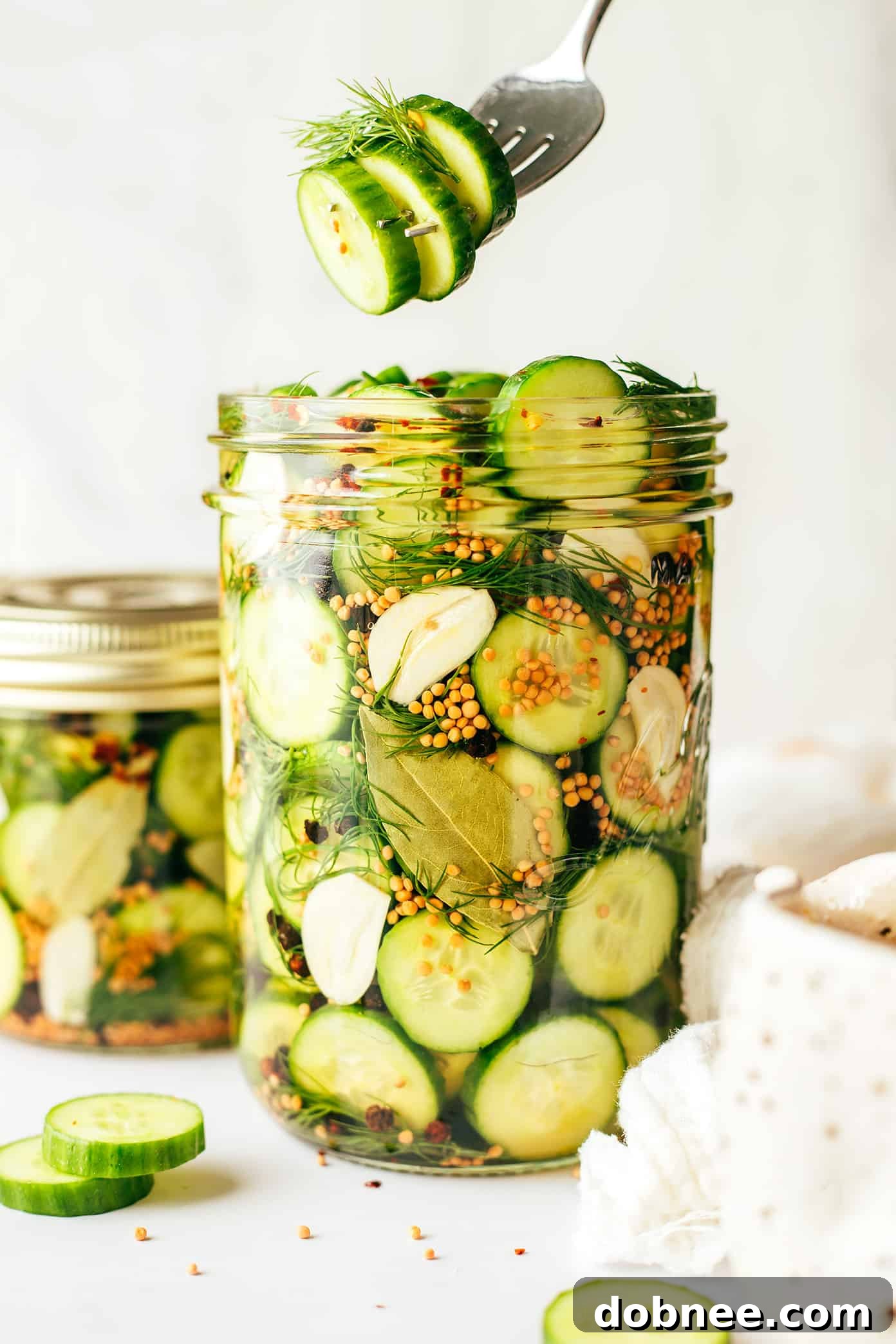
- Snack Attack: Honestly, sometimes there’s nothing better than eating them straight out of the jar! Their crisp texture and refreshing tang make them an incredibly satisfying and healthy snack on their own.
- Charcuterie Boards and Appetizers: Arrange a beautiful platter of cheeses, cured meats, crackers, and fruits, and don’t forget to include a small bowl of your homemade pickles. They provide a wonderful acidic counterpoint to rich flavors.
- In Cocktails: For a savory twist, use a pickle spear as a garnish in Bloody Marys or dirty martinis. The brine itself can even be used in small amounts to add a unique depth to savory drinks.
- Alongside Grilled Meats: The bright, acidic flavor of pickles pairs beautifully with smoky, rich grilled meats like BBQ ribs, grilled chicken, or steak. They offer a refreshing palate cleanser.
- With Eggs: Dice them finely and mix them into scrambled eggs, omelets, or frittatas. They can also be a delicious topping for deviled eggs.
- Garnish for Soups and Stews: A finely chopped pickle can add a surprising pop of flavor and acidity to hearty soups and stews, especially those with creamy bases.
Don’t be afraid to get creative – the possibilities are truly endless when it comes to enjoying your delicious, homemade refrigerator pickles!
Homemade Pickles FAQ & Troubleshooting
You’ve got questions, we’ve got answers! Here are some common inquiries and tips to ensure your homemade pickling experience is a success:
Q: Can I use this recipe for traditional canning and long-term storage?
A: No, this is a refrigerator pickle recipe and is specifically designed for short-term storage in the refrigerator. It does not use the proper acidification levels or canning methods (like a hot water bath) required for safe shelf-stable, long-term preservation. Attempting to can this recipe could lead to food safety risks.
Q: Can I re-use the pickle brine for a new batch of cucumbers?
A: To err on the side of caution and for optimum food safety, I strongly recommend always creating a fresh new brine for each batch of pickles. While some people do reuse brine, its acidity can decrease over time, and it may not offer sufficient protection against bacterial growth for subsequent batches.
Q: How should I store refrigerator pickles?
A: Refrigerator pickles must always be stored in a cool refrigerator in a clean, tightly sealed jar. Proper refrigeration is essential to maintain their crispness, flavor, and safety.
Q: How long do these homemade pickles last?
A: For optimum food safety, we generally recommend consuming these refrigerator pickles within 1 week. That said, in our household, we often keep ours for up to 2-3 weeks in the refrigerator without any issues, provided we always use a clean fork or spoon to remove the pickles (no double-dipping to avoid introducing bacteria). Always use your best judgment; if they smell off, look cloudy, or become soft, it’s best to discard them.
Q: My pickles aren’t as crisp as I’d like. What went wrong?
A: Several factors can affect crispness. Ensure you’re using fresh, firm pickling cucumbers (like Persian or English). Over-pickling can also lead to softer pickles, so don’t leave them in the brine for excessively long periods beyond 2-3 weeks. Not fully submerging cucumbers in the brine can also lead to softening. Finally, some varieties of cucumbers are simply naturally softer than others, so choosing the right type is important.
Q: Can I use a different type of salt?
A: It’s best to use fine sea salt or pickling salt for this recipe. Iodized table salt can sometimes contain anti-caking agents that make your brine cloudy and may impart an off-flavor. If you absolutely must use iodized table salt, use approximately half the amount specified in the recipe, as it is generally saltier by volume.
Q: My brine looks cloudy. Is it still safe?
A: A slightly cloudy brine can sometimes be normal, especially if you used iodized salt or if the cucumbers release some of their natural yeasts. However, if the cloudiness is accompanied by an off-smell, visible mold, or sliminess, it’s a sign that the pickles have gone bad and should be discarded immediately.
Q: Can I add sugar to this recipe?
A: Absolutely! If you prefer sweet or bread and butter style pickles, refer to the “Homemade Pickle Recipe Variations” section above for instructions on how to incorporate sweetener into your brine. This will produce a delightful sweet and tangy pickle.
Making your own pickles is a rewarding experience, and with these tips, you’ll be enjoying perfect homemade pickles every time!
Easy Homemade Refrigerator Pickles
- Prep Time: 5 minutes
- Cook Time: 0 mins
- Total Time: 5 minutes
- Yield: 1 jar
Description
This easy homemade pickles recipe only takes about 5 minutes to prep and makes perfectly crisp and delicious pickles that you’ll LOVE!
Ingredients
- 12 ounces Persian cucumbers,* sliced into coins or spears
- 5 to 6 large sprigs fresh dill, roughly chopped
- 4 small cloves garlic, thinly sliced
- 1 bay leaf
- 1 1/3 cups water
- 2/3 cup rice vinegar
- 1 tablespoon fine sea salt*
- 2 teaspoons black peppercorns
- 1 teaspoon mustard seeds (optional)
- 1/8 teaspoon crushed red pepper flakes
Instructions
- Layer the pickles. Add the cucumbers, dill, garlic and bay leaf to a large (about 1 quart or 1 liter) jar, layering the dill and garlic between the cucumbers if possible.
- Mix the brine. In a measuring jar, briefly whisk together the water, vinegar, salt, peppercorns and crushed red pepper flakes until combined.
- Combine. Pour the brine over the cucumber mixture. Then cover the jar securely with a lid and give it a good shake to combine. If needed, press the cucumbers down so that they are more or less fully submerged.
- Refrigerate. Refrigerate for ideally at least 1 day before eating, although the pickles will be lightly brined and ready to enjoy after just a few hours if you would like. Pickles can be stored in a sealed jar in the refrigerator for 1 week.*
Equipment
1-Liter Jar
Buy Now →
1-Quart Jar
Buy Now →
Glass Measuring Cups
Buy Now →
Notes
Cucumbers: Alternately, you could use 12 ounces of English cucumber (about 1 large English cucumber) for a similar crisp texture.
Salt: I strongly recommend using fine sea salt for this recipe instead of iodized table salt. Iodized salt can sometimes make your brine cloudy and may impart a slightly metallic taste. If you only have iodized table salt on hand, please note that you will need to use approximately half the amount to avoid over-salting, as it is generally saltier by volume.
Storage time: For optimum food safety, we recommended that you eat these refrigerator pickles within 1 week. That said, we often keep ours for up to 2-3 weeks in the refrigerator, using a clean fork or spoon each time to remove the pickles (no double-dipping to avoid adding bacteria), and have not had any issues. Always use your best judgment; discard if any off-smells, cloudiness beyond minor haze, or mold appears.
Recipe edit: This recipe was edited in July 2022. The original recipe called for one (12-ounce) English cucumber, used less vinegar (3 tablespoons), more salt (1.5 tablespoons), and no mustard seeds. The current version aims for a more balanced and widely appealing flavor profile.