





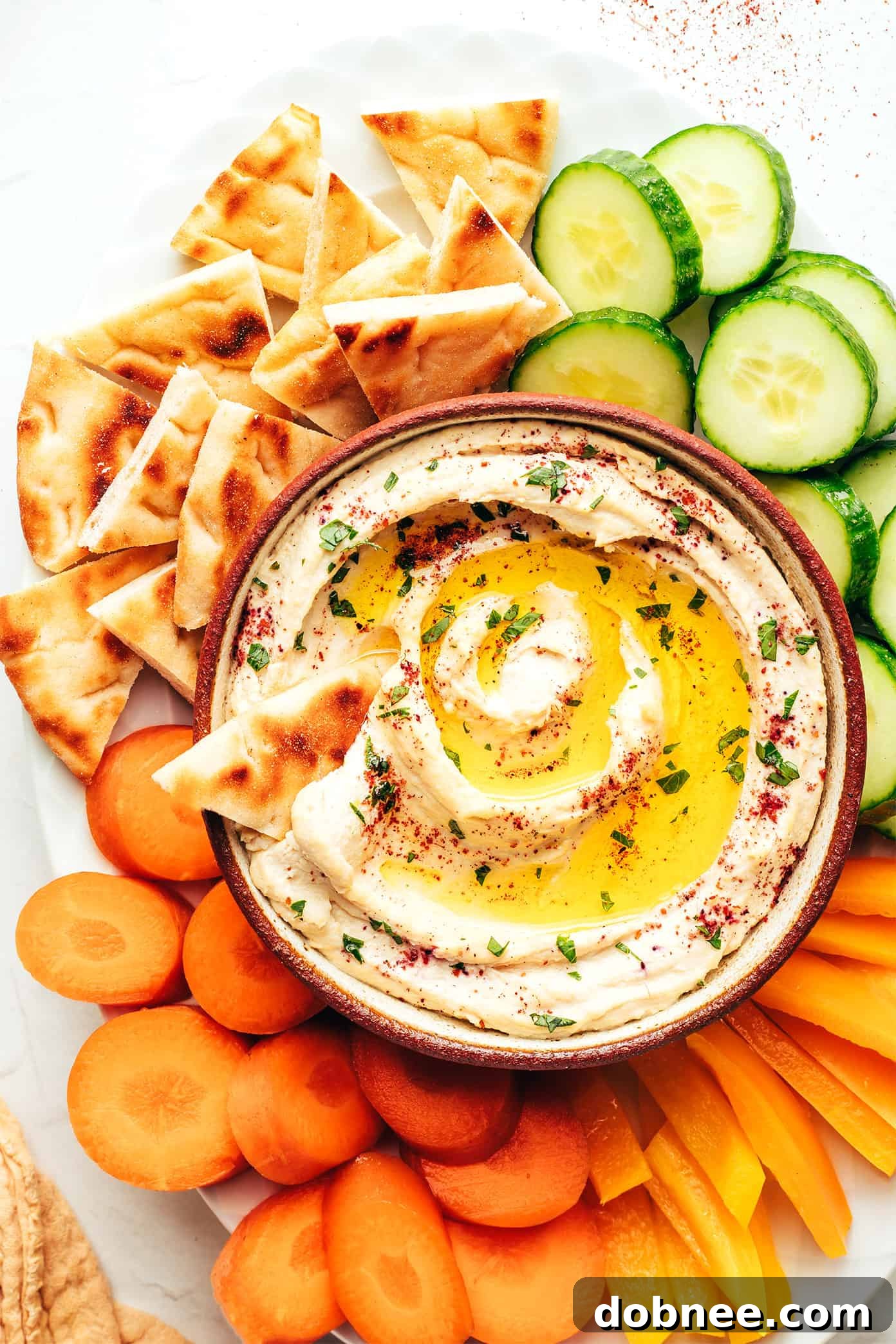
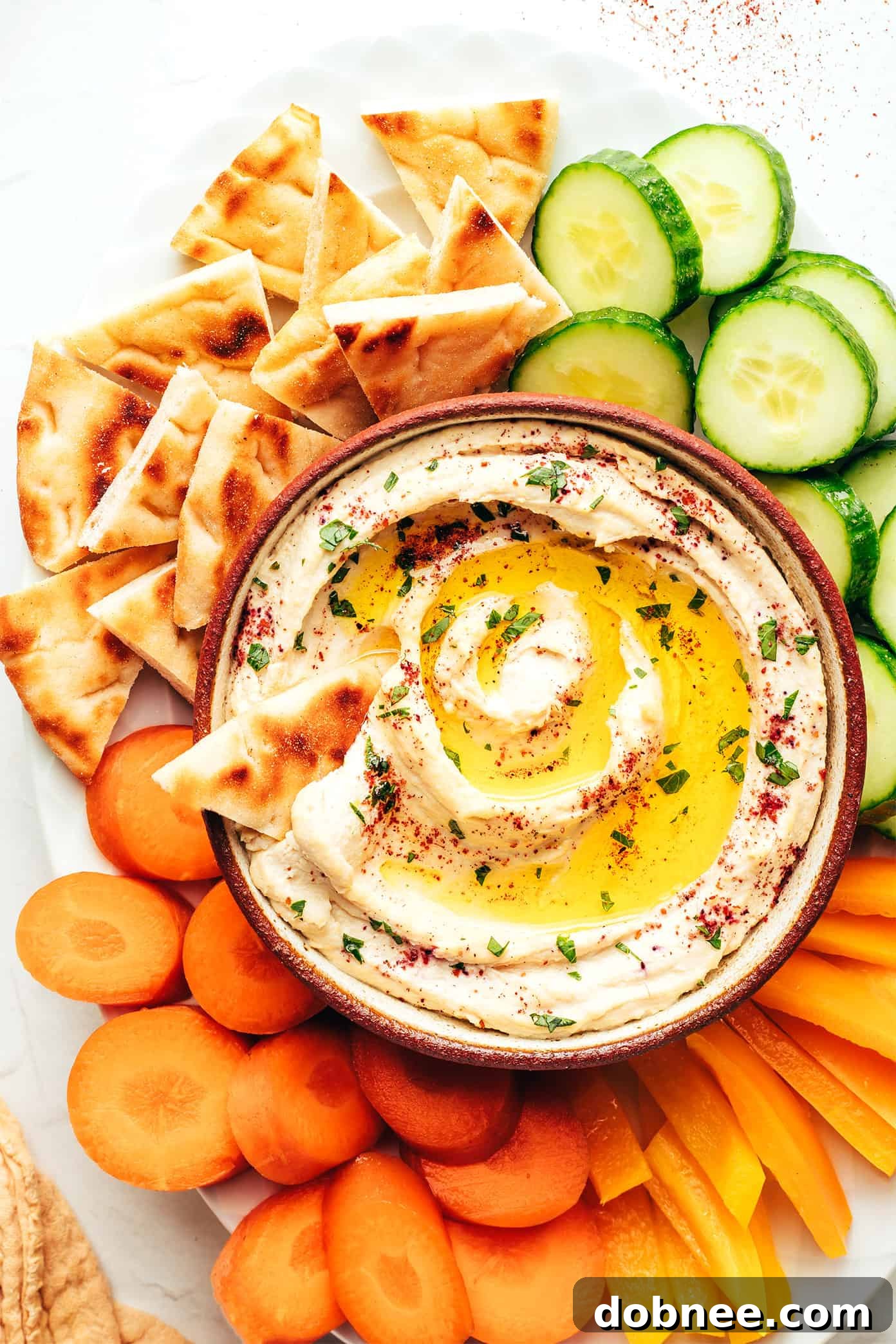
This homemade hummus recipe is quick and easy to make, super-smooth and creamy, and tastes so fresh and flavorful!
The Secret to Super-Smooth, Creamy Homemade Hummus
For too long, the quest for truly exceptional homemade hummus felt like an elusive dream. While I’ve always cherished a basic hummus recipe that served me well for years, a transformative culinary experience in Barcelona ignited a new mission. This humble falafel spot served up hummus so unbelievably creamy, ethereal, and bursting with flavor that it reset my standards completely. It was clear: my old recipe, while good, simply wasn’t great. And so began my deep dive into the art and science of perfecting homemade hummus, determined to crack the code for that unparalleled velvety texture and vibrant taste.
My Journey to the Perfect Hummus: Dispelling Myths and Discovering Truths
My culinary adventure started with two main objectives: first, to elevate the flavor, and second, to achieve that impossibly silky-smooth texture. The flavor enhancement proved to be the more straightforward part of the mission. A simple recalibration of key ingredients made an immediate and dramatic difference. Increasing the proportions of good-quality tahini for its rich, nutty depth, fresh lemon juice for its crucial brightness and acidity, potent garlic for an aromatic kick, and a balanced amount of fine sea salt instantly brought the dip to life. A final flourish of ground sumac – the preferred spice at our inspiring Barcelona spot – or a sprinkle of paprika for a milder, earthy note, completed the flavor profile, adding both visual appeal and an extra layer of taste.
However, the pursuit of the ultimate smooth texture was where the real “hummus-a-thon” began. The internet, as it often does, presented a dizzying array of strong opinions and intricate methods, mostly revolving around the preparation of chickpeas. In my makeshift test kitchen, I rigorously experimented with every suggested technique. I tried Solmonov’s renowned method of soaking dried chickpeas overnight and then boiling them until nearly disintegrated with baking soda, believed to be the secret to their exceptional softness. I also explored Epicurious’s quicker approach of simmering canned chickpeas for 20 minutes to soften them further. Melissa Clark’s Instant Pot hummus, promising convenience without sacrificing quality, was also put to the test. Even the Washington Post’s ultra-speedy method advocating for extended pureeing in a food processor, alongside various online tips like incorporating aquafaba (the liquid from canned chickpeas), using high-powered blenders, and the notoriously tedious task of individually peeling each chickpea – all were meticulously evaluated. Barclay, my trusty taste-tester, and I consumed batch after batch, sometimes twenty or more in a single month, confirming our unwavering love for hummus, despite the intensive research!
After this extensive and rather exhaustive testing period, our conclusion was surprisingly simple, yet profoundly impactful. Despite the passionate debates online, the actual differences in texture achieved by most of these elaborate chickpea preparation methods were, to our palates, astonishingly subtle, often microscopically so. During blind taste tests, conversations often devolved into hesitant remarks like, “Is batch three *really* smoother than batch four? Maybe? I think so?” It was clear that much of the hype surrounding these complex techniques didn’t translate into a genuinely discernible improvement in the final product. The time and effort invested often yielded returns that were hardly noticeable.
The true game-changer, the most significant factor in achieving that coveted light, whipped, and velvety-smooth consistency, turned out to be the simplest step of all: extended pureeing in the food processor. It seems almost too obvious, almost an anticlimax after countless hours of experimentation. But consistently allowing the food processor to work its magic for an extra few minutes—beyond what might initially seem sufficient—was the undeniable key. This sustained processing time allowed the ingredients to fully emulsify and aerate, breaking down the chickpeas to their smoothest possible state. This simple technique transformed the hummus from merely good to truly spectacular, consistently delivering the dreamiest texture we had encountered in Barcelona, without any complicated pre-preparation.
To be fair, there was a minute, almost imperceptible enhancement in both flavor and texture when using chickpeas cooked from scratch, whether on the stovetop or in an Instant Pot. Similarly, simmering canned chickpeas for 20 minutes beforehand might lend a fractionally creamier consistency. However, when we pitted three final batches against each other – one with scratch-cooked chickpeas, one with canned chickpeas simmered for 20 minutes, and one with chickpeas straight from the can – all subjected to a full four minutes of vigorous pureeing in the food processor, Barclay and I struggled to agree, even in blind tests, on which was definitively the smoothest. The extended pureeing time appeared to homogenize and perfect them all, demonstrating that this simple, accessible step is indeed the most potent secret to superior homemade hummus. So, while online hummus debates may rage with passion, for our household, this streamlined, effective method is the clear winner, proving that simple execution often triumphs over elaborate preparation!