

Mastering Homemade Turkey Gravy: Easier Than You Think!

There’s an undeniable magic that happens when a rich, velvety turkey gravy graces your holiday table. It’s the crowning glory for your perfectly roasted turkey, the luscious blanket for fluffy mashed potatoes, and the savory complement to any stuffing. Many shy away from making gravy from scratch, assuming it’s a complicated, time-consuming affair reserved for professional chefs. But I’m here to tell you that homemade turkey gravy is not only achievable but surprisingly simple and incredibly rewarding!
Think about it: you’ve already invested time and effort into roasting a beautiful, golden-brown turkey. Those flavorful pan drippings left at the bottom of the roasting pan are liquid gold, brimming with savory goodness. To let them go to waste would be a culinary crime! This recipe transforms those precious drippings into an exquisite gravy in just about 15 minutes – the perfect amount of time while your turkey is resting before carving. This clever timing ensures your turkey is juicy and ready, and your gravy is hot and fresh.
Over the years, this particular turkey gravy recipe has become my go-to. It’s consistently dependable, yields a smooth, rich gravy every single time, and is wonderfully adaptable to your taste preferences. A few simple ingredients, a whisk, and a little attention are all you need to create a deeply flavorful gravy that will impress your guests and elevate your entire meal. You’ll find it incredibly satisfying to pour a homemade gravy over your holiday feast, knowing you’ve crafted every delicious component from scratch. Get ready to fall in love with making your own turkey gravy!
This comprehensive guide will walk you through every step, from separating the fat to achieving that perfect silky texture, along with troubleshooting tips and creative variations. Whether you’re a seasoned chef or a first-time gravy maker, you’ll gain the confidence to create a truly exceptional turkey gravy that will be the highlight of any dinner.
Essential Tips for Perfect Turkey Gravy
Achieving a smooth, lump-free, and incredibly flavorful turkey gravy isn’t as daunting as it may seem. With these expert tips and tricks, you’ll be whipping up flawless gravy consistently. These techniques are designed to simplify the process and guarantee a delicious result every time you make homemade turkey gravy.
- Skim the Fat While Drippings Are Warm: This is a crucial first step. After removing your roasted turkey from the pan, allow the drippings to sit for a few minutes. The fat will rise to the top, making it much easier to skim off. Warm drippings separate more effectively than cold ones, allowing for a cleaner distinction between the flavorful juices and the fat needed for your roux. You can use a spoon or a ladle for this, carefully scooping off the top layer of fat.
- Utilize a Fat Separator for Ease: While not strictly essential, a fat separator is a game-changer. This handy kitchen tool makes the process of separating fat from the turkey juices virtually foolproof. Simply pour all your pan drippings into the separator, let the fat rise, and then pour the concentrated, flavorful juices from the bottom spout directly into your measuring cup. It ensures you get precisely the amount of fat and juices you need, with minimal effort and mess.
- Pre-Warm Your Stock: This might seem like a small detail, but it makes a big difference in gravy texture. Adding cold chicken or turkey stock to a hot roux can cause the flour mixture to seize up and create lumps. By gently warming your stock (either in the microwave or a small saucepan) before gradually incorporating it, you facilitate a smoother, more even blend, leading to a truly silky gravy.
- Add Liquid Gradually and Whisk Constantly: Patience is key when building your gravy. Once your roux is ready, slowly pour in the warm liquid (a combination of turkey juices and stock) while vigorously whisking. Adding the liquid slowly, in small increments, allows the flour in the roux to fully absorb the liquid without clumping. Continuous whisking ensures a homogenous mixture, preventing lumps and creating that desirable smooth, glossy texture.
- Master Consistency at the End: Gravy consistency is a matter of personal preference, and it’s easily adjustable. If your gravy appears too thick, simply whisk in additional warm chicken or turkey stock, a tablespoon at a time, until it reaches your desired pourable consistency. Conversely, if your gravy is too thin, allow it to simmer gently over low to medium heat for a few more minutes. The liquid will reduce, and the gravy will naturally thicken. Stir occasionally to prevent sticking.
- Season Thoughtfully at the Final Stage: Turkey drippings can be inherently salty, especially if your turkey was brined or heavily seasoned. For this reason, always taste your gravy before adding any salt or pepper. Seasoning at the very end ensures you achieve a perfectly balanced flavor profile without over-salting. Add salt and freshly ground black pepper incrementally until it tastes just right.
- Strain for an Ultra-Smooth Gravy: For those who desire a perfectly velvety, restaurant-quality gravy, an optional straining step is highly recommended. After the gravy is cooked and seasoned, simply pour it through a fine-mesh strainer into a clean saucepan or gravy boat. This will catch any small lumps, herb bits, or remaining turkey solids, leaving you with an impeccably smooth and luxurious finish.
- Pre-Warm the Gravy Boat: To ensure your delicious homemade turkey gravy stays warm throughout your meal, take a moment to pre-warm your gravy boat. Fill it with hot (not boiling) tap water, let it sit for a few minutes, then carefully empty it out just before pouring in the freshly made gravy. This simple trick will keep your gravy at the ideal serving temperature for longer.

Exciting Recipe Variations for Your Turkey Gravy
While classic turkey gravy is undeniably delicious, this recipe offers a fantastic foundation for experimentation. Don’t hesitate to personalize your gravy with these delightful variations, adding depth, aroma, and unique flavors to complement your meal. Each addition can transform your gravy, making it truly your own signature creation.
- Infuse with Garlic: For a savory boost, stir in one to two cloves of finely minced fresh garlic or a generous pinch of garlic powder when you’re making the roux. Sautéing the garlic briefly with the flour and fat will release its aromatic oils, adding a wonderful foundational layer of flavor to your gravy.
- Enrich with Fresh Herbs: Fresh herbs are a natural partner for turkey and gravy. Consider adding a teaspoon or two of finely chopped fresh rosemary, thyme, or sage (or a combination of all three) during the final simmering stage. These fragrant herbs will impart a beautiful, earthy aroma and taste, reminiscent of traditional holiday flavors.
- Boost Umami with Savory Enhancers: To deepen the savory richness of your gravy, a small splash of umami-rich ingredients can make a big difference. Try adding a teaspoon of soy sauce, Worcestershire sauce, or even a tiny dab of miso paste. These ingredients provide a complex, savory depth that enhances the overall flavor profile without overpowering the natural turkey essence.
- Creamy Indulgence: For a richer, more luxurious gravy, whisk in a tablespoon or two of heavy cream or half-and-half at the very end of the cooking process. The cream adds a silky texture and a subtle richness that is absolutely divine, transforming your gravy into an even more decadent accompaniment.
- A Hint of Wine or Sherry: Elevate your gravy with a touch of sophistication by deglazing your pan with dry white wine or dry sherry. After separating the drippings, add about 1/4 to 1/2 cup of wine or sherry to the roasting pan, scraping up any browned bits from the bottom. This process adds a lovely brightness and a subtle complexity to the gravy’s flavor. Alternatively, you can add a tablespoon or two directly into the gravy mixture during the simmering phase.
- Gluten-Free Option: Making gluten-free turkey gravy is simple. Substitute the all-purpose flour with a high-quality gluten-free all-purpose flour blend (ensure it contains xanthan gum for best results) in equal measure. The roux will form similarly, and the gravy will thicken beautifully, allowing everyone to enjoy this holiday staple.
- Mushroom Magic: For an earthier, more robust gravy, sauté finely diced mushrooms (cremini or shiitake work well) in a separate pan until golden brown. Add them to the gravy along with the stock, allowing their savory flavors to meld beautifully.
- Onion Infusion: Sauté finely diced shallots or onions in the turkey fat before adding the flour for the roux. This adds a sweet, aromatic base that complements the turkey flavor wonderfully, creating a more complex and nuanced gravy.

Frequently Asked Questions About Turkey Gravy
Here are answers to some of the most common questions about making turkey gravy, providing you with all the knowledge to create and enjoy this essential holiday side dish.
Absolutely! Homemade turkey gravy can be prepared up to 2-3 days in advance. Once made, allow it to cool completely before transferring it to an airtight container. Store it in the refrigerator. When you’re ready to serve, gently rewarm the gravy in a saucepan over low heat, whisking frequently. It may thicken significantly upon chilling, so be prepared to thin it out with a splash or two of warm chicken or turkey stock until it reaches your desired consistency.
No problem at all! This is a common situation, especially with smaller turkeys or if a lot of the drippings evaporated during roasting. The recipe calls for a total of 4 cups of liquid. After skimming the fat and measuring your turkey juices, simply make up the difference by adding more warm chicken or turkey stock until you reach the required 4 cups combined liquid. Using a good quality, low-sodium stock will ensure your gravy still has plenty of flavor.
Lumpy gravy is a common kitchen woe, but it’s easily fixable! First, try whisking vigorously with a sturdy whisk to break down any small lumps. If the lumps persist, an immersion blender (stick blender) can smooth it out beautifully right in the saucepan. For an impeccably smooth finish, simply pour the gravy through a fine-mesh strainer into a clean pot. Press down on any solids with the back of a spoon to extract all the delicious liquid.
Yes, absolutely! If you don’t have enough turkey fat skimmed from your drippings, or if you prefer the flavor of butter, it works wonderfully. Simply use an equal amount of unsalted butter (1/3 cup) to make your roux. Butter provides a classic, rich, and delicious flavor base for your homemade gravy, ensuring it’s still incredibly savory and satisfying.
Gravy consistency is easy to adjust. If your gravy seems too thin, let it simmer gently over medium-low heat for a few more minutes, stirring occasionally. As the liquid evaporates, the gravy will naturally reduce and thicken. For a quicker fix, you can whisk together a small slurry: combine 1 teaspoon of all-purpose flour with 1 tablespoon of cold water until smooth, then whisk this mixture into the simmering gravy and cook for another minute or two until it thickens. If, on the other hand, your gravy is too thick, simply whisk in additional warm chicken or turkey stock or even a little warm water, one tablespoon at a time, until it loosens to your preferred consistency.
Yes, homemade turkey gravy freezes beautifully! Allow the gravy to cool completely, then transfer it to freezer-safe containers or heavy-duty freezer bags. It can be stored in the freezer for up to 3 months. To reheat, thaw overnight in the refrigerator, then gently warm in a saucepan over low heat, whisking frequently and adding warm stock as needed to restore the desired consistency.
Turkey gravy is incredibly versatile! It’s famously served alongside roasted turkey, mashed potatoes, and stuffing. However, it also pairs beautifully with other poultry like chicken or duck, pork loin, or even vegetables like roasted Brussels sprouts or green bean casserole. Always serve it warm, ideally in a pre-warmed gravy boat for an elegant presentation.
Print Recipe

Classic Homemade Turkey Gravy
- Author: Ali
Prep Time: 5 mins
Cook Time: 10 mins
Total Time: 15 mins
Yield: About 8–10 servings (roughly 4 cups of gravy) 1x
Description
This easy homemade turkey gravy recipe utilizes flavorful pan drippings, a simple roux, and warm stock to create a rich, silky, and foolproof gravy. It’s the perfect accompaniment for your Thanksgiving feast or any roasted turkey dinner, promising deep flavor and a wonderfully smooth texture every single time.
Ingredients
Scale
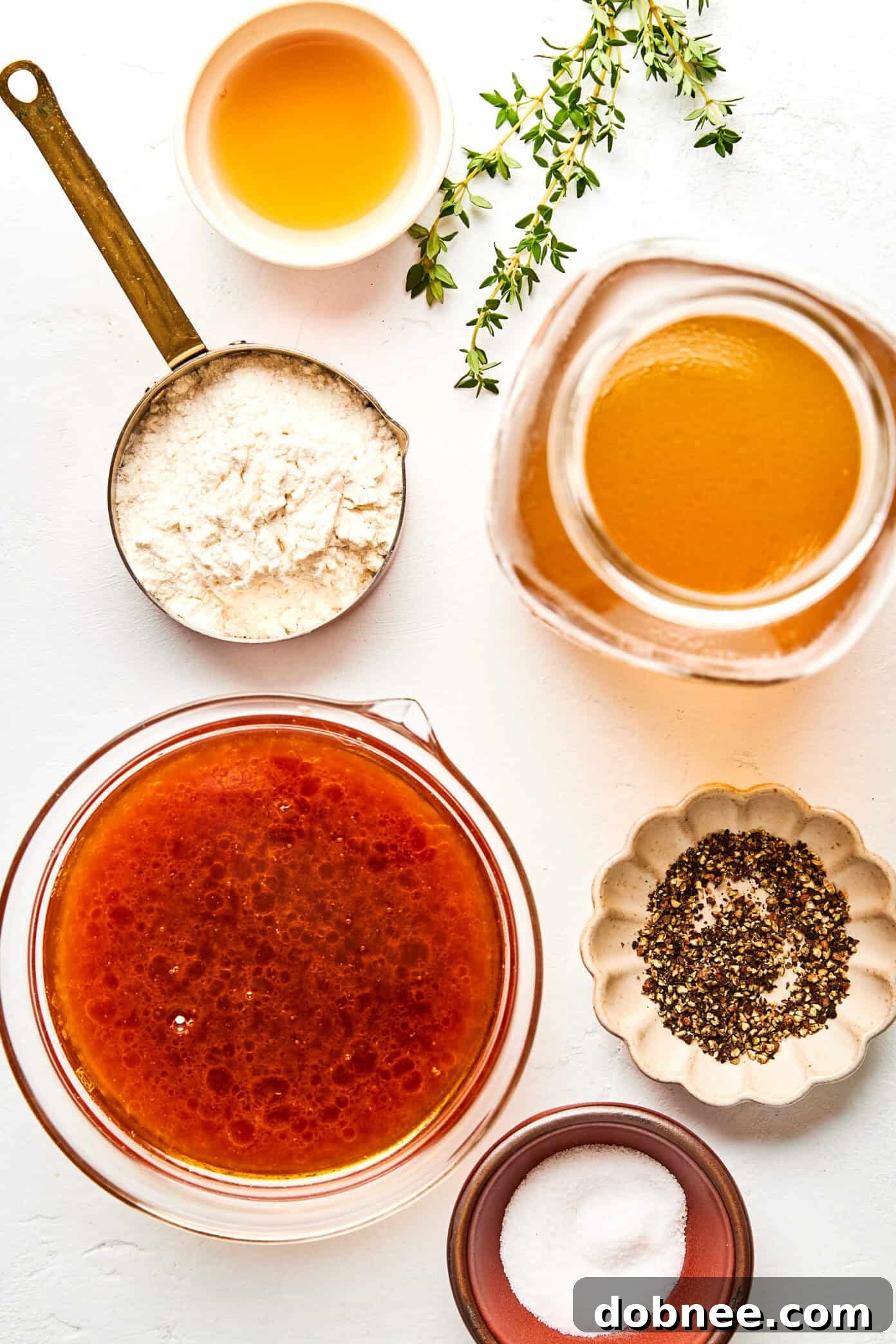
- 1/3 cup fat skimmed from the turkey pan drippings (or unsalted butter)
- 1/3 cup all-purpose flour (for a gluten-free option, use a GF all-purpose blend)
- 1 to 2 cups concentrated turkey juices (after the fat has been thoroughly skimmed off, use whatever you have)
- 3 to 4 cups warm chicken or turkey stock (adjust amount based on turkey juices)
- Fine sea salt and freshly-ground black pepper, to taste
- 1 teaspoon chopped fresh rosemary or thyme, optional (or a combination)
- 1 tablespoon dry sherry or dry white wine, optional (adds depth and brightness)
Instructions
- Separate Fat and Juices: Once your turkey is roasted and removed from the pan, carefully pour all the pan drippings into a heatproof measuring cup or, ideally, a fat separator. Allow it to sit for a few minutes until the fat layer clearly separates and rises to the top. Skim off most of the fat and measure the dark, concentrated turkey juices (you’ll typically have between 1 to 2 cups). Add enough warm chicken or turkey stock to the turkey juices to reach a total of 4 cups combined liquid. If you have a generous amount of turkey juices, you’ll need less stock.
- Prepare the Roux: In a large, sturdy skillet or saucepan (preferably a light-colored one to easily monitor the roux color) over medium heat, melt the skimmed turkey fat (or the unsalted butter if using). Once melted and shimmering, sprinkle in the all-purpose flour. Immediately begin whisking constantly. Continue to whisk for 3-4 minutes, until the mixture transforms into a lightly golden color and develops a pleasant, nutty aroma. This creates your roux, the thickening base for the gravy.
- Gradually Add Liquids: Slowly begin to whisk in about 3 cups of the combined warm turkey juices and stock mixture, adding just a small amount at a time. Whisk vigorously after each addition to smoothly incorporate the liquid and ensure there are no lumps. As the mixture heats and thickens slightly, continue adding more liquid as needed to achieve your preferred gravy consistency – whether you like it thick and hearty or slightly thinner and pourable.
- Optional Enhancements and Seasoning: If you’re using dry sherry or dry white wine, stir it into the gravy at this stage and let it simmer gently for 2-3 minutes to cook off the alcohol and meld the flavors. Now, taste the gravy and season generously with fine sea salt and freshly-ground black pepper. Remember, turkey drippings often carry some salt, so taste first! If desired, stir in your chopped fresh herbs (rosemary or thyme) for an aromatic finish.
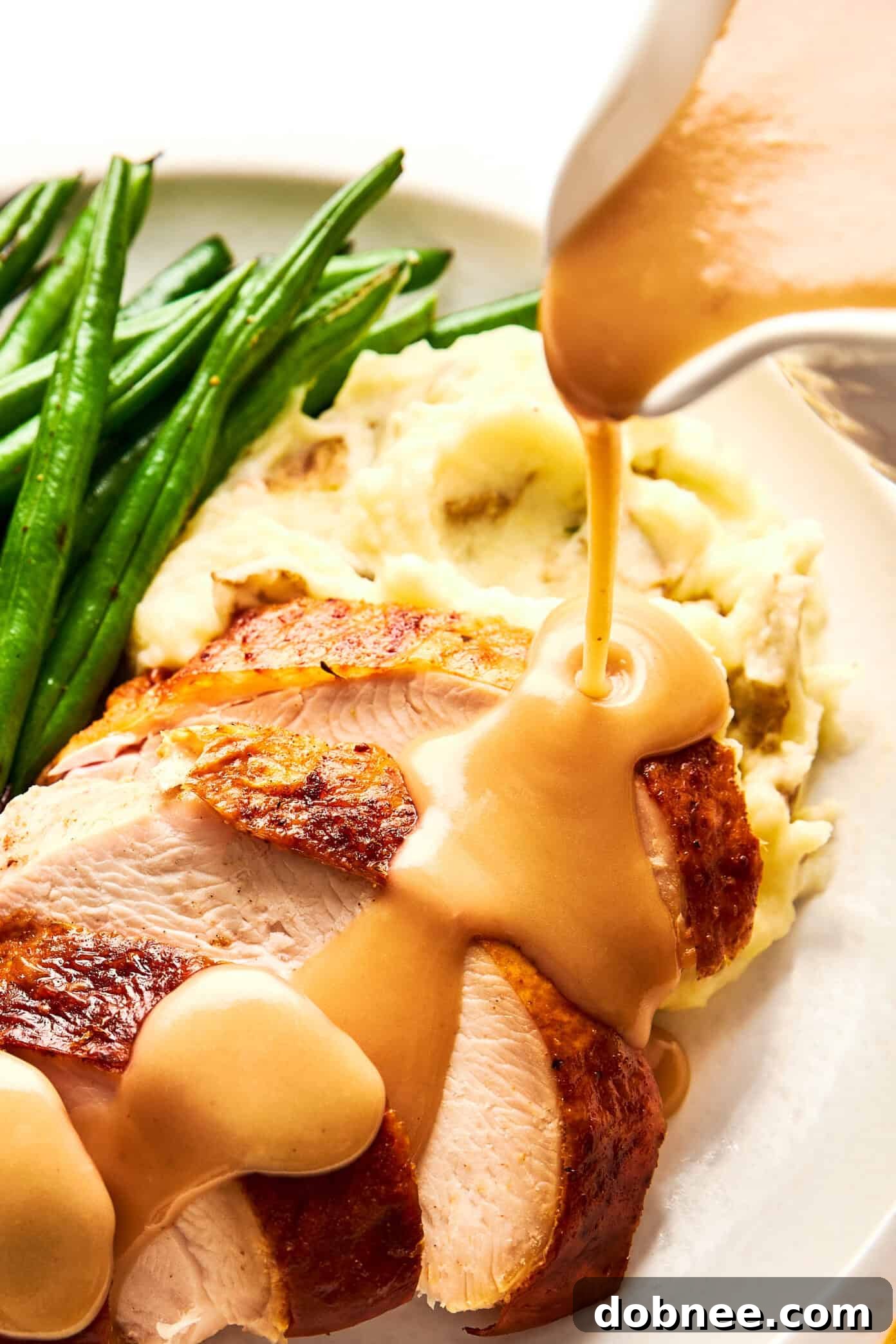
- Finish and Serve: For an exceptionally smooth and velvety gravy, pass it through a fine-mesh strainer into a clean saucepan or directly into your serving vessel. Transfer the hot gravy to a pre-warmed gravy boat and serve immediately. Enjoy this delectable homemade turkey gravy spooned over your roasted turkey, mashed potatoes, stuffing, and all your favorite holiday sides!
Equipment
Fat Separator
Buy Now →
Fine Mesh Strainer
Buy Now →
Gravy Boat
Buy Now →
In conclusion, creating a delicious homemade turkey gravy from scratch is an art that’s entirely within your reach. By following these straightforward steps and incorporating the helpful tips and variations, you’ll be able to produce a gravy that is not only rich in flavor but also boasts a perfect, silken texture. No more store-bought substitutes; your holiday table, or any meal featuring roasted poultry, deserves the authentic, satisfying taste of a gravy made with love and care.
The secret truly lies in leveraging those precious pan drippings, which are packed with concentrated flavor. Combine them with a simple roux and warm stock, and you unlock a world of savory goodness that complements turkey like nothing else. This gravy recipe is designed for both ease and excellence, ensuring that even during the busiest holiday preparations, you can whip up a batch that will garner rave reviews.
So, the next time you’re contemplating your roasted turkey dinner, remember that the most flavorful gravy is just a few steps away. Embrace the process, customize it to your liking, and enjoy the incredible satisfaction of serving a truly exceptional homemade turkey gravy. It’s a small effort that yields tremendous culinary rewards, making every spoonful a celebration of good food and great company.