

Pork Tenderloin with Burgundy Peppercorn Sauce: An Elegant & Easy Dinner
There’s something uniquely satisfying about the sharp, aromatic punch of freshly-cracked black pepper. For many, it’s a staple, a simple seasoning that elevates almost any dish. I remember a time when my younger self found my parents’ enthusiasm for their large pepper grinder rather amusing. It was a fixture at every meal, a source of constant, joyful seasoning for them, while my sister and I largely ignored it.
Fast forward a few decades, and the tables have turned. I’ve become the proud owner of a growing collection of beautiful peppercorns, eagerly anticipating the moment I can fill my own mill. There’s an undeniable satisfaction in grinding out remarkably fresh, fragrant, and oh-so-delicious black pepper. This culinary journey has naturally led me to a profound appreciation for one of the most classic and versatile sauces: the peppercorn sauce.
While I often improvise, tossing in whatever delightful ingredients I have on hand – a splash of wine, a hint of brandy, a touch of cream, fresh herbs – last week, I decided to meticulously document a particular combination that truly stood out. This exquisite Burgundy Peppercorn Sauce, which I served over a perfectly cooked pork tenderloin, is a testament to the power of fresh pepper. Its rich, savory, and subtly spicy notes complement not only pork but also steaks, chicken, seafood, or even grilled vegetables. It’s a recipe that promises simplicity, versatility, and an explosion of flavor.
So, dust off your pepper grinder – or grab your jar of coarsely-ground pepper – and prepare to embark on a culinary adventure that will tantalize your taste buds. This is more than just a recipe; it’s an ode to the humble peppercorn and the incredible depth it can bring to your cooking.
The Allure of Freshly Ground Black Pepper
The journey from childhood indifference to adult obsession with black pepper isn’t uncommon. The truth is, pre-ground pepper often falls flat, losing much of its volatile aromatic compounds to oxidation. Freshly grinding peppercorns, on the other hand, releases an intoxicating bouquet of flavors and aromas that are simply unparalleled. Beyond its pungent heat, black pepper offers nuanced notes of citrus, pine, and wood, adding complexity to any dish.
Different types of peppercorns also offer distinct profiles. While black peppercorns (like Tellicherry or Malabar) are the most common, their green, white, and pink counterparts each bring something unique to the table. Green peppercorns, harvested unripe, are milder and fruitier, often found brined. White peppercorns, which are black peppercorns with their outer husks removed, offer a sharper, cleaner heat. Pink peppercorns, though not true peppercorns but berries from a different plant, contribute a delicate, slightly sweet, and fruity aroma. For this Burgundy Peppercorn Sauce, robust black peppercorns are essential, providing that signature warmth and spice.
Using a quality pepper mill is crucial for achieving the perfect coarse grind needed for this sauce. The coarser grind allows the pepper to infuse its flavor slowly into the sauce without becoming overwhelmingly sharp, while also providing a delightful textural element. It’s an investment that pays dividends in flavor, making every meal more vibrant and aromatic.
Mastering the Perfect Pork Tenderloin
Pork tenderloin is an ideal canvas for the rich flavors of a Burgundy peppercorn sauce. Known for its lean, tender qualities, it cooks relatively quickly and remains incredibly juicy when prepared correctly. Selecting a good quality tenderloin is the first step – look for a piece that is light pink, firm, and free of excessive marbling.
Proper preparation of the pork tenderloin involves two key steps: trimming excess fat and removing the silver skin. While some fat adds flavor, too much can make the dish greasy. The silver skin, a thin, silvery membrane running along one side of the tenderloin, is particularly important to remove. Unlike fat, silver skin does not render down during cooking; it becomes tough and chewy. To remove it, slide a small, sharp knife just under one end of the silver skin, angle the blade slightly upwards, and carefully pull the silver skin taut with your other hand as you slice it away. A quick search for instructional videos online can provide visual guidance, ensuring your tenderloin is perfectly prepped for cooking.
Achieving a beautiful sear on the tenderloin before roasting is another crucial step. This browning, or Maillard reaction, creates a wonderfully flavorful crust, locking in juices and adding depth. Seasoning generously with freshly cracked black pepper and a touch of salt ensures that flavor penetrates deeply into the meat. Roasting at a higher temperature for a short period helps to cook the tenderloin through without drying it out, resulting in a tender, succulent centerpiece for your meal.
Crafting the Exquisite Burgundy Peppercorn Sauce
The beauty of this Burgundy Peppercorn Sauce lies in its balance of heat, richness, and savory depth. It’s a surprisingly straightforward sauce to make, transforming simple ingredients into a gourmet accompaniment. The process begins with sautéing shallots and garlic, building a foundational layer of aromatic flavor. Shallots, with their milder, sweeter oniony taste, are preferred here, but a finely chopped onion can also work beautifully.
The magic truly happens during the deglazing process. After sautéing, red wine is added to the hot pan, and as it boils, you’ll scrape up all the browned bits (or ‘fond’) from the bottom. This ‘fond’ is packed with concentrated flavor from the cooked tenderloin and aromatics, and deglazing incorporates it back into your sauce, adding incredible depth and complexity. Opt for a dry red wine, such as Pinot Noir or Cabernet Sauvignon, that you would also enjoy drinking.
Reducing the liquids is another critical step. Boiling down the red wine and then the beef broth concentrates their flavors, creating a more intense and robust sauce. You’ll know the sauce is sufficiently reduced when you can drag a wooden spoon through it, and it leaves a noticeable trail on the bottom of the pan. This indicates the sauce has thickened slightly and its flavors have intensified. The beef broth should be of good quality, as it forms the backbone of the sauce.
Finally, heavy cream is introduced, adding a luxurious richness and mellowing the sharp edges of the pepper and wine. This, too, is boiled down until it reaches the desired consistency. The final touch of fresh parsley brightens the sauce with its herbaceous notes, and a last scattering of black pepper adds a fresh burst of flavor. Taste the sauce for seasoning, adding salt if needed, remembering that the broth and wine already contribute some sodium.
Tips for Success and Delicious Variations
This Burgundy Peppercorn Sauce is wonderfully adaptable. While red wine is classic for a “Burgundy” sauce, don’t hesitate to experiment with other spirits for different flavor profiles. A dry white wine could offer a lighter, brighter sauce, while a touch of brandy or cognac would lend a sophisticated, slightly sweet depth. Even a splash of good quality sherry can introduce an intriguing nutty note. The key is to use something you enjoy and that complements the overall richness of the sauce.
For those who prefer a less intense pepper flavor, you can adjust the amount of freshly-cracked peppercorns used. Conversely, if you crave a bolder kick, feel free to add a bit more. Some recipes call for crushing the peppercorns in a mortar and pestle, which releases even more aromatic oils than a grinder, resulting in a more potent pepper essence.
This sauce is not just for pork tenderloin. It’s a fantastic accompaniment to a variety of proteins. Imagine it drizzled over a perfectly seared ribeye steak, enhancing its beefy flavor with its peppery creaminess. It’s also superb with pan-seared chicken breasts or even delicate salmon fillets. For a vegetarian option, try it with roasted portobello mushrooms or grilled asparagus for an elevated side dish.
Serving Suggestions to Complete Your Meal
Once your pork tenderloin is sliced into succulent medallions and bathed in the rich Burgundy Peppercorn Sauce, consider what sides will complete this elegant meal. Creamy mashed potatoes are a classic pairing, their mild flavor and smooth texture providing a comforting contrast to the sauce’s intensity. Roasted root vegetables, such as carrots, parsnips, or sweet potatoes, would add earthy sweetness and beautiful color to the plate.
For a lighter accompaniment, consider steamed green beans, asparagus, or a simple side salad with a light vinaigrette. The freshness of green vegetables can cut through the richness of the sauce, balancing the meal beautifully. A crusty baguette is also a welcome addition, perfect for soaking up every last drop of the delectable sauce.
Pairing a wine with this dish is equally important. Since the sauce features red wine, a glass of the same varietal you used in the sauce, like a Pinot Noir or a light-bodied Cabernet Sauvignon, would be an excellent choice. Their fruit notes and subtle tannins will complement both the pork and the peppery sauce.
This Pork Tenderloin with Burgundy Peppercorn Sauce recipe is a testament to how simple ingredients, combined with thoughtful technique, can create an extraordinary dining experience. It’s an accessible dish for home cooks seeking to impress without hours of effort. So, take the plunge, savor the aroma of freshly ground pepper, and delight in creating a meal that’s both gourmet and deeply satisfying.
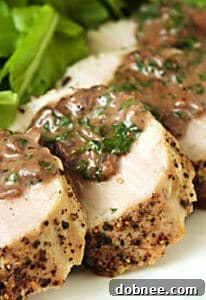
Pork Tenderloin with Burgundy Peppercorn Sauce
Prep Time: 5 minutes
Cook Time: 30 minutes
Total Time: 35 minutes
Yield: 1 lb tenderloin and 2-3 cups peppercorn sauce 1x
Description
You’ll adore this Pork Tenderloin with Burgundy Peppercorn Sauce. This recipe features perfectly seared and roasted pork tenderloin, generously coated in a rich, creamy, and subtly spicy red wine peppercorn sauce. It’s an elegant yet easy-to-prepare dish that is perfect for a special dinner or a delightful weeknight meal, bringing gourmet flavor to your table with minimal effort.
Ingredients
Scale
- 1 (about 1 lb.) pork tenderloin
- 2 Tbsp. olive oil (separated)
- 1 cup finely chopped shallots or onion
- 3 cloves garlic, minced
- 1/4 cup freshly-cracked black peppercorns (preferably coarsely ground)
- 1/2 cup dry red wine (such as Pinot Noir or Cabernet Sauvignon)
- 2 cups beef broth
- 1/2 cup heavy cream
- 1/2 cup fresh parsley, finely chopped
Instructions
- Prepare the Tenderloin: Preheat your oven to 425 degrees F (220 degrees C). Carefully trim the pork tenderloin of any excess fat. Locate and remove the silvery, tough silver skin membrane – this ensures a more tender bite. (For a helpful visual guide on removing silver skin, consider searching for a quick video tutorial online.)
- Sear the Tenderloin: Heat 1 tablespoon of olive oil in a large oven-safe skillet over medium-high heat until shimmering. Generously season the entire surface of the trimmed tenderloin with freshly-cracked black pepper, pressing gently to ensure the pepper adheres well. Carefully add the tenderloin to the hot skillet and sear for 4 to 5 minutes, turning it as needed to achieve an even golden-brown crust on all sides (approximately 1 minute per side). Once browned, transfer the tenderloin to a lightly greased baking dish.
- Roast the Tenderloin: Place the baking dish with the seared tenderloin into the preheated oven. Roast for 12 to 15 minutes, or until an instant-read thermometer inserted into the thickest part of the tenderloin registers 140 degrees F (60 degrees C). Remove the dish from the oven, transfer the tenderloin to a clean plate, and loosely cover it with aluminum foil. Let it rest for at least 5-10 minutes to allow the juices to redistribute, ensuring a tender and moist result. The internal temperature will continue to rise slightly during this resting period.
- Make the Peppercorn Sauce: While the tenderloin rests, return the same skillet (or a saucepan) to medium-high heat (no need to clean it; the browned bits add flavor). Add the remaining 1 tablespoon of olive oil and sauté the finely chopped shallots for 2 minutes until softened. Add the minced garlic and sauté for another 1 minute until fragrant.
- Deglaze and Reduce: Pour in the red wine. As it begins to boil, use a wooden spoon (preferably one with a straight edge) to vigorously scrape the bottom of the pan, dislodging all the flavorful browned bits (fond). Allow the wine to simmer and reduce until it’s almost completely evaporated. Then, add the beef broth and turn the heat to high. Bring the sauce to a rolling boil and reduce it until it thickens noticeably – you should be able to drag your wooden spoon through the center and leave a distinct trail (this usually takes 4-5 minutes).
- Finish the Sauce: Pour in the heavy cream and bring the sauce back to a boil. Continue to boil and reduce until it again leaves a clear trail when a spoon is dragged through it. Remove the skillet from the heat. Stir in the fresh parsley and any remaining freshly-cracked black pepper (ensure you don’t add more than 1 tablespoon, as the majority should have been used on the tenderloin). Taste the sauce and add salt if needed, adjusting to your preference.
- Serve: Slice the rested pork tenderloin on a slight diagonal into 1/2-inch to 1-inch thick medallions. Arrange the slices on plates and generously spoon the luxurious Burgundy Peppercorn Sauce over them. Serve immediately and enjoy!
Notes
Recipe adapted from Simply Recipes