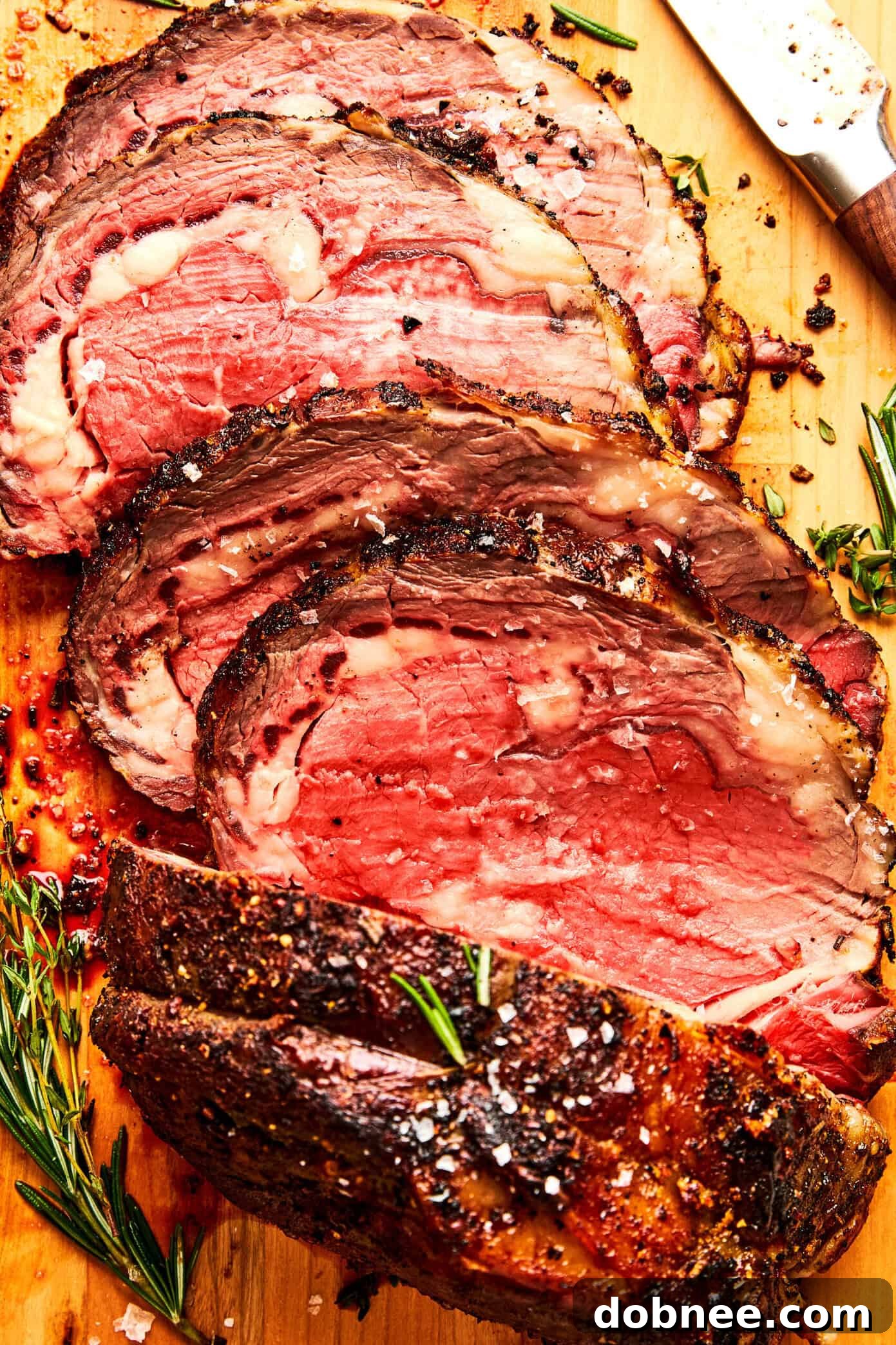
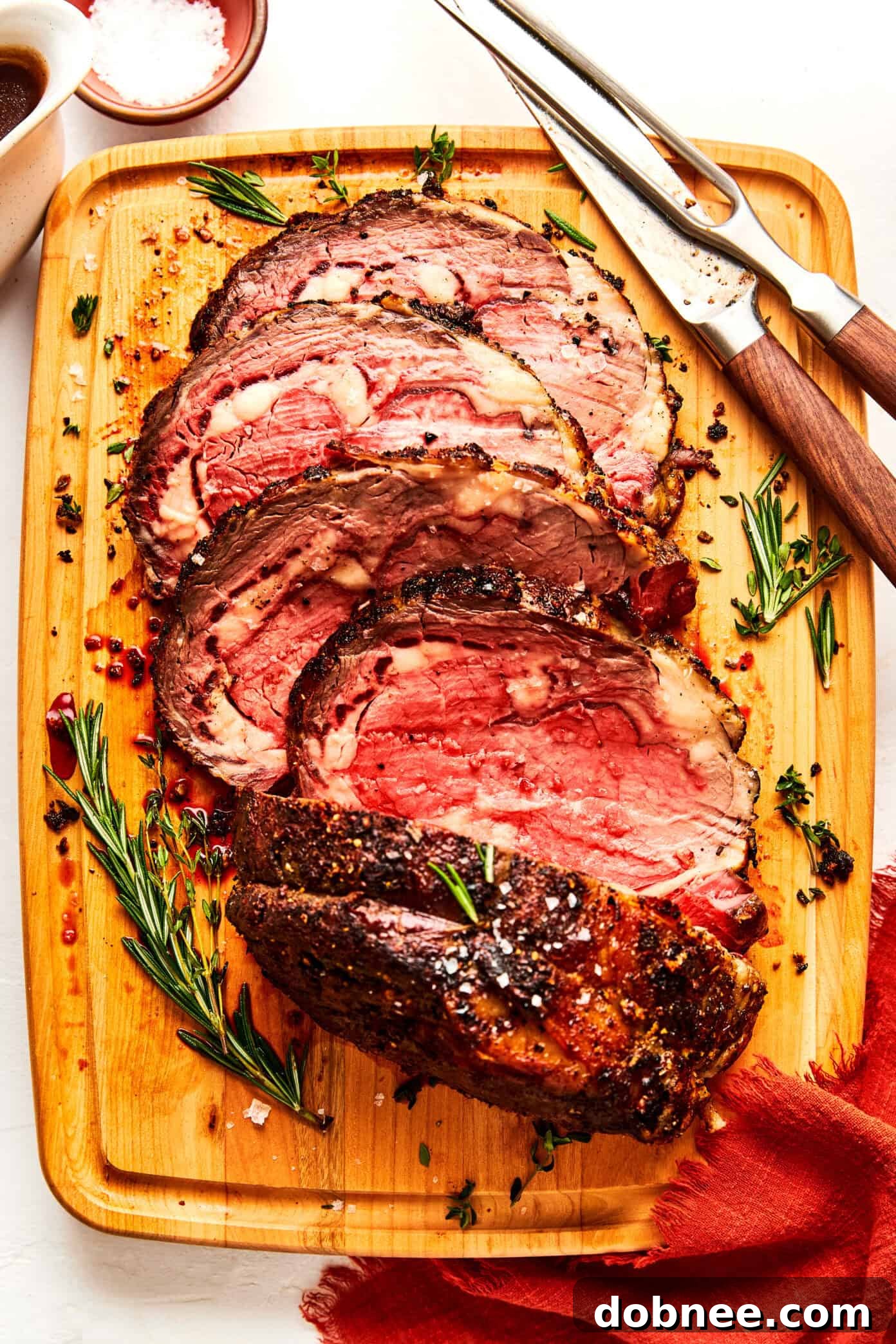
Mastering the Art of Prime Rib: Your Ultimate Guide to a Festive Centerpiece

There are certain dishes that transcend mere meals to become unforgettable culinary events, and a perfectly cooked prime rib roast stands proudly among them. More than just a cut of beef, it represents celebration, generosity, and the joyous spirit of special occasions. This recipe isn’t simply about roasting meat; it’s about crafting a showstopper, a succulent centerpiece that will undoubtedly be the highlight of your holiday table or any grand gathering.
We understand that investing in a prime rib is a significant splurge, a culinary commitment that deserves flawless execution. This is precisely why we’ve dedicated countless hours to meticulously developing and refining this recipe, ensuring it is not only bursting with flavor but also utterly foolproof. Our secret lies in a sophisticated yet remarkably straightforward reverse-sear method. This technique guarantees an ideal, edge-to-edge doneness, eliminating the dreaded gray band, while simultaneously creating the most irresistible, deeply savory, and beautifully caramelized crust imaginable. The result? Every single slice is a testament to unparalleled tenderness and rich, satisfying flavor.
Our journey to prime rib perfection encompasses every detail: from the creation of an aromatic garlic-herb butter that infuses the meat with fragrant notes, to the gentle, slow roast that coaxes out its natural juices, and finally, to transforming those richly caramelized pan drippings into the dreamiest, silkiest au jus. Each step has been rigorously tested and retested with one primary goal in mind: to keep the entire cooking process legitimately low-fuss, enabling even novice cooks to achieve professional-level results. This approach ensures that you deliver the incredible richness and depth of flavor that this exceptional cut of beef truly deserves, without unnecessary stress.
So, whether you are meticulously preparing this magnificent prime rib roast for a cherished holiday tradition, a momentous celebratory dinner, or simply to indulge in a luxurious and deeply satisfying meal, you are in for an incredibly memorable treat. Prepare to impress your guests, delight your palate, and solidify your reputation as a master of the festive feast. Let’s embark on this delicious journey and craft the perfect garlic herb prime rib!
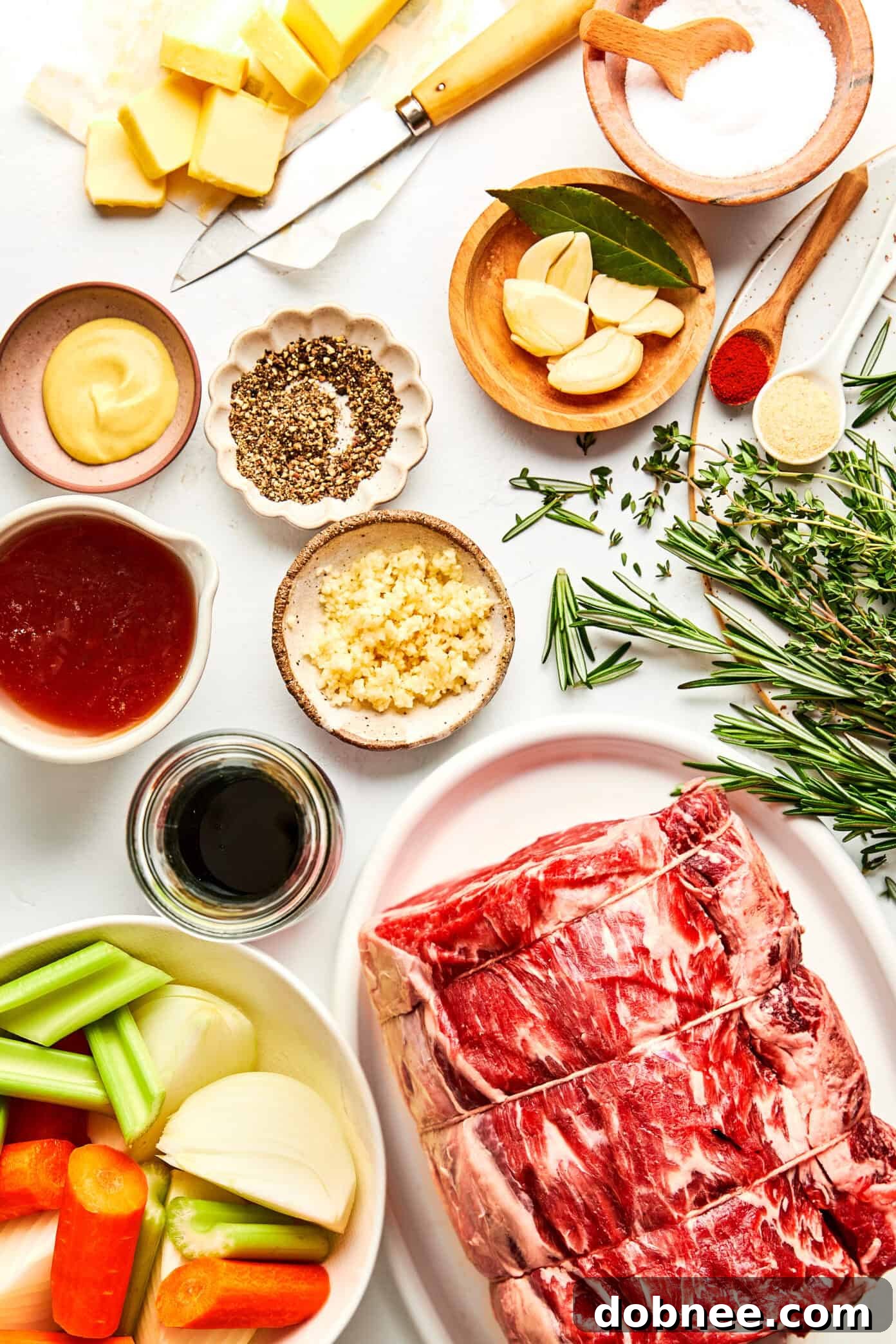
How To Select the Perfect Prime Rib for Your Culinary Masterpiece
Choosing the right cut of prime rib is arguably half the battle when preparing this magnificent roast. Given its premium status and the investment involved, especially for a special-occasion feast, making an informed decision at the butcher’s counter is crucial. Here are comprehensive tips to guide you, ensuring you shop with unwavering confidence and bring home a cut that promises exceptional results:
- Deciphering the Labels: “Standing Rib Roast” vs. “Prime Rib.” While “prime rib” is the universally recognized and popular term that most home cooks use, you will frequently encounter this exquisite cut labeled as a standing rib roast at your local butcher or grocery store. Don’t be confused; both terms refer to the exact same, magnificent section of beef. The “standing” moniker simply indicates that the roast is cooked upright on its ribs, which act as a natural roasting rack, contributing to even cooking and richer flavor.
- Bone-In vs. Boneless: A Consequential Choice.
For an unparalleled depth of flavor, superior juiciness, and a truly impressive presentation, I consistently recommend opting for a bone-in prime rib. The presence of the bones during roasting offers several significant advantages:
- Natural Insulation: The bones act as natural insulators, creating a protective barrier that helps the meat cook more evenly. This prevents the outer layers from drying out prematurely while the interior gently reaches your desired doneness.
- Moisture Retention: The bones contribute to exceptional moisture retention, resulting in an incredibly tender and juicy roast.
- Enhanced Flavor: As the roast cooks, marrow and collagen from the bones render, infusing the meat and, crucially, the pan drippings with a richer, more complex savory flavor, which is vital for a stellar au jus.
However, a boneless prime rib does offer its own set of practical benefits:
- Faster Cooking: Without the bones, heat penetrates the meat more directly, often leading to slightly faster cooking times.
- Easier Carving: Boneless roasts are significantly easier to slice evenly, which can be a major convenience during a busy holiday meal.
Ultimately, the decision balances the profound flavor and presentation benefits of bone-in versus the convenience and ease of boneless.
- Understanding Beef Grades: USDA Prime or Choice. Beef is graded by the United States Department of Agriculture (USDA) based primarily on its marbling (intramuscular fat) and the maturity of the animal. These grades are direct indicators of tenderness, juiciness, and flavor.
- USDA Prime: This is the highest and most coveted grade, characterized by an abundant and finely dispersed network of marbling. Prime cuts offer the most luxurious flavor, melt-in-your-mouth tenderness, and exceptional juiciness. They are typically found in high-end steakhouses and specialty butcher shops and come with a higher price point, reflecting their superior quality.
- USDA Choice: This is an excellent grade that is much more widely available to consumers and generally more budget-friendly than Prime. Choice cuts still boast good marbling, delivering a great balance of flavor, tenderness, and juiciness. For most home cooks, a USDA Choice prime rib will yield fantastic results and a truly memorable meal.
Either grade will produce a delicious prime rib, but Prime offers an undeniable edge in terms of richness.
- Purchasing the Proper Size: Quantity Per Person. Planning the correct roast size is essential to ensure everyone receives a generous portion while minimizing potential waste. As a reliable guideline:
- For a bone-in roast, plan on approximately 1 pound per person. This accounts for the weight of the bones, ensuring a substantial serving of edible meat.
- For a boneless roast, aim for about ¾ pound per person. Since there are no bones, you get more edible meat per pound.
If you’re hosting guests with exceptionally hearty appetites, or if you’re eagerly anticipating delicious leftovers (which I highly recommend for next-day sandwiches or hash!), it’s always a good strategy to err on the side of slightly more.
- Harnessing Your Butcher’s Expertise: Trimming and Tying. Don’t underestimate the invaluable services your butcher can provide. Before you leave the shop, politely request that they perform two crucial preparations:
- Trim Excess Fat: Ask them to trim any excessive fat cap, leaving a uniform layer of about ¼ to ½ inch. This layer will render during cooking, basting the meat and contributing to a flavorful crust, without becoming overly greasy.
- Remove and Re-tie Rib Bones: This is an ingenious technique! Ask the butcher to remove the rib bones cleanly, and then re-tie them securely back onto the roast with butcher’s twine. This offers the best of both worlds: you retain all the incredible flavor benefits and insulation of bone-in roasting, but after cooking, you simply snip the twine, and the bones detach cleanly, making the carving process an absolute breeze.
- Scrutinize the Marbling: The Ultimate Indicator. Marbling – those delicate, fine streaks and flecks of white fat interspersed throughout the lean muscle – is perhaps the most critical visual indicator of a prime rib’s quality. More abundant and, crucially, more evenly distributed marbling translates directly to superior flavor, enhanced juiciness, and a truly melt-in-your-mouth tenderness. While prime rib is inherently well-marbled, take a moment to visually inspect the roasts available and choose the one that exhibits the most consistent and appealing distribution of fat.
By following these guidelines, you’ll be well on your way to selecting a prime rib that forms the foundation of an truly exceptional meal.
Essential Tips for a Flawless Prime Rib Every Time
Achieving prime rib perfection goes beyond just following a recipe; it’s about understanding and implementing key techniques that elevate your roast from good to absolutely phenomenal. These carefully curated tips will empower you to produce a consistently exquisite roast, ensuring it comes out perfectly tender, juicy, and flavorful every single time you prepare it.
- Embrace the Dry Brine: A Game Changer for Flavor and Texture. Do not, under any circumstances, skip this crucial preparatory step! Dry brining involves seasoning the prime rib generously with kosher salt and allowing it to rest uncovered in the refrigerator. This process works wonders in two ways:
- Deep Seasoning: The salt draws moisture from the meat’s surface, which then reabsorbs along with the dissolved salt, seasoning the roast deeply from within. This results in flavor that permeates the entire cut, not just the surface.
- Superior Crust: By drying out the surface of the meat, the dry brine also fundamentally alters the protein structure, leading to a more tender texture and, critically, ensures the formation of that incredible, savory, and extra-crispy crust during the final sear.
While an overnight brine (12 hours) is excellent, allowing it to rest for 24–48 hours will yield even more profound results in terms of both flavor depth and crust development.
- Achieve True Room Temperature: The Secret to Even Cooking. This step is profoundly important for ensuring your prime rib cooks evenly from its outer edges to its very center. A cold roast placed directly into a warm oven will cook unevenly; the outer layers will inevitably overcook and dry out before the center reaches your desired doneness. To prevent this, budget ample time – typically 3 to 4 hours, depending on the size of your roast and ambient room temperature – for the prime rib to rest at room temperature before it ever enters the oven. This allows the internal temperature of the meat to equalize, promoting a gentle, uniform cooking process that results in consistent doneness throughout.
- Invest in an Instant-Read Thermometer: Your Culinary Best Friend. Precision is absolutely paramount when it comes to achieving the perfect prime rib doneness, and an instant-read meat thermometer is your most reliable and indispensable tool. Forget guesswork, poking, or relying on visual cues alone; this device will ensure you pull the roast at precisely the right moment.
- For a perfect medium-rare (our recommendation), aim to remove the roast from the oven when its internal temperature reaches 120°F (49°C).
- For a luscious medium, pull it at 125°F (52°C).
Always insert the thermometer into the thickest part of the roast, ensuring it doesn’t touch any bones, which conduct heat differently. Remember, the internal temperature will continue to rise by several degrees (known as carryover cooking) as the roast rests.
- Low and Slow Roasting: The Path to Unrivaled Tenderness. Resisting the urge to crank up the oven temperature is a fundamental principle for prime rib perfection. Roasting at a gentle 250°F (121°C) ensures the meat cooks slowly and uniformly from the outside in. This methodical approach prevents the outer layers from drying out or becoming tough while the interior remains incredibly juicy and tender. The low-and-slow method also creates a broader “sweet spot” for achieving your desired doneness, making the entire process more forgiving and less prone to overcooking. Patience truly is a virtue here, and the melt-in-your-mouth results are unequivocally worth the extended cooking time.
- The Non-Negotiable Rest: Preserving Every Precious Drop of Juice. This step is just as critical to the final texture and juiciness of your prime rib as the cooking itself, if not more so. Once removed from the oven, your prime rib absolutely must rest, loosely tented with aluminum foil, for a minimum of 20 to 30 minutes. During cooking, the meat’s muscle fibers contract, causing the precious internal juices to rush towards the center. Resting allows these fibers to relax, encouraging the juices to redistribute evenly throughout the entire roast. Skipping this vital step means that when you slice into your magnificent roast, a significant amount of flavorful moisture will bleed out onto the cutting board, resulting in a noticeably drier, less flavorful experience.
- Crafting the Au Jus While the Roast Rests: Liquid Gold. Never, ever let those richly browned pan drippings go to waste – they are truly liquid gold and form the concentrated foundation of an exquisite au jus. While your prime rib is undergoing its crucial resting period, this is the perfect, efficient opportunity to transform those flavorful bits and rendered fats into a savory accompaniment that will elevate every single bite of your roast. The drippings hold all the complex, concentrated essence of your beef, ready to be deglazed, simmered, and reduced into a beautiful, rich sauce that perfectly complements the prime rib.
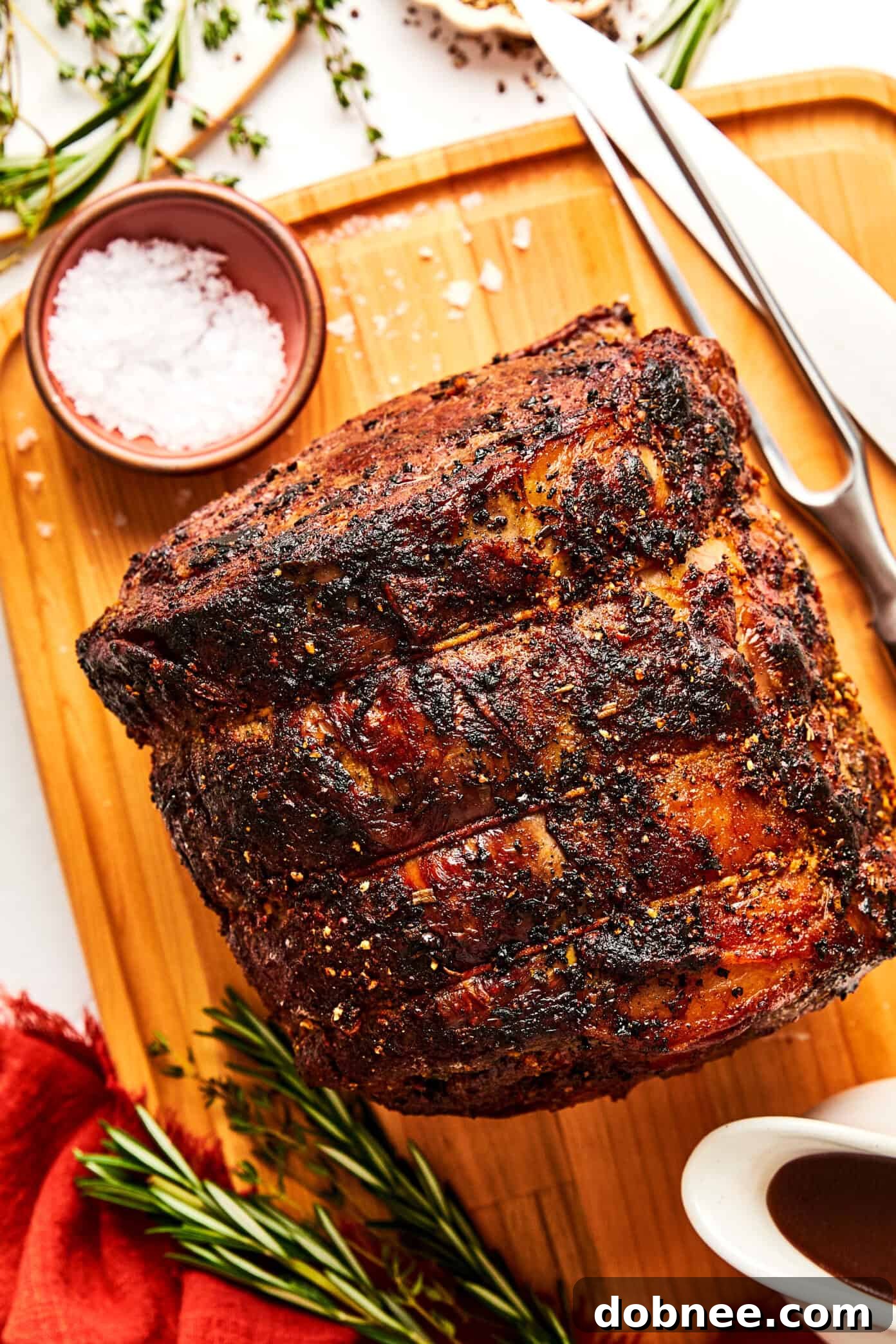
Creative Variations to Customize Your Prime Rib
While our garlic-herb prime rib recipe is designed for classic perfection, cooking is also an art of personalization. Feel free to explore these delicious and imaginative variations to customize your roast, tailoring it to your unique taste preferences, or to complement specific culinary themes for your special occasion. These simple adjustments can add exciting new dimensions and unexpected twists to your magnificent prime rib.
- Infuse with Horseradish: A Zesty, Piquant Kick. For those who appreciate a bit of piquant heat and a sharp contrast to the rich beef, incorporating horseradish into the herb butter rub is a fantastic idea. Add about ½ to 1 teaspoon (or more, to taste, depending on your preferred spice level) of finely grated fresh horseradish or prepared horseradish (ensure it’s well-drained) to your garlic-herb butter mixture. This will lend a subtle, zesty warmth and a delightful tang that perfectly cuts through the richness of the beef, creating a dynamic flavor profile.
- Experiment with Herb Combinations: Aromatic Twists. Rosemary and thyme are undoubtedly classic and beloved companions to beef, providing a robust, earthy aroma. However, the vast world of fresh herbs offers endless possibilities for aromatic twists. Consider swapping or augmenting these with other fragrant options:
- Sage: Earthy, slightly peppery, and subtly bitter, fresh sage pairs wonderfully with rich meats, adding a rustic depth.
- Marjoram: A milder, sweeter cousin to oregano, marjoram offers a delicate floral note and a hint of pine that can lighten the overall herb blend.
- Parsley: Fresh, vibrant, and herbaceous, parsley can brighten the overall flavor profile and add a beautiful green speckle to your crust.
- Oregano: For a more robust, slightly Mediterranean influence, a touch of fresh oregano can be surprisingly delightful and adds a pungent, peppery kick.
- Bay Leaf: While often used in the au jus, finely crumbled dried bay leaves can also be incorporated into the rub for a subtle, complex background note.
Feel free to create your own signature herb blend based on your taste!
- Swap the Wine for the Au Jus: A Lighter or Different Profile. Our recipe calls for dry red wine (like Cabernet Sauvignon or Chianti) in the au jus, which contributes a deep, robust, and complex flavor. However, if you prefer a lighter, more delicate sauce, or simply don’t have red wine on hand, a dry white wine can be an excellent and equally delicious substitute. Choose a crisp, unoaked white such as Sauvignon Blanc, Pinot Grigio, or even a dry vermouth. This will yield a brighter, more acidic au jus that still possesses wonderful depth and complexity, offering a different but equally appealing flavor dimension.
- Add Mushrooms to the Roasting Pan: Earthy Umami Boost. To infuse your prime rib and au jus with an extra layer of savory, earthy umami, scatter about 8 ounces of cleaned, halved baby bella (cremini) mushrooms (or even quartered button mushrooms) around the aromatic vegetables in the bottom of the roasting pan before the slow roast. As they cook alongside the beef, these mushrooms will absorb the meat’s rich flavors and release their own savory notes into the pan drippings, resulting in an even richer, more complex, and deeply flavorful au jus. You can then serve these roasted mushrooms alongside the prime rib as a delicious, tender side dish.
- Spice Rub Variations: Beyond Herbs and Garlic. While the garlic-herb butter is undeniably phenomenal, consider experimenting with a different dry spice rub for a distinct kind of crust and flavor. A sweet and smoky bark can be achieved by combining ingredients like smoked paprika (for color and depth), garlic powder, onion powder, a pinch of cayenne pepper (for a touch of heat), and a little brown sugar (to aid caramelization and add sweetness). This rub can be applied directly to the dry-brined roast before adding any butter, or used in place of the butter rub for a different texture and flavor profile.
- Citrus Zest Infusion: Bright, Aromatic Notes. For a surprising burst of freshness and aroma, a finely grated zest from one orange or lemon can be a wonderful addition to the garlic-herb butter. The bright, tangy citrus notes provide a beautiful contrast to the inherent richness of the beef, adding an aromatic dimension that awakens the palate and offers a sophisticated twist.
- Mustard Variations: More Than Just Dijon. While Dijon mustard provides a classic tang and helps bind the rub, consider other mustards for different flavor profiles. A grainy mustard will add texture and a more robust mustard flavor, while a honey mustard could offer a subtle sweetness.
Don’t be afraid to get creative and tailor this recipe to your own culinary preferences. These variations provide a wonderful starting point for making this prime rib truly your own.
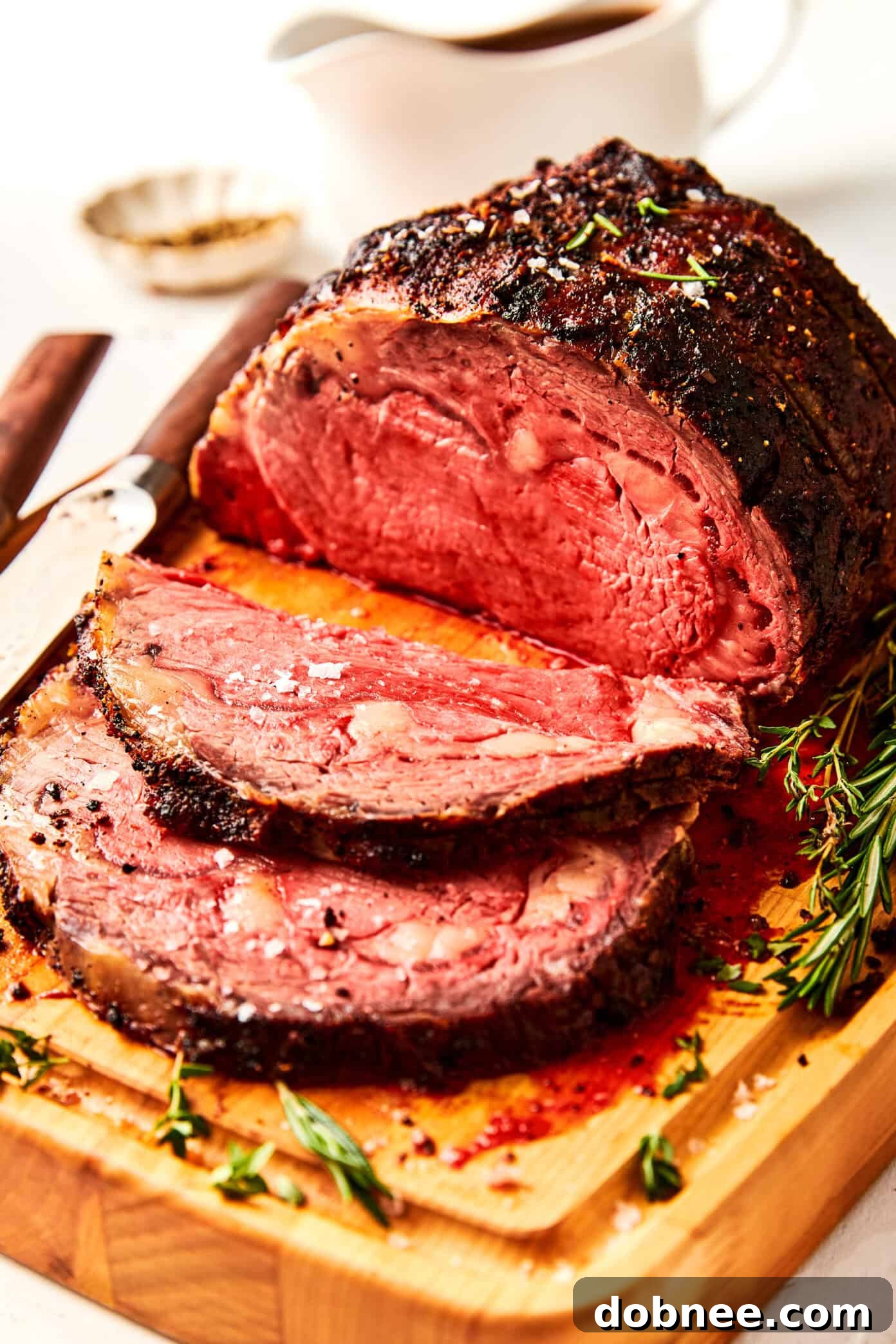
Frequently Asked Questions About Cooking Prime Rib
When planning your prime rib feast, a general guideline is to account for approximately 1 pound of bone-in roast per person. This measurement considers the weight of the bones, ensuring that each guest receives a generous and satisfying portion of edible meat. If you’re hosting a grand holiday spread with numerous side dishes, or if you know your guests are particularly hearty eaters, you might consider increasing this to 1½ pounds per person to guarantee ample servings and the cherished possibility of delicious leftovers. For a boneless roast, ¾ pound per person is usually sufficient as there is no bone weight.
While a full overnight (12-24 hours) dry brine offers the absolute best results for deeply seasoned meat and the development of a superior, crispy crust, even a shorter 2–4 hour dry brine can make a noticeable and worthwhile difference in flavor penetration and meat tenderness. If you find yourself truly pressed for time, season the roast generously at least 1 hour before you plan to start cooking and allow it to sit at room temperature during that period. However, always strive for the longest dry brine possible; the more time it has, the better the payoff in terms of flavor and texture!
Absolutely! If you prefer to omit the wine from your au jus, whether due to personal preference or unavailability, you can easily substitute the ¾ cup of dry red wine with an equal amount of additional beef stock. To compensate for the depth of flavor and subtle acidity that wine typically contributes, you might want to enhance your wine-free au jus by adding a splash (approximately 1-2 teaspoons) of Worcestershire sauce, a dash of balsamic vinegar, or even a tiny pinch of sugar. These additions can help round out the flavors and boost the richness and complexity of your sauce.
Reheating prime rib properly is crucial to maintain its exquisite tenderness and prevent it from becoming dry or tough. The best and most recommended method is to gently warm individual slices. Place the leftover prime rib slices in an oven-safe dish, add a tablespoon or two of any reserved au jus (or a little beef broth) to the bottom of the dish to provide moisture, and cover the dish tightly with aluminum foil. Reheat in a preheated 250°F (121°C) oven for approximately 10-15 minutes, or until the slices are just heated through to your liking. Avoid using high heat or the microwave for reheating, as these methods can quickly dry out and overcook the delicate meat, compromising its quality.
The reverse-sear method is a cooking technique that involves two distinct phases: first, cooking the prime rib slowly at a very low oven temperature, followed by a quick blast of extremely high heat at the very end. This method is highly recommended for prime rib for several compelling reasons: it allows the roast to cook much more evenly to your desired doneness, virtually eliminating the undesirable “bullseye” effect (where the edges are overcooked and gray, while the center is less done) often seen with traditional high-heat roasting. The initial low-and-slow phase gently brings the internal temperature of the meat up, ensuring it remains incredibly juicy and tender throughout. The final, brief high-heat sear then creates a magnificent, deeply caramelized, and savory crust on the exterior, adding an irresistible texture contrast and flavor dimension that is the hallmark of a perfectly cooked prime rib. It’s a method that maximizes both internal juiciness and external crispness.
While you wouldn’t cook the entire prime rib roast completely a day ahead (as it’s best enjoyed fresh), several crucial preparatory steps can certainly be accomplished in advance, significantly reducing stress on the day of your event. The dry brining process, for instance, is ideally done 24-48 hours ahead of cooking for optimal flavor and texture. You can also prepare your aromatic garlic-herb butter mixture a day or two beforehand and store it covered in the refrigerator. Additionally, the vegetables destined for the roasting pan (onion, carrot, celery, garlic) can be chopped and stored. By completing these key steps, you streamline your cooking process, making the final preparation much smoother and more enjoyable, allowing you more time to focus on your guests.
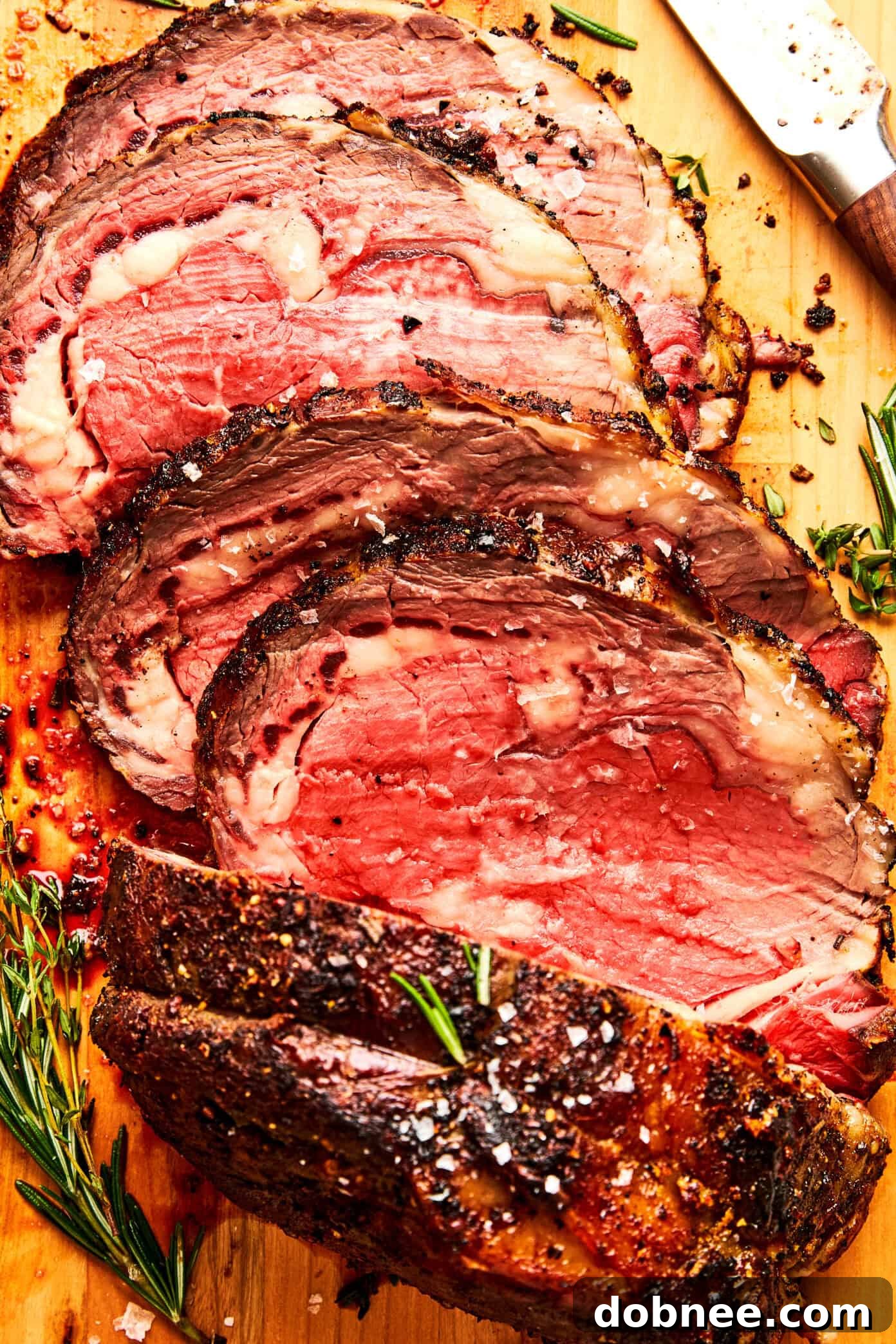
Complementary Sides: What To Serve With Your Exquisite Prime Rib
A magnificent prime rib roast, rich in flavor and tender in texture, deserves an equally impressive and thoughtfully selected supporting cast of side dishes. The right accompaniments can elevate your meal, offering complementary flavors, contrasting textures, and vibrant colors that enhance the overall dining experience without overshadowing the star of the show. Here are some classic, delightful, and highly recommended choices that pair beautifully with the robust, savory notes of garlic herb prime rib and its luscious, homemade au jus:
The BEST Creamy Mashed Potatoes
A timeless and indispensable pairing, fluffy and intensely buttery mashed potatoes are absolutely perfect for soaking up every last drop of the rich, savory au jus. Their smooth, yielding texture provides a comforting and essential contrast to the robust beef, offering a hearty and satisfying starch element to the meal.
Crisp Roasted Asparagus
Lightly charred and tender-crisp roasted asparagus provides a beautiful green pop of color and a refreshing, slightly bitter counterpoint to the richness of the prime rib. A simple preparation with just olive oil, a sprinkle of salt, and freshly ground black pepper is often all that’s needed to highlight its natural flavors.
Warm 1-Hour Soft and Buttery Dinner Rolls
Freshly baked dinner rolls are always a universally welcome addition to any festive meal. They are perfect for wiping up any remaining savory sauce on your plate or simply enjoying alongside the meal with a pat of butter. Their soft texture and subtly sweet, buttery flavor are incredibly satisfying.
Zesty and Crisp Caesar Salad
A crisp, bright, and tangy Caesar salad provides a refreshing counterpoint and crunch, effectively cutting through the richness of the prime rib. Its savory dressing, garlic-infused croutons, and Parmesan cheese make it a hearty and flavorful salad option that complements the main course beautifully.
Beyond these popular choices, consider adding other seasonal roasted vegetables such as tender Brussels sprouts, a classic green bean casserole, or decadent creamed spinach for a truly well-rounded, visually appealing, and gastronomically satisfying spread. Each of these side dishes contributes a unique element that harmonizes beautifully with the star of the show, ensuring a memorable dining experience for all.
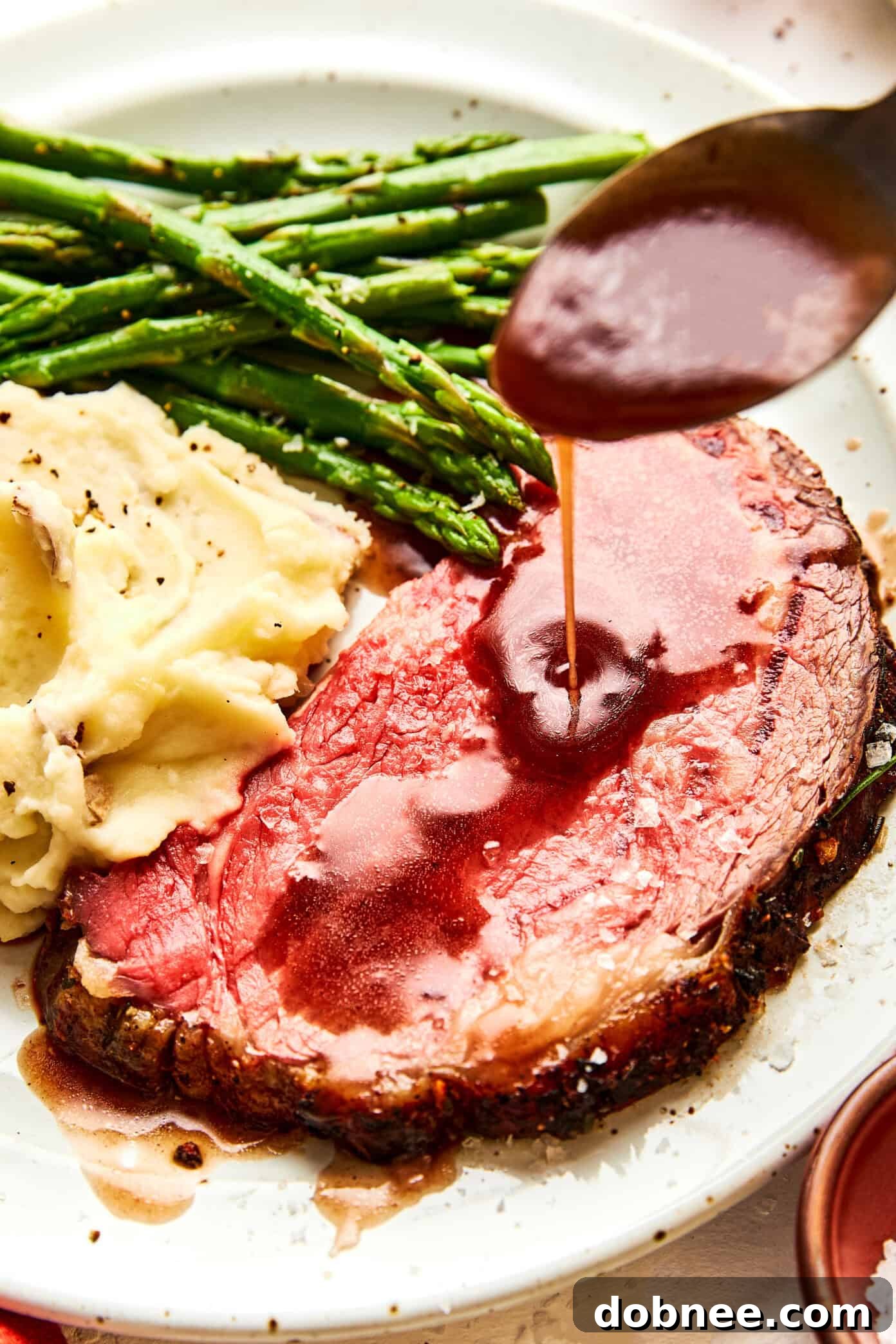
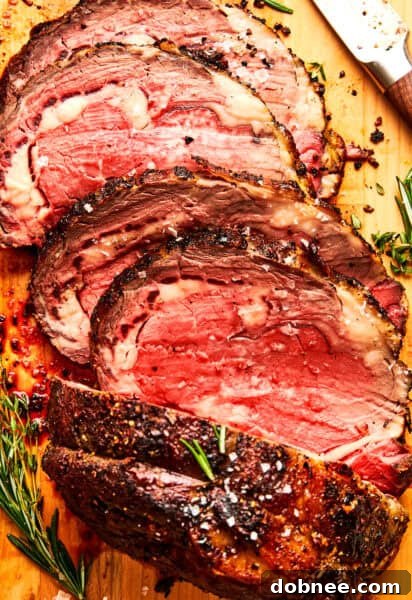
Garlic Herb Prime Rib with Au Jus
- Author: Ali
- Prep Time: 20 mins
- Cook Time: 3 hours 30 mins
- Total Time: 4 hours 15 mins
- Yield: 6 to 8 servings
Description
This easy-to-follow prime rib recipe is your ultimate guide to a show-stopping holiday or special occasion roast. It features a deeply flavorful garlic-herb butter, a foolproof reverse-sear method for perfect doneness, and a rich, homemade au jus that brings every bite to life. Prepare to impress with a tender, juicy, and beautifully crusted prime rib that tastes as incredible as it looks.
Ingredients
For the Prime Rib:
- 1 bone-in standing rib roast (6–8 pounds), ribs removed and tied to the roast (ask your butcher to do this for you!)
- 2 tablespoons kosher salt
- ½ cup unsalted butter, softened
- 2 tablespoons finely-chopped fresh rosemary
- 1 tablespoon finely-chopped fresh thyme
- 3 large cloves garlic, very finely minced
- 2 teaspoons Dijon mustard
- 2 teaspoons freshly-ground coarse black pepper
- 1 teaspoon onion powder
- ½ teaspoon smoked paprika
For the Roasting Pan:
- 1 cup beef stock or water
- 1 medium yellow onion, peeled and quartered
- 1 medium carrot, roughly chopped
- 1 rib celery, roughly chopped
- 3–4 large garlic cloves, lightly smashed
For the Au Jus:
- ¾ cup dry red wine (such as Cabernet Sauvignon or Chianti)
- 3 cups beef stock
- 1 sprig fresh thyme or 1 small sprig rosemary
- 1 bay leaf
- fine sea salt and freshly ground black pepper, to taste
Optional (to thicken the au jus):
- 1 tablespoon cornstarch
- 1 tablespoon cold water
Instructions
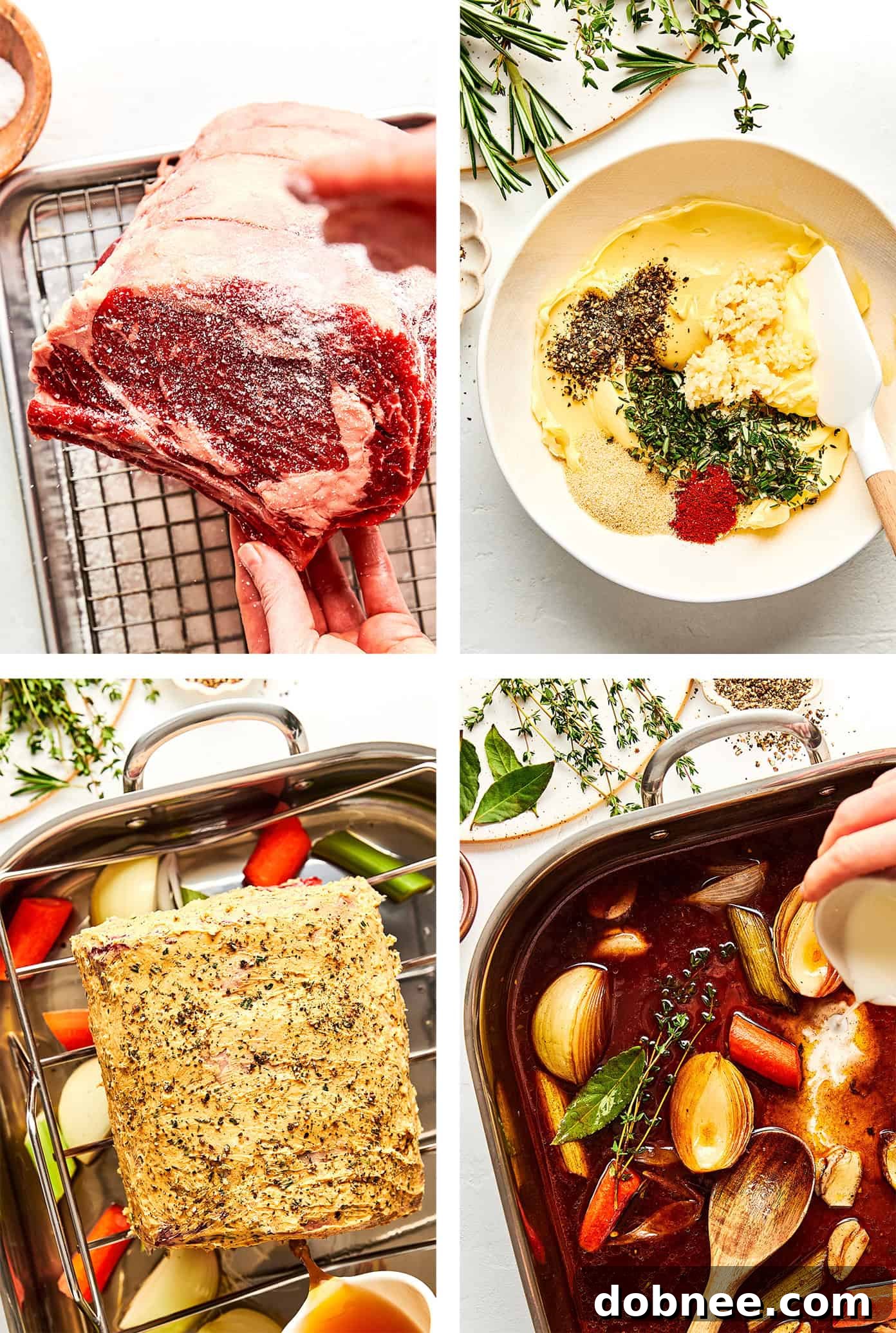
- Dry-brine the roast. Begin by thoroughly patting the entire prime rib roast very dry with paper towels. Generously season all sides of the roast with kosher salt. Place the seasoned roast on a wire rack, ensuring it’s elevated over a rimmed baking sheet. Refrigerate uncovered for a minimum of 12 hours, and ideally for up to 48 hours, to allow for optimal dry-brining. This process is crucial for deep seasoning and achieving that desirable crispy crust.
- Bring to room temperature. Approximately 3 to 4 hours before you plan to begin cooking, remove the prime rib from the refrigerator. Allow it to rest at room temperature. This step is critically important for ensuring the roast cooks evenly throughout and reaches its perfect internal doneness. While the roast is coming to temperature, preheat your oven to a low 250°F (121°C).
- Prepare the garlic-herb butter. In a small bowl, combine the softened unsalted butter with the finely-chopped fresh rosemary, finely-chopped fresh thyme, very finely minced garlic cloves, Dijon mustard, freshly-ground coarse black pepper, onion powder, and smoked paprika. Stir all these ingredients together until they are thoroughly and evenly combined, forming a fragrant paste.
- Assemble the roasting pan. In the bottom of a large roasting pan, evenly scatter the quartered yellow onion, roughly chopped carrot, roughly chopped celery rib, and the lightly smashed garlic cloves. Pour in 1 cup of beef stock or water. Place a sturdy roasting rack over the vegetables in the pan. Position the prime rib roast on the rack with the fat-cap side facing up. Spread the prepared garlic-herb butter mixture evenly all over the entire surface of the meat. Finish by seasoning the roast generously with additional freshly-ground black pepper.
- Slow-roast to perfection. Carefully transfer the assembled roasting pan to your preheated 250°F (121°C) oven. Roast slowly until the internal temperature of the prime rib, measured with an instant-read thermometer inserted into the thickest part of the meat (avoiding bones), reaches 120°F (49°C) for a medium-rare doneness or 125°F (52°C) for a medium doneness. This slow roasting process typically takes approximately 3 to 3½ hours, but cooking times can vary based on your specific oven and the size and shape of your roast.
- Crucial resting period. Once the prime rib reaches your desired internal temperature, carefully remove it from the oven. Tent the roast loosely with aluminum foil to retain heat. Allow it to rest undisturbed for a minimum of 20 to 30 minutes. This resting period is non-negotiable, as it permits the meat’s juices to redistribute evenly throughout the roast, ensuring every slice is incredibly tender and moist. The internal temperature will also continue to rise slightly during this time (carryover cooking).
- Prepare the rich au jus (while the roast rests). While your prime rib is resting, make the delicious au jus. Carefully spoon or pour off most of the accumulated fat from the roasting pan, leaving behind about 2 to 3 tablespoons of fat along with all the browned bits and caramelized drippings at the bottom. Place the roasting pan directly over medium heat on your stovetop (if your pan is stovetop-safe). Add the ¾ cup of dry red wine and bring it to a simmer, using a wooden spoon to scrape up all the flavorful browned bits from the bottom of the pan. Continue to simmer for 2–3 minutes until the wine has slightly reduced. Stir in the 3 cups of beef stock, fresh thyme or rosemary sprig, and the bay leaf. Continue to simmer gently for about 10 minutes, allowing the flavors to meld and deepen.
- Tip: If your roasting pan is not stovetop-safe, carefully transfer the browned bits and drippings to a medium saucepan and prepare the au jus there instead.
- Optional thickening: For a slightly thicker au jus, whisk together 1 tablespoon of cornstarch with 1 tablespoon of cold water in a small bowl until smooth, forming a slurry. Stir this slurry into the simmering au jus and cook for an additional 1–2 minutes, stirring constantly, until it reaches your desired consistency. Strain the au jus through a fine-mesh sieve into a serving vessel to remove any solids, then season with fine sea salt and freshly ground black pepper to taste. Keep warm until serving.
- Perform the final sear. Just before serving, heat a large cast-iron skillet (or another heavy-bottomed, oven-safe pan) over high heat until it’s very hot. Add a tablespoon of high-heat oil (such as avocado oil) or beef tallow to the skillet. Carefully transfer the rested prime rib roast to the hot skillet. Sear on all sides, including the ends, for 1–2 minutes per side. This rapid, high-heat sear will create a magnificent, rich, golden-brown crust, adding incredible texture and intensifying the exterior flavor of the roast.
- Slice and serve with flair. Remove the prime rib from the skillet. If your butcher tied the bones back on, carefully remove the kitchen twine and then remove the rib bones. Place the roast on a sturdy cutting board. Using a sharp carving knife, slice the roast against the grain into ½-inch-thick slices. Arrange the slices beautifully on a serving platter. Drizzle generously with the warm, homemade au jus, and for an extra touch of gourmet appeal, sprinkle with flaky sea salt just before serving. Enjoy your perfectly cooked masterpiece!