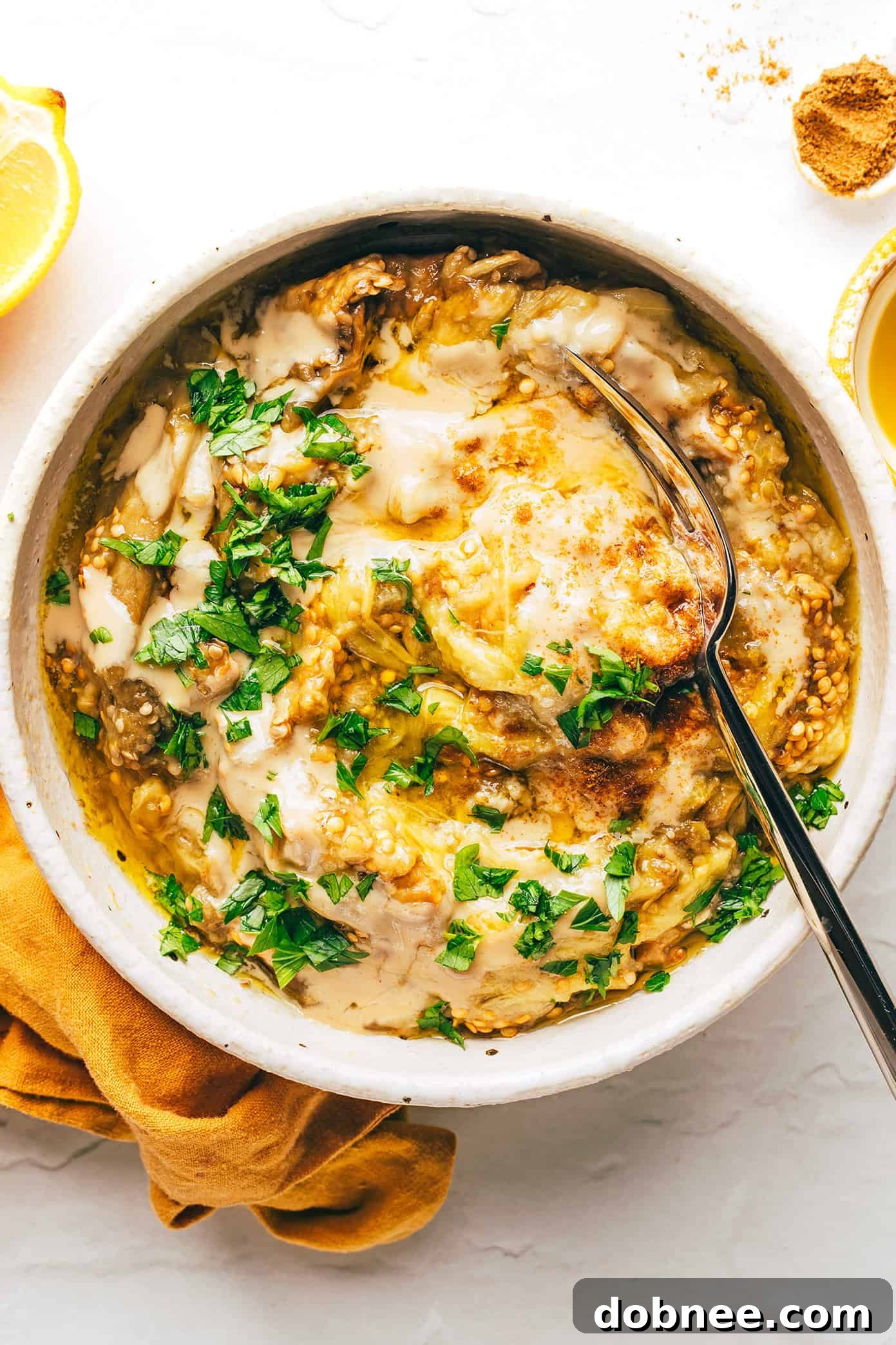
Ultimate Creamy & Smoky Baba Ganoush Recipe: Your Guide to the Best Middle Eastern Eggplant Dip
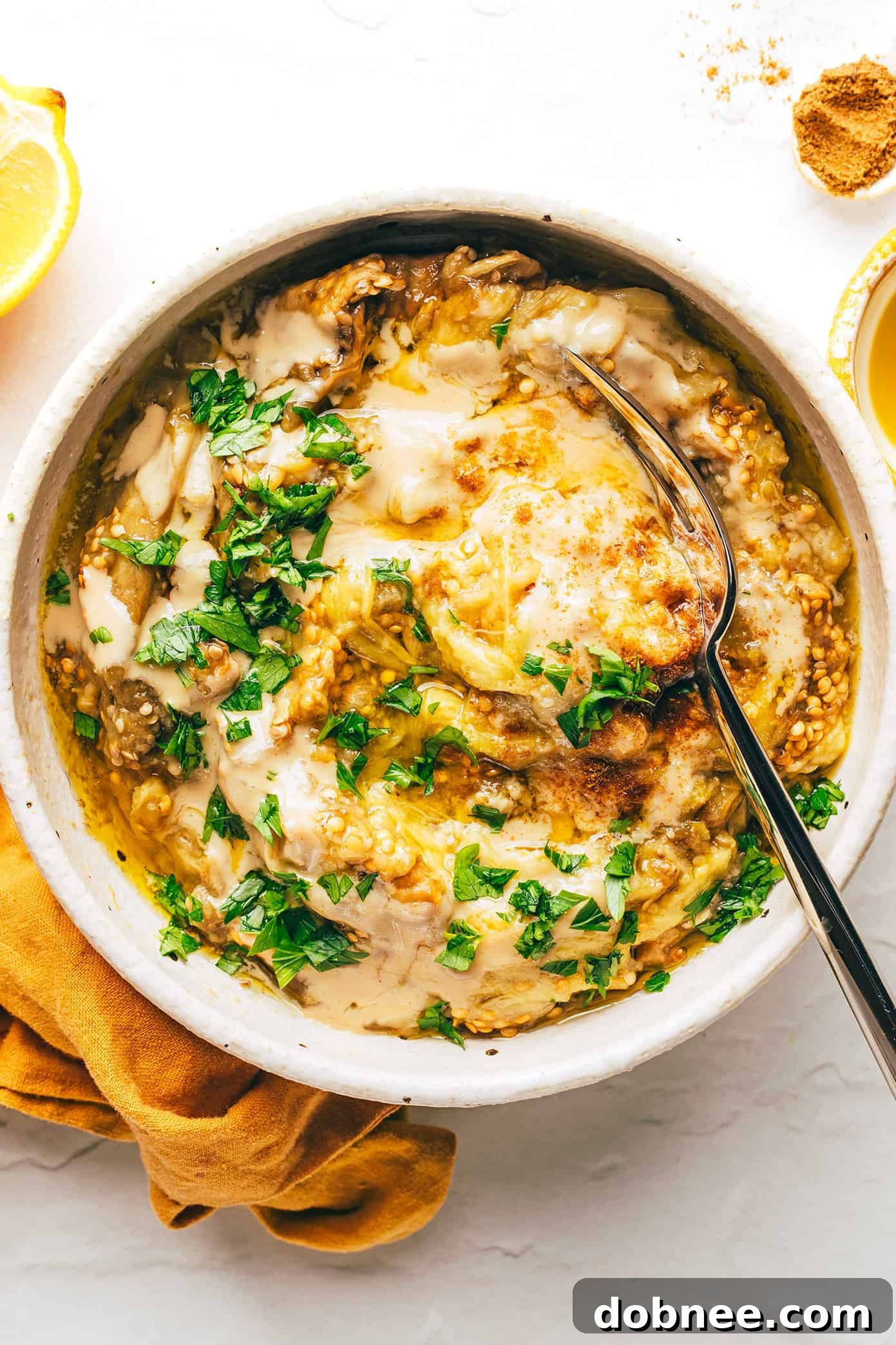
For a long time, I confess I was quite hesitant about eggplant. Its unique texture and sometimes bitter notes weren’t always my favorite. However, everything changed when I discovered the magic of perfectly roasted eggplant transformed into a stellar batch of baba ganoush. Suddenly, this humble vegetable became the star of a dish I couldn’t get enough of. And once you try this recipe, I’m confident you’ll feel the same way!
This classic Lebanese dip has become a staple in my kitchen, especially during peak eggplant season. My partner, Barclay, and I love preparing it on repeat, ensuring we always have a fresh batch on hand in the fridge for whenever a craving strikes. Its rich, smoky, and zesty flavors are simply irresistible, making it an incredibly versatile addition to any meal or snack. Whether you’re a seasoned chef or a beginner in the kitchen, this easy-to-follow recipe will guide you to create a baba ganoush that is not only delicious but also wonderfully adaptable to your personal taste.
What Exactly is Baba Ganoush? A Culinary Gem Explained
Baba Ganoush, often likened to hummus but with a distinctive smoky character, is a traditional Middle Eastern dip made primarily from roasted or grilled eggplant, tahini, lemon juice, garlic, and olive oil. Its name, which roughly translates to “pampered daddy” or “spoiled father” in Arabic, hints at its luxurious and comforting nature. Originating from Lebanon, this beloved dish has variations across the Middle East and the Mediterranean, each bringing a unique twist to the core recipe. The key to its unparalleled flavor lies in charring the eggplant, which infuses the dip with an incredible smoky depth that sets it apart.
Beyond its delightful taste, baba ganoush is also a fantastic healthy option. Eggplant is rich in fiber, vitamins, and minerals, while tahini provides healthy fats and protein. It’s naturally vegan, gluten-free, and packed with nutrients, making it an excellent choice for a wide range of dietary preferences. This recipe emphasizes fresh, wholesome ingredients, ensuring a vibrant and flavorful dip that’s as good for you as it is delicious.
Why This Homemade Baba Ganoush Will Become Your Favorite
Having sampled countless versions of baba ganoush in restaurants over the years, I’ve developed a strong preference for a full-flavored dip, much like my ideal hummus. This means generous amounts of creamy tahini, bright lemon juice, pungent garlic, and a hint of earthy cumin are absolute musts. While the smoky notes achieved from grilling are truly unparalleled, I’ve perfected an oven-roasting method that delivers fantastic results for those without access to a grill. Living in Barcelona, where grilling isn’t always an option in our apartment, this oven method has been a game-changer.
What truly makes this recipe stand out is its incredible flexibility. The ingredient amounts are merely a suggestion, inviting you to tinker and adjust them until your baba ganoush is exactly how you like it – whether that’s extra garlicky, super lemony, intensely tahini-rich, perfectly salty, wonderfully creamy, or even delightfully chunky. This is your canvas to create a dip that perfectly matches your palate. Plus, making it from scratch ensures maximum freshness and flavor, far surpassing any store-bought alternative.
Mastering the Star Ingredient: Eggplant Selection & Preparation
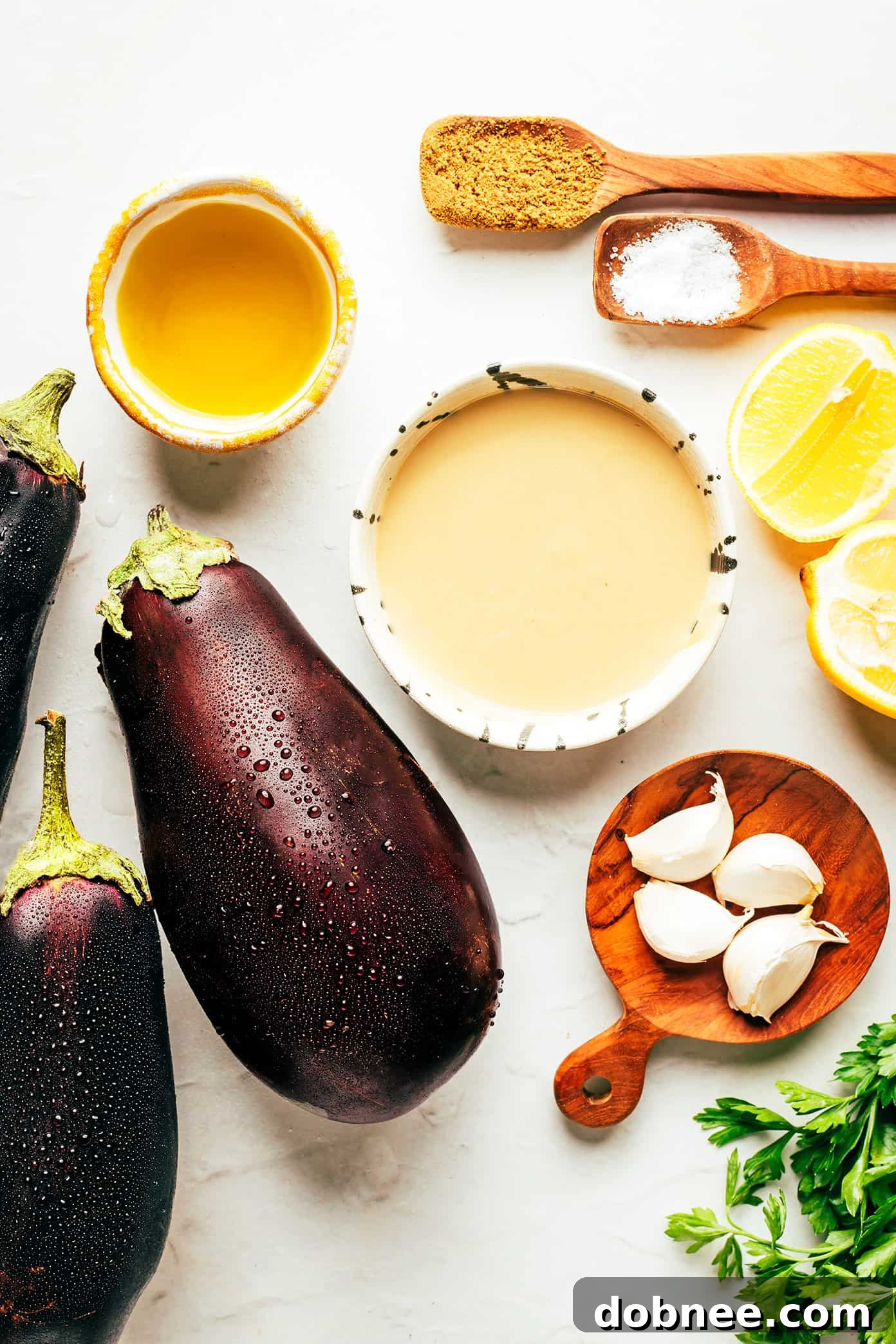
The success of your baba ganoush hinges on the eggplant. Choosing the right kind and preparing it properly are crucial steps to achieving that deep, smoky, and tender consistency. For this recipe, I recommend using either Italian or American (globe) eggplants. When selecting your eggplants, always opt for those on the smaller side. Smaller eggplants tend to be less bitter, contain fewer seeds, and cook much faster and more evenly, resulting in a silkier, more flavorful dip.
The magic truly happens during the cooking process. Whether you choose to roast your eggplant in the oven or char it on a grill, the goal is to cook it over high heat until the flesh inside is completely soft, almost collapsing, and the skin is beautifully charred. This charring is what imparts that signature smoky flavor that defines baba ganoush. While grilling offers the most intense smoky notes, a hot oven can achieve wonderful results, especially when eggplants are cooked flesh-side-down to maximize contact with the heat.
After cooking, allowing the eggplant to rest for about 20 minutes is vital. This resting period allows the eggplant flesh to continue steaming within its skin, becoming even more tender and easier to scoop. Don’t rush this step! It contributes significantly to the creamy texture of the final product. Additionally, a crucial step often overlooked is straining the cooked eggplant. This process helps to remove excess bitter juices and water, concentrating the eggplant’s flavor and preventing a watery dip. A fine-mesh strainer and gentle pressing with a spoon are all you need to achieve the perfect consistency.
The Essential Ingredients for Zesty Baba Ganoush
Before diving into the full recipe, let’s explore the key ingredients that come together to create this irresistible dip. Each component plays a vital role in building the complex flavor profile of baba ganoush:
- Eggplants: As discussed, Italian or American (globe) eggplants are best. Prioritize smaller ones for less bitterness and a quicker, more consistent cook. Their soft, smoky flesh forms the foundation of the dip.
- Garlic: This recipe calls for 4 large cloves of garlic, roasted alongside the eggplant. Roasting transforms raw garlic’s sharp bite into a sweet, mellow, and wonderfully aromatic flavor that complements the smoky eggplant beautifully. If your garlic cloves are smaller, feel free to add a few more, just keep an eye on them as they will cook faster.
- Olive Oil: A good quality extra virgin olive oil is indispensable. We use it to brush the eggplant and garlic before roasting, helping them char and soften, and then incorporate the rest into the dip for richness and a silky texture. A final drizzle before serving adds a luxurious finish and vibrant flavor.
- Tahini: This rich sesame paste is a cornerstone of Middle Eastern dips like baba ganoush and hummus. It contributes an incredible creaminess, nutty depth, and a characteristic savory note that binds all the flavors together. Don’t be shy with it – adjust to your taste for a richer dip.
- Lemon Juice: Freshly squeezed lemon juice is crucial for balancing the richness of the tahini and the smokiness of the eggplant. Its bright, zesty acidity elevates all the other flavors, making the dip wonderfully refreshing.
- Fine Sea Salt: Essential for seasoning, salt brings out the best in all the ingredients. For an extra layer of smoky complexity, consider using smoked fine sea salt.
- Seasonings: Ground cumin provides an earthy, warm spice that is characteristic of Middle Eastern cuisine. Just a quarter teaspoon makes a significant difference. For a beautiful finish and tangy touch, a sprinkle of ground sumac is highly recommended just before serving.
- Chopped Fresh Parsley: This vibrant herb adds a burst of freshness and a beautiful green hue. Traditionally mixed into the dip, it also makes for a lovely garnish.
Step-by-Step Guide: How to Make Baba Ganoush from Scratch
Making homemade baba ganoush is surprisingly simple, yet yields incredibly rewarding results. Here’s a detailed breakdown of the basic steps to create this flavorful dip:
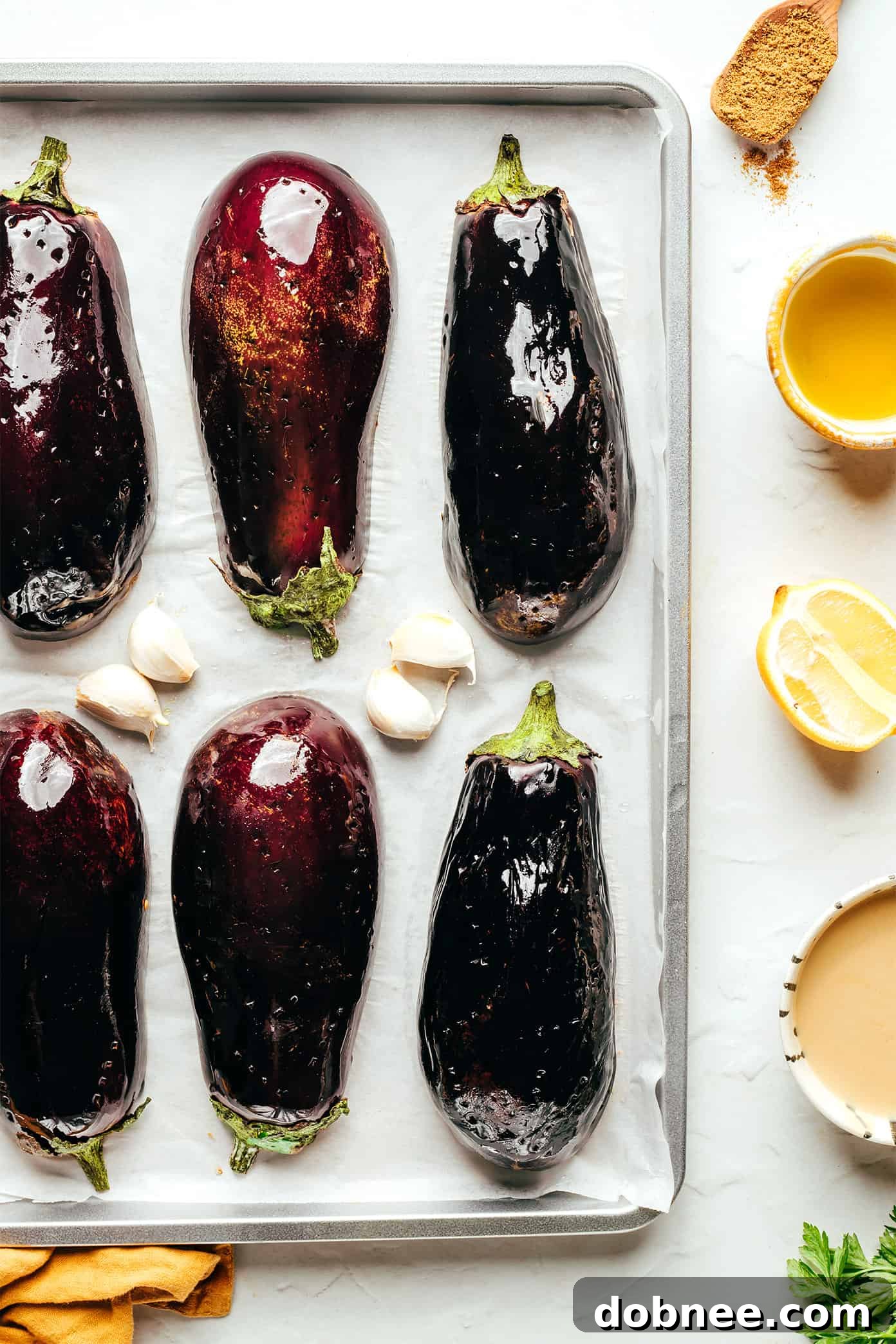
- Roast the Eggplant and Garlic: Preheat your oven to a high temperature, around 450°F (230°C), and line a large baking sheet with parchment paper. Halve the eggplants lengthwise and pierce the purple skins several times with a fork. Brush the exposed white flesh of the eggplants and the unpeeled garlic cloves with about 1 tablespoon of olive oil. Place the eggplants flesh-side-down on the baking sheet, alongside the unpeeled garlic. Roast for approximately 20 minutes. At this point, carefully remove the garlic cloves and set them aside to cool. Return the eggplants to the oven and continue roasting for another 25-35 minutes, or until they have completely collapsed and their flesh is incredibly soft and tender. The exact cooking time will vary depending on the size of your eggplants and garlic. Once cooked, transfer the baking sheet to a wire cooling rack and let the eggplants rest flesh-side-down, undisturbed, for about 20 minutes. This crucial resting period allows the eggplant to continue steaming, intensifying its tenderness and making it easier to work with.
- Strain the Eggplant: Once the roasted eggplant has cooled enough to handle, use a spoon to scoop out the soft flesh, discarding the skin. Transfer the flesh to a large fine-mesh strainer. Using the back of the spoon, gently press down on the eggplant flesh to strain out any excess water or bitter juices. This step is essential for achieving a thick, creamy, and flavorful baba ganoush, preventing it from becoming watery. After straining, transfer the eggplant flesh to a large mixing bowl.
- Combine the Ingredients: Carefully peel the cooled roasted garlic cloves and add them to the mixing bowl with the strained eggplant. Using a fork, begin to stir and gently mash the eggplant and garlic together. Continue mashing until you reach your desired consistency – some prefer a completely smooth dip, while others enjoy a slightly chunky texture. Next, add the remaining 2 tablespoons of olive oil, tahini, fresh lemon juice, fine sea salt, ground cumin, and a tablespoon or two of chopped fresh parsley. Stir all the ingredients thoroughly until they are well combined and the dip has a uniform consistency.
- Season to Perfection: This is a critical step! Taste the baba ganoush and adjust the seasoning as needed. You might find it needs a bit more salt to brighten the flavors, or perhaps a squeeze of extra lemon juice for more zest. Feel free to also add more cumin for warmth or additional parsley for freshness, tailoring the dip exactly to your preferences.
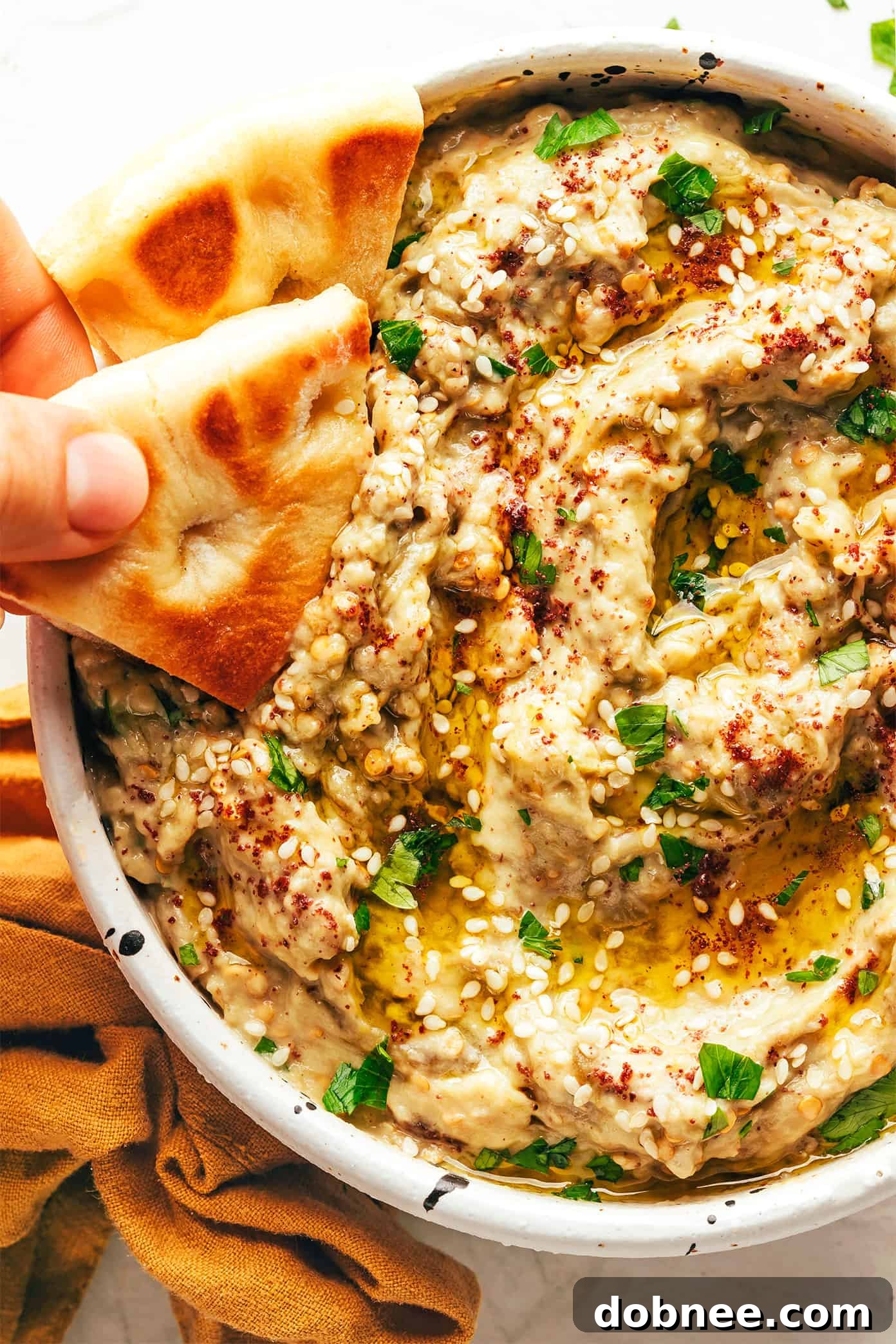
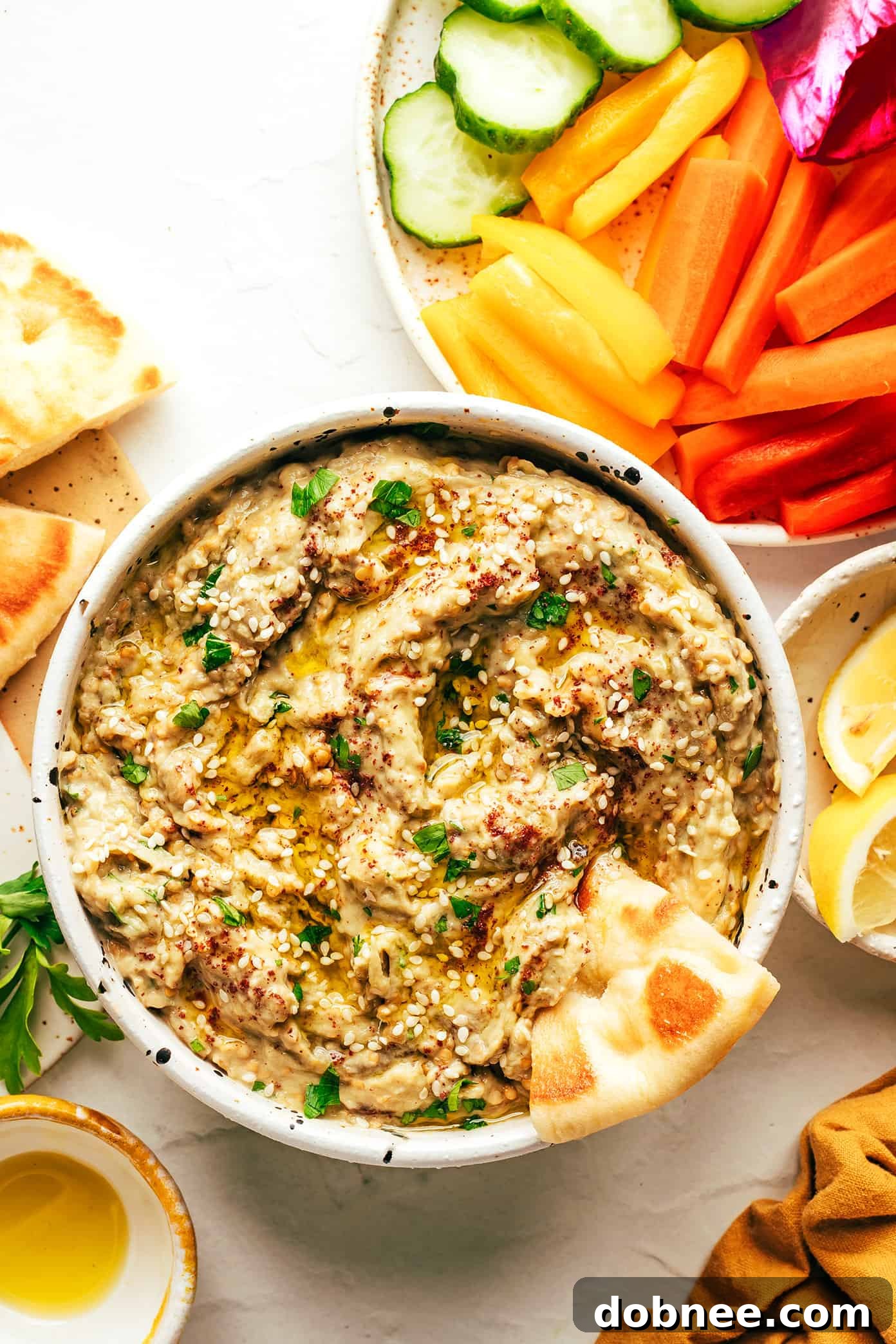
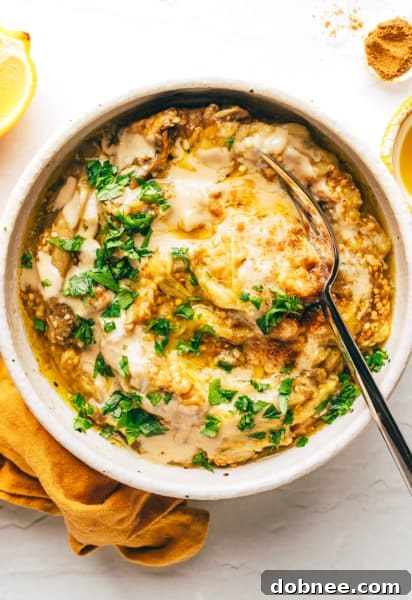
- Serve and Enjoy: Once seasoned to your liking, serve the baba ganoush immediately. For an aesthetically pleasing and flavorful finish, drizzle a little extra virgin olive oil over the top, sprinkle with additional fresh parsley, and add a pinch of ground sumac. This dip is wonderful served with warm pita bread, fresh vegetables, or as a spread. Leftovers can be stored in an airtight container in the refrigerator for up to 3-4 days, allowing the flavors to meld even further.
Creative Variations & Customization Tips for Your Baba Ganoush
Baba ganoush is a dish that truly shines with personalization. Everyone seems to have a unique preference for what makes the “best” version, so feel empowered to experiment and tailor this recipe to your liking. Here are some fantastic variations to consider:
- Grill for Intense Smoky Flavor: If you have access to a grill, I highly recommend grilling your eggplant instead of roasting it. Grilling over an open flame imparts an incredibly deep and authentic smoky flavor that is hard to replicate. You can find detailed grilling instructions in the notes section below the recipe card.
- Achieve a Silky Smooth Texture: While I prefer a slightly chunky baba ganoush that offers some textural interest, many love a perfectly smooth dip. To achieve this, simply transfer the combined ingredients into a food processor or blender and pulse briefly until it reaches your desired silky consistency. Be careful not to over-process, as this can make it gluey.
- Enhance the Smoky Profile: No grill? No problem! You can still boost the smokiness. Try using smoked salt instead of regular sea salt, or add a pinch of smoked paprika to the dip. For an even more pronounced smoky kick, a tiny drizzle of liquid smoke can be transformative (use sparingly!).
- Add a Spicy Kick: If you enjoy a bit of heat, stir in a pinch or two of cayenne pepper or a dash of your favorite hot sauce. Start small and add more to taste.
- Introduce Fresh Mint: For an extra layer of bright herbaceousness, add some chopped fresh mint along with (or in addition to) the parsley. Mint pairs wonderfully with the smoky and tangy flavors.
- Top with Toasted Pine Nuts: For a delightful crunch and rich, buttery flavor, sprinkle some lightly toasted pine nuts over your baba ganoush just before serving. They add an elegant touch and fantastic texture.
- Garnish with Pomegranate Seeds: For a burst of vibrant color and a sweet-tart contrast, sprinkle fresh pomegranate seeds over the finished dip. It’s visually stunning and adds a refreshing pop.
Frequently Asked Questions About Baba Ganoush
Here are some common questions about this delightful Middle Eastern dip:
- How do you pronounce baba ganoush? It’s pronounced bah-bah ga-NOOSH.
- Are there different ways to spell this dish? Yes, you’ll often see it spelled as babaganoush, baba ghanoush, or baba ghanouj, among other variations.
- What does baba ganoush mean? It roughly translates from Arabic to “spoiled daddy” or “pampered daddy,” perhaps alluding to its rich and indulgent flavor.
- Where is baba ganoush from? While its origins are widely attributed to Lebanon, different countries throughout the Middle East and even parts of Europe have developed their own unique interpretations of the recipe.
- Can baba ganoush be frozen? Technically, yes, but it’s not recommended. Freezing and thawing can significantly alter the texture, making it less creamy and sometimes watery. For best results, enjoy it fresh or within a few days of preparation.
Serving Suggestions: Beyond the Dip Bowl
While baba ganoush is undeniably excellent as a simple dip, its versatility extends far beyond a bowl with pita bread. Here are some inspiring ideas to incorporate this flavorful dip into various meals:
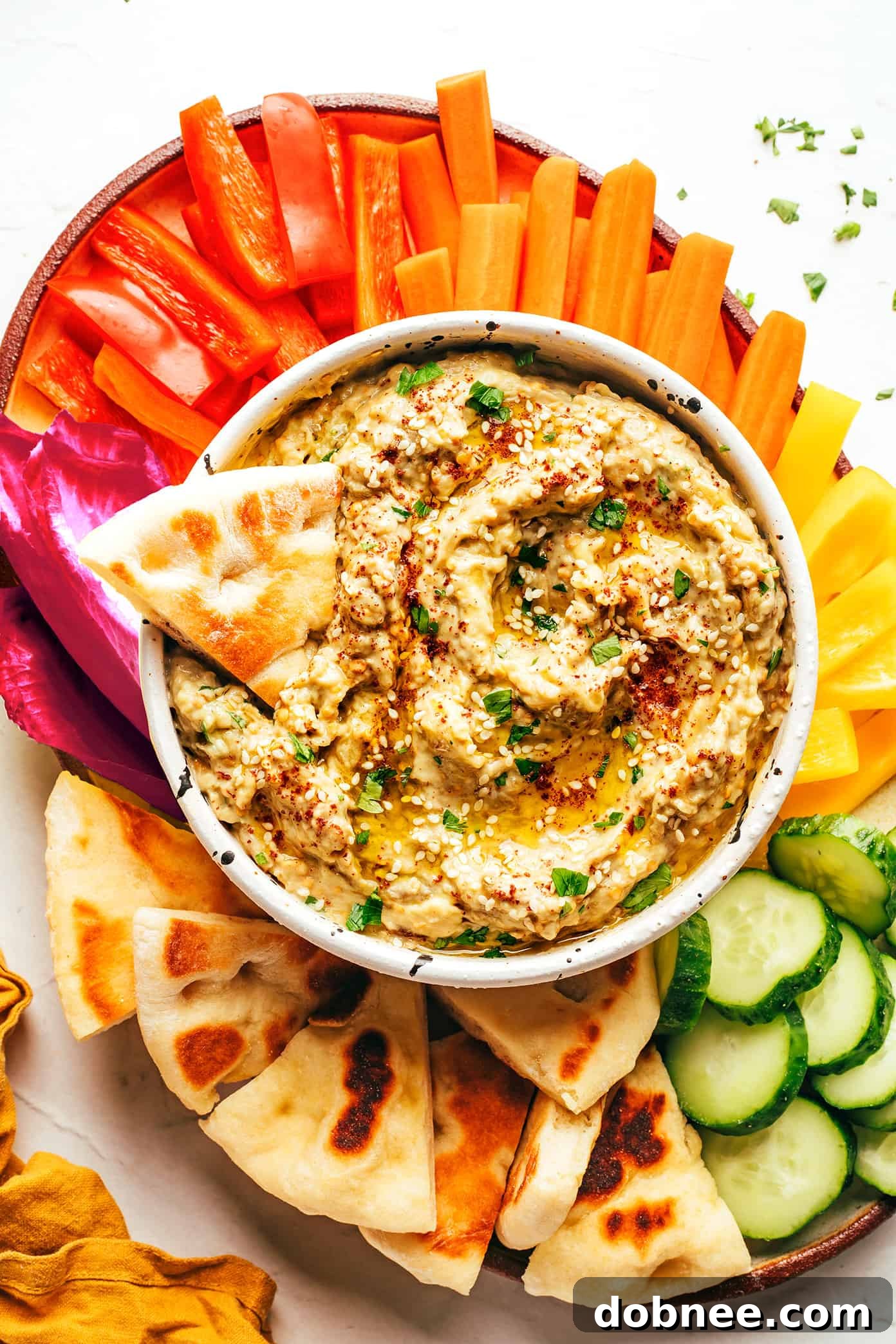
- Classic Dip: Serve with warm pita bread, naan, an assortment of crackers, crunchy veggie sticks (carrots, celery, cucumber), or even a side of crispy fries.
- Delicious Spread: Elevate your sandwiches, wraps, pitas, and even burgers by using baba ganoush as a creamy, flavorful spread. It’s a fantastic alternative to mayonnaise or other condiments.
- Salad Dressing Base: Whisk leftover baba ganoush with a bit of extra olive oil, lemon juice, and seasonings to create a unique and flavorful salad dressing.
- Flavor Booster for Soups & Stews: Stir a spoonful or two into your favorite soups or stews towards the end of cooking for added depth and a subtle smoky richness.
- Creative Pizza Topping: Spread it onto pizza dough as an eggplant-y base before adding other toppings. It’s an unexpectedly delicious way to enjoy baba ganoush.
- Mezze Platter Essential: A mezze platter isn’t complete without baba ganoush. Pair it with hummus, olives, dolmas, falafel, fresh salads, and cheeses for a delightful spread.
- Accompaniment to Grilled Meats & Vegetables: Its smoky notes make it a perfect pairing for grilled chicken, lamb, kebabs, or roasted vegetables.
- Breakfast Booster: Try spreading it on toast with a poached egg and a sprinkle of chili flakes for a savory and satisfying breakfast.
More Favorite Dip Recipes to Explore
If you’ve fallen in love with homemade dips, here are a few more amazing recipes to add to your repertoire:
- Classic Hummus
- Guacamole
- The Best Salsa
- Buffalo Chicken Dip
- Spicy Greek Feta Dip
- Slow Cooker Spinach Artichoke Dip
Baba Ganoush
Author: Ali
Prep Time: 35 mins
Cook Time: 45 mins
Total Time: 1 hour 20 mins
Yield: 6 to 8 servings 1x
Description
This Baba Ganoush recipe is easy to make, perfect for dipping or spreading, and full of the best rich and zesty flavors. See notes above for possible ingredient modifications.
Ingredients
Scale
- 2 to 2.5 pounds Italian eggplants (about 3 small eggplants)
- 3 tablespoons olive oil, divided (plus extra for drizzling)
- 4 large cloves garlic, unpeeled
- 1/3 cup tahini
- 3 tablespoons lemon juice
- 1/2 teaspoon fine sea salt
- 1/4 teaspoon ground cumin
- 2 to 4 tablespoons chopped fresh parsley
- optional: ground sumac, for sprinkling
Instructions
- Roast the eggplant and garlic. Heat oven to 450°F and line a large baking sheet with parchment paper. Slice the eggplants in half lengthwise and poke the purple skins with a fork a few times, then brush the exposed white flesh of the eggplants and the unpeeled garlic cloves with 1 tablespoon of the olive oil. Place the eggplants flesh-side-down on the baking sheet along with the unpeeled garlic cloves. Roast everything together for 20 minutes*, then remove the garlic cloves and set them aside to cool. Return the sheet of eggplants to the oven and continue roasting for 25-35 more minutes, until the eggplants have collapsed and the flesh is completely soft and tender. (Cooking time will depend on the size of your eggplants and garlic cloves.) Transfer the baking sheet to a wire cooling rack and let the eggplants rest flesh-side-down, undisturbed, for about 20 minutes so that the eggplant flesh can continue to steam inside of its skins.
- Strain the eggplant. Once the eggplant has cooled a bit, use a spoon to scoop out the soft flesh and transfer it to a large fine-mesh strainer. Use the spoon to gently press and strain out the excess water over the sink, then transfer the flesh to a large mixing bowl.
- Combine the ingredients. Peel the roasted garlic and add it to the mixing bowl. Use a fork to stir and gently mash the eggplant and roasted garlic until they reach a smooth-yet-slightly-chunky consistency. Add in the remaining 2 tablespoons olive oil, tahini, lemon juice, salt, cumin, and a tablespoon or two of chopped fresh parsley, and stir until combined.
- Season. Taste and season with extra salt, if needed. (Feel free to also adjust the amounts of lemon juice, cumin, or parsley, if desired.)
- Serve. Then serve with a drizzle of olive oil, a sprinkle of extra parsley and a pinch of sumac…and enjoy! Leftovers can be refrigerated in a sealed container for up to 3-4 days.
Equipment
Tahini
Buy Now →
Ground Sumac
Buy Now →
Ground Cumin
Buy Now →
Notes
Grill option: If you own a grill, I would highly recommend grilling instead of roasting the eggplant, to give it some extra smoky flavor. Heat the grill to medium-high heat. Leave the eggplants whole and poke them a few times on all sides with a fork. Drizzle the garlic cloves with oil, then place them in a double-wrapped foil packet (completely sealed). Grill the eggplant and garlic packet together for about 25 minutes, remove the garlic and set aside, then continue grilling the eggplants for 15-25 minutes longer until they have collapsed and the flesh inside is completely soft and tender. Grill time will vary depending on the size of your eggplants. Transfer the eggplants to a large bowl, cover, and let rest for 20 minutes so that the eggplants can steam. Then continue on with the recipe as directed.
Double-checking the garlic: I find that it takes about 20 minutes at this temperature for unpeeled garlic cloves to fully roast, but they may need more or less time in the oven/grill, so it’s best to keep an eye on them so that they do not burn. If you use smaller garlic cloves, note that they will also need less cooking time.