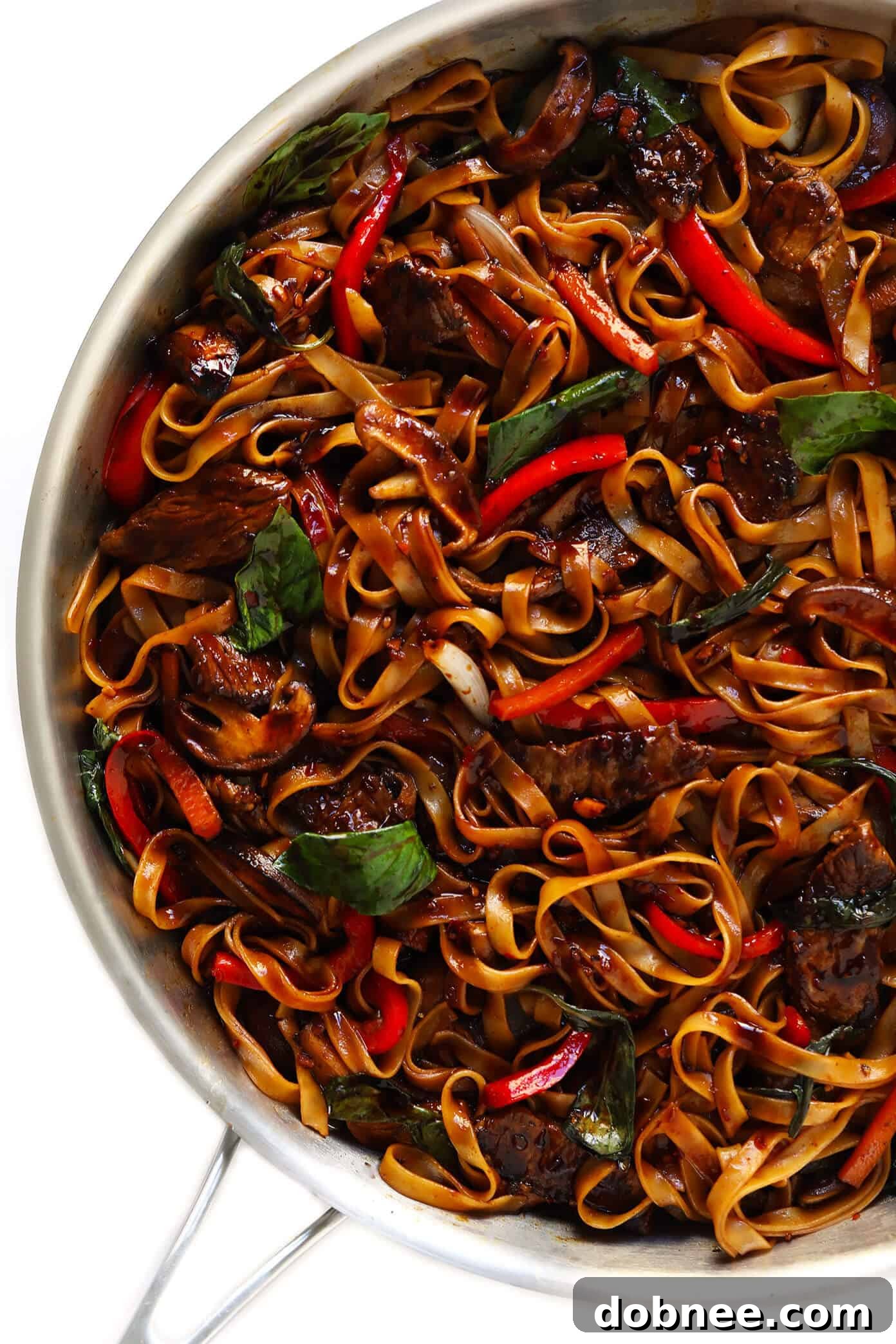
This Thai Basil Beef Noodle Stir-Fry recipe is not just easy to make; it’s a culinary journey infused with the finest savory Thai basil sauce. It’s incredibly versatile too – feel free to substitute beef with chicken, pork, shrimp, or even crispy tofu to suit your taste!
The Quest for Authentic Thai Flavors: Discovering Thai Basil in Barcelona
For almost two years, a specific culinary quest had consumed me in Barcelona: finding fresh Thai basil. As a passionate home cook, accustomed to the vibrant, distinctive flavors of authentic Thai cuisine, I often found myself compromising, using common Italian basil as a stand-in. While a respectable herb in its own right, Italian basil simply couldn’t replicate the unique, irresistibly savory, slightly spicy, and delicate anise notes of its Thai cousin. The absence of this essential ingredient was a subtle, yet persistent, void in my favorite Thai dishes.
Then, earlier this month, fate intervened during an ordinary stroll through a different part of the city. I happened upon a small, unassuming Asian market. Curiosity piqued, I decided to pop in, hoping to find some obscure ingredient or perhaps a new inspiration. And there it was, a glorious sight that instantly brought a smile to my face: bundles upon bundles of fresh Thai basil, fragrant and vibrant. Its presence was a testament to the fact that authentic flavors were finally within reach. My quest was over, and I left the market with an enormous bouquet, eager to return to my kitchen and unleash a wave of culinary creativity.
Crafting the Perfect Thai Basil Beef Noodle Stir-Fry
Naturally, my first order of business was to dive into all my beloved Thai basil recipes. One particular evening, with my vegetarian husband out for the night (providing a rare opportunity to cook with meat), I decided to improvise. I threw together a quick Thai basil beef and noodle stir-fry, and the result was nothing short of spectacular. It was so incredibly delicious, so perfectly balanced in flavor and texture, that I knew immediately I had to share this recipe with you.
This dish is essentially a slightly simplified, yet equally robust, take on my cherished Drunken Noodles (Pad Kee Mao) recipe. It features generous portions of tender, thinly sliced steak, perfectly al dente rice noodles, a medley of quick-cooking fresh vegetables, and, of course, a rich, savory stir-fry sauce elevated by an abundance of fresh Thai basil. Every bite was an explosion of the bold, authentic Thai flavors I adore in a quality stir-fry.
What makes this Thai Basil Beef Noodle Stir-Fry truly stand out is its incredible convenience without sacrificing flavor. You can whip it up in just about 30 minutes, making it an ideal choice for a busy weeknight meal when you crave something exotic yet quick. Its adaptability is another major plus; you can easily customize it with whatever vegetables and protein you have on hand, from succulent chicken or pork to juicy shrimp or even crispy baked tofu. And speaking from personal experience (as the primary meat-eater in a household of two), I can confidently vouch that the leftovers are just as fantastic, if not better, making it an excellent candidate for meal prepping healthy lunches. If you’re a fan of flavorful, quick, and satisfying stir-fries, this Thai Basil Beef Noodle Stir-Fry is destined to become a new favorite in your culinary repertoire. Let’s get stir-frying!
Why Fresh Thai Basil is Non-Negotiable for This Recipe
Thai basil is not just another herb; it’s the heart and soul of many classic Thai dishes, and this stir-fry is no exception. Its distinct flavor profile – a complex blend of licorice-like anise, subtle pepperiness, and a hint of sweetness – sets it miles apart from common Italian basil. While Italian basil can be a decent substitute in a pinch, it simply lacks the authentic punch and aromatic depth that truly defines this dish. The unique aroma that fills your kitchen and the nuanced flavor it imparts to the sauce are what elevate this stir-fry from merely good to absolutely extraordinary. If you can, make the effort to seek out fresh Thai basil at your local Asian market; it genuinely transforms this recipe and is well worth the hunt.
Essential Ingredients for Your Thai Basil Beef Noodle Stir-Fry
Crafting a memorable stir-fry begins with selecting the right, fresh ingredients. Here’s a detailed look at what you’ll need to create this flavor-packed dish, along with tips for optimal results:
- Fresh Thai Basil: As previously highlighted, fresh Thai basil is paramount. Look for vibrant green leaves, often with purple stems or flowers, indicative of its freshness and potent flavor. Pack it tightly for measuring; a generous amount ensures the basil’s distinctive character shines through.
- Noodles: Rice noodles are traditional and highly recommended for their delicate texture and excellent ability to absorb the rich sauce. Opt for wide, flat rice noodles (often labeled as “Pad See Ew noodles” or “Drunken Noodles”) for the best chewy consistency. However, feel free to use your preferred stir-fry noodles, such as thin vermicelli, egg noodles, or even udon for a different mouthfeel.
- Beef: For ultimate tenderness and rich flavor, flank steak or tender sirloin are excellent choices. The key is to slice the beef thinly against the grain. This technique shortens the muscle fibers, ensuring the meat cooks quickly and remains incredibly tender, not tough. If you prefer, ground beef can also be used for a heartier, more rustic texture that blends seamlessly with the sauce. For alternative proteins, consider sliced chicken breast or thighs, tender pork tenderloin, or plump, peeled shrimp.
- Veggies: We’re keeping things simple yet impactful with red bell pepper, sweet white onion, earthy shiitake or baby bella mushrooms, and pungent minced garlic. This combination offers a fantastic balance of textures and tastes. Feel free to incorporate your favorite stir-fry vegetables like crisp broccoli florets, thinly sliced carrots, vibrant snap peas, fresh green beans, tender zucchini, baby corn, or bok choy for added nutrition and color.
- The Ultimate Stir-Fry Sauce: This isn’t just any sauce; it’s a harmonious blend of savory, sweet, and spicy notes that creates the signature Thai flavor profile.
- Low-Sodium Soy Sauce: Forms the essential salty, umami base. Using low-sodium allows for better control over the overall saltiness of the dish, letting you adjust to taste.
- Dark Soy Sauce: Adds a beautiful, appetizing deep caramel color to the noodles and a subtle, less salty sweetness that enhances the visual appeal and depth of flavor.
- Oyster Sauce: Contributes a rich, savory, slightly sweet, and complex umami depth that is quintessential in many Asian stir-fries, providing a luscious coating for the ingredients.
- Fish Sauce: An absolutely essential ingredient for authentic Thai flavor, providing a salty, pungent umami kick without making the dish taste “fishy.” It adds a layer of complexity that can’t be replicated.
- Chile Garlic Sauce: Delivers a balanced heat and garlicky punch. Adjust the amount to your preferred spice level; a little goes a long way to awaken the palate.
- Optional Toppings: Elevate your stir-fry with a sprinkle of optional toppings. Sliced fresh green onions add a welcome pungent freshness, toasted sesame seeds provide a nutty crunch, chopped peanuts offer additional texture and richness, fried garlic gives an extra layer of savory depth, and fresh lime wedges brighten the entire dish with a zesty, acidic finish.
Mastering the Art of Thai Beef Noodle Stir-Fry: Step-by-Step Guide
The key to a successful stir-fry lies in meticulous preparation and quick, high-heat cooking. Follow these straightforward steps to achieve a restaurant-quality dish in your own kitchen:
- Prepare the Sauce: In a small bowl or measuring cup, whisk together all the sauce ingredients (low-sodium soy sauce, dark soy sauce, oyster sauce, fish sauce, and chile garlic sauce) until they are thoroughly combined and smooth. Set this mixture aside. This crucial step ensures all subsequent cooking proceeds without interruption.
- Cook the Noodles: Follow the specific package instructions to cook your chosen rice noodles until they are perfectly al dente. It’s vital not to overcook them, as mushy noodles will detract from the stir-fry’s texture. Once cooked, drain them immediately and set them aside. To prevent the noodles from sticking together while you prepare the other ingredients, I highly recommend tossing them with a small drizzle of neutral cooking oil.
- Sear the Beef: Heat 1 tablespoon of cooking oil in a large sauté pan or wok over medium-high heat until it begins to shimmer. Season your thinly sliced steak generously with fine sea salt and freshly cracked black pepper. Add the seasoned beef to the hot oil and sauté for just 3-4 minutes, stirring only occasionally, allowing it to develop a beautiful brown crust on all sides. Avoid overcrowding the pan; if necessary, cook the beef in two batches to ensure it sears rather than steams. Once browned, transfer the cooked steak to a separate clean plate and set aside. Return the empty pan to the heat.
- Sauté the Veggies: Add the remaining 1 tablespoon of oil to the same pan, along with the thinly sliced white onion. Sauté for about 2 minutes, stirring occasionally, until it starts to soften and become fragrant. Next, add the sliced mushrooms, red bell pepper, and minced garlic. Continue to sauté for another 3-5 minutes, or until the vegetables reach your desired level of tenderness – ideally still crisp-tender for the best texture in a stir-fry.
- Combine Everything: This is where the magic happens! Immediately return the cooked beef to the pan. Add the prepped noodles, along with the whisked stir-fry sauce and the fresh Thai basil leaves. Using tongs or a large spatula, give everything a good, vigorous toss until all the ingredients are evenly coated with the rich, aromatic sauce. The basil will wilt quickly, infusing the entire dish with its distinctive fragrance. Remove the pan from the heat as soon as everything is well combined to prevent overcooking the noodles or vegetables.
- Serve Immediately: Transfer your hot and vibrant Thai Basil Beef Noodle Stir-Fry to individual serving plates or a large communal platter. Garnish generously with any of your desired toppings – fresh sliced green onions, toasted sesame seeds, crunchy chopped peanuts, savory fried garlic, or a refreshing squeeze of fresh lime juice for an extra burst of flavor. Serve warm and savor the explosion of authentic Thai tastes!
Creative Variations to Customize Your Stir-Fry
One of the best aspects of stir-fries is their incredible flexibility. Don’t hesitate to get creative and tailor this recipe to your specific preferences, dietary needs, or simply what you have available in your pantry:
- Spice It Up: If you adore heat, there are numerous ways to intensify the spice level. Incorporate thinly sliced fresh Thai bird chiles with the vegetables for a vibrant, immediate kick. A dash of sriracha sauce or a sprinkling of crushed red chili flakes (added with the sauce or as a topping) will also add a welcome fiery dimension.
- Experiment with Proteins: While beef is undoubtedly delicious, this stir-fry is equally fantastic with a variety of other proteins. Consider using sliced chicken breast or thighs, tender pork tenderloin, or plump shrimp for a delightful seafood twist. For a vegetarian or vegan option, firm or extra-firm tofu (pressed, cubed, and pan-fried until golden and crispy) makes a superb, protein-rich substitute. You can also skip the protein entirely and load up on extra vegetables for a satisfying, nutrient-packed meat-free meal.
- Diverse Vegetable Choices: The beauty of a stir-fry lies in its ability to showcase a wide array of vegetables. Beyond bell peppers and mushrooms, try adding crisp broccoli florets, thinly sliced carrots, fresh snap peas, vibrant green beans, tender zucchini, vibrant bok choy, or bamboo shoots. Remember to cut all vegetables into similar sizes to ensure even cooking and a consistent texture.
- Noodle Alternatives: If rice noodles aren’t your preference or are not readily available, many other noodle types work wonderfully. Explore udon noodles for a chewier texture, egg noodles for a classic Asian feel, soba noodles for an earthy flavor, or even sweet potato noodles for a naturally gluten-free twist. Regardless of your choice, ensure you cook them according to package directions before adding them to the stir-fry.
- Make it Gluten-Free: To transform this dish into a completely gluten-free meal, simply substitute regular soy sauce and dark soy sauce with tamari, which is a gluten-free alternative. Additionally, ensure your chosen brands of oyster sauce and fish sauce are certified gluten-free, as some may contain wheat.
- Add a Touch of Sweetness: For those who appreciate a slightly sweeter profile in their Thai dishes, a teaspoon of brown sugar or palm sugar can be dissolved into the sauce mixture. This subtle addition beautifully complements the savory and spicy elements, creating a more complex and rounded flavor.
Tips for Stir-Fry Success
Achieving a perfect stir-fry every time involves a few key principles that will make your cooking experience smoother and your dish more delicious:
- Mise en Place is Key: This French culinary term, meaning “everything in its place,” is absolutely critical for stir-frying. Because stir-fries cook very quickly at high heat, you won’t have time to chop, mince, or measure ingredients once you start cooking. Have all your meat sliced, vegetables chopped, sauce whisked, and noodles cooked and drained, ready to go before the wok or pan even hits the stove.
- Don’t Overcrowd the Pan: This is a common mistake. Cooking in batches, especially the beef, is essential if your pan isn’t large enough to accommodate all ingredients in a single layer. Overcrowding lowers the pan’s temperature dramatically, leading to steamed instead of beautifully seared meat and crisp-tender vegetables.
- High Heat, Quick Cook: Stir-frying relies on consistently high heat to cook ingredients rapidly, sealing in flavors and retaining crisp textures. Keep the heat consistently high and move ingredients around constantly using a spatula or tongs to ensure even cooking.
- Taste and Adjust: Before combining everything, taste your sauce mixture. This is your last chance to adjust seasonings as needed. Once everything is together, you can still add a dash more fish sauce for umami, soy sauce for saltiness, or chili garlic sauce for heat, but it’s best to get the base right from the start.
Serving and Storing Your Delicious Stir-Fry
This Thai Basil Beef Noodle Stir-Fry is best enjoyed immediately, straight from the pan, when the noodles are perfectly tender, the vegetables are crisp-tender, and the aromas are at their absolute peak. It makes for a complete and satisfying meal all on its own, providing a perfect balance of protein, carbohydrates, and vegetables. However, you can also serve it with a side of steamed white or brown rice to soak up any extra delectable sauce.
If you happen to have leftovers (which are always a treat!), store them promptly in an airtight container in the refrigerator for up to 3-4 days. To reheat, simply warm the stir-fry in a microwave or gently sauté it in a pan over medium heat until heated through. The flavors tend to meld even further overnight, often making for a wonderfully convenient and even more flavorful lunch the next day.
Experience Authentic Thai Flavors at Home
Armed with this comprehensive recipe and these helpful tips, you’re now perfectly ready to recreate the vibrant, aromatic, and deeply satisfying experience of a Thai Basil Beef Noodle Stir-Fry right in your own kitchen. It’s more than just a meal; it’s a testament to the joy of discovering unique ingredients and the simple pleasure of crafting a delicious, wholesome dish from scratch. So, gather your fresh Thai basil, slice your beef, and prepare to embark on a culinary adventure that promises big, authentic flavors and an incredibly easy cooking process. Enjoy every savory bite!
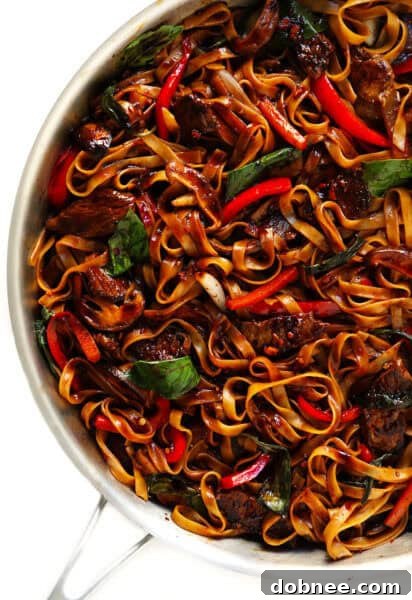
Thai Basil Beef Noodle Stir-Fry
- Author: Ali
- Prep time:
- Cook time:
- Total time:
- Yields: 4 servings
Description
This Thai Basil Beef Noodle Stir-Fry recipe is easy to make and tossed with the best savory Thai basil sauce. Feel free to sub in chicken, pork, shrimp or crispy tofu in place of the beef if you would like!
Ingredients
Stir-Fry Ingredients:
- 8 ounces (uncooked) rice noodles
- 2 tablespoons oil, divided
- 1 ¼ pounds sirloin or flank steak, cut into bite-sized pieces
- Fine sea salt and freshly-cracked black pepper
- 1 small white onion, peeled and thinly sliced
- 8 ounces shiitake or baby bella mushrooms, sliced
- 1 red bell pepper, cored and thinly sliced
- 4 cloves garlic, peeled and minced
- 1 ½ cups packed fresh Thai basil leaves
- Optional toppings: sliced green onions, toasted sesame seeds, chopped peanuts, fried garlic and/or fresh lime wedges
Sauce Ingredients:
- 3 tablespoons low-sodium soy sauce
- 2 tablespoons oyster sauce
- 2 tablespoons fish sauce
- 1 tablespoon sweet dark soy sauce
- 1 tablespoon chile garlic sauce, or more/less to taste
Instructions
- Prep the sauce. Whisk the sauce ingredients together in a small bowl or measuring cup until combined.
- Prep the noodles. Cook the noodles according to package instructions until they are al dente. Drain and set aside until ready to use. (I would also recommend tossing the noodles with a drizzle of oil if it will be a few minutes until you add them to the stir-fry, to prevent them from sticking together.)
- Sear the beef. Heat 1 tablespoon oil in a large sauté pan or wok over medium-high heat. Season the steak with a generous pinch of salt and pepper. Then add the steak to the oil and sauté for 3-4 minutes, stirring only occasionally, until it is browned on all sides. Transfer the cooked steak to a separate (clean) plate, and return the pan to the heat.
- Cook the veggies. Add the remaining 1 tablespoon oil to the pan along with the onion. Sauté for 2 minutes, stirring occasionally. Add the mushrooms, bell pepper and garlic, and sauté for 3-5 more minutes, or until the veggies reach your desired level of tenderness.
- Combine everything together. Immediately add the cooked noodles, sauce, steak and Thai basil to the pan. Give everything a good toss until everything is evenly coated with the sauce, and remove the pan from the heat.
- Serve warm. Serve immediately, garnished with any of your desired toppings.