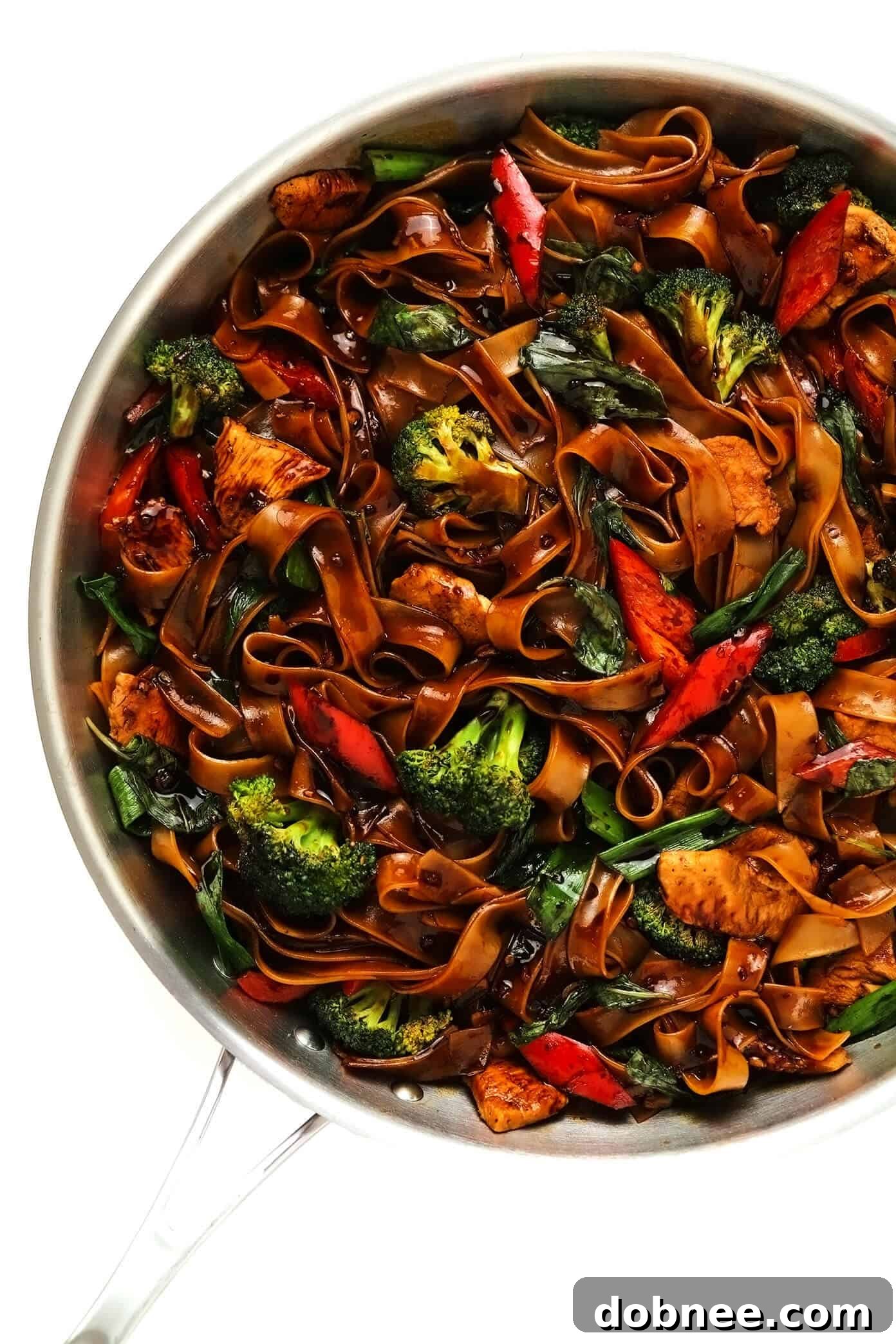
Discover the ultimate recipe for Thai Drunken Noodles (Pad Kee Mao), a fiery and flavorful stir-fry featuring your preferred protein, fresh vegetables, and an unforgettable Thai basil sauce.
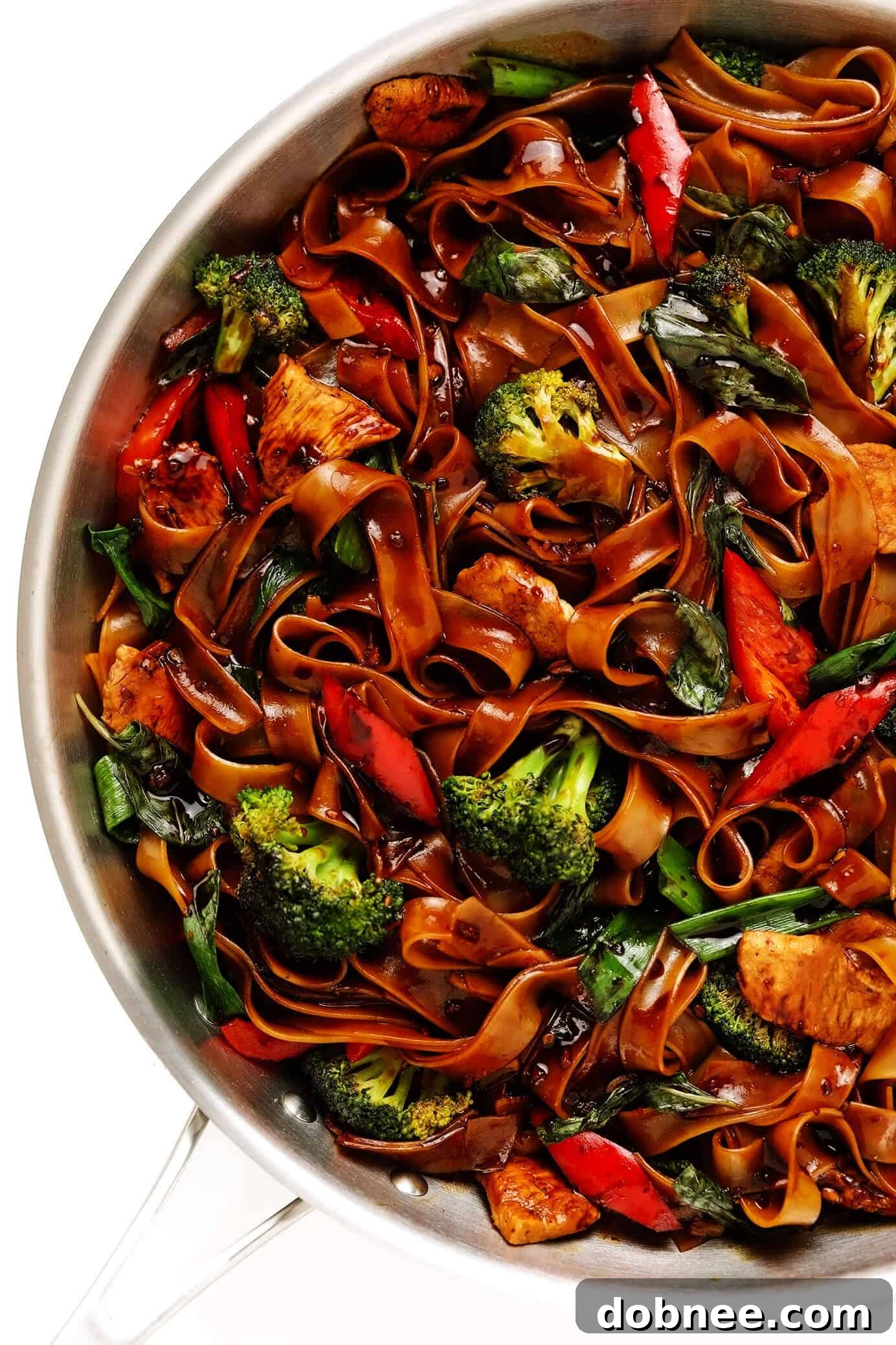
Mastering Thai Drunken Noodles (Pad Kee Mao): Your Guide to Authentic Flavors
For lovers of vibrant, aromatic, and deeply satisfying stir-fried dishes, Thai Drunken Noodles, known in Thailand as Pad Kee Mao (ผัดขี้เมา), stand out as an absolute masterpiece. While their name might conjure images of late-night revelry, this iconic dish is actually a flavor powerhouse, renowned for its spicy kick, savory depth, and the unmistakable fragrance of fresh Thai basil. It’s a culinary journey that promises an exhilarating experience for your taste buds.
Pad Kee Mao is far from just another noodle dish; it’s a symphony of textures and tastes. Unlike some other Thai noodle preparations, “drunken noodles” traditionally contain no alcohol. The intriguing name is widely believed to be a whimsical reference to the dish’s potent spiciness, thought to be the perfect cure for a hangover—or perhaps simply so delicious and fiery it might make you feel a little tipsy! Whatever the origin, the magic truly unfolds in its signature sauce: a complex blend of salty, sweet, and umami notes, heightened by a generous hand of aromatic Thai holy basil.
My adoration for these noodles knows no bounds. The moment that rich sauce, infused with anise-like Thai basil, coats the chewy rice noodles, alongside crisp vegetables and tender protein, something truly extraordinary happens. It transforms into a dish that is utterly irresistible, making it a constant favorite on my kitchen rotation. If you’ve enjoyed Pad Kee Mao at your favorite Thai-American restaurant, prepare to fall in love all over again with this homemade version that captures all the authentic zest and spice.
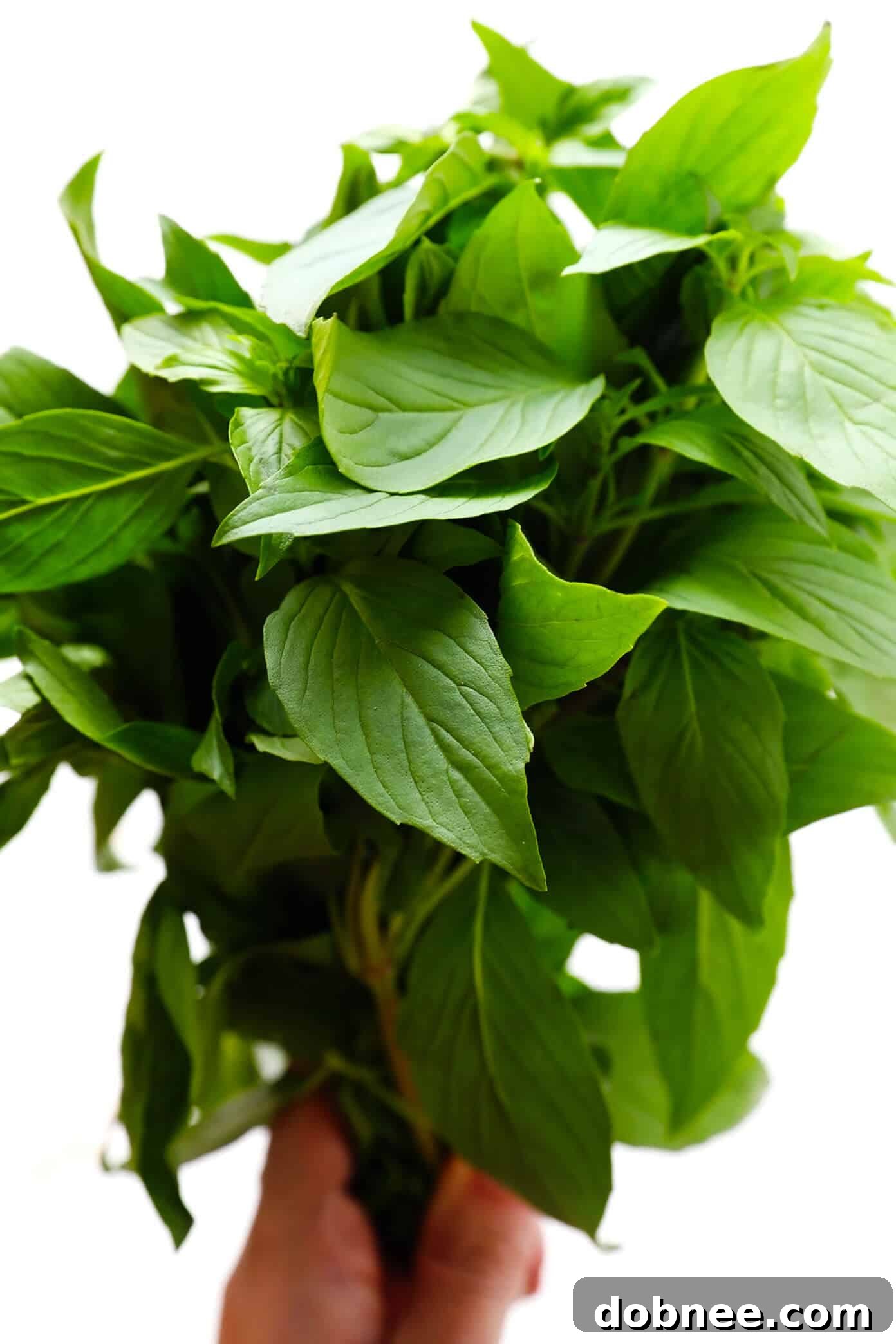
To truly unlock the authentic essence of this recipe, I cannot stress enough the importance of seeking out fresh Thai basil. While Italian basil offers a lovely flavor, Thai basil’s distinct anise and peppery notes provide that elusive “je ne sais quoi” that elevates Pad Kee Mao from good to absolutely phenomenal. A visit to your local Asian grocery store will be well worth the trip to procure this key ingredient. While striving for authenticity, this recipe is meticulously crafted to replicate the beloved Thai-American restaurant experience I cherished for years, ensuring a ridiculously delicious outcome every time.
The excellent news is that creating this sensational dish at home is surprisingly straightforward, and it yields fantastic leftovers, making it an ideal choice for meal prep or a delightful weeknight dinner. So, gather your fresh Thai basil and let’s embark on this culinary adventure to create the perfect homemade Pad Kee Mao together!
Essential Ingredients for Authentic Pad Kee Mao
Crafting the perfect Pad Kee Mao begins with selecting the right ingredients. Each component plays a vital role in achieving that complex balance of flavors. Here’s a closer look at what you’ll need and why:
- Rice Noodles: The foundation of our stir-fry! For Drunken Noodles, wider, flat rice noodles are often preferred as they hold up well to the vigorous stir-frying and absorb the sauce beautifully. You can use fresh or dried varieties, just be sure to follow package instructions for cooking them al dente, ensuring they remain slightly firm and chewy. Overcooked noodles can become mushy.
- Protein: I’ve opted for succulent, bite-sized thin slices of boneless, skinless chicken breast, which cook quickly and absorb flavors well. However, this recipe is incredibly versatile. Feel free to substitute with thinly sliced beef, tender pork, juicy shrimp, or firm tofu for a vegetarian option. The key is to cut your protein into uniform, manageable pieces to ensure even cooking.
- Veggies: My recipe features a vibrant mix of crisp broccoli florets, sweet red bell pepper, fresh scallions (green onions), and pungent minced garlic. These vegetables add essential texture, color, and nutrients. Traditionally, Chinese broccoli (Gai Lan) is a popular choice, offering a slightly bitter, earthy counterpoint. If you can find Chinese broccoli, try it! Otherwise, feel free to get creative with other stir-fry friendly vegetables like snap peas, carrots, baby corn, or mushrooms. The goal is a quick-cooking, flavorful assortment that retains a pleasant crunch.
- Thai Basil: This is arguably the star ingredient beyond the noodles themselves! Thai basil possesses a unique, slightly spicy, anise-like flavor profile that sets it apart from common Italian basil. It provides the signature aroma and taste that truly defines Pad Kee Mao. Don’t be shy with the amount—a generous quantity is crucial for authentic flavor. If Thai basil is absolutely unavailable, Italian basil can be a substitute, but be aware the flavor will differ significantly.
- The Irresistible Stir-Fry Sauce: This “drunken” sauce is where the magic truly lies, a masterful blend of savory, sweet, and spicy elements:
- Low-Sodium Soy Sauce: Provides the fundamental salty, umami base.
- Oyster Sauce: Adds a rich, savory, slightly sweet depth and glossy texture.
- Fish Sauce: Essential for authentic Thai umami and a subtle funky depth that rounds out the flavors.
- Sweet Dark Soy Sauce: Contributes a dark, rich color and a caramelized sweetness. If unavailable, a mix of regular soy sauce and a touch of molasses, brown sugar, or honey can be used (see notes below).
- Chili Garlic Sauce: Delivers the iconic heat and aromatic garlic kick that Pad Kee Mao is famous for. Adjust to your preferred spice level.
- Toppings: Elevate your dish with optional garnishes. Fresh lime wedges offer a burst of acidity, brightening the rich flavors. Sliced Thai bird chiles are perfect for those who crave extra heat. For added crunch and flavor, consider a sprinkle of chopped peanuts or crispy fried garlic.
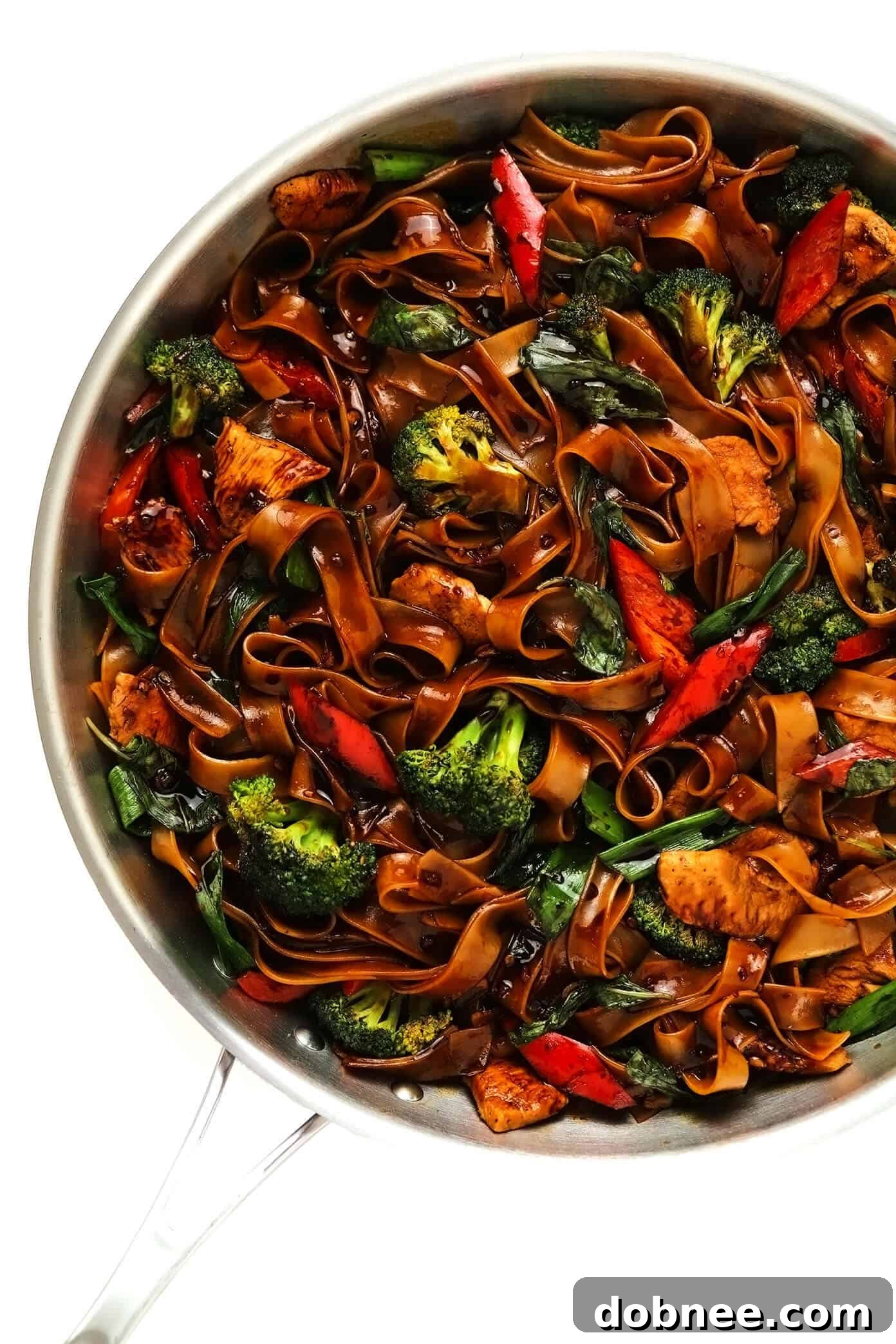
How to Create Flavorful Thai Drunken Noodles: A Step-by-Step Guide
Making Thai Drunken Noodles is a quick and dynamic process, characteristic of stir-frying. The key to success lies in proper preparation and cooking in stages. Follow these steps for a perfectly balanced and delicious meal:
- Prepare the “Drunken” Sauce: In a small bowl or measuring cup, whisk together all the sauce ingredients until thoroughly combined. This includes the low-sodium soy sauce, oyster sauce, fish sauce, sweet dark soy sauce, and chili garlic sauce. Having the sauce ready before you start cooking is crucial, as stir-fries move quickly.
- Cook the Rice Noodles: Follow the package instructions to cook your rice noodles until they are just al dente—meaning they are firm to the bite but not hard. Overcooking will lead to mushy noodles. Once cooked, drain them immediately and rinse them under cool water. This stops the cooking process and prevents them from sticking together. If you’re not adding them to the stir-fry right away, toss them with a small drizzle of oil to keep them separate.
- Sauté Your Chosen Protein: Heat 1 tablespoon of oil in a large sauté pan or wok over medium-high heat until shimmering. Season your chicken (or other protein) with a generous pinch of salt and pepper. Add the protein to the hot pan and sauté for 3-4 minutes, stirring occasionally. Cook until it’s golden brown and cooked through. Transfer the cooked protein to a clean plate and set aside. This step ensures your protein is perfectly cooked without overcooking the vegetables.
- Stir-Fry the Vegetables: Add the remaining 1 tablespoon of oil to the same pan. Add the white parts of the chopped scallions and the diced red bell pepper to the pan and stir-fry for 2 minutes, stirring occasionally, until they begin to soften. Next, add the broccoli florets and minced garlic. Continue to sauté for another 2 minutes, or until the vegetables reach your desired level of tenderness. I prefer mine with a slight crispness, so avoid overcooking them.
- Combine All Ingredients: Immediately return the cooked protein to the pan. Add the prepared noodles, the whisked “drunken” sauce, the fresh Thai basil leaves, and the green parts of the scallions. Toss everything together vigorously for 1-2 minutes, ensuring all ingredients are evenly coated with the rich, aromatic sauce. The heat from the pan will wilt the basil and allow its fragrance to infuse the entire dish.
- Serve Immediately: Remove the pan from the heat and serve your Thai Drunken Noodles without delay, while they are still piping hot and fresh. Garnish with any of your desired toppings, such as a squeeze of fresh lime, extra sliced Thai bird chiles for an added kick, chopped peanuts, or crispy fried garlic.
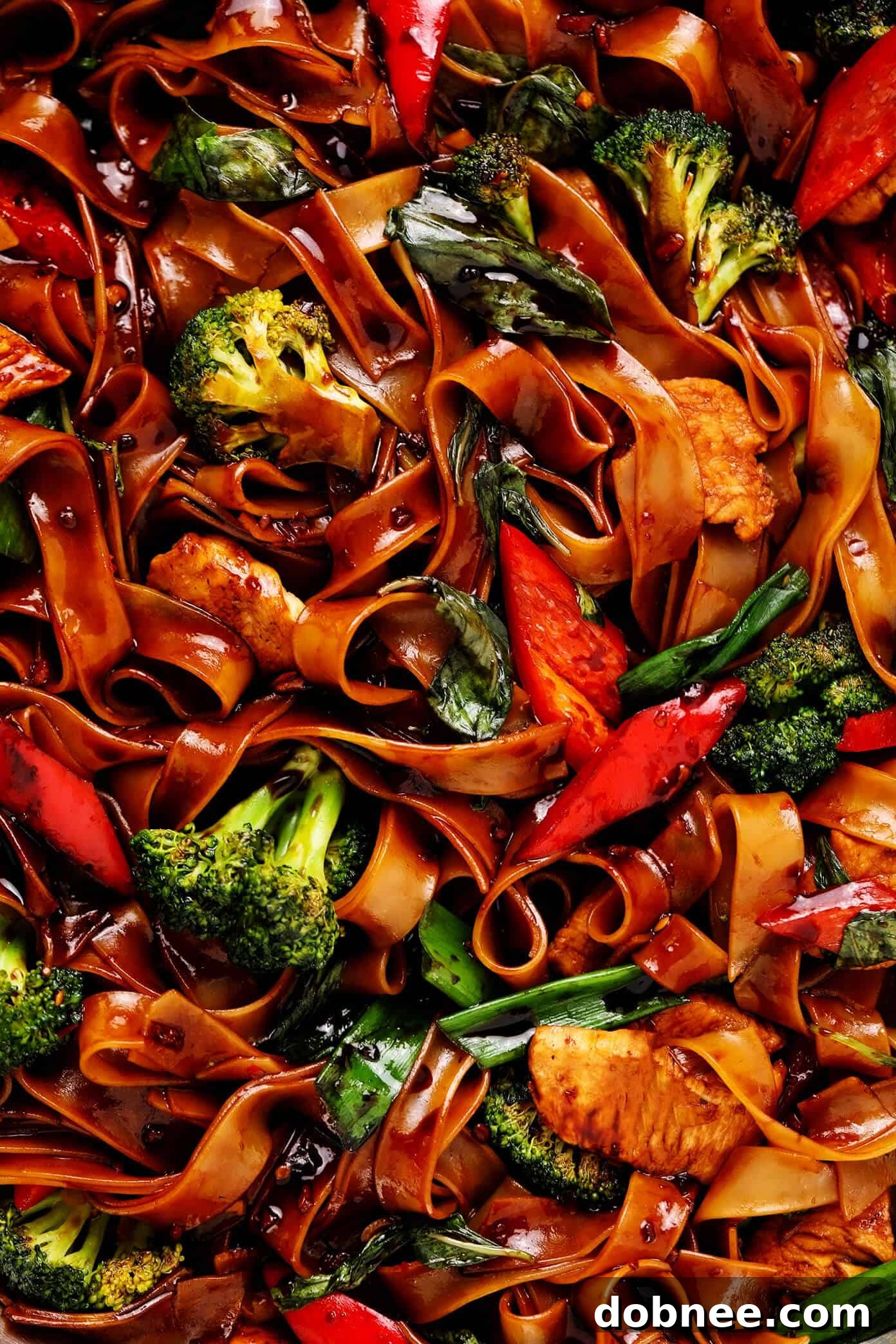
Customizing Your Drunken Noodles: Exciting Variations
One of the beautiful aspects of stir-fries like Pad Kee Mao is their inherent flexibility. This recipe serves as a fantastic blueprint, allowing you to easily adapt it to your preferences, dietary needs, or whatever ingredients you have on hand. Don’t hesitate to experiment and make it your own!
- Protein Power-Ups: While chicken is a popular choice, the sauce beautifully complements almost any protein.
- Beef: Thinly sliced sirloin or flank steak works wonderfully. Marinate it briefly in a little soy sauce and cornstarch for extra tenderness.
- Pork: Sliced pork tenderloin or thinly cut pork belly offers a rich flavor.
- Shrimp: Add raw shrimp in the last few minutes of cooking the vegetables, as they cook very quickly and can become rubbery if overcooked.
- Tofu: For a hearty vegetarian option, use extra-firm tofu, pressed and cubed, then pan-fried until golden and crispy before adding to the stir-fry.
- Vegetable Medley: The current combination of broccoli and bell pepper is excellent, but the possibilities are endless. Almost any stir-fry-friendly vegetable can be incorporated.
- Traditional Touch: As mentioned, Chinese broccoli (Gai Lan) is a classic. Cut the stems into smaller pieces and stir-fry before adding the leafy parts.
- Other Favorites: Consider adding sliced carrots, snow peas, baby corn, mushrooms (shiitake or cremini), green beans, or even spinach (stir in at the very end as it wilts quickly).
- Onions: Sliced yellow or red onions can add another layer of flavor and sweetness.
- Heat It Up (or Tone It Down): Drunken Noodles are known for their spice!
- Spicier: For more heat, increase the amount of chili garlic sauce in the recipe. You can also add thinly sliced fresh Thai bird chiles directly to the stir-fry with the garlic, or serve extra sliced chiles on top for individual adjustment. A dash of sriracha can also be stirred in at the end.
- Milder: If you prefer less heat, simply reduce the amount of chili garlic sauce or omit it entirely. You can always add a very small amount to taste.
- Gluten-Free Adaptation: Making this dish gluten-free is straightforward with a few simple substitutions:
- Soy Sauce: Swap regular soy sauce for gluten-free tamari.
- Oyster Sauce: Look for gluten-free oyster sauce alternatives, which are readily available in Asian markets or online.
- Sweet Dark Soy Sauce: If you cannot find a gluten-free version, substitute with additional gluten-free tamari and a drizzle of a gluten-free sweetener like molasses, maple syrup, brown sugar, or honey to achieve a similar color and sweetness.
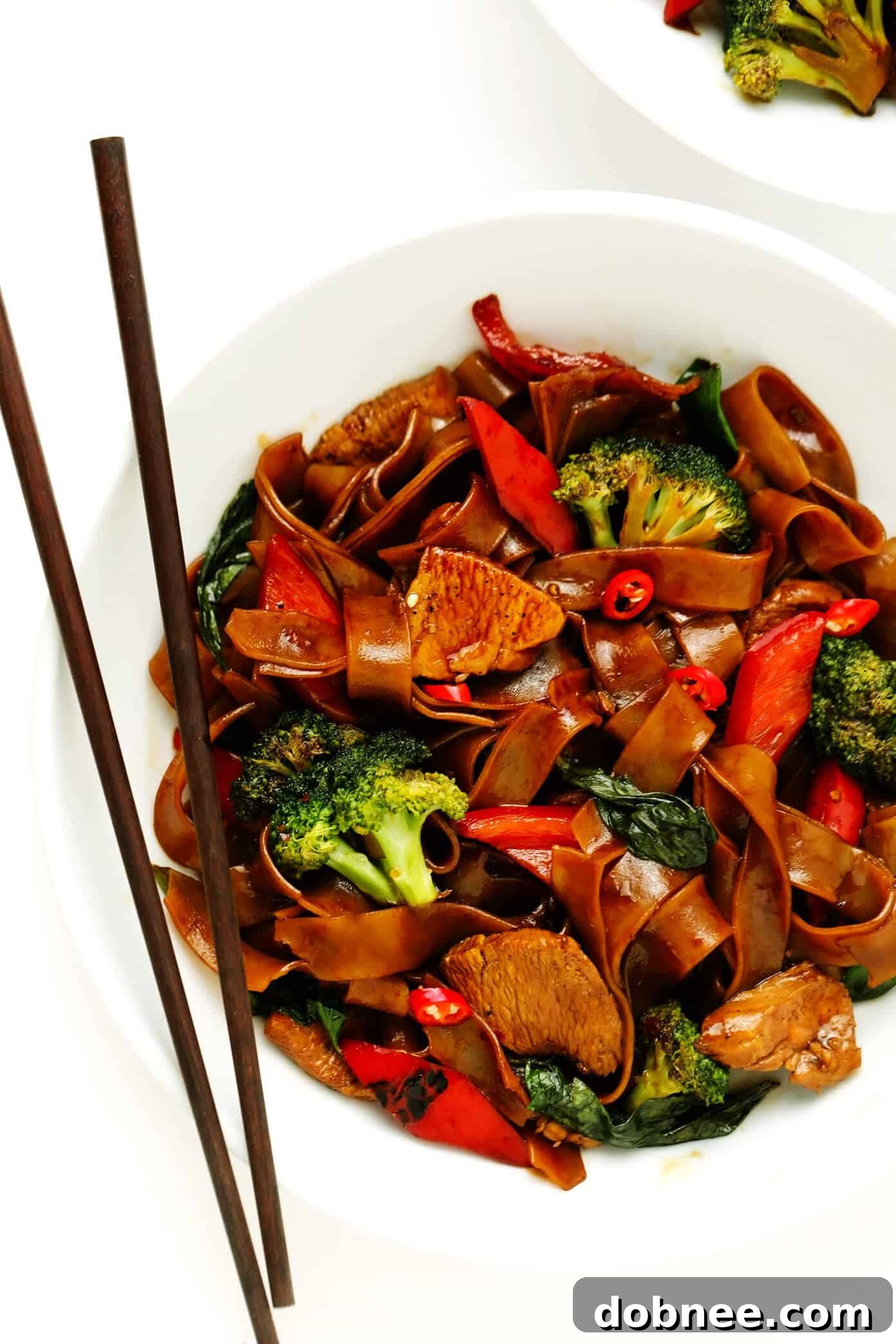
With these variations, you can confidently tailor this Drunken Noodle recipe to perfectly suit your taste and pantry, ensuring a delicious and satisfying meal every time!
More Favorite Noodle Recipes to Explore
If you’ve fallen in love with the magic of stir-fried noodles, there’s a whole world of delicious dishes waiting for you. Here are a few more of my top noodle recipe recommendations to inspire your next culinary adventure:
- Sesame Noodles: A classic, comforting dish with a rich, nutty sauce.
- Cold Sesame Peanut Noodles: Perfect for a refreshing meal, these noodles are packed with creamy, savory flavor.
- Japchae (Korean Noodle Stir-Fry): A vibrant and flavorful Korean glass noodle dish with assorted vegetables and savory beef or mushrooms.
- Five Spice Tofu with Sesame Noodles: An aromatic and satisfying vegetarian option, combining crispy tofu with flavorful sesame noodles.
- Vietnamese Chicken Noodle Bowls: Fresh, light, and incredibly flavorful, these bowls offer a delightful blend of herbs, noodles, and tender chicken.
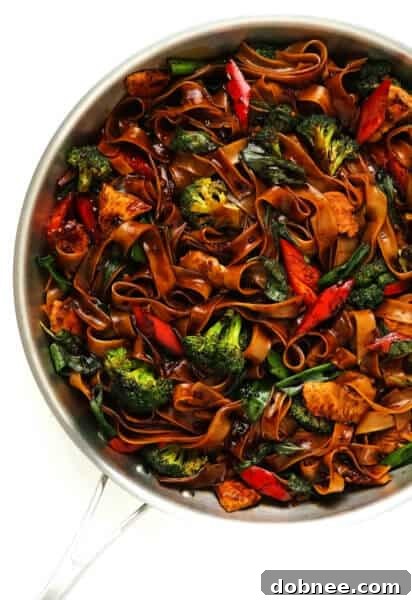
Thai Drunken Noodles (Pad Kee Mao)
Prep Time: 30 minutes
Cook Time: 15 minutes
Total Time: 45 minutes
Yield: 4 to 6 servings 1x
Description
My favorite recipe for Thai drunken noodles (pad kee mao), made with your choice of protein and veggies and the most irresistible Thai basil sauce.
Ingredients
Scale
Stir-Fry Ingredients:
- 8 ounces uncooked rice noodles
- 2 tablespoons oil, divided
- 1 pound boneless skinless chicken breasts*, cut into bite-sized pieces
- 3 scallions, chopped with white and dark green parts divided
- 2 cups broccoli florets (or other veggies*)
- 1 red bell pepper, cored and diced
- 4 cloves garlic, minced
- 1 1/2 cups tightly-packed fresh Thai basil leaves
- optional toppings: fresh lime wedges, sliced Thai bird chiles, chopped peanuts, and/or fried garlic
Stir-Fry Sauce:
- 3 tablespoons low-sodium soy sauce
- 2 tablespoons oyster sauce
- 2 tablespoons fish sauce
- 1 tablespoon sweet dark soy sauce*
- 1 tablespoon chili garlic sauce
Instructions
- Prep the sauce: Whisk the sauce ingredients together in a small bowl or measuring cup until combined.
- Prep the noodles: Cook the noodles according to package instructions until they are al dente. Drain and rinse with cool water until the noodles are no longer hot, and set aside until ready to use. (I would also recommend tossing the noodles with a drizzle of oil if it will be a few minutes until you add them to the stir-fry, to prevent them from sticking together.)
- Sauté the chicken: Heat 1 tablespoon oil in a large sauté pan or wok over medium-high heat. Season the chicken with a generous pinch of salt and pepper. Then add the chicken to the oil and sauté for 3-4 minutes, stirring only occasionally, until it is cooked through. Transfer the cooked chicken to a separate (clean) plate, and return the pan to the heat.
- Cook the veggies. Add the remaining 1 tablespoon oil to the pan. Add the white parts of the green onions and the bell pepper to the pan and sauté for 2 minutes, stirring occasionally. Add the broccoli and garlic and sauté for 2 more minutes, stirring occasionally, until the veggies reach your desired level of tenderness.
- Combine everything. Immediately add the cooked noodles, sauce, chicken, Thai basil, and the green parts of the scallions to the pan. Give everything a good toss for 1-2 minutes until all ingredients are evenly coated with the sauce.
- Serve warm. Remove pan from the heat and serve immediately, garnished with any of your desired toppings.
Equipment
Oyster Sauce
Buy Now →
Fish Sauce
Buy Now →
Chili Garlic Sauce
Buy Now →
Notes
Protein alternatives: Feel free to substitute a pound of beef, pork, shrimp or tofu in place of the chicken if you would like, or you can just omit the added protein from this recipe entirely.
Veggie options: Feel free to substitute whatever stir-fry-friendly veggies you prefer in place of the broccoli and bell pepper, if you would like. Chinese broccoli is often traditionally used in this recipe, which should have its stems chopped and sautéed first and then the leafy green parts tossed in near the end.
Dark soy sauce alternative: If you can’t find dark soy sauce, you can sub in a teaspoon of soy sauce plus a teaspoon or two of sweetener (molasses is closest in flavor, but honey, maple syrup or sugar would work) in its place.