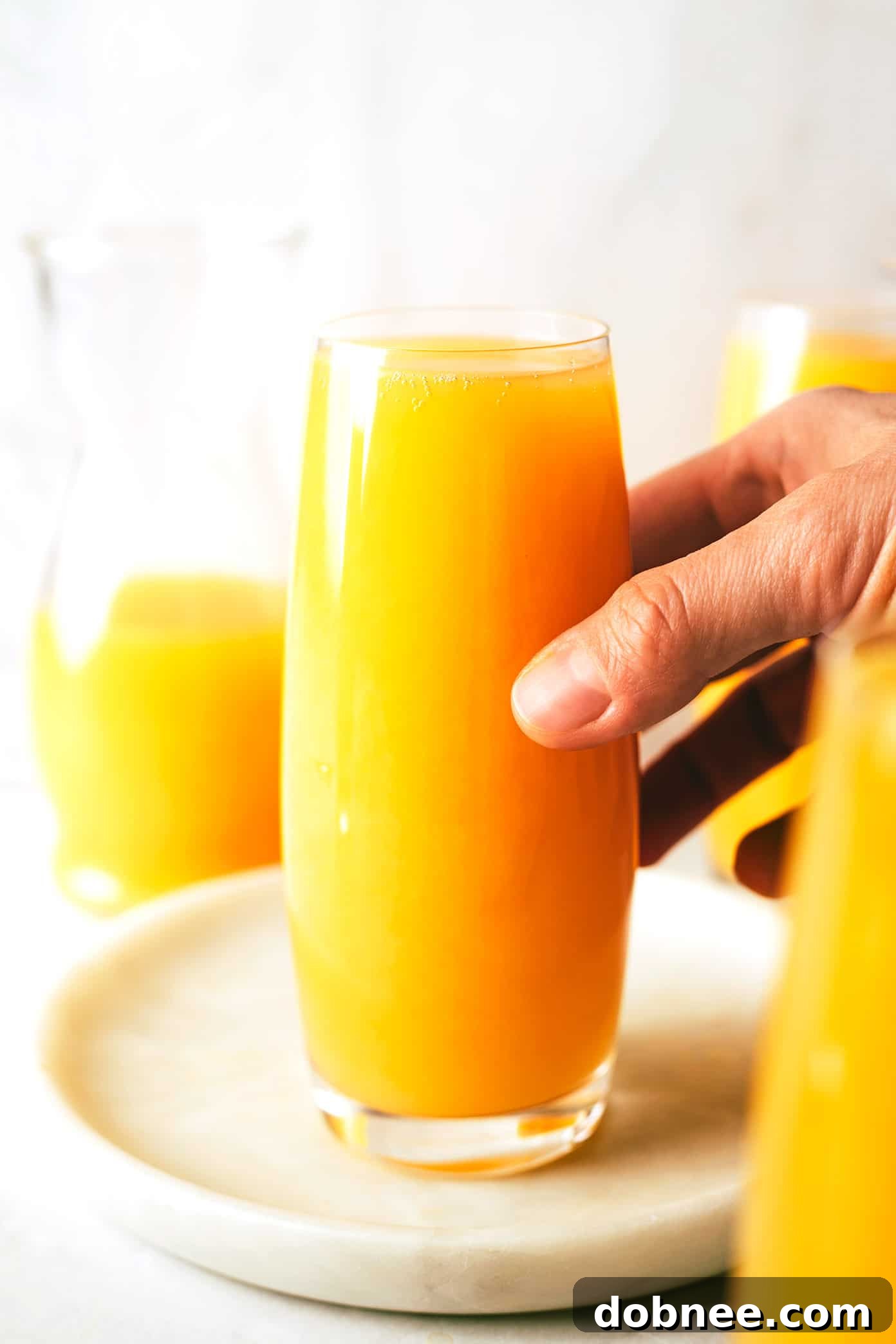
How to Make Classic Mimosas: The Ultimate Brunch Cocktail Guide
Unleash the bubbly spirit of brunch with this essential guide to crafting the perfect classic mimosa. Dive into tips for selecting the finest ingredients, customizing your drinks with delightful additions (including non-alcoholic choices!), and effortlessly preparing a magnificent pitcher of mimosas for any gathering.
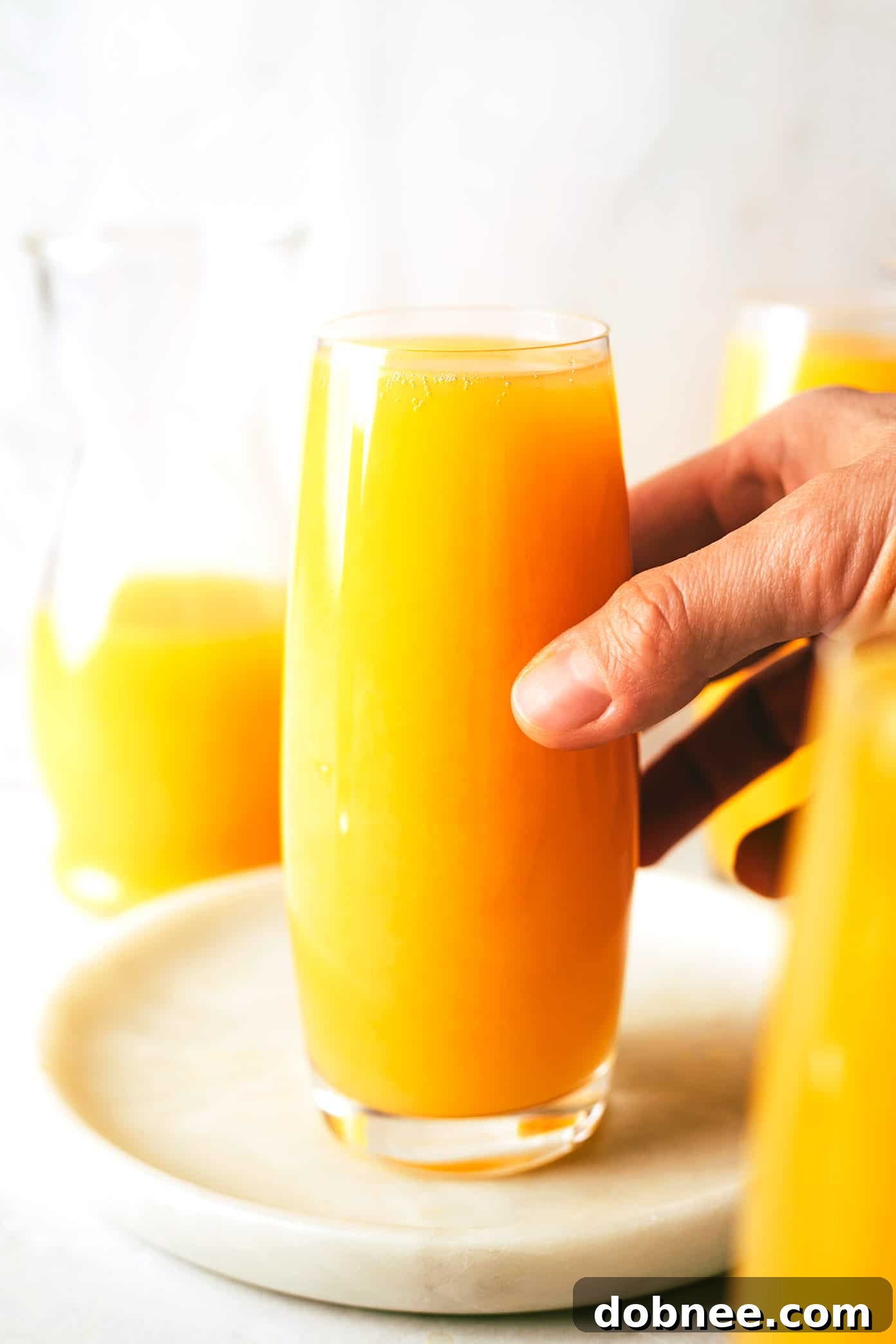
As the aroma of freshly brewed coffee mingles with the promise of good company, there’s one drink that consistently shines as the undisputed star of any brunch spread: the classic mimosa. Simple yet elegant, this iconic two-ingredient cocktail effortlessly transforms any meal into a celebration. While our culinary adventures have led us to explore exciting variations like Mimosa Sangria, Tequila Sunrise Mimosas, and Tropical Mimosa Smoothies, it’s high time we dedicated a comprehensive spotlight to the original, beloved recipe that started it all.
Originating from the Hôtel Ritz Paris in the 1920s (though some credit London’s Buck’s Club with a similar predecessor, the Buck’s Fizz), the mimosa quickly became a global symbol of refined yet relaxed indulgence. Its widespread appeal stems from its refreshing taste, beautiful golden hue, and remarkable ease of preparation. Whether you’re hosting a grand holiday brunch, a casual weekend get-together, or simply treating yourself to a leisurely morning, a perfectly crafted mimosa is the ideal accompaniment.
Having experienced the joy of easily accessible, high-quality sparkling wine in regions like Spain (where Cava flows freely for less than 10€ a bottle!), we’ve deepened our appreciation for this effervescent delight. The Spanish certainly love their Cava, and by extension, their mimosas – a testament to this cocktail’s universal charm. While fancy Champagne is delightful, the beauty of a mimosa lies in its versatility and the fact that you don’t need to break the bank for a spectacular result. This weekend, no matter where you are in the world, a bubbly celebratory cocktail sounds like a perfect idea. So, grab a bottle of your favorite bubbly, and let’s make a round!
Mimosa Ingredients: The Foundation of Flavor
At its heart, the classic mimosa is celebrated for its elegant simplicity, requiring just two core ingredients. However, the quality and type of these components significantly influence the final taste. Let’s explore how to choose wisely for a truly exceptional drink.
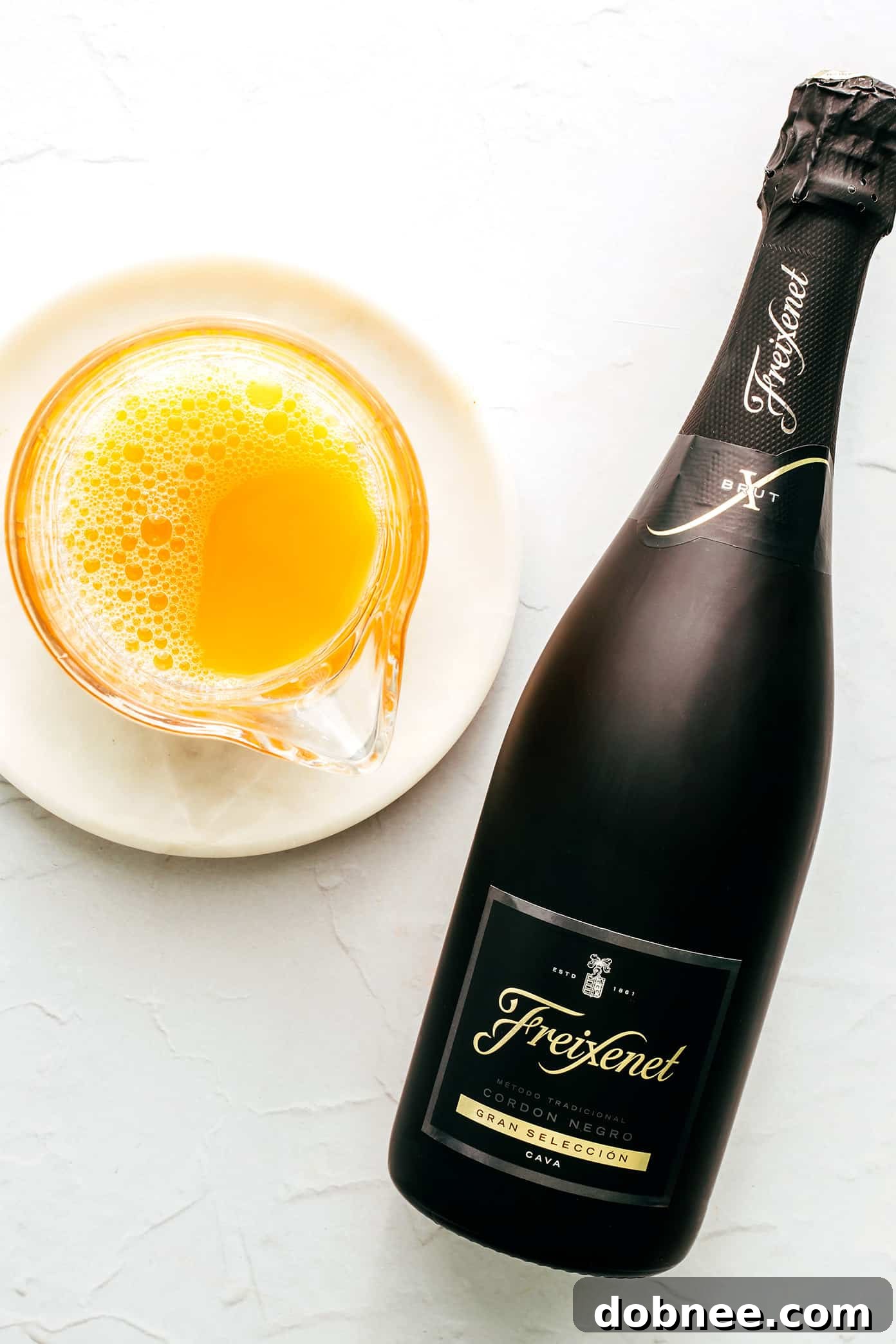
1. The Sparkling Wine: Choosing Your Bubbly Base
The choice of sparkling wine is paramount. While any bubbly will technically work, a dry or semi-dry variety is highly recommended to achieve a harmonious balance with the sweetness of the orange juice. Opting for a sparkling wine that isn’t excessively sweet prevents the mimosa from becoming cloying, ensuring a crisp and refreshing finish.
- Recommended Types:
- Cava (Spain): An excellent and often affordable choice, Cava offers crisp acidity and fine bubbles, making it a favorite for mimosas. Its production method is similar to Champagne, offering great value.
- Prosecco (Italy): Generally softer, lighter, and fruitier than Cava or Champagne, Prosecco is another popular and budget-friendly option. Look for “Brut” or “Extra Dry” varieties to avoid excessive sweetness.
- American Sparkling Wine: Many domestic sparkling wines offer great value and quality, often produced in regions like California. They can be an excellent choice for mixing.
- Champagne (France): For a truly luxurious mimosa, a Brut Champagne is ideal. However, since the delicate nuances of high-end Champagne can be easily overshadowed by orange juice, a more moderately priced bottle is perfectly acceptable and often preferred for mixing.
- Sweetness Levels: When selecting your sparkling wine, pay attention to the labels indicating sweetness. Look for “Brut” (very dry), “Extra Dry” (off-dry, slightly sweeter than Brut but still dry), or “Sec” (medium-dry). Avoid “Demi-Sec” or “Doux” unless you specifically prefer a very sweet mimosa, as these can make the drink overly sugary when combined with orange juice.
- Temperature: Ensure your sparkling wine is thoroughly chilled before serving. This is crucial for maintaining its effervescence and overall refreshing quality. A well-chilled bottle contributes significantly to the mimosa’s vibrant taste and texture.
2. The Orange Juice: The Sweet & Tangy Counterpart
The second essential ingredient, orange juice, brings the vibrant color and signature citrus flavor to the mimosa. Quality matters here as much as with the wine, as it forms half of the cocktail’s flavor profile.
- Freshly Squeezed: For an unparalleled taste experience, freshly squeezed orange juice is always the top choice. Its bright, natural flavor elevates the cocktail significantly, offering a clean and authentic citrus note that store-bought varieties often lack.
- 100% Orange Juice: If using store-bought, opt for 100% pure orange juice with no added sugars, preservatives, or artificial flavors. Read labels carefully to ensure you’re getting the purest form available.
- Pulp-Free: A pulp-free variety is generally preferred for mimosas. This ensures a smoother texture and prevents any fibrous bits from interfering with the delicate bubbles of the sparkling wine, contributing to a more elegant and visually appealing drink.
- Temperature: Like the sparkling wine, the orange juice must be well chilled. Warm juice will quickly diminish the fizziness of your mimosa, resulting in a less enjoyable drink. Keep it in the refrigerator until immediately before mixing.
Elevate Your Mimosa: Creative Customizations & Add-ins
While the classic mimosa is perfect on its own, there’s a world of possibilities for those who enjoy a little experimentation. These enhancements can add subtle depth, a touch of elegance, or an extra kick to your brunch beverage, allowing you to personalize each drink to taste.
- Elderflower Liqueur (e.g., St. Germain): A subtle splash of this delicate, floral liqueur introduces a sophisticated sweetness and aromatic note that harmonizes beautifully with orange and sparkling wine. It’s often referred to as “bartender’s ketchup” for its ability to enhance almost any cocktail, and it truly makes a mimosa shine.
- Grenadine: For a visually stunning “sunrise” effect, a small dash of grenadine (poured slowly after the orange juice) will create a lovely red gradient at the bottom of your glass, adding a hint of tart cherry and pomegranate sweetness. This is perfect for themed events or just adding a pop of color.
- Orange Liqueur (e.g., Cointreau, Grand Marnier): If you desire a deeper, more complex orange flavor with an added alcoholic punch, a touch of orange liqueur is an excellent choice. It amplifies the citrus notes and provides a more spirited mimosa.
- Rose Water or Orange Blossom Water: For a non-alcoholic aromatic boost, these floral waters impart a subtle, fragrant essence that can transform your mimosa into a more exotic and sophisticated drink. Use sparingly, as their flavors are potent.
- Fresh Herbs: A sprig of fresh sage, rosemary, or even lavender can add a refreshing, herbaceous aroma and flavor to your mimosa. Gently muddle a few leaves at the bottom of the glass or simply use them as an elegant garnish to infuse subtle notes.
Beyond these, you can venture into entirely different flavor profiles by swapping out orange juice for other fruit juices like cranberry, pineapple, grapefruit, or pomegranate for vibrant variations. While technically no longer a “mimosa” in the strictest sense, these “sparkling juice cocktails” are equally delicious and festive ways to enjoy sparkling wine.
The Right Vessel: Choosing Your Mimosa Glasses
The choice of glassware isn’t just about aesthetics; it plays a crucial role in enhancing the mimosa experience, particularly in preserving its effervescence and presenting it beautifully.
- Champagne Flutes: These tall, slender glasses are the traditional and ideal choice for sparkling wines and mimosas. Their narrow opening helps to concentrate the aromas and, more importantly, minimize the surface area exposed to air, thereby preserving the bubbles for longer. The visual effect of the continuous stream of bubbles rising in a flute is also part of the mimosa’s appeal.
- Classic Stemmed Flutes: Offer an elegant presentation and ensure your hand doesn’t warm the drink.
- Stemless Flutes: A modern and often more stable alternative, still offering the ideal shape and maintaining effervescence.
- Alternative Glasses: If champagne flutes aren’t available, glasses with a relatively narrow opening, such as white wine glasses, can also work effectively. The goal is to avoid wide-mouthed glasses like coupes or tumblers, which allow the precious carbonation to dissipate too quickly, leaving your mimosa flat.
- The Chilled Touch: For an extra touch of sophistication and to keep your mimosas colder for longer, a simple trick is to place your empty glasses in the freezer for about 10-15 minutes before serving. This small step makes a significant difference in maintaining the drink’s temperature and fizz.
Once your ideal glassware is selected and chilled, and your ingredients are prepared and perfectly cold, you’re ready to embark on the simple yet satisfying process of mixing your mimosas!
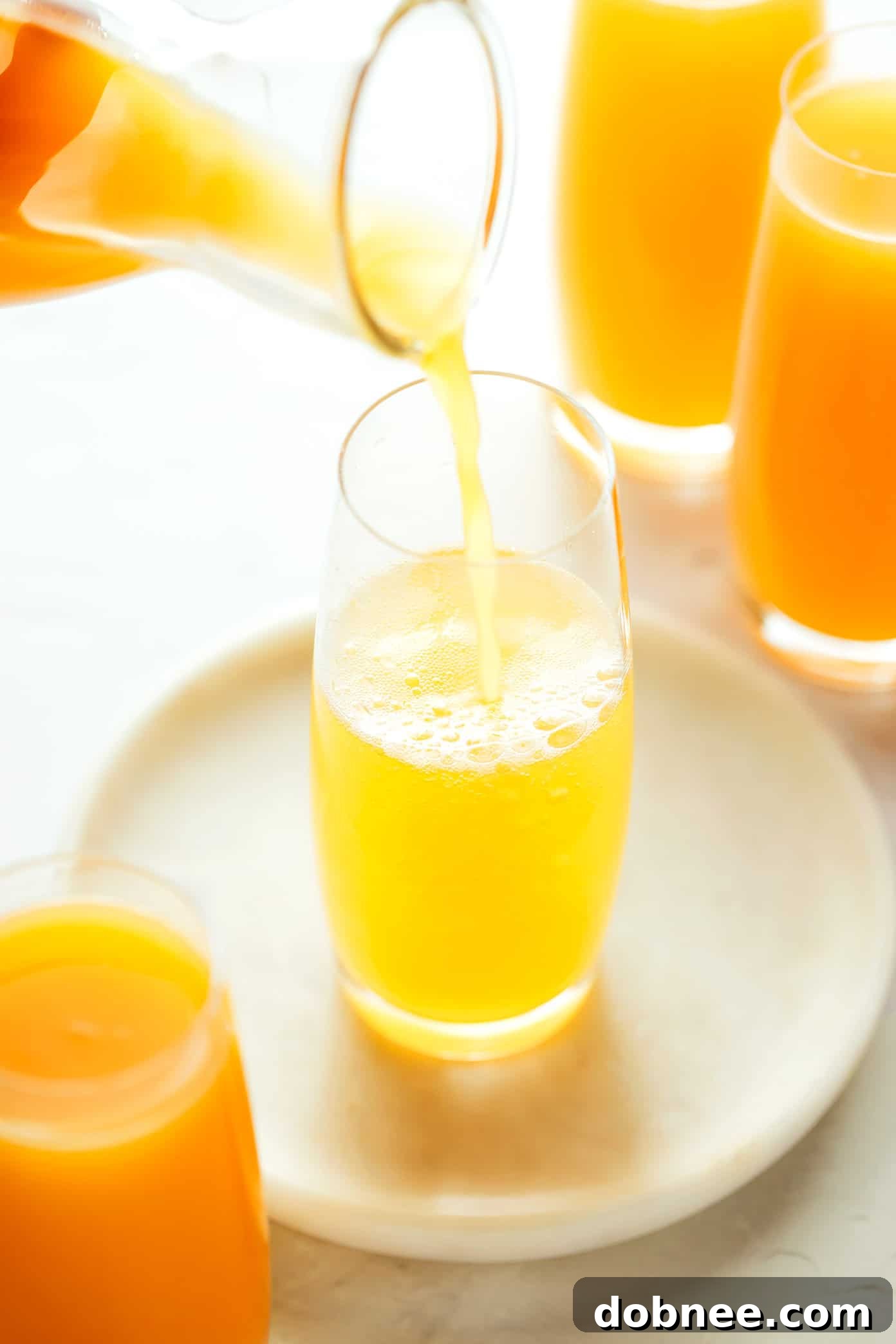
How To Make Mimosas: Step-by-Step Perfection
With your chilled ingredients and sparkling glasses at the ready, crafting a mimosa is wonderfully straightforward. Follow these steps for a perfectly mixed single serving that maximizes both flavor and fizz:
- Prepare Your Glass: Ensure your champagne flute is clean and, ideally, pre-chilled from the freezer. A cold glass helps keep your mimosa colder for longer and preserves its effervescence.
- Pour the Sparkling Wine: Tilt the champagne flute at a slight angle (around 45 degrees). Slowly pour your chilled sparkling wine until the glass is about two-thirds full. Pouring slowly and at an angle helps to minimize excessive fizz and preserve the precious bubbles, ensuring a lively drink.
- Add the Orange Juice: Gently top the sparkling wine with your chilled, pulp-free orange juice until the glass is full. Pouring gently prevents a sudden rush of foam and helps maintain the wine’s carbonation.
- Do Not Stir: Resist the urge to stir! The natural effervescence of the sparkling wine is enough to gently mix the ingredients on its own. Stirring would only cause the bubbles to dissipate prematurely, leading to a flat mimosa.
- Garnish (Optional): For a final flourish and enhanced aroma, add a thin orange slice to the rim of the glass, or a decorative orange twist. Fresh berries like raspberries or blueberries, or a sprig of fresh rosemary, also make beautiful and aromatic garnishes that can subtly influence the drink’s profile.
- Serve Immediately: Mimosas are best enjoyed fresh and cold, when their bubbles are at their most lively and their flavors are most vibrant.
Serving a Crowd: The Mimosa Pitcher Method
When entertaining a larger group, preparing mimosas by the pitcher can be a convenient and time-saving option, allowing you to focus on your guests rather than continually mixing drinks. While this method might result in a slightly less fizzy drink compared to individual pours (due to the transfer and slight agitation), it’s an excellent choice for keeping the drinks flowing efficiently.
- Choose Your Pitcher: Select a large, clear glass pitcher. Ideally, chill the pitcher in the refrigerator for at least 15-20 minutes before use to help keep the contents cold.
- Add Sparkling Wine: Carefully pour your chilled sparkling wine into the pitcher. For a standard 750ml bottle, this would typically yield enough for 6-8 servings, depending on your desired ratio.
- Add Orange Juice: Gently pour the desired amount of chilled orange juice into the pitcher. For a classic 1:1 ratio, use roughly 1 ½ to 2 cups of orange juice per 750ml bottle of sparkling wine. For a less sweet, stronger mimosa, use closer to 1 ½ cups.
- Chill Briefly: If not serving immediately, place the pitcher in the refrigerator for no more than 10 minutes. This keeps the mixture cold without losing too many bubbles. Prolonged chilling will cause significant carbonation loss.
- Serve: Pour the pre-mixed mimosas into individual champagne flutes. You can prepare a tray with pre-garnish glasses or offer garnishes separately for guests to add themselves.
Pro Tip for Crowds: A Mimosa Bar! To offer guests full customization and ensure maximum fizz for each serving, consider setting up a “mimosa bar.” Provide separate bottles of various chilled sparkling wines, an assortment of chilled fruit juices (orange, cranberry, pineapple, grapefruit, peach puree for Bellinis), and a selection of garnishes (fresh berries, orange slices, edible flowers, herbs). Let guests mix their own to their exact preference, creating a fun and interactive experience.
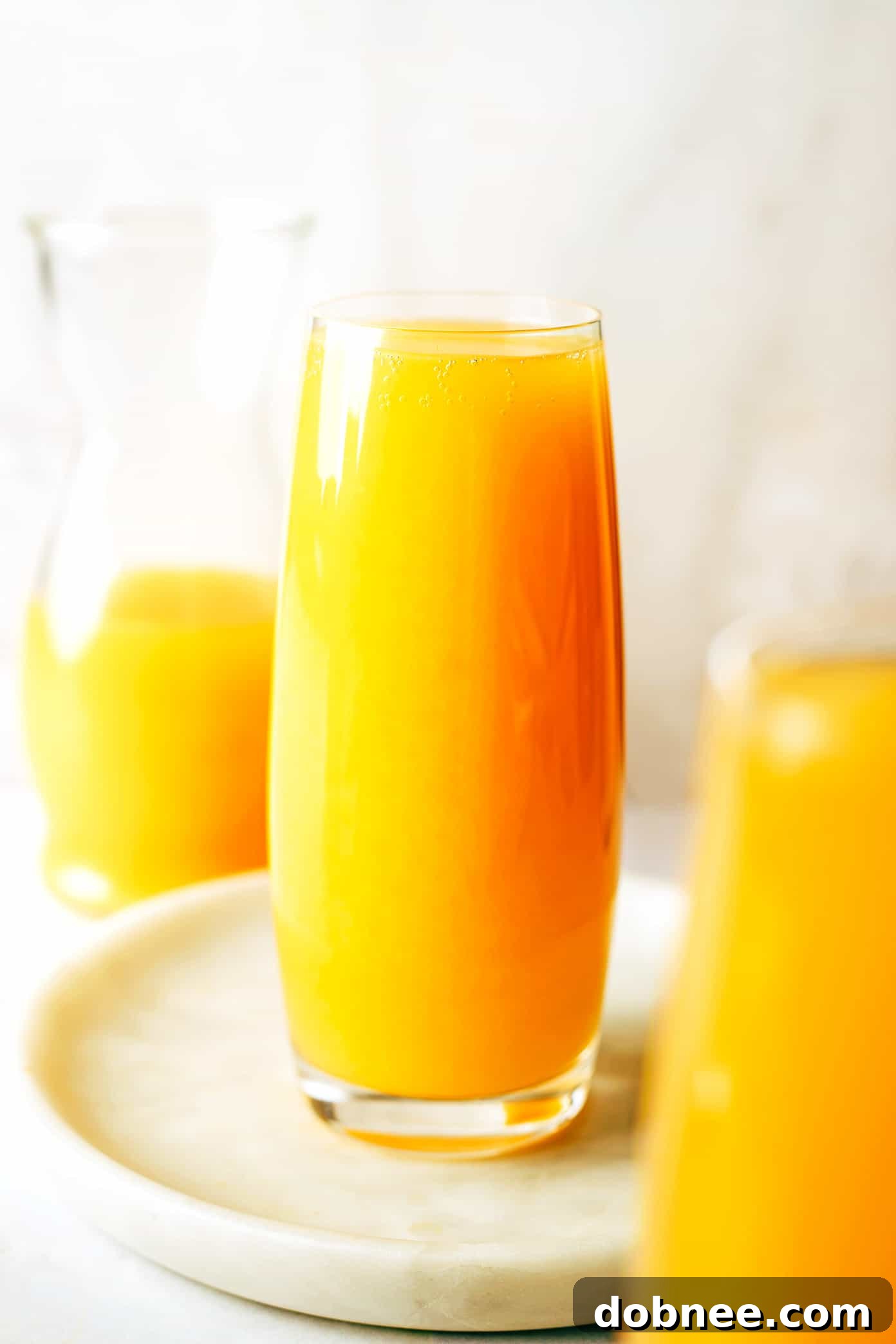
The Perfect Balance: Sparkling Wine to Orange Juice Ratio
The ideal ratio of sparkling wine to orange juice is a matter of personal taste, directly influencing both the sweetness and alcoholic strength of your mimosa. There are two widely accepted approaches:
- The Classic 1:1 Ratio: Many traditional recipes suggest an equal blend of one part sparkling wine to one part orange juice. This ratio yields a sweeter, fruitier drink with a lower alcohol presence, perfect for those who enjoy a more juice-forward cocktail.
- The Bubbly 2:1 Ratio: For those who prefer a less sweet mimosa that allows the subtle nuances of the sparkling wine to shine through, a ratio of two parts sparkling wine to one part orange juice is popular. This results in a drier, more effervescent cocktail with a slightly higher alcohol content per glass.
We encourage you to experiment! The beauty of mixing mimosas individually is that you can easily tailor each glass to the preferences of your guests. Start with a 2:1 ratio and add more orange juice if a sweeter profile is desired. Remember, there’s no single “wrong” way to enjoy your mimosa, only your personal preference.
Mimosa Frequently Asked Questions (FAQ)
- Q: Why should I add the sparkling wine first?
- A: Pouring the sparkling wine first, especially at an angle, helps preserve its precious bubbles by minimizing agitation. More importantly, it prevents the potential sticky mess that can occur when pouring bubbly on top of orange juice, which can cause excessive foam and overflow. Adding orange juice to wine offers much better control over the fizz.
- Q: Do I need to stir the mimosa?
- A: No, absolutely not! Stirring causes the bubbles to dissipate rapidly, leaving you with a flat mimosa. The natural effervescence of the sparkling wine is enough to gently mix the ingredients on its own. Simply let the liquids settle after pouring.
- Q: Is it necessary to add ice to a mimosa?
- A: Ice is generally not recommended for mimosas. Instead, ensure both your sparkling wine and orange juice are thoroughly chilled before mixing. This keeps the drink cold without diluting its flavor or compromising its fizziness. Chilled glasses further enhance this effect.
- Q: Can mimosas be made non-alcoholic?
- A: Yes, easily! For a delicious non-alcoholic mimosa (often called a “mock-mosa”), simply substitute the sparkling wine with non-alcoholic sparkling grape juice, sparkling cider, or even a light ginger ale. Combine with chilled orange juice for a refreshing and festive drink suitable for all ages and occasions.
- Q: How long can I prepare a mimosa ahead of time?
- A: Mimosas are best enjoyed immediately after mixing to savor their full effervescence. If preparing a pitcher for a crowd, do so no more than 10 minutes before serving and keep it chilled. For longer readiness, it’s best to keep the sparkling wine and orange juice separate and thoroughly chilled, allowing guests to mix their own just before drinking for optimal freshness and fizz.
- Q: What foods pair well with mimosas?
- A: Mimosas are the quintessential brunch cocktail! They pair beautifully with a wide array of brunch fare, including savory dishes like quiches, frittatas, eggs Benedict, and bacon, as well as sweeter options like pancakes, waffles, French toast, fresh fruit salads, and pastries. Their refreshing citrus notes cut through richer foods and complement lighter ones perfectly, making them incredibly versatile.
- Q: Can I use frozen concentrated orange juice?
- A: While technically possible, frozen concentrated orange juice reconstituted with water is not recommended for mimosas. Its flavor is often less vibrant and can taste artificial compared to 100% pure or freshly squeezed juice, significantly impacting the quality of your cocktail.
Classic Mimosa Recipe
- Prep Time: 1 minute
- Total Time: 1 minute
- Yield: 6-8 servings
Description
Master the art of making the classic mimosa with this easy-to-follow recipe. Perfect for brunch, holidays, or any celebratory occasion. Explore customization tips above to personalize your drink.
Ingredients
- 1 (750 mL) bottle dry sparkling wine, thoroughly chilled (e.g., Cava, Prosecco Brut, or Brut Champagne)
- 1 ½ to 3 cups 100% pulp-free orange juice, thoroughly chilled (adjust amount to desired sweetness and ratio)
- Optional garnish: Fresh orange slices, raspberries, blueberries, or a sprig of fresh rosemary
Instructions
- For A Single Serving: Slowly tilt a chilled champagne flute and pour sparkling wine until it is about two-thirds full. Gently top with chilled orange juice until the glass is full. Do not stir. Garnish with an orange slice or other desired garnish, and serve immediately.
- For A Pitcher (6-8 servings): In a large, chilled glass pitcher, slowly pour one 750ml bottle of sparkling wine. Gently add 1 ½ to 3 cups of chilled orange juice, adjusting for your preferred sweetness. Do not stir. Refrigerate for up to 10 minutes before pouring into individual champagne flutes and serving. Garnish glasses as served.