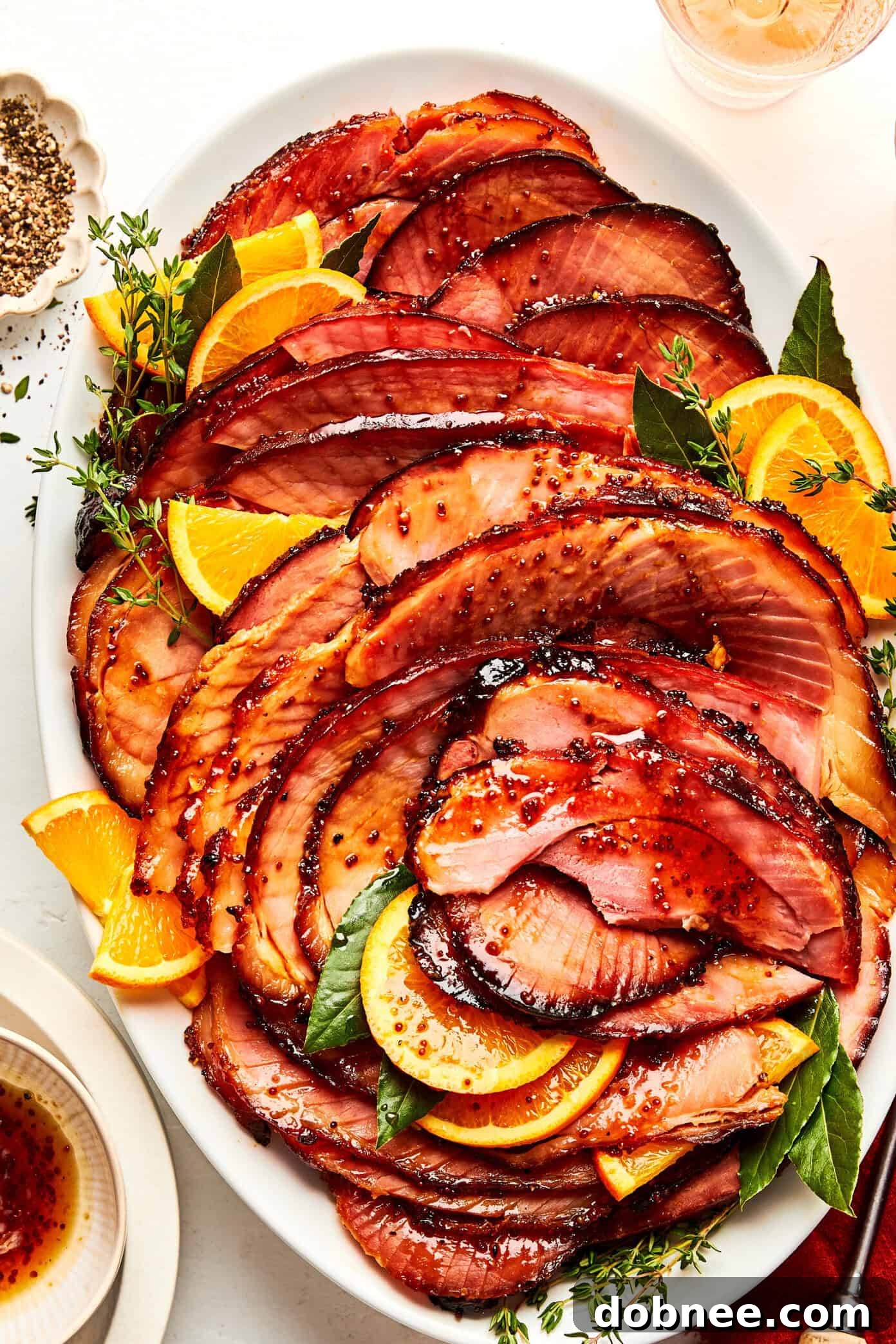
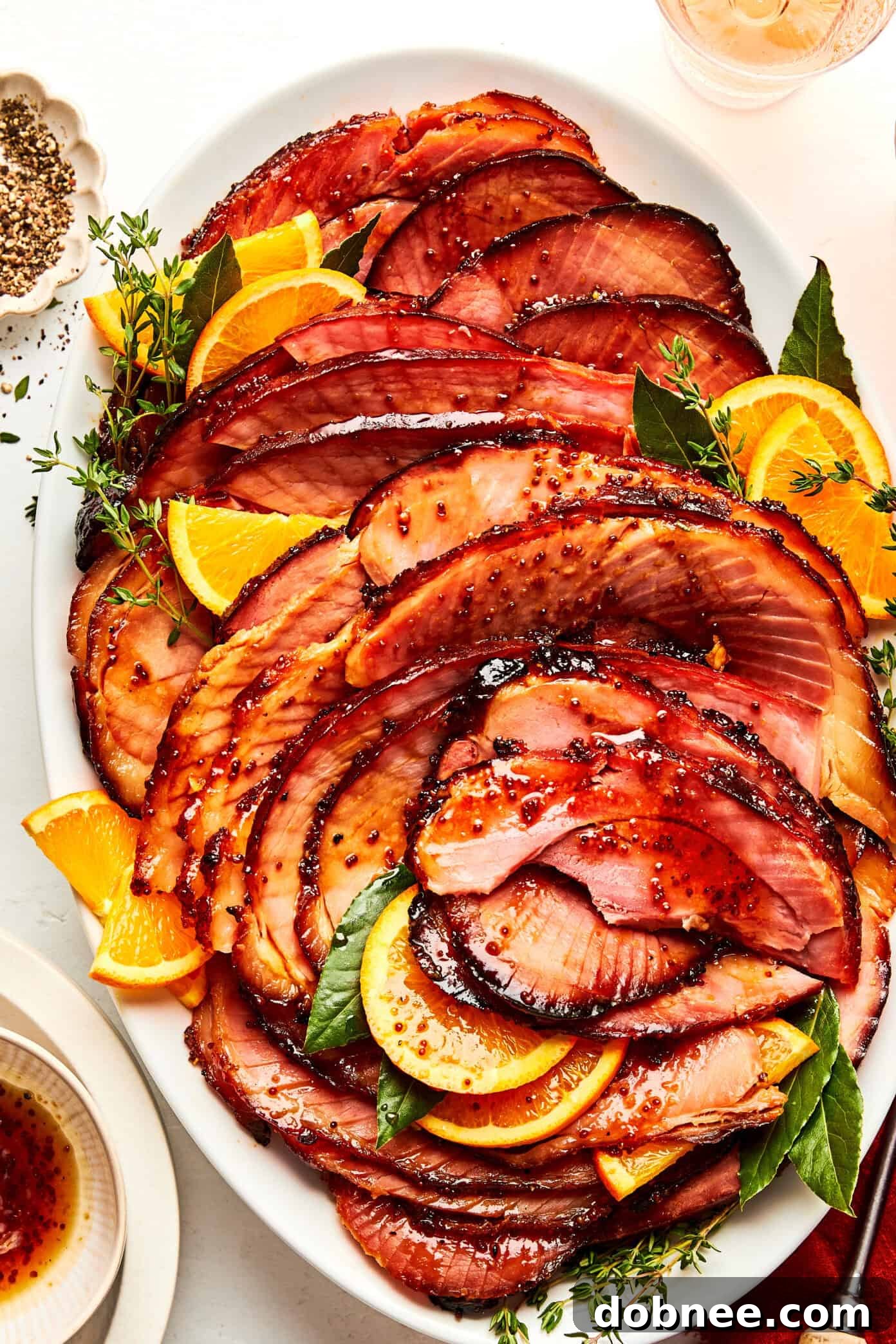
The Ultimate Sweet and Savory Glazed Ham: An Effortless Holiday Centerpiece

Welcome to your new favorite glazed ham recipe! Forget the overly sweet, one-note hams of the past. This recipe is meticulously crafted to deliver a perfectly balanced sweet and savory experience, making it an absolute showstopper for any holiday gathering or special occasion.
We believe a truly great honey glazed ham should tantalize every taste bud, not just the sweet ones. That’s why our signature glaze begins with the classic rich caramelization of brown sugar and honey, then takes an exciting turn with vibrant orange and lemon juices, the tangy bite of whole-grain Dijon mustard, a whisper of umami from soy sauce, aromatic garlic, and fresh thyme. The result is a bold, complex, and incredibly flavorful glaze that harmonizes beautifully with the natural richness of the ham, without ever becoming cloyingly sweet.
The best part? This isn’t just the best glazed ham recipe you’ll ever taste; it’s also one of the easiest. Starting with a fully cooked spiral-cut ham means most of the work is already done. Your task is simply to gently warm the ham, baste it generously with our incredible homemade glaze, and let your oven work its magic. As your kitchen fills with the most inviting holiday aromas, you’ll wonder why you ever bothered with complicated main dishes.
Whether you’re planning your Easter brunch, Christmas dinner, or a memorable Sunday feast, this easy ham recipe guarantees success. It’s consistently a crowd-pleaser and offers fantastic leftovers for days. Get ready to impress your guests and delight your family with a truly unforgettable holiday ham!
Crafting the Perfect Glaze: A Symphony of Flavors
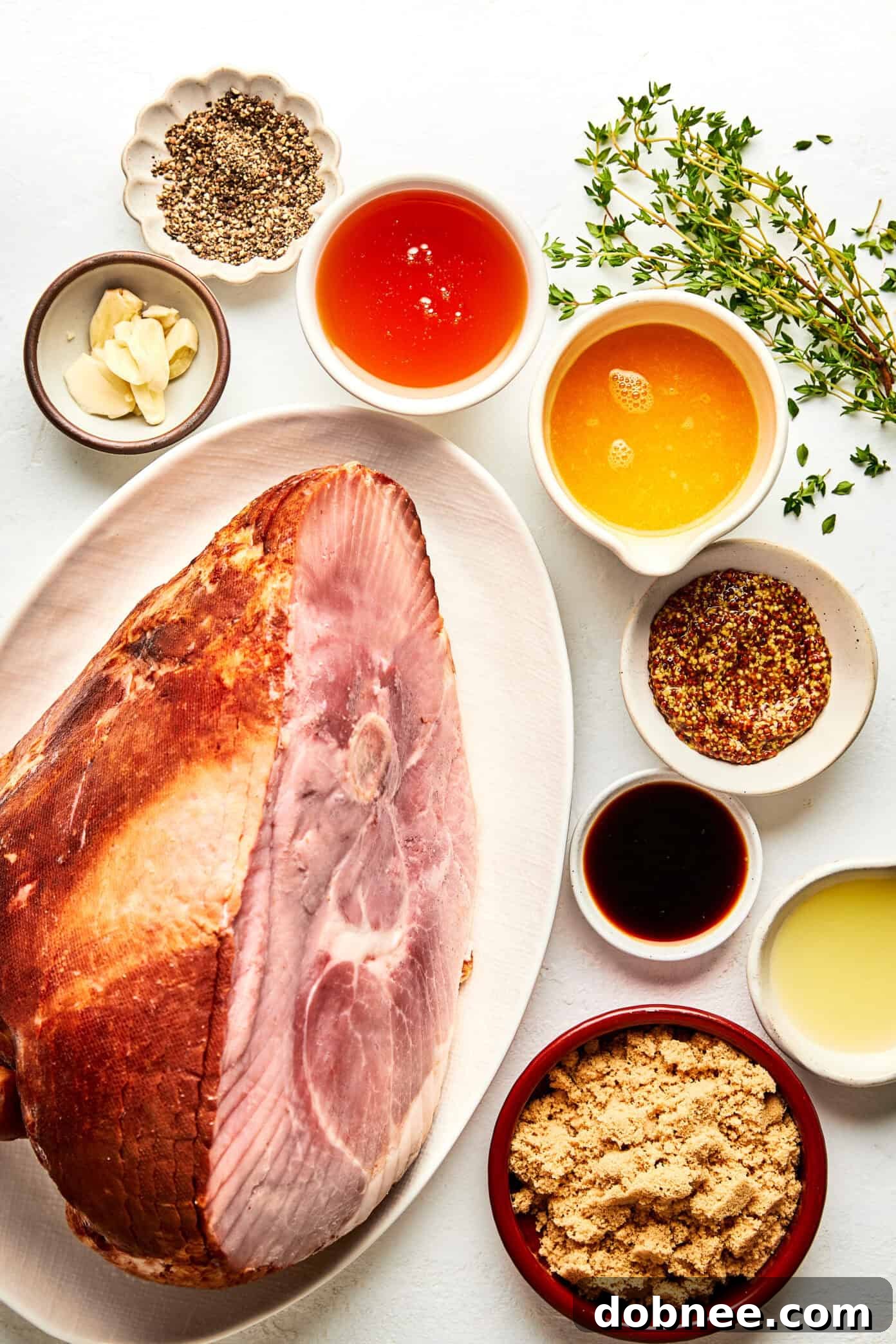
The secret to an exceptional holiday ham lies in its glaze. Our recipe elevates the traditional sweet coating into a multi-dimensional flavor experience. Here’s a deeper look at the ingredients that make this glaze truly special:
- Brown Sugar & Honey: These form the sweet foundation, providing that quintessential caramelized crust we all adore. Brown sugar offers a deep, molasses-rich sweetness, while honey adds a floral note and helps create that irresistible sticky texture.
- Orange & Lemon Juice: Citrus is crucial for cutting through the richness and sweetness. Orange juice brings bright, fruity notes, while a splash of lemon juice provides a zesty tang, balancing the flavors and preventing the glaze from being too heavy.
- Whole Grain Dijon Mustard: This isn’t just for flavor; it’s a game-changer. Dijon adds a sharp, pungent kick and a subtle spicy depth that beautifully complements the pork. The whole grains provide a lovely texture and visual appeal to the finished glaze.
- Soy Sauce: The unsung hero! A small amount of soy sauce introduces a crucial umami element, enhancing the savory qualities of the ham and adding complexity without making the glaze taste distinctly Asian. It truly rounds out the flavor profile.
- Garlic: Freshly smashed garlic infuses the glaze with a pungent, aromatic warmth that pairs wonderfully with both the ham and the other glaze ingredients. Its savory notes ensure the glaze remains balanced.
- Thyme: Fresh thyme sprigs lend an earthy, herbaceous aroma and flavor. Thyme is a classic complement to pork, adding a sophisticated, fragrant dimension to the glaze.
- Black Pepper: A generous amount of freshly ground coarse black pepper adds a mild heat and aromatic spice, creating a delightful contrast with the sweetness and highlighting the other savory components.
Each ingredient plays a vital role in creating a glaze that is vibrant, complex, and utterly delicious. It’s designed to coat your ham in a sticky, glistening layer that’s bursting with flavor in every bite.
Choosing Your Ham: A Foundation for Feast
The success of your glazed ham begins with selecting the right ham. Given that most hams available today are fully cooked, your primary goal is gentle reheating and flavor enhancement. Here’s what to look for:
- Fully Cooked: Always opt for a fully cooked ham. This recipe is designed for reheating, not cooking raw pork.
- Spiral-Cut: A spiral-cut ham is highly recommended for its convenience and superior glazing capabilities. The pre-sliced cuts allow the glaze to seep deep into the meat, ensuring every bite is moist and flavorful. It also makes carving incredibly easy.
- Bone-In vs. Boneless: A bone-in ham typically offers superior flavor and moisture. The bone helps retain heat and contributes to a richer taste. While a boneless ham can work, it may cook faster and can sometimes be a bit drier. If using boneless, keep a closer eye on the internal temperature.
- Weight: For a bone-in ham, plan for about ¾ to 1 pound per person to account for the bone and ensure plenty of leftovers. For boneless ham, you can plan for ½ to ¾ pound per person. This recipe works well for hams ranging from 7 to 10 pounds. Adjust baking time accordingly.
Essential Tools for a Glazed Ham Masterpiece
Preparing a perfect glazed ham requires just a few basic kitchen tools. Having these on hand will ensure a smooth and successful cooking process:
- Roasting Pan: A sturdy roasting pan with a rack is essential. The rack elevates the ham, allowing hot air to circulate evenly and preventing the bottom from getting soggy.
- Aluminum Foil: For lining the roasting pan (for easy cleanup) and for tenting the ham to prevent over-browning or drying out.
- Meat Thermometer: Absolutely crucial for ensuring your ham reaches the correct internal temperature without overcooking. An instant-read thermometer is best.
- Medium Saucepan: For preparing your delicious, homemade glaze.
- Whisk: To combine glaze ingredients thoroughly.
- Basting Brush: A silicone basting brush is ideal for applying the glaze evenly and generously over the ham.
- Sharp Carving Knife: For easy slicing and serving your beautifully glazed ham.
Expert Tips for a Flawless Glazed Ham
While making glazed ham is wonderfully forgiving, these expert tips will help you achieve a perfectly moist, flavorful, and beautifully caramelized centerpiece every time:
- Let the ham come to room temperature first. Removing the ham from the refrigerator about an hour before baking is vital. This allows the ham to heat more evenly throughout, reducing cooking time and preventing the outer layers from drying out while the center warms up. A chilled ham going straight into a hot oven can seize up, resulting in a tougher texture.
- Keep the oven low and slow. A moderate oven temperature of 325°F is ideal. This gentle heat warms the ham slowly and thoroughly, ensuring it remains incredibly juicy and tender. High heat can dry out the ham quickly, especially around the edges, before the glaze has a chance to properly meld and caramelize.
- Use a roasting pan with foil. Lining your roasting pan with heavy-duty aluminum foil (or using a disposable foil pan) is a game-changer for cleanup. The sugary glaze, if it drips and bakes directly onto the pan, can become very difficult to scrub off. Foil catches all the delicious drippings and makes cleanup a breeze.
- Simmer the glaze until just thickened. When preparing your glaze on the stovetop, you’re looking for a consistency that is pourable yet syrupy. It should coat the back of a spoon. Avoid making it too thick at this stage, as it will continue to thicken and caramelize beautifully as it bakes onto the ham in the oven.
- Start glazing once the ham is warmed through. Begin basting the ham only after it has reached an internal temperature of about 100°F (approximately two-thirds of the way through its total baking time). Applying a sugary glaze too early can cause it to burn and harden before the ham is fully heated, resulting in a dark, bitter crust.
- Baste generously and often. For the best results, baste your ham every 20 minutes once you start the glazing process. Don’t just brush the surface; make sure to get some of that glorious glaze in between the spiral-cut slices. This ensures maximum flavor penetration and a moist, sticky coating throughout.
- Tent with foil if needed. Keep a close eye on your ham. If you notice the glaze starting to get too dark or brown too quickly at any point during baking, loosely tent the top of the ham with aluminum foil. This acts as a shield, protecting the glaze from burning while the ham continues to heat through.
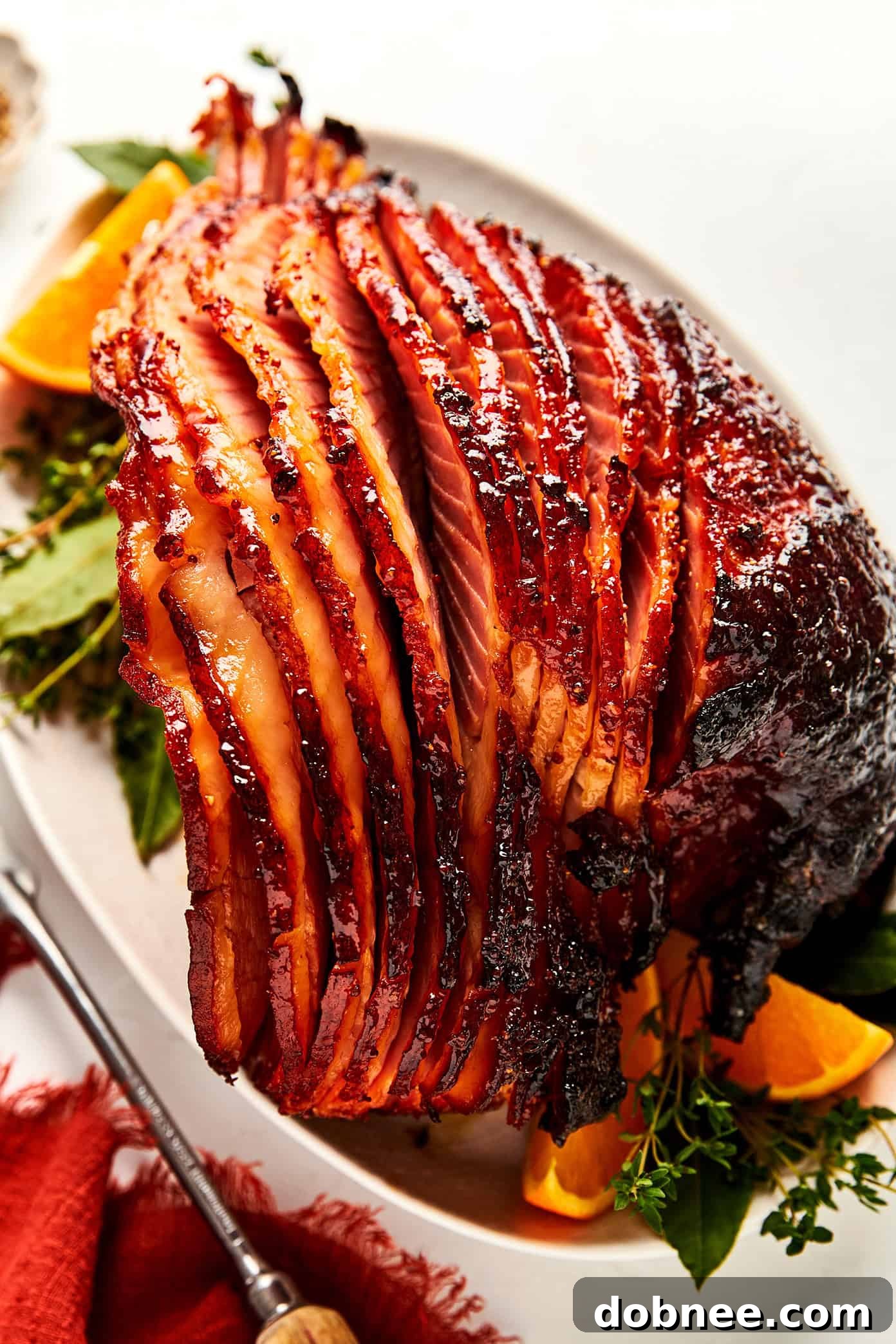
- Finish hot if you want extra caramelization. For that ultimate, irresistible sticky shine and deeply caramelized crust, remove the foil during the final 10-15 minutes of baking and increase the oven temperature to 400°F. Alternatively, you can briefly broil the ham for 1–3 minutes at the very end. Watch it constantly during this phase, as sugary glazes can go from perfect to burnt in a matter of seconds.
Creative Glaze Variations to Inspire Your Palate
Our base glaze recipe is incredibly versatile and delicious as is, but don’t hesitate to customize it to your taste preferences or what you have on hand. Experimentation can lead to wonderful new flavor profiles for your glazed ham. Here are some fantastic ham glaze variations:
- Swap maple syrup for the honey. For a deeper, richer, and more autumnal sweetness, replace the honey with an equal amount of pure maple syrup. This imparts a wonderful warmth, perfect for a cozy holiday meal.
- Add aromatic spices. Infuse your glaze with a more traditional holiday spice profile by adding a pinch of ground cinnamon, cloves, nutmeg, or allspice. A quarter to half a teaspoon of any of these will add a lovely fragrant dimension.
- Use pineapple juice. If you love the classic pairing of ham and pineapple, simply swap the orange juice for an equal amount of unsweetened pineapple juice. Pineapple adds a sweeter, tropical tang that many find irresistible.
- Introduce a boozy note. For a sophisticated twist, stir in a tablespoon or two of bourbon, dark rum, or even a dry sherry to the glaze. The alcohol will cook off, leaving behind a subtle, complex boozy aroma and flavor that elevates the ham.
- Incorporate fresh rosemary. For a more earthy and robust herbaceous flavor, add a sprig or two of fresh rosemary along with the thyme. Rosemary pairs beautifully with pork and offers a slightly piney, fragrant note.
- Add a hint of heat. If you enjoy a bit of a kick, a pinch of cayenne pepper or crushed red pepper flakes (¼ to ½ teaspoon, to taste) will add a subtle warmth and excitement to your sweet and savory glaze.
- Experiment with other fruit juices. Beyond orange and pineapple, consider using apple cider, cherry juice, or even a splash of cranberry juice for different fruity undertones.
- Try different mustards. While whole-grain Dijon is fantastic, feel free to try honey mustard for a sweeter profile, or even a spicy brown mustard for more heat.
Frequently Asked Questions About Glazed Ham
- Do I need to rinse the ham before baking?
- No, there’s no need to rinse a fully cooked ham. Simply remove it from its packaging and pat it dry with paper towels if there is any excess moisture on the surface. Rinsing can actually spread bacteria around your kitchen.
- How much ham should I plan per person?
- For a bone-in ham, plan on about ¾ to 1 pound per person. This accounts for the weight of the bone and ensures you’ll have ample servings, plus some delicious leftovers. For a boneless ham, you can typically plan for ½ to ¾ pound per person.
- Can I make the glaze ahead of time?
- Absolutely! The glaze can be prepared up to 3 days in advance. Store it in an airtight container in the refrigerator. When ready to use, gently rewarm it on the stovetop over low heat until it’s pourable and fragrant again.
- How do I keep the ham from drying out?
- Several factors help:
- Bake it covered: Keep the ham loosely tented with foil for most of the cooking time to trap moisture.
- Moderate oven temperature: A low and slow 325°F prevents rapid moisture loss.
- Don’t overcook: Use a meat thermometer! Stop baking once the internal temperature reaches 140°F (for fully cooked ham). The ham will continue to cook slightly as it rests.
- Baste frequently: The glaze not only adds flavor but also helps keep the surface moist.
- Can I use this recipe with boneless ham?
- Yes, this recipe works beautifully with boneless ham. Just be aware that boneless hams typically cook faster than bone-in hams. Monitor the internal temperature closely with a meat thermometer and reduce the cooking time slightly as needed.
- What temperature should leftover ham be reheated to?
- Leftover ham should be reheated to an internal temperature of 140°F (60°C). You can reheat slices in the oven, microwave, or a skillet with a splash of broth or water to keep them moist.
- What are the best side dishes to serve with glazed ham?
- Glazed ham pairs wonderfully with a variety of classic sides. Consider creamy mashed potatoes, roasted asparagus, green bean casserole, scalloped potatoes, sweet potato casserole, or a fresh garden salad. Don’t forget some warm dinner rolls to soak up those delicious pan drippings!
Print Recipe
Glazed Ham
- Author: Ali
-
Prep Time: 15 mins -
Cook Time: 2 hours -
Total Time: 2 hours 15 mins -
Yield: 12–16 servings
Description
This glazed ham recipe features a perfectly balanced sweet-and-savory glaze and an easy, foolproof method, making it ideal for any holiday or special occasion.
Ingredients
- 1 fully-cooked, bone-in spiral-cut ham (7 to 10 pounds)
- 1 cup packed brown sugar
- 1/2 cup honey
- 1/2 cup freshly squeezed orange juice
- 2 tablespoons freshly squeezed lemon juice
- 3 tablespoons whole grain Dijon mustard
- 1 tablespoon soy sauce
- 3 garlic cloves, smashed
- 2 fresh thyme sprigs
- lots of freshly-ground coarse black pepper, to taste (I recommend at least a generous ½ teaspoon or more)
Instructions
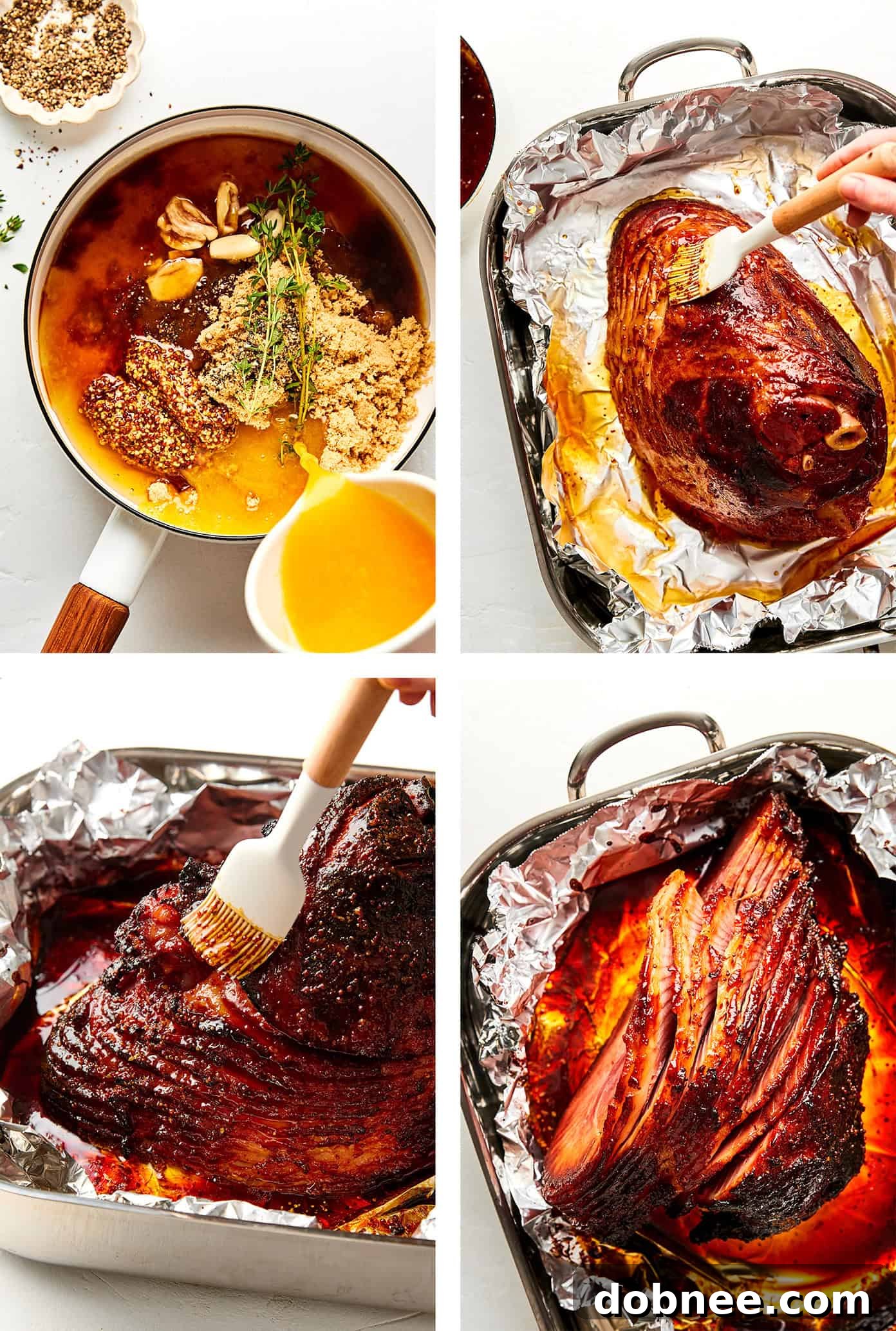
- Prep the ham. Remove the ham from the refrigerator about an hour before baking to bring it to room temperature. Preheat oven to 325°F and place the rack in the center. Line a roasting pan with foil or spray with nonstick spray.
- Make the glaze. Combine the brown sugar, honey, orange juice, lemon juice, Dijon mustard, soy sauce, garlic, thyme, and black pepper in a medium saucepan. Bring to a gentle boil over medium heat, then reduce to a simmer. Cook for 10-15 minutes, stirring often, until slightly thickened and fragrant. Remove and discard the thyme sprigs (and garlic cloves, if smashed) before glazing.
- Bake the ham. Unwrap the ham and discard any packaging materials. Place it cut-side down in the prepared roasting pan and cover loosely with foil. Bake for about 12–15 minutes per pound, until a thermometer inserted into the thickest part (not touching bone) registers about 100°F.
- Glaze and finish. Begin basting the ham with the warm glaze every 20 minutes from this point forward, loosely tenting with foil between bastings. Continue baking until the internal temperature reaches 140°F. If the glaze seems like it’s starting to burn at any point, loosely tent the top of the ham with aluminum foil. If you feel like the glaze needs extra caramelization, remove the foil and increase the oven temperature to 400°F (or broil for 1–3 minutes) near the end, watching closely to prevent burning.
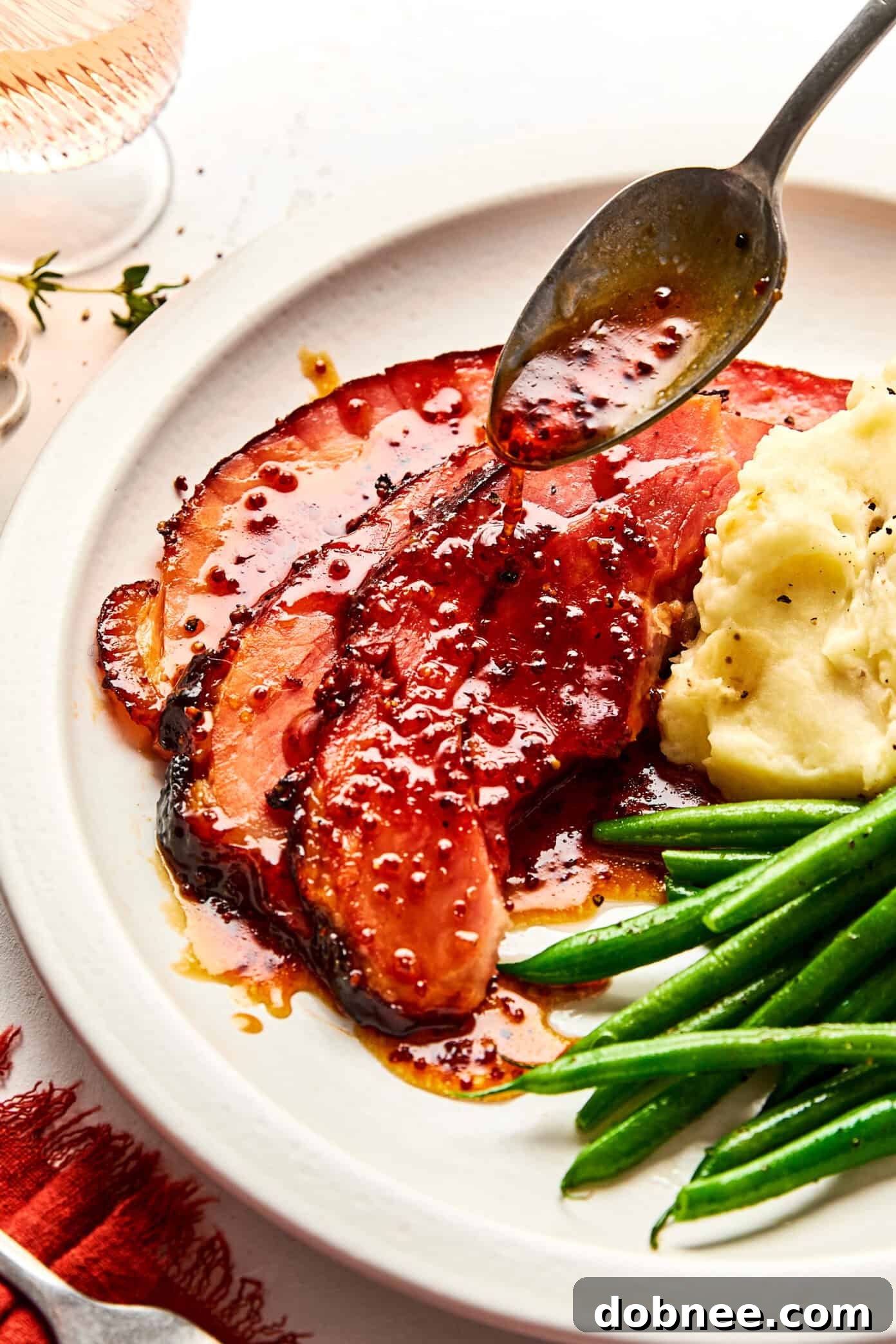
- Rest and serve. Let the ham rest for 20 minutes before slicing. Brush with any remaining glaze (getting some between the slices) and spoon a bit of pan drippings over the top before serving. Enjoy!
Serving Suggestions and Leveraging Leftovers
Once your magnificent glazed ham emerges from the oven, glistening and fragrant, it’s time to complete your feast. This ham pairs beautifully with an array of classic side dishes. Consider serving it alongside creamy mashed potatoes, perfectly roasted asparagus or green beans, tender sweet potato casserole, or a fresh, crisp salad to balance the richness. Don’t forget some warm, crusty bread or dinner rolls to sop up any extra glaze and savory pan drippings!
One of the many joys of preparing a generous ham is the delicious leftovers. Properly stored, cooked ham can last in the refrigerator for 3-4 days, and it freezes wonderfully for up to 2-3 months. Beyond simply reheating slices, transform your leftovers into exciting new meals:
- Ham Sandwiches: Classic and always satisfying, especially with a sharp cheddar and a little mustard.
- Split Pea Soup: The ham bone and leftover meat are perfect for making a hearty, flavorful split pea soup.
- Ham and Cheese Omelets or Frittatas: Dice the ham and incorporate it into breakfast or brunch dishes.
- Ham Salad: Finely chop the ham, mix with mayonnaise, celery, and seasonings for a delightful sandwich filling.
- Ham and Bean Soup: A comforting and filling meal, especially on a chilly day.
- Pasta Dishes: Add diced ham to macaroni and cheese, carbonara, or a creamy pasta bake.
This sweet and savory glazed ham isn’t just a meal; it’s an experience that extends beyond the initial serving, bringing joy and convenience to your kitchen for days to come.