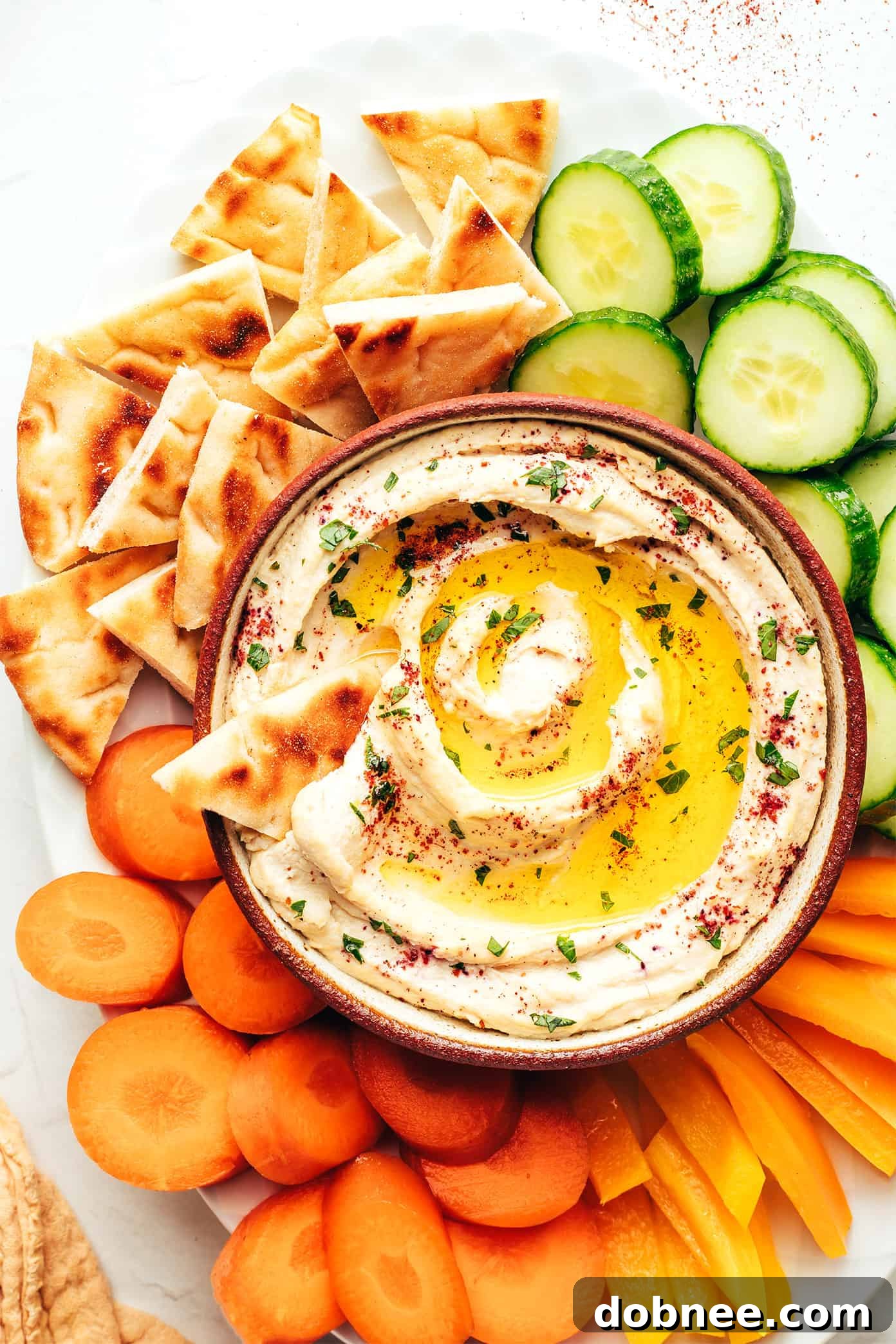
This homemade hummus recipe is quick and easy to make, super-smooth and creamy, and tastes so fresh and flavorful!
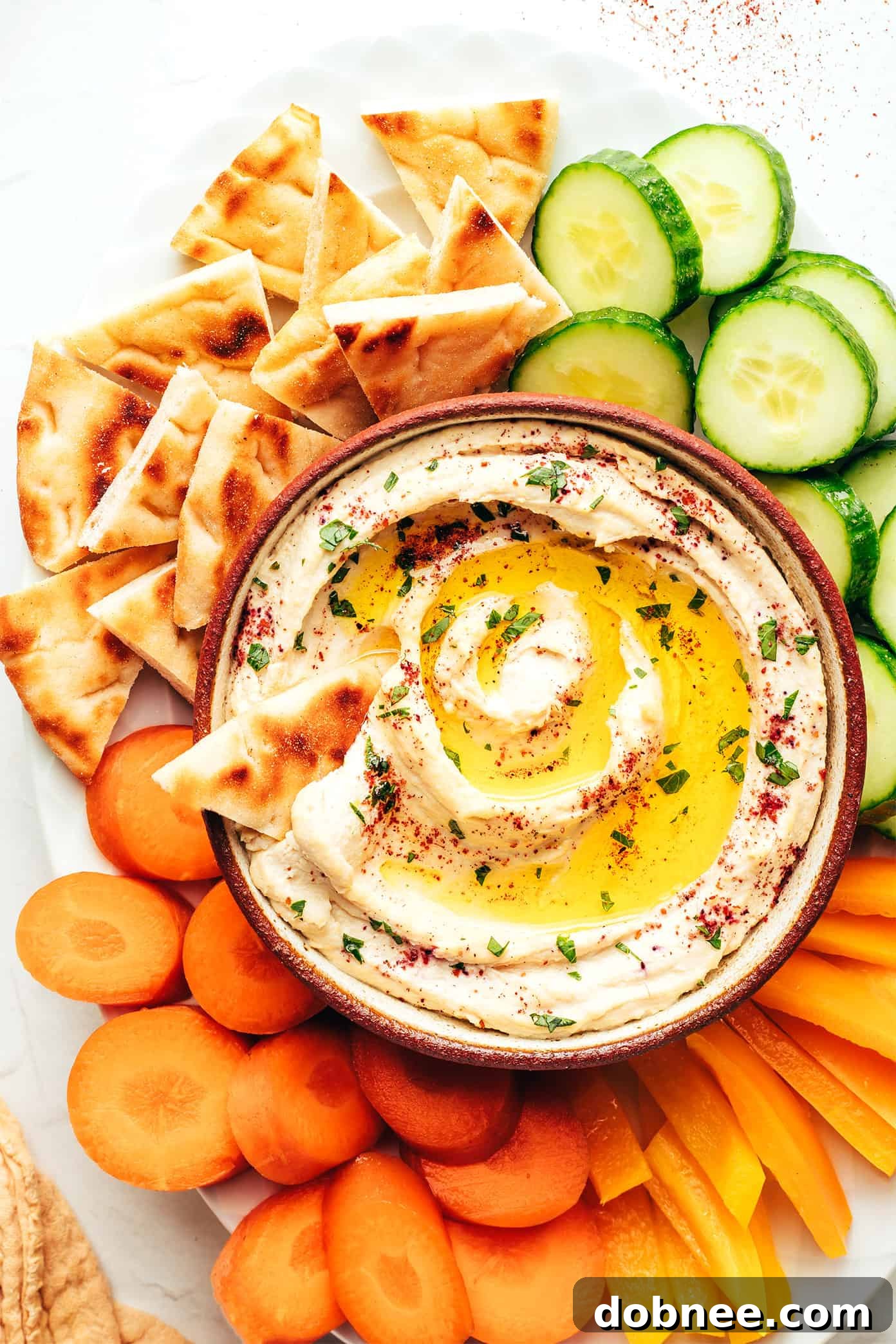
The Secret to Super-Smooth, Creamy Homemade Hummus
For too long, the quest for truly exceptional homemade hummus felt like an elusive dream. While I’ve always cherished a basic hummus recipe that served me well for years, a transformative culinary experience in Barcelona ignited a new mission. This humble falafel spot served up hummus so unbelievably creamy, ethereal, and bursting with flavor that it reset my standards completely. It was clear: my old recipe, while good, simply wasn’t great. And so began my deep dive into the art and science of perfecting homemade hummus, determined to crack the code for that unparalleled velvety texture and vibrant taste.
My Journey to the Perfect Hummus: Dispelling Myths and Discovering Truths
My culinary adventure started with two main objectives: first, to elevate the flavor, and second, to achieve that impossibly silky-smooth texture. The flavor enhancement proved to be the more straightforward part of the mission. A simple recalibration of key ingredients made an immediate and dramatic difference. Increasing the proportions of good-quality tahini for its rich, nutty depth, fresh lemon juice for its crucial brightness and acidity, potent garlic for an aromatic kick, and a balanced amount of fine sea salt instantly brought the dip to life. A final flourish of ground sumac – the preferred spice at our inspiring Barcelona spot – or a sprinkle of paprika for a milder, earthy note, completed the flavor profile, adding both visual appeal and an extra layer of taste.
However, the pursuit of the ultimate smooth texture was where the real “hummus-a-thon” began. The internet, as it often does, presented a dizzying array of strong opinions and intricate methods, mostly revolving around the preparation of chickpeas. In my makeshift test kitchen, I rigorously experimented with every suggested technique. I tried Solmonov’s renowned method of soaking dried chickpeas overnight and then boiling them until nearly disintegrated with baking soda, believed to be the secret to their exceptional softness. I also explored Epicurious’s quicker approach of simmering canned chickpeas for 20 minutes to soften them further. Melissa Clark’s Instant Pot hummus, promising convenience without sacrificing quality, was also put to the test. Even the Washington Post’s ultra-speedy method advocating for extended pureeing in a food processor, alongside various online tips like incorporating aquafaba (the liquid from canned chickpeas), using high-powered blenders, and the notoriously tedious task of individually peeling each chickpea – all were meticulously evaluated. Barclay, my trusty taste-tester, and I consumed batch after batch, sometimes twenty or more in a single month, confirming our unwavering love for hummus, despite the intensive research!
After this extensive and rather exhaustive testing period, our conclusion was surprisingly simple, yet profoundly impactful. Despite the passionate debates online, the actual differences in texture achieved by most of these elaborate chickpea preparation methods were, to our palates, astonishingly subtle, often microscopically so. During blind taste tests, conversations often devolved into hesitant remarks like, “Is batch three *really* smoother than batch four? Maybe? I think so?” It was clear that much of the hype surrounding these complex techniques didn’t translate into a genuinely discernible improvement in the final product. The time and effort invested often yielded returns that were hardly noticeable.
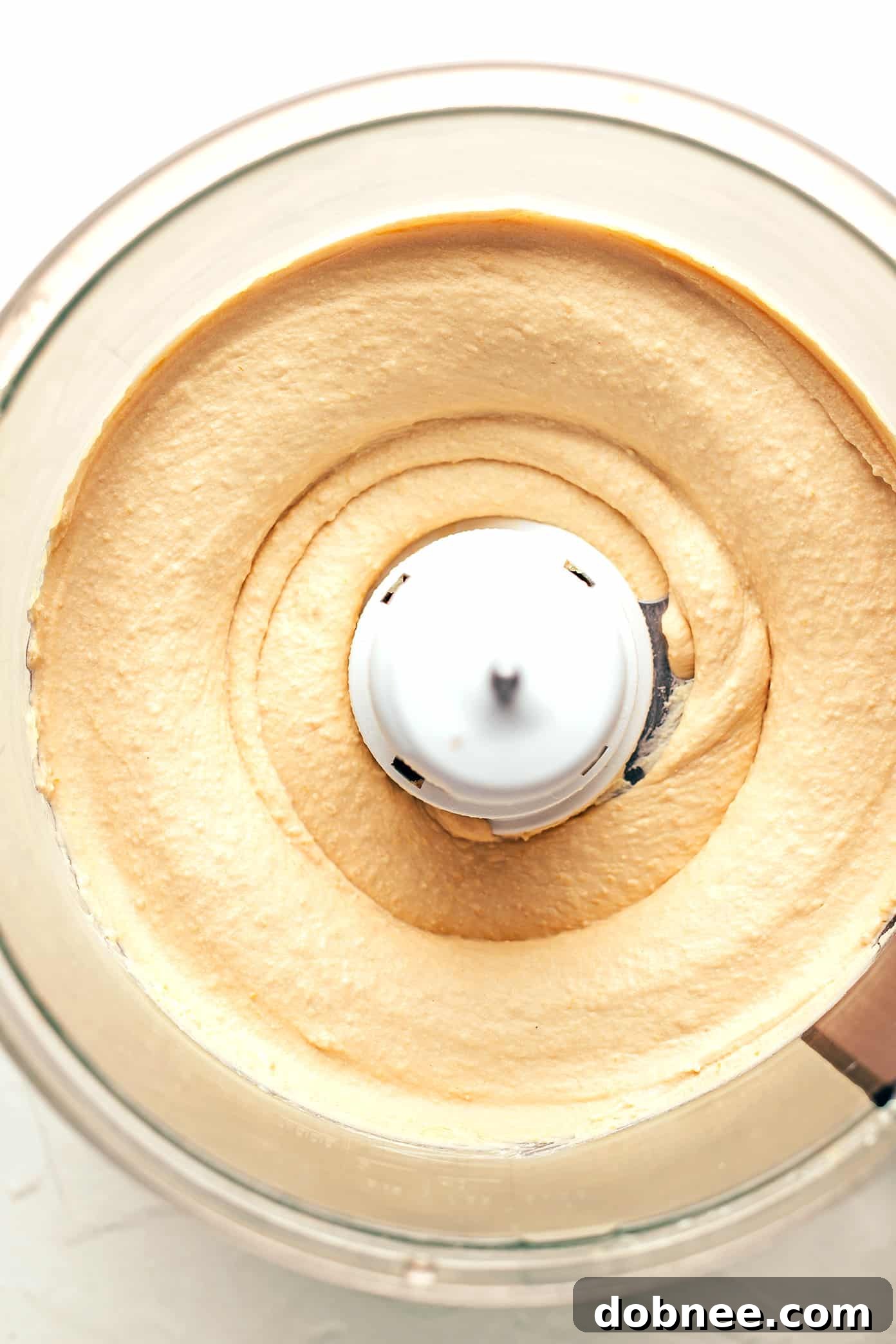
The true game-changer, the most significant factor in achieving that coveted light, whipped, and velvety-smooth consistency, turned out to be the simplest step of all: extended pureeing in the food processor. It seems almost too obvious, almost an anticlimax after countless hours of experimentation. But consistently allowing the food processor to work its magic for an extra few minutes—beyond what might initially seem sufficient—was the undeniable key. This sustained processing time allowed the ingredients to fully emulsify and aerate, breaking down the chickpeas to their smoothest possible state. This simple technique transformed the hummus from merely good to truly spectacular, consistently delivering the dreamiest texture we had encountered in Barcelona, without any complicated pre-preparation.
To be fair, there was a minute, almost imperceptible enhancement in both flavor and texture when using chickpeas cooked from scratch, whether on the stovetop or in an Instant Pot. Similarly, simmering canned chickpeas for 20 minutes beforehand might lend a fractionally creamier consistency. However, when we pitted three final batches against each other – one with scratch-cooked chickpeas, one with canned chickpeas simmered for 20 minutes, and one with chickpeas straight from the can – all subjected to a full four minutes of vigorous pureeing in the food processor, Barclay and I struggled to agree, even in blind tests, on which was definitively the smoothest. The extended pureeing time appeared to homogenize and perfect them all, demonstrating that this simple, accessible step is indeed the most potent secret to superior homemade hummus. So, while online hummus debates may rage with passion, for our household, this streamlined, effective method is the clear winner, proving that simple execution often triumphs over elaborate preparation!
Classic Hummus: A 1-Minute Video Guide
For a visual guide to crafting this perfect hummus, watch our quick video below. Learn how to achieve that super-smooth texture and rich flavor in just a few simple steps, making delicious homemade hummus in under 5 minutes!
(Note: Replace YOUR_VIDEO_ID with the actual YouTube or video platform ID for the video titled “Classic Hummus Recipe”)
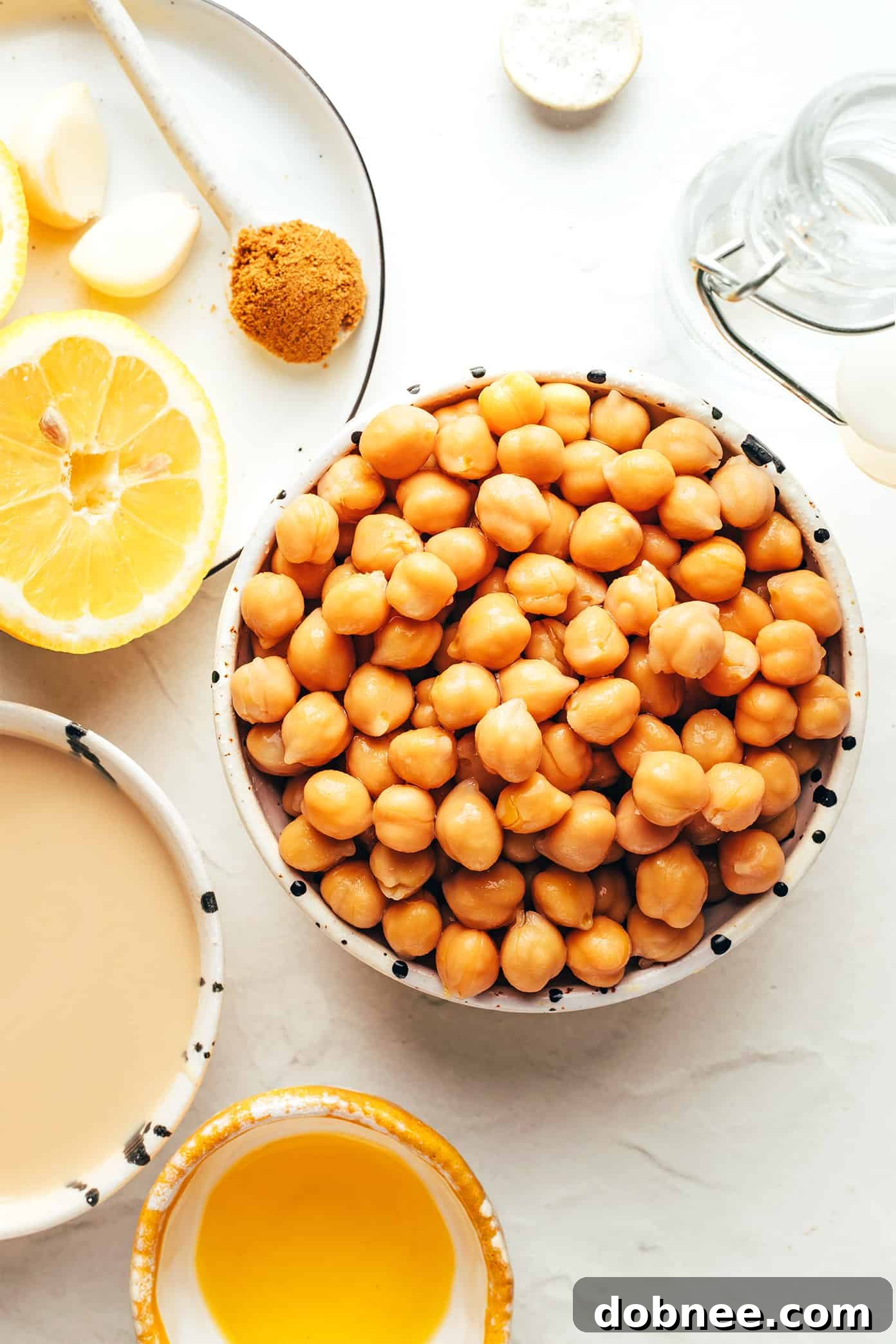
What Exactly is Hummus? Unveiling a Culinary Staple
Before we dive deeper into the recipe, let’s briefly define this beloved dip. Hummus, meaning “chickpeas” in Arabic, is a traditional Middle Eastern and Mediterranean spread that has captivated taste buds worldwide for centuries. Its core components are simple yet incredibly harmonious: chickpeas (also known as garbanzo beans), tahini (a rich paste made from ground sesame seeds), fresh lemon juice, aromatic garlic, and a touch of salt. While these form the foundation, regional variations often include additional spices like ground cumin, which adds a beautiful earthy warmth, or even different herbs and garnishes. The history of hummus is rich and ancient, with evidence suggesting its consumption dates back centuries, if not millennia, making it a truly timeless dish. Its widespread popularity today is a testament to its deliciousness and nutritional value.
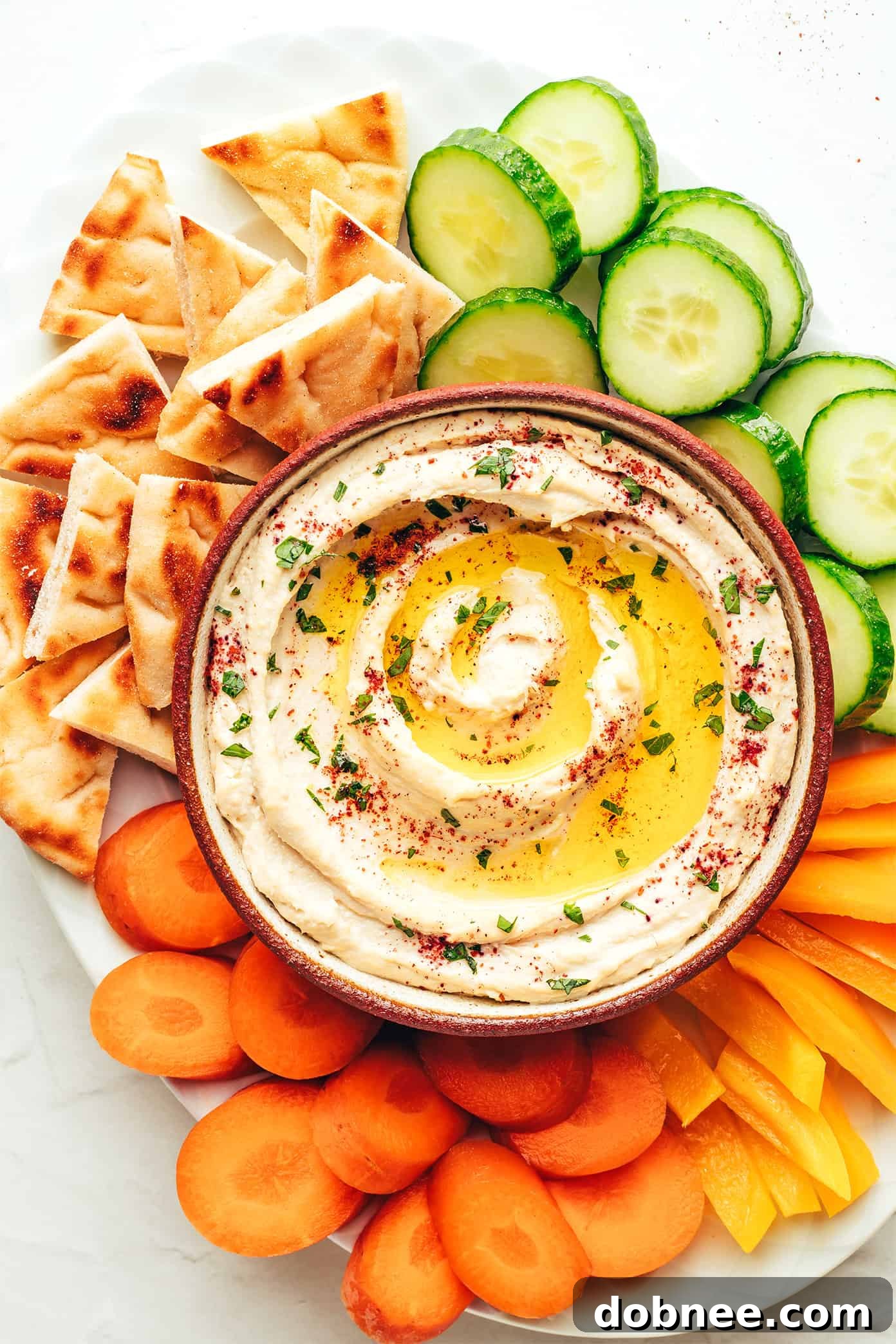
Served either warm or cold, hummus is incredibly versatile. It shines as a dip for warm pita bread, crunchy fresh vegetable sticks, or crispy crackers. It also serves as a creamy spread in sandwiches, wraps, and gyros, adding moisture and a distinct savory depth. Beyond these traditional uses, its adaptability extends to salad dressings, pasta sauces, and even as a unique crust for baked proteins. Its appeal lies not only in its delightful flavor and texture but also in its wholesome nature, being naturally vegan, gluten-free (when served with appropriate accompaniments), and packed with protein and fiber. Its global embrace has led to countless variations available in grocery stores, but nothing truly compares to the fresh, vibrant taste and unparalleled texture of a homemade batch.
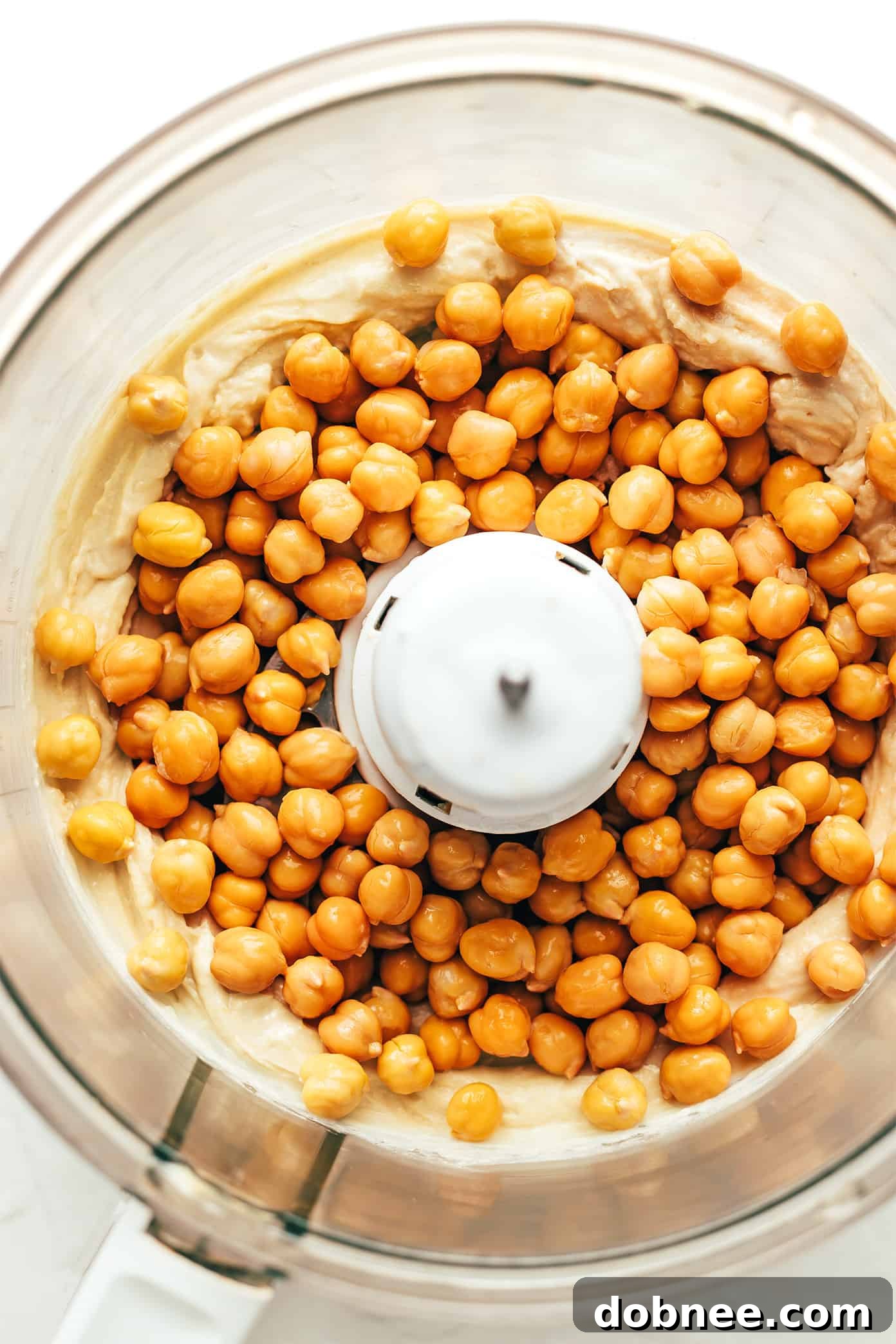
Essential Hummus Ingredients: Pantry Staples for a Gourmet Dip
One of the most appealing aspects of making hummus from scratch is that it relies on readily available ingredients, many of which are likely already in your pantry. This makes it an ideal choice for an impromptu appetizer, a wholesome snack, or a delicious accompaniment to any weeknight meal. Understanding the role of each component is key to achieving that authentic, creamy taste. Here’s a closer look at what you’ll need and why each element is vital:
- Chickpeas (Garbanzo Beans): For convenience and consistent results, I highly recommend using a can of good quality organic chickpeas. Ensure they are thoroughly rinsed under warm water and drained before adding them to your food processor. The rinsing removes excess sodium and any canning liquid, ensuring a cleaner flavor. While some traditional methods advocate for cooking dried chickpeas from scratch, our extensive testing revealed that canned chickpeas, when properly pureed, yield virtually indistinguishable results in terms of texture, making them an excellent shortcut.
- Tahini: As arguably the most prominent flavor and texture contributor, the quality of your tahini is paramount. Invest in a good-quality brand, preferably one that is light in color and has a relatively thin, pourable consistency when stirred. A well-stirred tahini, with its rich, slightly bitter, nutty depth, is essential for authentic hummus. Don’t skimp on this ingredient, as it profoundly impacts the final flavor and creaminess.
- Fresh Garlic: This recipe suggests two medium cloves, which provides a balanced pungency without overpowering the other flavors. Garlic offers a pungent, aromatic warmth that is fundamental to hummus. However, if you’re a true garlic enthusiast, feel free to double this amount for a bolder, more garlicky hummus. Adjust to your personal preference, remembering that fresh is always best for maximum flavor.
- Fresh Lemon Juice: This is a non-negotiable! The vibrant acidity of freshly squeezed lemon juice cuts through the richness of the tahini and brightens all the flavors, making the hummus incredibly refreshing and balanced. It’s crucial for that essential zing. Bottled lemon juice simply won’t deliver the same fresh, lively notes.
- Ground Cumin: A cornerstone spice in many Middle Eastern dishes, ground cumin adds an earthy, warm, and subtly spicy note that beautifully complements the other ingredients. It provides a depth of flavor that enhances the overall authenticity and complexity of the hummus, making it more aromatic and inviting.
- Extra Virgin Olive Oil: We’ll incorporate a few tablespoons directly into the hummus during blending to enrich its texture and flavor, adding a silky mouthfeel. Crucially, a generous drizzle of high-quality extra virgin olive oil just before serving is essential for both presentation and an additional layer of richness, adding a beautiful sheen and peppery finish.
- Fine Sea Salt: Salt is more than just a seasoning; it’s a critical flavor enhancer that brings out the best in all the other ingredients. Use fine sea salt for its clean taste and quick dissolution, ensuring even seasoning throughout the dip. Always taste and adjust the seasoning as you go, as the perfect amount of salt can transform the entire dish.
- Cold Water: This often-overlooked ingredient is a true game-changer for achieving that desired light, airy, and whipped texture. Adding cold water gradually during the blending process helps create an emulsion with the tahini and olive oil, resulting in a silkier, smoother hummus that’s less dense and more spreadable. The cold temperature also helps to keep the texture light and prevents the tahini from seizing. Don’t be shy about adding a bit more if your hummus seems too thick or needs further loosening.
While the focus here is on ease and efficiency with canned chickpeas, for those who prefer to experiment or have extra time, here are the alternative chickpea preparation methods you might encounter:
- Chickpeas Cooked from Scratch: If you’re starting with dried chickpeas, you’ll need to soak them overnight and then cook them until they are very tender, almost mushy. This can be done on the stovetop (boiling with a pinch of baking soda can aid softening) or efficiently in an Instant Pot. Overcooking them slightly can help in achieving a softer texture and loosening their skins, which some believe contributes to a smoother hummus.
- Canned Chickpeas, Simmered for 20 Minutes: For a slight texture boost without starting from dried beans, rinse and drain your canned chickpeas. Transfer them to a saucepan, cover with an inch or two of fresh water, bring to a simmer, and let them cook gently for about 20 minutes before draining. This can further soften firmer canned varieties, although, as previously noted, the difference after thorough pureeing is often marginal for the extra effort involved.
Beyond the core ingredients, don’t forget the power of toppings! For a classic presentation, a swirl of extra olive oil, a vibrant sprinkle of ground sumac or paprika, and a scattering of fresh chopped parsley are perfect and visually appealing. But don’t limit your creativity! Toasted pine nuts add a delightful nutty crunch, chopped roasted red peppers offer sweetness and color, and a dash of everything bagel seasoning can provide an unexpected savory twist. The possibilities are truly endless, allowing you to customize your hummus to suit any taste, dietary preference, or special occasion.
How To Make Hummus: Your Step-by-Step Guide to Creamy Perfection
Creating this incredibly smooth and flavorful hummus is remarkably simple, especially once you embrace the power of your food processor. Forget complicated techniques; focus on these straightforward steps to achieve homemade perfection that will impress every time:
- Combine Initial Ingredients: Begin by adding the good-quality tahini, 2 tablespoons of cold water, 2 tablespoons of extra virgin olive oil, ground cumin, fine sea salt, peeled and smashed garlic cloves, and fresh lemon juice into the bowl of your food processor.
- Initial Puree for Emulsification: Process these ingredients for about 30-60 seconds, or until they form a smooth, well-combined paste. This initial blending helps to emulsify the tahini and lemon juice, creating a stable base and laying the groundwork for a truly creamy texture. Scrape down the sides of the bowl with a spatula to ensure everything is fully incorporated.
- Add Chickpeas: Now, add the rinsed and drained can of chickpeas to the food processor. Distribute them evenly over the tahini mixture.
- Extended Pureeing for Ultimate Smoothness: This is the most crucial step for achieving that coveted silky, whipped texture. Puree the mixture for a full 3-4 minutes continuously. Yes, really! Let your food processor work diligently. You’ll observe the hummus becoming progressively lighter, fluffier, and noticeably smoother as it processes. Pause once or twice during this period to scrape down the sides of the bowl with a spatula, ensuring all ingredients are thoroughly incorporated and blended evenly. If the mixture seems too thick or isn’t smoothing out to your liking, add an additional tablespoon or two of cold water, one at a time, and continue processing until your desired consistency is achieved. The cold water helps maintain the light texture.
- Taste and Adjust Seasoning: Once your hummus has reached its desired creamy consistency, stop the food processor and taste it. This is your opportunity to fine-tune the flavors to perfection. Add more salt if needed to enhance the overall taste, extra cumin for a deeper earthy note, or more lemon juice to boost its brightness and acidity. Blend again briefly after any additions to ensure they are fully mixed in.
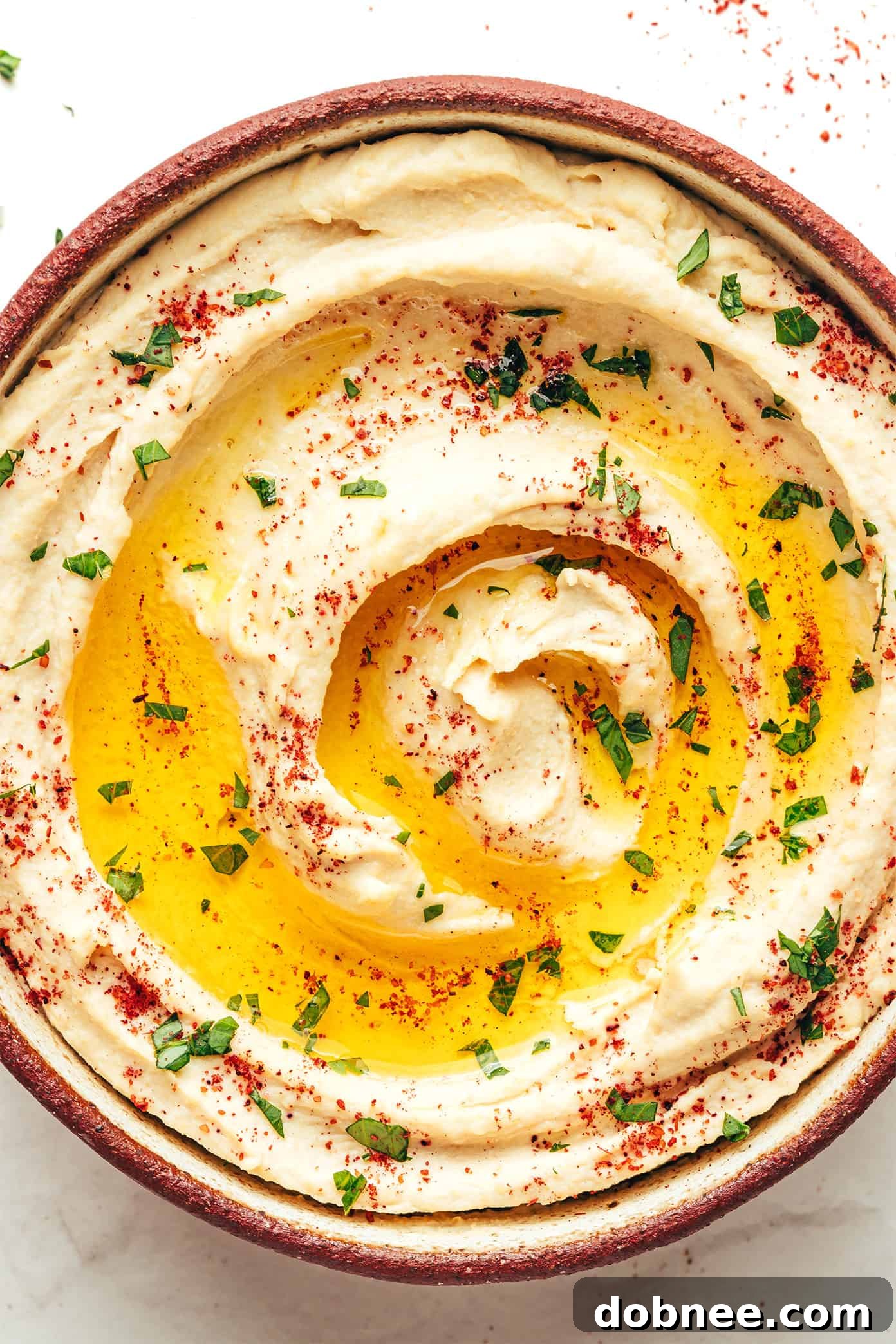
- Garnish and Serve: Transfer your freshly made hummus to a serving bowl. Drizzle generously with extra virgin olive oil, then add your preferred toppings such as a vibrant sprinkle of ground sumac or paprika, and a scattering of fresh chopped parsley. Serve immediately with warm pita bread, an assortment of crisp fresh vegetable sticks, crackers, or use it as a versatile spread. Leftovers can be stored in an airtight container in the refrigerator for up to 3 days, maintaining their delicious flavor and texture.
Hummus Recipe Variations: Get Creative with Your Dip!
While classic hummus is undeniably delicious and a staple for good reason, it also serves as a fantastic, neutral base for endless creative variations. Don’t hesitate to experiment with different additions to customize your dip, catering to various tastes and occasions:
- Roasted Red Pepper Hummus: A classic and incredibly popular choice! Simply blend in 1/2 to 1 cup of roasted red peppers (easily found in a jar, thoroughly drained, or freshly roasted for an even deeper flavor) along with the chickpeas. For an extra layer of warmth and a subtle kick, add a pinch of crushed red pepper flakes.
- Pesto Hummus: For an herbaceous and aromatic twist, stir in a few tablespoons of your favorite store-bought or homemade pesto during the final pureeing stage. This fusion creates a vibrant green hummus perfect for a fresh taste. Garnish with extra fresh basil or toasted pine nuts for an added flourish.
- Roasted Garlic Hummus: For a sweeter, mellower garlic flavor that lacks the raw bite of fresh garlic, roast a whole head of garlic until the cloves are soft and caramelized. Squeeze out the tender roasted cloves and use them instead of, or in addition to, fresh garlic in the recipe. This creates a wonderfully deep, rich, and slightly sweet hummus profile.
- Spicy Hummus: Infuse your hummus with exhilarating heat by adding a dash of cayenne pepper, a pinch of red pepper flakes, or a swirl of fiery harissa paste during the blending process. Adjust the amount to your preferred level of spice.
- Sun-Dried Tomato Hummus: Blend in a handful of oil-packed sun-dried tomatoes (thoroughly drained) for a rich, tangy, and intensely savory flavored hummus. This variation adds a beautiful reddish hue and a concentrated burst of Mediterranean taste.
- Caramelized Onion Hummus: Sauté finely sliced onions until deeply caramelized and sweet, then blend them into your hummus for an incredibly rich, savory, and sophisticated flavor profile.
Beyond the Dip: Versatile Ways To Enjoy Hummus
Hummus is incredibly versatile and can be enjoyed in countless innovative ways beyond its traditional role as a simple dip. Its creamy texture and savory flavor make it a fantastic ingredient to incorporate into various meals. Here are some creative and delicious ideas to integrate more homemade hummus into your culinary repertoire:
- Hummus Toast: Move over, avocado toast! Spread a generous layer of creamy hummus on your favorite toasted sourdough, whole wheat, or gluten-free bread. Top with sliced cucumbers, cherry tomatoes, everything bagel seasoning, crumbled feta, microgreens, or a drizzle of spicy chili oil. It’s a satisfying, protein-packed, and visually appealing breakfast, lunch, or snack.
- Sandwich and Wrap Spread: Ditch the mayonnaise or plain mustard! Hummus makes an excellent, healthier, and far more flavorful spread for all types of sandwiches, wraps, and gyros. It adds essential moisture, a luxurious creaminess, and a delightful savory depth that elevates any filling, from grilled vegetables to falafel or chicken.
- Salad Dressing Base: Transform your hummus into a creamy and tangy salad dressing. Thin it out with a bit of extra fresh lemon juice, cold water, and a splash of olive oil, then whisk until it reaches a pourable consistency. It creates a creamy, tangy, and incredibly flavorful dressing that’s perfect for green salads, hearty grain bowls, or even as a sauce for roasted vegetables.
- Pasta Sauce: Similarly, thin out hummus with some reserved pasta water, a splash of olive oil, and an extra squeeze of lemon juice to create a quick, easy, and healthy sauce for hot pasta. It coats the noodles beautifully, offering a unique Mediterranean twist. It also works wonderfully as a creamy base for cold pasta salads, adding a rich texture and savory flavor.
- “Crust” for Chicken or Fish: Get truly creative by using hummus as a flavorful and moist coating for chicken breasts, fish fillets, or even tofu steaks before baking or pan-frying. It creates a tender, moist interior with a delicious, slightly golden-brown exterior. This old but beloved hummus-crusted chicken recipe is a long-standing favorite for a reason!
- Deviled Eggs Booster: For a unique and surprisingly delicious twist on classic deviled eggs, mix some hummus directly into the mashed egg yolk filling. The creamy texture, subtle tang, and savory flavors of hummus complement deviled eggs beautifully, adding an unexpected depth and richness.
- Hummus Mashed Potatoes: For a healthier, incredibly flavorful, and dairy-free side dish, substitute some of the butter or cream in your mashed potatoes with a generous spoonful of hummus. The result is surprisingly delicious, adding a subtle tang, richness, and an extra boost of protein and fiber to your classic comfort food.
- Pizza Base: For a unique Mediterranean-inspired pizza, spread a thin layer of hummus on your pizza crust instead of traditional tomato sauce. Top it with colorful roasted vegetables, crumbled feta cheese, kalamata olives, and fresh herbs for a deliciously different and healthier meal that’s bursting with flavor.
More Favorite Dip Recipes to Explore
If you’ve enjoyed mastering this hummus recipe and are looking for other delicious, crowd-pleasing dips to add to your repertoire, here are a few more highly-rated favorites that are sure to impress your family and friends:
- Easy Elote Dip: A creamy, zesty, and utterly irresistible Mexican street corn inspired dip, perfect for parties.
- The Best Restaurant-Style Salsa: Fresh, vibrant, and perfectly balanced, just like your favorite Mexican restaurant, and so easy to make at home.
- The Best Guacamole: A classic, creamy, and flavorful recipe that’s always a crowd-pleaser and a staple for any gathering.
- Skinny Buffalo Chicken Dip: All the bold, spicy flavors of buffalo chicken in a lighter, healthier dip that doesn’t compromise on taste.
- Spicy Greek Feta Dip (Tirokafteri): A tangy, spicy, and utterly addictive dip showcasing creamy feta cheese, perfect with pita or vegetables.
- Slow Cooker Spinach Artichoke Dip: A warm, cheesy, and comforting dip that’s perfect for parties with minimal effort, allowing your slow cooker to do all the work.
Homemade Classic Hummus Recipe
Author: Ali
Prep Time: 10 minutes
Total Time: 10 minutes
Yield: 6-8 servings
This homemade hummus recipe is incredibly quick and easy to prepare, resulting in a supremely smooth, creamy, and fresh-tasting dip that will rival any store-bought version. Perfect for snacks, appetizers, or as a versatile spread!
Ingredients
- 1/3 cup good-quality tahini
- 2-4 tablespoons cold water, or more if needed
- 2 tablespoons extra virgin olive oil
- 1/2 teaspoon ground cumin
- 3/4 teaspoon fine sea salt
- 2 medium cloves garlic, peeled and smashed
- Juice of 1 fresh lemon (approximately 2-3 tablespoons)
- 1 (15 ounce) can chickpeas, rinsed thoroughly and drained
- Optional Toppings: extra drizzle of olive oil, chopped fresh parsley, sprinkle of ground sumac or paprika, toasted pine nuts, a pinch of red pepper flakes
Instructions
- Add tahini, 2 tablespoons cold water, 2 tablespoons olive oil, cumin, salt, garlic, and fresh lemon juice to the bowl of a food processor. Puree for about 30-60 seconds until a smooth, well-combined paste forms. Scrape down the sides of the bowl as needed.
- Add the rinsed and drained chickpeas to the food processor. Puree continuously for a full 3-4 minutes. This extended pureeing is key for an incredibly smooth and creamy texture. Pause once or twice to scrape down the sides of the bowl, ensuring all ingredients are thoroughly incorporated. If the mixture appears too thick or dense, add an additional tablespoon or two of cold water, one at a time, and continue processing until your desired light and airy consistency is achieved.
- Taste the hummus and adjust seasonings as needed. Add more salt to enhance the overall flavor, extra cumin for a deeper earthy note, or more lemon juice to boost its brightness and tang, according to your preference. Blend briefly again to fully incorporate any additions.
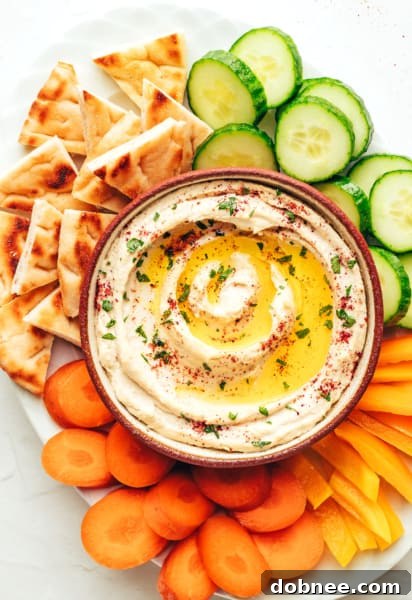
- Transfer your freshly made hummus to a serving bowl. Garnish generously with your desired toppings – a swirl of extra virgin olive oil, a vibrant sprinkle of ground sumac or paprika, and a scattering of fresh chopped parsley are classic choices. Serve immediately with warm pita bread, fresh vegetables, or crackers. Leftovers can be stored in an airtight container in the refrigerator for up to 3 days.
Notes
While this recipe emphasizes convenience with canned chickpeas, for those interested in alternative preparations:
- Scratch-Cooked Chickpeas: You can use chickpeas cooked from dried beans, either on the stovetop or in an Instant Pot. Overcooking them slightly can help soften the chickpeas and loosen their skins, potentially yielding a marginally smoother texture.
- Simmered Canned Chickpeas: To slightly enhance the texture of canned chickpeas, rinse and drain them, then simmer in fresh water for 20 minutes before draining again and adding to the food processor.
In our extensive testing, the difference in smoothness from these alternative chickpea preparations was often negligible after thorough pureeing with a food processor, making the standard canned chickpea method highly recommended for its simplicity and excellent results without sacrificing quality.
Share Your Creation!
We’d love to see your homemade hummus! Tag @gimmesomeoven on Instagram and use the hashtag #gimmesomeoven so we can see your delicious results!