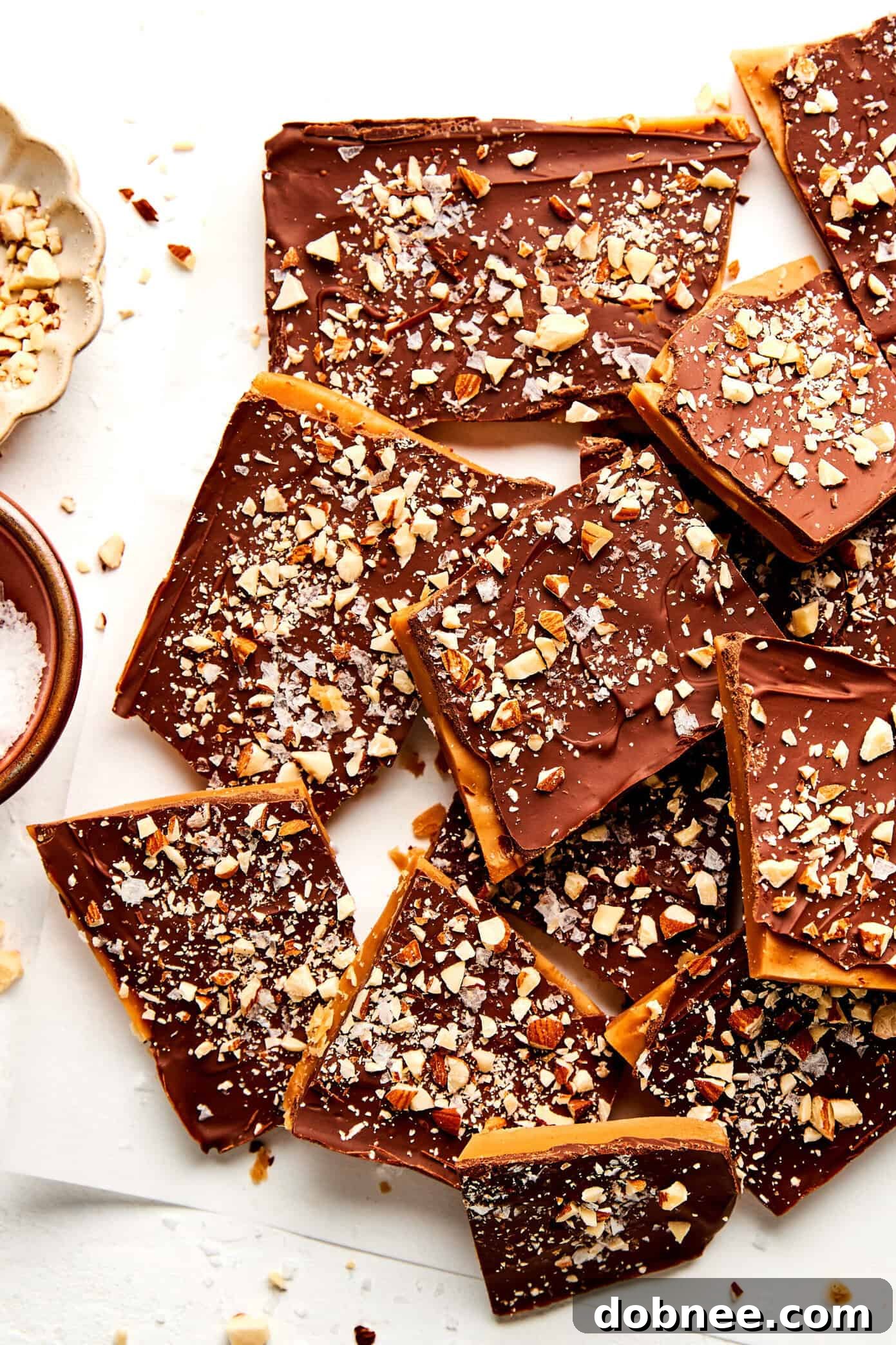
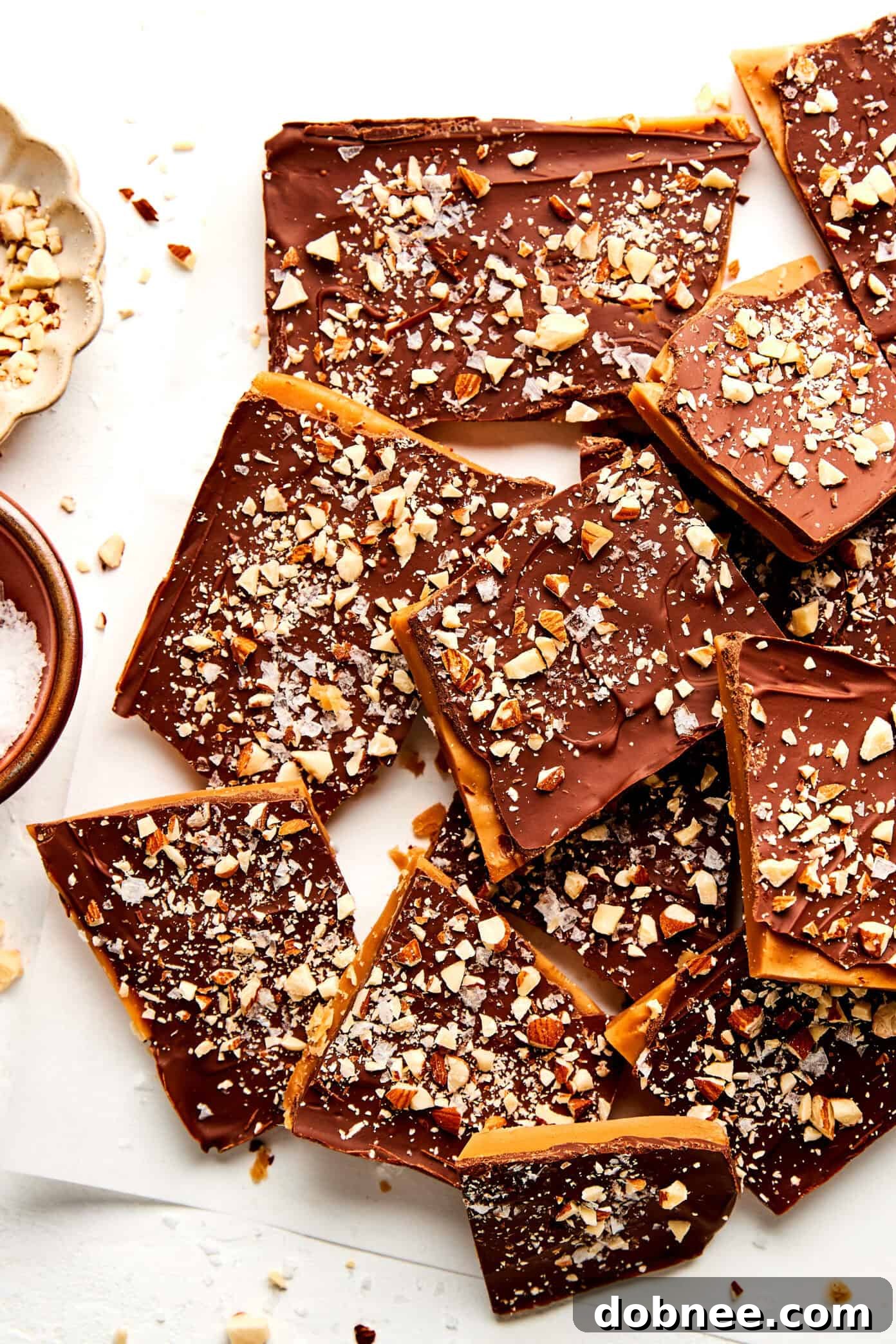
The Ultimate Homemade Toffee!

Few confections capture the heart quite like a perfectly crafted batch of homemade toffee. There’s an undeniable magic in transforming simple ingredients into a brittle, buttery masterpiece that delivers a symphony of flavors and textures with every bite. If you’re searching for that ideal sweet and salty crunch, a decadent layer of melty chocolate, and a satisfying snap that doesn’t cling stubbornly to your teeth, then you’ve absolutely arrived at the right place.
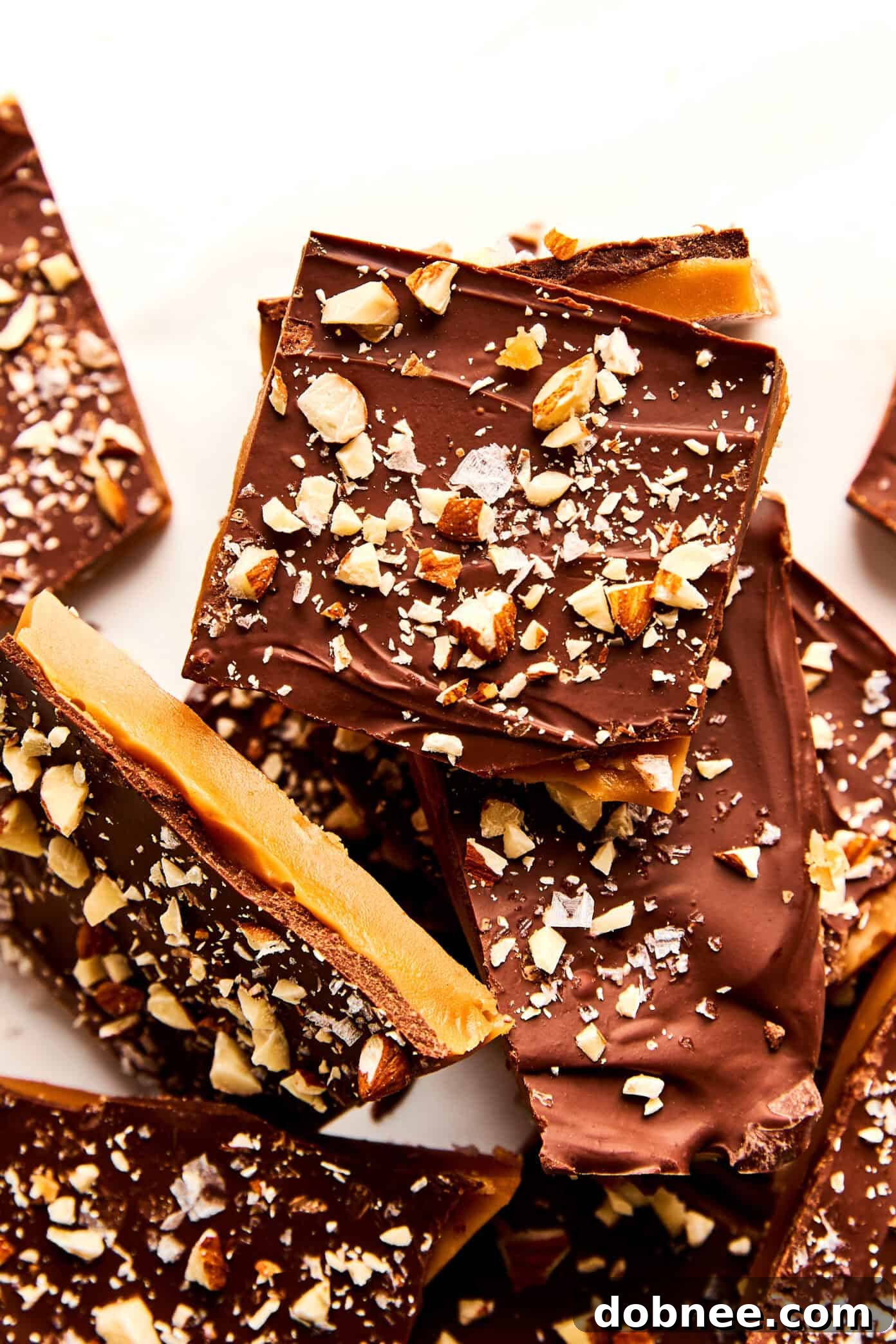
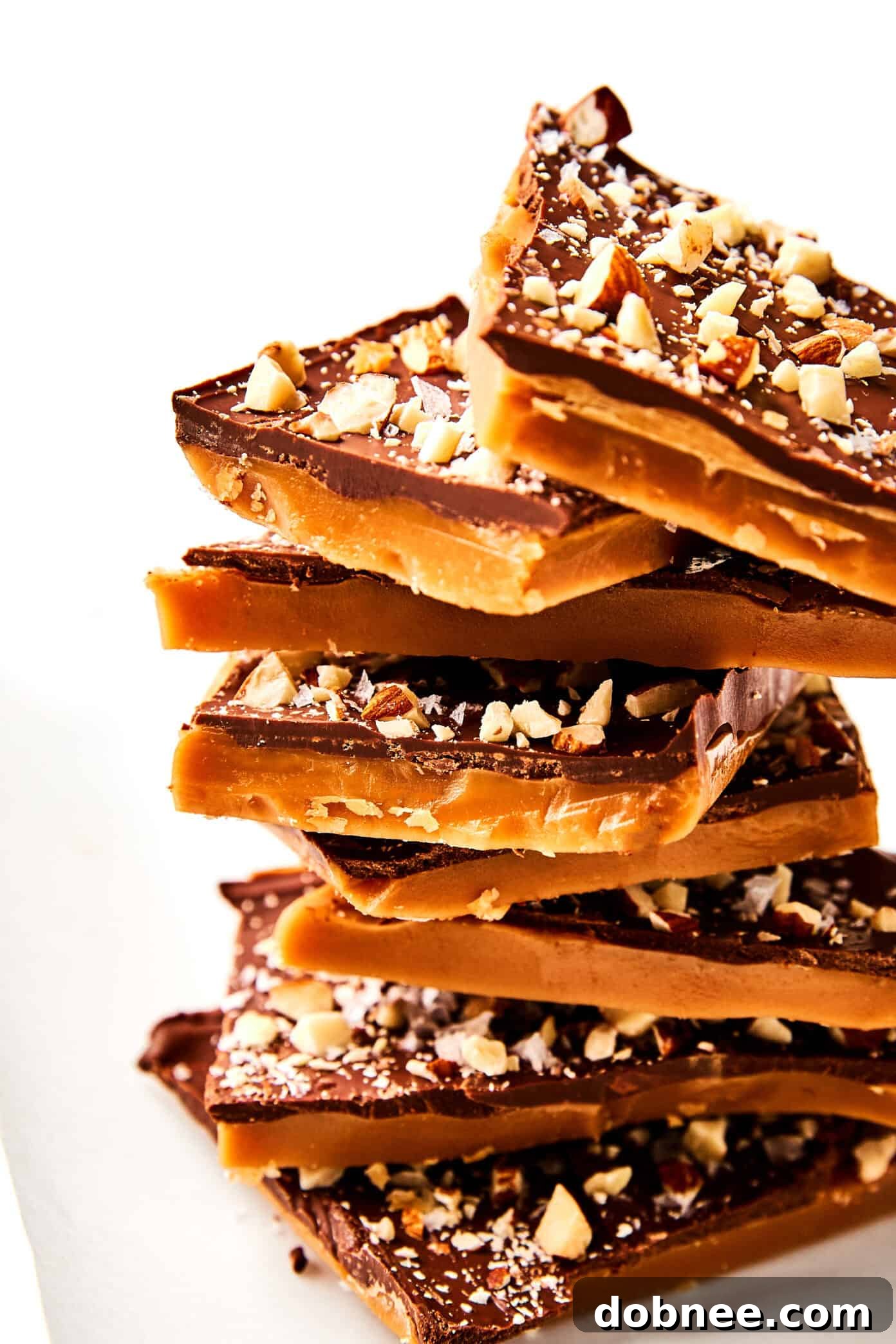
Over the years, I’ve experimented extensively with various toffee recipes, refining techniques and tweaking proportions, and this particular rendition has emerged as my absolute personal favorite. It’s a recipe that promises consistency and delivers on taste, turning what might seem like a complex process into an enjoyable kitchen adventure. The foundation is a rich, buttery toffee base, meticulously cooked to achieve that perfect hard-crack stage. This is then crowned with a luscious layer of melted chocolate chips, which transforms into a smooth, glossy topping. A final flourish of crunchy nuts (entirely optional, but highly recommended for an extra layer of texture) and a delicate sprinkle of flaky sea salt complete this irresistible treat.
One of the standout qualities of this recipe, and something I truly cherish, is its exceptional texture. Unlike some toffees that can be notoriously sticky, this version breaks cleanly and melts in your mouth, leaving behind only the memory of its exquisite flavor, not a sticky residue on your dental work. It’s pure dessert perfection, offering an elevated experience that far surpasses anything you’d find in a store-bought package.
For those venturing into the wonderful world of candy making for the first time, or even seasoned bakers looking for a reliable guide, I cannot stress enough the importance of a candy thermometer. This essential tool is your best friend in ensuring the toffee reaches the precise temperatures required for its signature crispness and prevents any chewy disappointments. Below, I’ve meticulously outlined a wealth of tips and tricks designed to guarantee a smooth and successful process from start to finish. You’ll be delighted to discover that with just a handful of straightforward ingredients and a bit of patience, you can create a batch of homemade toffee that will impress everyone fortunate enough to try it. So, gather your apron and let’s dive into making some spectacular toffee!
Achieving Toffee Perfection: Essential Recipe Tips
Crafting flawless toffee every time is simpler than you might think, especially when armed with the right knowledge. Here are my top tricks to ensure your homemade toffee turns out perfectly crisp, smooth, and utterly delicious with each batch:
- Choose a Heavy-Bottomed Saucepan. This isn’t just a suggestion; it’s a critical component for even heat distribution. Thin-bottomed pans are prone to developing hot spots and heating unevenly, which can easily lead to scorching parts of your sugar mixture while other areas remain undercooked. A sturdy, heavy-bottomed pot ensures a consistent temperature across the base, allowing the toffee to cook uniformly and achieve that beautiful, deep golden color without burning.
- Opt for Standard American Unsalted Butter. While European-style butter is often lauded for its rich flavor and higher fat content, it’s not ideal for toffee making. Its elevated fat percentage can cause the butter and sugar emulsion to break or “separate” during the cooking process, resulting in a greasy, less cohesive toffee. Stick to good quality, unsalted American butter for the most reliable and perfectly textured results in this recipe.
- Stir Gently and Steadily. When making toffee, there’s a fine line between adequate stirring and over-stirring. Excessive or vigorous stirring can introduce air into the mixture and encourage the formation of sugar crystals, leading to a grainy or gritty texture instead of the desired smooth, glassy finish. Keep your stirring slow and steady, just enough to ensure the ingredients are combining and cooking evenly without agitating the sugar too much.
- Brush Down the Sides of the Pan. As your sugar mixture cooks, tiny sugar crystals can sometimes cling to the sides of the saucepan, just above the liquid line. These rogue crystals can act as “seed” crystals, causing the entire batch of toffee to crystallize and become grainy. A quick and gentle swipe with a wet pastry brush along the inner sides of the pan helps dissolve these crystals back into the solution, preventing crystallization and ensuring a silky-smooth toffee.
- Rely on Your Candy Thermometer. This tool is your non-negotiable partner in toffee making. Toffee requires a very specific temperature—305°F (151°C)—to reach the “hard-crack” stage, which is what gives it that signature crisp, brittle snap. Pulling the mixture off the heat too early will result in a soft, chewy, or even sticky toffee. A candy thermometer provides precise temperature readings, taking the guesswork out of this crucial step and guaranteeing perfect results every time.
- Work Quickly Once the Toffee is Ready. Toffee sets incredibly fast once it reaches the hard-crack stage and is removed from the heat. Have your vanilla extract measured and your prepared pan ready to go. As soon as the thermometer hits 305°F, immediately remove the pan, stir in the vanilla, and pour the hot toffee into your parchment-lined pan. Don’t delay, as even a few extra seconds can cause it to thicken too much, making it difficult to spread into an even layer.
- Prepare Your Pan Properly. Line your baking pan with parchment paper, allowing a generous overhang on two sides. This simple step is a game-changer for easy removal. Once the toffee has cooled and set, you can simply lift it out of the pan using the parchment paper, making for a clean transfer and effortless breaking into pieces.
Get Creative: Exciting Toffee Recipe Variations
While the classic buttery toffee with chocolate and nuts is truly divine, this recipe serves as a fantastic canvas for your culinary creativity. Here are a few delightful ways you can customize your homemade toffee to suit your taste, explore new flavor profiles, and make it truly your own:
- Experiment with Different Chocolates: The semisweet chocolate chips provide a balanced sweetness, but don’t limit yourself! For a richer, more intense chocolate experience, swap them for finely chopped bittersweet chocolate. If you love a contrasting flavor, consider adding a beautiful swirl of melted white chocolate over the dark chocolate layer once it’s spread, creating an elegant marbled effect. You could also use milk chocolate for a sweeter, creamier finish.
- Explore a Variety of Nuts: Almonds and walnuts are traditional choices, but the world of nuts offers endless possibilities. Elevate your toffee with the vibrant green and slightly salty crunch of pistachios, the buttery richness of pecans, or the distinctive flavor of toasted hazelnuts. A mix of several nuts can also create a wonderfully complex texture and taste. Remember to chop them finely for easy distribution and eating.
- Infuse with Espresso: For coffee lovers, a subtle hint of espresso can elevate the chocolate layer beautifully. Stir in ½ teaspoon of high-quality instant espresso powder (or finely ground instant coffee) directly into the melted chocolate before spreading it. This deepens the chocolate flavor and adds a sophisticated, bittersweet note that truly complements the toffee.
- Introduce Warm Spices: A dash of spice can transform your toffee into a cozy, comforting treat. Add ½ teaspoon of ground cinnamon to the toffee mixture as it cooks for a warm, aromatic flavor. For those who enjoy a little kick, a tiny pinch (about ⅛ teaspoon) of cayenne pepper can be stirred into the chocolate layer, offering a surprising and delightful warmth that lingers on the palate. Ground ginger or cardamom could also be interesting additions.
- Add Tropical Coconut: For a delightful texture and tropical twist, sprinkle toasted coconut flakes evenly over the melted chocolate layer. The sweet, chewy coconut provides a wonderful contrast to the brittle toffee and smooth chocolate. Ensure your coconut is lightly toasted to enhance its flavor and aroma before adding it.
- Candy Cane Crunch (Seasonal): During the holidays, crush some candy canes and sprinkle them over the melted chocolate for a festive, minty toffee. This adds a beautiful color and a refreshing burst of peppermint flavor.
- Salty Pretzel Swirl: Instead of nuts, or in addition to them, crush some pretzels and sprinkle them over the chocolate layer. The extra saltiness and crunchy texture of the pretzels provide an addictive sweet-and-salty combination that is hard to resist.
Frequently Asked Questions About Homemade Toffee
While technically possible for highly experienced candy makers, I strongly advise against it, especially if you’re new to the process. The hard-crack stage, crucial for that perfectly crisp toffee, requires an extremely precise temperature of 305°F (151°C). Without a thermometer, judging this by visual cues alone (like color and the “cold water test”) is very difficult and often leads to an undercooked, chewy, or overly brittle, burnt toffee. A good candy thermometer is an inexpensive investment that guarantees consistent and successful results every single time.
Toffee separation (where the butter and sugar mixture splits, often appearing greasy or curdled) is typically caused by two main factors: heating the mixture too quickly or using butter with too high a fat content (like some European-style butters). Keeping the heat low to medium and cooking slowly allows the butter and sugar to emulsify properly. Gentle, consistent stirring also aids in preventing this. If it does separate, sometimes a quick, vigorous whisk off the heat can bring it back together, but prevention is key.
Absolutely! The nuts are an entirely optional topping, included for added texture and flavor, but your toffee will be equally delicious without them. If you’re avoiding nuts due to allergies or preference, simply omit them. You can replace them with other crunchy toppings like crushed pretzels, colorful sprinkles for a fun look, or even more flaky sea salt for an extra salty kick. The base toffee and chocolate layer are fantastic on their own.
Yes, humidity can significantly impact the success and texture of your toffee. Sugar is hygroscopic, meaning it absorbs moisture from the air. On very humid days, the toffee may struggle to reach the hard-crack stage, taking much longer to cook, or it might soften slightly after setting, losing its crispness. If possible, choose a dry, low-humidity day for candy making to achieve the best, snappiest results. Storing finished toffee in an airtight container also helps protect it from moisture.
To keep your toffee fresh and crisp, it’s essential to store it properly. Once completely cooled and broken into pieces, place the toffee in an airtight container at room temperature. Layering pieces with parchment paper can prevent them from sticking together. Stored this way, homemade toffee will typically stay fresh and delicious for up to 2-3 weeks. You can also refrigerate it for a longer shelf life, up to a month, but be aware that it might “sweat” a bit when brought back to room temperature due to condensation. Freezing is also an option for up to 3 months; just thaw at room temperature before serving.
If your toffee is too dark or has a burnt taste, it usually indicates that the heat was too high or it cooked for too long past the desired temperature. Sugar can burn very quickly once it reaches higher temperatures. To prevent this, always use a heavy-bottomed pan, maintain a low to medium heat, stir gently but consistently, and most importantly, rely on your candy thermometer. As soon as it hits 305°F (151°C), remove it from the heat immediately. A slightly darker caramel color is good, but a deep mahogany or black color indicates burning.
More Irresistible Sweet Treats To Try!
Perfectly Salted Caramels
Quick & Easy Kettle Corn
Delectable Salted Chocolate Brownie Bites
Perfectly Spiced Candied Pecans
Print Recipe
Classic Homemade Toffee with Chocolate & Sea Salt
Author: Ali
Prep Time: 10 minutes
Cook Time: 30 minutes
Total Time: 40 minutes
Yield: 16–20 delectable pieces 1x
Description
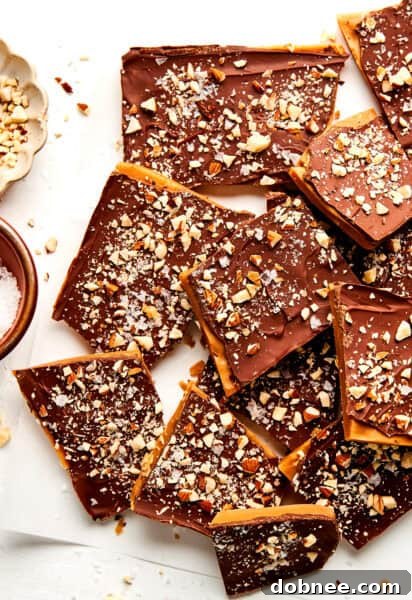
Indulge in the irresistible pleasure of homemade toffee with this easy-to-follow recipe. Featuring a rich, buttery base that cooks to a perfectly crisp, non-sticky hard-crack consistency, it’s then generously topped with a velvety layer of melted semisweet chocolate. A sprinkle of finely chopped nuts (optional, but highly recommended) and a delicate finish of flaky sea salt add layers of texture and a harmonious balance of sweet and savory flavors. This is the ultimate toffee that promises a satisfying snap every time.
Ingredients
Scale
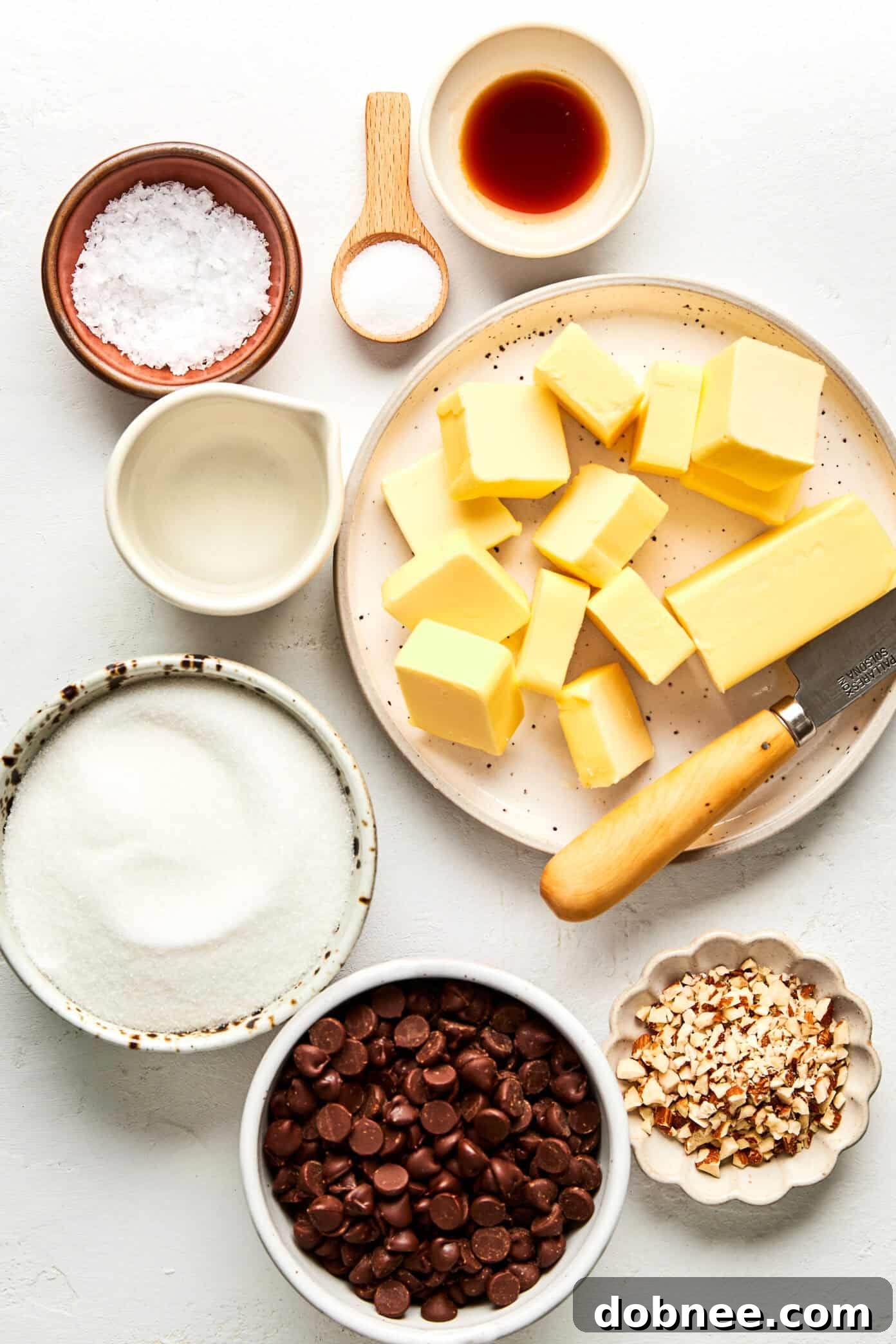
- 1 cup (226g) unsalted butter, preferably standard American, cut into even pieces for uniform melting
- 1 cup (200g) granulated sugar, forming the sweet foundation of our toffee
- 1/4 cup water, to help dissolve the sugar and prevent early crystallization
- 1 teaspoon fine sea salt, for a subtle balance against the sweetness
- 1 teaspoon pure vanilla extract, added at the very end for aromatic depth
- 1 cup good quality semisweet chocolate chips, for the luscious topping
- 2 tablespoons finely-chopped almonds or walnuts, for a delightful crunch and optional topping
- flaky sea salt, for a final flourish and enhanced flavor (optional, but highly recommended)
Instructions
- Prepare Your Baking Pan. Begin by thoroughly lining a 9×9-inch baking pan with parchment paper. Make sure to leave a slight overhang on at least two opposite sides; this ingenious trick will make it significantly easier to lift the hardened toffee out of the pan later on, preventing any sticking or breakage.
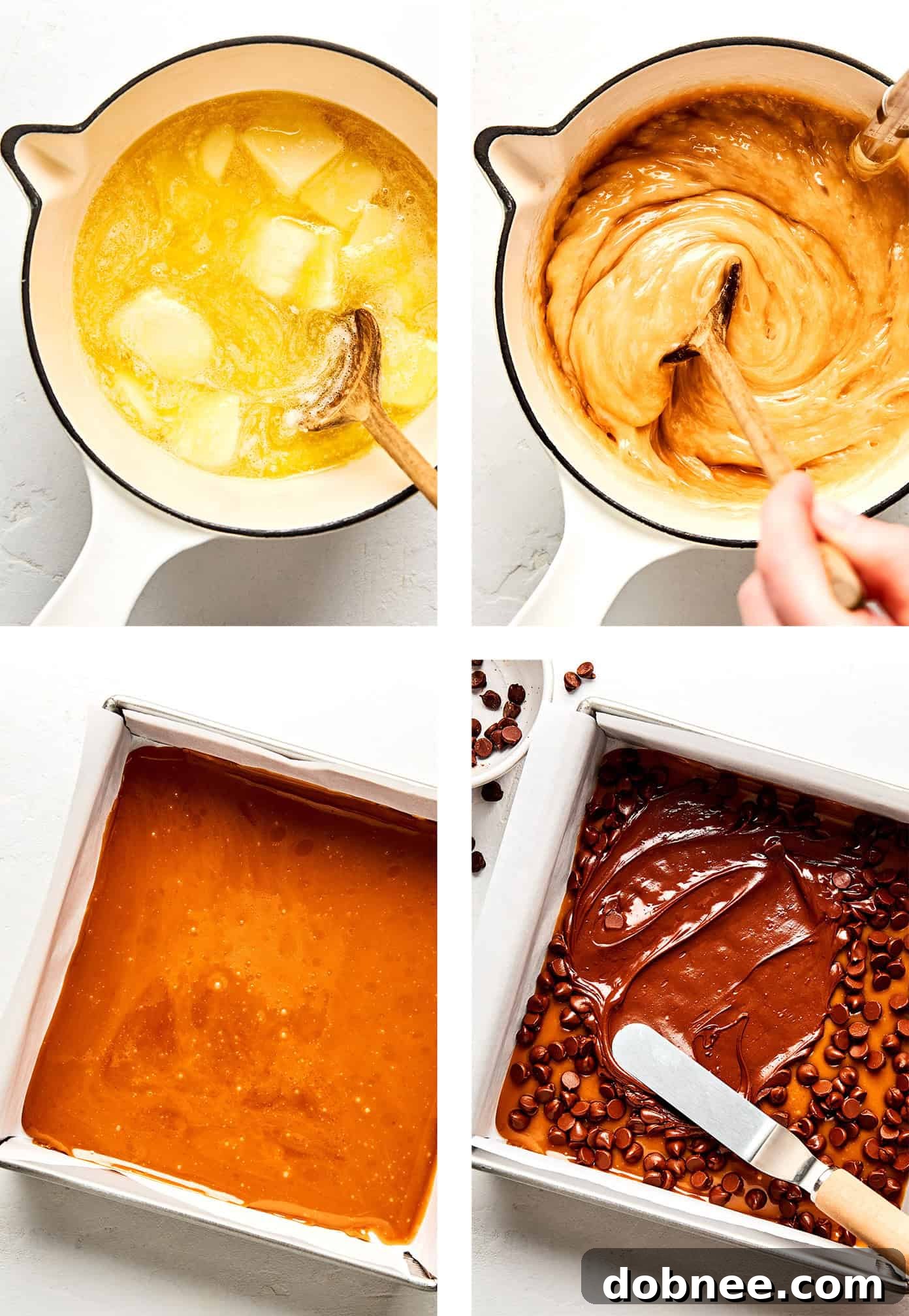
- Melt the Toffee Base Gently. In a heavy-bottomed medium saucepan (this is crucial for even heating), combine the butter pieces, granulated sugar, water, and fine sea salt. Place the saucepan over a low heat setting. Stir the mixture gently and frequently with a wooden spoon or a heatproof spatula. Continue this patient stirring until all the butter has completely melted and the sugar has fully dissolved, resulting in a smooth, consistent mixture. Avoid increasing the heat too quickly at this stage.
- Prevent Early Crystallization. Before the mixture even begins to boil, take a clean pastry brush and dip it into warm water. Carefully brush down any sugar crystals that may have splashed or clung to the inner sides of the pan, just above the liquid line. Dissolving these rogue crystals is vital; they can act as “seed” crystals, potentially causing your entire batch of toffee to crystallize and become grainy instead of smooth and brittle.
- Bring to a Gentle Boil. Once the butter is melted and sugar is dissolved, increase the heat to medium. Continue to stir the mixture gently but consistently as it slowly comes to a steady, rolling boil. Patience is key here; resist the urge to crank up the heat significantly, as this can lead to scorching the sugar or uneven cooking, compromising the final texture and flavor of your toffee.
- Cook to the Hard-Crack Stage. Carefully clip a candy thermometer to the side of your saucepan, ensuring that the tip of the thermometer does not touch the bottom of the pan (this can give an inaccurate reading). Continue to cook the mixture, stirring only occasionally, as it gradually thickens and deepens in color to a rich, golden amber. Monitor the thermometer closely until it reaches precisely 305°F (151°C). This is the “hard-crack” stage, essential for brittle toffee, and typically takes about 10–15 minutes from the boil. Do not remove the pan before this temperature is reached.
- Add Vanilla and Pour Immediately. The moment the thermometer hits 305°F, immediately and carefully remove the saucepan from the heat. Quickly stir in the vanilla extract; the mixture will bubble up vigorously, which is normal. Without delay, pour the extremely hot toffee into your previously prepared parchment-lined baking pan. Working swiftly, gently tilt the pan or use a spatula to spread the hot toffee into an even, thin layer across the bottom.
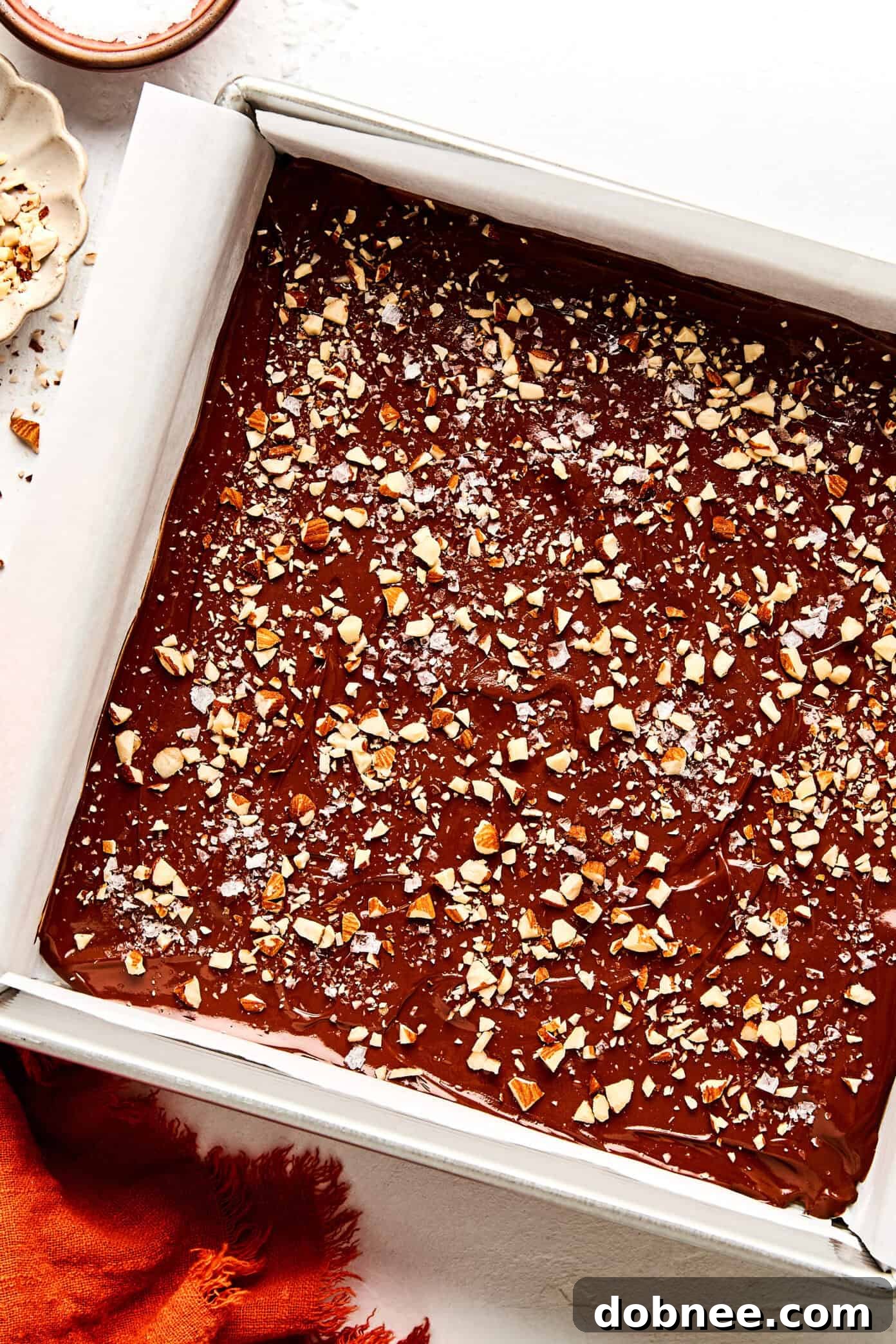
- Top with Melting Chocolate. Allow the hot toffee to sit undisturbed for about 5 minutes. Then, evenly sprinkle the semisweet chocolate chips over the warm surface of the toffee. Loosely cover the pan with a piece of aluminum foil or an inverted baking sheet. Let it sit for another 5 minutes; this helps trap the heat and allows the chocolate chips to melt into a smooth, pliable state. After 5 minutes, remove the cover and use a spatula or an offset knife to gently spread the melted chocolate into a perfectly smooth, even layer over the entire surface of the toffee.
- Finish and Cool to Perfection. If desired, immediately sprinkle the finely chopped almonds or walnuts and a pinch of flaky sea salt over the still-soft chocolate layer. This adds extra texture and a beautiful contrasting flavor. Allow the toffee to cool completely at room temperature until the chocolate layer is firm and the toffee base is fully set and brittle. For a slightly quicker set, you may refrigerate it briefly, but letting it cool naturally at room temperature often yields the best, crispest snap. Once completely firm, use the parchment overhang to lift the entire sheet of toffee from the pan. Break it into satisfyingly snappy pieces, and serve your exquisite homemade treat! Store in an airtight container at room temperature.
Essential Equipment
Candy Thermometer
Buy Now →
9×9″ Baking Pan
Buy Now →
Parchment Paper
Buy Now →