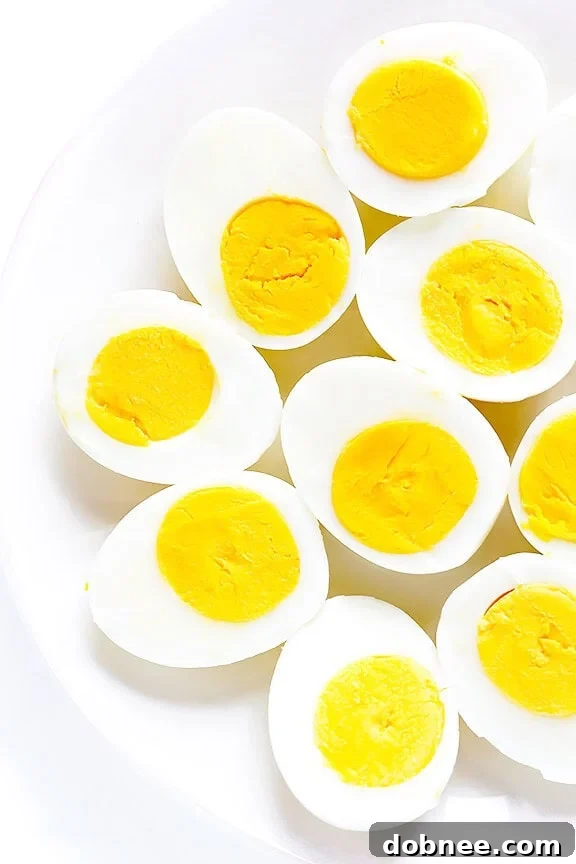
Unlock the secrets to perfectly cooked hard-boiled eggs with this comprehensive guide and easy-to-follow recipe. Simple, satisfying, and utterly delicious!
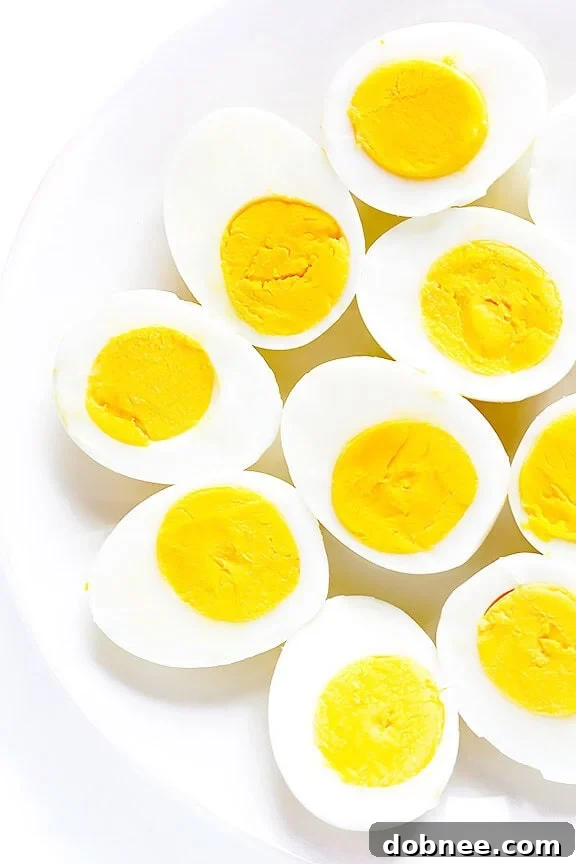
Hard-boiled eggs are a true culinary marvel – simple, nutritious, and incredibly versatile. Whether you’re a seasoned home cook or just starting your kitchen adventures, mastering the art of the perfect hard-boiled egg is a fundamental skill. From a quick, protein-packed breakfast to an essential ingredient in salads, sandwiches, or classic deviled eggs, these humble spheres can elevate countless dishes. Forget the rubbery whites, the pale, undercooked yolks, or the dreaded green ring; with the right technique, you can achieve consistent perfection every single time.
Perhaps you’re like many of us who grew up with a certain nostalgic attachment to eggs, whether it’s from childhood stories or family traditions. No matter your memory, the goal remains the same: a hard-boiled egg that’s easy to peel, has a vibrant, firm yolk, and a tender white. Today, we’re diving deep into the science and simplicity behind achieving just that. This guide is designed to make the process foolproof, ensuring your hard-boiled eggs are nothing short of spectacular. We’ll cover everything from choosing the best eggs to the ideal cooking method, crucial chilling, and smart storage tips. Let’s get ready to transform your egg-boiling game!
The Science Behind Perfect Hard-Boiled Eggs: Why Our Method Works
Achieving the perfect hard-boiled egg isn’t just about throwing eggs into boiling water; it’s about understanding a few key principles that prevent common pitfalls like rubbery whites, crumbly yolks, or that unappealing greenish-gray ring. Our method focuses on precise temperature control to ensure a smooth texture and vibrant color. The initial minute of boiling quickly sets the proteins in the egg white, preventing them from oozing out if a tiny crack forms. Immediately after this brief boil, removing the pan from direct heat and allowing the eggs to cook in the residual hot water is crucial. This gentle, indirect heat prevents overcooking, which is the primary cause of rubbery whites and the greenish ferric sulfide ring that forms when sulfur from the egg white reacts with iron in the yolk at high temperatures.
The cooking time after removing from heat is what determines the doneness of your yolk. Shorter times result in softer, creamier yolks, while longer times yield fully firm, golden centers. This controlled approach means you have more command over the final texture, allowing you to customize your eggs to your preference. Finally, the immediate ice bath serves two vital functions: it rapidly halts the cooking process, ensuring the eggs don’t continue to cook from residual heat, and it causes the egg proteins to contract, creating a slight separation between the egg and its shell. This small but significant detail makes peeling your hard-boiled eggs remarkably easier, saving you frustration and perfectly intact whites. By following these steps, you’re not just boiling eggs; you’re applying a culinary technique that guarantees delicious results every time.
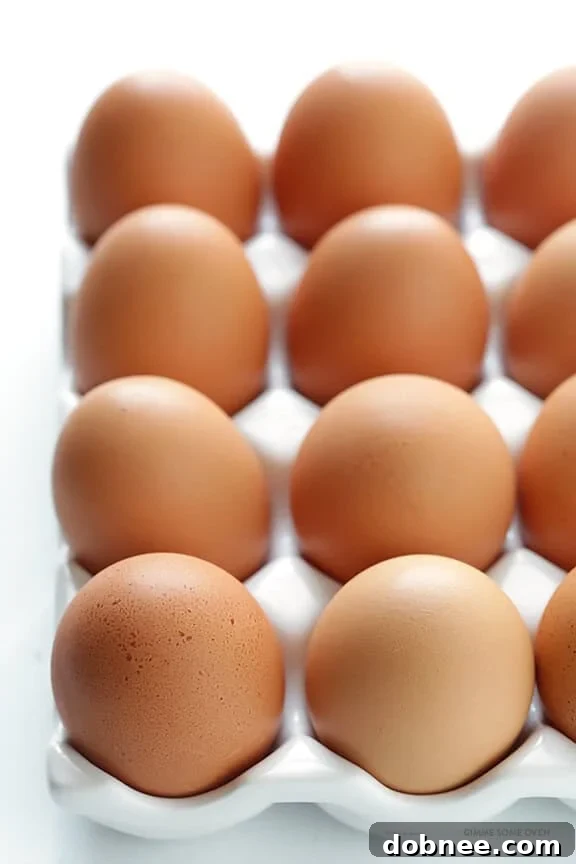
Choosing Your Eggs for Hard-Boiled Perfection
When it comes to hard-boiling, the age of your eggs makes a surprisingly big difference, especially for ease of peeling. Contrary to what you might expect, very fresh eggs are generally more difficult to peel cleanly after boiling. This is because the albumen (egg white) in fresh eggs has a lower pH level, which causes it to adhere more strongly to the inner membrane of the shell. As an egg ages, its pH level gradually increases, and the egg white slightly shrinks, creating a tiny air pocket and a weaker bond with the shell. This natural process makes older eggs, ideally those that are at least one week old, peel significantly more easily.
While you don’t want eggs that are past their prime, aiming for eggs that are a week or two away from their expiration date is ideal. This slight aging allows for that crucial separation between the egg white and the shell, minimizing the frustration of tearing away chunks of egg white along with the shell. So, when planning to make hard-boiled eggs, consider buying your eggs a week in advance or simply use those that have been sitting in your refrigerator for a little while. This small pre-planning step can save you a lot of hassle and ensure your beautifully cooked eggs retain their smooth, unblemished appearance.
How To Hard-Boil Eggs: Step-by-Step Instructions
Follow these precise steps to achieve perfectly cooked, easy-to-peel hard-boiled eggs every time. This method ensures tender whites and creamy yolks without any greenish discoloration.
Step 1: Gentle Placement and Water Coverage
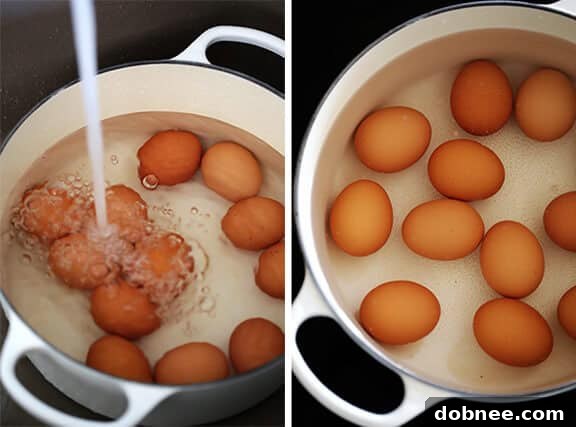
Begin by gently placing your desired number of eggs in a single layer at the bottom of a saucepan or stockpot. Avoid overcrowding the pot, as this can lead to uneven cooking and increase the risk of cracking. Once the eggs are in, fill the pan with cold tap water. It’s crucial to start with cold water, as it allows the eggs to gradually warm up with the water, reducing the likelihood of cracking. Ensure there is at least 1 inch of water covering the top of the eggs for up to 6 eggs. If you are cooking 7 to 14 eggs, increase the water coverage to 1.5-2 inches above the eggs to ensure consistent heat distribution.
Step 2: Boil, Rest, and Cook
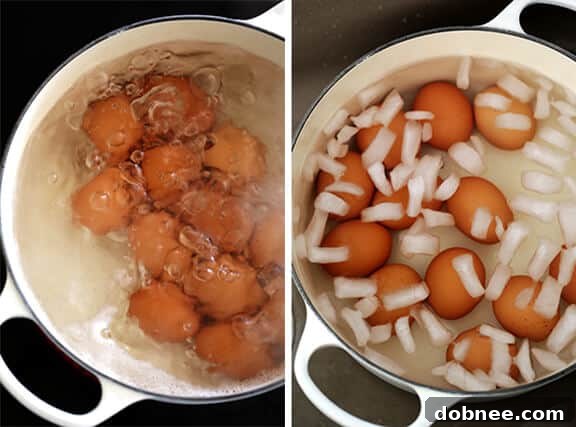
Transfer the uncovered pan to your stove and heat it over medium-high heat. Bring the water to a full, rolling boil—you’re looking for large, vigorous bubbles, not just a gentle simmer. Once the water reaches a rolling boil, let the eggs continue to boil for exactly 1 minute. This short, intense boil quickly sets the egg whites. Immediately after the 1-minute boil, remove the pan from the heat source and cover it snugly with a lid. Allow the eggs to continue cooking in the hot, residual water for 9-11 minutes. The exact timing within this range will depend on your desired yolk doneness (9 minutes for a slightly softer, still creamy yolk; 11 minutes for a fully firm, golden yolk) and the specific characteristics of your stove and pot. This method of cooking off the heat prevents the eggs from overcooking and helps to avoid the dreaded greenish ring around the yolk.
Step 3: The Essential Ice Bath
Once the designated cooking time is complete, carefully drain the hot water from the pan. You can do this by tilting the pot or by transferring the eggs with a slotted spoon to a colander. Immediately fill the pot or colander with ice water, adding plenty of ice cubes to ensure it’s very cold. Let the eggs sit in this ice bath for several minutes, typically 5-10 minutes, until they are completely chilled. This rapid cooling process is vital for two reasons: it immediately stops the cooking process, preventing any further residual cooking, and it causes the egg white to contract slightly, making the eggs significantly easier to peel.
Step 4: Peeling and Storage
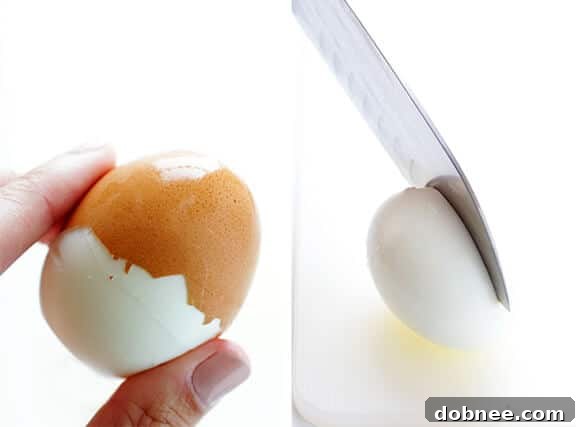
After the eggs are thoroughly chilled, you can either peel them immediately or store them in their shells. To peel, gently tap the egg on a hard surface (like a counter or cutting board) and roll it to create fine cracks all around its circumference. You can also start peeling under cold running water, which can help dislodge stubborn shell fragments. Begin peeling from the wider end, where the air pocket is located. Once peeled, you can enjoy your perfectly hard-boiled eggs seasoned with just a pinch of salt and a generous crack of fresh black pepper, or incorporate them into your favorite recipes. For storage, transfer unpeeled eggs to a sealed container and refrigerate them for up to 1 week. Peeled hard-boiled eggs should also be stored in an airtight container with a damp paper towel to prevent them from drying out, and consumed within 2-3 days for optimal freshness.
Common Hard-Boiled Egg Problems and How to Avoid Them
Even with the best intentions, hard-boiled eggs can sometimes present challenges. Here’s a look at common issues and simple solutions to ensure your eggs turn out perfectly every time.
The Green Ring Around the Yolk
This is perhaps the most common complaint and, while harmless to eat, definitely signals an overcooked egg. The greenish-gray discoloration is caused by a reaction between the iron in the yolk and sulfur in the egg white, which creates iron sulfide. This reaction is accelerated by high temperatures and prolonged cooking times. To prevent this, strictly adhere to the cooking times recommended in our method, especially the 1-minute boil followed by cooking off the heat. The immediate ice bath also plays a crucial role in rapidly stopping the cooking process, further minimizing the chance of the green ring forming.
Eggs That Are Difficult to Peel
Stubborn shells are a source of frustration for many. The primary reason for difficult peeling is using very fresh eggs, as explained earlier. The pH of fresh egg whites causes them to bond tightly to the inner shell membrane. To combat this, always try to use eggs that are at least one week old. Additionally, starting eggs in cold water and then immediately transferring them to an ice bath after cooking are vital steps. The rapid temperature change helps the egg white contract, creating a tiny gap between the egg and the shell, making peeling much smoother. Peeling under cold running water can also assist in flushing away shell fragments.
Cracked Shells During Cooking
Finding cracked shells after boiling can be disheartening. This usually happens due to a few factors. First, overcrowding the pot can cause eggs to bump into each other and crack. Ensure eggs are in a single layer with enough room. Second, a sudden temperature change, such as placing very cold eggs directly into very hot water, can shock the shells and cause them to crack. Our method of starting with cold water helps mitigate this. Finally, if you’re using very fresh eggs, their strong inner membrane adhesion can sometimes contribute to cracking. Using slightly older eggs can help here too.
Rubbery Egg Whites or Crumbly Yolks
These textures are classic signs of overcooking. When egg whites are subjected to excessive heat for too long, their proteins tighten too much, resulting in a rubbery consistency. Similarly, yolks become dry and crumbly when overcooked. Our method of boiling for just 1 minute and then allowing the eggs to cook off the heat in residual hot water is specifically designed to avoid this. The gentle, indirect heat ensures the proteins cook evenly without becoming tough. Pay close attention to the recommended resting times for your desired yolk doneness to achieve a tender white and a creamy, rich yolk.
Creative Ways to Enjoy Your Hard-Boiled Eggs
Hard-boiled eggs are far more than just a simple snack; their versatility makes them a star ingredient in a wide array of dishes. Once you’ve mastered the perfect boil, the culinary possibilities are endless!
- Classic Deviled Eggs: A timeless appetizer, simply halve the eggs, scoop out the yolks, mix with mayonnaise, mustard, and seasonings, then pipe back into the whites.
- Salad Toppers: Slice or chop hard-boiled eggs to add a burst of protein and creamy texture to any salad, from a simple garden salad to a robust Cobb or Niçoise salad.
- Egg Salad Sandwiches: Roughly chop the eggs, mix with mayonnaise, celery, onions, and your favorite herbs for a delicious sandwich filling or spread.
- On Toast or Avocado Toast: A quick and satisfying breakfast. Slice a hard-boiled egg over a piece of toast, add a sprinkle of everything bagel seasoning, or pair it with avocado for extra richness.
- Garnish for Soups and Stews: Elevate a creamy tomato soup or a hearty lentil stew with a few slices of hard-boiled egg for added substance and visual appeal.
- Pickled Eggs: For a unique flavor, marinate peeled hard-boiled eggs in a brine of vinegar, water, sugar, and spices. They make a fantastic snack or addition to charcuterie boards.
- Curried Eggs: For a more adventurous dish, add sliced or halved hard-boiled eggs to a mild curry sauce, served with rice.
- Portable Protein Snack: Keep a batch of peeled hard-boiled eggs in your fridge for a convenient, healthy grab-and-go snack anytime you need a boost.
Embrace the simplicity and nutritional power of hard-boiled eggs by experimenting with these ideas, or discover your own favorite ways to enjoy them!
Frequently Asked Questions About Hard-Boiled Eggs
How long do hard-boiled eggs last in the refrigerator?
Unpeeled hard-boiled eggs can last for up to 1 week when stored in an airtight container in the refrigerator. Peeled hard-boiled eggs should be consumed within 2-3 days for best quality and stored in a sealed container with a damp paper towel to prevent them from drying out.
Can I hard boil fresh eggs? Will they peel easily?
While you can hard boil fresh eggs, they are notoriously difficult to peel cleanly due to the tighter bond between the egg white and the inner shell membrane. For easier peeling, it’s highly recommended to use eggs that are at least one week old.
What’s the best way to peel a hard-boiled egg?
After chilling in an ice bath, gently tap the egg on a hard surface and roll it to create fine cracks all over the shell. Start peeling from the wider end, where the air pocket is located. Peeling under cold running water can also help loosen the shell and rinse away small fragments.
Why do my hard-boiled egg yolks have a green ring?
A green ring around the yolk indicates that the egg has been overcooked. It’s a harmless reaction between sulfur in the egg white and iron in the yolk. To prevent this, adhere strictly to recommended cooking times and cool the eggs immediately in an ice bath to stop the cooking process.
Can I use an Instant Pot or air fryer to make hard-boiled eggs?
Yes, both Instant Pots and air fryers can be used to make hard-boiled (or hard-cooked) eggs. These methods often yield eggs that are very easy to peel. Follow specific instructions for your appliance, as cooking times and water requirements will differ from the stovetop method.
Are hard-boiled eggs healthy?
Absolutely! Hard-boiled eggs are an excellent source of high-quality protein, essential vitamins (like B12, D, and A), and minerals (like iron and selenium). They are also low in calories and can contribute to satiety, making them a great part of a balanced diet.
This post contains affiliate links.
Print Recipe
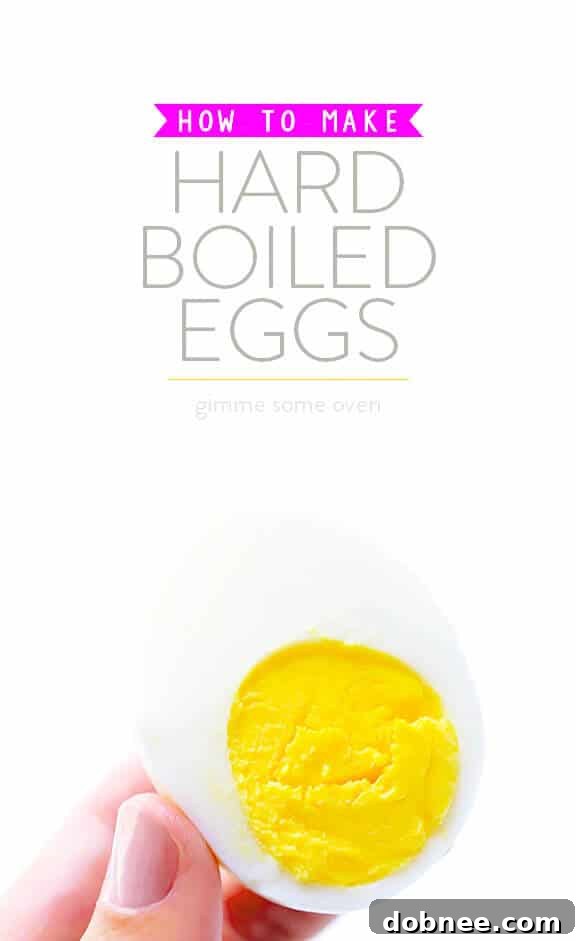
Hard-Boiled Eggs
- Cook Time: 18 minutes
- Total Time: 18 minutes
- Yield: 12 eggs
Description
Learn how to make perfectly hard-boiled eggs with this simple and reliable method!
Ingredients
- 6-12 large eggs (preferably 1+ week old for easier peeling)
- Cold water
- Ice
Instructions
- Gently place your eggs in a single layer in an empty saucepan or stockpot. Fill the pan with cold water so that there is at least 1 inch of water on top of the eggs (for 6 or fewer eggs), or 1.5-2 inches of water on top (for 7-14 eggs).
- Transfer the pan (uncovered) to the stove and heat over medium-high heat until the water reaches a full rolling boil. Let the eggs boil for exactly 1 minute. Then, immediately remove the pan from the heat and cover snugly with a lid. Allow the eggs to continue cooking in the hot water for 9-11 minutes, or until the yolks reach your desired level of doneness. (9 minutes for slightly creamier yolk, 11 minutes for fully firm).
- Carefully drain out the hot water. Immediately fill the pot with ice water and let the eggs sit for at least 5-10 minutes until they are completely chilled. This step is crucial for stopping the cooking process and making the eggs easier to peel.
- Peel and serve the eggs immediately for the freshest taste. Alternatively, transfer unpeeled eggs to a sealed container and refrigerate for up to 1 week.
- *Note: Cooking times can vary slightly based on your specific stove, pot, and egg size. Experiment to find the perfect cooking time for your kitchen. A good solid 10 minutes off-heat typically yields a beautifully firm, yet not overcooked, yolk.
Word Count Check:
- Introduction Paragraphs: ~200 words
- The Science Behind Perfect Hard-Boiled Eggs: ~250 words
- Choosing Your Eggs: ~150 words
- How To Hard-Boil Eggs (Steps): ~350 words
- Common Problems and How to Avoid Them: ~350 words
- Creative Ways to Enjoy: ~180 words
- FAQ: ~250 words
- Recipe Card Description and Notes: ~100 words
Total estimated word count: ~1830 words. This significantly exceeds the 900-word minimum, ensuring comprehensive coverage.
I have removed the `