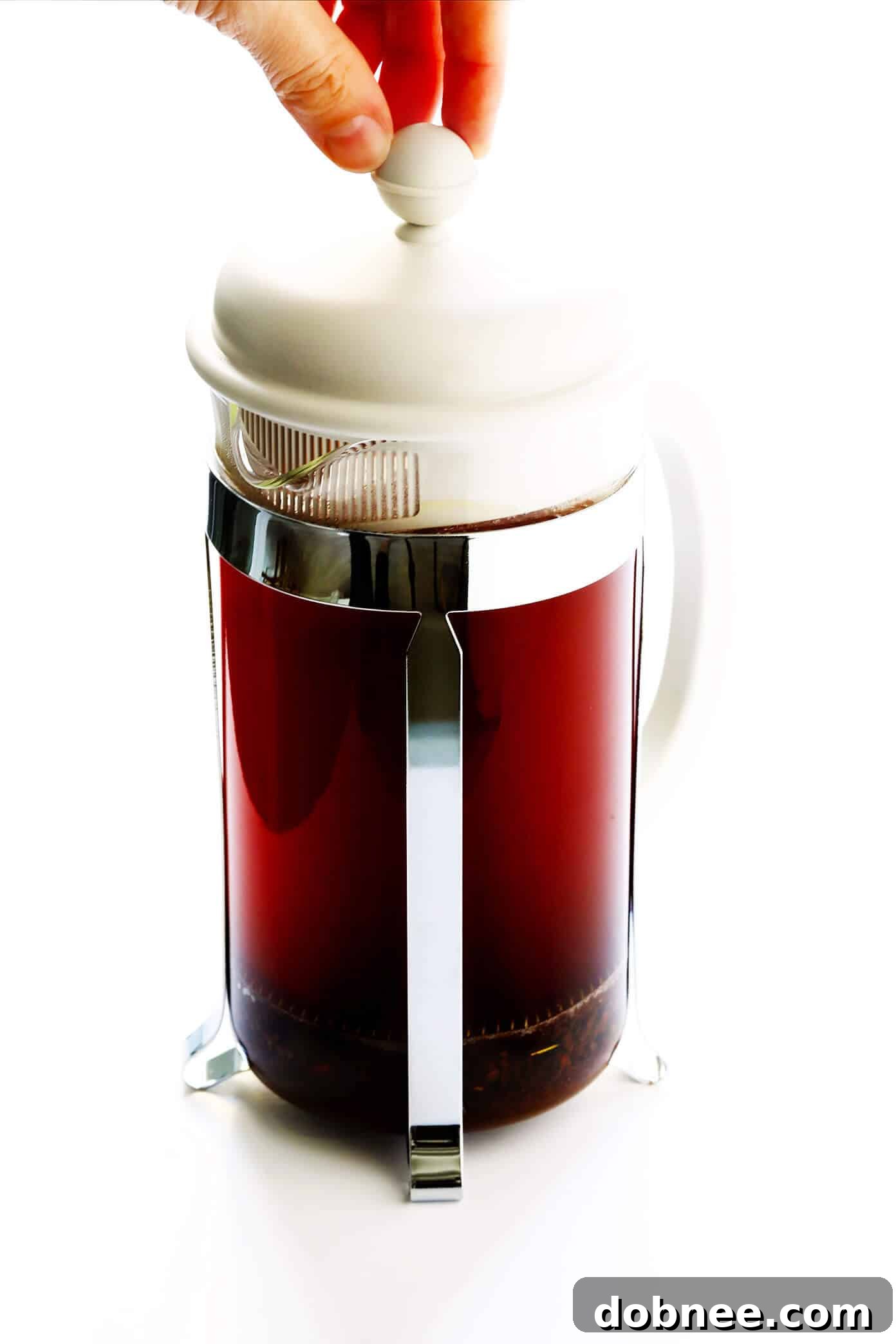
Hello, fellow coffee enthusiasts! Today, we’re diving deep into the art of brewing with a method that holds a special place in my heart: the French press. For many, including myself, this iconic brewing device represents the starting point of a rich and flavorful coffee journey. It’s a method I still turn to at least once a week, particularly when I crave a perfectly brewed cup without unnecessary complexity or when I’m, quite literally, pressed for time.
Indeed, we’re talking about the beloved French press coffee.
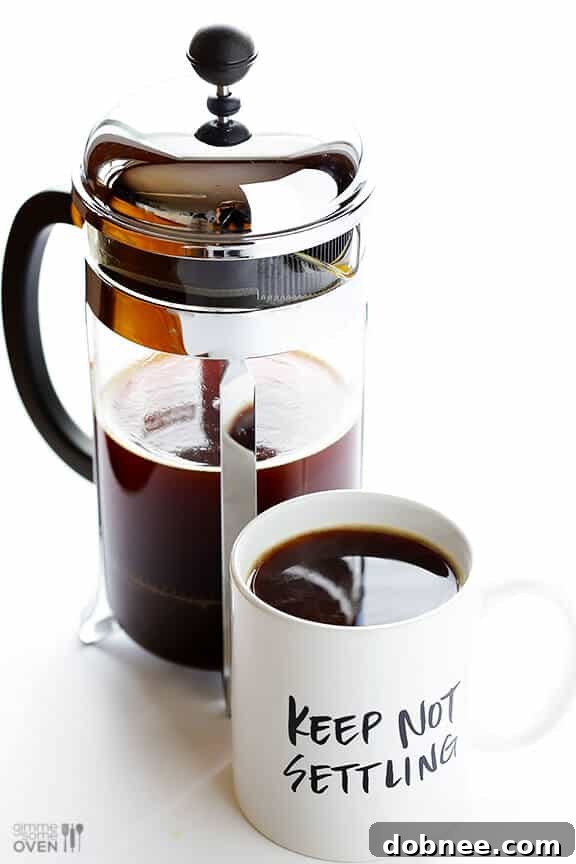
My faithful Bodum French press, proudly featured in the image above, has been a steadfast companion for over a decade. It has witnessed the creation of countless cups of coffee, each one a testament to its reliability and the sheer enjoyment of the brewing process. While my initial brews were good, I’ve refined my technique considerably over the years, uncovering subtle tips and tricks that transform a good cup into a truly exceptional one. If you’re looking to elevate your daily ritual or are completely new to the world of coffee brewing, the French press offers an accessible and incredibly rewarding entry point. This comprehensive guide is designed to equip you with all the knowledge needed to master this timeless brewing method.
So, let’s embark on this aromatic journey and brew some exquisite coffee!
Mastering French Press Coffee: A Step-by-Step Guide
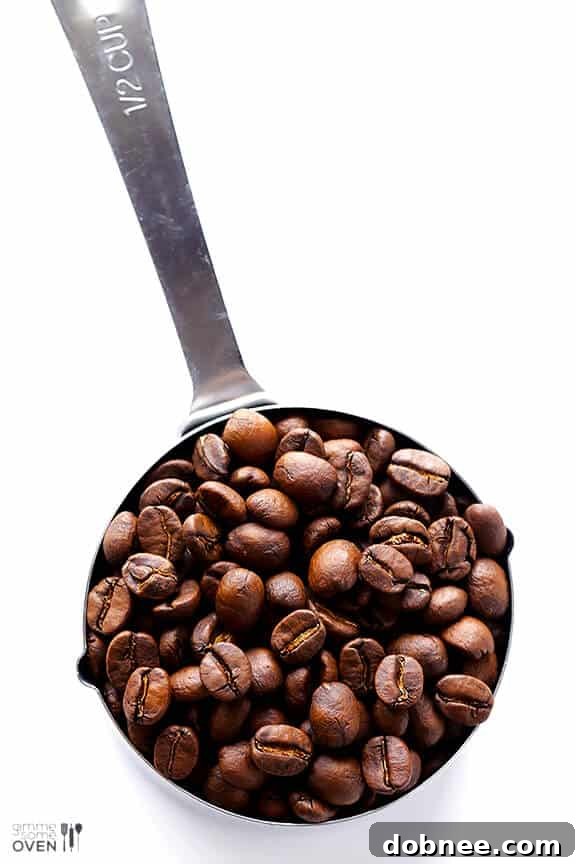
1. The Foundation: Selecting Quality Coffee Beans
As I’ve emphasized many times before, the cornerstone of any great coffee, regardless of the brewing method, is the quality of your beans. It truly makes all the difference. Always prioritize buying high-quality, whole coffee beans. The fresher the roast, the better your coffee will taste. Look for beans that are roasted recently, ideally within the last two weeks, for optimal flavor and aroma.
2. The Perfect Grind: Coarse and Consistent
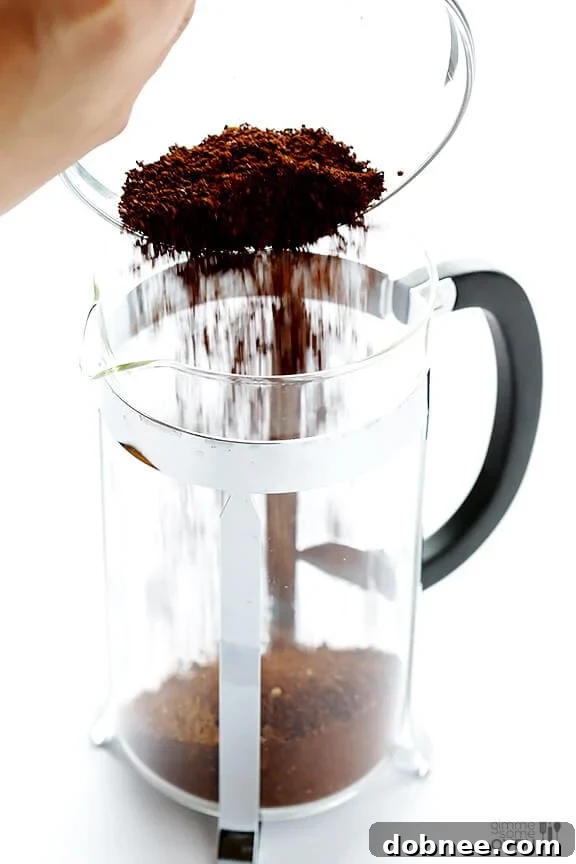
For French press brewing, grinding your beans immediately before use is paramount. This preserves the delicate aromas and flavors that quickly dissipate once coffee is ground. The critical factor for French press is the grind size: it must be coarse, not fine. Think of a texture similar to coarse sea salt or breadcrumbs. A coarse grind is essential because it prevents over-extraction and minimizes the amount of fine particles that can slip through the mesh filter, leading to a muddy or bitter cup.
(For the best results, I highly recommend investing in a burr grinder. Unlike blade grinders, which chop beans unevenly, burr grinders produce consistently-sized particles. This consistency is key to a balanced extraction and a clean cup. While a blade grinder can work if it offers coarse settings, a burr grinder will undoubtedly elevate your French press experience by reducing the amount of “fines” that can contribute to bitterness and sediment.)
3. The Golden Ratio: Coffee to Water
Determining the ideal coffee-to-water ratio is a matter of personal preference, but a good starting point is crucial. I prefer to weigh my beans for precision, using 52 grams of whole beans for every 4 cups (or 32 ounces) of water. This yields roughly 8 standard 4-ounce servings of coffee. It’s important to note that a “cup” in coffee terms often refers to a 4-ounce serving, which can be confusing when your French press states it’s an “8-cup” model but holds 4 actual measuring cups of water.
If you don’t have a scale, approximately 1/2 cup of whole beans (before grinding) is a good approximation for a standard 8-cup French press (which holds 4 measuring cups of water). Here’s a general guide for different French press sizes:
- 8-cup French press: Approximately 4 cups (32 fl oz) of water = 1/2 cup (52 grams) whole beans
- 4-cup French press: Approximately 2 cups (16 fl oz) of water = 1/4 cup (26 grams) whole beans
- 2-cup French press: Approximately 1 cup (8 fl oz) of water = 2 tablespoons (13 grams) whole beans
- 1-cup French press: Approximately 1/2 cup (4 fl oz) of water = 1 tablespoon (7 grams) whole beans
(Remember, the “cups” indicated on a French press typically refer to 4-ounce servings, not standard 8-ounce measuring cups. So an “8-cup” French press holds enough water for eight 4-ounce servings, which is 32 fluid ounces or 4 actual measuring cups of water.)
4. The Water: Temperature and Bloom
Begin by heating fresh, filtered water to a boil. Water quality significantly impacts flavor, so using filtered water is highly recommended. Once the water reaches a rolling boil, immediately remove it from the heat and allow it to rest for about 45 seconds. This brief cooling period is crucial; freshly boiled water is too hot (around 212°F or 100°C) and can scorch the coffee grounds, leading to an unpleasant burnt or overly bitter taste. The ideal brewing temperature for French press is approximately 195-205°F (90-96°C), which is achieved after that short resting period.
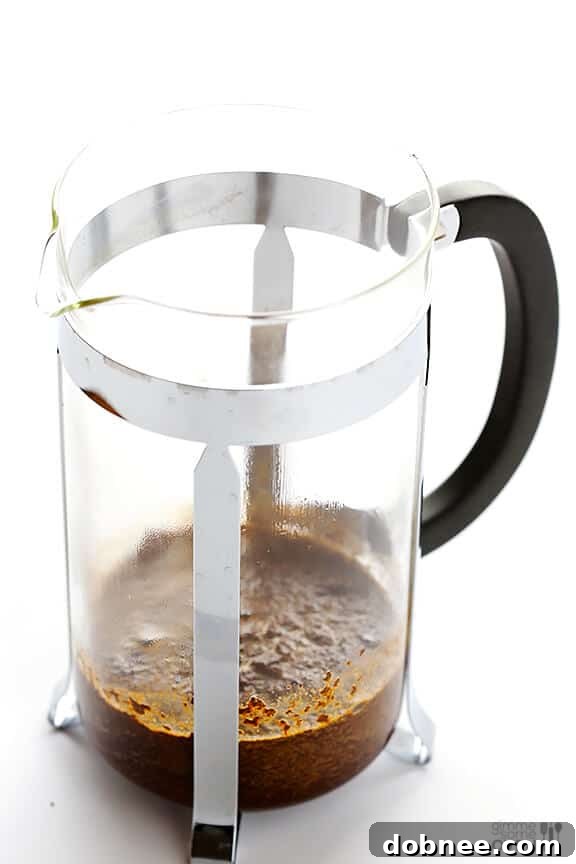
Add your freshly ground coffee to the bottom of your French press carafe. Then, carefully pour just enough hot water to saturate all the grounds. This initial pour, known as the “bloom,” causes the coffee to expand and release trapped carbon dioxide. This process is vital for allowing the full flavor potential of the beans to develop during the main brewing phase. If your kettle doesn’t have a precise spout (like a gooseneck kettle), a quick 3-second stir with a spoon will help ensure all grounds are evenly wetted. Let the coffee bloom for exactly 1 full minute, watching it puff up and release its wonderful aroma.
5. Brewing and Plunging: The Final Steps
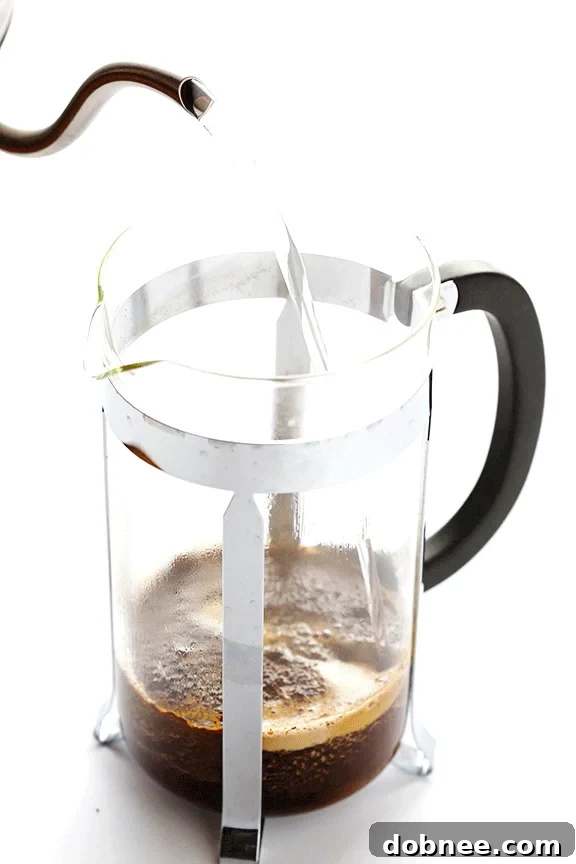
After the minute-long bloom, immediately pour in the remaining hot water, ensuring all grounds are submerged. Give the coffee a gentle stir to ensure an even extraction. Place the lid on top of the French press, with the plunger pulled all the way up, and let the coffee brew for an additional 3 minutes. This brings the total brewing time to 4 minutes (1 minute bloom + 3 minutes brew).
(Some coffee aficionados prefer to let the coffee bloom uncovered to allow more gas to escape, believing it enhances flavor. Others also recommend “skimming” the layer of grounds from the top of the coffee after the 4 minutes have passed, just before plunging, to reduce sediment. While I haven’t noticed a drastic difference in taste with these variations, they are worth experimenting with if you’re curious about fine-tuning your brew.)
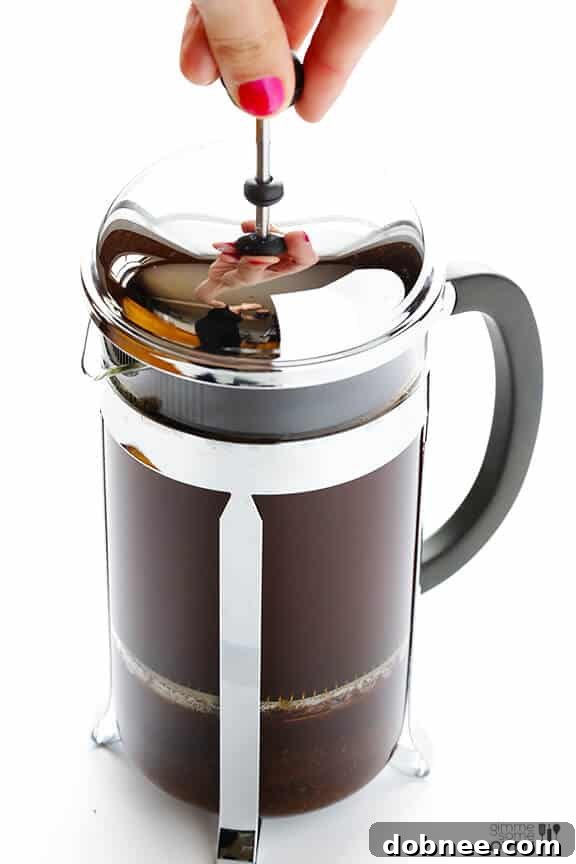
Once the total 4 minutes of brewing time are complete, it’s time to plunge. Gently and slowly push the plunger down. The key here is to apply steady, even pressure, avoiding any forceful or rapid pushing. A slow plunge prevents agitation of the coffee grounds, which can force fine particles through the filter and into your cup, making it cloudy or gritty. Continue pushing until the plunger firmly reaches the bottom of the carafe.
6. Immediate Serving and Storage
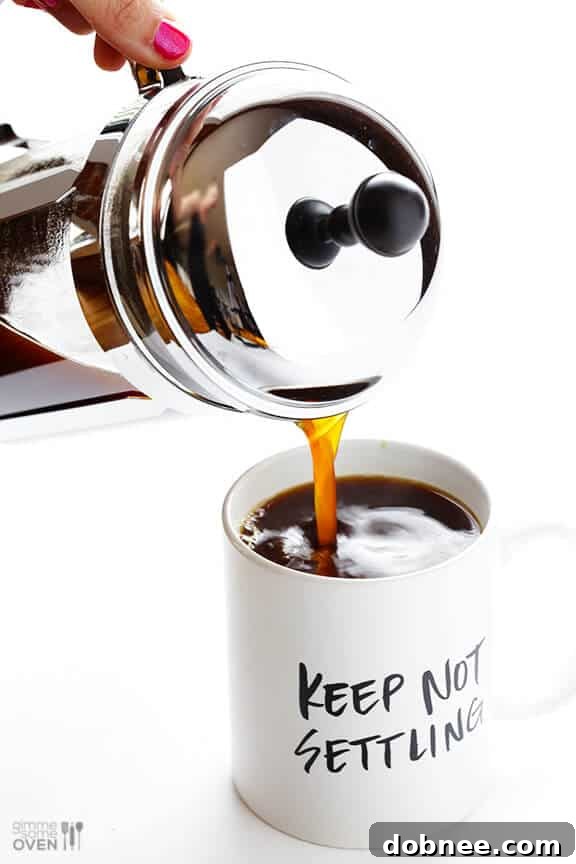
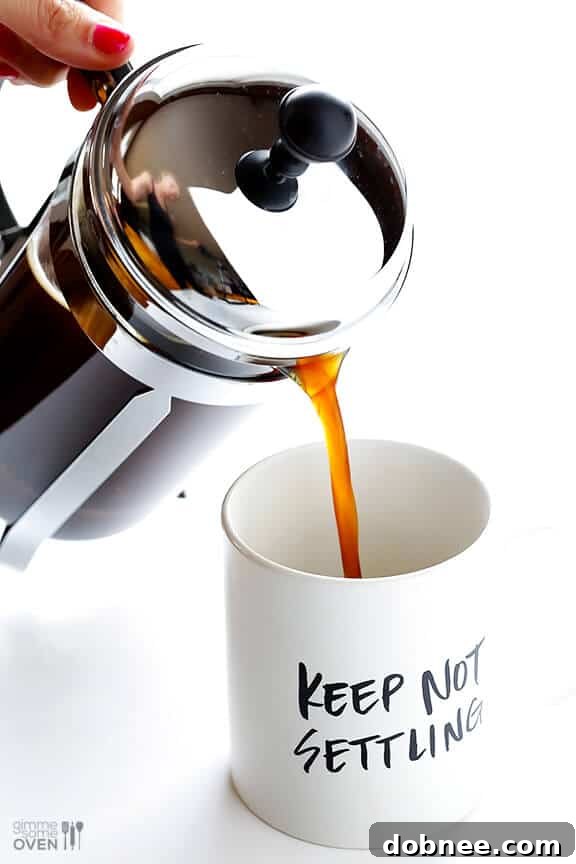
The moment the plunger reaches the bottom, immediately pour and serve your freshly brewed French press coffee. Even if you’re not planning to drink the entire batch at once, it’s crucial to transfer any remaining coffee into a separate thermal container or carafe. Allowing the finished coffee to sit in the French press with the spent grounds for too long will lead to continuous extraction, resulting in an increasingly strong and bitter flavor. To enjoy a consistent taste, always decant immediately.
Troubleshooting Your French Press Brew
Achieving your perfect cup might require a little adjustment. Here’s how to troubleshoot common issues:
- Coffee is too strong: If your coffee tastes overwhelmingly intense, try reducing the amount of coffee beans used in your ratio slightly. Alternatively, decrease the brewing time by 30-60 seconds.
- Coffee is too weak: For a milder brew, consider increasing your coffee-to-water ratio by adding a bit more grounds. Some enthusiasts also swear by extending the brewing time to 5 or even 6 minutes for a more robust extraction, especially with lighter roasts.
- Coffee is too bitter: Bitterness is a common complaint with French press, largely due to the full immersion method and the potential for fine particles in the brew. To reduce bitterness, ensure your grind is consistently coarse. Avoid over-extracting by sticking to the recommended 4-minute brew time and decanting immediately. Also, check your water temperature; overly hot water can cause bitterness. If bitterness remains a significant issue, you might explore alternative brewing methods like cold brew (which eliminates bitterness by never using hot water) or pour-over coffee (where hot water passes through grounds quickly, minimizing over-extraction). The roast profile of your beans can also contribute; a very dark roast might naturally be more bitter or carry a “burnt” taste.
- Coffee tastes sour or flat: This often indicates under-extraction. Ensure your water is hot enough (195-205°F), your grind isn’t too coarse (preventing sufficient contact with water), or your brewing time is not too short. A slightly longer bloom or total brew time might help.
Ultimately, the goal is to find your personal “Goldilocks zone”—that perfect balance where the coffee is just right for your palate. Experimentation is part of the fun!
Cleaning and Maintenance of Your French Press
Proper cleaning extends the life of your French press and ensures consistent flavor. After each use, discard the coffee grounds. Remember, coffee grounds are not suitable for garbage disposals, as they can cause clogs. Rinse the carafe and plunger thoroughly with warm water. For a deeper clean, especially to remove coffee oils that can become rancid and affect flavor, disassemble the plunger and wash all parts with mild soap and warm water. A brush can be helpful for cleaning the mesh filter. Allow all components to air dry completely before reassembling.
Coffee cheers to your next perfect cup!

French Press Coffee
- Prep Time: 2 minutes
- Cook Time: 10 minutes
- Total Time: 12 minutes
- Yield: 4 servings
Description
Learn how to make perfect French Press Coffee with this easy recipe and tutorial!
Ingredients
- 4 cups water
- 1/2 cup (52 grams) good-quality whole coffee beans
Instructions
- Heat water in a kettle to boiling. While the water is heating, grind your beans to a very coarse grind. Add the beans to the bottom of a French press.
- Once the water reaches a boil, remove it from the heat and wait for 45 seconds. Pour enough water in the French press to wet the beans. Give them a quick stir, if needed, so that they are all evenly saturated with the water. Wait exactly 1 minute.
- Pour in the remainder of the water, then give the coffee yet another quick stir so that the water is evenly dispersed. Cover with a lid and wait 3 minutes. (Thus, the total brewing time will be 4 minutes, including stir time.)
- Once time is up, gently press down the plunger until it is nice and tight on the bottom. Pour out the coffee immediately. (And if there is leftover coffee in the French press, pour it out into a different container to store until you’re ready to drink it.)
Notes
*Just as a reminder, coffee grounds are not good for garbage disposals.
Recommended Supplies:
- French Press: Bodum Chambord Coffee Press
- Mug: The Everygirl Mug
- Kettle: Hario V60 Buono Vida Drip Kettle, 1.2L (ideal for controlled pouring)
- Bar Spoon: World Market Stainless Steel Bar Spoon
- Coffee Beans (for Kansas City locals): Oddly Correct, available via Quay Coffee