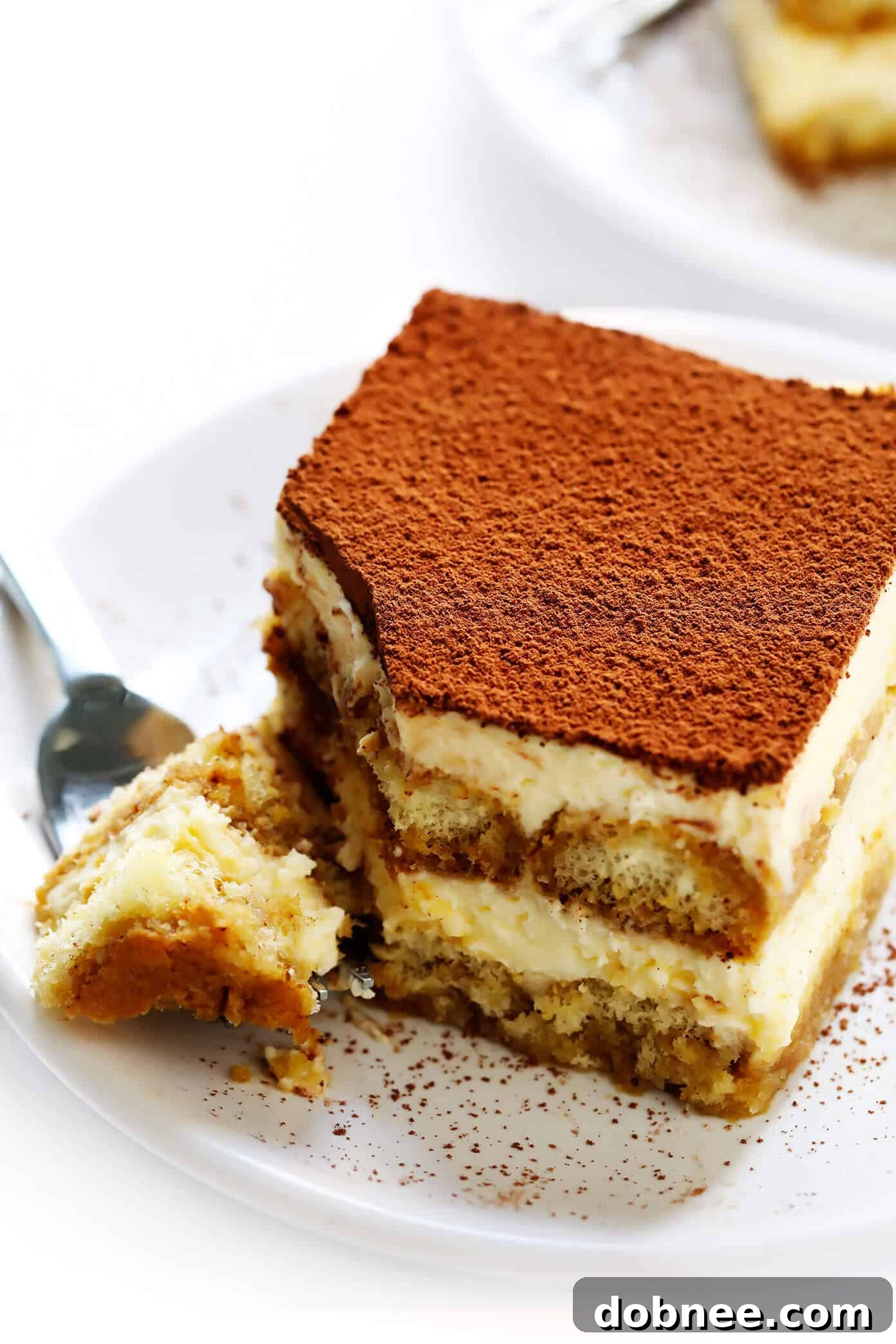
Discover the art of creating a classic Italian tiramisù with this incredibly easy recipe. Featuring a safe, cooked egg filling, this version delivers all the indulgent and delicious flavor you crave, perfect for any occasion.
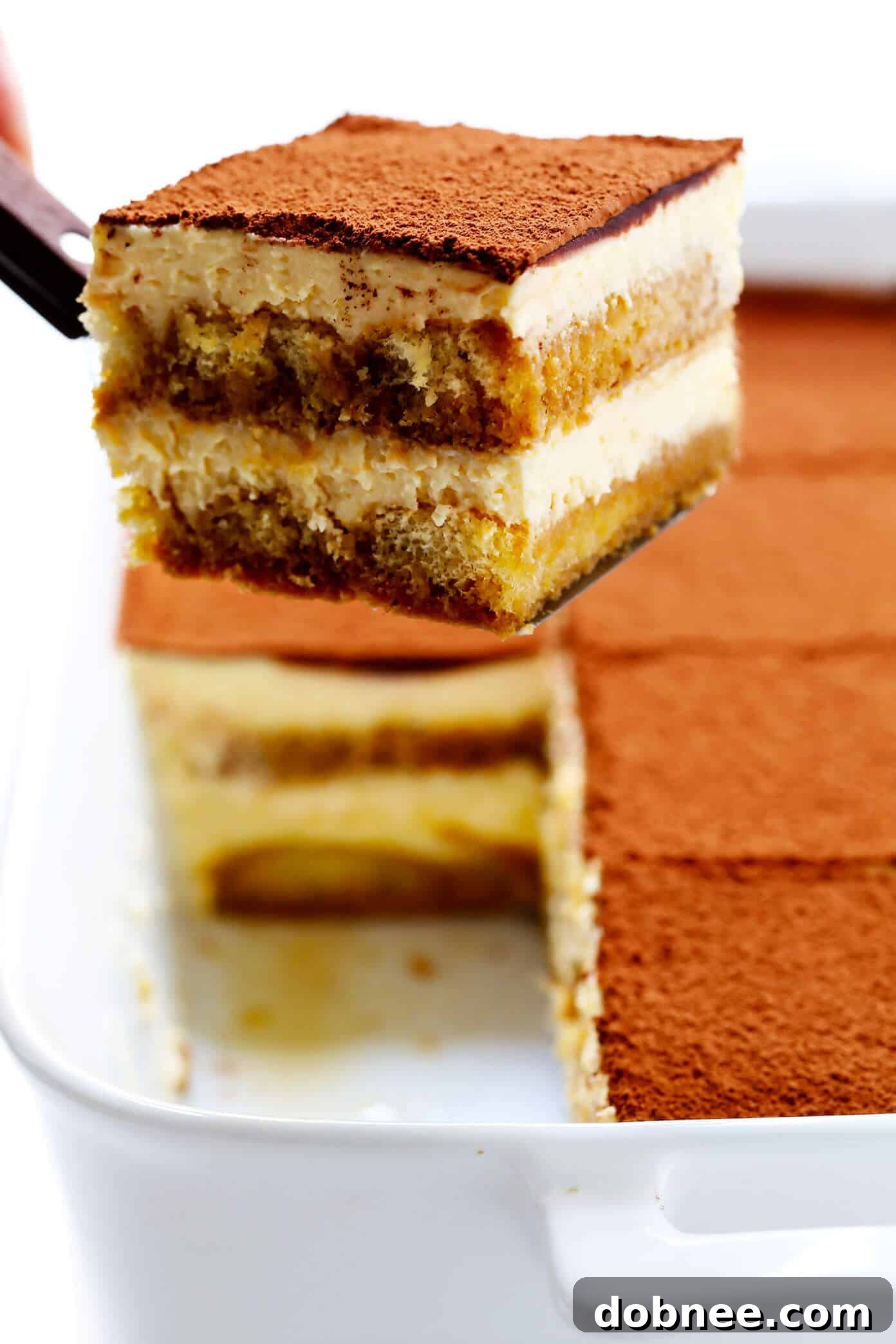
There’s something truly magical about Italian cuisine, isn’t there? From savory pasta dishes to delightful antipasti, the flavors evoke a sense of warmth, tradition, and pure culinary joy. For my husband, Barclay, and frankly, for me too, Italian food holds a very special place in our hearts. We’re both utterly captivated by its rich history and incredible taste. But when it comes to dessert, one dish consistently stands out as his absolute favorite: tiramisù.
I often find myself laughing because no matter how much we’ve indulged in our favorite Italian restaurant – after feasting on generous servings of antipasti, crisp salads, and abundant pasta – Barclay can never resist ordering a slice of tiramisù. By that point, I’m typically completely full, barely able to contemplate another bite, let alone additional carbohydrates. Yet, with a twinkle in his eye, my sweets-loving husband always insists, “you can always make room” for tiramisù. And somehow, he always does. It’s a testament to the irresistible charm of this iconic dessert.
The past few years, with all their unexpected twists and turns, meant missing out on our cherished Italian restaurant visits and even a planned trip to Italy. Feeling a longing for those authentic flavors, I decided to embark on a culinary adventure at home. My mission: to surprise Barclay by mastering the art of homemade tiramisù. To my delight, I discovered that creating this masterpiece in your own kitchen is far simpler than I had ever imagined. Beyond the sheer satisfaction of making it yourself, homemade tiramisù offers wonderful benefits. You gain the freedom to customize it to your preference, whether it’s using decaffeinated espresso for an evening treat, choosing your favorite liqueur (or none at all), or opting for a safer cooked egg method instead of raw eggs. And, of course, there’s the unparalleled pleasure of enjoying any delicious leftovers for breakfast the next day – a practice I highly endorse!
So, if you’re searching for an elegant yet easy-to-prepare Italian dessert that’s guaranteed to impress any crowd, look no further. The next time you’re at the store, simply pick up a package of ladyfingers, and let’s delve into the delightful world of tiramisù!
Mastering Tiramisù: A Sweet Journey
Tiramisù, translating to “pick me up” or “cheer me up,” perfectly embodies the delightful experience it offers. This beloved Italian dessert is a harmonious blend of textures and flavors, combining coffee-soaked ladyfingers with a rich, creamy mascarpone filling and a dusting of cocoa powder. While many assume its origins trace back centuries, tiramisù is a relatively modern creation, believed to have emerged in Italy during the 1960s or 1970s. Its widespread popularity is a testament to its universally appealing taste and luxurious feel.
This recipe focuses on an approachable method that ensures both safety and incredible flavor. By using a cooked egg custard, known as zabaglione, we eliminate concerns about raw eggs while maintaining the authentic richness and airy texture characteristic of a perfect tiramisù. Get ready to create a dessert that will transport your taste buds straight to Italy.
Essential Tiramisù Ingredients: The Heart of the Dessert
Before we dive into the full preparation details, let’s explore the key ingredients that make this tiramisù recipe truly shine. Each component plays a vital role in achieving that perfect balance of sweetness, bitterness, and creamy indulgence.
- Egg Yolks: These are central to our cooked egg custard, or zabaglione. When gently heated and whisked with sugar and marsala, they create a light, frothy, and wonderfully stable base for our filling, ensuring a safe and delectable dessert.
- Granulated Sugar: A common household staple, granulated sugar provides the necessary sweetness, balancing the bitterness of the espresso and cocoa, and contributing to the smooth texture of the zabaglione.
- Dry Marsala: This fortified wine is a traditional choice for tiramisù, lending a unique depth and subtle nutty flavor. However, don’t feel limited! Rum, brandy, cognac, or even bourbon can be fantastic alternatives. For an alcohol-free version, simply omit it entirely.
- Mascarpone Cheese: The star of the creamy filling! Mascarpone is an Italian cream cheese, known for its incredibly smooth, rich, and slightly sweet profile. Its high fat content gives tiramisù its signature luxurious texture. Remember to drain any excess water before adding it to your mix for optimal results.
- Vanilla Extract: A touch of pure vanilla extract enhances the overall sweetness and complexity of the mascarpone filling, adding a warm, aromatic note.
- Fine Sea Salt: A pinch of fine sea salt might seem counterintuitive in a dessert, but it’s a secret weapon. It beautifully accentuates and rounds out all the other flavors, preventing the tiramisù from tasting overly sweet and bringing a harmonious balance.
- Heavy Cream: Whipped to stiff peaks, heavy cream provides the essential airiness and lightness that makes the tiramisù filling so divine. It creates a delicate contrast to the richer mascarpone and zabaglione layers.
- Espresso: The iconic bitter backbone of tiramisù. You can brew fresh espresso, use espresso powder dissolved in hot water, or opt for a very strong batch of coffee. Feel free to use decaf if you’re serving it in the evening or prefer to avoid caffeine. The quality of your coffee significantly impacts the final flavor.
- Ladyfingers: These delicate, dry, and crisp sponge cakes are crucial for soaking up the espresso without becoming soggy. Look for the “crisp Italian ladyfingers” variety, typically found in the international aisle of your grocery store. Avoid the soft, spongy types, as they will disintegrate too quickly. We typically need one 14-ounce package to create two perfect layers.
- Unsweetened Cocoa Powder: A generous dusting of unsweetened cocoa powder provides a final flourish, adding a slight bitterness and elegant presentation. It’s used both between layers and as a final garnish just before serving.
Crafting Your Homemade Tiramisù: A Step-by-Step Guide
Traditionally, many tiramisù recipes call for raw eggs, with yolks and whites separated and used in different components of the creamy filling. However, for those who prefer to avoid raw eggs due to dietary preferences or safety concerns, this recipe offers a delicious and equally authentic alternative. We’ll be using the Italian method of creating a zabaglione (a cooked egg custard) in place of raw yolks, and whipped cream instead of raw whites. This technique ensures a safe, stable, and utterly fabulous tiramisù that sacrifices none of the traditional flavor or luxurious texture. While it involves a few mixing bowls and a bit of patience, the process is straightforward and incredibly rewarding.
Here’s a detailed overview of how to assemble your perfect tiramisù, complete with essential tips:
- Prepare the Zabaglione: This is our cooked egg custard base. If you own a double boiler, now is the time to use it. If not, simply heat about an inch of water in a saucepan until it simmers gently. Place a metal or heat-safe glass bowl securely on top of the simmering saucepan, ensuring the bottom of the bowl does not touch the water. In this bowl, combine the egg yolks, granulated sugar, and 1/4 cup (not all of it!) of your chosen dry marsala. Using a whisk or, for an easier arm workout, a hand mixer on low speed, whisk the mixture constantly. Continue whisking for 5 to 7 minutes. You’ll notice the mixture gradually transforming into a pale yellow color and nearly tripling in volume, becoming thick and frothy. This continuous whisking over gentle heat is key to cooking the eggs safely and creating the perfect custard. Once done, remove the bowl from the heat and transfer it to the refrigerator to cool slightly while you move on to the next steps. This cooling step helps stabilize the custard.
- Whip the Mascarpone Mixture: In a large mixing bowl, combine the softened mascarpone cheese (ensure any excess water has been drained), vanilla extract, and fine sea salt. Using a hand mixer or a stand mixer fitted with a whisk attachment, beat the mixture briefly on medium speed until it is smooth and creamy. Be careful not to overmix the mascarpone, as it can separate. Transfer this luscious mascarpone mixture to a clean bowl and set it aside for later.
- Whip the Heavy Cream: Using the same large mixing bowl (no need to wash if you’re short on time, as long as it’s relatively clean), pour in the cold heavy cream. Beat the cream on medium-high speed with your handheld mixer or stand mixer until stiff peaks form. This means that when you lift the whisk, the peak of cream should hold its shape firmly without drooping over. This airy whipped cream will lighten our rich filling.
- Gently Combine the Filling: This step requires a delicate touch. Using a rubber spatula, gently fold the mascarpone mixture into the freshly whipped cream until it is mostly combined and uniform. Next, gradually incorporate the cooled zabaglione mixture. The key here is to fold gently and slowly, using an upward motion from the bottom of the bowl, to preserve the airiness and volume you’ve worked hard to create. Avoid over-mixing, as this can cause the mixture to deflate, resulting in a dense rather than light and fluffy filling.
- Prepare the Espresso Mixture: In a small bowl, combine the freshly brewed espresso (or strong coffee) with the remaining 1/4 cup of dry marsala (or your chosen liqueur/alcohol substitute). Stir well to ensure the flavors are fully integrated. This mixture will be used to quickly dip the ladyfingers, infusing them with that classic coffee and alcohol essence.
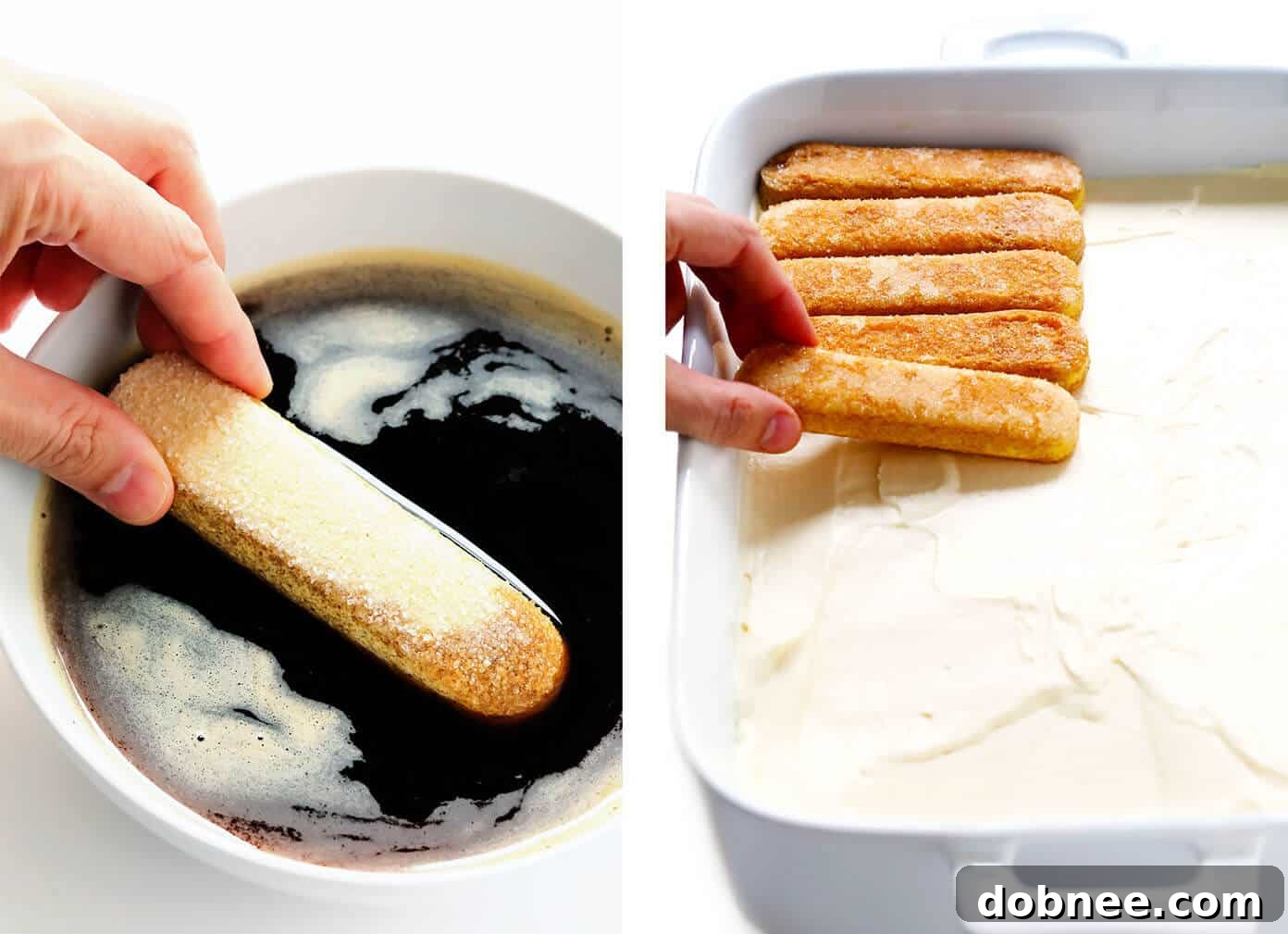
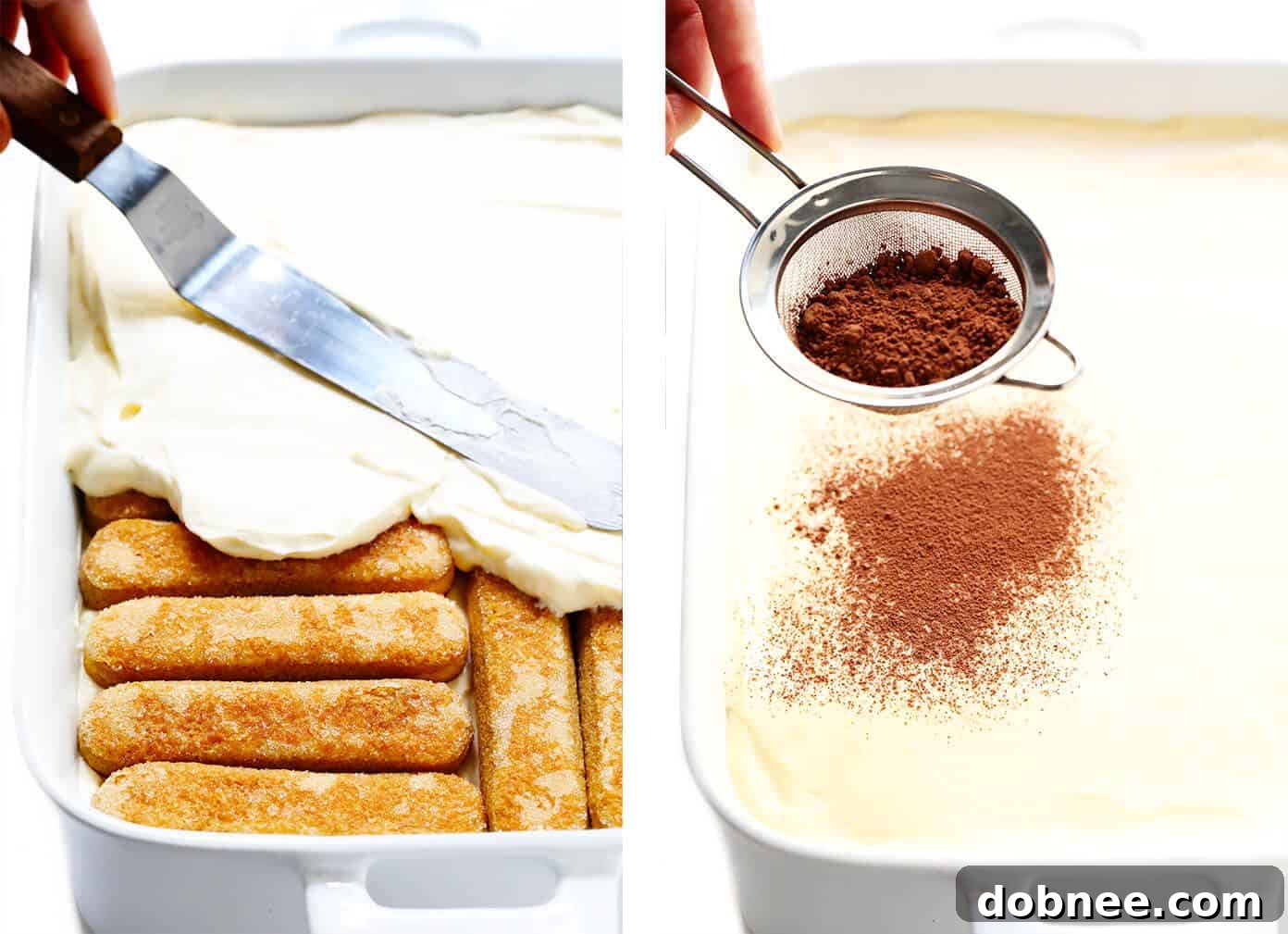
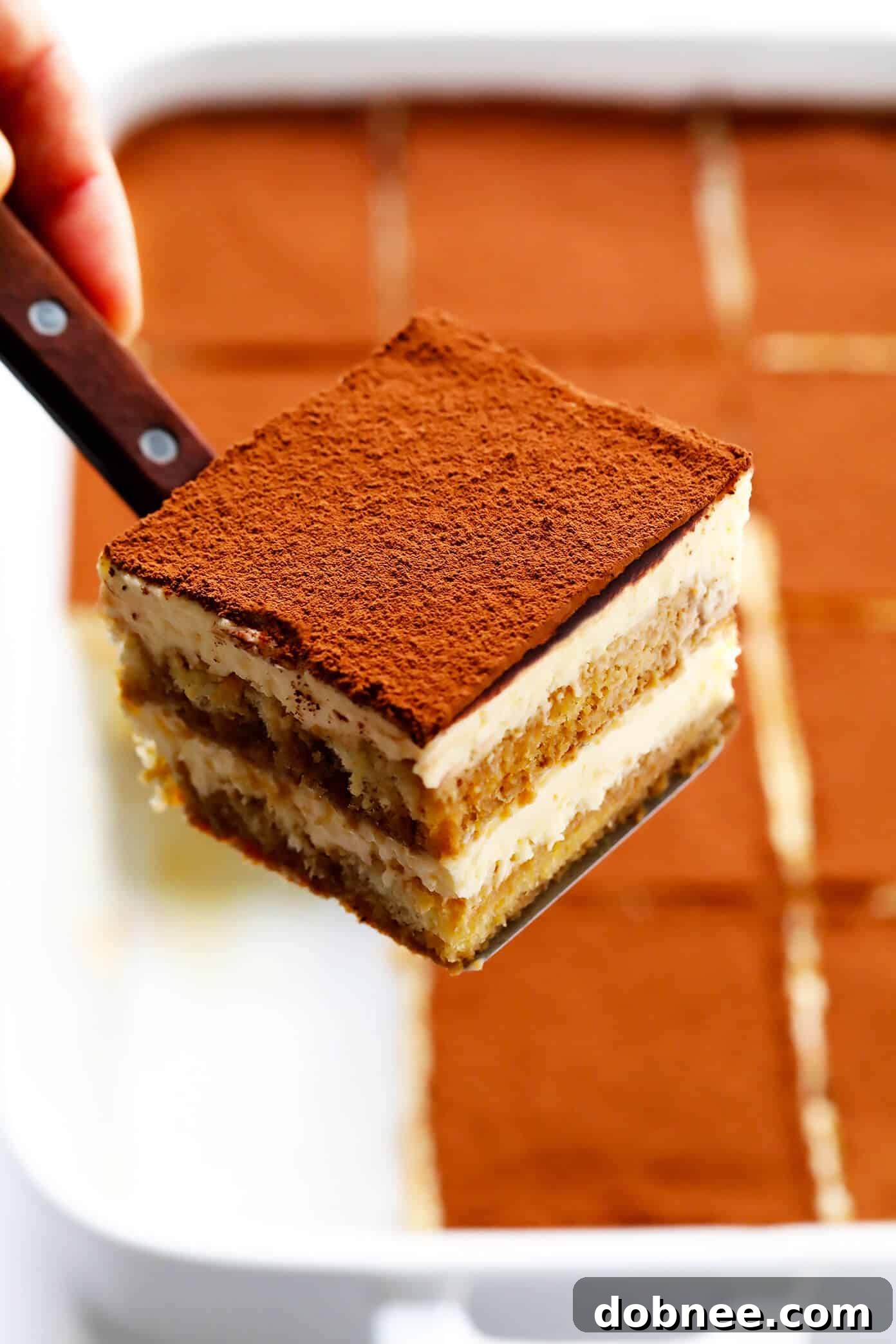
- Assemble the Tiramisù Layers: Now comes the exciting part – assembly! One at a time, take a ladyfinger and very briefly (literally just for a second or two per side) dip it into the espresso mixture. The goal is to coat both sides without saturating them, as over-soaked ladyfingers will make your tiramisù soggy. Arrange these espresso-dipped ladyfingers in a single, even layer to cover the bottom of a 9×13-inch baking dish. Don’t worry if there are small gaps; you can break some ladyfingers to fill in larger spaces. Once your first layer of ladyfingers is complete, use a spoon or an offset spatula to gently spread half of your creamy mascarpone filling mixture evenly over the ladyfingers. Repeat this process: add a second layer of espresso-dipped ladyfingers, followed by the remaining half of the creamy filling.
- Chill for Perfection: Once assembled, cover the baking dish tightly with plastic wrap and refrigerate your tiramisù for a minimum of 4 to 6 hours. Ideally, let it chill overnight. This crucial chilling period allows the flavors to meld beautifully and the dessert to set firmly, making it easier to slice and enhancing its overall texture and taste. Patience is a virtue when it comes to tiramisù!
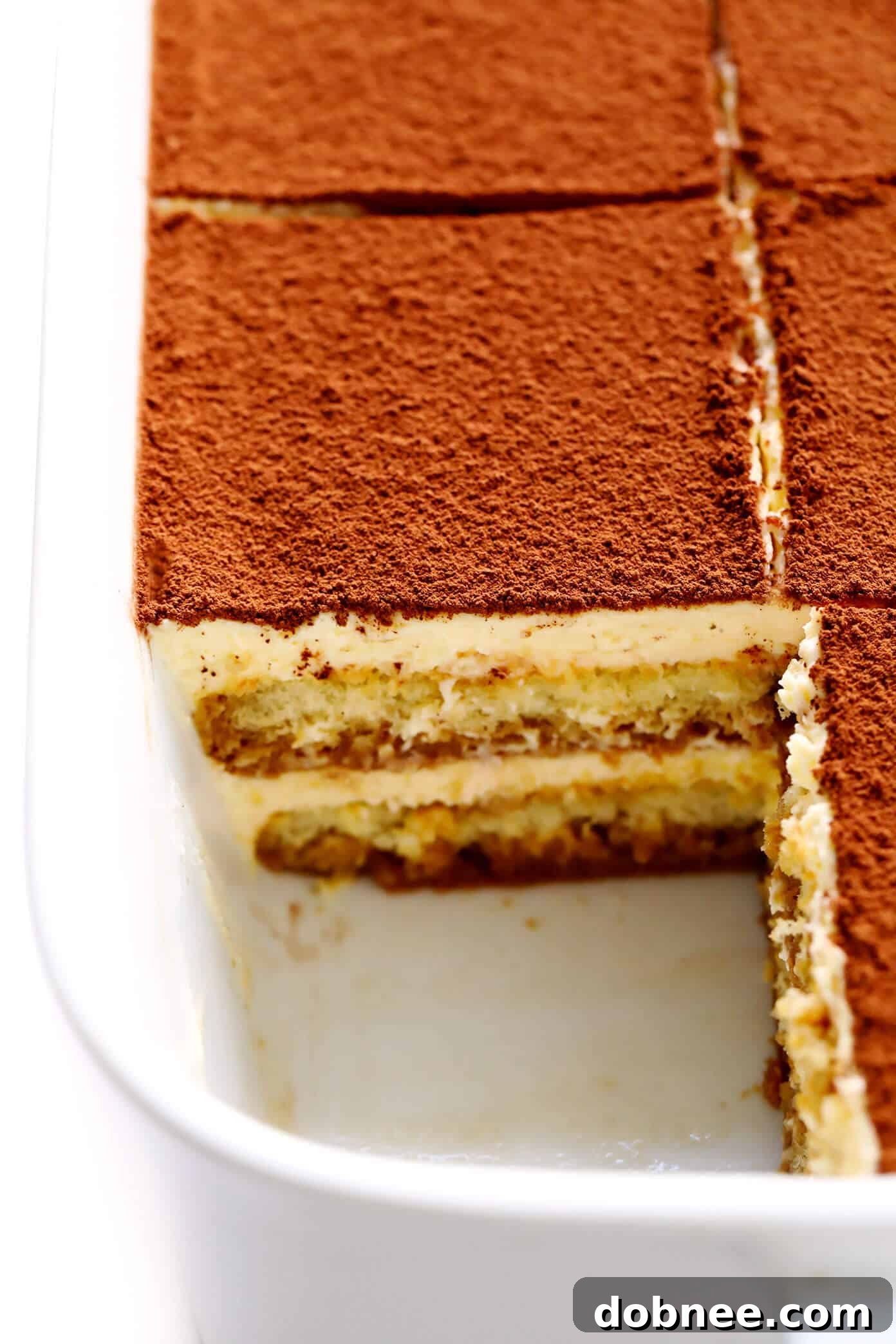
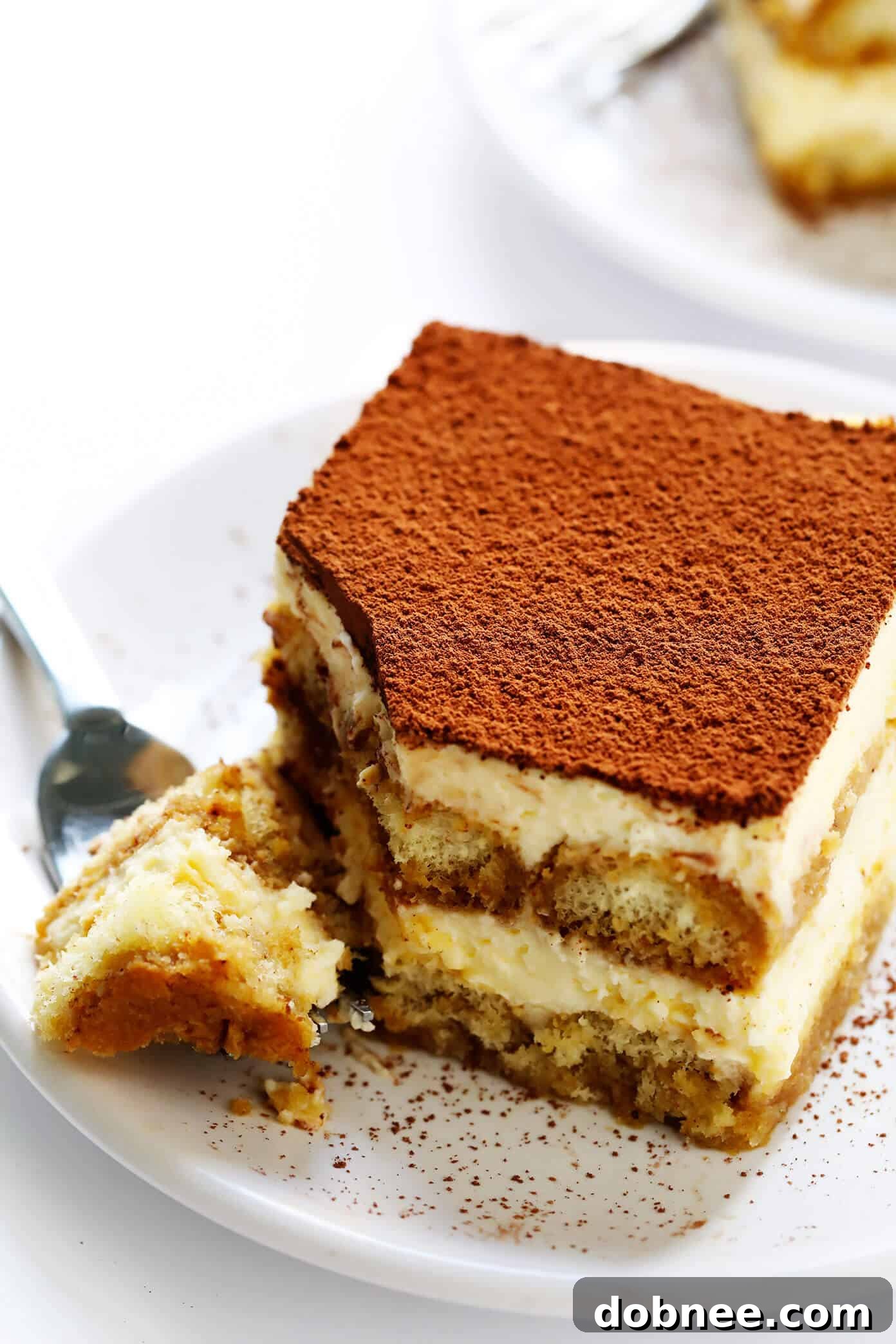
- Serve with a Flourish: Before serving, use a fine-mesh strainer to evenly dust the top of the tiramisù with a generous layer of unsweetened cocoa powder. This adds a beautiful visual appeal and a delightful bitter counterpoint to the sweet cream. Then, slice into generous portions, serve, and savor every indulgent bite! Any leftovers can be covered and refrigerated for up to 3 days, making it a fantastic make-ahead dessert.
Elevate Your Tiramisù: Creative Variations and Expert Tips
This classic tiramisù recipe is wonderfully versatile, allowing for numerous adjustments to suit your personal taste or dietary needs. Here are a few ideas to customize your dessert and make it truly your own:
- Liqueur Alternatives: While dry Marsala is traditional, feel free to experiment with other spirits. Rum offers a sweeter, more intense note, brandy provides a sophisticated warmth, cognac a fruity depth, and Kahlua (coffee liqueur) can enhance the espresso flavor. Choose what you love!
- Alcohol-Free Option: If you prefer to make this dish alcohol-free, simply omit the dry Marsala (or any other liqueur) from both the zabaglione and the espresso mixture. The tiramisù will still be incredibly delicious and family-friendly. You can substitute with a dash of vanilla extract or a bit of coffee syrup for added flavor without the alcohol.
- Go Gluten-Free: For those with gluten sensitivities, gluten-free ladyfingers are readily available and work beautifully in this recipe, allowing everyone to enjoy this delightful dessert.
- Decorative Toppings: Want to add an extra touch of elegance? Instead of a simple dusting of cocoa, consider piping or swirling the top layer of the mascarpone filling using a piping bag and your favorite tip. Alternatively, you can pipe or swirl an additional layer of plain whipped cream on top for a beautiful contrast.
- Chocolate Shavings: For a decadent twist, sprinkle finely shaved dark chocolate over the top of your tiramisù instead of, or in addition to, the cocoa powder. The rich, bittersweet chocolate complements the coffee and cream perfectly.
- Spice it Up: A tiny pinch of cinnamon or nutmeg added to the cocoa powder can provide a subtle, warm spice note that beautifully enhances the overall flavor profile.
Tiramisù Frequently Asked Questions (FAQ)
Here are answers to some common questions about tiramisù, providing deeper insight into this beloved Italian dessert:
Q: What does “tiramisù” mean?
A: The name “tiramisù” delightfully translates from Italian to mean “pick me up” or “cheer me up.” This perfectly encapsulates the dessert’s invigorating blend of coffee, sugar, and rich cream, which truly brightens the spirits!
Q: Where did tiramisù originate?
A: We have the beautiful country of Italy to thank for this incredible dessert. Interestingly, despite its classic status, tiramisù is not an ancient tradition. Food historians generally agree it was created relatively recently, sometime in the 1960s or 1970s, making it a “modern classic.”
Q: Can you freeze tiramisù?
A: Yes, tiramisù freezes surprisingly well! To freeze, ensure it’s tightly wrapped in several layers of plastic wrap, then an additional layer of aluminum foil, to prevent freezer burn. It can be stored in the freezer for up to 3 months. When you’re ready to enjoy it, thaw gradually in the refrigerator for at least 24 hours before serving.
Q: Can you serve tiramisù immediately after making it?
A: While technically you can eat tiramisù immediately after assembly, it’s highly recommended to chill it for at least 4 to 6 hours, or even better, overnight. This chilling period is crucial for several reasons: it allows the ladyfingers to fully absorb the espresso flavor, helps the creamy filling to set firmly, and gives all the flavors time to meld and harmonize, resulting in a much more delicious and cohesive dessert. If you can’t wait, be prepared to enjoy a softer, less structured version with a spoon!
Q: What’s the best way to store leftover tiramisù?
A: Leftover tiramisù should always be covered tightly with plastic wrap or stored in an airtight container in the refrigerator. It will keep well for up to 3 days, maintaining its delicious flavor and texture.
Tiramisù Recipe Card
This classic Italian tiramisù recipe is easy to make, features a safe cooked egg method, and delivers an indulgent, delicious dessert every time.
Author: Ali
- Prep Time: 37 mins
- Cook Time: 8 mins
- Total Time: 45 mins
- Yield: 12 servings
Ingredients
- 8 large egg yolks
- 2/3 cup granulated sugar
- 1/2 cup dry marsala*, divided (or substitute with rum, brandy, cognac, bourbon, or omit for alcohol-free)
- 1 pound (16 ounces) mascarpone cheese, drained of any excess water
- 1 teaspoon vanilla extract
- 1/4 teaspoon fine sea salt
- 1 1/2 cups heavy cream, very cold
- 1 1/2 cups espresso (or very strong coffee*, use decaf if preferred)
- 36 to 42 crisp Italian ladyfingers (one 14-ounce package*)
- Unsweetened cocoa powder, for dusting
Instructions
- Make the zabaglione. Heat 1 inch of water in a large saucepan over medium heat until simmering. In a metal (or heat-proof glass) mixing bowl, combine the egg yolks, sugar, and 1/4 cup of the dry marsala. Set this bowl atop the simmering saucepan (ensure the bottom of the bowl does not touch the water). Using a whisk (or a hand mixer on low speed), whisk the mixture constantly for 5 to 7 minutes, or until it turns pale yellow and nearly triples in volume. Remove from heat and transfer the mixture to the refrigerator briefly to cool while you proceed with the next steps.
- Whisk the mascarpone mixture. In a large mixing bowl, combine the mascarpone cheese, vanilla extract, and sea salt. Using a hand mixer (or a stand mixer), beat the mixture on medium speed for about 1 minute until smooth. Transfer this mascarpone mixture to a clean bowl and set aside.
- Whip the cream. Add the cold heavy cream to the same large mixing bowl. Beat using a handheld mixer (or stand mixer) on medium-high speed until stiff peaks form.
- Combine the filling. Use a rubber spatula to gently fold the mascarpone mixture into the whipped cream until mostly combined. Then, gradually fold in the cooled zabaglione mixture until fully integrated. Be careful not to overmix, which can deflate the mixture.
- Make the espresso mixture. In a small bowl, stir together the espresso and the remaining 1/4 cup of marsala (or your chosen liqueur).
- Assemble the tiramisù. One at a time, quickly dip each ladyfinger into the espresso mixture (just for a second or two per side, to avoid oversaturation). Arrange the dipped ladyfingers in an even layer to cover the bottom of a 9×13-inch baking dish. Once the first layer is complete, use a spoon or an offset spatula to evenly spread half of the creamy filling mixture on top. Repeat with a second layer of espresso-dipped ladyfingers, followed by the remaining half of the creamy filling.
- Chill. Cover the baking dish with plastic wrap and refrigerate for at least 4 to 6 hours, or until completely chilled and set. For best results, chill overnight.
- Serve. Before serving, use a fine-mesh strainer to evenly dust the top of the tiramisù with a layer of unsweetened cocoa powder. Slice into portions, serve, and enjoy! Leftovers can be covered and refrigerated for up to 3 days.
Equipment
- Offset Spatula
- Ladyfingers
- Fine Mesh Strainer
Notes
- Total Time: The listed total time does not include the essential 4-6 hours of chilling time required for the tiramisù to set and for flavors to fully develop.
- Alcohol Options: Feel free to use rum, cognac, brandy, Kahlua, or any other preferred liqueur in place of dry Marsala. For an alcohol-free version, simply omit the alcohol entirely.
- Espresso Options: You can brew fresh espresso, prepare a very strong batch of coffee, or mix hot water with espresso powder. Decaf options are perfectly fine if you prefer.
- Ladyfinger Quantity: The exact number of ladyfingers needed may vary slightly based on your pan’s size and shape. Aim for a single, even layer. Small gaps are acceptable, and you can break ladyfingers in half to fill larger spaces.
- Gluten-Free Option: To make this dessert gluten-free, substitute with gluten-free ladyfingers.