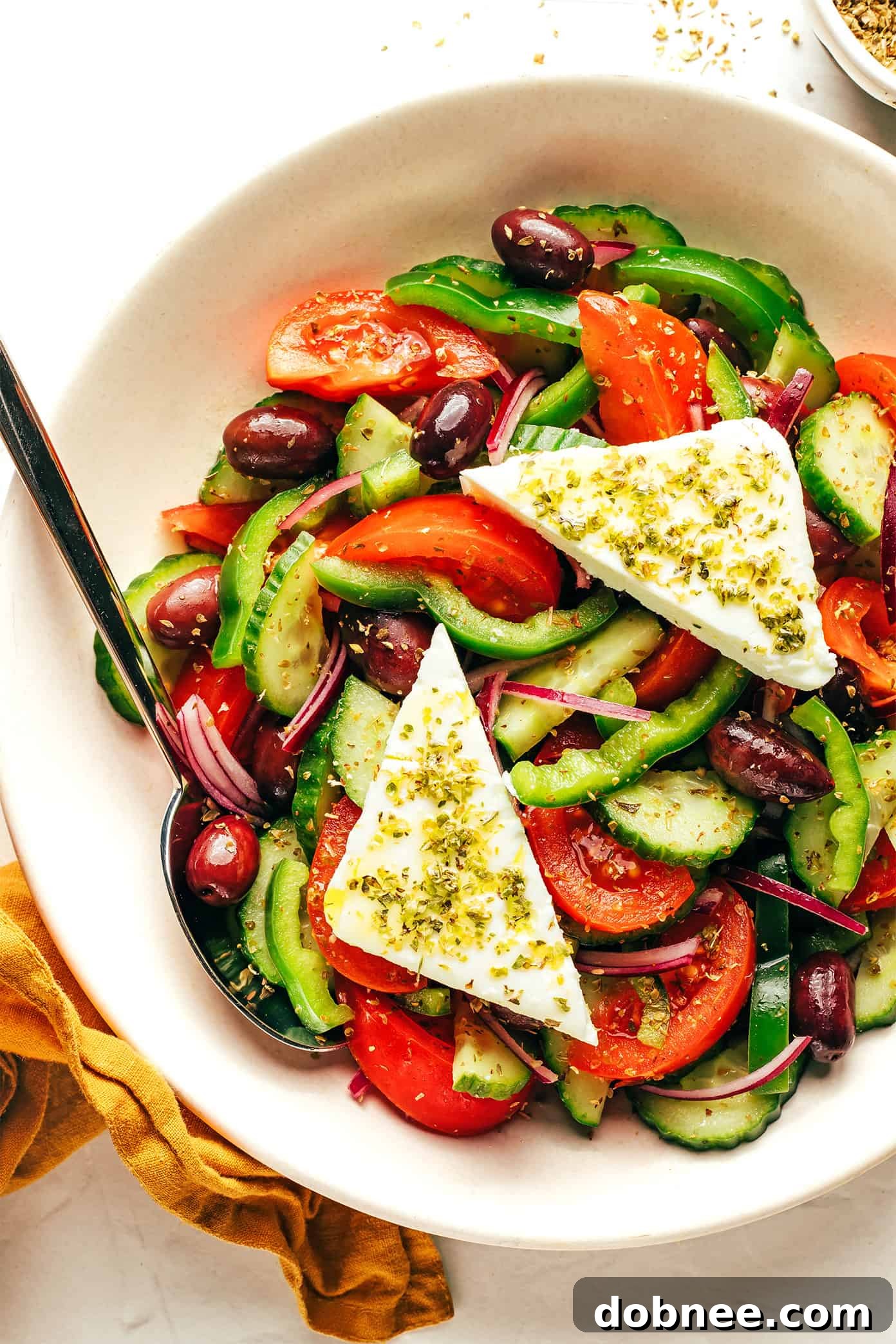
Discover the true essence of Greek cuisine: a guide to crafting an authentic, fresh, and irresistibly delicious Greek salad, inspired by our culinary journey through Greece.
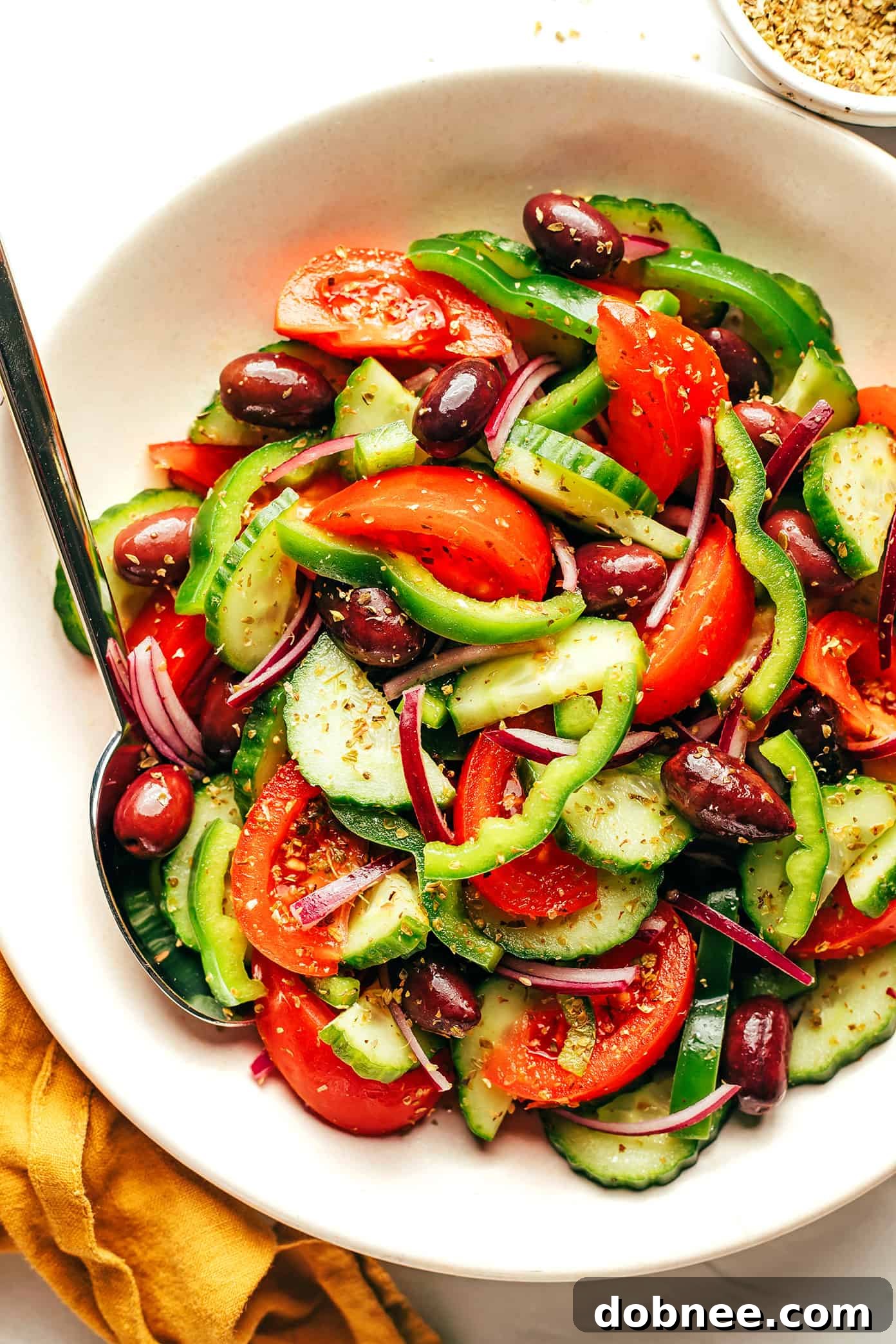
During a recent unforgettable trip to Greece, a simple yet profound culinary revelation captured my heart and taste buds: the authentic Greek salad. When my partner, Barclay, asked about my birthday wishes for our Greek adventure, my list was clear and concise:
- Bask in the breathtaking panoramic views.
- Indulge in an abundance of captivating books.
- Savor as many traditional Greek salads as humanly possible.
I am delighted to report that all missions were gloriously accomplished, especially the latter! This journey transformed into the ultimate Greek salad-a-thon, a dream come true for any food enthusiast seeking genuine flavors.
It turns out that in Greece, salads are a staple not just for lunch and dinner, but often for breakfast too. This delightful tradition allowed us to fully immerse ourselves in the country’s vibrant culinary landscape. Our visit in late May perfectly coincided with the peak season for fresh produce, and the quality of their traditional Greek salads was nothing short of spectacular. Each salad was an explosion of freshness, vivacity, and exquisite taste, exactly as I had envisioned. What struck us most was their consistent simplicity in both ingredients and presentation, yet they tasted remarkably different from the “Greek salads” typically served back home in the States. We simply couldn’t get enough. Naturally, the moment we returned, our kitchen was buzzing with the delightful challenge of recreating these masterpieces.
Here’s a deep dive into every valuable lesson we gathered, allowing you to bring a piece of Greece to your own table!
The Hallmarks of a True Horiatiki: What Makes an Authentic Greek Salad?
One of the most remarkable aspects of Greek salads in Greece—known locally as Horiatiki Salata, or “village salad”—is their unwavering consistency. Every time you order one, you’re greeted with the same impeccable fresh ingredients, the same simple, rustic presentation, and the same winning flavors. While certain regions boast unique local salads (like the distinctive Santorini salad or the Folegandros salad, each featuring a special local ingredient or two), the classic Horiatiki adheres to a set of timeless principles:
- No Lettuce, No Greens: This is perhaps the most significant departure from its American counterpart. A true Greek salad contains no lettuce, spinach, or any other leafy greens. Its foundation is purely a vibrant medley of hearty vegetables, ripe tomatoes, briny olives, and creamy cheese. We absolutely adored this focused approach, allowing the natural flavors of the produce to shine without distraction.
- Effortlessly Simple Dressing: Forget the creamy, herb-heavy dressings you might be familiar with. In Greece, the dressing for a Horiatiki is remarkably minimalist. It consists of a generous drizzle of high-quality extra-virgin olive oil, often accompanied by a splash of red wine vinegar, and a sprinkle of dried oregano and sea salt. This understated approach underscores the importance of exceptional ingredients, letting their natural goodness be the star. The olive oil isn’t just a component; it’s a co-star, often served tableside for guests to add to their preference.
- Generous, Rustic Vegetable Chunks: Precision chopping is not the goal here. Instead, authentic Greek salads feature large, rustic chunks of vegetables, especially ripe tomatoes cut into substantial wedges. You won’t find tiny cherry or grape tomatoes; the focus is on robust, full-sized produce, contributing to a satisfying texture and visual appeal that celebrates the garden’s bounty. This substantial cut also helps the vegetables retain their juice and firmness.
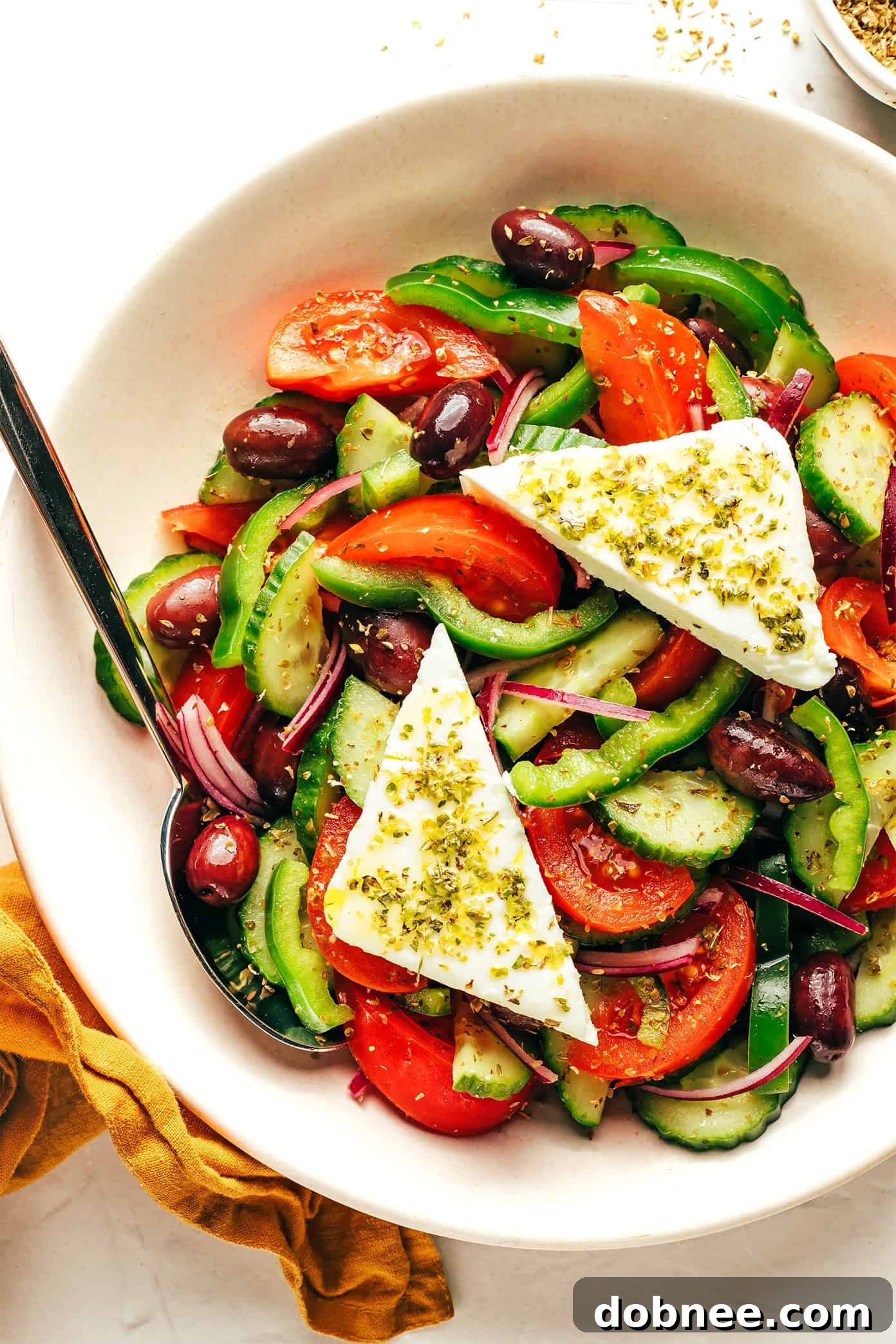
- The Star: A Mega Hunk of Feta: Greece takes immense pride in its delicious, fresh sheep’s milk feta, and rightfully so. It’s not merely an accent but the undisputed star of the salad. It’s always served as a large, impressive block—either square or triangular—perched majestically atop the vegetables. You will never see crumbled feta in a traditional Greek salad; its presence as a whole piece encourages diners to break off creamy morsels as they eat, experiencing its full flavor and texture.
- Only Green Bell Peppers: Our culinary explorations across Greece confirmed that only bright green bell peppers are used in authentic Greek salads. We never encountered red, orange, or yellow varieties. These peppers are typically sliced horizontally into strips, adding a crisp, slightly bitter counterpoint that balances the sweetness of the tomatoes and the richness of the feta.
- Kalamata Olives with Pits: Always. The presence of the pit indicates the olives are whole, ensuring their flavor and texture remain intact until the moment they are eaten. These deep purple, almond-shaped olives are indispensable, offering a distinctive briny, fruity note that defines the salad’s character. Removing the pits often diminishes their authentic taste and firm texture.
- Unpretentious Presentation: The beauty of a Horiatiki lies in its inherent simplicity. About half the time, our salads were presented with the core ingredients in a bowl, with bottles of olive oil and vinegar provided on the table for us to dress our portions. Other times, they arrived perfectly prepared. Regardless, the presentation was consistently simple, straightforward, and never overly tossed. The vibrant colors of the fresh vegetables are so captivating on their own that they require no fancy garnishes or elaborate arrangements. It’s a testament to the belief that true quality needs no embellishment.
Diving Deeper: Essential Greek Salad Ingredients
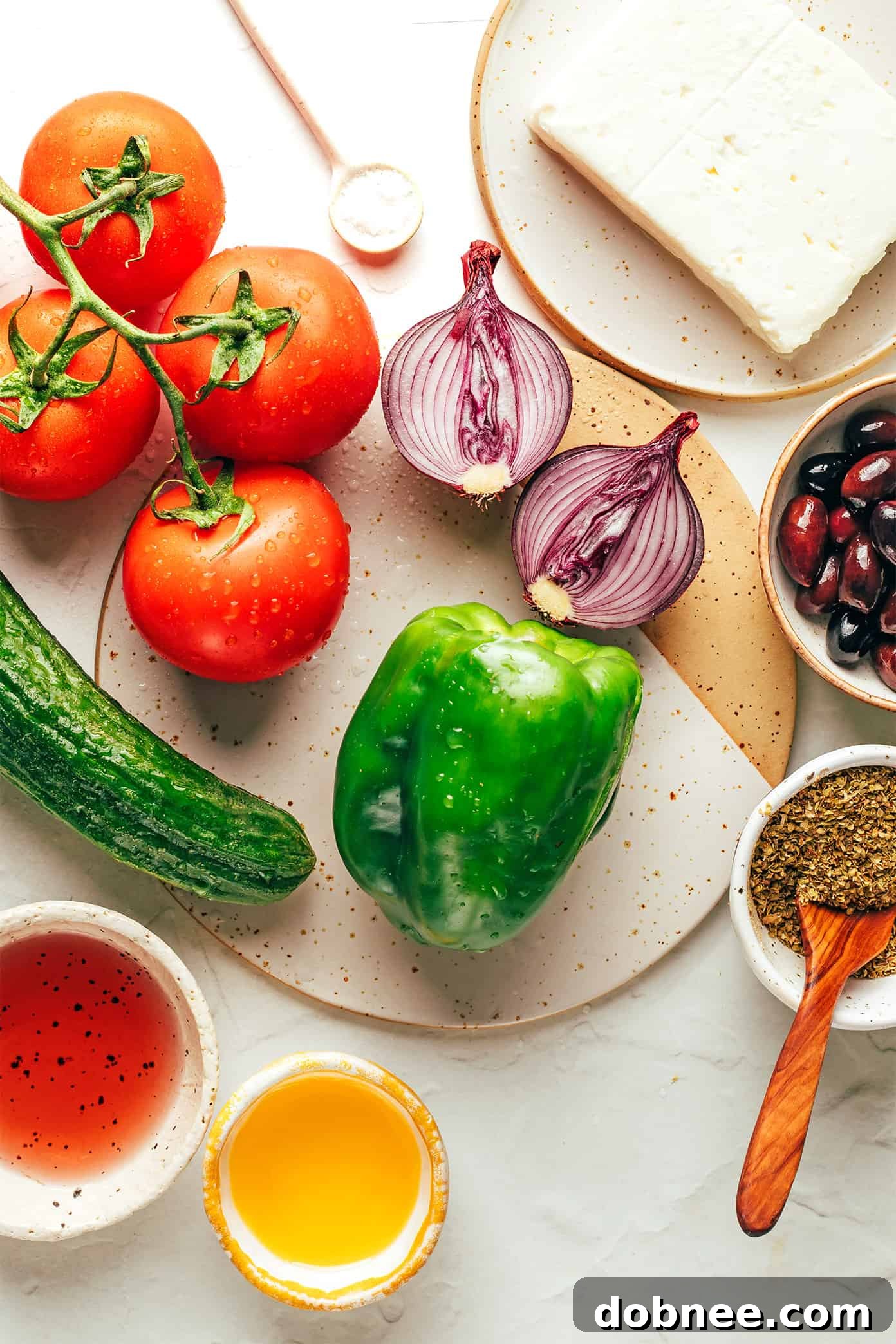
To recreate this quintessential taste of Greece in your own kitchen, focusing on high-quality, fresh ingredients is paramount. Here’s a more specific breakdown of what you’ll need for a truly authentic Greek salad recipe:
- Tomatoes: We consistently enjoyed ripe, round, medium-sized tomatoes, meticulously cut into generous wedges. The key here is ripeness and seasonality; fresh, in-season tomatoes elevate this salad to an entirely new level of deliciousness. Heirloom tomatoes can also add a beautiful complexity of flavor.
- Cucumber: Either crisp Persian cucumbers or the longer, milder English cucumbers work perfectly. Both varieties offer a refreshing crunch and a subtle sweetness that complements the other ingredients. Slice them into half-moons for a pleasant texture.
- Green Bell Pepper: As tradition dictates, stick to a large green bell pepper, cored and thinly sliced. Its slightly bitter, crisp notes are crucial for the salad’s authentic flavor profile. While other colored peppers are sweeter, they stray from the classic taste.
- Red Onion: A small red onion, peeled and very thinly sliced, adds a delicate pungency and a beautiful pop of color without overpowering the other flavors. Its mild bite provides a refreshing contrast.
- Kalamata Olives: These distinctive, deep purple olives are non-negotiable. Always use them whole and unpitted. The pit helps to preserve their briny, fruity flavor and firm texture, providing a more robust olive experience.
- Feta Cheese: The defining ingredient! Seek out authentic Greek feta made from sheep’s milk (sometimes with a small percentage of goat’s milk). It should be creamy, tangy, and served in a substantial block, not crumbled. Its salty richness is the heart and soul of the salad.
- Extra Virgin Olive Oil: This is more than just an ingredient; it’s the primary component of your simple Greek “dressing.” Invest in a good-quality, flavorful extra-virgin olive oil. Its rich, peppery, or grassy notes will infuse every bite with Mediterranean sunshine.
- Dried Oregano: Essential for that unmistakable Greek aroma and taste. This herb was sometimes tossed directly with the salad, and other times generously sprinkled on top as a finishing flourish. Greek oregano, known for its potent aroma, is highly recommended.
- Sea Salt: Always a must, especially in Mediterranean cuisine. However, since feta cheese is inherently salty, start with a light hand and adjust to taste. You can always add more, but you can’t take it away!
Optional Additions for Enhanced Flavor:
- Red Wine Vinegar: While some salads relied solely on olive oil, many of our Greek salads featured a generous splash of red (or occasionally white) wine vinegar. This adds a delightful tanginess and brightness, perfectly cutting through the richness of the oil and feta.
- Capers: On a few occasions, we encountered Greek salads with a sprinkle of capers. These tiny, briny flower buds add an intriguing burst of salty, pungent flavor that Barclay particularly enjoyed, offering another layer of complexity.
Crafting Your Authentic Greek Salad: A Simple Guide
Creating this delicious Horiatiki recipe is wonderfully straightforward, emphasizing fresh ingredients and minimal fuss. Here’s how to assemble your taste of Greece:
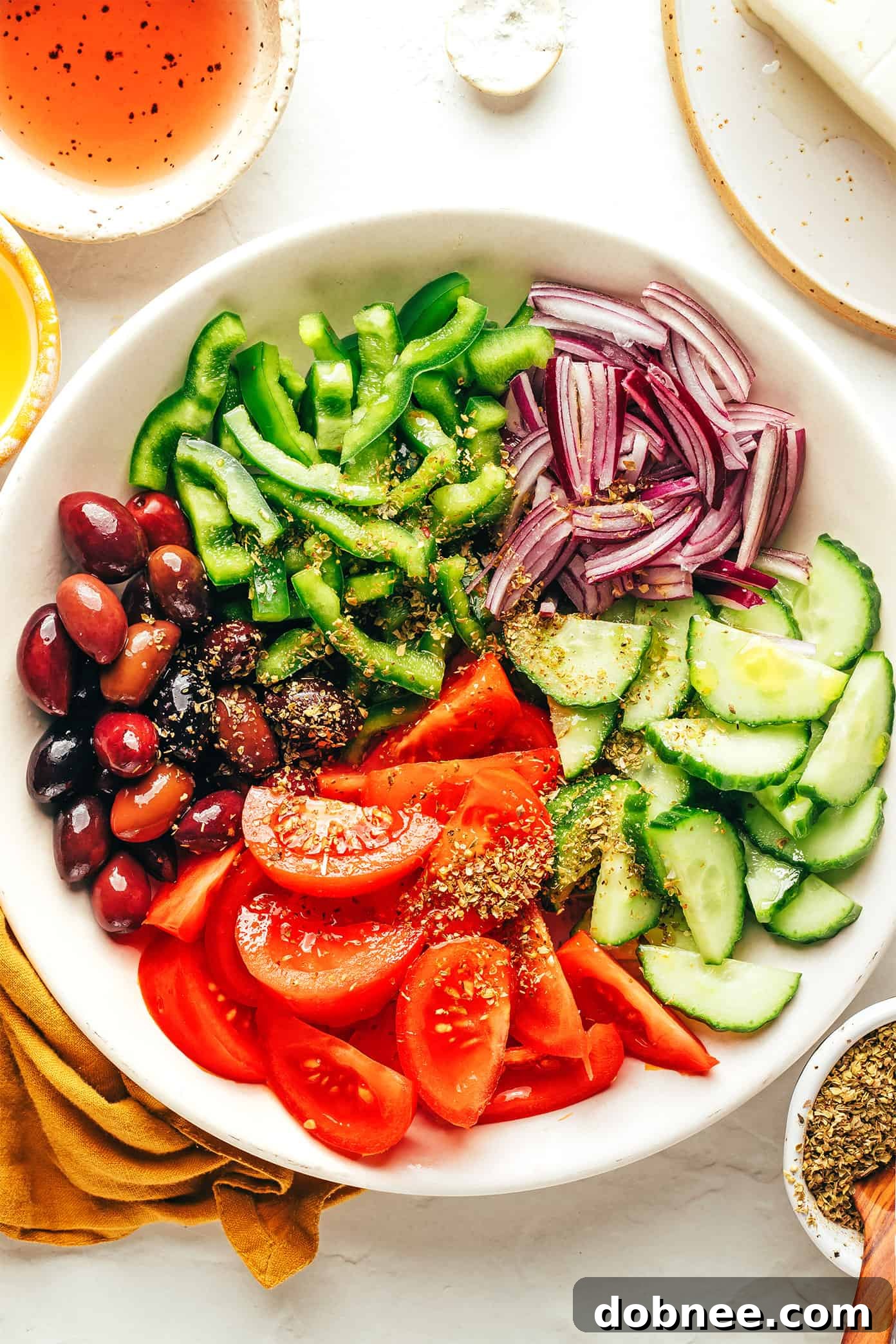
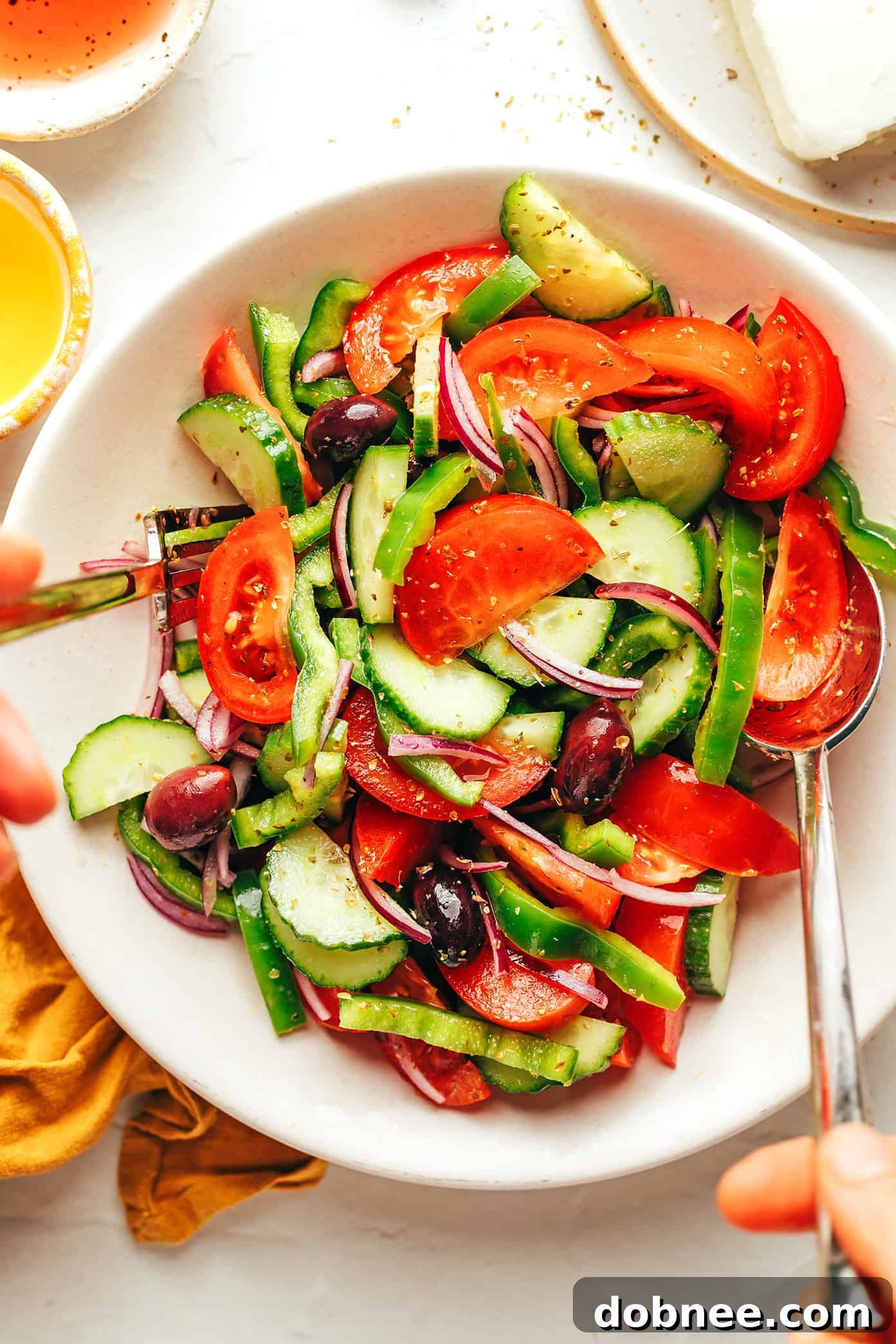
- Prepare and Combine Your Base Ingredients: Begin by washing and preparing your vegetables. In a large mixing bowl, gently combine the freshly cut tomatoes (in generous wedges), sliced cucumber (half-moons), thin strips of green bell pepper, thinly sliced red onion, and whole Kalamata olives. The beauty of this salad comes from the rustic cuts, so don’t worry about perfection.
- Dress Simply with Authentic Flavors: The magic of the Greek salad dressing lies in its simplicity and quality. Evenly drizzle a generous amount of high-quality extra virgin olive oil over the combined vegetables. Follow with a splash of red wine vinegar (if using), and then sprinkle with dried oregano and a pinch of sea salt. Remember, the saltiness of the feta will contribute significantly, so season judiciously.
- Briefly Toss to Marry Flavors: With a gentle hand, briefly toss the ingredients to ensure they are lightly coated with the olive oil, vinegar, and seasonings. Avoid over-mixing, as this can bruise the fresh vegetables and diminish their vibrant appearance and crisp texture. The goal is to lightly distribute the dressing, allowing each component to retain its integrity.
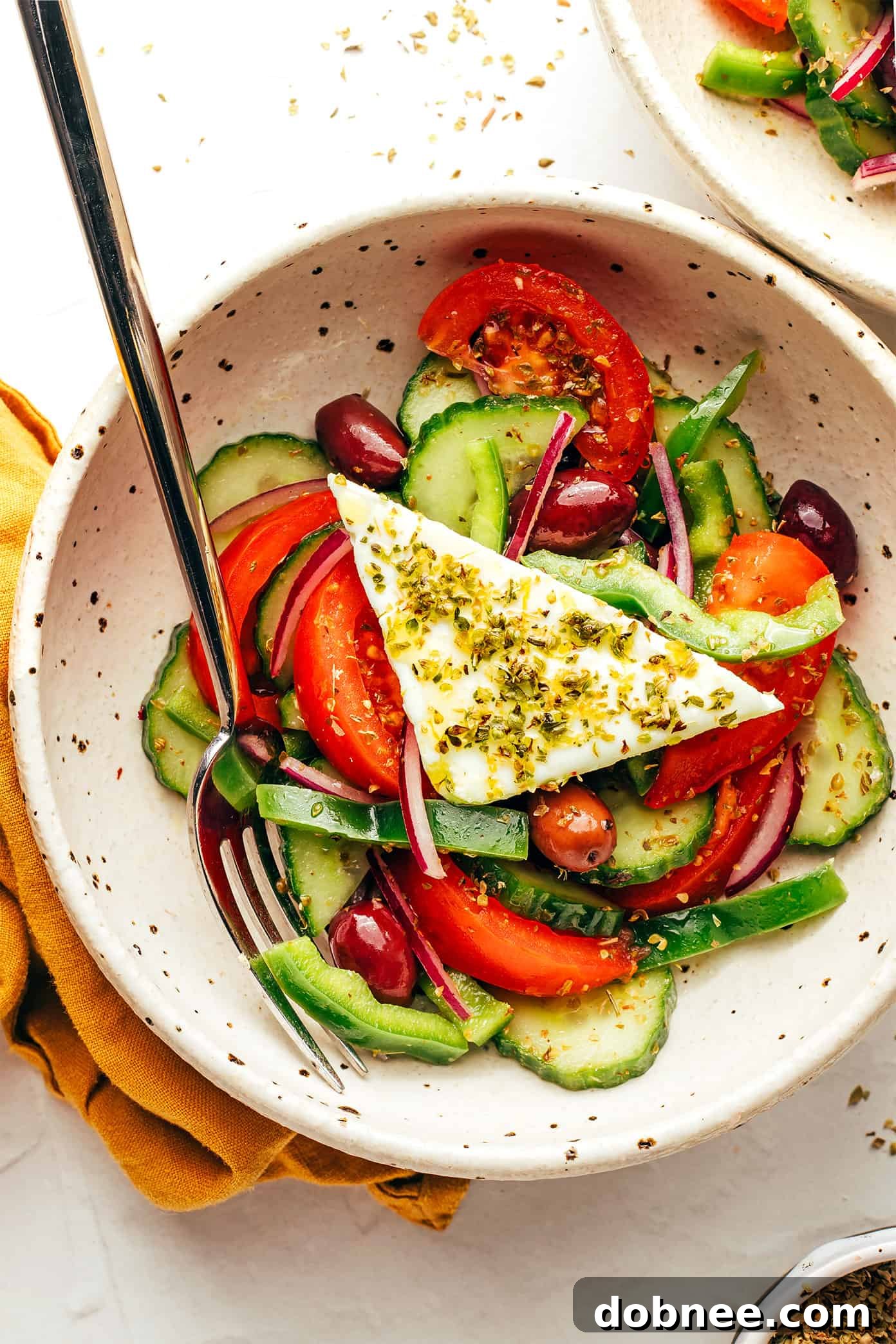
- Crown Your Creation with Feta Cheese: The grand finale! Carefully place the large block of sheep’s milk feta cheese directly on top of the colorful salad. For an extra touch of indulgence and aroma, you can drizzle a tiny bit more olive oil over the feta and sprinkle it with an additional pinch of dried oregano. This presentation makes the feta the undeniable centerpiece.
- Serve and Savor Immediately (or Store Briefly): Your authentic Greek salad is now ready to be enjoyed! Serve it immediately to experience the peak freshness and crunch of the vegetables. If you have leftovers, transfer them to an airtight container and refrigerate for up to 3 days. While it’s best fresh, the flavors can sometimes deepen slightly after a short rest.
Perfect Pairings: What to Serve with Your Horiatiki
The light, fresh, and summery flavors of an authentic Greek salad make it incredibly versatile. It pairs beautifully with a wide array of dishes, particularly those suited for warm weather or a Mediterranean theme. Whether you serve it as a vibrant side dish or elevate it to a refreshing main course, its zesty profile is always a welcome addition. If you’re anything like Barclay and me, a generous bowl of this salad often suffices as a satisfying meal in itself! However, should you wish to complement it, here are some delightful suggestions:
- Grilled Delights: The robust flavors of the salad wonderfully complement anything hot off the grill. Think marinated chicken, succulent lamb chops, grilled fish (like snapper or sea bass), or even grilled halloumi cheese for a vegetarian option. The smokiness of grilled foods offers a fantastic contrast to the salad’s crisp freshness.
- Classic Greek Main Courses: Naturally, a Greek salad is the perfect accompaniment to other traditional Greek dishes.
- Pita Sandwiches: It’s an ideal side for hearty pita sandwiches or wraps, such as:
- Chicken Souvlaki: Skewered and grilled marinated chicken.
- Falafel: Crispy, spiced chickpea fritters, perfect for vegetarian meals.
- Gyros or Kebab Plates: The refreshing salad helps cut through the richness of spiced meats.
- Pita Sandwiches: It’s an ideal side for hearty pita sandwiches or wraps, such as:
- Appetizer Spreads and Dips: A large loaf of crusty bread, perfect for soaking up the delicious juices from the salad, is a must. Serve it alongside a selection of classic Mediterranean dips for a convivial spread:
- Spicy Greek Feta Dip (a creamy, tangy, and subtly spicy concoction – recipe coming soon!)
- Hummus: The creamy, garlicky chickpea dip.
- Tzatziki: A cool and refreshing cucumber-yogurt dip.
- Light Lunches or Brunch: Paired with a simple omelette or frittata, the Greek salad adds a burst of freshness to a brunch spread.
- Dessert: To round off a delightful Greek meal, a traditional sweet like Baklava Cups offers a perfect balance of nutty sweetness and flaky pastry.
Authentic Greek Salad
- Prep Time: 10 minutes
- Total Time: 10 minutes
- Yield: 4 servings
Description
This traditional Greek Salad recipe is wonderfully uncomplicated, easy to make, and so refreshing. Feel free to toss everything together in a mixing bowl, or just serve the base ingredients with bottles of olive oil and red wine vinegar on the side for people to dress their individual portions.
Ingredients
- 4 medium-sized tomatoes, cut into wedges
- 1 English cucumber (or two small Persian cucumbers), sliced into half moons
- 1 large green bell pepper, cored and thinly sliced
- 1 small red onion, peeled and thinly sliced
- 1 cup kalamata olives
- 3-4 tablespoons olive oil
- 2 tablespoons red wine vinegar
- 1 teaspoon dried oregano, plus extra for serving
- sea salt
- 5 ounces feta cheese, thickly-sliced if possible
Instructions
- Combine the tomatoes, cucumber, bell pepper, red onion and olives in a large mixing bowl. Drizzle evenly with olive oil and red wine vinegar, and sprinkle with the oregano and a pinch of salt.
- Toss briefly. Then top with feta cheese. And finish the salad by drizzling a little extra olive oil and adding another pinch of oregano on top.
- Serve and enjoy! Or refrigerate in a sealed container for up to 3 days.